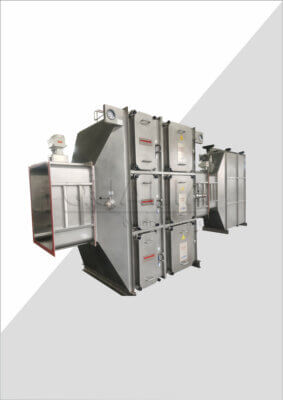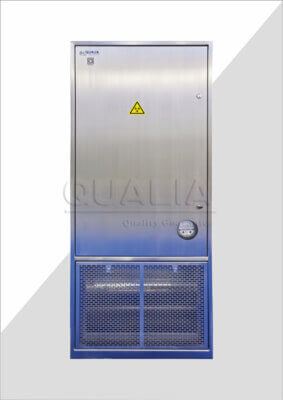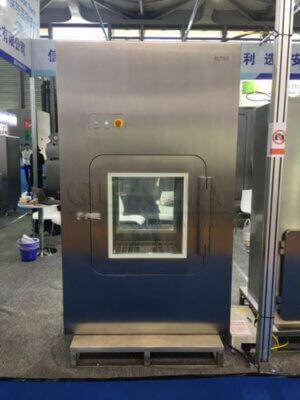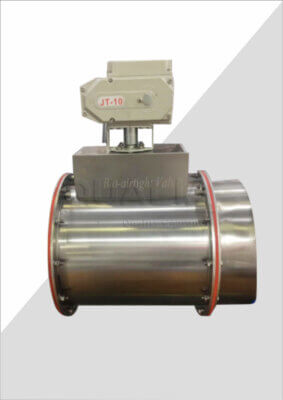
A fixed VHP generator RFQ that reaches suppliers without a common duty definition produces bids that cannot be compared on price or technical merit, because each vendor fills the gaps with its own assumptions about room volume, cycle time, and interface scope. The buyer’s task is not to describe the equipment but to describe the duty the equipment must perform, the physical and control interfaces it must meet, and which deliverables belong to the vendor rather than the site team. Getting this right before issuing the RFQ determines whether the responses that come back can be placed side by side at all.
Comparable Bids Require a Common Room and Cycle Duty
| Duty input | State in the RFQ | Compare in the vendor response |
|---|---|---|
| Treatment zones | Name every zone included in the required duty | Capacity assumptions and limitations for the stated zones |
| Operating scenarios | Define the expected operating scenarios | Cycle assumptions and limitations for those scenarios |
| Obciążenie reprezentatywne | Describe the representative load used for the request | Assumptions and limitations tied to that load |
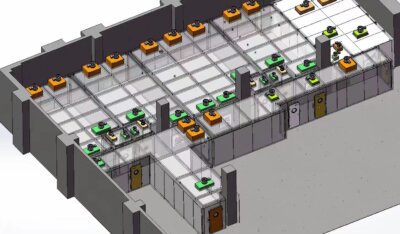
A fixed VHP generator is sized and controlled against a specific decontamination duty, not against a generic room area. The duty is defined by which zones are treated, what state those zones are expected to be in when a cycle runs, and what load is present during that cycle. If the RFQ does not name every treatment zone the generator must serve, vendors will default to their own assumption about which spaces are included, and the resulting capacity figures will not describe the same job. A generator scoped for a single enclosure answers a different question than one scoped for an enclosure plus an interconnected transfer or access space, and the difference shows up in cycle time, peroxide consumption, and aeration duration, not just in equipment size.
Operating scenarios matter for the same reason. A cycle intended for routine decontamination between process steps carries different assumptions than one intended for a full room turnover or for decontamination following a containment breach response, and a vendor quoting against an unstated scenario will default to the most common case rather than the one the project actually needs. Where the project runs more than one scenario against the same generator, the RFQ should say so, because a single cycle recipe does not necessarily cover every scenario without separate development and validation.
The representative load is the third variable that must be fixed before quotation. Surfaces, materials, and geometries inside the treatment zone absorb and release peroxide differently, and a cycle developed against an empty room will not necessarily perform the same way once fixtures, equipment, or packaging materials are introduced as load. Naming a representative load lets vendors state the capacity assumptions and limitations that apply specifically to that load, rather than issuing a cycle claim that only holds under idealized conditions. Where the actual load changes materially after award, the cycle basis the vendor quoted may need reconfirmation, which is a reason to describe the load as completely as the project allows at RFQ stage rather than leaving it to be discovered during cycle development.
State Utility, Distribution and HVAC Interface Conditions
| Interfejs | RFQ condition to state | Scope boundary to make explicit |
|---|---|---|
| Narzędzia | Available utility conditions | Buyer and vendor utility scope |
| Peroxide supply | Peroxide supply boundary | Where buyer and vendor supply responsibility begins and ends |
| Injection and distribution | Required injection and distribution route | Which parts of the route are in buyer or vendor scope |
| HVAC and exhaust | Required HVAC and exhaust interfaces | Included interfaces and any site modifications outside equipment supply |
| Service access | Required service access conditions | Buyer and vendor responsibility for providing that access |
A fixed VHP generator does not operate as a standalone unit; it draws utilities, injects vaporized peroxide along a distribution route, and interacts with the room’s HVAC and exhaust systems. Each of these is a physical interface where responsibility can be assumed by both parties or by neither, and an RFQ that leaves them implicit invites vendors to quote only the generator itself while treating everything connecting it to the room as someone else’s problem.
Utility conditions available at the installation point determine what the generator can draw from the site versus what the site must provide as a precondition. If the available utility conditions differ from what a vendor’s standard configuration assumes, the equipment may need adjustment before it can be installed as quoted, so stating the actual available conditions up front prevents a mismatch discovered only at installation.
The peroxide supply boundary is a similar question with a sharper consequence: it fixes where the vendor’s responsibility for supplying and handling peroxide ends and where the buyer’s handling and storage responsibility begins. Injection and distribution routing raises a related but distinct issue, because the path the vaporized peroxide takes from generator to treatment zone may pass through ducting, penetrations, or fittings that belong to the room construction rather than to the generator package, and whether those are included in the vendor’s scope changes both the quoted price and the installation sequence.
HVAC and exhaust interfaces carry a different kind of consequence because they affect the room’s broader air handling, not just the decontamination cycle. Where the generator’s injection or exhaust demands interact with the room’s existing HVAC control strategy, site modifications outside the equipment supply itself may be required, and whether those modifications are in vendor or buyer scope needs to be explicit rather than inferred from the equipment quotation. Service access is the final interface worth naming explicitly: a generator that requires clearance or access provisions for maintenance will only get that access if the room design accounts for it, and that is a buyer-side construction decision as much as a vendor-side equipment specification.
Define Controls, Communications and Safe Failure Expectations
Controls and communications define how the generator is operated, monitored, and interlocked with the rest of the facility, and failure behavior defines what happens when something does not go as planned. These are separate questions from capacity and interface scope, and an RFQ that only addresses utilities and duty without addressing control behavior leaves the vendor free to propose whatever control architecture is standard for their platform, whether or not it integrates with the buyer’s existing systems.
Where the generator needs to communicate with a building management system, a room monitoring system, or an access control system, the RFQ should state which signals or interfaces are required rather than assuming the vendor’s standard control package already includes them. A generator that reports cycle status only on a local panel answers a different operational need than one that reports status to a centralized system the facility already monitors, and the difference affects how operators and biosafety or EHS oversight actually use the equipment day to day.
Safe failure expectations deserve the same explicit treatment. Any cycle-based decontamination process has failure modes, whether from a utility interruption, a sensor fault, or an incomplete cycle, and how the generator and the room respond to that failure is a design decision, not an automatic property of the equipment. Where a failure during a cycle must result in a defined safe state, that expectation needs to be part of the RFQ rather than left to be discovered when a vendor’s standard failure response does not match what the facility’s broader safety strategy assumes. The buyer does not need to specify how the failure response is engineered, but naming the expectation lets each vendor state whether and how their control system meets it, which is the only way to compare this aspect of competing bids on equal terms.
Request Cycle Development, Compatibility and Aeration Evidence
| Obszar dowodów | Request from the vendor | What the response should clarify |
|---|---|---|
| Cycle development | Cycle-development responsibilities and relevant cycle assumptions | Who owns cycle development and which assumptions limit the proposed duty |
| Kompatybilność materiałowa | Material-compatibility evidence and its stated limitations | What the evidence supports and where project-specific confirmation remains necessary |
| Napowietrzanie | Aeration approach and stated limitations | The proposed approach and the conditions that limit its applicability |
A vendor’s quotation reflects assumptions about cycle performance, and those assumptions should be stated as assumptions rather than accepted as a universal guarantee. Three separate evidence requests belong in the RFQ, and treating them as one blurs decisions that actually depend on different information.
Cycle development responsibility is the first. Developing a working cycle for a specific room and load combination is a distinct activity from supplying the generator itself, and vendors differ in whether cycle development is included in their equipment offer, offered as a separate service, or left to the buyer’s own validation team. The RFQ should ask vendors to state who owns this responsibility and which assumptions about the room and load limit the cycle they are proposing, because a cycle developed against one load or configuration does not necessarily transfer to another without reconfirmation.
Material compatibility evidence is the second, and it answers a narrower question than cycle performance: whether the materials present in the treatment zone are known to tolerate exposure to vaporized peroxide without damage or without absorbing and later releasing residual peroxide. A vendor may hold compatibility evidence for materials tested under their own conditions, but that evidence has a boundary, and the RFQ should ask the vendor to state what the evidence actually covers and where project-specific confirmation remains necessary for materials the vendor has not tested.
Aeration is the third and is often where unstated assumptions cause the most friction after award. Aeration is the process by which residual peroxide is cleared from the treatment zone following a cycle, and the approach a vendor proposes, whether relying on ambient exchange, active purging, or a combination, carries its own limitations tied to room geometry, load material, and the HVAC interface already established. Asking the vendor to state the aeration approach and the conditions under which it applies, rather than accepting a general claim that aeration is handled, gives the buyer a basis for judging whether that approach is compatible with the room as it will actually be built and operated.
Allocate FAT, SAT, IQ/OQ and Handover Deliverables
| Deliverable area | Define in the RFQ | Evidence or boundary to preserve |
|---|---|---|
| Design documents | Required design documents and vendor deliverables | Link the required design evidence to the project requirements |
| FAT i SAT | Required vendor support and acceptance ownership for factory and site testing | Vendor FAT may support the project when justified; site SAT remains distinct, with tests and acceptance criteria defined for the project |
| IQ and OQ | Required vendor inputs, support, and acceptance ownership for installation and operational qualification | Keep IQ and OQ evidence distinct and use approved protocols, predefined criteria, and documented deviations |
| Training, spares, and handover | Required training, spares, handover records, and acceptance ownership | Treat each stated item as a defined handover deliverable rather than an assumed inclusion |
Qualification and handover deliverables are where vendor responsibility and buyer responsibility most often get assumed rather than defined, and the consequence of an unstated allocation surfaces late, when the equipment is on site and the project needs evidence that was never requested. Annex 15 of EudraLex Volume 4 links the user requirements specification to the design qualification, permits a justified vendor factory acceptance test to support the project, and treats site acceptance testing along with installation and operational qualification as distinct stages, each requiring approved protocols, predefined acceptance criteria, and documented handling of any deviation. The RFQ should allocate deliverables against that same structure rather than leaving the vendor to propose whatever documentation package is standard for their platform.
Design documents are the foundation: the RFQ should state which design documents the vendor must deliver and should tie those documents back to the project’s own requirements rather than accepting a generic equipment manual as sufficient. Factory and site acceptance testing follow a similar logic to what Annex 15 describes, where a vendor’s factory test can support the project’s qualification evidence if justified, but the site acceptance test remains a distinct activity with its own tests and acceptance criteria defined for the specific installation, not inherited wholesale from the factory test.
Installation and operational qualification carry the same distinction. The vendor may supply inputs and support for both, but IQ and OQ evidence needs to stay separate, built on approved protocols and predefined criteria, with any deviation documented rather than resolved informally. Confusing vendor support for these stages with the buyer’s responsibility to execute and own the qualification record is one of the more consequential scope gaps a buyer can leave unaddressed.
Training, spares, and handover records close the deliverable list, and each should be treated as something the RFQ defines explicitly rather than something assumed to be bundled with equipment supply. A buyer evaluating competing bids benefits from comparing these deliverables against a structured reference, such as the supplier selection criteria used for vendor assessment, so that what one vendor includes as standard and another treats as an add-on becomes visible before award rather than after.
Commercial Clarifications That Prevent Scope Gaps
| Responsibility area | Clarification required | Scope gap the clarification prevents |
|---|---|---|
| Equipment supply | State what the equipment offer includes and excludes | Treating the quoted equipment package as the complete project scope |
| Site modifications | State which site modifications are included or excluded and whether they are buyer or vendor scope | Assuming site work is included in equipment supply |
| Validation execution | Separate validation execution from vendor testing support and IQ/OQ inputs | Treating support or supplied inputs as responsibility for executing validation |
| Regulatory responsibility | State the regulatory responsibility and exclusions assigned to each party | Treating the equipment offer as an unconditional regulatory commitment |
Once the technical duty, interfaces, controls, evidence requests, and qualification deliverables are defined, the commercial offer still needs to be read against four separate responsibility areas, because a quotation can bundle or omit any of them without making that bundling obvious on the page.
Equipment supply is the first and narrowest: the RFQ response should state plainly what the quoted equipment package includes and excludes, because a generator quotation that reads as comprehensive may in fact cover only the unit itself, with distribution hardware, control integration, or site modifications priced separately or not priced at all. Reading the equipment line item as if it represents the complete project scope is the most direct way a buyer ends up back at the negotiating table after award.
Site modifications are the second area, and they deserve explicit confirmation of whether they are included in the vendor’s offer or treated as buyer scope, because interface decisions made earlier around HVAC, exhaust, and injection routing often carry construction consequences that the equipment quotation alone does not price.
Validation execution is the third, and it is where vendor testing support is most easily mistaken for vendor responsibility. A vendor that supplies FAT support, SAT support, or IQ/OQ inputs is providing evidence and assistance toward qualification, not assuming responsibility for executing the buyer’s validation program or for the acceptance decisions that program requires. Separating supplied inputs from executed validation in the commercial response prevents the buyer from later discovering that no party actually owns the qualification record.
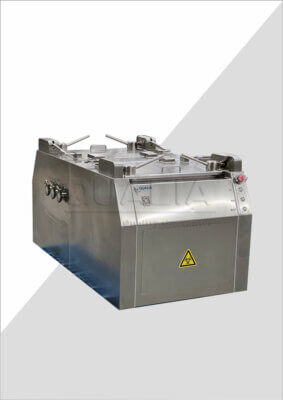
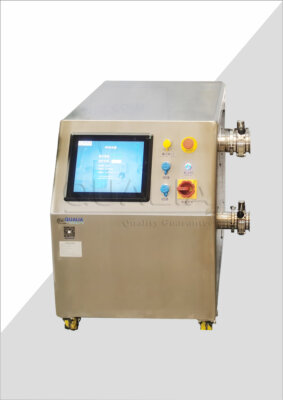
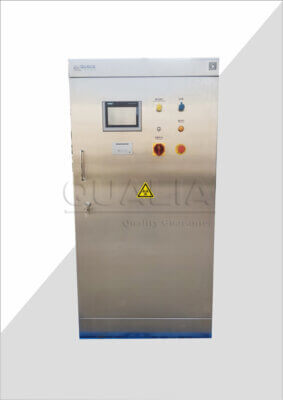
Regulatory responsibility is the fourth, and the RFQ response should state what regulatory responsibility the vendor accepts and what it excludes, because an equipment offer that meets applicable design standards is not the same as an unconditional regulatory commitment covering the buyer’s own facility operation. ISO 14644-4 frames cleanroom design, construction, start-up, and verification as a life-cycle matter with its own requirement and maintenance checklists, but it does not prescribe a specific technology or a specific contractual delivery method, which is precisely why the commercial response needs to state, rather than imply, where the vendor’s regulatory scope ends. A checklist built around documents, utilities, controls, and validation support, structured the way a technical procurement team would organize an RFQ file, is one way to confirm that each of these four areas has actually been addressed in the vendor’s response before a decision is made on comparative price alone. Where QUALIA is asked to respond to a fixed VHP generator RFQ, the project information the buyer supplies against this structure, treatment zones, scenarios, representative load, interface conditions, and deliverable allocation, is what enters the configuration and quotation review for the relevant generator, such as the Generator nadtlenku wodoru VHP typu I, with final suitability confirmed against the specific project.
Często zadawane pytania
Q: Can we issue the RFQ before every room condition and operating scenario is final?
A: Yes, if the unresolved items are stated as bounded alternatives rather than left implicit. Identify each treatment zone, the scenarios under consideration, and the representative load, then require each vendor to show which alternative its capacity and cycle assumptions address.
Q: How should we compare bids when suppliers divide the project scope differently?
A: Recast each offer into the same responsibility breakdown: equipment supply, utilities and physical interfaces, site modifications, validation execution, and regulatory responsibility. Record inclusions, exclusions, and buyer-supplied items for each area before comparing commercial totals.
Q: What controls information should the buyer settle during the RFQ stage?
A: Define the required control and communication interfaces, the site systems they must connect with, operator and service access needs, and the failure conditions that require an agreed response. Ask each vendor to identify what is included, what depends on the site, and which safe-failure details still need project confirmation.
Q: Should a vendor be asked to guarantee one universal VHP cycle in its bid?
A: No. Require the vendor to state cycle-development responsibility, capacity and cycle assumptions, material-compatibility evidence, the aeration approach, and the limitations attached to each. This shows what can be evaluated at bid stage and what must be confirmed for the actual room, load, and configuration.
Q: Can successful factory testing replace site testing or IQ and OQ activities?
A: Do not assume that it can. Vendor factory acceptance testing may support the qualification case when justified, but site acceptance testing remains distinct, and installation qualification and operational qualification require their own defined inputs and evidence. Assign support and acceptance ownership in the RFQ, with approved protocols, predefined criteria, and documented deviations.