
A pressure cascade that holds steady during an unoccupied commissioning walk-through can collapse below safe thresholds within seconds of a routine door cycle. That gap — between what a static reading confirms and what the system actually delivers during live use — is where containment failures are seeded and where FDA 483 observations are later written. The practical consequence is not abstract: a lab that accepts the cascade on paper and defers dynamic testing often discovers the deficiency at occupancy, when rework involves revalidating HVAC interlocks, re-tuning PLC control loops, and potentially redesigning sensor placement under biosafety constraints. What follows gives you the criteria, failure patterns, and test conditions you need to judge whether a pressure cascade is genuinely defensible or only compliant under conditions that never occur in operation.
Differential pressure evidence beyond static readings
Static differential pressure readings are necessary, but they are not sufficient evidence that a cascade is intact. A sensor that has drifted beyond ±1 Pa — the accuracy figure specified by WHO LBM 4th Edition for BSL-3 differential pressure monitoring — can continue to report plausible values while the actual differential has degraded or reversed. Because pressure transmitters are often treated as passive infrastructure rather than measurement instruments requiring periodic traceability verification, calibration gaps of many years are a realistic operational pattern, not a hypothetical edge case.
The specific calibration problem worth auditing is not merely whether a certificate exists, but whether it includes as-found and as-left data, environmental compensation, and uncertainty expressed at 95% confidence. Fewer than one in five procurement teams perform this audit at acceptance. Without it, there is no defensible basis to trust that the pressure readings used during commissioning reflect actual zone differentials. An uncertainty statement that lacks environmental compensation, for example, may underperform in the temperature and humidity range of an operating BSL-3 suite even if it passed under laboratory bench conditions.
FDA 483 observations have repeatedly cited failure to monitor pressure differentials during actual production, not just during commissioning checks. The pattern is predictable: periodic or static-only monitoring records a snapshot during a low-activity window, misses transient losses of containment during transfers or door cycles, and allows contamination ingress that is only discovered downstream. Accepting a cascade without dynamic recording leaves that risk unaddressed regardless of how clean the static numbers look.
Each of the following risk factors can make static evidence indefensible at audit.
| Czynnik ryzyka | Why It Undermines Static Evidence | What to Confirm or Clarify |
|---|---|---|
| 10-year calibration gap with a failed sensor | Undetected sensor failure makes static readings false; containment verification is invalid. | Calibration certificates must include as-found/as-left data, environmental compensation, and uncertainty at 95% confidence. |
| Lack of calibration traceability audit | Fewer than 1 in 5 procurement teams audit ISO 17025 traceability and uncertainty statements, allowing invalid pressure data to be used for acceptance. | Audit calibration traceability to ISO 17025 with explicit uncertainty before acceptance. |
| Static-only or periodic monitoring | FDA 483 observations show failure to monitor pressure differentials during actual production; transient containment losses are missed. | Require dynamic monitoring with recording during normal operation, not solely periodic checks. |
| Sensor accuracy outside ±1 Pa | Without ±1 Pa accuracy per WHO LBM 4th Ed, cascade deviations may not be detected reliably. | Verify differential pressure sensor accuracy meets ±1 Pa and that calibration supports this performance. |
The practical audit step is to require calibration certificates with full traceability to ISO 17025 before acceptance, verify that sensor accuracy is confirmed at ±1 Pa under operating environmental conditions, and confirm that dynamic monitoring is in place — not periodic spot checks.
Directional airflow during door events
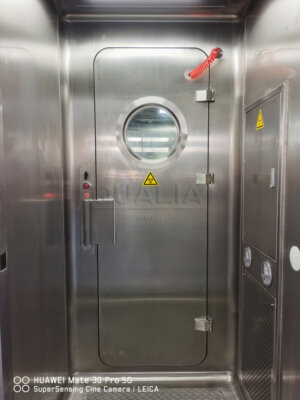
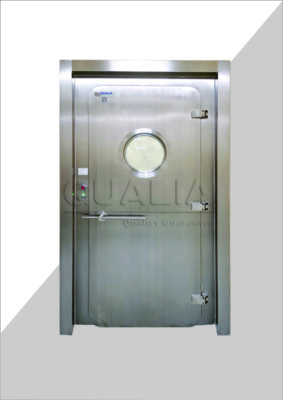
The direction of airflow across a BSL-3 boundary during a door event is a more demanding test of cascade integrity than any static reading. When a pneumatic seal door inflates or deflates, the brief pressure disruption created by the moving door mechanism and the accompanying change in room leakage can drive the differential temporarily below the threshold required to maintain inward airflow direction. A 5-second inflation or deflation cycle is enough for a poorly tuned system to drop below 15 Pa — the point at which directional control becomes unreliable and outward migration of contaminated air becomes possible.
The variables that determine whether the cascade holds during a door event are interconnected in a way that cannot be validated in isolation. PID loop tuning must be matched to the specific HVAC response time for that zone volume and supply configuration. Sensor placement must capture the actual zone differential, not a dead-zone reading that lags the real pressure transient by several seconds. If either of these is misaligned, the control system may not register a cascade collapse until after the window for corrective action has passed.
Acceptance testing should record transient pressure during at least 10 consecutive door cycles at a logging interval of one second or less. This is a testing design criterion that makes acceptance defensible, not a minimum codified by a single standard — but it reflects the logic that a cascade which passes under a single slow-logged door event may fail consistently under operational cadence. Without sub-second recording, a 3-second pressure dip below threshold is invisible to a system logging at 10-second intervals, and the acceptance record will show clean data that does not reflect what happened. For guidance on how HVAC design choices upstream of commissioning affect this dynamic behavior, the design logic is covered in detail in Jak projektować podciśnieniowe systemy kaskadowe dla laboratoryjnych systemów HVAC BSL-3?.
The downstream consequence of skipping this test is not theoretical. A lab that passes acceptance on static data and a single door cycle check will likely face the transient collapse during first occupancy, when actual door use frequency and personnel movement create conditions the commissioning protocol never simulated.
Alarm response and recovery after disturbance
Alarm response criteria define what the system does when the cascade is disturbed, not just whether the disturbance is detected. The difference matters because a system can have correct alarm thresholds and still fail containment if the detection-to-response latency is too long or if the default behavior on power loss is open rather than sealed.
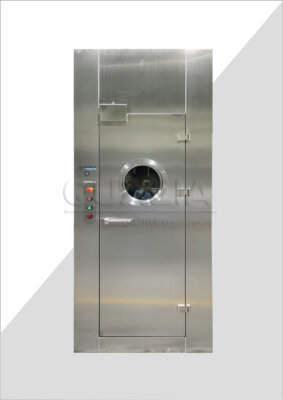
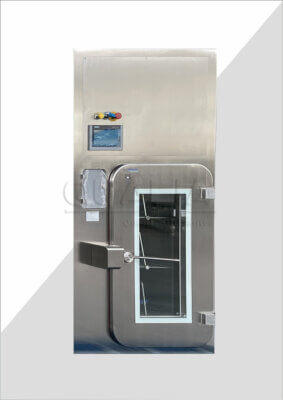
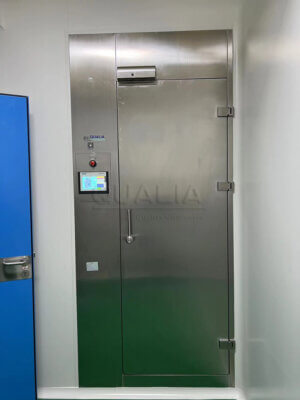
Dla systemy drzwi z uszczelnieniem pneumatycznym, the pneumatic supply fault alarm threshold is a design parameter that directly determines how quickly a developing seal failure is flagged. Setting the alarm at less than 0.15 MPa with PLC alarm log timestamping ensures that a supply drop is captured before door seal integrity is compromised — but only if the alarm is actively connected to a response protocol, not just logged passively. The more fundamental requirement is that the control system operate in a fail-secure default mode: on power loss, door locks must engage and the seal must inflate, maintaining containment by default rather than defaulting to an open or unpowered state.
The control system’s speed under dynamic disturbance is a separate and often underestimated criterion. A PLC PID loop with a response time of 50 milliseconds or less can begin corrective action before a transient cascade collapse propagates across the zone boundary. Generic automation platforms with response latencies of 150 to 200 milliseconds cannot. The difference is not purely theoretical — during a door cycle in a zone with tight pressure margins, a 150-millisecond delay in PID response may allow the cascade to collapse and partially recover without the alarm log ever capturing the event, because the threshold exceedance duration was too short to meet the alarm filter time. That is a failure that looks like normal operation in the data.
Each of the four parameters below needs to be confirmed under dynamic test conditions, not assumed from specification documents.
| Parametr | Requirement/Threshold | Risk if Not Met / What to Verify |
|---|---|---|
| Pneumatic supply fault alarm | Set at <0.15 MPa with PLC alarm log timestamping. | Undetected supply failure can compromise door seals; confirm alarm threshold and timestamped logging are active. |
| Fail-secure default mode on power loss | Door locks engage and seal inflates to maintain containment. | Without fail-secure behavior, power loss immediately breaks containment; verify the default mode is configured and tested. |
| PLC PID loop response time | ≤50 ms; generic platforms with 150–200 ms latency cannot recover cascade fast enough during door cycling. | Slow response allows transient pressure collapse and potential contamination migration; test response time under dynamic conditions. |
| External fault: building fire alarm shutdown | Fire alarm system can shut down BSL-3 HVAC and exhaust when tripped, creating a containment failure mode. | Acceptance criteria must address this external fault; clarify what happens to containment and whether backup or isolation measures exist. |
One failure mode that belongs in acceptance criteria but is often handled only procedurally is the building fire alarm HVAC shutdown. When a fire alarm trips, BSL-3 supply and exhaust may be shut down by the building automation system, collapsing the pressure cascade entirely. Acceptance criteria should explicitly define what happens to containment during this event and whether backup isolation, damper sequences, or procedural controls exist to limit exposure duration. Treating this as a future operational consideration rather than an acceptance-stage question leaves a critical gap in the documented containment case.
HVAC, leakage and procedure dependencies
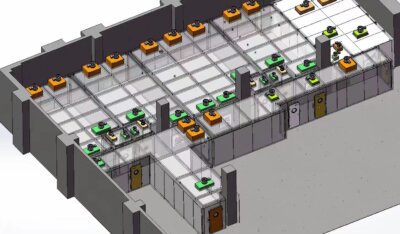
The pressure cascade does not operate as a standalone system. Its stability depends on the coordinated behavior of HVAC controls, room envelope leakage characteristics, door sequencing, and air change rate delivery — and each of these can independently undermine the cascade without triggering an obvious failure signal.
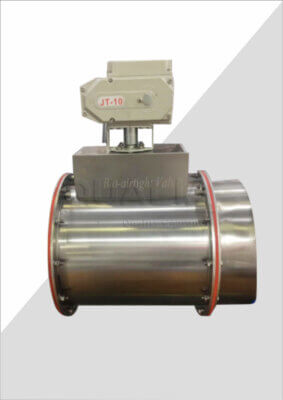
The most deceptive failure mode in this category is a venturi valve control system that is not actively interconnected to the HVAC loop. Valves that hold a fixed position can maintain pressure differentials in unoccupied mode for years, generating clean commissioning and routine monitoring data while the underlying control architecture has no ability to respond to dynamic load changes. The problem surfaces only when occupancy-related disturbances — doors cycling, personnel movement, equipment operation — create the first real demand for active pressure modulation. At that point, the control system that appeared functional is revealed as static, and the cascade collapses under conditions it was never actually designed to handle.
For a cascade to be established and maintained, enough airflow must traverse the boundary between adjacent zones to create a stable directional differential. A target of at least 100 cfm moving from the less contaminated to the more contaminated space around doorways is a planning criterion for cascade establishment, not a regulatory floor — but it reflects the minimum condition under which a differential can be reliably maintained under dynamic perturbation. Air change rates in the 30 to 50 ACH range appropriate for ISO 7 spaces also affect pressure stability; if ACH design falls below this range, pressure fluctuations during peak occupancy can undermine cascade control even when the HVAC interlock is correctly configured.
The validation test that is most often deferred is the coordinated commissioning of HVAC interlocks under repeated door cycling — confirming that the interlock maintains ≥15 Pa across the boundary during repeated door events, not just in steady state.
| Dependency or Risk Area | Hidden Failure Mode | What to Validate or Clarify |
|---|---|---|
| Airflow traversing around doors | Without at least 100 cfm moving from least to most contaminated spaces, stable pressure differential cannot be established. | Confirm ≥100 cfm traversing doorways to establish the cascade. |
| Venturi valve controls not interconnected to HVAC | Valves can remain stuck in position for years while still maintaining pressure in unoccupied mode, masking improper control architecture. | Validate that venturi valve controls are actively interconnected to the HVAC system and respond correctly to load changes, not just static unoccupied conditions. |
| HVAC interlock validation during door cycling | Door events can collapse the cascade below 15 Pa if HVAC and door controls are not coordinated. | Commission and validate the HVAC-door interlock to maintain ≥15 Pa during repeated door cycles. |
| Air change rate (ACH) design | Inadequate ACH (below 30–50 ACH for ISO 7) can cause pressure fluctuations that undermine cascade control. | Verify ACH design meets the 30–50 range and assess impact on cascade stability during both occupied and unoccupied modes. |
The ACH and cascade stability dependency is also relevant to facility planning stages that occur before detailed commissioning design begins. The relationship between supply volume, room pressurization, and dynamic response is discussed in the context of BSL HVAC system engineering in Projekt systemu HVAC BSL 2/3/4: Kaskada ciśnień, współczynniki ACH i wymagania inżynieryjne dotyczące kierunkowego przepływu powietrza.
Test conditions that make pressure cascade defensible
Defensible acceptance testing requires conditions that match what the cascade will experience during operation, not conditions optimized for a clean pass. The two operating modes that must both be tested — occupied and unoccupied — can produce materially different cascade behavior because HVAC control setpoints, occupancy loads, and door use patterns differ between them. A cascade tested only in unoccupied mode may hold 20 Pa across every boundary and still collapse to 8 Pa during a morning entry sequence that no commissioning protocol ever simulated.
Sensor placement is a test condition, not just a hardware decision. Sensors placed in pressure dead zones — corners with low air velocity, areas behind large equipment, or locations that average across two distinct flow regions — can consistently report values that do not reflect the actual boundary differential. When transient recording is the primary evidence for cascade integrity, a sensor that lags the real pressure by even two to three seconds can allow a cascade collapse to go undocumented. Placement must be validated so that the sensor captures the controlling differential at the zone boundary within one PLC scan cycle of the actual event.
Pressure decay testing using a method like ASTM E779 provides a quantitative basis for characterizing door and envelope leakage under both static and transient conditions. It is not a governing BSL-3 compliance standard, but it gives a repeatable, measurable method to understand how much leakage exists in the room envelope — information that directly affects how much HVAC capacity and control authority is available to maintain the cascade during disturbances. Testing that does not include a leakage characterization step cannot distinguish between a cascade that holds because of well-controlled HVAC and one that holds only because room leakage happens to be favorable under the specific test conditions.
The sequence in which tests are performed also matters. A protocol that tests static differential pressure first, then door cycling separately, and then alarm response in isolation may pass each component while missing a combined failure mode that only appears when all three occur in sequence — which is how a routine entry with an alarm event during door cycling actually unfolds in operation. Test design should include at least one combined-state scenario that reflects operational reality.
Acceptance threshold for cascade stability
The pressure differential thresholds used for acceptance are not a single universal figure, and selecting the wrong one — or applying one threshold without accounting for transient behavior — produces a documented acceptance that does not cover the actual risk.
ISO 14644-1:2015 positions ≥15 Pa as the reference threshold for adjacent zone differentials in cleanroom and controlled environments. FDA guidance recommends 10 to 15 Pa between rooms of different classification. EU GMP Annex 1 sets a minimum of 10 Pa. These are not interchangeable: a facility subject to EU GMP Annex 1 oversight that selects ≥15 Pa as its acceptance threshold is conservative, while a facility targeting FDA compliance that accepts 10 Pa is operating at the lower boundary of the recommended range. The jurisdictional alignment is a review check that must be confirmed before acceptance criteria are finalized, not a post-acceptance adjustment.
The more critical analytical point is that passing a static pressure withstand test — even one conducted at ≥2500 Pa for door systems — does not demonstrate that the cascade will hold under transient door cycling conditions. A door assembly that passes a 2500 Pa static hold can still allow the zone differential to drop to 6 Pa during a 5-second cycling event if HVAC response and PID tuning are inadequate. The static test proves structural and seal integrity; it says nothing about the dynamic pressure control behavior that determines whether containment is maintained during actual use. Treating a static pass as sufficient for cascade acceptance is the specific mistake that dynamic commissioning protocols are designed to prevent.
Calibration interval for the differential pressure transmitters used in acceptance testing is a maintenance and review check with direct implications for data defensibility. A fixed 12-month calibration cycle may allow drift beyond acceptable limits for transmitters used in continuous monitoring applications. A 6-month interval justified by drift analysis is a more defensible practice for BSL-3 differential pressure transmitters — but the defensibility comes from the drift data, not from the interval itself. Without drift characterization, any fixed interval is arbitrary.
| Kryterium | Threshold / Standard | Key Clarification for Defensible Acceptance |
|---|---|---|
| Adjacent zone pressure differential | ≥15 Pa (ISO 14644-1:2015); 10–15 Pa (FDA); ≥10 Pa (EU GMP Annex 1). | Select the applicable jurisdictional threshold and validate the cascade under all operating modes, not just static conditions. |
| Door static pressure withstand | ≥2500 Pa static test for door systems. | Passing a static test does not guarantee containment during door cycling; transient cascade collapse is the actual vulnerability. |
| Transmitter calibration interval | Based on drift analysis; typically 6 months for continuous monitoring, rather than a fixed 12-month cycle. | Justify the interval with drift data to avoid measurement drift that invalidates pressure readings used for acceptance. |
The threshold selection, the transient behavior under door cycling, and the calibration interval together constitute the acceptance evidence base. Any one of the three left unaddressed creates a gap that can surface during audit as a compliance finding or during occupancy as a containment event.
Accepting a BSL-3 pressure cascade requires confirming three things that static commissioning data cannot confirm on its own: that the cascade direction holds during door events under dynamic HVAC response, that alarm and fail-secure behavior functions correctly under fault conditions, and that the sensors used to record all of this are traceable, accurately placed, and logging at intervals short enough to capture transient exceedances. The combination of those requirements — tested under both occupied and unoccupied modes, with leakage characterized and HVAC interlocks validated under repeated door cycling — is what separates a defensible acceptance record from one that will not survive a dynamic audit.
Before finalizing acceptance criteria, confirm which jurisdictional pressure threshold applies and document the justification, verify that PLC response time meets the design target under dynamic test conditions rather than steady state, and establish that the calibration basis for every differential pressure transmitter includes traceability, uncertainty at 95% confidence, and a recalibration interval supported by drift data. Those are the specific items most likely to be missing from a commissioning package that otherwise looks complete.
Często zadawane pytania
Q: What happens to the pressure cascade when a building fire alarm triggers an HVAC shutdown — and does that need to be resolved before acceptance?
A: Yes, it must be addressed at the acceptance stage, not deferred to operations. A fire alarm that shuts down BSL-3 supply and exhaust collapses the pressure cascade entirely, and acceptance criteria should define what containment state exists during that event, how long exposure can last, and whether backup damper sequences or isolation controls are in place to limit the breach window. Treating this as a future procedural matter leaves the containment case undocumented for a fault mode that will occur.
Q: Can a BSL-3 pressure cascade be accepted if the HVAC commissioning and door control commissioning were completed by different teams on different schedules?
A: Not without a coordinated re-validation that tests both systems together under dynamic door cycling. The cascade stability depends on the HVAC interlock responding in time to door-induced pressure disturbances, and that response can only be confirmed when both control systems are operating simultaneously under the same test conditions. Separate commissioning records for each subsystem do not demonstrate that the integrated behavior meets the ≥15 Pa threshold during repeated door events — which is the actual acceptance condition.
Q: If static pressure readings and calibration certificates both look correct, what is the most likely remaining reason a cascade acceptance record would not survive a dynamic audit?
A: The most likely gap is that transient pressure behavior during door cycling was never logged at sufficient resolution. A system that holds acceptable static differentials and uses calibrated sensors can still allow the cascade to drop below threshold during a 3-to-5-second door event — a collapse that is invisible to any logging interval longer than one second. If the acceptance protocol did not record at least 10 consecutive door cycles at ≤1-second intervals, the static data does not cover the failure mode that auditors and occupancy conditions will expose.
Q: Is a ≥15 Pa acceptance threshold always the right choice, or does it depend on the specific regulatory context the facility operates under?
A: It depends on jurisdiction, and selecting the wrong threshold is a compliance risk in both directions. ISO 14644-1:2015 references ≥15 Pa, FDA guidance recommends 10–15 Pa, and EU GMP Annex 1 sets a minimum of 10 Pa. A facility under EU GMP oversight using ≥15 Pa is conservative; one targeting FDA compliance accepting exactly 10 Pa is at the lower boundary of the recommended range. The jurisdictional alignment must be confirmed and documented before acceptance criteria are finalized, because a post-acceptance threshold adjustment requires re-documenting the entire evidence basis.
Q: How should a project team decide whether existing HVAC infrastructure is adequate for a BSL-3 pressure cascade, or whether redesign is needed before acceptance testing begins?
A: The decision point is whether the HVAC control architecture can actively respond to dynamic load changes, not just hold pressure under static conditions. If venturi valves or other terminal devices are not actively interconnected to the HVAC control loop, they may sustain a differential in unoccupied mode while being structurally unable to respond to door cycling or occupancy loads. Testing under unoccupied conditions alone will not reveal this. Before committing to an acceptance protocol, confirm that the HVAC interlock is validated under repeated door cycling in occupied mode and that airflow traversing zone boundaries meets the 100 cfm planning threshold — if either condition is unmet, acceptance testing will likely produce failures that require HVAC rework under biosafety constraints.