Często zadawane pytania
Q: What happens if the project site cannot support single-pass HVAC with HEPA-filtered exhaust — does the rest of the equipment package still apply?
A: The package cannot be commissioned without compliant airflow infrastructure, so scope must be resolved before procurement begins. Single-pass, directionally controlled, HEPA-filtered exhaust is a regulatory boundary condition, not an optional upgrade. If the existing mechanical plant cannot support it, the HVAC system must be included in the equipment package scope or handled as a parallel civil works item with clearly documented interfaces — otherwise biosafety review will flag the gap and force a late, budget-breaking correction.
Q: After a packaged proposal is submitted and accepted, what is the immediate next step before equipment fabrication begins?
A: The buyer must formally confirm scope exclusions, utility specifications, acceptance test criteria, and required document deliverables in writing before fabrication is released. Without that confirmation, a manufacturer cannot lock in interface dimensions, pressure differential setpoints, or validation protocols. Verbal alignment between public-health stakeholders and technical buyers is not sufficient — undocumented exclusions are the most common cause of late change orders once manufacturing is underway.
Q: At what project stage does a packaged proposal stop being the right approach and custom component sourcing become more appropriate?
A: A packaged approach loses its advantage when the facility design requires non-standard containment boundaries, unusual workflow sequences, or heavily customised utility interfaces that a standard package cannot accommodate without significant modification. At that threshold, custom sourcing gives the owner tighter control over individual specifications, but it shifts full engineering coordination responsibility to the owner’s team — which is only viable when dedicated in-house or consultant engineering oversight is already resourced and budgeted.
Q: Is a pass-through autoclave always sufficient for waste decontamination, or are there conditions where an effluent decontamination system is also required?
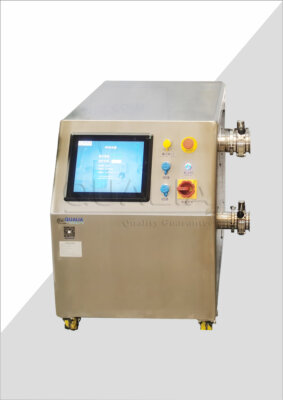
A: A pass-through autoclave covers solid and regulated dry waste, but it does not address liquid waste streams — which require a dedicated effluent decontamination system when drain lines exit the containment boundary. If the BSL-3 facility generates liquid infectious waste at any point in the workflow, an EDS must be included in the package. Omitting it is one of the documented failure modes that triggers commissioning rejection, because liquid effluent escaping the containment boundary is a direct violation of the containment requirement.
Q: How should a project team weigh the approval-speed benefit of a packaged proposal against the risk that the package includes equipment the public-health authority ultimately does not accept?
A: The risk is manageable if the package is built against WHO Laboratory Biosafety Manual 4th Edition requirements and all document deliverables — HEPA filter certification, autoclave validation records, and pressure differential test reports — are specified as contractual inclusions from the outset. Approval speed is only a genuine advantage when the package is pre-aligned with the authority’s review checklist; a package that omits required commissioning documentation creates longer delays than phased custom sourcing would have, because the entire submission must be revised rather than a single component.
Powiązane treści:
- BSL-3 Laboratory Guide: Containment Design, Equipment, Validation and Supplier Questions
- Skrzynka bezpieczeństwa biologicznego: Rodzaje i przewodnik wyboru dla zastosowań BSL
- Custom cRABS: Rozwiązania dostosowane do potrzeb branży farmaceutycznej
- Niestandardowe izolatory do testów sterylności dla farmaceutycznej kontroli jakości
- Zarządzanie odpadami cRABS: Bezpieczna utylizacja w sterylnej farmacji
- Zarządzanie odpadami w izolatorach bezpieczeństwa biologicznego
- Skrzynka przepustowa do pomieszczeń czystych: Wymagania dotyczące wyboru i integracji
- Pass Box w branży farmaceutycznej: wymagania GMP i przewodnik konfiguracji
- Dynamic Pass Box w branży farmaceutycznej: Zgodność z HEPA dla stref GMP