

The choice between adherent and suspension cell culture platforms is the foundational strategic decision in viral vector manufacturing. This early technical decision fundamentally dictates capital expenditure, operational complexity, and long-term commercial viability, locking in a specific technology ecosystem. For process engineers and facility planners, the downstream implications of this initial choice cascade through every subsequent equipment and design decision.
Industry momentum is consolidating around suspension platforms and stable producer cell lines to improve consistency, yield, and cost for high-volume commercial production. This shift reflects the need for scalable, closed-system processes that can meet the demands of late-stage clinical trials and commercial supply. Understanding the equipment landscape and its integration into a compliant facility is no longer a secondary concern but a primary determinant of program success and speed to market.
Core Differences: Adherent vs. Suspension Production Systems
Defining the Platforms
Adherent systems require cells to attach to a surface for growth, traditionally using roller bottles or multi-layer factories. These systems provide a high surface area for cell growth and can simplify downstream processing for intracellular products. However, they often involve complex seed trains and serum use, creating operational bottlenecks. Suspension systems utilize cells that grow freely in culture media within stirred-tank bioreactors. This approach offers superior scalability and homogeneous culture conditions but requires suspension-adapted cell lines like HEK293.
Application in Viral Vector Production
The application dictates the optimal platform. For adenovirus production, both adherent and suspension systems are employed, though large-scale commercial manufacturing increasingly favors suspension for its volumetric efficiency. For Adeno-Associated Virus (AAV) production, suspension culture in single-use bioreactors is becoming the industry standard, especially when paired with transient transfection or baculovirus infection of insect cells. The shift aims to achieve higher titers and more consistent product quality through advanced process control.
Impact on Development Pathway
This early choice creates divergent development paths with significant long-term impact. Adherent processes may offer a faster route to proof-of-concept for early R&D but face steep scalability challenges. Suspension processes require more upfront development to adapt cell lines and optimize transfection but provide a clearer, more linear scale-up path to commercial volumes. In my experience, companies that delay this strategic decision often incur significant costs later when redeveloping processes for scale.
| Platform | Primary Equipment | Key Operational Characteristic |
|---|---|---|
| Adherent | Roller bottles, fixed-bed bioreactors | High surface area for growth |
| Adherent | Multi-layer factories | Complex seed train |
| Suspension | Stirred-tank bioreactors (SUBs) | Superior scalability |
| Suspension | Stirred-tank bioreactors | Homogeneous culture conditions |
| Suspension | SUBs with suspension-adapted cells | Contrôle avancé des processus |
Source: Technical documentation and industry specifications.
Key Equipment for Upstream and Downstream Processing
Upstream Processing Equipment
Upstream processing centers on bioreactors—either fixed-bed for adherent culture or stirred-tank for suspension. These are integrated with control systems to maintain critical parameters like pH, dissolved oxygen, and temperature. Supporting equipment includes media preparation tanks, inoculum bioreactors for cell expansion, and systems for viral production via transient transfection or infection. The design of these systems must account for shear sensitivity, especially for delicate AAV vectors, to prevent damage during agitation and sparging.
Downstream Processing Equipment
Downstream processing purifies the viral harvest from the bioreactor. The train typically begins with depth filtration and tangential flow filtration for clarification and concentration. Chromatography systems, including affinity and ion-exchange columns, are then used for high-purity separation. The selection of resins and membrane materials is critical for achieving the required purity profile while maintaining viral vector integrity and recovery yield.
The Critical Integration
A significant, often overlooked detail is that upstream process design directly dictates downstream complexity and cost. Decisions on cell harvest viability, lysis reagents, and residual transfection agents or baculovirus debris significantly impact purification challenges. Therefore, process development must be fully integrated from the start. Using scale-down models to optimize the entire workflow for cost of goods, rather than focusing solely on maximizing upstream titers, is essential for a commercially viable process.
Facility Design: Cleanroom Classifications and Biosafety Levels
Biosafety and Containment Requirements
Viral vector manufacturing requires Biosafety Level 2 containment, which impacts fundamental facility architecture. HVAC systems must be designed with negative pressure in production suites and HEPA-filtered exhaust to prevent environmental release. This design is a critical path item requiring extensive lead time. Building a compliant facility from greenfield status can take years, making modular cleanroom solutions and detailed early planning with engineering firms essential to avoid clinical timeline delays.
Cleanroom Classification Standards
Cleanroom classification is strictly dictated by the activity performed within each area. These classifications, defined by standards like ISO 14644-1: Cleanrooms and associated controlled environments, govern the allowable particulate count. The facility layout must enforce unidirectional flow of personnel and materials, moving from lower to higher cleanliness grades, to prevent contamination of the product.
Zoning and Operational Flow
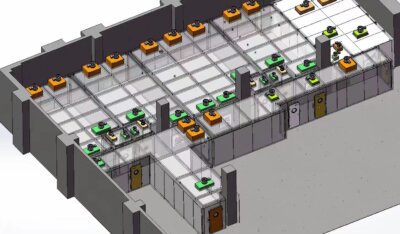
The facility is divided into segregated suites for USP, DSP, and fill-finish to prevent cross-contamination. Support areas for equipment preparation and utilities are designated at lower grades. The following table outlines the typical classifications for a viral vector facility. A common mistake is underestimating the space and validation requirements for ancillary areas like buffer preparation, which must also meet stringent controls.
| Area / Activity | Required Cleanroom Grade | ISO Equivalent |
|---|---|---|
| Cell culture, initial DSP | Grade C | ISO 7 |
| Aseptic core, fill-finish | Grade A (hoods/isolators) | ISO 5 |
| Background for Grade A | Note B | ISO 5 |
| Support areas | Grade D | ISO 8 |
| Overall Facility Requirement | Biosafety Level 2 (BSL-2) | Negative pressure, HEPA exhaust |
Source: ISO 14644-1: Cleanrooms and associated controlled environments. This standard defines the particle concentration limits for each ISO class (e.g., ISO 5, 7, 8), which directly correspond to the Grade A, C, and D classifications used in GMP pharmaceutical manufacturing, including for viral vector production.
Single-Use vs. Stainless Steel: A Total Cost of Ownership Analysis
Evaluating Upfront and Operational Costs
The industry debate often centers on upfront capital, where single-use technologies clearly have an advantage by eliminating the need for costly stainless steel vessels and complex clean-in-place systems. This reduces initial investment and accelerates facility fit-out. However, a true analysis must extend to operational consumable costs, which accumulate with each batch. For high-volume commercial production, the recurring cost of single-use bioreactor bags, tubing assemblies, and filters can become a significant portion of the cost of goods.
Assessing Risk and Resilience
Beyond direct costs, risk assessment is paramount. Single-use systems reduce cross-contamination risk and minimize cleaning validation burdens. Yet, they introduce a critical dependency on the polymer supply chain. Widespread SUT adoption has created systemic fragility; a shortage of specific resins or a production delay at a key supplier can halt operations for months. This vulnerability necessitates a proactive procurement strategy, turning supply chain management into a core operational competency.
The Strategic Decision Framework
The decision is not binary but strategic. A hybrid approach is often optimal: using single-use for flexibility in clinical manufacturing and stainless steel for dedicated, high-volume commercial production lines. The following TCO comparison highlights the trade-offs. Manufacturers must model their specific production volumes and product lifecycle to determine the break-even point.
| Facteur de coût | Single-Use Technology (SUT) | Acier inoxydable |
|---|---|---|
| Upfront Capital | Plus bas | Haut |
| Risque de contamination croisée | Réduit | Plus élevé |
| Validation du nettoyage | Minime | Très large |
| Coût opérationnel | High (consumables) | Plus bas |
| Supply Chain Risk | Critical vulnerability | Lower dependency |
Remarque : SUT risk includes polymer resin shortages and extended lead times.
Source: Technical documentation and industry specifications.
Critical Process Parameters and Analytical Testing Requirements
Controlling the Production Process
Robust manufacturing hinges on identifying and controlling critical process parameters. For viral vector production in bioreactors, these CPPs typically include pH, dissolved oxygen, temperature, and agitation rate. Precise control of these parameters is essential for maintaining cell health, optimizing viral replication or vector packaging, and ensuring consistent product quality. Agitation must be carefully balanced to maintain homogeneity without generating shear forces that damage cells or viral particles.
Comprehensive Product Characterization
A comprehensive analytical testing strategy is required for in-process monitoring and final product release. This strategy employs a suite of orthogonal methods. qPCR or dPCR quantifies the genomic titer, while ELISA measures the total capsid titer. Cell-based potency assays determine functional activity, and analytical techniques like HPLC or capillary electrophoresis assess purity and identify product-related impurities. Establishing validated, phase-appropriate methods early is critical for generating the data needed for regulatory filings.
The Analytics-Scale Mismatch
A significant challenge is that process analytics often lag behind bioreactor scale-up. The rapid adoption of large-scale single-use systems has outpaced the development of integrated, single-use sensors. This forces manufacturers to use workarounds like aseptically inserting probes, which introduces sterility risks and potential sampling errors. This sensor gap limits the implementation of real-time control and advanced Process Analytical Technology, constraining yield optimization at commercial scale.
| Catégorie | Parameter / Test | Method / Challenge |
|---|---|---|
| Critical Process Parameter (CPP) | pH, Dissolved Oxygen (DO) | Bioreactor integrated control |
| Critical Process Parameter (CPP) | Agitation | Shear sensitivity management |
| Genomic Titer Test | Vector genome quantification | qPCR or dPCR |
| Capsid Titer Test | Total capsid measurement | ELISA |
| Potency Assay | Functional activity | Cell-based assays |
| Process Limitation | Contrôle en temps réel | Sensor gap in large-scale SUBs |
Source: Technical documentation and industry specifications.
Navigating Scalability Challenges from R&D to Commercial Scale
The Scale-Up Pathway
Scalability from small-scale process development to commercial manufacturing is a primary engineering challenge. It involves moving from adherent flatware or small single-use bioreactors (e.g., 1-50L) to large-scale fixed-bed or suspension bioreactors that can reach 2,000 liters. This is not a simple linear multiplication. Factors like mixing time, oxygen transfer rate, and pH gradient control change non-linearly with scale, requiring careful process characterization.
Tools for De-risking Scale-Up
Scale-down models are essential tools for de-risking this transition. These miniature systems mimic the conditions of the large-scale bioreactor and are used with Design of Experiments methodologies to identify the CPPs and their acceptable ranges before tech transfer. The goal is to develop a process that is robust and forgiving to minor scale-related variations, ensuring the product’s critical quality attributes are maintained.
The Strategic Partnering Imperative
For many organizations, especially emerging biotechs, the capital expenditure and specialized expertise required for scale-up are prohibitive. Partnering with a Contract Development and Manufacturing Organization is a strategic de-risking mechanism. A CDMO provides essential process engineering expertise, pre-validated facilities, and regulatory experience. This partnership can accelerate timelines and validate program feasibility, allowing the biotech to focus on clinical development.
| Stade de développement | Typical Scale | Key Challenge / Strategy |
|---|---|---|
| R&D / Process Development | Small SUBs, flatware | Establishing CPPs via DoE |
| Pilot / Tech Transfer | Scale-down models | Seamless USP-DSP integration |
| Commercial Manufacturing | Up to 2,000L bioreactors | Managing shear sensitivity |
| Strategic De-risking | All scales | Partnering with a CDMO |
Source: Technical documentation and industry specifications.
Implementing a cGMP-Compliant Viral Vector Manufacturing Facility
Integrating Systems and Quality
Implementing a cGMP facility requires a holistic approach that integrates equipment, utilities, and rigorous quality systems from the ground up. The facility layout must enforce strict segregation of personnel and material flows across distinct functional areas: cell banking, upstream processing, downstream processing, and quality control. All utilities—Water-for-Injection, clean steam, and process gases—must be designed, installed, and qualified to meet pharmacopeial standards. Reliable cold chain storage, often at -80°C for viral vectors, is mandatory.
The Regulatory and Timeline Reality
All equipment and processes must be designed, qualified, and operated under cGMP guidelines from agencies like the FDA and EMA. This includes installation qualification, operational qualification, and performance qualification. The lengthy timeline for facility construction or retrofitting, often 24-36 months, underscores the value of strategic partnerships and modular approaches. Furthermore, pandemic-era regulatory flexibilities, such as parallel process review, are expected to hardwire into future standards.
Engaging Regulators Early
A critical best practice is to engage regulators early through pre-IND or scientific advice meetings. This allows companies to design phase-appropriate Chemistry, Manufacturing, and Controls plans that leverage streamlined pathways. Proactive engagement ensures the facility design and control strategy align with regulatory expectations from the outset, preventing costly redesigns or delays during later-stage reviews. The selection of raw materials, governed by guidelines like USP <1043> Ancillary materials for cell, gene, and tissue-engineered products, is a key topic for these discussions.
Selecting Equipment: A Decision Framework for Your Application
Aligning with Strategic Goals
Selecting equipment requires a decision framework that balances immediate technical needs with long-term strategic goals. The first step is to firmly align the platform choice with commercial objectives. A product destined for a large patient population with chronic dosing demands a highly scalable, cost-effective suspension process. A niche therapy for an ultra-rare disease might be viable with a more flexible, lower-capital adherent system.
Evaluating Technology and Integration
Next, evaluate single-use versus stainless steel based on a thorough TCO analysis that includes supply chain resilience. Ensure the selected equipment supports your specific production method, whether it’s transient transfection, baculovirus infection, or stable producer cell lines. Crucially, assess how upstream choices integrate with downstream needs; a high-titer process that generates difficult-to-remove impurities is not optimal.
Leveraging Innovation and Expertise
Consider the growing trend toward integrated, automated “factory-in-a-box” solutions that combine upstream and midstream processing to reduce footprint and manual handling. Finally, recognize that CDMOs are increasingly competing on deep, vertical specialization. When selecting a partner, prioritize those with targeted expertise in your specific vector type and platform, not just general capacity. For organizations building internal capability, partnering with a firm that provides integrated viral vector production platforms can streamline technology transfer and accelerate development.
The foundational decision between adherent and suspension systems dictates your capital roadmap and scalability ceiling. A rigorous TCO analysis for single-use systems must account for supply chain fragility, not just unit cost. True process robustness is built through integrated development, where upstream choices are validated against downstream purification challenges.
Need professional guidance to navigate these complex decisions for your gene therapy program? The experts at QUALIA specialize in designing and implementing scalable, cGMP-ready manufacturing strategies tailored to viral vector applications. Contact our team to discuss your specific platform and scalability requirements.
Questions fréquemment posées
Q: How do we decide between adherent and suspension cell culture systems for viral vector production?
A: Your choice between adherent and suspension systems dictates your entire manufacturing pathway and long-term commercial viability. Adherent platforms, like fixed-bed bioreactors, suit certain cell types but complicate scale-up. Suspension systems using stirred-tank bioreactors offer superior scalability and process control for high-volume production. This means facilities targeting commercial gene therapies should prioritize developing suspension-adapted cell lines, as this aligns with industry momentum for consistent, cost-effective manufacturing.
Q: What cleanroom classifications and biosafety levels are required for a viral vector facility?
A: Viral vector production requires a BSL-2 containment environment with cleanrooms classified by specific activity. Cell culture and initial downstream steps occur in a Grade C (ISO 7) space, while aseptic filling requires a Grade A (ISO 5) zone within a Grade B background. Support areas are Grade D (ISO 8). This design, governed by standards like ISO 14644-1, necessitates unidirectional flow and segregated suites. For projects where clinical timelines are critical, plan for extensive lead times and consider modular cleanroom solutions to accelerate facility readiness.
Q: What is the total cost of ownership analysis for single-use versus stainless steel equipment?
A: A true total cost of ownership analysis must extend beyond upfront capital to include operational consumable costs and, critically, supply chain risk. While single-use technologies reduce cleaning validation and cross-contamination, they create dependency on polymer resins, leading to material shortages. This means operations relying on single-use systems must implement multi-supplier sourcing and buffer stocks, turning procurement into a core strategic competency to mitigate program delays.
Q: How do we manage the gap in process analytics when scaling up in single-use bioreactors?
A: Scaling in single-use systems often outpaces the development of integrated, single-use sensors, creating a significant analytics gap. This forces workarounds like aseptically inserting probes, which introduces sterility risks and limits real-time process control. If your operation requires advanced Process Analytical Technology for yield optimization, plan for this constraint and invest in scale-down models to define critical parameters before tech transfer to commercial-scale equipment.
Q: What is a strategic approach to navigating scalability challenges from R&D to commercial production?
A: A primary strategy is to use scale-down models and Design of Experiments to identify critical process parameters before technology transfer to large-scale bioreactors. For many organizations, partnering with a specialized Contract Development and Manufacturing Organization (CDMO) is a key de-risking mechanism. This means emerging biotechs should select CDMO partners based on targeted platform expertise and vector-specific experience, not just general capacity, to access essential process engineering and regulatory support.
Q: Which standards are most critical for implementing a cGMP-compliant viral vector facility?
A: Implementation requires adherence to a hierarchy of standards. Cleanroom design and monitoring follow ISO 14644-1, while aseptic processing operations align with ISO 13408-1. Equipment fabrication must meet hygienic design criteria per the ASME BPE standard. This integrated approach means your facility design must enforce strict personnel and material flow segregation from the start, with all equipment qualified under cGMP from agencies like the FDA.
Q: How should we select and control raw materials like cell culture media for viral vector processes?
A: The selection and qualification of ancillary materials require a risk-based quality management approach. Guidelines such as USP <1043> Ancillary materials provide a framework for assessing raw materials like media and transfection reagents. This means your quality system must rigorously evaluate and control these materials, as their variability directly impacts upstream production titers and downstream purification challenges.
Contenu connexe :
- Production de vecteurs viraux : Protocoles de laboratoire BSL-3
- The Complete Vaccine Production Equipment Guide for Pharma & Biotech Facilities: 2025 GMP Compliance Edition
- Recherche BSL-4 : Percées dans le domaine de la fièvre hémorragique virale
- Systèmes de décontamination des effluents pour la recherche virale : Mesures de sécurité essentielles
- cRABS pour la thérapie cellulaire : Faire progresser le traitement stérile
- Révolutionner le traitement des eaux usées grâce aux bioréacteurs à membrane
- Quand passer à un cRABS ? 5 indicateurs clés
- Optimisation des procédés biotechnologiques grâce à la filtration in situ
- Étude de cas : 30% Augmentation du rendement grâce à la filtration in situ


 FR
FR  EN
EN  AR
AR  KO
KO  ID
ID  IT
IT  PT
PT  RU
RU  RO
RO  ES
ES  NL
NL  DE
DE  TR
TR  UK
UK  PL
PL