
Le remplacement du filtre dans un isolateur OEB5 est l'une des opérations de maintenance les plus risquées dans une installation de manipulation de composés puissants — non pas parce que la procédure est intrinsèquement complexe, mais parce que ses risques sont facilement mal évalués. Les équipes qui programment un remplacement de filtre BIBO en parallèle des tâches de maintenance préventive de routine omettent souvent les contrôles d’étanchéité et la vérification de la pression qui distinguent un remplacement contrôlé d’un rejet incontrôlé. Lorsqu’un filtre HEPA chargé se trouve du côté contaminé d’un boîtier et que la séquence des sacs n’a pas été confirmée, les conséquences en termes d’exposition ne se résument pas à une simple mention d’incident évité de justesse dans le registre : il s’agit d’une décontamination potentielle de la salle, d’un arrêt de production et d’une constatation d’audit qui remet en cause l’ensemble de la stratégie de confinement. Ce qui suit aidera les planificateurs de maintenance, les responsables de la biosécurité et les équipes d’assurance qualité à déterminer quand les conditions d’un remplacement sûr et documenté sont réellement réunies, et quelles lacunes dans le processus d’approbation sont les plus susceptibles d’apparaître lors d’une inspection.
Limites du filtre en charge avant le remplacement du BIBO
La première question à se poser avant tout remplacement d’un filtre BIBO n’est pas “ quand faut-il remplacer le filtre ? ”, mais “ quelles sont les conditions aux limites actuelles du côté contaminé ? ”. Un filtre HEPA saturé dans un isolateur OEB5 a accumulé des composés hautement actifs — potentiellement des HPAPI ou des substances cytotoxiques dont les limites d’exposition professionnelle sont inférieures à 1 µg/m³. Si l’enveloppe de confinement autour de ce filtre ne peut être vérifiée avant d’accéder au boîtier, le remplacement ne dispose d’aucune condition de départ définie.
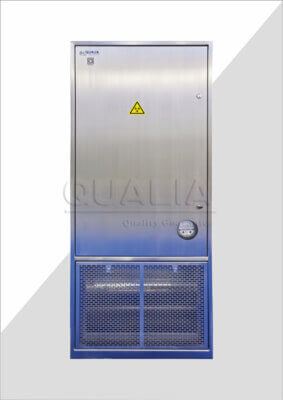
Les conceptions de BIBO en matière de systèmes de confinement pharmaceutiques répondent généralement à ce besoin grâce à trois éléments qui agissent en synergie : un revêtement continu en PVC qui constitue la barrière physique, un mécanisme à tige « push-push » permettant à l'opérateur d'introduire le filtre dans le sac sans pénétrer du côté contaminé, et une surveillance continue de la différence de pression afin de vérifier l'intégrité de l'enceinte avant toute ouverture.
| Élément de frontière | Caractéristiques principales | Rôle de confinement |
|---|---|---|
| Gaine continue en PVC | Barrière physique faisant partie intégrante du logement | Permet à l'opérateur de rester à l'extérieur de la zone contaminée pendant la manipulation des filtres |
| Système à tige de poussée-poussée | Mécanisme manuel de retrait du filtre | Permet le transfert du filtre sans pénétrer dans la zone contaminée |
| Contrôle de la pression différentielle | Lecture en continu, généralement comprise entre −30 et −60 Pa | Vérifie l'intégrité de l'enceinte ; signale toute perte d'étanchéité avant l'ouverture |
L’importance de ces éléments réside dans la manière dont ils peuvent présenter des défaillances individuelles. Une déchirure de la doublure lors de la traction transfère directement la contamination à l’extérieur du sac à déchets — un événement qui peut ne pas être visible au moment où il se produit. Une tige « push-push » mal manipulée qui se rétracte trop tôt peut rompre l’étanchéité entre la face contaminée du filtre et l’ouverture du sac avant que celui-ci ne soit entièrement fixé. Une différence de pression s’écartant de la plage habituelle comprise entre −30 et −60 Pa indique que le boîtier ne maintient plus l’étanchéité prévue par la procédure de remplacement. N’importe laquelle de ces conditions, si elle est présente au début de la procédure, compromet le principe de confinement sur lequel repose le système BIBO — et aucune d’entre elles ne sera perceptible une fois le remplacement en cours.
Fixation du sac, séquence de serrage et traces du parcours des déchets
La procédure de mise en sac et de retrait du sac constitue une séquence, et non un ensemble d'étapes pouvant être effectuées dans un ordre aléatoire. La logique de sécurité repose sur le fait que le sac soit entièrement fixé à l'anneau d'ensachage avant que le filtre ne se déplace, que le filtre soit entièrement enfermé avant toute soudure, et que le parcours des déchets soit validé avant que l'emballage scellé ne quitte la zone. Rompre cet ordre à n'importe quel moment — en précipitant la fixation parce que le boîtier est difficile d'accès, ou en coupant avant de s'être assuré que les deux soudures thermiques tiennent bien — annule la protection que cette séquence est censée assurer.
Dans la pratique, la procédure décrite dans les consignes commerciales du BIBO se déroule comme suit : le sachet en PVC est scellé à l’anneau de mise en sachet du boîtier avant que le filtre ne soit manipulé ; le filtre contaminé est tiré à l'intérieur du sac via le mécanisme à tige « push-push » ; le sac est thermosoudé deux fois à un endroit qui emprisonne le filtre contaminé d'un côté ; le matériau est découpé entre les deux soudures ; la moitié souillée et scellée est retirée pour être incinérée ; et la moitié propre du sac reste fixée au boîtier, prête pour le cycle suivant. La logique de sécurité opérationnelle de cette dernière étape est souvent négligée : la moitié propre qui reste fixée n’est pas un simple élément de commodité, mais un pont de confinement qui empêche le prochain remplacement de commencer avec une bague d’emballage ouverte.
C’est au niveau de la confirmation du parcours des déchets que la documentation des procédures présente le plus souvent des lacunes. Même si le sac est correctement scellé, il peut tout de même entraîner un événement d’exposition s’il est transféré vers un flux de déchets standard, entreposé dans une zone dépourvue de confinement secondaire, ou conservé en attente d’élimination plus longtemps que ne le permettent les procédures du site. Pour les composés OEB5, il faut s’assurer que la voie d’élimination — généralement l’incinération — est disponible avant de programmer le remplacement, et non après que le colis scellé attend la collecte. Un parcours des déchets documenté fait partie intégrante des conditions limites, et non d’une réflexion après coup.
Les recommandations de l’OMS relatives aux dispositifs de confinement primaire réaffirment le principe selon lequel les procédures de changement en toute sécurité doivent maintenir la barrière de confinement depuis le premier contact jusqu’à l’élimination finale ; ce raisonnement s’applique également lorsque le dispositif est un boîtier BIBO plutôt qu’une enceinte de sécurité biologique. L’analogie est directe : le mécanisme physique change, mais l’obligation de maintenir l’opérateur à l’extérieur de l’enveloppe contaminée à chaque étape reste la même.
Risque lié aux interventions de maintenance en dehors des conditions normales de production
Le schéma de défaillance observé ici est récurrent et bien documenté : un site considère le remplacement des filtres comme une tâche de maintenance préventive standard, la confie à du personnel de maintenance n’ayant pas suivi de formation spécifique au confinement, et part du principe que la conception du système BIBO assure une protection passive, quelle que soit la manière dont la procédure est exécutée. Or, ce n’est pas le cas.
Le système BIBO réduit le contact direct avec le filtre contaminé, mais il n’élimine pas la voie d’exposition. Il a pour effet de transférer l’intégralité de la charge de confinement sur l’intégrité du sac, la technique de fixation, la qualité du thermoscellage, la manipulation des tiges et la formation de la personne effectuant le travail. Chacun de ces éléments est une variable susceptible de se dégrader sous la pression du temps, en raison d’une pratique peu fréquente ou d’une supervision insuffisante. Un filtre qui a été manipulé correctement une douzaine de fois par un opérateur formé peut l’être de manière incorrecte dès la première fois qu’un autre technicien effectue cette tâche sous la pression des délais. Il ne s’agit pas d’une préoccupation théorique ; c’est la réalité opérationnelle qui rend nécessaire, et non facultative, une procédure chorégraphiée et régie par des autorisations.
Les recommandations du NIOSH relatives à l'exposition professionnelle aux médicaments dangereux en tirent une conclusion claire : des pratiques de travail inadéquates lors de la manipulation de composés puissants constituent une voie majeure d'exposition professionnelle, et les conséquences sanitaires en aval sont graves pour les antinéoplasiques et autres HPAPI. L’opération de remplacement — en particulier pour les composés OEB5 — est une tâche de manipulation de médicaments dangereux dans un contexte de maintenance, et le cadre de gestion des risques doit en tenir compte.
Concrètement, pour la planification, cela signifie que le remplacement du filtre BIBO ne doit pas être programmé pendant une fenêtre de maintenance préventive (PM) avec des tâches d’entretien sans rapport avec cette opération, qui impliqueraient la présence de personnel supplémentaire dans la zone, créeraient des différences de pression dues au va-et-vient aux portes ou détourneraient l’attention de l’opérateur formé aux procédures de confinement. Considérer ce remplacement comme une fenêtre protégée, et non comme une tâche insérée entre d’autres, est un choix de planification ayant des conséquences directes sur la protection de l’opérateur.
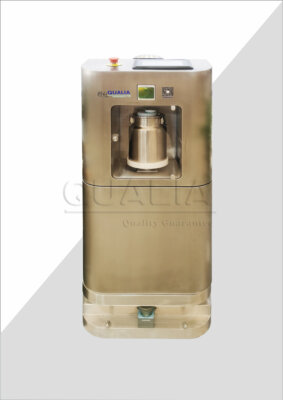
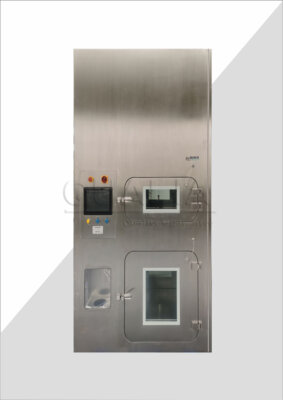
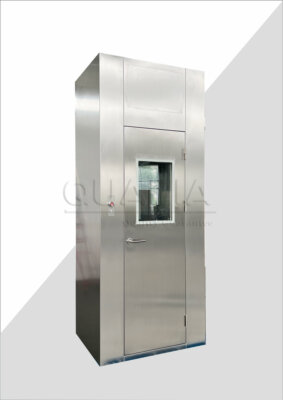
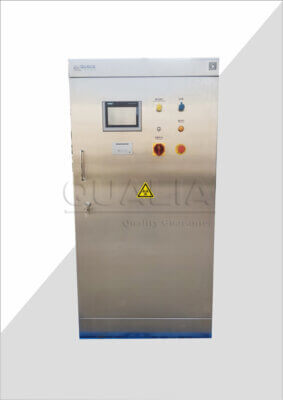
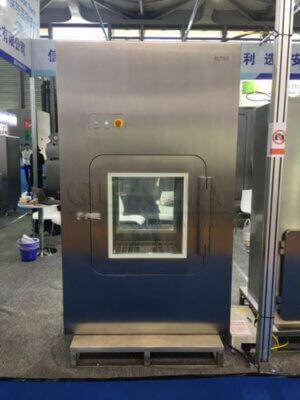
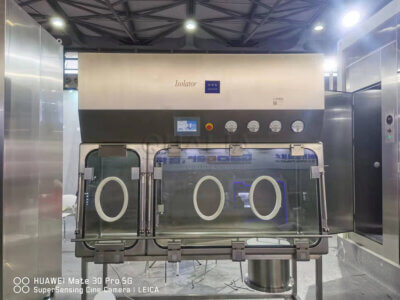
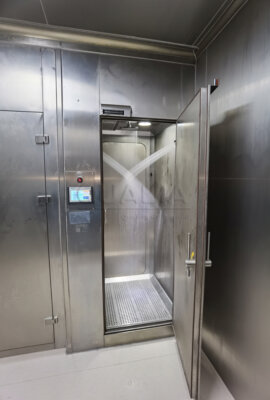
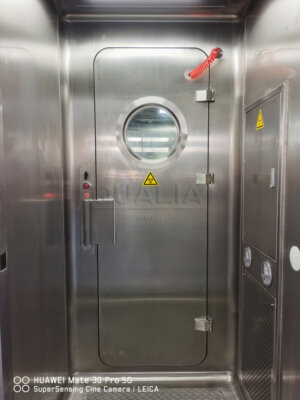
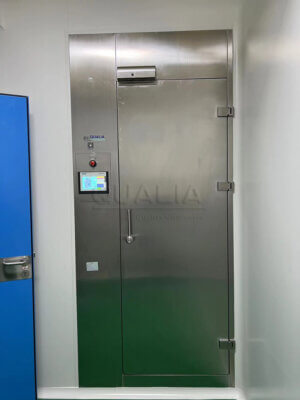
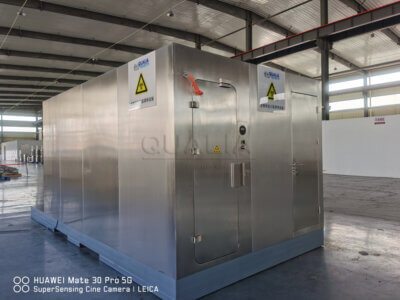
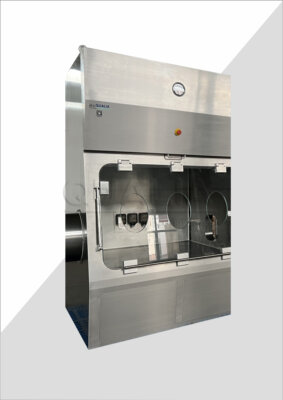
Pour les équipes qui réexaminent la conception de l'accès aux filtres de leur système d'isolateur actuel, L'isolateur OEB4/OEB5 de Qualia Bio Cette page présente les aspects à prendre en compte en matière d'intégration des boîtiers, notamment en ce qui concerne l'accès pour le remplacement des composants et le maintien de la pression.
Planification des interventions sans libération de résidus non vérifiés
La planification d'un remplacement de filtre BIBO nécessite de résoudre un conflit que la plupart des systèmes de maintenance préventive ne sont pas conçus pour gérer : le filtre peut devoir être remplacé en fonction des données de pression différentielle ou du temps écoulé, mais cette opération nécessite une vérification des limites de confinement qui prend du temps et peut ne pas s'inscrire dans le flux de travail standard de la maintenance préventive. L'instinct est de donner la priorité au calendrier. Les implications en matière de confinement vont dans le sens contraire.
Un test d’arrêt du préfiltre et de chute de pression — effectué avant d’accéder au boîtier — permet de confirmer que l’enveloppe de confinement est intacte et qu’aucun résidu ne pénétrera dans la salle pendant la transition. Sans cette vérification, l’équipe intervient sans avoir la confirmation des conditions de départ. Il ne s’agit pas d’une simple formalité ; c’est une couche de protection manquante. Si le test de chute de pression révèle une fuite, le plan de remplacement doit être modifié avant même de toucher le sac. Découvrir cette situation en cours d’intervention, alors que le boîtier est partiellement ouvert et que le sac est déjà fixé, est bien pire.
Les difficultés de planification sont bien réelles. La pression négative continue dans un isolateur OEB5 — maintenue pour préserver le gradient de confinement — ne peut pas être simplement interrompue pour s’adapter à une fenêtre de maintenance qui arrange. Toute perte de pression imprévue pendant ou immédiatement après le retrait du filtre crée les conditions propices à la migration de résidus non vérifiés. La solution ne consiste pas à éviter le contrôle de pression, mais à prévoir une marge de manœuvre suffisante dans le planning autour du remplacement afin que l’étape de vérification ne soit pas omise sous la pression du temps. Cela signifie que le plan de maintenance pour les remplacements de filtres BIBO dans les systèmes OEB5 doit être rédigé différemment du format standard de maintenance préventive : les conditions limites confirmées doivent constituer une condition préalable au démarrage de la procédure, et non une simple case à cocher à la fin.
Pour avoir une vision structurée de la manière dont l’évaluation des risques doit éclairer la décision de procéder ou de reporter un remplacement, Évaluation des risques liés au changement de filtre BIBO : Comment décider quand le confinement est obligatoire aborde plus en détail le cadre d'évaluation préalable au changement.
Valve d'autorisation de remplacement pour les systèmes de filtration OEB5
La procédure de validation du remplacement d’un filtre BIBO dans un système OEB5 ne se résume pas à un simple résultat de test : il s’agit d’une procédure documentée qui permet de confirmer la délimitation du côté contaminé, le circuit d’évacuation et les performances après le remplacement avant que le système ne soit remis en production. Réduire cette procédure à une simple inspection visuelle ou à la signature d’un technicien revient à traiter une opération de maintenance cruciale pour le confinement comme une simple formalité administrative.
La vérification des performances de confinement après remplacement, réalisée selon la méthodologie SMEPAC — telle que décrite dans le Guide des bonnes pratiques de l’ISPE pour l’évaluation des performances de confinement —, fournit un cadre de mesure structuré permettant de confirmer que le système respecte la classe OEB requise après un remplacement de filtre. Exprimés en µg/m³ et comparés à la cible OEB5 inférieure à 1 µg/m³, les résultats SMEPAC fournissent aux équipes d’assurance qualité et de biosécurité une référence comparable pour analyser les tendances entre les différents remplacements et identifier les premiers signes de dérive de la procédure. Ce critère doit être considéré comme l’un des éléments du processus de validation, et non comme le seul : l’inspection visuelle de l’intégrité du boîtier, la confirmation de l’élimination correcte des sacs et la vérification du compte-rendu de remplacement par rapport à la procédure opérationnelle standard (SOP) approuvée font toutes partie de ce même processus.
Le risque en aval d’une étape d’approbation mal définie est un échec d’audit qui invalide rétroactivement le compte-rendu de remplacement. Si le test SMEPAC est effectué après le remplacement mais que la séquence de serrage n’a pas été documentée, ou si le parcours des déchets n’a pas été confirmé à l’avance, le résultat du test peut démontrer des performances acceptables au moment de la mesure tout en laissant une lacune dans la documentation qu’un inspecteur considérera comme un manquement à la procédure. Le contrôle d’approbation doit être conçu de manière à ce qu’un résultat SMEPAC satisfaisant ne puisse masquer un manquement procédural — ce qui signifie que la structure du contrôle doit permettre de vérifier le respect du processus parallèlement à la mesure des performances.
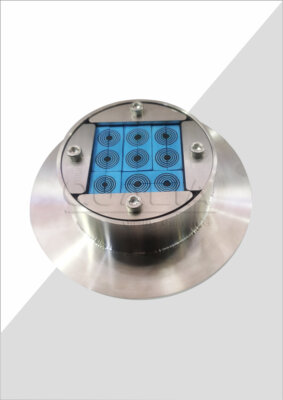
Pour les établissements qui évaluent des configurations de logement permettant ce type de vérification après modification, Le système « Bag-In Bag-Out » de Qualia Bio et Système de filtration in situ Ces pages décrivent les configurations de boîtier et de filtration correspondant à ces exigences en matière d'accès et de vérification.
La conséquence la plus concrète de ce cadre de planification est que la procédure de remplacement du BIBO doit être définie avant que le premier filtre n'atteigne son intervalle de remplacement — et non élaborée au moment où l'alarme de pression différentielle se déclenche. Cela signifie que la méthode de fixation des poches, l'état de l'équipement de thermoscellage, le circuit d'élimination des déchets et le protocole de vérification post-remplacement doivent tous être confirmés comme disponibles et documentés avant que la fenêtre de remplacement ne s'ouvre. Dans un environnement OEB5, l’absence de l’un de ces éléments ne constitue pas une lacune à combler a posteriori ; c’est une raison de reporter le remplacement.
Avant de programmer le prochain remplacement du filtre BIBO, il convient de vérifier les points suivants : la différence de pression actuelle se situe-t-elle dans la plage pour laquelle la procédure a été validée ? La filière d’élimination des déchets a-t-elle été validée pour les matières de classe OEB5 ? Un test SMEPAC ou une méthode équivalente de vérification après modification est-il programmé, et pas seulement disponible ? Et le technicien chargé de l’intervention a-t-il suivi la procédure suffisamment récemment pour que la séquence soit à jour ? Ces quatre conditions déterminent ensemble si le « point de contrôle » est réel ou purement administratif.
Questions fréquemment posées
Q : Que devons-nous faire si la différence de pression se situe en dehors de la plage autorisée juste avant un remplacement prévu du BIBO ?
R : Ne procédez pas au remplacement. Un différentiel de pression qui s’est écarté des limites de fonctionnement documentées indique que le boîtier pourrait ne plus garantir l’étanchéité supposée par la procédure. Si vous ouvrez le boîtier sans vous être assuré de son étanchéité, vous risquez de contaminer toute la pièce. Recherchez la cause — état des joints, position du registre, alarmes du système — et effectuez un test de chute de pression. Ne reprenez le remplacement que lorsque le différentiel de pression est stable et se situe dans la plage spécifiée dans la procédure opérationnelle standard (SOP) du site.
Q : Après avoir pris connaissance de ces recommandations, quelle est la mesure la plus urgente que nous devrions prendre pour mettre en place un processus d'autorisation de remplacement des BIBO dans notre établissement ?
R : Transformez les quatre conditions d’accès — confirmation de la différence de pression, disponibilité de la voie de dérivation, méthode de vérification programmée après modification et compétence du technicien — en une liste de contrôle préalable au démarrage qui nécessite une validation indépendante avant tout accès au boîtier. Joignez cette liste de contrôle à l’autorisation de maintenance de l’isolateur en tant que procédure à étapes obligatoires ne pouvant être contournée. Cela transforme l’étape d’approbation, qui n’était auparavant qu’une formalité secondaire susceptible d’être relevée lors d’un audit, en un contrôle documenté que le service d’assurance qualité peut examiner avant la procédure, conformément au cadre de gestion des risques préconisé par le Guide des bonnes pratiques de l’ISPE sur l’évaluation des performances de confinement.
Q : Notre site ne dispose pas des moyens nécessaires pour réaliser les essais SMEPAC. Quelle méthode alternative est acceptable pour vérifier l'étanchéité après un remplacement du filtre BIBO OEB5 ?
R : Un essai quantitatif équivalent démontrant que la concentration de particules en suspension dans l’air ou d’un traceur de substitution est inférieure à la valeur cible OEB5 (< 1 µg/m³) est acceptable, à condition qu’il respecte les principes d’évaluation des performances de confinement énoncés dans le guide de l’ISPE. Les options comprennent une surveillance de l’hygiène industrielle à l’aide d’un traceur de substitution validé lors d’une simulation d’exposition dans le pire des cas, ou un test d’étanchéité par compteur de particules étalonné selon la limite OEB5. L’exigence essentielle est la preuve numérique, et non l’utilisation d’un instrument spécifique. Si aucune méthode équivalente n’est disponible sur site, faites appel à un prestataire tiers spécialisé en hygiène industrielle pour effectuer une vérification après modification jusqu’à ce qu’une capacité interne soit mise en place ; ne vous fiez pas uniquement à une inspection visuelle ou à un test de maintien de pression pour valider un système OEB5.
Q : Existe-t-il d’autres méthodes de remplacement des filtres permettant de réduire les risques liés à la manipulation des sacs, et comment se comparent-elles au système BIBO en termes d’exposition lors de la maintenance OEB5 ?
R : Les solutions de transfert fermé, telles que les interfaces à double porte ou à vanne papillon divisée, peuvent réduire les erreurs de manipulation des sacs, mais n’éliminent pas la nécessité d’une séquence coordonnée et d’un parcours d’élimination validé. Le risque d’exposition se déplace simplement de l’intégrité de la fixation du sac vers l’alignement de l’interface et la confirmation de l’étanchéité, et la même rigueur procédurale s’applique. Aucun système de remplacement de filtre pour l’OEB5 n’est passif ; chaque conception fait reposer la fiabilité du confinement sur le respect par l’opérateur d’une séquence définie. Le cadre des étapes de validation — vérification des limites avant le remplacement, confirmation de l’itinéraire des déchets et tests quantitatifs après le remplacement — reste l’exigence universelle, quelle que soit la configuration matérielle.
Q : Si notre isolateur traite des composés de classe OEB4 (limite d’exposition professionnelle (OEL) généralement comprise entre 1 et 10 µg/m³), les critères d’approbation du remplacement doivent-ils être aussi stricts que pour la classe OEB5 ?
R : La même structure de critères devrait s’appliquer, mais les seuils d’acceptation doivent être adaptés à la limite de la classe OEB4. Le filtre HEPA chargé contient toujours des substances puissantes, et un remplacement du BIBO raté dans un isolateur OEB4 peut entraîner une contamination de la salle et faire l’objet d’un examen minutieux de la part des autorités réglementaires. Vous devez toujours procéder à une confirmation de la différence de pression, suivre une séquence de manipulation des sacs bien coordonnée, mettre en place un circuit de gestion des déchets vérifié et effectuer un test quantitatif de confinement après le remplacement, mais la cible du test peut être alignée sur la limite d’exposition professionnelle OEB4 plutôt que sur le seuil OEB5 inférieur à 1 µg/m³. La gamme d’isolateurs OEB4/OEB5 de Qualia Bio montre que la conception des enceintes est souvent identique pour ces classes de puissance ; ce qui change, c’est la cible de vérification des performances. N’interprétez pas l’assouplissement de la limite d’exposition professionnelle (OEL) comme une autorisation de faire l’impasse sur cette étape : il suffit d’aligner les critères numériques sur la classe de danger du composé.