Most OEB4/OEB5 isolator RFQs specify containment performance at the point of purchase and leave everything else — filter change procedures, cleaning validation support, safe-change configurations, maintenance access — outside the supplier scope entirely. That gap rarely surfaces during bid comparison. It surfaces at commissioning, or during the first operational audit, when it becomes clear that no agreed test method exists to back the supplier’s OEB claim and no maintenance record structure has been established. At that stage, closing the gap means rework in both validation documentation and vendor accountability, often under time pressure. The practical resolution is to define, before a quote is accepted for technical review, what evidence each OEB claim is paired with — and which responsibilities belong to the supplier versus the site.
Containment performance requirements for OEB isolators
ISO Class 5 air quality at rest is the most common measurable containment benchmark written into OEB isolator specifications, and it functions as a useful design target precisely because it is testable, documentable, and comparable across supplier responses. The classification framework is supported by ISO 13408-6:2021 for isolator systems used in aseptic processing contexts, which gives procurement and QA teams a reference point for confirming how a supplier intends to demonstrate and document compliance with that figure — not just assert it. What matters at the RFQ stage is not whether ISO Class 5 appears in the supplier’s proposal, but whether the supplier can describe the certification method, specify the test conditions, and produce at-rest data that can be reviewed during qualification.
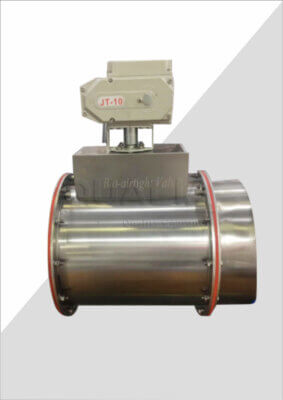
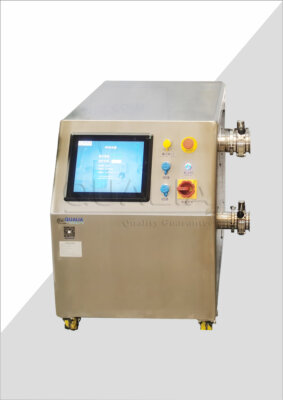
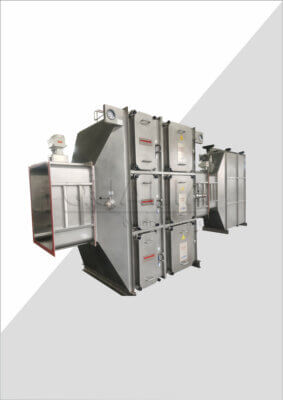
Closed-loop EC fan airflow control matters because fixed-speed fan assumptions degrade silently. As HEPA filters load over their service life, a fixed-speed system delivers progressively less airflow without any automatic compensation — and without compensation, the containment performance that the supplier demonstrated during acceptance testing may not be maintained through routine operation. Closed-loop EC fan systems adjust speed to compensate for filter loading, holding airflow within the isolator consistent over time. The consequence of omitting this detail from the RFQ is that a supplier can meet the purchase specification at factory acceptance and still deliver a system whose containment drifts as soon as the filters begin to foul in service.
The table below captures the two core specification requirements at this level, along with what must be confirmed in the RFQ rather than assumed from a supplier’s general product claims.
| Performance Requirement | Why It Matters for OEB4/OEB5 | What to Confirm in the RFQ |
|---|---|---|
| ISO Class 5 air quality (at rest) | Establishes a clear cleanliness and containment benchmark for evaluation | Supplier’s documented certification method and acceptance limits |
| Closed-loop EC fan airflow | Maintains containment as filters load, reducing risk of gradual performance drift | Fan control strategy, compensation behaviour, and performance data under loaded filter conditions |
Cleaning and maintenance access in supplier scope
Cleaning and maintenance access is the most consistently underspecified area in OEB4/OEB5 isolator procurement. Teams write containment performance targets carefully, then treat filter change procedures and cleaning validation support as site responsibilities that do not belong in the supplier scope. The result is a system that passes purchase specification review and fails EHS scrutiny the first time routine maintenance is assessed — because no agreed procedure exists, no exposure-reduction design was required, and no evidence was captured to support cleaning validation.
The boundary that matters here is between what the supplier builds into the equipment and what the site must develop independently after installation. Safe Change filter configurations, tool-less knife-edge gel-sealed filters, and anti-microbial panel coatings are not universal OEB4/OEB5 compliance requirements. They are design and specification inputs that, if absent from the RFQ, will be absent from the delivered system. A supplier response that does not address filter handling method, access geometry, or surface treatment is not necessarily describing a non-compliant isolator — it is describing an isolator whose operational exposure risks have not been evaluated and whose cleaning validation pathway has not been defined.
When a supplier proposal is silent on these features, the question is not whether the system passes acceptance testing. The question is whether the site will be able to operate and maintain it at OEB4/OEB5 levels without generating a rework burden in procedures, training, and validation documentation that was never budgeted.
| Maintenance Feature | RFQ Specification Requirement | Operational Benefit |
|---|---|---|
| Safe Change filter configuration | Filters replaceable internally or externally to the booth with minimised open-operator contact | Reduces operator exposure risk during filter changeouts |
| Tool-less, knife-edge gel sealed filters | Specify rapid tool-free filter replacement capability | Shortens downtime and lowers exposure duration |
| Isocide anti-microbial powder coating | Require anti-microbial coating on isolator panels | Inhibits microbial growth and aids cleaning validation evidence |
Test evidence for operator protection claims
An OEB claim without a paired evidence method is a statement, not a specification. The distinction matters during vendor comparison because two proposals that both claim OEB5 performance may be using entirely different evidential bases — or none at all. Requiring each supplier to describe, before quote acceptance, how they propose to demonstrate the claimed containment level is the earliest available intervention point for separating credible proposals from those that defer that question to post-order clarification.
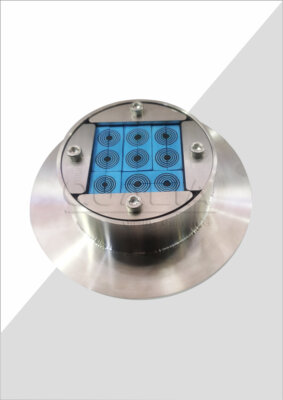
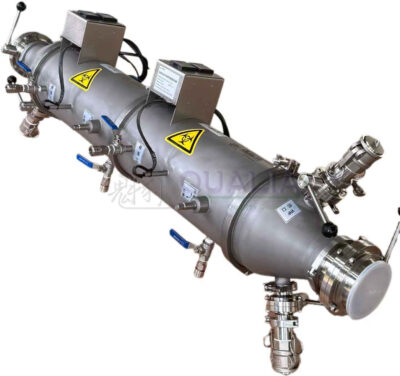
Integrated filter challenge ports are a specific example of built-in test infrastructure that makes containment claims verifiable. Filter integrity testing requires access to introduce a challenge aerosol upstream of the filter and measure downstream penetration. If that access is not designed into the isolator, the test cannot be performed in a way that is documented and reproducible — and the operator protection claim associated with HEPA filtration effectiveness remains unprovable without invasive modification. ISPE’s SMEPAC methodology establishes the expectation that containment performance evidence should be documentable and reproducible; filter challenge ports are the physical prerequisite for meeting that expectation at the filter level.
The practical threshold is straightforward: if a supplier’s proposal includes an OEB performance claim but does not describe how that claim will be verified — which test method, which access point, which surrogate or challenge agent, under what conditions — the proposal is not ready for technical evaluation. Accepting it without that clarification shifts the burden of developing a test method to the site, after equipment is ordered, when the leverage to require design changes is lowest.
For teams evaluating containment verification options beyond filter integrity testing, surrogate powder testing approaches for OEB4/OEB5 performance verification are covered in more detail in Surrogate Powder Testing Methods for OEB 4-5 Containment Performance Verification.
Supplier versus site responsibility for monitoring
The boundary between what a supplier is accountable for and what a site must own is genuinely difficult to draw in OEB isolator procurement — and it is drawn in the wrong place more often than procurement teams recognize. The default failure mode is conflation: the RFQ is written as though supplier equipment capability and site operator monitoring are continuous responsibilities, which means neither party has clearly agreed to own the gaps between them.
Supplier scope, when defined carefully, covers equipment design, containment performance evidence at defined test conditions, maintenance access features, and documentation that supports qualification. Site responsibility covers ambient air monitoring, operator biological monitoring, cleaning validation protocols, and the procedural controls that govern how the equipment is operated in practice. ISPE guidance on containment for potent compounds treats these as distinct planning domains — the equipment provides a containment capability, and the site’s monitoring and procedural controls confirm that the capability is being maintained and is sufficient for the compound handled.
The RFQ is the correct place to draw this boundary explicitly, because drawing it post-order creates accountability disputes during commissioning and qualification. A supplier who has not been asked to support cleaning validation evidence will not have configured surface treatments, access geometry, or documentation structures to support it. A site that has not defined its monitoring responsibilities before procurement will arrive at IQ/OQ/PQ without a clear picture of which qualification activities belong to the vendor and which belong to the site validation team. Neither gap is cheap to close under a live project timeline.
RFQ details that expose weak containment proposals
Weak containment proposals share a recognizable pattern: they name an OEB level, reference a containment figure, and leave every verification question open for post-order discussion. The problem is not that any single missing detail proves the proposal is non-compliant — it is that the combined absence of ISO Class 5 data, EC fan performance evidence, filter challenge port specification, and safe-change configuration creates a proposal where no claim can be independently evaluated before contract award.
The consequence is not theoretical. A proposal that defers all verification questions to post-order documentation forces the buyer to either accept vague OEB claims as the basis for contract, or invest in clarification rounds that could have been avoided by requiring evidence-paired claims at the RFQ stage. For procurement teams under timeline pressure, the temptation is to accept the proposal and resolve the gaps later — which is precisely when those gaps become rework, not just clarifications.
Each detail in the table below functions as a review check that tests proposal defensibility, not a pass/fail regulatory criterion.
| OEB Claim Area | RFQ Detail to Demand | Why Absence Exposes a Weak Proposal |
|---|---|---|
| Containment air quality | ISO Class 5 certification method and at-rest data | Vague air-quality claims cannot be compared or verified |
| Sustained containment over filter life | Closed-loop EC fan performance evidence under loaded filter conditions | Fixed-speed claims may degrade silently as filters foul |
| Filter integrity testing | Integrated filter challenge ports with documented test access | Without built-in test access, operator protection claims remain unprovable |
| Cleaning and changeout access | Safe Change filter configuration and tool-less gel seal capability | Claims about low exposure mean little if filter handling method is unspecified |
When a proposal is missing more than one of these elements, the appropriate response is a structured supplier clarification request before technical evaluation proceeds — not a conditional pass with the expectation that gaps will be resolved during negotiation.
Technical-review threshold for OEB supplier responses
Defining a technical-review threshold before RFQ responses arrive is a procurement-stage judgment tool, not a formal qualification standard. Its purpose is to force the evidence-versus-claim boundary to be drawn early, when it is still inexpensive to require a supplier to revise their response rather than their delivered system.
A workable threshold is this: any OEB performance claim in a supplier response must be accompanied by a proposed evidence method before the response is accepted for technical evaluation. That evidence method does not need to be complete — it needs to be specific enough to evaluate whether the supplier has a credible plan for demonstrating the claimed containment level. A proposal that says “OEB5 performance verified by surrogate powder testing per SMEPAC methodology with integrated filter challenge ports” is evaluable. A proposal that says “OEB5 capable” is not.
The trade-off in applying this threshold is real. Requiring more containment evidence increases supplier workload, and in markets with limited OEB5 isolator suppliers, it may reduce early bid participation or extend the clarification cycle. That cost is worth accepting, because the alternative — comparing proposals with incompatible evidential bases — produces a vendor selection that reflects proposal quality rather than equipment capability. The practical question for procurement and EHS teams is not whether this threshold creates friction, but whether they prefer to manage that friction at RFQ stage or at qualification.
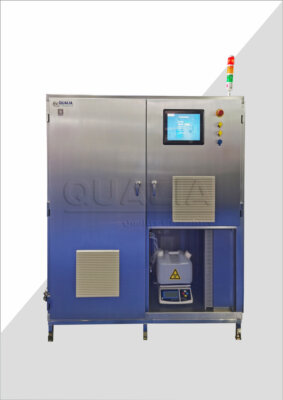
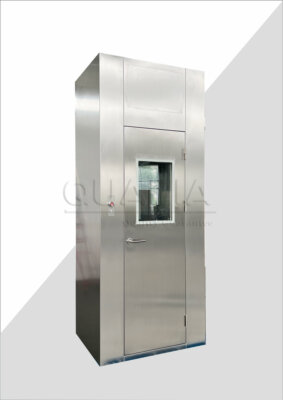
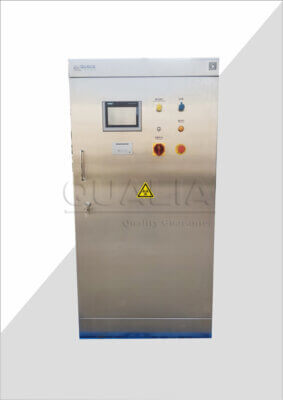
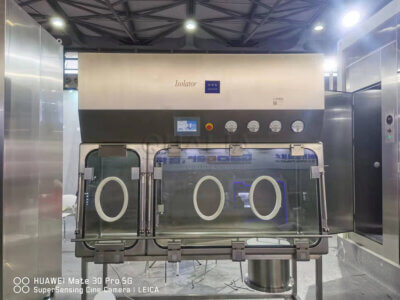
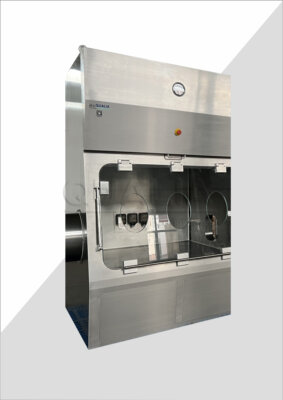
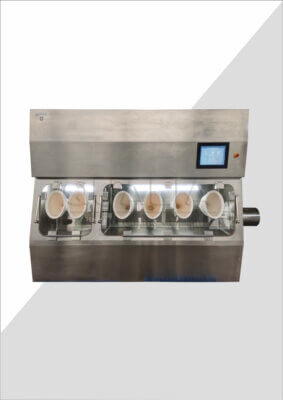
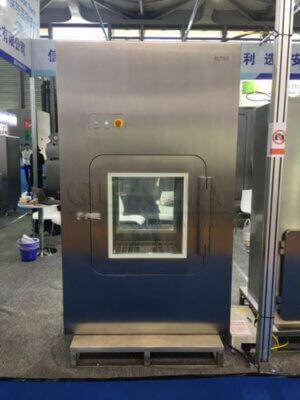
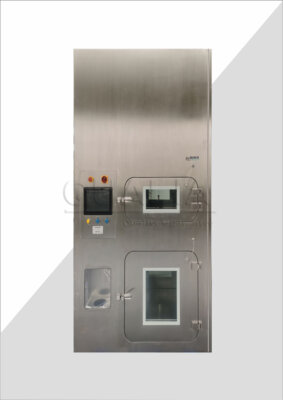
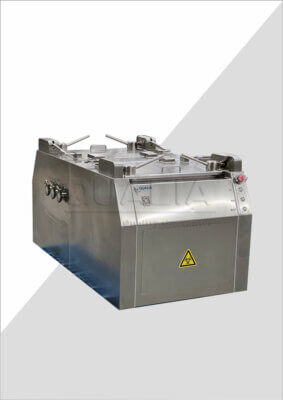
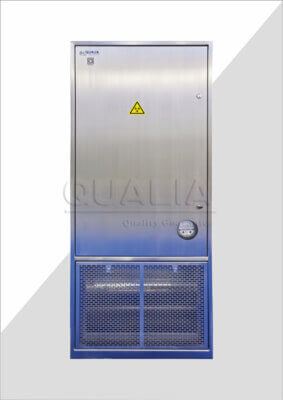
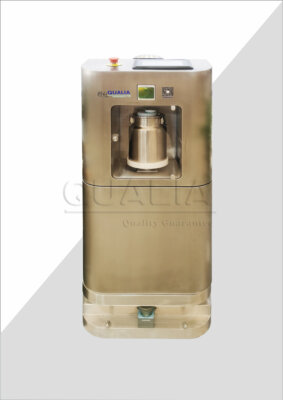
Qualia Bio’s OEB4/OEB5 isolator is designed with these specification inputs in mind, including closed-loop airflow control, Safe Change filter configurations, and integrated filter challenge infrastructure — the features that make OEB claims verifiable rather than asserted.
For teams working through isolator selection criteria in parallel with RFQ development, the Expert Guide to Choosing the Right OEB Isolator covers the upstream selection logic that shapes which RFQ requirements are most critical for a given compound category and containment context.
The most defensible OEB4/OEB5 isolator procurement process is one where the evidence threshold is set before responses arrive, the supplier-site responsibility boundary is drawn in the RFQ rather than discovered at commissioning, and cleaning and maintenance access are treated as specification inputs rather than operational afterthoughts. Each of those conditions is easiest to establish at the RFQ stage and progressively more expensive to retrofit as the project advances.
Before advancing any supplier response to technical evaluation, confirm that each OEB claim has a named evidence method, that filter handling and safe-change configuration are explicitly addressed, and that the scope boundary between supplier equipment capability and site monitoring responsibility has been stated. If those three conditions are not met, the comparison that follows will be between proposals, not between containment systems.
Frequently Asked Questions
Q: What if our compound is OEB4 rather than OEB5 — does the same RFQ scope apply?
A: Yes, the same scope structure applies. The evidence-pairing requirement, supplier-site responsibility boundary, cleaning and maintenance access specifications, and filter integrity test infrastructure are all relevant regardless of whether the target is OEB4 or OEB5. The distinction between the two bands affects the stringency of the containment performance target, not the categories of information the RFQ must request. Leaving filter handling, safe-change configuration, or verification methods unspecified creates the same commissioning and audit risk at OEB4 as it does at OEB5.
Q: If a supplier provides SMEPAC test data from a previous installation, is that sufficient to accept their OEB claim for technical review?
A: Only if the test conditions, equipment configuration, and challenge methodology are directly comparable to what is being procured. Historical SMEPAC data from a different isolator model, a different transfer method, or a different process configuration cannot be used as direct evidence for the system under evaluation. The threshold described in this article requires a proposed evidence method for the specific equipment and scope in the RFQ — not a reference to prior testing. If the supplier’s plan is to rely on existing data, they should be required to demonstrate why those conditions are equivalent before the response advances to technical evaluation.
Q: At what point in a project does it become too late to set the evidence-pairing threshold without significant rework cost?
A: Once a supplier response has been accepted for technical evaluation without evidence-paired OEB claims, the leverage to require design changes drops sharply. After contract award, requiring a supplier to add filter challenge ports, reconfigure safe-change access, or produce ISO Class 5 at-rest data that was not part of the original scope becomes a change order negotiation rather than a procurement requirement. The cost is not only financial — it affects the qualification timeline, because documentation structures and test methods that were never defined in the equipment scope must now be developed under a live project schedule. The RFQ stage is the last low-cost intervention point.
Q: How should a procurement team weigh a lower-cost proposal that meets the OEB claim but lacks filter challenge ports and safe-change configuration against a higher-cost proposal that includes both?
A: The cost difference should be evaluated against the site cost of developing those capabilities independently after installation — not against the purchase price alone. A proposal without integrated filter challenge infrastructure means the site must either modify the equipment post-delivery, accept an unprovable filter integrity claim, or develop an alternative verification approach with no supplier support. A proposal without safe-change configuration places the exposure burden of routine filter maintenance on the site’s procedural controls rather than on engineered design. In OEB4/OEB5 contexts, those gaps typically generate more cost in cleaning validation development, EHS review remediation, and maintenance procedure rework than the initial price difference represents.
Q: Is there a minimum number of missing elements in a supplier proposal that should trigger a formal clarification request rather than outright rejection?
A: A formal clarification request is appropriate when one or two specific, answerable gaps exist — for example, a supplier has not described the filter challenge port configuration but has otherwise provided evidence-paired claims. Rejection from technical evaluation is appropriate when the proposal contains an OEB performance claim with no proposed verification method at all, because that gap cannot be resolved through clarification without the supplier substantively revising their technical approach. The practical boundary is whether the missing information is a documentation omission or a signal that the supplier has not planned for verifiable containment performance. If the latter, advancing the proposal creates a comparison against proposals with defensible evidence bases, which distorts the evaluation.