

Performance Qualification (PQ) testing for Vaporized Hydrogen Peroxide (VHP) sterilizers is not merely a validation exercise; it is the foundational act of defining the process specification for parametric release. The central challenge for sterilization professionals is transitioning from a biological indicator (BI)-dependent system to a data-driven release framework. This shift demands that PQ documentation be engineered not as a historical archive, but as the active, definitive reference standard for every production cycle. Misconceptions persist that parametric release is simply about removing BIs, when in reality, it is a systemic upgrade of the quality management system (QMS) predicated on flawless PQ data.
The urgency for mastering PQ documentation is driven by the competitive and regulatory landscape. Standards like ISO 22441:2022 formally incorporate parametric release principles, setting a new benchmark for sterilization control. Facilities that successfully implement this framework achieve faster throughput, lower operational costs, and demonstrate a superior state of control to regulators. Conversely, those clinging to traditional BI-based release risk operational bottlenecks and falling behind as industry expectations evolve. The strategic divide is now defined by data mastery.
Defining Critical Cycle Parameters for VHP Sterilization
The Foundation of Parametric Release
Performance Qualification establishes the precise relationship between physical process parameters and the achieved Sterility Assurance Level (SAL). The critical output is a validated process specification document. This document defines the exact tolerances for sterilant concentration, relative humidity (RH), pressure, and temperature that guarantee efficacy. It becomes the central release artifact, carrying ongoing regulatory liability. Every routine cycle is measured against this PQ-defined specification, making its clarity and accuracy non-negotiable.
From Validation File to Live Reference
The strategic implication is profound. PQ documentation transforms from a static validation file into the active reference standard for batch release. This requires a documentation strategy focused on longevity and accessibility. Parameters must be defined with statistically justified limits, not arbitrary ranges. In our validation projects, we consistently find that the most robust PQ packages are those designed with the end-user—the production operator and quality reviewer—in mind, ensuring the critical specifications are immediately actionable.
The Parameter Interdependence
A key insight often overlooked is the interdependence of critical parameters. RH controls condensation, which directly impacts microbial inactivation, but it is itself influenced by temperature and pressure. The PQ must not only document individual parameter tolerances but also provide evidence that their combined operation, within the specified ranges, delivers a reproducible microbiocidal effect. This systems-level view is what supports a true parametric release claim.
The Role of Relative Humidity (RH) in VHP Sterilant Efficacy
A Controlling Variable for Condensation
Relative Humidity is not merely a monitored condition; it is a primary control variable for sterilant delivery and microbial inactivation. Effective VHP sterilization relies on achieving a specific RH level to facilitate the condensation of hydrogen peroxide micro-condensate on surfaces. PQ documentation must capture specific, time-based RH data: the pre-conditioning level (typically maintained below 80% to prevent premature condensation) and the controlled increments achieved during sterilant injection and the exposure phase.
Demonstrating the Validated Relationship
The purpose of this detailed RH documentation is to demonstrate the validated cause-and-effect relationship. The data must show that controlling RH within the PQ-defined window consistently results in the required log reduction of biological indicators. This establishes RH as a reliable proxy for efficacy. Its interrelationship with pressure provides a multi-stream data verification system, where one parameter can confirm the proper behavior of another, enhancing overall process reliability.
Strategic Monitoring Implications
Because RH is so critical to the process mechanism, its reliable monitoring is a non-negotiable element. Sensor placement, calibration frequency, and data sampling rates must be justified in the PQ protocol and adhered to in routine production. The strategic shift here is moving from simply recording RH to using it as an active, real-time control parameter that forms a cornerstone of the parametric release decision.
Documenting Pressure and Temperature for Parametric Release
Enabling Real-Time Process Verification
Chamber pressure and temperature are fundamental, continuously monitorable parameters that provide direct, real-time evidence of process delivery. Their documentation strategy must support two goals: enabling sterilant concentration calculation and facilitating Statistical Process Control (SPC). Pressure change during sterilant injection is a critical input for the ideal gas law calculation. This requires PQ documentation to include calibration records for pressure transducers and evidence correlating the measured pressure increment to microbial inactivation.
Validating Uniform Operating Conditions
Temperature documentation must define a validated operating range (e.g., 20-35°C) and, crucially, provide evidence of uniform distribution under loaded conditions. Temperature affects hydrogen peroxide vapor behavior and microbial resistance. PQ studies should include temperature mapping data for worst-case load configurations to prove consistency. The strategic value lies in using these parameters for SPC; by establishing control limits from PQ data, facilities can monitor for deviations in real-time, providing a more immediate and robust foundation for release than lagging BI results.
| Parameter | Documentation Requirement | Strategic Value |
|---|---|---|
| Pressure Change | Calibrated transducer records | Enables sterilant concentration calculation |
| Temperature Uniformity | Validated under loaded conditions | Ensures consistent microbial resistance |
| Real-time Data | Continuous monitoring logs | Foundation for Statistical Process Control (SPC) |
| Operating Range | e.g., 20-35°C documented | Defines validated process window |
Source: ISO 14937 Sterilization of health care products — General requirements. This general standard provides the foundational principles for validating and documenting all sterilization processes, including the requirement to define and monitor critical physical parameters like pressure and temperature to demonstrate a state of control.
Validating Sterilant Concentration: Calculation vs. Direct Measurement
The Core PQ Deliverable
A central deliverable of PQ is validating the method for determining sterilant concentration. This is the parameter most directly linked to microbiocidal efficacy. The industry has traditionally assumed direct analytical measurement (e.g., via a spectrophotometric probe) is superior. However, evidence consistently shows concentration can be accurately calculated using pressure differential and the ideal gas law, with strong correlation to microbial inactivation (R² ≥ 0.98).
Challenging Regulatory Assumptions
This calculated method presents a significant strategic opportunity. It challenges the regulatory dogma favoring “direct” measurement, suggesting a physical probe may be superfluous for proving process repeatability when a properly calibrated pressure measurement system is in place. PQ documentation must therefore explicitly specify the chosen method and present data validating its reliability as an indicator of microbiocidal effect. This includes side-by-side comparisons showing correlation between the calculated concentration and BI kill.
Infrastructure and Cost Implications
Advocating for the calculated approach can simplify monitoring infrastructure and reduce long-term costs associated with the purchase, calibration, and maintenance of analytical probes. It also streamlines the documentation package for parametric release, as the concentration data is derived directly from the already-required pressure logs. This decision, rooted in robust PQ data, impacts capital expenditure and operational complexity.
| Validation Method | Key Data / Correlation | Strategic Implication |
|---|---|---|
| Calculated (Ideal Gas Law) | Pressure differential input | Challenges direct measurement dogma |
| Direct Analytical Measurement | Physical probe reading | Traditional regulatory expectation |
| Microbiological Correlation | R² ≥ 0.98 with inactivation | Validates method as efficacy indicator |
| PQ Documentation Requirement | Specifies chosen method | Justifies monitoring infrastructure |
Source: ISO 22441:2022 Sterilization of health care products — Low temperature vaporized hydrogen peroxide. ISO 22441 governs the validation of VHP processes, including the methods for determining and documenting sterilant concentration, which is a critical parameter for proving process efficacy.
Establishing Statistical Process Control (SPC) Limits from PQ Data
Moving Beyond Simple Ranges
The analysis of PQ data must employ Statistical Process Control tools to define normal process variation. Setting limits based on the observed variation from multiple consecutive qualification cycles is fundamentally different from using arbitrary, wide tolerances. SPC distinguishes between common cause variation (inherent system noise) and special cause variation (signaling a process shift). The resulting control charts transform raw sensor data into actionable intelligence for routine production.
Enabling Real-Time Release Decisions
The establishment of warning and action limits enables real-time release decisions. An operator can monitor a live control chart and immediately identify a trend toward a warning limit, prompting investigation before a batch is compromised. This demonstrates a proactive state of control to regulators, far superior to a post-cycle review of data against fixed limits. It makes the release decision contemporaneous with the process execution.
Signaling a Skilled Labor Transition
Implementing SPC signals a necessary skilled labor transition. It requires personnel proficient in data interpretation and basic statistics, moving beyond the traditional skill set of reading BI incubators. Training programs must evolve to equip staff to understand control charts, recognize patterns, and initiate appropriate investigations. This human factor is a critical, and often underestimated, component of a successful parametric release program.
| SPC Component | Source Data | Operational Outcome |
|---|---|---|
| Warning Limits | Multiple PQ cycle analysis | Early process deviation detection |
| Action Limits | Modeled system inherent noise | Triggers intervention for special causes |
| Control Charts | Raw sensor data transformation | Enables real-time release decisions |
| Skill Requirement | Data interpretation proficiency | Signals skilled labor transition |
Source: Technical documentation and industry specifications.
Note: The implementation of SPC for sterilization processes aligns with the quality management principles embedded within standards like ISO 14937, which require a statistical approach to demonstrate an ongoing state of process control.
Documenting the PQ Load Challenge for Routine Replication
The Replication Imperative
Parametric release is predicated on the routine load being a replica of the load validated during PQ. Therefore, PQ documentation must meticulously detail the “worst-case” load configuration. This includes the specific materials, packaging types, product density, and spatial arrangement that presented the greatest challenge to sterilant penetration. As per guidance in documents like ISO/TS 21387, load configuration becomes a critical validation deliverable, not an ancillary note.
Shifting the Validation Burden
This requirement decisively shifts the validation burden to load consistency. The strategic implication is that supply chain and load planning gain critical quality importance. A facility cannot claim parametric release if the production load differs from the PQ load in a way that affects sterilant delivery. The PQ report must provide clear, unambiguous evidence—often through fractional studies or specific BI placement—that the documented configuration represents the worst-case.
Extending Quality Oversight Upstream
Consequently, facilities must enforce strict configuration management from kit assembly through warehouse staging. This extends quality oversight upstream, requiring controls to ensure every production load conforms to the PQ-defined parameters. It creates a direct link between the sterilization department’s release capability and the practices of the materials and assembly teams.
| Load Characteristic | PQ Documentation Detail | Quality System Impact |
|---|---|---|
| Materials & Packaging | “Worst-case” configuration defined | Dictates supply chain controls |
| Density & Arrangement | Greatest penetration challenge evidence | Enforces load planning consistency |
| Routine Replication | Meticulous configuration description | Shifts burden to load consistency |
| Configuration Management | Kit assembly to warehouse staging | Extends quality oversight upstream |
Source: ISO/TS 21387 Sterilization of health care products — Guidance on the requirements for the validation and routine processing of sterile barrier systems and sterile packaging. While not in the initial list, this technical specification is directly relevant. It provides guidance on load validation, emphasizing that the qualified load configuration is a critical deliverable and must be meticulously documented and replicated for routine processing.
Aligning Documentation with ISO 22441 and Regulatory Standards
The Primary Standard Framework
Documentation practices must align with international standards, primarily ISO 22441:2022 for VHP sterilization. This standard incorporates the principles of parametric release. The documentation strategy must demonstrate two key elements: that a validated process specification exists (the output of PQ), and that routine records confirm each cycle delivered within those validated tolerances. This satisfies the fundamental regulatory expectation of a demonstrated state of control.
Integrating an All-Encompassing QMS
Critically, true parametric release demands an all-encompassing QMS. It cannot exist as an isolated procedure within the sterilization department. Standards like ISO 11135 (for EO) and regulatory guides like Annex 17 outline that the release decision must integrate change control, personnel training, knowledge management, and preventive maintenance records. A deviation in any supporting system could invalidate the parametric release decision for a batch. This represents a systemic upgrade.
The Systemic Upgrade
This alignment is not merely a paperwork exercise. It requires a process where the maintenance schedule for pressure transducers is formally linked to the batch release decision. It means training records for load assemblers are part of the batch documentation review. The PQ data set initiates this interconnected system, providing the validated benchmarks against which all these supporting elements are judged.
| Documentation Element | Standard Reference | QMS Integration Requirement |
|---|---|---|
| Validated Process Specification | ISO 22441:2022 core | Satisfies state of control expectation |
| Routine Record Confirmation | Parametric release principle | Must show delivery within tolerances |
| All-encompassing QMS | ISO 11135 / Annex 17 | Integrates change control, training |
| Systemic Upgrade | Beyond procedural change | Links maintenance to release decision |
Source: ISO 22441:2022 Sterilization of health care products — Low temperature vaporized hydrogen peroxide. ISO 22441 is the primary standard for VHP sterilization and incorporates the principles of parametric release, requiring documentation that demonstrates a validated process and routine control within its specified limits.
Implementing a Parametric Release Framework from PQ Data
The Definitive Output Framework
The ultimate output of a well-executed PQ is a definitive framework for routine parametric release. This framework specifies the exact documentation package required for each cycle. It typically includes: verification of pre-cycle environmental conditions, continuous data logs showing all critical parameters remained within PQ-defined SPC limits, the final calculated or measured sterilant concentration, and a completed load configuration checklist confirming replication of the PQ challenge. Chemical indicators serve only as a qualitative, immediate visual supplement.
Transitioning the Role of Biological Indicators
This shift redefines the role of Biological Indicators and biological/chemical dosimeters. They become lagging indicators for periodic validation checks, not primary release tools. Their use transitions to quarterly or semi-annual re-qualification activities, or for testing after significant maintenance events. This change reduces consumable costs and eliminates the incubation delay that bottlenecks throughput.
Creating a Competitive Divide
Facilities that successfully implement this data-rich framework will achieve faster throughput and lower operational costs, creating a new competitive divide. The ability to release loads immediately upon cycle completion, based on real-time data review, provides a significant logistical and financial advantage over facilities reliant on traditional 7-day BI incubations. This makes the investment in a meticulously documented PQ and the subsequent QMS integration a strategic imperative, not just a compliance activity.
| Critical Parameter | Validated Tolerance Example | Primary Release Function |
|---|---|---|
| Sterilant Concentration | Calculated via pressure differential | Parametric release basis |
| Relative Humidity (RH) | Pre-conditioning <80% | Controls condensation efficacy |
| Chamber Pressure | Monitored for injection delta | Input for concentration calculation |
| Temperature | Operating range 20-35°C | Affects vapor behavior |
Source: ISO 22441:2022 Sterilization of health care products — Low temperature vaporized hydrogen peroxide. This standard specifies the requirements for validating and controlling a VHP sterilization process, including defining the critical process parameters and their tolerances that must be documented during Performance Qualification.
The transition to parametric release hinges on three core decisions derived from PQ data: selecting and validating the method for determining sterilant concentration, establishing statistically justified control limits for all critical parameters, and enforcing absolute rigor in load configuration replication. These decisions move sterility assurance from a post-process biological test to a real-time, data-verified engineering control. The implementation priority is integrating these PQ-derived specifications into a quality management system where change control, training, and maintenance are formally linked to the release decision.
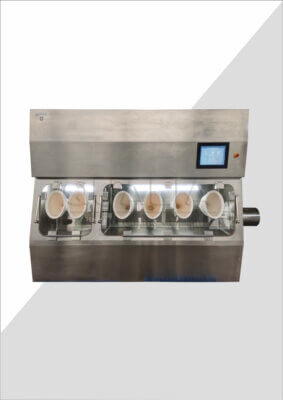
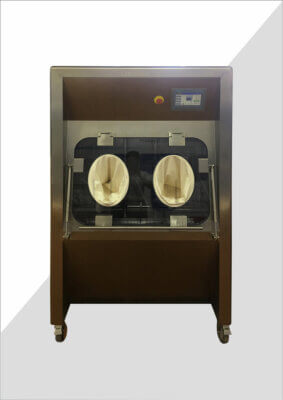
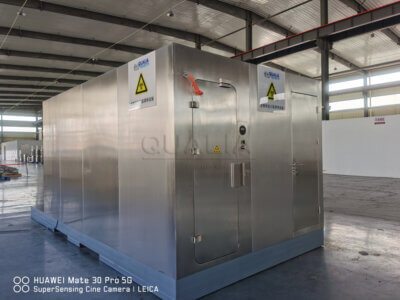
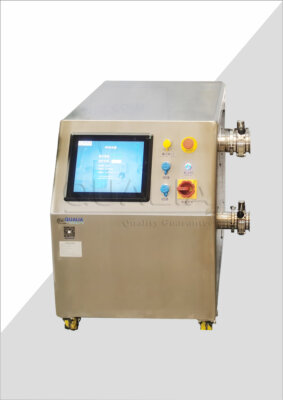
Need professional guidance to engineer your Performance Qualification documentation for a seamless parametric release framework? The experts at QUALIA specialize in developing validation strategies that transform PQ data into a competitive operational advantage. For a detailed analysis of how a modern VHP hydrogen peroxide sterilization system can be validated to support this data-driven approach, contact our technical team to discuss your facility’s requirements.
Frequently Asked Questions
Q: How do you define the critical parameters for parametric release of a VHP sterilization cycle?
A: The essential parameters are sterilant concentration, relative humidity, chamber pressure, and temperature, each with validated tolerances established during Performance Qualification. This documented specification becomes the active standard for every production cycle, replacing biological indicators as the primary release criterion. This means your PQ protocol must treat these parameter definitions as a critical quality document with long-term regulatory and operational significance, as outlined in ISO 22441:2022.
Q: Why is relative humidity (RH) so critical in VHP sterilization validation?
A: RH directly controls sterilant condensation and microbial kill efficacy, making it a primary process control variable. Your PQ must document specific RH levels during pre-conditioning and sterilant exposure to prove the validated relationship to microbiocidal effect. For operations implementing parametric release, you must prioritize reliable, calibrated RH monitoring as a non-negotiable element of your real-time process verification system.
Q: Can we use calculated sterilant concentration instead of direct measurement for parametric release?
A: Yes, evidence supports using the pressure differential and ideal gas law for accurate concentration calculation, which strongly correlates with microbial inactivation. Your PQ documentation must validate this chosen method and present data proving its reliability as an indicator of the microbiocidal effect. If your goal is to simplify monitoring and reduce probe maintenance costs, you should advocate for this calculated approach in your validation strategy and regulatory submissions.
Q: What is required to document the load configuration for a VHP parametric release program?
A: You must meticulously detail the validated “worst-case” load—including materials, packaging, density, and arrangement—and provide evidence it presents the greatest challenge to sterilant penetration. This load definition becomes a critical validation deliverable, as per standards like ISO/TS 21387. This means your supply chain and load planning processes gain critical quality importance and require strict configuration management from kit assembly through to sterilization.
Q: How do we transition from BI-based release to a parametric release framework using PQ data?
A: Implement a framework where each cycle’s release package verifies pre-cycle conditions, includes continuous data logs proving parameters stayed within PQ tolerances, states the final sterilant concentration, and includes a load configuration checklist. This shifts biological indicators to a periodic validation check role. For facilities seeking faster throughput, this data-rich framework creates a competitive advantage, but it demands an upgraded QMS integrating change control and skilled personnel for data interpretation, as supported by ISO 14937 principles.
Q: How should we use PQ data to establish real-time process control limits?
A: Analyze data from multiple consecutive PQ cycles using Statistical Process Control (SPC) tools to model inherent system variation and set statistically valid warning and action limits for critical parameters like pressure and temperature. This transforms sensor data into charts for actionable, real-time release decisions. If your facility adopts this, plan for a skilled labor transition, requiring personnel proficient in data interpretation beyond reading BI incubators.
Q: Which standards govern the documentation for a VHP sterilization parametric release program?
A: Your documentation strategy must align primarily with ISO 22441:2022 for VHP processes, incorporating its parametric release principles, and should integrate with the overarching quality system requirements found in standards like ISO 11135. This demonstrates a state of control to regulators. Therefore, implementing true parametric release is a systemic QMS upgrade encompassing change control and training, not just a procedural change in the sterilization department.
Related Contents:
- VHP vs Traditional Sterilization: 2025 Comparison
- VHP Sterilization in Healthcare: 2025 Best Practices
- Validated VHP Sterilization SOPs | Audit Checklist for Regulatory Compliance
- Lab Sterilization with VHP: 2025 Expert Guide
- The Complete Hydrogen Peroxide Sterilization Guide for Medical Device and Pharmaceutical Facilities: 2025 Standards and Best Practices
- VHP Sterilization Validation: 2025 Protocols
- VHP Sterilization Process: 2025 Comprehensive Guide
- Top 10 Advantages of VHP Sterilization in 2025
- VHP Generator Validation Protocols | FDA Approved Sterilization Standards