Operating a Class III Biosafety Cabinet (BSC) without current NSF/ANSI 49 certification is a critical safety and compliance failure. The certification process is not a bureaucratic formality but a rigorous, condition-dependent validation of your primary containment barrier. Misunderstanding the scope of field testing, recertification triggers, or certifier qualifications exposes your facility to unacceptable risk.
The 2024 revisions to NSF/ANSI 49 underscore the standard’s rapid evolution, demanding proactive management. This guide details the complete field testing protocol, compliance requirements, and strategic framework for maintaining an unbroken chain of certification, ensuring your high-containment work proceeds with validated protection.
What is NSF/ANSI 49 Certification for Class III BSCs?
Defining the Standard’s Role
NSF/ANSI 49 certification is the formal verification that a Class III BSC meets the rigorous design, construction, and performance criteria of the American National Standard. It confirms the cabinet provides the highest level of personnel, product, and environmental protection for work with Risk Group 3 and 4 pathogens. This certification is a lifecycle requirement, not a one-time factory event, and serves as the primary evidence of compliance during audits and inspections.
The Strategic Certification Ecosystem
The certification process itself functions as a strategic market barrier and opportunity. The accredited process for becoming a field certifier creates a specialized, high-value service sector. This allows certified providers and manufacturers with accredited in-house teams to command premium contracts, making the selection of a certifier a decision with long-term operational and financial implications. The standard is a rapidly evolving regulatory target, with significant annual revisions demanding continuous compliance monitoring.
A Global Compliance Passport
For laboratories operating in or supplying to international markets, NSF/ANSI 49 certification acts as a de facto global market passport. It and the EU’s EN 12469 are the dominant dual standards for biosafety cabinetry. Procurement specifications should mandate dual certification to maximize equipment utility, facilitate technology transfer, and protect resale value across multinational operations, a detail often overlooked in single-market sourcing.
Core Field Testing Requirements for Class III BSC Certification
The Mandated Test Sequence
Field certification is a multi-variable, condition-dependent process mandated after installation, relocation, filter changes, or annually. An accredited certifier must execute a defined sequence of tests, beginning with a comprehensive physical inspection for damage and cleanability of all interior surfaces. This foundational step identifies issues that could compromise containment or decontamination procedures before performance testing begins.
Validating Containment and Filtration
The core performance tests validate the cabinet’s primary protective functions. The pressure decay test assesses the gas-tight integrity of the entire cabinet shell. HEPA filter integrity tests, for both supply and exhaust filters, challenge the filtration barrier with a polydisperse aerosol to confirm ≥99.99% efficiency on 0.3-micron particles. Inflow velocity measurements ensure the system maintains proper directional airflow under negative pressure, a critical factor for containment.
Ensuring Holistic System Safety
Additional tests verify the complete operational safety envelope. Airflow smoke pattern tests provide visual confirmation of containment. Motor and blower performance tests confirm the system can maintain required pressures under load. Illumination tests (≥ 1000 lux) and noise level checks ensure operator safety and ergonomics, reflecting the standard’s expansion toward total worker health. Finally, electrical safety tests verify proper grounding (≤ 0.1 ohm) and alarm functionality.
The following table outlines the core field tests and their pass criteria.
Core Field Testing Requirements for Class III BSC Certification
| Test Category | Key Parameter / Measurement | Pass Criteria / Requirement |
|---|---|---|
| Physical Inspection | Surface cleanability, damage | No defects, cleanable surfaces |
| Cabinet Integrity | Pressure decay rate | Within standard limit |
| Filtration Integrity | HEPA filter leak test | ≤ 0.01% penetration (99.99% efficiency) |
| Airflow Safety | Inflow velocity measurement | Maintains negative pressure |
| Operator Environment | Illumination level | ≥ 1000 lux |
| Electrical Safety | Grounding resistance | ≤ 0.1 ohm |
Source: NSF/ANSI 49. This standard defines the mandatory field tests, performance criteria, and methodologies for certifying biosafety cabinets, including the specific tests and tolerances listed.
Understanding the Pressure Decay and HEPA Integrity Tests
The Pressure Decay Test: Verifying the Shell
The pressure decay test is the definitive method for assessing the gas-tight integrity of the Class III BSC’s welded shell and gasketed penetrations. The enclosure is pressurized with air, isolated, and the rate of pressure drop over a specified time is measured. A decay rate within the strict standard limit confirms there are no significant leaks in the cabinet walls, window seals, or glove port rings, ensuring the physical barrier is intact. In my experience, failures here most often trace to worn glove rings or degraded window gaskets, not the welded seams.
The HEPA Integrity Test: Challenging the Filter
The HEPA filter integrity test validates the critical filtration barrier. Both supply and exhaust filters are challenged upstream with a generated polydisperse aerosol, such as PAO or DOP. A scanning photometer or particle counter probes downstream across the filter media, its seal to the housing, and the housing itself to detect leakage. Passing this test confirms each filter provides the required 99.99% efficiency on 0.3-micron particles, preventing environmental release or product contamination.
The Critical Role of Configuration
Cabinet performance is intricately linked to specific model configurations. Technicians must apply manufacturer-specific correction factors during testing. Options like UV lights, additional pass-through ports, or altered service fixtures can affect system airflow and pressure set points. Using generic testing assumptions for a customized cabinet is invalid and creates a dangerous compliance gap, as the certified performance is tied to the exact as-built configuration.
The table below contrasts the objectives and technical details of these two pivotal tests.
Understanding the Pressure Decay and HEPA Integrity Tests
| Test | Primary Objective | Key Technical Detail |
|---|---|---|
| Pressure Decay | Verifies gas-tight cabinet shell | Measures pressure drop over time |
| HEPA Integrity | Validates filtration barrier | Challenges filter with polydisperse aerosol |
| HEPA Efficiency | Particle retention performance | 99.99% on 0.3-micron particles |
| Critical Factor | Model-specific configuration | Requires manufacturer correction factors |
Source: NSF/ANSI 49. The standard specifies the procedures, test agents (e.g., PAO, DOP), and acceptance criteria for these fundamental containment and filtration integrity tests.
Key Compliance and Documentation Requirements for Certification
Meeting Performance Parameters
Successful certification requires all test results to fall within the tolerances specified by NSF/ANSI 49 and the manufacturer’s model-specific listing. This includes inflow velocity, pressure decay rates, filter penetration, illumination, and electrical safety. Upon passing, an official, dated certification label is affixed to the cabinet. This label is the primary physical evidence of compliance and must remain legible; its absence during an audit is an immediate citation.
The Certification Report
The certifier must provide a detailed test report documenting all procedures, the calibrated instruments used (with calibration dates), raw and final results, and any corrective actions taken. This report is a vital quality assurance document. It provides the traceability required for pharmaceutical GMP environments and forms the baseline for future recertification comparisons. The certifier’s own accreditation under a recognized program, such as NSF’s, must be verifiable and current for the report to be valid.
Navigating Phased Model Certification
Manufacturers often employ a phased model certification strategy. Different serial number ranges of the same cabinet model may be certified to different editions of the standard (e.g., NSF/ANSI 49-2014 vs. 2022). This creates a mixed fleet within a single lab. Your compliance documentation must accurately pair each cabinet’s serial number with its correct certification baseline. Technicians must then apply the appropriate historical protocol during testing, complicating standardized record-keeping.
Maintaining Compliance: Recertification Triggers and Schedules
Time-Based and Event-Based Mandates
Compliance is maintained through a strict dual-trigger system. Annual recertification is non-negotiable, requiring a full battery of tests every 12 months. More critically, event-based recertification is required after any incident that could compromise containment. Lab managers must integrally link BSC certification logs to their asset relocation and maintenance calendars. Operating an uncertified cabinet post-move constitutes a critical safety failure, regardless of how carefully the move was executed.
Defining Recertification Events
Event-based triggers include cabinet relocation (any movement from its installed position), HEPA filter replacement, and any repair to interior surfaces, airflow paths, blowers, or control systems. Even minor repairs to sash handles or interior lighting require re-verification, as they involve breaching the cabinet envelope. A formal change control procedure that flags these events for the facility manager is essential to prevent oversights.
The schedule below outlines the primary triggers and their implications for laboratory operations.
Maintaining Compliance: Recertification Triggers and Schedules
| Recertification Trigger | Frequency / Condition | Implication |
|---|---|---|
| Time-based | Mandatory annual schedule | Full test battery every 12 months |
| Relocation | After any cabinet move | Full recertification required |
| Filter Change | Post HEPA replacement | Integrity and airflow tests |
| Repairs | To airflow or control systems | Event-based recertification |
| Standard Revision | Phased model certification | Mixed fleet compliance complexity |
Source: Technical documentation and industry specifications. Recertification schedules and triggers are mandated by NSF/ANSI 49 and manufacturer requirements to ensure ongoing safety and performance.
Selecting an Accredited Field Certifier: Key Qualifications
Accreditation as the Foundation
The paramount qualification is current accreditation under a recognized program like the NSF Biosafety Cabinet Field Certifier Accreditation Program. This accreditation is proof of competency in the required test methods and knowledge of the current standard. Always verify the accreditation status directly with the accrediting body. Given the standard’s rapid evolution, explicitly ask the certifier about their training on the latest revisions, such as the 2024 updates to alarm and disconnect requirements.
Model-Specific Expertise
Prioritize certifiers with demonstrated familiarity with your specific cabinet models and configurations. As performance is model-specific, experience with your manufacturer’s technical bulletins and correction factors is invaluable for accurate testing. A certifier applying generic parameters can produce a false pass or fail, both of which carry significant risk. Request references for similar projects or cabinet types.
Evaluating Service Logistics
In a globalized market, supply chain localization pressures are reshaping service logistics. With major manufacturers producing overseas, the need for local accredited technicians can create service bottlenecks. When selecting a certifier—or a cabinet manufacturer with in-house service—evaluate their regional network density, average response time, and parts inventory. This operational reliability is a key differentiator that impacts your lab’s continuity far more than a marginally lower service cost.
Common Certification Failures and How to Prevent Them
Analyzing Typical Failure Modes
Most certification failures are preventable and stem from maintenance lapses, environmental factors, or user error. Failed pressure decay tests frequently point to damaged glove rings, worn window gaskets, or poor sealant integrity at penetrations. Failed HEPA integrity tests typically indicate a compromised filter seal or, less commonly, damaged media from improper handling. Inflow or velocity failures often result from clogged pre-filters, blower performance drift, or improper cabinet balancing after a filter change.
The Risk of Misapplication
A critical, yet common, operational failure involves using the cabinet for inappropriate applications. Employing a Class II Type A2 cabinet for work with volatile chemicals, for example, breaches its certified safety limits, as these units are not designed for chemical containment. This misapplication poses a direct hazard and would cause a certification failure if tested under those conditions. User training must clearly define the cabinet’s operational envelope.
Proactive management focused on the common failure points listed below is the most effective prevention strategy.
Common Certification Failures and How to Prevent Them
| Failure Mode | Typical Cause | Preventive Action |
|---|---|---|
| Pressure Decay Fail | Damaged glove rings, gaskets | Pre-certification visual inspection |
| HEPA Integrity Fail | Compromised filter seal | Careful handling during changes |
| Inflow Velocity Fail | Clogged pre-filters, blower issues | Scheduled pre-filter maintenance |
| Operational Safety Fail | Misapplication beyond limits | User training on cabinet class |
| Documentation Fail | Incorrect model parameters | Maintain detailed asset register |
Source: NSF/ANSI 49. The standard outlines performance tolerances, and common failures often result from deviations in maintenance, testing procedures, or operational use outside the certified scope.
Developing a Proactive BSC Management and Safety Protocol
Building the Master Asset Register
A proactive protocol starts with a master asset register. This living document details each BSC’s model, serial number, certification baseline, installed configuration, and service history. This register enables accurate, model-specific maintenance and testing. It is the single source of truth for compliance officers and certifiers, preventing errors from using incorrect technical parameters for your specific units.
Integrating Training and Change Control
The protocol must enforce mandatory training for all users, ensuring they understand the cabinet’s protective limits and the severe consequences of misapplication. It must also establish a formal change control procedure. Any event triggering recertification—a move, repair, or filter change—must be logged through this system, automatically flagging the cabinet for decommissioning until it is recertified. This closed-loop process eliminates reliance on memory or informal notes.
Strategizing for Digital Integration
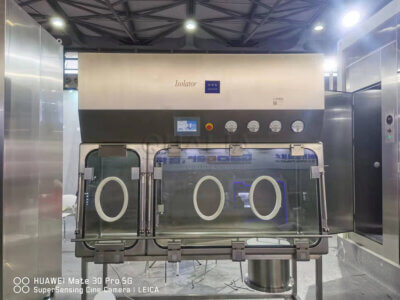
Forward-looking labs should evaluate digital integration as a competitive frontier. When procuring new units, consider smart features like ECM motors, filter life indicators, and built-in data-logging capabilities. These features enable predictive maintenance, provide continuous performance monitoring, and streamline compliance documentation by automatically generating audit trails. Investing in a modern OEB4/OEB5 isolator with these capabilities offers long-term lifecycle savings and risk reduction, positioning biosafety management as a cornerstone of a holistic laboratory safety culture.
Effective NSF/ANSI 49 compliance for Class III BSCs hinges on three integrated actions: selecting an accredited certifier with model-specific expertise, maintaining impeccable records tied to a master asset register, and enforcing a strict protocol for event-based recertification. This framework transforms certification from a reactive cost into a proactive safety and quality assurance program.
Need professional guidance to implement a compliant biosafety cabinet management protocol or specify certified equipment for your high-containment facility? The experts at QUALIA provide strategic consulting and solutions tailored to the evolving standards of BSL-3 and BSL-4 operations. For a direct consultation on your containment challenges, you can also Contact Us.
Frequently Asked Questions
Q: What triggers a mandatory recertification for a Class III biosafety cabinet beyond the annual schedule?
A: Event-based recertification is required after any incident that could compromise the cabinet’s containment integrity. This includes physical relocation, replacement of HEPA filters, or repairs to interior surfaces, airflow systems, blowers, or controls. This means your laboratory’s maintenance and asset relocation calendars must be formally integrated with your biosafety management protocol to prevent operating an unsafe, non-compliant unit.
Q: How do the pressure decay and HEPA integrity tests differ in what they validate for a Class III BSC?
A: The pressure decay test verifies the gas-tight integrity of the entire cabinet shell by measuring pressure loss over time, confirming the physical barrier has no leaks. The HEPA integrity test validates the filtration barrier by challenging filters with an aerosol and scanning for downstream leakage to confirm ≥99.99% efficiency on 0.3-micron particles. For operational planning, you must schedule both tests during certification, as they assess fundamentally different but equally critical containment functions.
Q: What are the most critical qualifications when selecting a field certifier for NSF/ANSI 49 compliance?
A: The certifier must hold current accreditation under a recognized program like the NSF Biosafety Cabinet Field Certifier Accreditation Program. You must also verify their specific experience with your cabinet model and configuration, as performance parameters and correction factors are model-specific. If your facility operates globally, prioritize certifiers with dense regional service networks to avoid bottlenecks and ensure reliable response times for compliance events.
Q: Why is understanding a cabinet’s specific model and serial number critical for accurate field testing?
A: Performance testing parameters and correction factors are uniquely defined by the manufacturer for each model and can vary even between serial number ranges of the same model certified to different standard editions. Technicians must apply these exact specifications during tests like inflow velocity measurement. This means your asset register must document precise model, serial number, and configuration data to prevent invalid—and potentially dangerous—generic testing assumptions.
Q: What common failures cause a Class III BSC to fail its pressure decay or HEPA integrity test?
A: Pressure decay failures typically stem from damaged glove port rings, degraded window gaskets, or failing sealants. HEPA integrity test failures usually indicate a breached filter seal or damaged filter media. For proactive risk management, implement a strict pre-certification visual inspection and maintenance schedule, and immediately log any physical impact or filter change event that necessitates recertification.
Q: How does NSF/ANSI 49 certification impact the global deployment or resale of Class III biosafety cabinets?
A: NSF/ANSI 49 and the European EN 12469 are the dominant dual standards for biosafety cabinetry. Certification to both standards acts as a de facto global market passport, maximizing utility and resale value across multinational operations. When procuring equipment, your specifications should explicitly mandate dual certification to ensure flexibility and long-term asset value.
Q: What key elements should a proactive BSC management protocol include beyond scheduling annual tests?
A: An effective protocol requires a master asset register with detailed configuration data, enforced procedures for event-based recertification triggers, and user training on operational limits to prevent misapplication. Strategically, evaluate new cabinets with smart features like data-logging for predictive maintenance. This positions biosafety management as a core component of laboratory safety culture and requires updating the protocol in response to the evolving standard.
Related Contents:
- NSF/ANSI 49: Biosafety Cabinet Standard Explained
- Biosafety Cabinet Certification: Why It’s Crucial
- Biosafety Cabinet Installation: What You Need to Know
- Biological Safety Cabinet Selection for BSL 2/3/4 Labs: Class I, II, III Comparison & NSF/ANSI 49 Compliance Requirements
- Biosafety Cabinet Certification: Training Overview
- EN 12469: Biosafety Isolator Performance Standard
- Biosafety Cabinet Sizes: Finding the Perfect Fit
- Biosafety Cabinet Validation: Ensuring Compliance
- Choosing the Right Biosafety Cabinet: 5 Key Factors