Building or operating an Animal Biosafety Level 3 (ABSL-3) facility is a monumental investment. The critical, and often costly, mistake is applying a generic BSL-3 standard without recognizing the profound operational and regulatory chasm between veterinary and pharmaceutical environments. A design or protocol optimized for agricultural pathogen containment can fail under pharmaceutical Good Laboratory Practice (GLP) scrutiny, and vice-versa. This misalignment leads to failed inspections, invalidated studies, and stranded capital.
The distinction is no longer academic. The convergence of zoonotic disease threats and advanced translational research demands facilities that can navigate both worlds. Understanding the core differences in regulatory DNA, risk vectors, and operational logistics is essential for making strategic decisions that protect your investment, ensure compliance, and enable your research mission.
Key Regulatory Frameworks: Veterinary vs. Pharmaceutical Oversight
The Foundational Jurisdictional Split
The entire compliance pathway is dictated by the primary objective of the work. Veterinary ABSL-3 operations fall under agencies like the USDA Animal and Plant Health Inspection Service (APHIS), with a mandate rooted in agricultural biosecurity and controlling foreign animal diseases. Permitting, such as the VS Form 16-6 for pathogen import, is geared toward preventing economic catastrophe in livestock industries. Pharmaceutical ABSL-3 research, in contrast, answers to human health agencies like the FDA and NIH. Its oversight focuses on drug/vaccine development safety, data integrity under GLP, and animal welfare via Institutional Animal Care and Use Committees (IACUC). Choosing the wrong regulatory starting point creates immediate, insurmountable roadblocks.
The Nuance of “Exposure History”
A critical and often overlooked detail in veterinary regulation is that USDA APHIS authority can be triggered by an agent’s “exposure history” to animals or animal products, not just its inherent pathogenicity. A cell line or reagent exposed to materials from a country with a reportable disease may suddenly require BSL-3 handling, creating complex supply chain liabilities. Furthermore, work with Select Agents is prohibited from standard USDA permit pathways and falls under the stricter Federal Select Agent Program, adding another layer of mandatory compliance. In my experience consulting with diagnostic labs, the most common audit finding stems from incomplete tracing of fetal bovine serum origins.
Strategic Alignment for Compliance
The strategic implication is clear: organizations must first align their project’s core objective with the correct regulatory agency’s mandate. This initial classification determines the permitting labyrinth, inspection criteria, and documentation standards. Attempting to retrofit a facility or protocol after the fact is prohibitively expensive. Proactive engagement with both agricultural and public health regulators is essential for projects operating in jurisdictional gray areas, such as zoonotic disease research with dual-use potential.
Pathogen Scope & Animal Models: A Critical Operational Difference
Defining the Risk Profile
The agents and animal models directly define the containment risk profile and facility design. Veterinary facilities prioritize pathogens with agricultural economic and trade impacts, such as Foot-and-Mouth Disease virus, avian influenza, and Brucella. Work frequently involves the natural hosts: cattle, swine, and poultry. The primary risk vector is pathogen escape into local livestock populations. Pharmaceutical environments center on human infectious diseases (e.g., tuberculosis, viral hemorrhagic fevers) and employ animal models that best mimic human physiology, such as non-human primates (NHPs) or transgenic mice. The containment focus is on preventing human infection within the research setting.
Logistical Implications of Model Choice
The choice of animal model has profound logistical implications. Housing and handling large agricultural species require fundamentally different infrastructure than maintaining NHPs or rodents for precision research. The increasing use of complex translational models forces pharmaceutical BSL-3 suites to converge the operational demands of high-containment engineering, specialized veterinary clinical care, and rigorous research protocols. This convergence dictates talent strategy.
The Evolving Talent Requirement
The strategic implication is that talent strategy must evolve beyond traditional biosafety officers. Recruiting or training professionals who can bridge animal biosafety, veterinary medicine, and pharmaceutical research protocols is becoming a critical success factor. As model complexity grows, so does the need for integrated expertise to manage animal welfare, scientific validity, and containment integrity simultaneously.
The table below illustrates the direct correlation between research focus, pathogen type, and animal model, highlighting the operational divergence.
| Primary Focus | Key Pathogen Examples | Typical Animal Models |
|---|---|---|
| Agricultural Biosecurity | Foot-and-Mouth Disease virus | Cattle, Swine |
| Agricultural Biosecurity | Avian influenza | Poultry |
| Agricultural Biosecurity | Brucella species | Large livestock |
| Human Therapeutic Development | Viral hemorrhagic fevers | Non-human primates |
| Human Therapeutic Development | Tuberculosis | Transgenic mice |
Source: Technical documentation and industry specifications.
Facility Inspection & Permitting: USDA vs. FDA/IACUC Focus
The Prerequisite of Certification
For veterinary work with high-consequence pathogens, USDA APHIS typically mandates a facility inspection and certification before issuing operational permits. This creates a sequential dependency where significant capital investment in a certified containment facility is a non-negotiable prerequisite for licensing. The inspection assesses the physical and operational ability to contain the specific agricultural threat. There is no room for provisional approval.
The Emphasis on Data and Welfare
Pharmaceutical facility inspections, while subject to Select Agent Program rules if applicable, place heavy emphasis on different benchmarks. The IACUC and AAALAC International focus intensely on animal welfare protocol adherence. The FDA, for studies supporting regulatory submissions, scrutinizes data integrity under GLP. Every piece of equipment, especially if modified for BSL-3 compatibility, must undergo rigorous performance qualification (PQ) to prove it does not compromise study data quality.
The Strategic Timeline Impact
The strategic implication for planning is stark. Veterinary infectious disease research must budget for significant lead time—often 12-18 months or more—for design, construction, and facility certification ahead of any experimental timeline. Pharmaceutical projects must build in time and resource allocation for extensive equipment validation and documentation to satisfy GLP auditors, a step often underestimated in early planning.
Operational Adaptations for Large Animals vs. Precision Research
Engineering for Scale vs. Precision
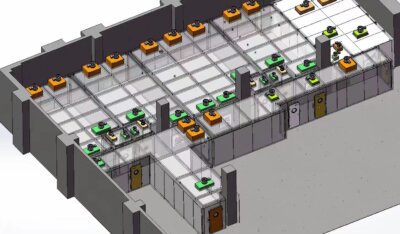
Practical containment implementation diverges sharply. Veterinary operations handling large animal necropsies require containable floors with high-volume drainage, specialized carcass waste handling systems (e.g., alkaline hydrolysis), and HVAC designed for the heat and particulate load of large animal rooms. The physical scale drives engineering. Pharmaceutical research, particularly involving in vivo imaging, employs a separation strategy. The BSL-3 animal area is physically separated from sensitive, expensive instrumentation located in a BSL-1 or BSL-2 area.
The Trade-offs of Adapted Technology
A common method is modifying clinical imaging scanners with containment tubes or sealed chambers. For instance, a PET/CT scanner can be fitted with a poly-methyl methacrylate (PMMA) tube, allowing imaging of an infected animal while the scanner remains outside the containment zone. However, this adaptation involves quantifiable trade-offs. The tube causes a measurable decrease in system sensitivity and increases image noise, which must be calibrated for and factored into experimental design.
Making Informed Compromises
The strategic implication is that institutions investing in hybrid BSL-3 imaging must accept and quantify these performance reductions. This data must be integrated into dosing calculations, sample size justifications, and data interpretation protocols. The decision to adapt equipment is not just an engineering challenge but a statistical one, impacting the fundamental validity of the research data produced.
The following table contrasts the key operational adaptations and their inherent trade-offs in each environment.
| Environment | Key Adaptation | Technical Trade-off/Consideration |
|---|---|---|
| Veterinary ABSL-3 | Large necropsy floors | High-volume waste handling |
| Veterinary ABSL-3 | Reinforced animal housing | Large-scale HVAC systems |
| Pharmaceutical ABSL-3 | BSL-3 / BSL-1 separation strategy | Containment tubes/chambers |
| Pharmaceutical ABSL-3 | Modified imaging equipment (e.g., PET/CT) | Decreased system sensitivity |
| Pharmaceutical ABSL-3 | Modified imaging equipment (e.g., PET/CT) | Increased image noise |
Source: Technical documentation and industry specifications.
Occupational Health Programs: Zoonotic vs. Human Pathogen Risks
Tailoring Medical Surveillance
Both environments mandate rigorous occupational health programs, but the risk profile dictates their design. In veterinary settings, personnel face prominent risks from zoonotic pathogens like Coxiella burnetii (Q fever) or avian influenza. Surveillance programs therefore emphasize pre-employment and periodic serological monitoring to establish baselines and detect asymptomatic seroconversion. Training focuses on risks from aerosols generated by livestock and environmental contamination.
Protecting Both People and Equipment
Pharmaceutical settings centered on human-adapted pathogens may involve symptom monitoring and specific testing for the agent under study. Protocols also extend to protecting specialized equipment within the suite, such as using HEPA-filtered enclosures for centrifuges to prevent contamination. The blurring line between human and veterinary pathogens creates overlapping risk categories that challenge standard program templates.
The Need for Adaptive Protocols
The strategic implication is that occupational health programs cannot be static. Proactive engagement with both agricultural and public health regulators is essential to define appropriate medical surveillance for projects in gray areas. Programs must be adaptable, with clear protocols for emerging zoonoses, and should include training on the distinct risk vectors present in each type of work environment.
Cost Drivers & Budget Implications for Each Environment
Capital Expenditure Priorities
Capital costs are driven by different primary factors. Veterinary ABSL-3 facilities incur major expenses from large-scale infrastructure: reinforced animal housing, large-volume waste treatment systems for carcasses, and HVAC systems capable of handling big animal rooms. The upfront cost of achieving facility certification for permit eligibility is a significant, non-negotiable budget line. Pharmaceutical ABSL-3 costs are heavily influenced by the integration of sophisticated, containment-compatible instrumentation. The purchase, modification, and ongoing validation of equipment like PET/CT or MRI scanners represent a substantial, recurring investment.
Operational and Hidden Costs
Operational complexity also diverges. Pharmaceutical environments managing live-animal studies within high containment face increased labor costs for highly specialized staff who can navigate the dual demands of science and safety. A critical hidden cost stems from the dynamic regulatory landscape; the linkage of permit requirements to the animal disease status of a reagent’s country of origin necessitates real-time supply chain intelligence to avoid unexpected BSL-3 containment mandates.
Strategic Budgeting Insights
The strategic implication for financial planning is twofold. For veterinary projects, budgets must front-load capital for certification. For pharmaceutical projects, they must accurately forecast the total cost of ownership for specialized equipment, including validation and specialized labor. Procurement teams in both sectors must develop dynamic risk-assessment capabilities tied to global animal disease outbreaks.
The cost structures for each pathway highlight fundamentally different financial planning requirements.
| Cost Category | Veterinary ABSL-3 Driver | Pharmaceutical ABSL-3 Driver |
|---|---|---|
| Capital Expenditure | Facility certification for permits | Containment-compatible instrumentation |
| Infrastructure | Large-volume waste treatment systems | Equipment modification & validation |
| Infrastructure | HVAC for large animal rooms | Complex live-animal study logistics |
| Operational Cost | Carcass handling systems | Highly specialized staff labor |
| Hidden Cost | N/A (built into capital) | Supply chain disease-status intelligence |
Source: Technical documentation and industry specifications.
Choosing the Right Standards: A Decision Framework for Your Lab
A Systematic Four-Factor Assessment
Selecting the appropriate ABSL-3 standards requires a systematic assessment of core project parameters. First, definitively answer the primary objective question: agricultural disease control or human therapeutic development? This points to the lead regulatory agency (USDA vs. FDA/NIH). Second, classify the biological agent with absolute certainty, checking both its inherent pathogenicity and its “exposure history” to animal-derived materials. This dictates Select Agent status and handling protocols under the NIH Guidelines for Research Involving Recombinant DNA Molecules or other relevant frameworks.
Evaluating Model and Strategic Direction
Third, evaluate the animal model. Large agricultural species demand one set of facility adaptations, while precision models interfacing with complex equipment demand another. Fourth, assess the long-term strategic direction of your institution. Veterinary BSL-3 is trending toward integrated “One Health” diagnostics, while pharmaceutical BSL-3 is grappling with the logistics of increasingly complex models. Investment decisions should favor flexible infrastructure and hybrid expertise to meet future demands for dual-use capabilities.
Building for Future Convergence
The ultimate strategic implication is to build with convergence in mind. While standards must be applied correctly for current projects, infrastructure and talent investments should anticipate the blending of agricultural and human health research. Flexible facility design that can accommodate different scales of animal work and adaptable operational protocols will provide the greatest long-term value and resilience.
The decision framework below helps navigate the initial critical choices that set the entire project on the correct regulatory and operational path.
| Decision Factor | Veterinary Pathway Indicator | Pharmaceutical Pathway Indicator |
|---|---|---|
| Primary Objective | Agricultural disease control | Human therapeutic development |
| Lead Regulatory Agency | USDA APHIS | FDA, NIH |
| Agent Classification | Economic/zoonotic trade impact | Human infectious disease focus |
| Animal Model Scale | Large agricultural species | Precision models (e.g., NHPs, rodents) |
| Strategic Trend | Integrated “One Health” diagnostics | Complex model logistics |
Source: NIH Guidelines for Research Involving Recombinant DNA Molecules. This foundational biosafety standard outlines containment requirements for research involving potentially hazardous agents, directly informing the regulatory and safety framework for pharmaceutical pathway research involving recombinant DNA or infectious agents.
The divergence between veterinary and pharmaceutical ABSL-3 standards is not a minor technicality but a fundamental strategic fork in the road. The core decision points—regulatory jurisdiction, agent classification, animal model scale, and long-term mission—determine everything from capital allocation to daily workflows. Misalignment at any point risks compliance failures, data integrity issues, and financial losses. Prioritize a definitive project classification before design begins, and ensure your biosafety and operational teams are fluent in the specific language of your required regulatory pathway.
Need professional guidance to navigate the complex intersection of high-containment biosafety and specialized animal research support? The experts at QUALIA provide strategic consulting to align your facility design, operational protocols, and compliance strategy with the precise demands of your research environment. Contact our team to develop a framework tailored to your specific objectives.
Frequently Asked Questions
Q: How does the primary regulatory agency for our project affect ABSL-3 facility planning and permitting?
A: The lead agency defines your compliance pathway and project prerequisites. Veterinary work under USDA APHIS requires facility inspection and certification before permit issuance, making capital investment a non-negotiable first step. Pharmaceutical research under FDA/NIH oversight focuses on data integrity and animal welfare, with inspections often tied to IACUC and GLP standards. This means your strategic timeline must allocate significant lead time for USDA-driven facility certification, while FDA-focused projects should prioritize equipment validation and protocol documentation from the start.
Q: What is the “exposure history” concept in veterinary BSL-3 regulation, and why does it matter for our supply chain?
A: USDA APHIS regulates materials based on their contact with animals or animal products, not just inherent pathogenicity. For example, a cell line exposed to serum from a country with a reportable disease may trigger BSL-3 handling requirements, regardless of the cell line’s own risk profile. This creates complex supply chain liabilities and can unexpectedly elevate containment needs for common reagents. Your procurement team must implement rigorous, real-time tracing for all animal-derived materials to avoid project delays and invalidated permits.
Q: How do operational adaptations differ for large animal veterinary work versus precision pharmaceutical research in ABSL-3?
A: Veterinary facilities prioritize large-scale containment for livestock, requiring reinforced housing, large-volume carcass waste systems, and ventilation for big animal rooms. Pharmaceutical suites often separate animal holding (BSL-3) from sensitive instrumentation (BSL-1) using containment tubes or sealed chambers, which allows for complex analytics but can reduce equipment performance. If your research involves advanced imaging, you must accept and calibrate for these performance trade-offs in your experimental design and data analysis.
Q: What are the key differences in occupational health program design for zoonotic versus human-adapted pathogen risks?
A: Programs are shaped by the dominant risk profile. Veterinary settings with zoonotic threats like Q fever emphasize pre-employment and periodic serological monitoring to detect symptomless exposure, with training focused on livestock-generated aerosols. Pharmaceutical settings with human-adapted pathogens may center on agent-specific symptom monitoring and protecting containment equipment. For projects involving pathogens like SARS-CoV-2 in animals, you must proactively engage both agricultural and public health regulators to define appropriate, adaptable medical surveillance protocols.
Q: How should we classify a biological agent to determine the correct ABSL-3 handling standards?
A: You must perform a definitive, two-part classification. First, verify the agent’s inherent pathogenicity and its status under the NIH Guidelines for Research Involving Recombinant DNA Molecules. Second, investigate its complete “exposure history” to any animal-derived materials during production or handling, as this dictates USDA oversight and potential Select Agent status. Beginning workflow planning without this complete classification risks using invalid permits and causing significant project delays.
Q: What are the major cost drivers for building and operating a veterinary versus a pharmaceutical ABSL-3 facility?
A: Capital costs diverge sharply. Veterinary facilities are driven by large-scale infrastructure: reinforced large-animal housing, high-volume waste treatment, and HVAC for big rooms. Pharmaceutical costs are dominated by integrating and validating containment-compatible, sophisticated instrumentation like modified PET/CT scanners. Your budget must prioritize upfront facility certification costs for veterinary work, while pharmaceutical planning should focus on the lifecycle costs of specialized equipment and the highly skilled labor required for complex in vivo studies.
Related Contents:
- BSL-4 Animal Research: Ensuring Handler Safety
- Animal BSL-3 Laboratories for Veterinary and Infectious Disease Research in the Pharmaceutical Industry
- BSL-3 Animal Housing: Safe Containment Systems
- BSL-3 Animal Research: Facility Design Guide
- Zoonotic Diseases: BSL-4 Lab Investigations Revealed
- Zoonotic Disease Studies in BSL-3 Labs: Insights
- BSL-4 Biodefense: Cutting-Edge Research Programs
- Global Disease Surveillance: BSL-4 Lab Networks
- BSL-3 Research: Infectious Disease Breakthroughs