For professionals specifying ISO 5 cleanrooms, the choice between 50% and 100% HEPA ceiling coverage is a critical design pivot. This decision dictates not only initial capital outlay but also long-term operational performance, energy consumption, and certification certainty. Misconceptions persist that a 50% layout is simply a cost-saving alternative, but the reality involves a complex trade-off between system integration, airflow physics, and total cost of ownership.
The selection is increasingly urgent as industries from pharmaceuticals to advanced electronics face stricter regulatory scrutiny and sustainability mandates. The enormous energy demand of maintaining 240-600 air changes per hour (ACH) directly conflicts with corporate ESG goals, making efficiency a competitive differentiator. Understanding the technical and financial implications of each layout is essential for making a future-proof investment that balances compliance, cost, and operational flexibility.
HEPA Ceiling Coverage: Defining 50% vs. 100% Layouts
The Core Design Distinction
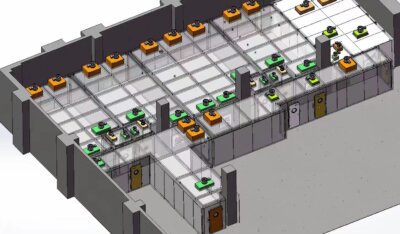
Ceiling coverage percentage refers to the proportion of the ceiling grid occupied by HEPA fan filter units (FFUs). A 50% layout strategically distributes FFUs over approximately half the ceiling area, leaving open grid space for conventional lighting, sprinklers, and other utilities. To meet the stringent ISO 5 ACH requirement, these fewer FFUs must operate at higher discharge velocities. In contrast, a 100% layout creates a continuous grid of FFUs, forming a complete ceiling of unidirectional, laminar airflow. This design maximizes particle sweeping efficiency but necessitates specialized, low-profile integrations for all ancillary services. The choice fundamentally represents a trade-off between initial system simplicity and ultimate airflow control.
Engineering the Airflow Profile
Achieving laminar flow is the primary objective for ISO 5 classification. The 100% coverage configuration is engineered to provide the most uniform and robust downward flow, minimizing turbulence at the source. The 50% layout requires precise aerodynamic engineering to ensure laminar flow plumes from each FFU merge effectively and reach all critical work zones without significant degradation. Industry experts recommend that the latter approach demands more rigorous computational fluid dynamics (CFD) modeling during design to predict and mitigate potential edge effects or dead zones around uncovered ceiling sections.
Integration and Physical Constraints
The chosen layout immediately constrains all other architectural and MEP systems. A 50% coverage design allows for the conventional placement of ceiling-mounted utilities in the open grid spaces, which can simplify initial coordination and potentially lower fit-out costs. A 100% coverage layout forces all other systems to be subordinate to airflow physics. This typically requires specialized teardrop lighting mounted between FFUs and often dictates a raised perforated floor system for air return, increasing the complexity and cost of these ancillary components. From our experience in modular construction, we’ve found that resolving these utility conflicts early is paramount to avoiding costly field modifications.
| Feature | 50% Coverage Layout | 100% Coverage Layout |
|---|---|---|
| Ceiling Grid Occupancy | ~50% | 100% |
| FFU Discharge Velocity | Higher velocity | Lower, uniform velocity |
| Air Changes Per Hour (ACH) | 240-600 ACH | 240-600 ACH |
| Airflow Pattern | Engineered laminar flow | Continuous laminar “wall” |
| Utility Integration Space | Conventional placement possible | Specialized, low-profile required |
Source: ISO 14644-4:2022 Cleanrooms and associated controlled environments — Part 4: Design, construction and start-up. This standard provides requirements for cleanroom design, including air filtration systems and airflow patterns, directly governing the engineering principles for achieving target ISO classes through HEPA coverage and airflow uniformity as detailed in the table.
Cost Comparison: Capital Investment vs. Long-Term Operational Expense
Analyzing Upfront Capital Outlay
The financial analysis begins with capital expenditure. The 50% layout offers a clear advantage in initial hardware costs due to the purchase of roughly half the number of FFUs. This can present an attractive reduction in upfront budget, particularly for large cleanroom footprints. However, this saving is only one part of the equation. The 100% layout requires a higher initial investment in filtration hardware but establishes the foundation for potentially lower and more predictable operating costs. This dynamic frames a strategic capital allocation decision: minimize initial outlay or invest more upfront for operational stability.
Projecting Operational and Lifecycle Costs
Long-term expenses reveal a different picture. In a 50% layout, individual FFUs must work harder, running at higher fan speeds to achieve the target ACH. This increases per-unit energy consumption, generates more operational noise, and may accelerate filter loading, reducing service life and increasing maintenance frequency. A well-designed 100% system utilizes more units operating at lower, more efficient speeds to deliver the same total airflow. This can lead to better aggregate energy efficiency, quieter operation, and extended filter life. The total cost of ownership model must factor in these variable expenses over the facility’s lifespan.
| Cost Factor | 50% Coverage Layout | 100% Coverage Layout |
|---|---|---|
| Initial Capital Investment | Lower | Higher |
| FFU Energy Consumption | Higher per unit | Lower, aggregate optimized |
| Operational Noise Level | Typically higher | Potentially quieter |
| Filter Lifespan Impact | May be reduced | More favorable |
| Long-Term Cost Predictability | Lower | Higher |
Source: Technical documentation and industry specifications.
Airflow Performance & Particle Control: A Direct Technical Comparison
Uniformity and Turbulence
Airflow performance is the critical differentiator. The 100% coverage configuration provides the most uniform and robust laminar flow profile, effectively minimizing turbulence at the source. This creates a predictable “wall” of air that offers superior particle sweeping capability across the entire work zone. The 50% layout, while capable of meeting ISO 5 particle counts, is inherently more susceptible to flow variations. It requires meticulous engineering to ensure laminar flow plumes merge correctly and can exhibit more pronounced edge effects or minor turbulence around the uncovered ceiling sections, which could compromise particle control at critical locations.
Assurance in Validation and Compliance
This performance gap directly impacts validation certainty. The continuous laminar flow of a 100% layout simplifies the process of demonstrating compliance with ISO 14644-1:2015 for particle concentration and airflow uniformity. It offers a higher margin of safety, reducing the risk of test failure during certification. The 50% layout, while permissible, often carries higher validation complexity and risk. This is why the industry trend is decisively shifting toward risk-averse, full-coverage designs for critical applications, prioritizing guaranteed certification over initial cost savings.
| Performance Metric | 50% Coverage Layout | 100% Coverage Layout |
|---|---|---|
| Flow Uniformity | Requires precise engineering | Most uniform & robust |
| Turbulence Potential | More pronounced edge effects | Minimized turbulence |
| Particle Sweeping Capability | Good | Superior |
| Compliance Assurance Risk | Higher validation complexity | Highest assurance |
| Industry Trend | Permissible | Default for critical ops |
Source: IEST-RP-CC012.3 Considerations in Cleanroom Design. This industry-recommended practice provides detailed guidance on cleanroom design considerations, including airflow patterns and particle control effectiveness, which form the basis for the technical performance comparison between the two layout strategies.
Design Integration & Flexibility: Balancing Utilities with Airflow
The Utility Coordination Challenge
The ceiling layout dictates the integration strategy for all other building services. The 50% model offers a pragmatic solution for projects where utility routing is a primary constraint, allowing lights, fire suppression heads, and sensors to occupy standard positions in the open grid. The 100% model demands innovation, forcing the use of low-profile, teardrop-style lighting and often requiring services to be routed through interstitial spaces or specialized raceways. This necessitates earlier and more collaborative design phases between architectural, mechanical, and electrical teams to avoid conflicts that could impede airflow or compromise cleanroom integrity.
The Critical Role of Supporting Architecture
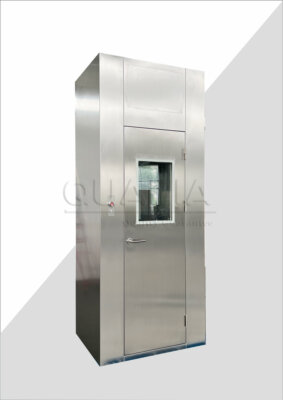
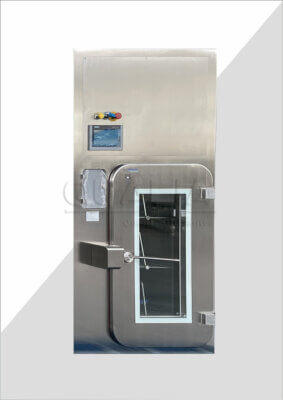
Achieving and maintaining ISO 5 classification is not solely an HVAC achievement. The core cleanroom’s performance is dependent on its supporting containment architecture. Both layouts require properly sized airlocks and cascade pressure zones—such as an ISO 7 or ISO 8 gowning room—to act as contamination buffers. These spaces are non-negotiable for protecting the core environment from particulate ingress during personnel movement. Neglecting the design and balancing of these ancillary zones will undermine the performance of even the most advanced HEPA ceiling system, a common oversight in projects focused solely on the main room’s specifications.
Which Layout Is Better for Energy Efficiency and Noise?
Decoding the Efficiency Equation
Energy efficiency is not intrinsically tied to coverage percentage but to overall system design optimization. A 50% layout with high-speed fans risks higher per-unit energy draw and lower system-level efficiency. Conversely, a 100% layout with many low-speed FFUs can be precisely optimized for aggregate efficiency, especially when incorporating variable-air-volume (VAV) technology that adjusts fan speed based on real-time particle counts or occupancy. The massive energy load of continuous HEPA filtration is a key driver for innovation, making high-efficiency FFU motors and integrated energy recovery systems a significant competitive advantage for modern mobile high-containment laboratory solutions.
Acoustic Performance and Operator Environment
Noise generation is a direct function of fan speed. The higher operational velocities required in a 50% layout typically result in greater acoustic output per FFU, which can aggregate into a noticeably louder ambient environment. A well-designed 100% system with slower-spinning fans can achieve a quieter workspace. This is a critical factor for operator comfort, productivity, and safety, as excessive noise can lead to fatigue and difficulty communicating in a controlled environment. Specifiers must consider acoustic performance data alongside airflow specifications.
| Operational Parameter | 50% Coverage Layout | 100% Coverage Layout |
|---|---|---|
| Per-FFU Energy Draw | Higher | Lower |
| System-Level Efficiency | Risk of lower efficiency | Optimizable for high efficiency |
| Typical Noise Generation | Higher operational sound | Quieter overall environment |
| Key Enabling Technology | Standard FFUs | VAV FFUs, energy recovery |
| Impact on Operator Comfort | Lower | Higher |
Source: Technical documentation and industry specifications.
Selecting the Right Layout: Key Decision Criteria for Your Application
Conducting a Process-Driven Risk Assessment
The final selection must be driven by a formal risk assessment of the intended processes. A 100% coverage layout is effectively mandated for applications where any turbulence or particle retention is unacceptable, such as aseptic filling, advanced semiconductor lithography, or certain cell therapy workflows. It provides the highest assurance for validation and ongoing compliance. A 50% layout may be technically suitable for less particle-sensitive ISO 5 applications, such as some medical device assembly or optical manufacturing, where the process can tolerate a slightly higher risk profile and where utility integration challenges are paramount.
Matching Airflow Design with Procedural Rigor
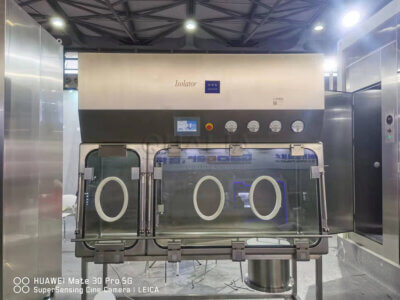
A critical, often underestimated factor is that personnel are the dominant contaminant source in an operational cleanroom. Therefore, capital investments in advanced airflow design can be nullified by inadequate procedural controls. The selected HEPA layout must be supported by an equally rigorous program of personnel training, validated gowning procedures, and strict material transfer protocols. For a 50% layout, this is especially crucial, as the margin for error in particle control is smaller. Supplementing with local laminar flow hoods at specific high-risk workstations can be a strategic compromise to enhance protection without committing to full ceiling coverage.
| Decision Driver | Favors 100% Coverage | Favors 50% Coverage |
|---|---|---|
| Process Criticality | Aseptic filling, lithography | Less particle-sensitive ISO 5 |
| Risk Tolerance | Zero turbulence acceptable | Managed risk acceptable |
| Validation Certainty | Highest priority | Secondary priority |
| Utility Integration Need | Subordinate to airflow | Primary constraint |
| Supplemental Control | Not typically required | Local laminar flow hoods |
Source: ISO 14644-1:2015 Cleanrooms and associated controlled environments — Part 1: Classification of air cleanliness by particle concentration. This standard defines the ISO Class 5 particle concentration limits, establishing the fundamental performance requirement that drives the risk-based application assessment for selecting an appropriate HEPA coverage layout to achieve certification.
Implementation & Certification for Prefabricated Modular Cleanrooms
Technical Execution with Modular Systems
Prefabricated modular construction offers distinct advantages for implementing either HEPA layout, particularly in ensuring airtight integrity and precise FFU grid alignment. Key technical execution points include the use of a negative-pressure plenum above the ceiling to protect the cleanroom from attic contamination, and properly sizing low-wall grilles or a perforated raised floor to ensure balanced return airflow. Modular systems inherently provide the structural precision needed for both 50% and 100% FFU mounting, turning the ceiling into a predictable, manufactured component rather than a site-built variable.
Navigating the Certification Protocol
Certification against ISO 14644-1 involves a series of definitive tests: particle count certification, airflow velocity and uniformity measurement, and airflow visualization (smoke testing) to confirm unidirectional flow. The selected HEPA layout must demonstrably pass these tests in all three states: “as-built,” “at-rest,” and “operational.” The predictability and panel-based integrity of a prefabricated modular cleanroom significantly de-risk this certification process. This speed and certainty are primary reasons modular solutions are capturing market share from traditional construction, as they directly mitigate the risk of facility obsolescence and lengthy validation delays.
Future-Proofing Your Cleanroom: Considerations for Reconfiguration
Designing for Inherent Adaptability
Future-proofing requires designing the facility with physical and technological adaptability in mind. Modular cleanrooms excel here; their prefabricated panels and standardized FFU grid systems can be disassembled, reconfigured, or expanded with minimal disruption to adjacent operations. When planning the initial layout, consider potential process changes, throughput increases, or the adoption of stricter future classifications. A 100% coverage layout’s uniform grid provides the most consistent and flexible foundation for any future change, as the entire ceiling is already an active filtration plane.
Integrating Data-Driven Intelligence
The integration of sensor networks and data analytics is transitioning from a premium option to a standard requirement for a future-proof asset. Embedded IoT sensors for continuous particle monitoring, pressure differential, temperature, and humidity enable real-time performance dashboards, predictive maintenance alerts, and sophisticated root-cause analysis for contamination events. This transforms the cleanroom from a static controlled environment into a smart, data-driven asset. This intelligence not only protects your operational integrity but also provides auditable data to streamline regulatory compliance and optimize lifecycle costs.
The decision between 50% and 100% HEPA coverage hinges on a clear-eyed evaluation of process risk, total cost of ownership, and long-term facility strategy. Prioritize 100% coverage for zero-tolerance particle control and maximum validation certainty. Consider a 50% layout only for less critical ISO 5 applications where utility integration is a dominant constraint, and be prepared to supplement with localized controls and rigorous procedures. In both cases, the integrity of supporting buffer zones and personnel protocols is non-negotiable for achieving designed performance.
Need a partner to navigate these complex design trade-offs for your next project? The engineering team at QUALIA specializes in translating technical requirements into optimized, certifiable modular cleanroom solutions. Contact us to discuss your specific application and certification goals.
Frequently Asked Questions
Q: What are the key technical differences in airflow performance between a 50% and 100% HEPA ceiling coverage layout?
A: A 100% coverage layout creates a continuous wall of unidirectional airflow, delivering superior laminar flow uniformity and particle sweeping efficiency. A 50% layout can be susceptible to turbulence and edge effects around uncovered ceiling sections, requiring precise engineering to ensure coverage. This means operations like aseptic filling, where any turbulence is unacceptable, should prioritize a 100% design for guaranteed compliance, as detailed in airflow design guidance from ISO 14644-4:2022.
Q: How does the choice between 50% and 100% coverage impact our total cost of ownership?
A: The choice represents a strategic capital vs. operational expense trade-off. A 50% layout lowers initial hardware costs but typically incurs higher long-term energy and maintenance costs due to FFUs running at higher speeds. A 100% layout requires greater upfront investment but often achieves better aggregate energy efficiency with many units operating at lower speeds. For projects where predictable operational costs and reliability are critical, you should plan for the higher initial investment of a full-coverage system.
Q: Which HEPA layout is more suitable for integrating standard ceiling utilities like lighting?
A: A 50% coverage design provides open grid space for conventional placement of lights, sprinklers, and sensors, simplifying initial MEP integration. A 100% layout forces all utilities to be subordinate to airflow, necessitating specialized low-profile fixtures like teardrop lights mounted between FFUs. This means facilities with significant utility integration constraints or budget limitations for custom components may find a 50% layout more practical, though it requires careful design to avoid compromising air cleanliness.
Q: How do we validate that our chosen HEPA filter layout meets ISO 5 classification requirements?
A: Certification against ISO 14644-1:2015 requires passing particle count, airflow velocity/uniformity, and airflow visualization tests in as-built, at-rest, and operational states. Your selected layout must demonstrably achieve the required 240-600 air changes per hour with proper unidirectional flow. This means you should design with a clear validation margin, as a 100% coverage layout typically provides higher assurance for passing these critical tests, reducing certification risk.
Q: What are the primary decision criteria for selecting a 50% versus a 100% HEPA coverage layout?
A: Selection hinges on a risk assessment of your application’s particle sensitivity and regulatory demands. A 100% layout is mandated for critical processes like semiconductor lithography or sterile filling. A 50% layout may be suitable for less sensitive ISO 5 applications or where utility integration is a primary driver. This means you must balance airflow certainty against integration complexity, and always pair your HVAC investment with rigorous personnel procedural controls, which are a dominant contamination source.
Q: Can a prefabricated modular cleanroom be reconfigured if we need to change our HEPA layout later?
A: Yes, modular cleanrooms are designed for adaptability, with prefabricated panels and standardized FFU grids that allow for reconfiguration or expansion with minimal disruption. A 100% layout’s uniform grid provides a consistent foundation for future changes, while a 50% layout may offer slightly easier re-routing of utilities. This means planning for potential process changes or stricter future classifications is essential, and modular construction directly mitigates the risk of facility obsolescence.
Q: How does HEPA ceiling coverage affect operational noise and energy efficiency goals?
A: Energy efficiency depends on system design, not coverage percentage alone. A 50% layout with high-speed fans typically consumes more energy per unit and generates more noise, while a well-designed 100% system with many low-speed FFUs can be optimized for aggregate efficiency and quieter operation. This creates a direct conflict with sustainability targets, so facilities aiming for lower operational sound and energy use should prioritize advanced, efficiently designed 100% coverage systems or variable-air-volume FFU technology.
Related Contents:
- How to Calculate Air Change Rates (ACH) for Prefabricated Cleanrooms by ISO Classification & Room Volume
- ISO 7 vs ISO 8 Prefabricated Cleanrooms: Airflow Pattern & Air Change Rate Requirements for Pharmaceutical Packaging
- What Particle Count Limits Apply to ISO 6 Prefabricated Cleanrooms in Semiconductor Manufacturing?
- ISO 14644 and Biosafety Cabinets: Clean Air Standards
- Biosafety Isolators: ISO 14644 Compliance Guide
- ISO 14644-1 Classification Requirements for Prefabricated Cleanrooms: ISO 4 to ISO 8 Design Standards & Particle Count Specifications
- Air Shower Particle Counts: Meeting Standards
- BSL-3 Lab Design: Essential Layout Requirements
- BSL-3 Lab Layout: Optimizing Space for Safety