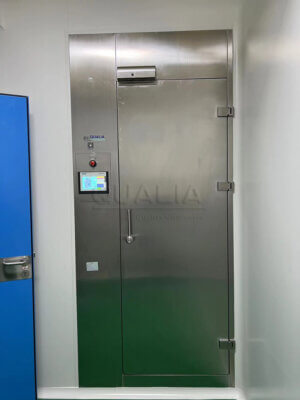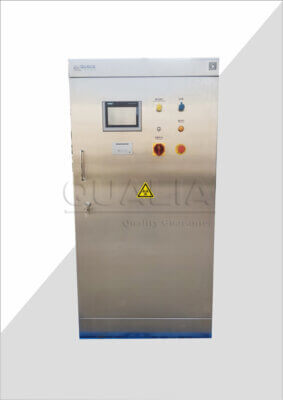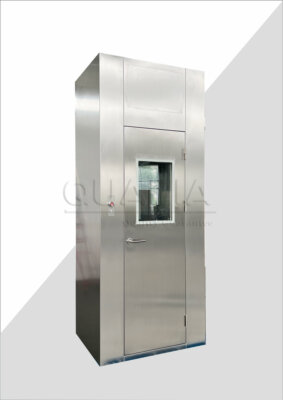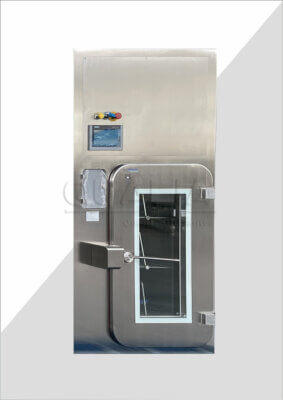

Material disputes in pass box procurement rarely surface during the RFQ stage — they emerge weeks or months later, when a unit arrives on site and QA begins reviewing fabrication against what the specification should have required. The cost at that point is not just a vendor conversation; it is punch-list delays, potential rework, and a qualification timeline that slips because material grade, weld treatment, or gasket specification was never pinned down in writing. The decision that controls this outcome happens earlier than most teams expect: in the URS, before any supplier sees the enquiry. Understanding what belongs in that document, what finish and documentation standards follow from it, and where generic fabrication diverges from qualification-ready fabrication will help you evaluate a proposed unit before it becomes a project liability.
GMP material definitions that belong in the URS
The most common source of RFQ disputes is not a supplier delivering the wrong product — it is a buyer accepting a compliant response to an under-specified requirement. When the URS states “stainless steel body” without a grade, the supplier has no obligation to provide 316L, and the fabricator has no reason to select it over a cheaper alternative. By the time the material test certificates arrive and QA reviews them against what the validated process actually requires, the unit may already be in receiving.
Grade selection is a design input with direct consequences for corrosion resistance and cleanability. AISI 316L is the typical choice for internal chamber surfaces in pharmaceutical environments because its lower carbon content reduces sensitization risk and its corrosion performance is defensible in the presence of cleaning agents. Specifying 304 stainless as an acceptable alternative for outer casing or secondary chamber surfaces is a legitimate cost decision, but only if it is made deliberately and documented, not left as a fabrication variable. Door and front panel materials are a separate specification decision — anodized aluminum is a common and appropriate choice, but it should appear explicitly in the URS rather than be assumed.
Gasket material is the detail most frequently omitted and most likely to cause an audit problem. EVA is a commonly specified sealing material for pass box gaskets because of its sealing performance characteristics; without a specific call-out, a supplier may use a lower-grade elastomer that passes a visual inspection but fails under repeated cleaning cycles or pressure differential testing. Each of these material choices is a procurement input that closes a gap before fabrication begins.
| Material Element | Specification to Include in URS | Why Ambiguity Triggers Disputes |
|---|---|---|
| Body material | AISI 316L stainless steel | Prevents material grade ambiguity; different grades affect corrosion resistance and cleanability |
| Front / doors | Anodized aluminum | Avoids assumption of default material; ensures suitable finish for non-chamber surfaces |
| Gasket | EVA sealing material | Guarantees high sealing performance and prevents leakage-related audit failures |
| Outer casing / inner chamber (alternative) | 304 stainless steel as an acceptable grade option | Defines fallback grade clearly; leaving it undefined invites fabrication variance and unexpected material substitutions |
Leaving any of these elements undefined does not just create fabrication variance — it creates a situation where the supplier’s interpretation of the specification is technically defensible, which means the buyer absorbs the cost of resolution rather than the vendor.
Finish and weld details that affect cleanability
A chamber that looks clean from the outside can still fail a cleanability review. The distinction that matters to auditors — and to cleaning validation — is not surface appearance but surface geometry: specifically, whether internal weld seams have been smoothed and whether internal corners carry a radius large enough to allow cleaning tools and agents to make consistent contact with the surface.
Polished stainless steel interiors with smooth radiused corners are a standard auditor expectation in GMP environments, not because a specific regulation defines a universal radius requirement, but because cleaning validation depends on the assumption that surfaces are accessible. Sharp internal corners and unsmoothed weld seams create microenvironments where residue accumulates and cleaning agents cannot reliably reach. When a cleaning SOP is written and validated, it is validated against the assumption that the chamber geometry supports the method. If the actual surface does not match that assumption, the SOP cannot be faithfully executed, which is difficult to defend under audit. This principle — that surface cleanability is a design input, not an afterthought — is consistent with the design guidance framing in the WHO Laboratory Biosafety Manual (4th Edition), which treats surface finish as a function of contamination control rather than cosmetic preference.
The practical failure pattern here is specifying “polished stainless steel interior” in the URS without defining what that means for welds. Cosmetic polishing of exterior surfaces and functional smoothing of internal weld seams are different operations, and a supplier responding to a vague finish requirement will interpret it in the way that minimizes fabrication effort. The result is a chamber that appears to meet specification until a QA reviewer or auditor looks at the internal corner treatment and flags it as a cleanability concern. At that stage, the remediation options are limited: rework is expensive and may affect structural integrity, and acceptance under deviation requires documented justification that the surface is cleanable as-built, which is hard to demonstrate without cleaning validation data specific to that geometry.
Including weld smoothness and internal corner treatment as explicit design requirements — alongside surface finish grade — in the URS converts a common punch-list item into a closed specification requirement that the supplier must meet before delivery.
Certificate and turnover records QA will request
Document turnover is where qualified hardware most often stalls. A unit can be fabricated correctly, tested on the supplier’s floor, and arrive in good mechanical condition — and still sit in receiving for weeks while QA waits for records that the supplier has not yet compiled or that were never scoped into the contract. The delay is not a hardware problem; it is a documentation scope problem that was not resolved at the procurement stage.
The full package QA expects at handover covers multiple categories. Technical drawings and equipment specifications establish the physical baseline. User manuals and SOPs define how the unit should be operated, cleaned, and maintained. IQ/OQ/PQ protocols, along with executed records or the basis for site execution, define the qualification pathway. For dynamic pass boxes, HEPA filter test certificates are a specific requirement because periodic filter integrity testing is a regulatory expectation and the certificates are the evidence that the installed filter meets the claimed performance. Airtightness testing records are similarly non-negotiable: without verified pressure differential integrity, the pass box cannot be shown to maintain containment under GMP conditions, and QA has no basis for accepting it. Operational logs may appear to be a post-installation item, but establishing the log format and initial entries as part of turnover demonstrates that process control begins at installation, not after an audit request.
| Documentation Item | Why QA Requests It | Consequence if Missing |
|---|---|---|
| Full documentation package (technical drawings, equipment specs, user manuals, SOPs, maintenance records, IQ/OQ/PQ protocols) | Establishes the basis for qualification, operation, and maintenance | Blocks QA release; installation cannot proceed, delaying GMP use |
| Operational logs | Demonstrate ongoing process control and equipment traceability; common audit focus | Audit finding; raises concerns about unmonitored operation |
| HEPA filter test certificates (dynamic pass boxes) | Prove compliance with periodic filter integrity testing; required for validation | Non-compliance; QA rejects the unit for dynamic applications |
| Airtightness testing records | Confirm pressure differential integrity and containment capability under GMP conditions | QA rejection; inability to demonstrate containment performance |
The consequence of a missing record is not proportional to its apparent importance. A missing user manual creates a documentation gap; a missing airtightness test record can block QA release entirely, because containment performance is a core qualification criterion. Treating the documentation package as a completeness threshold — where every listed item must be present before the unit is accepted — is the procurement posture that prevents this delay from accumulating on the project schedule.
For dynamic pass boxes used in sterile transfer or high-containment applications, the qualification documentation requirements extend into the operational phase, where the Biosafety Pass Box specification should already reflect the intended IQ/OQ/PQ scope at the time of procurement.
Cost impacts of moving from generic to qualification-ready fabrication
The price difference between a generic pass box and a qualification-ready unit is visible at the time of purchase. The cost difference between them is not fully visible until the project is further along, which is why teams consistently underestimate the total lifecycle cost of the cheaper option.
A static pass box carries a lower initial price and simpler ongoing maintenance. Its limitation is not a quality deficiency — it is an application boundary. Static units rely on passive barrier function without active airflow management or HEPA filtration, which means they cannot reliably maintain contamination control in high-risk zones or environments with strict pressure differential requirements. Using a static unit in an application that requires active containment is not a cost-saving decision; it is a risk decision with audit consequences, because the contamination control claim cannot be supported under qualification review. That application boundary is the threshold that defines when the higher cost of a dynamic unit is not optional.
Dynamic pass boxes carry a higher purchase price and a more complex maintenance profile. Filter changes, airflow sensor calibration, and periodic HEPA integrity testing are recurring operational costs that must be budgeted explicitly. Teams that treat the purchase price as the full cost of ownership, absorbing maintenance costs into a general facilities budget, often find that the ongoing expenditure was not anticipated in the original capital estimate. The relevant planning discipline is to treat filter testing and sensor calibration as line items in the operational budget from the point of procurement, not as variable costs to be resolved later.
| Consideration | Static Pass Box | Dynamic Pass Box |
|---|---|---|
| Initial investment | Lower | Higher |
| Maintenance burden | Simpler; minimal moving components | More complex; requires filter changes, sensor calibration |
| Recurring operational costs | Minimal beyond basic cleaning | Ongoing costs for filter testing and airflow sensor calibration |
| Suitability for high-risk zones | Not suitable; weaker contamination control can lead to contamination events and audit failures | Required for zones with strict containment requirements |
| Contamination control | Passive barrier; limited pressure differential assurance | Active airflow and HEPA filtration; stronger containment |
The lifecycle argument for qualification-ready fabrication is not that it is cheaper in absolute terms. It is that a rigorous unit compresses the back-end timeline by limiting punch-list work and QA objections. A generic unit that requires rework to meet cleanability standards, or generates repeated documentation requests before QA accepts it, accumulates project costs that were not in the original estimate. The higher purchase price of a qualification-ready unit is often recovered in reduced rework cycles and a shorter path from delivery to installation sign-off.
Traceable documentation as the threshold for GMP acceptance
Hardware quality and documentation quality are evaluated separately in GMP procurement, but they are not independent. A unit that is fabricated correctly but cannot produce traceable materials certificates and a complete qualification record is not a qualified unit — it is a piece of equipment waiting for the documentation that would make it one. The threshold for GMP acceptance is not appearance or function in isolation; it is the combination of both with the paperwork that makes them auditable.
The most consistent audit findings in pass box deployments follow a recognizable pattern: missing or incomplete SOPs, absent operational logs, interlock malfunctions that were not documented, poor door sealing that was not caught during acceptance testing, and cleaning practices that deviate from what the SOP requires. What these findings share is not hardware failure but documentation control failure — situations where the equipment may have been functioning acceptably but the records needed to demonstrate that were not in place. These are not unusual audit outcomes; they are well-established failure patterns that a structured documentation requirement is designed to prevent.
Full qualification — IQ, OQ, PQ — is the practical acceptance condition for a pass box entering GMP service. IQ establishes that the unit was installed as specified. OQ verifies that it performs within defined parameters under operational conditions. PQ demonstrates that it consistently delivers the intended outcome in the context of the process it supports. Each phase generates records, and those records are what QA reviewers are checking when they evaluate whether the unit can be released for use. Without executed qualification documentation, the unit has not been accepted — it has been placed.
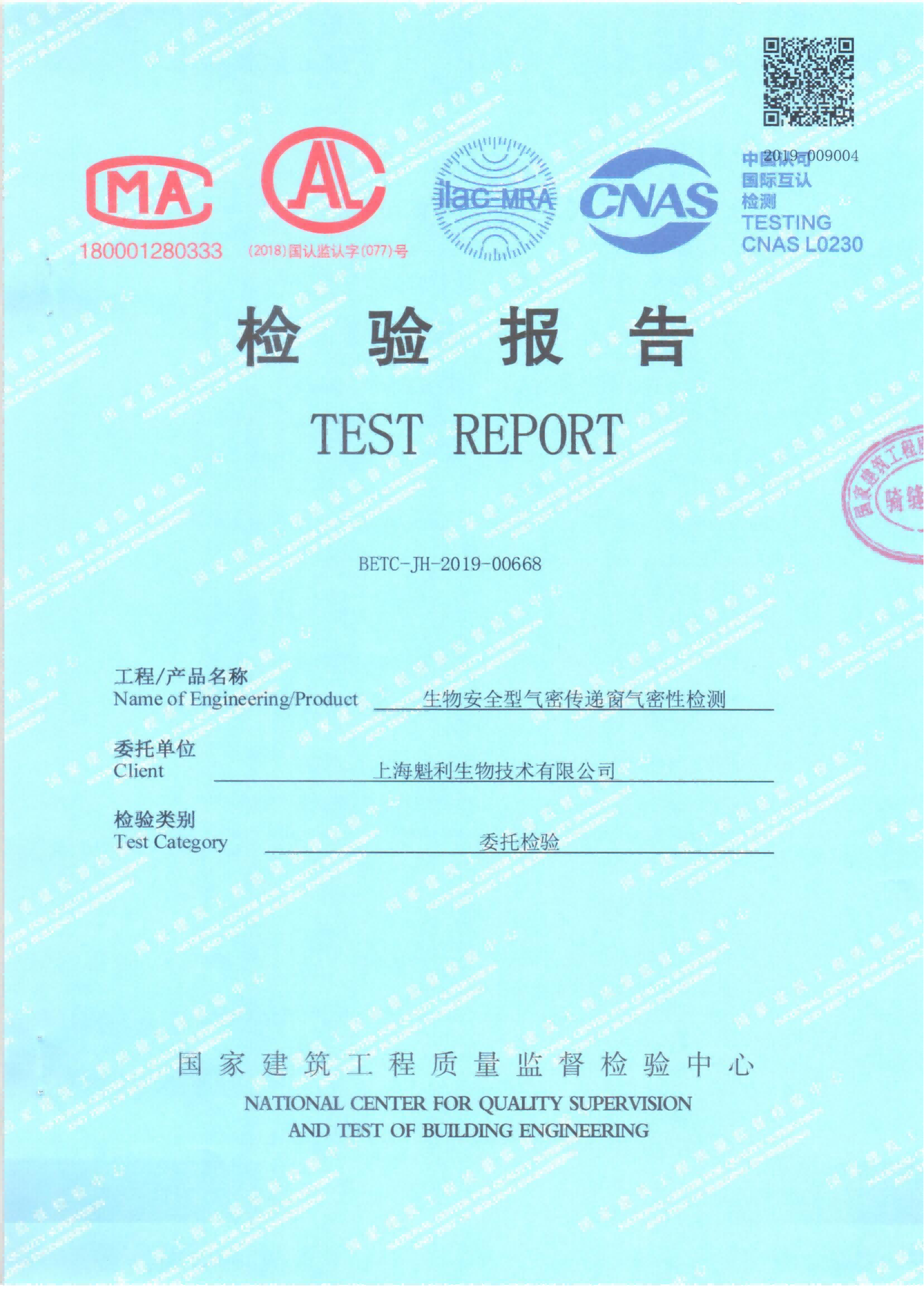
The material traceability requirement reinforces this. Material test certificates for 316L or 304 stainless steel, gasket material declarations, and surface finish records connect the physical unit back to its specification. If a supplier cannot provide these records on request, the traceability chain is broken, and QA has no basis for confirming that the fabricated unit matches what was specified in the URS. That gap — between a unit that looks correct and a unit that can be shown to be correct — is the practical boundary that separates GMP-acceptable procurement from procurement that creates qualification risk.
For facilities managing sterile processing alongside containment applications, the documentation standard that applies to a pass box is consistent with what ISO 35001:2019 frames as the broader principle of biorisk management: that equipment performance must be documented, traceable, and subject to systematic review, not assumed from physical inspection alone.
The decisions that determine whether a pass box reaches GMP service on schedule are made before fabrication begins — in the URS, in the documentation scope defined at contract, and in the supplier qualification criteria applied during procurement. Material grade, finish specification, gasket call-out, and weld treatment are not details to be resolved in the field; they are inputs that belong in the specification, where their absence creates ambiguity that compounds through every subsequent project stage.
Before committing to a unit, confirm that the supplier can provide traceable material test certificates, executed or protocol-ready IQ/OQ/PQ documentation, HEPA filter test certificates where applicable, and airtightness test records — and that these items are contractually scoped, not assumed. If any part of the documentation package is undefined at the procurement stage, the risk of a delay at document turnover is not theoretical. It is the most common way a mechanically sound unit fails to reach installation on the planned date.
Frequently Asked Questions
Q: What happens if a supplier cannot provide material test certificates after delivery?
A: The unit cannot be accepted for GMP use, and the procurement must be treated as a qualification risk rather than a hardware problem. Traceability of material grade — 316L or 304 stainless, gasket declarations, surface finish records — is what connects the physical unit back to the URS. Without those certificates, QA has no auditable basis for confirming the fabricated unit matches what was specified, which means the gap must be resolved before the unit can progress toward installation sign-off. If a supplier cannot produce traceable records on request, they are below the threshold for GMP procurement regardless of how the unit appears on inspection.
Q: At what point does a static pass box become the wrong choice, even if budget is the constraint?
A: When the application requires active containment, pressure differential maintenance, or HEPA-controlled transfer conditions, a static unit is not a lower-cost alternative — it is an unsuitable one. The contamination control claim that a static unit cannot support will not survive qualification review in high-risk zones, which means the cost of using it in the wrong application is an audit finding and potential rework, not a budget saving. The budget constraint is better addressed by scoping a dynamic unit correctly at procurement than by selecting a static unit and absorbing the qualification consequences later.
Q: If the IQ/OQ/PQ protocols are site-executed rather than supplier-provided, what must the supplier still deliver at turnover?
A: The supplier must still deliver the complete physical documentation baseline: technical drawings, equipment specifications, material test certificates, airtightness test records, HEPA filter test certificates for dynamic units, and the operational and maintenance records that the site team needs to write and execute their own protocols against. Site execution of qualification does not reduce supplier documentation obligations — it shifts who runs the protocols, not who provides the equipment data that makes those protocols executable. Missing any of these records at turnover leaves the site team unable to complete IQ without chasing records that should have been contractually scoped before fabrication began.
Q: Does specifying 304 stainless steel for outer casing rather than 316L create a compliance problem?
A: Not if the choice is made deliberately and documented in the URS with a clear application boundary. 304 is a legitimate specification for outer casing or secondary surfaces where exposure to aggressive cleaning agents and sustained moisture contact is limited. The compliance problem arises when the grade is left undefined and the fabricator selects 304 as a cost decision for surfaces where 316L was implicitly expected — particularly internal chamber surfaces. The specification, not the material itself, is what determines whether the outcome is defensible under audit.
Q: How should ongoing filter testing and calibration costs for dynamic pass boxes be handled in the project budget?
A: They should be treated as explicit line items in the operational budget from the point of procurement, not absorbed into a general facilities cost pool or left to be resolved after installation. Filter integrity testing and airflow sensor calibration are recurring regulatory obligations for dynamic units, and their frequency and cost can be estimated before purchase based on the supplier’s maintenance documentation. Teams that do not separate these costs at the capital planning stage consistently find that total cost of ownership was underestimated, which creates budget pressure during the operational phase and occasionally leads to deferred maintenance that becomes an audit finding.