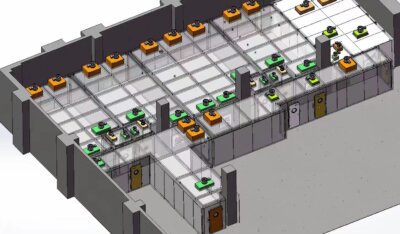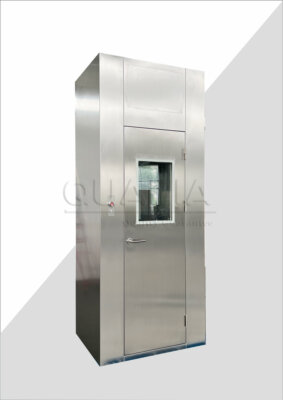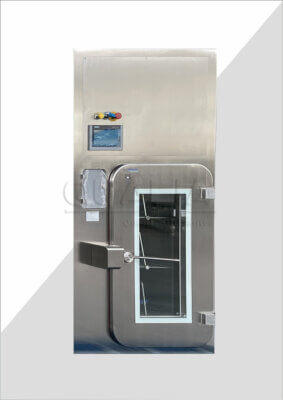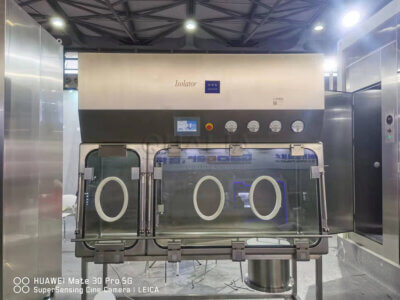

In BSL-3 laboratories, the airlock is the critical control point for containment. Its failure can compromise the entire facility’s integrity. The central challenge is configuring an interlock system that enforces procedural safety while maintaining an absolute physical seal. Many specifications focus on individual components—the door, the lock, the seal—but true safety emerges from their integrated performance. A system that is airtight but lacks definitive access control, or vice versa, introduces unacceptable risk.
Attention to this integration is paramount now. Evolving global standards and a focus on operational transparency demand systems that provide verifiable data, not just physical barriers. Furthermore, the increasing use of aggressive gaseous decontaminants like VHP places unprecedented stress on materials. Selecting a configuration is no longer just about door hardware; it is a strategic decision impacting long-term certification, operational workflow, and total cost of ownership for a high-containment asset.
Key Design Principles for BSL-3 Airlock Interlock Systems
The Dual-Action Containment Mandate
BSL-3 containment rests on two pillars: maintaining directional airflow and preventing cross-contamination. The airlock interlock system is the engineered solution for both. Its design must merge a fail-safe physical barrier with enforced procedural logic. The electromagnetic interlock provides the definitive “one-door-open-at-a-time” rule, a non-negotiable requirement of biorisk management frameworks like CWA 15793:2011 Laboratory biorisk management. This electronic control prevents human error from breaching the containment envelope.
Integrating Seal and Lock Functionality
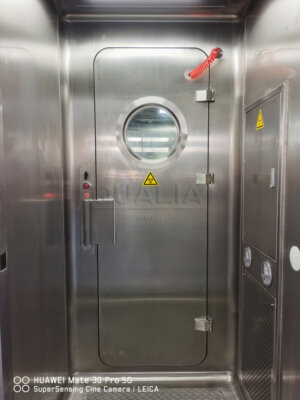
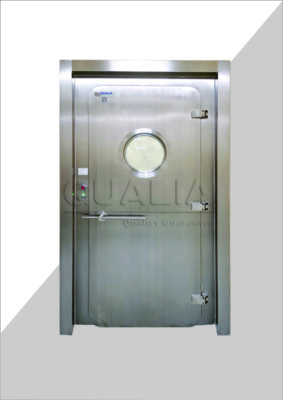
The physical seal’s role is to create an airtight boundary that holds the laboratory’s pressure differential. An inflatable pneumatic seal achieves this by actively compressing against the frame, accommodating minor structural shifts that would compromise a static gasket. The critical design principle is the synergy between this seal and the electromagnetic lock. The lock must engage only when the seal is confirmed to be at operational pressure, and the seal must maintain integrity regardless of the lock’s state. This integration transforms two components into a single, reliable containment mechanism.
Addressing Structural and Operational Realities
A common oversight is specifying the interlock system in isolation from the building structure. The frame supporting the door and seal must resist deflection under pressure load; a flexing frame will break the seal’s airtight contact. Furthermore, the system must be designed for real-world use, including emergency egress. Industry experts recommend configurations with manual overrides for seal deflation and door release, ensuring personnel safety during a power failure without compromising the interlock’s default secure state.
Core Technical Specifications & Performance Benchmarks
Quantifying Airtight Integrity
Performance claims must be grounded in measurable, testable data. The primary metric is leak tightness, classified and validated per ISO 10648-2:1994 Containment enclosures — Part 2: Classification according to leak tightness and associated checking methods. For BSL-3 airlocks, the system must hold specified pressure differentials—typically up to ±2000 Pa—with minimal leakage. This isn’t a theoretical value; it’s verified through standardized quantitative testing, providing a definitive benchmark for procurement and certification.
Structural and Control System Parameters
Supporting airtightness are stringent structural specifications. The door frame, typically stainless steel, must demonstrate minimal deflection (e.g., <1mm per meter) under maximum pressure load to maintain seal contact. On the control side, the system must provide clear, hardwired output signals for integration. These include door position (open/closed), lock status (engaged/released), and fault conditions (seal pressure loss, power failure). This data is non-negotiable for connecting to a Building Management System (BMS) for centralized oversight.
The table below outlines the core technical benchmarks that define a high-performance BSL-3 airlock interlock system, providing the quantitative basis for specification and validation.
| Parameter | Benchmark / Specification | Unit / Condition |
|---|---|---|
| Pressure Differential Holding | Up to ±2000 Pa | Maximum operating range |
| Leakage Rate | 0.25% – 0.5% | % of volume per hour |
| Frame Deflection Resistance | < 1mm per meter | Under pressure load |
| Seal Material Lifespan | > 5 years | EPDM, typical service life |
| Control Signals Provided | Door status, lock state, fault alarms | For BMS integration |
Source: ISO 10648-2:1994 Containment enclosures — Part 2: Classification according to leak tightness and associated checking methods. This standard provides the classification and test methods for leak tightness, directly establishing the performance benchmarks for pressure differential holding and leakage rates critical for validating airlock seal integrity.
Safety Features, Redundancy, and Fail-Safe Protocols
Mitigating Pneumatic System Dependencies
The superior seal provided by inflatable technology introduces a dependency on compressed air. The primary safety protocol addresses this. Systems must include automatic pressure regulation to prevent seal damage from over-inflation and monitoring to detect under-inflation. Crucially, emergency manual deflation valves accessible from both sides of the door are mandatory. This allows personnel to break the seal and open the door for egress if pneumatic power fails, a detail we verify in every design review.
Enforcing Logic with Electronic Redundancy
The electromagnetic interlock’s control logic, often managed by a dedicated programmable logic controller (PLC), must be failsafe. Its default state should be “locked,” requiring positive confirmation of conditions to release. Redundancy comes from backup power via an uninterruptible power supply (UPS) to maintain interlock enforcement during main power transitions. Furthermore, the system should include diagnostic indicators for lock health and seal pressure, providing immediate visual or BMS-transmitted alerts for any deviation from normal operation.
Integration with BMS and Laboratory Control Systems
From Standalone Hardware to Networked Node
Modern containment requires data. The interlock system is no longer an isolated lock; it is a critical node providing real-time status to the laboratory’s digital nervous system. Integration with the BMS allows centralized monitoring of all airlock states, interlock sequences, and alarm conditions. This enables facility managers to oversee containment integrity from a single dashboard, responding immediately to faults and maintaining a continuous log for audit trails, as encouraged by biocontamination control standards like BS EN 17141:2020 Cleanrooms and associated controlled environments. Biocontamination control.
Enabling Predictive Operations and Compliance
The next step is leveraging this data for predictive maintenance and enhanced compliance. Logs of cycle counts, seal pressure trends, and lock engagement times can forecast maintenance needs before a failure occurs. This shift from reactive to predictive management underscores the strategic value of selecting interlock systems designed for deep integration. It future-proofs the facility against evolving regulatory demands for operational transparency and data-driven risk management.
Material Selection: Comparing Seal and Frame Options
Seal Material Chemistry and Lifespan
Material choice dictates resistance to the laboratory environment. For inflatable seals, high-density EPDM is the prevalent choice for BSL-3 applications due to its excellent aging properties and proven resistance to harsh decontaminants like vaporized hydrogen peroxide. Silicone rubber offers alternatives for specific chemical exposure profiles. The key decision factor is certified material lifespan under accelerated aging tests with common disinfectants; a five-year service life for EPDM is a typical benchmark that directly impacts maintenance scheduling and TCO.
Frame Integrity and Corrosion Resistance
The structural frame must provide a rigid, non-compliant mounting surface for the seal. Full-welded stainless steel (SS304 or 316L) is standard, offering the necessary strength and corrosion resistance for humid, chemically exposed environments. The finish and weld quality are critical—any porosity or irregularity can become a contamination trap or compromise cleanability. The frame is a permanent asset; its specification must align with the facility’s long-term containment strategy.
The selection of materials for seals and frames is a primary determinant of system longevity and operational reliability. The following comparison highlights the standard options and their key characteristics.
| Component | Primary Material Options | Key Performance Characteristic |
|---|---|---|
| Inflatable Seal | High-density EPDM | Excellent aging, VHP resistance |
| Inflatable Seal | Silicone rubber | Specific performance profiles |
| Structural Frame | Stainless Steel (SS304/316L) | Full-welded, corrosion resistance |
| Seal Service Life | > 5 years (EPDM) | Withstands harsh decontaminants |
Source: Technical documentation and industry specifications.
Implementation Planning and Configuration Scenarios
Mapping Configuration to Workflow
Effective implementation starts by mapping the airlock’s role in the laboratory workflow. Will it serve as a personnel entry, a material transfer point, or both? A single interlocked door provides a barrier between zones, while a classic two-door vestibule creates an anteroom for gowning/de-gowning. The configuration must also support room decontamination cycles, requiring the airlock to function as a gas-tight boundary. Planning must consider the sequence of operations: the interlock logic must accommodate the desired workflow without creating procedural bottlenecks.
Ensuring Modular Interoperability
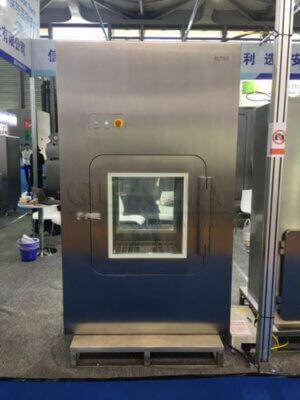
Modern laboratories are built with modular, interoperable containment components. The airlock interlock system should be designed to sequence not just with another door, but with other sealed equipment like VHP pass-through chambers and material airlocks. This systems-based approach reduces integration risk. Specifying components from a cohesive ecosystem ensures communication protocols and physical interfaces are compatible, avoiding costly custom engineering and ensuring operational reliability from day one.
Total Cost of Ownership and Long-Term Value
Analyzing Beyond the Purchase Price
The procurement decision must evaluate total cost of ownership (TCO). Initial price is one component. More significant are recurring costs: scheduled seal replacement, energy for pneumatic compressors, and preventive maintenance. A higher-quality seal with a longer certified lifespan may have a higher upfront cost but reduces long-term parts and labor expenses. The most substantial hidden cost is unplanned downtime due to component failure or interoperability issues, which can halt critical research and necessitate emergency remediation.
The Value of Integrated System Accountability
Sourcing the door, seal, lock, and controls from different vendors may seem cost-effective. The reality in high-containment settings is often the opposite. Integration challenges, divided warranty coverage, and finger-pointing during faults introduce significant risk and cost. A single-source vendor providing a fully integrated and tested system assumes total accountability. This consolidated responsibility delivers greater long-term value through guaranteed interoperability, streamlined support, and a single point of contact for service, directly protecting the facility’s operational continuity.
A comprehensive view of cost is essential for justifying capital investment. The following table breaks down the key TCO factors and their impact on long-term value.
| Cost Factor | Consideration / Impact | Long-Term Value Driver |
|---|---|---|
| Initial Purchase | Component vs. integrated system | Lower integration risk |
| Seal Replacement | 5+ year lifespan (EPDM) | Reduced maintenance frequency |
| Operational Downtime | Interoperability failures | High hidden cost |
| Vendor Strategy | Single-source accountability | Full system assurance |
| Key Perspective | Total Cost of Ownership (TCO) | Over initial price |
Source: Technical documentation and industry specifications.
Selecting the Right Configuration for Your Facility
Aligning Specifications with Strategic Goals
The selection process begins by validating core performance benchmarks against your facility’s specific risk assessment and certification targets. Does your protocol require holding 250 Pa or 500 Pa? What leakage rate is mandated by your accrediting body? The answers define the minimum technical specification. The next step is aligning with strategic goals: is operational data logging a priority for future audits? Is there a plan to integrate with a new laboratory information management system (LIMS)? These questions move the decision beyond hardware to operational capability.
Evaluating the Supplier Landscape and Future Trends
The global supplier market offers distinct tiers. Premium providers offer complete, certified integrated systems with extensive validation support. Others provide high-quality components for bespoke integration. The choice balances budget with required levels of technical support, documentation, and long-term partnership. Furthermore, consider material evolution; advanced polymers and ePTFE membranes may offer future advantages. The final selection should be a configuration that meets today’s stringent requirements while remaining adaptable to tomorrow’s operational and regulatory landscape.
The definitive configuration for a BSL-3 airlock interlock system must satisfy three concurrent demands: certified technical performance, seamless integration into both physical and digital workflows, and a sustainable total cost of ownership. Prioritize vendors who provide validated test data against recognized standards, not just marketing claims. Ensure the proposed system’s control outputs match your BMS input requirements exactly.
Need professional guidance on specifying and integrating fail-safe containment doors for your high-containment facility? The engineering team at QUALIA specializes in configuring airtight interlock systems that meet global standards and adapt to your laboratory’s unique workflow. Contact us to discuss your project’s specific pressure holding, material compatibility, and integration requirements. You can also reach our technical specialists directly at mailto:[email protected] for a preliminary specification review.
Frequently Asked Questions
Q: What are the critical performance benchmarks for a BSL-3 airlock’s inflatable seal?
A: The primary metric is airtightness, measured by the system’s ability to maintain pressure differentials up to ±2000 Pa with a leakage rate not exceeding 0.25% to 0.5% of the enclosed volume per hour. This performance is validated using standardized leak-tightness test methods defined in ISO 10648-2:1994. For procurement, you should require vendors to provide certified test data against these specific benchmarks to ensure compliance with containment integrity requirements.
Q: How does the electromagnetic interlock system integrate with our Building Management System (BMS)?
A: The interlock controller provides hardwired status and alarm signals for direct BMS connection, including door position, lock engagement, and faults like seal pressure loss. This enables centralized, real-time monitoring and logging of all access events and system states for audit trails. If your facility’s strategy includes advanced operational transparency or predictive maintenance, you must ensure your BMS IT infrastructure can support the data integration from these IoT-enabled containment nodes.
Q: Why is EPDM often the preferred material for inflatable seals in high-containment labs?
A: High-density EPDM offers superior resistance to harsh decontaminants like vaporized hydrogen peroxide (VHP) and excellent aging properties, typically delivering a service life exceeding five years. This material selection directly supports long-term biocontamination control strategies as outlined in standards like BS EN 17141:2020. For facilities with frequent decontamination cycles, investing in premium EPDM seals reduces long-term replacement costs and downtime, justifying the higher initial investment.
Q: What fail-safe protocols are essential for a pneumatic inflatable seal system during a power loss?
A: Critical protocols include backup power (UPS) for the control system and electromagnetic locks, plus emergency manual deflation valves accessible from both sides of the door to ensure personnel egress. The system should also incorporate automatic pressure regulators to protect the seal from damage. This means your risk assessment must account for these redundancies; a system lacking manual override valves or UPS support creates an unacceptable egress hazard in a containment environment.
Q: How does a biorisk management framework influence the configuration of door interlocks?
A: Frameworks like CWA 15793:2011 mandate engineering controls to enforce procedural protocols, which is the core function of an electromagnetic interlock system. The interlock physically enforces a “one-door-open-at-a-time” sequence, a critical barrier in the hierarchy of controls. When selecting a configuration, you must verify that the interlock logic is managed by a dedicated, fault-tolerant controller to meet the reliability expectations of a formal biorisk management system.
Q: Should we source airlock components individually or as an integrated system from a single vendor?
A: A total cost of ownership (TCO) analysis strongly favors an integrated solution from a single-source provider. While component sourcing may offer lower upfront costs, it introduces significant hidden expenses from integration complexity, interoperability failures, and divided accountability for the sealed workflow. For sophisticated BSL-3 facilities, you should prioritize vendors who assume full system accountability, as this delivers greater long-term operational integrity and risk mitigation.
Q: What structural specifications are necessary for the door frame supporting an inflatable seal?
A: The frame, typically constructed from full-welded stainless steel (SS304 or 316L), must provide extreme rigidity to resist deflection greater than 1mm per meter under operational pressure differentials. This structural integrity is non-negotiable for maintaining the seal’s compressive, gap-free closure. During design, you must ensure the building’s structure can support this rigid mounting; a flexible wall will compromise the seal’s performance and fail leakage tests.
Related Contents:
- BSL-3 Airlocks: Door Specs for Lab Security
- Airlock Systems in Biosafety Isolators
- Airlock Systems in OEB4/OEB5 Isolators: Design Guide
- Biosafety Level (BSL) Inflatable Seal Door Design: BSL-2, BSL-3 & BSL-4 Containment Standards
- Air Shower Interlocks: Contamination Prevention
- APR Door Seal Installation | Technical Specifications & Performance
- Understanding Pneumatic APR Door Seal Technology
- The Complete Inflatable Seal Door Guide for Regulated Environments: FDA, GMP & Biosafety Applications (2025 Edition)
- What Are APR Door Pneumatic Seals and How They Work