Choosing between autoclaving and an effluent decontamination system (EDS) for liquid waste is a question of whether the waste stream, its volume, and its chemical makeup still fit within a batch-container process, or whether the project has outgrown that model. Getting this wrong does not just create inefficiency; it can mean selecting a route that cannot be validated for the load it is actually asked to treat.
Start with Waste Type, Quantity, and Chemical Compatibility
| Project condition | Route-selection consequence | Evidence boundary |
|---|---|---|
| Waste type and biological agent | Use the actual waste and agent to define the conditions each route must address and validate. | Neither route is established as universally safer or compliant. |
| Waste quantity | If larger high-risk liquid volumes cannot practically be collected and treated in small volumes, evaluate an EDS as a design option. | No universal volume threshold or cutover point is established. |
| Chemical composition | Chemical contents may make autoclaving hazardous and rule out that route. | Compatibility must be assessed for the actual waste; no general chemical-compatibility conclusion applies. |
| Container compatibility | The autoclave route depends on compatible liquid-waste containers and secondary containment. | Compatibility does not by itself establish cycle efficacy or discharge acceptance. |
The starting point for this comparison is not the equipment but the waste itself. The biological agent present, the volume generated per batch or per shift, and the chemical composition of the liquid together define what any treatment route must actually accomplish before a project team can judge whether autoclaving remains workable or whether an EDS should be evaluated as the configured alternative.
Biological agent and risk level set the baseline requirement that both autoclaving and an EDS must meet, but they do not by themselves determine which route is preferable. That determination depends on how the agent interacts with the other two variables. Waste quantity matters because autoclaving is fundamentally a batch, container-based process: waste is collected into discrete vessels, loaded, treated, cooled, and unloaded as a unit. Where volumes stay within what can be practically collected and cycled in this way, autoclaving remains a viable route to evaluate. Where volumes grow beyond what small-batch collection can reasonably absorb, the batch model itself becomes the constraint, independent of whether the autoclave is otherwise functioning correctly.
Chemical composition introduces a separate and sometimes decisive constraint. Autoclaving liquid waste depends on compatible containers and a liquid cycle suited to the contents; chemical constituents that react under heat, generate pressure, or degrade container or gasket materials can make the autoclave route hazardous rather than merely inefficient. This is a compatibility question that has to be assessed against the actual waste stream, not inferred from the biological risk level alone. A waste stream with a low biological risk but an incompatible chemical profile can rule out autoclaving just as decisively as a waste stream with high volume.
Project teams should treat these three variables as a screening layer that comes before any equipment discussion. The World Health Organization’s LBM 4th Edition decontamination and waste management monograph frames liquid-waste autoclaving around container compatibility and cycle mechanics, while its laboratory design and maintenance monograph frames EDS evaluation around volumes that cannot practically be collected and treated in small batches. Neither source establishes a universal volume threshold or a fixed point at which one route replaces the other; the determination stays project-specific, built from the waste type, quantity, and chemistry together.
Trace Safe Container Handling Through the Autoclave Route
| Autoclave-route stage | Control to trace | What the check establishes |
|---|---|---|
| Container selection | Use compatible, unsealed liquid-waste containers. | Establishes that the container arrangement is suitable for the route; it does not establish treatment efficacy. |
| Secondary containment and loading | Use secondary spill containment and a controlled loading arrangement. | Addresses spill containment during handling; it does not establish cycle performance. |
| Liquid cycle and cooling | Use the applicable liquid cycle with slow, controlled cooling. | Addresses liquid-load treatment and cooling behavior; no universal cycle is established. |
| Unloading | Define safe unloading after controlled cooling. | Addresses post-cycle handling; it does not prove local discharge acceptance. |
| Records and efficacy evidence | Retain cycle records and liquid-load efficacy testing for representative loads. | Supports verification for the actual load; it is not universal compliance proof. |
Where autoclaving remains the route under consideration, the handling chain deserves its own scrutiny, because each stage carries a distinct engineering function and a distinct piece of evidence, and none of them substitutes for another.
Container selection is the first decision point. Liquid-waste autoclaving uses containers that are compatible with the waste and left unsealed, so that steam can penetrate the load and pressure does not build inside a closed vessel. This is a container-compatibility decision, separate from whether the liquid cycle itself will achieve adequate treatment. A compatible container makes the loading arrangement workable; it does not, on its own, demonstrate that the cycle will decontaminate the load.
Secondary containment and the loading arrangement address a different risk: spill control during handling, before and during the cycle. Where a facility handles liquid waste that could spill or leak from an unsealed container, secondary containment becomes part of the safe-handling configuration, addressing the handling risk rather than the treatment outcome.
The liquid cycle and its cooling phase are where actual treatment happens. Liquid loads behave differently from solid or instrument loads inside an autoclave, which is why a liquid-specific cycle, including slow and controlled cooling, is part of the route’s mechanics. Cooling too quickly can create problems with container integrity or with superheated liquid behavior; this is a cycle-design condition that the project’s validation work needs to address for the specific load, not a fixed parameter that applies uniformly across all liquid waste.
Unloading follows controlled cooling and is itself a distinct safety step, addressing personnel exposure to a treated but still hot or pressurized load. None of these stages, individually, proves that the discharge leaving the facility meets local requirements; that is a separate question addressed later in the workflow.
Records and efficacy evidence close the loop. The Canadian Biosafety Handbook’s chapter on decontamination ties autoclave validation to representative load or vessel conditions and highlights cycle records, spill trays, and liquid-load efficacy testing as the evidence base for this route. That evidence applies to the representative load tested; it is not a universal compliance proof extendable to every waste stream the facility might generate.
Identify Larger High-Risk Volumes That Make Small-Volume Treatment Impractical
The autoclave route assumes that waste can be collected into discrete containers and processed in batches small enough to fit the vessel, the cycle, and the handling chain already described. That assumption holds until volume growth outpaces it. The relevant question is not how large a facility is in absolute terms, but whether its liquid waste generation has reached a point where small-volume collection and treatment becomes operationally impractical for the biological risk involved.
This is the condition that shifts the project conversation toward an EDS. According to the WHO LBM 4th Edition laboratory design and maintenance monograph, an EDS is a supported design option specifically for larger high-risk liquid volumes that cannot practically be collected and treated in small volumes, with treatment configured either on entry, as the waste is generated, or after collection in specialized tanks. This framing is risk-based rather than volume-based in any fixed sense; the monograph does not establish a universal volume threshold, a multiple-source aggregation rule, a performance benchmark, or a cost conclusion that would let a project team look up a number and decide.
What this means practically is that the decision has to be built from the project’s own waste-generation pattern. Where a facility’s liquid waste arises from a limited number of discrete, separable events, batch collection into compatible containers may remain workable even at a meaningful risk level, because the volume per event stays within what the autoclave route can absorb. Where waste arises continuously or from multiple simultaneous sources, or where the practical burden of collecting, labeling, transporting, and cycling that volume through batch containers becomes the limiting factor rather than the biological risk itself, that is the condition the WHO framing describes, and it is the condition that makes an EDS worth formal evaluation.
The two configurations named, on-entry treatment and collection into specialized tanks, are not interchangeable defaults; each implies a different interface with the generating process and a different footprint, and the choice between them depends on how the waste stream enters the system and how much holding capacity the facility can accommodate. This is a configuration question for the specific project, not a general ranking of one approach over the other.
Validate Representative Loads and Vessels for Either Route
| Route | Representative validation basis | Evidence to check | What it does not establish |
|---|---|---|---|
| Autoclave | Representative liquid-load conditions | Validation and liquid-load efficacy evidence covering the representative load | A universal cycle, throughput, discharge criterion, or compliance conclusion |
| EDS | Representative vessel conditions | Validation evidence covering the representative vessel conditions | A universal performance level, route cutover, or compliance conclusion |
Whichever route a project leans toward, validation has to be built around conditions that represent what the equipment will actually treat, not around idealized or best-case loads. The Canadian Biosafety Handbook’s decontamination chapter applies this principle to both autoclaves and EDS, requiring validation using representative load or vessel conditions rather than a generic demonstration run.
For the autoclave route, this means validation and efficacy testing have to reflect the actual liquid load: its volume, its container fill level, its chemical and biological composition, and the cycle parameters the project intends to use operationally. A cycle validated against a smaller or less viscous test load does not automatically extend its evidence to a different, larger, or more complex load encountered later. Where a facility’s waste composition varies across different processes or production campaigns, this raises the question of whether one validated cycle can be treated as representative of all of them, or whether multiple representative conditions need separate validation.
For the EDS route, the equivalent requirement centers on representative vessel conditions, meaning the tank or treatment vessel configuration, its fill pattern, and its treatment cycle need to be validated against the conditions the system will actually encounter in service, rather than against a simplified test case. Because an EDS can be configured to treat waste on entry or after collection in specialized tanks, the representative condition itself depends on which configuration the project has selected; a vessel validated under a collection-tank condition is not automatically representative of an on-entry treatment configuration.
In both cases, the evidence generated is bounded to the representative condition it was built around. Neither source extends this validation into a universal cycle, a fixed throughput figure, a discharge criterion, or a general compliance conclusion. The project team’s task is to define what “representative” means for its own waste stream, across both composition and volume, before validation work begins, so the resulting evidence actually covers the conditions the equipment will face in routine operation.
Compare Treatment Records, Operator Tasks, and Discharge Interfaces
| Comparison point | Autoclave route | EDS route | Decision use |
|---|---|---|---|
| Treatment path | Collect in compatible containers with secondary containment, then use the applicable liquid cycle. | Treat on entry or after collection in specialized tanks. | Compare the complete configured treatment path. |
| Operator task chain | Account for loading, controlled cooling, and safe unloading. | Confirm the project-specific tasks for the selected treatment point and collection arrangement. | Compare actual handling demands without assuming either route is universally safer. |
| Records and verification | Check cycle records and efficacy evidence for representative liquid loads. | Check treatment records and validation evidence for representative vessel conditions. | Identify the evidence each configured route can provide. |
| Discharge interface | Assess the local discharge controls after treatment and cooling. | Assess the local discharge controls at the configured treatment and discharge interface. | Apply project-specific local controls; neither route alone proves discharge acceptance. |
Once a route is technically viable, the comparison shifts from whether it can work to what it demands operationally, and this is where the two configured paths diverge most clearly in daily practice. Autoclaving’s treatment path runs through container collection, secondary containment, and a liquid cycle; an EDS’s treatment path runs through either on-entry treatment or collection into specialized tanks. These are structurally different workflows, and the operator tasks attached to each follow from that structural difference rather than from one route being inherently simpler than the other.
The autoclave route places its operational weight on physical handling: loading containers correctly, managing controlled cooling before unloading, and executing safe unloading procedures once cooling is complete. Each of these steps involves direct operator interaction with a load that has specific thermal and pressure characteristics. An EDS, by contrast, shifts operational weight toward confirming that the treatment point and collection arrangement selected for the project are functioning as configured, since the system is built around a treatment and discharge interface rather than discrete batch handling events.
Records and verification evidence differ accordingly. The autoclave route generates cycle records and liquid-load efficacy testing tied to representative loads, as described earlier. An EDS route generates treatment records and validation evidence tied to representative vessel conditions. Both are forms of verification evidence, but they are not interchangeable, and a project team requesting documentation from a supplier needs to ask for the form of evidence that matches the route actually selected, rather than assuming one record type substitutes for the other.
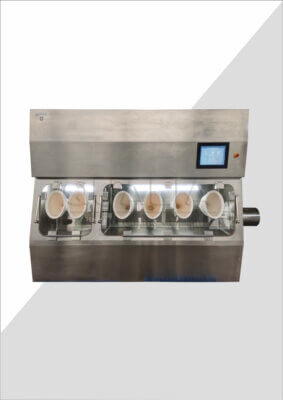
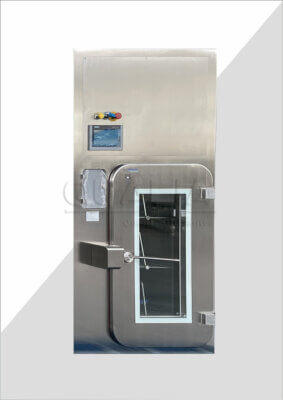
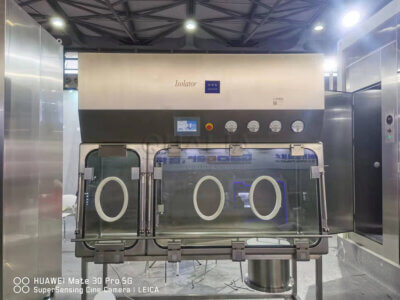
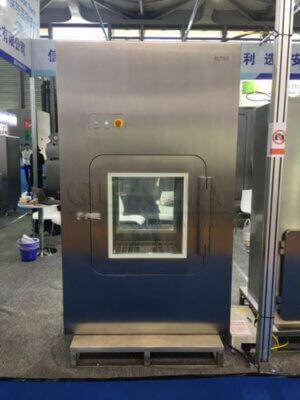
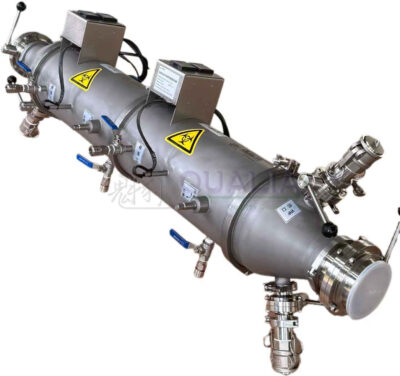
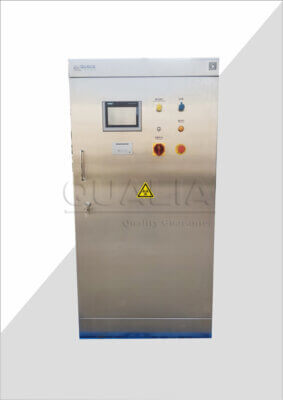
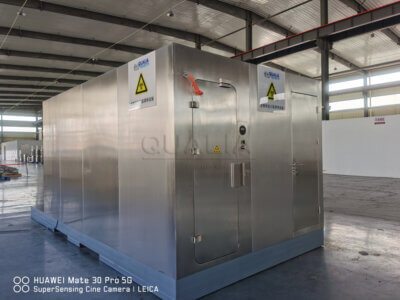
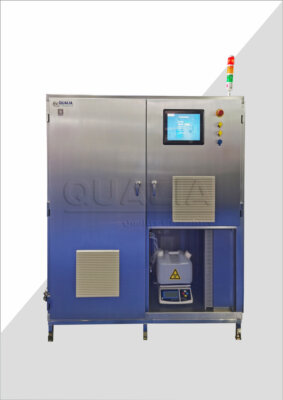
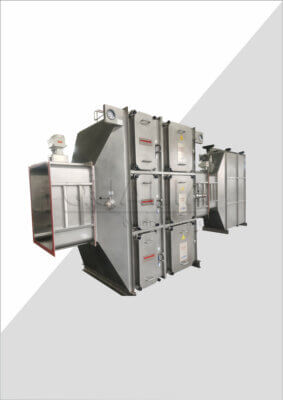
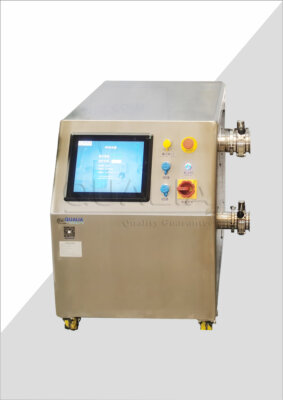
Discharge interface considerations apply to both routes but are configured differently in each. Autoclaved liquid waste reaches a discharge point after treatment and controlled cooling; an EDS reaches its discharge point through whatever treatment and discharge configuration the project has specified, whether on-entry or tank-based. In either case, local discharge controls, the requirements governing what can be released and under what conditions, sit outside the treatment equipment itself and have to be assessed against the specific site’s regulatory and infrastructure context. QUALIA’s Effluent Decontamination System for BSL liquid waste is one example of equipment configured around this kind of treatment-and-discharge interface, and the operator-task and verification planning described in BioSafe EDS: Thermal Systems for Effluent Treatment reflects how that configuration translates into daily operational records once a route has been selected.
Document a Conditional Route Decision for the Project
The comparison built across waste characteristics, container handling, volume thresholds, validation evidence, and operational demands converges on a conditional rather than a fixed answer. Where a facility’s liquid waste stream fits within compatible containers, stays within volumes that small-batch collection can absorb, and does not involve chemical contents that make autoclaving hazardous, autoclaving remains a route worth validating on its own terms, using representative liquid-load conditions and the container, cooling, and unloading chain already established for that route. Where the liquid volume involved is large enough that small-volume collection and treatment becomes impractical for the risk involved, an EDS becomes the design option to evaluate, configured either for on-entry treatment or for collection into specialized tanks, with its own representative-vessel validation path.
Neither route should be documented as universally safer, faster, or more compliant than the other; the WHO and Canadian Biosafety Handbook sources both frame this as a risk-based, project-specific determination rather than a fixed rule. What the project record should capture instead is the reasoning: the waste type and biological agent involved, the quantity and generation pattern observed, the chemical compatibility findings that either support or rule out autoclaving, and the representative conditions that validation work will need to cover for whichever route is chosen.
Where this reasoning is incomplete, the missing piece is usually one of two things: a clear picture of actual waste volume and generation pattern across the facility’s processes, or a chemical compatibility assessment specific to the waste stream rather than a general assumption based on biological risk level alone. Either gap changes the route decision directly, since volume drives the practicality of batch collection and chemistry can independently rule out the autoclave path regardless of volume. Projects preparing a supplier conversation benefit from resolving these two points first, since the documentation requested from a supplier, covering treatment method, batch records, alarms, and maintenance isolation as outlined in the EDS URS and RFQ scope guidance, depends on which route the project’s own waste characteristics have already pointed toward.
Frequently Asked Questions
Q: What project information should be assembled before comparing EDS and autoclave routes?
A: Define the actual waste types, quantities, biological agents, and chemical composition, then map how each stream would be collected, treated, cooled where applicable, verified, and discharged. This gives the comparison a project-specific basis instead of relying on a general preference for one technology.
Q: Can every liquid-waste stream in a facility follow the same treatment route?
A: Do not assume that one route fits every stream. Check each stream’s chemical compatibility, container and containment needs, quantity, and biological risk; a chemical content that makes autoclaving hazardous or a volume that is impractical to handle in small batches may require a different route decision.
Q: If an EDS is being evaluated, what configuration choice must be defined early?
A: Decide whether treatment would occur on entry or after collection in specialized tanks. Then identify the representative vessel conditions to validate, the treatment records needed, the operator tasks at that treatment point, and the local discharge interface that must be assessed.
Q: Does successful treatment validation automatically establish that the effluent can be discharged locally?
A: No. Validation should cover representative liquid-load conditions for an autoclave or representative vessel conditions for an EDS, while discharge acceptance remains a separate project-specific check. Document the applicable local discharge controls alongside treatment records, cooling requirements, and verification evidence.