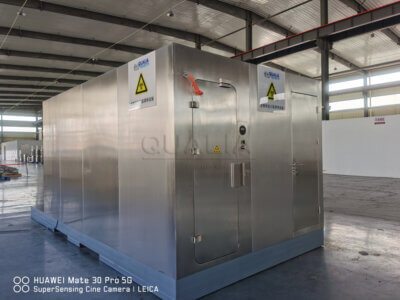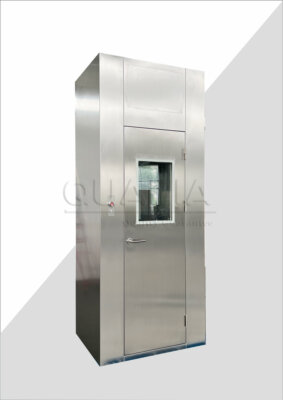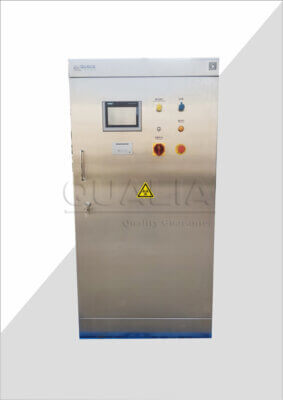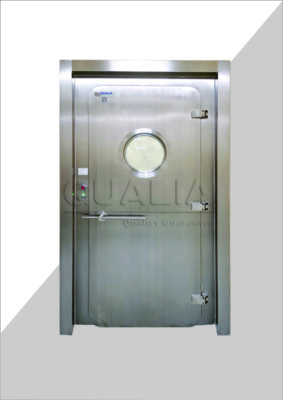

An effluent decontamination system can complete its inactivation cycle correctly and still leave the project team without grounds to discharge. The cycle is one control objective; the condition of the batch at the point of release is another. Deciding what counts as sufficient evidence for that second judgment, and who is accountable for making it, is the planning question this article works through.
Set the Release Boundary After Treatment
| Boundary check | What it establishes | Decision limit |
|---|---|---|
| Inactivation step completion | Confirms that the treatment step has been completed | Does not by itself establish readiness for discharge |
| Effluent temperature | Provides temperature evidence for the release decision | Acceptability depends on the applicable discharge conditions |
| Effluent chemistry | Provides chemistry evidence for the release decision | Acceptability depends on the applicable discharge conditions |
| Local release conditions | Defines the conditions that apply to the actual discharge | Must be closed before the discharge decision |
Treatment and discharge are not the same decision, and treating them as one step removes the checks that protect the facility from a bad release. An inactivation cycle is designed to meet a biological or chemical kill condition inside the vessel. It is validated against that condition, not against whatever temperature or chemistry the effluent happens to carry once the cycle ends. A batch can finish its treatment step exactly as intended and still be too hot, too far from neutral, or otherwise outside whatever condition the facility’s discharge point requires.
This distinction matters because the people who manage the EDS cycle and the people who manage the discharge connection may be working from different boundaries. Process engineering may treat “cycle complete” as the natural handoff point. Facilities or environmental compliance staff, by contrast, need the effluent to satisfy conditions that exist outside the treatment vessel entirely — conditions tied to the receiving sewer, the municipal permit, or the site’s own internal discharge standard. Where these two views are not reconciled in the project design, the system can report a successful cycle while the actual release still waits on information nobody built an evaluation step for.
The practical response is to define a release boundary explicitly, as a step after treatment completion, with its own inputs: a temperature check, a chemistry check, and the local release conditions that apply to that specific discharge point. None of these checks can be assumed from the cycle result. Temperature acceptability depends on what the downstream system or receiving permit allows, not on what the EDS vessel achieved internally. Chemistry acceptability is the same kind of judgment — it depends on conditions set by the discharge context, which varies by site, by jurisdiction, and by the nature of the receiving infrastructure. The WHO’s guidance on decontamination and waste management (WHO Laboratory Biosafety Manual) supports the general expectation that liquid waste treatment and its downstream handling be evaluated as distinct activities, though the specific cycle values and local discharge conditions remain project-specific and must be confirmed against the monograph and the site’s own permit rather than assumed from this general principle.
Closing this boundary is a design task, not a monitoring task. It means specifying, at the project level, exactly what evidence is captured once treatment ends and before discharge proceeds, and making sure that evidence maps onto the conditions the local discharge point actually imposes.
Control Cooling with Measurements, Permissives, and Exception Logic
| Cooling control element | Project definition needed | Decision supported |
|---|---|---|
| Measurement point | Where the cooling condition is measured | Whether the measured effluent condition can be evaluated for release |
| Permissive | What measured condition permits movement toward release | Whether progression is allowed |
| Alarm | What out-of-range result generates an alarm | Whether an exception requires attention |
| Out-of-range response | What happens when the measured result is outside the defined condition | Whether the effluent is held, diverted, or retreated instead of released |
Cooling is often the first thing a release boundary has to resolve, because effluent leaving an inactivation cycle is frequently well outside a dischargeable temperature range, and the path from cycle-end temperature to release-ready temperature has to be controlled rather than assumed. Controlling it means defining a small number of distinct elements, each of which does a different job, and none of which can substitute for another.
The first is the measurement point itself: where, physically, the cooling condition is measured. A measurement point near the vessel outlet reflects a different state than one further downstream, and the choice determines whether the figure the control system is reading actually represents the effluent that will be released, or an intermediate condition that will still change before discharge. Where the measurement point is placed upstream of further heat exchange or dilution, the reading cannot be taken as the final release condition.
The second is the permissive — the condition that must be satisfied before the system allows movement toward release. A permissive is a gate, not a report; it converts a measured value into a decision about whether the process may continue. The third is the alarm, which exists for the case where the measured condition falls outside what the permissive allows. An alarm signals that attention is needed; it does not by itself decide what happens to the batch.
That decision is the fourth element: the out-of-range response. This is where the design has to be explicit, because an alarm without a defined response leaves the operator improvising under conditions that already indicate something is wrong. The response has to specify whether the batch is held in place, diverted to another vessel or holding condition, or returned for further cooling before any re-evaluation against the permissive. Where the project treats cooling control as “measure and alarm” without defining this fourth step, the system can correctly detect an out-of-range condition and still leave the facility without a controlled way to act on it.
Configuring these elements coherently — consistent measurement location, permissives tied to the facility’s actual release conditions, and an out-of-range response that connects back to disposition — is a project-specific design task, closely related to how the system’s cooling mechanism itself is engineered and instrumented.
Define Neutralization Inputs and Out-of-Range Response
Neutralization raises the same structural question as cooling, applied to chemistry instead of temperature, and the same discipline applies: a single pH or chemical reading at one point in the process does not establish that the effluent leaving the system is within range, unless the project has defined where that reading is taken, what range it must satisfy, and what happens when it doesn’t.
The mechanism is different from cooling in one respect that affects configuration: chemical neutralization reactions can have their own dynamics — mixing time, dosing response, potential for localized conditions that don’t match a single-point reading — in a way that a temperature measurement, which responds more predictably to time and heat transfer, typically does not. Where neutralization chemistry is involved, the project needs to be clear about whether a single in-line reading is sufficient evidence of a uniform, stable condition, or whether the process requires confirmation after a mixing or hold period before the reading can be trusted as representative of the batch as a whole.
This has a direct consequence for how out-of-range response is built. If a neutralization reading is taken before the batch has had time to reach a stable condition, an out-of-range result might reflect a transient state rather than a real problem — but treating every such reading as equally meaningful, without resolving that ambiguity in the design, risks two different failures: releasing something that hasn’t actually reached the required condition, or unnecessarily diverting a batch that would have settled into range given more time. Neither failure mode is acceptable as a matter of improvisation; both have to be designed out through a defined sequence of measurement, hold, re-measurement if needed, and a clear criterion for what counts as a stable, representative reading.
As with cooling, the out-of-range response for neutralization has to specify what happens to the batch — not just that an exception exists. Where facility conditions allow a divert-and-retreat path, the response can call for returning the batch to treatment. Where no such path exists in the configuration, the response has to specify a hold condition and an escalation route instead. Which option a given project supports depends on how the system and its associated vessels were configured at the outset, which is exactly the kind of decision that needs to be resolved during project definition rather than discovered during operation.
Locate Sampling to Represent the Effluent Actually Released
| Sampling-point check | Question to resolve | Decision consequence |
|---|---|---|
| Representative effluent | Does the sample represent the material actually released? | If not, the point cannot support the discharge decision |
| Safe access | Can the point be accessed without creating a new exposure route? | If not, do not accept the location |
| Cross-contamination control | Can sampling occur without creating a new cross-contamination route? | If not, do not accept the location |
A sampling point exists to answer one question: does this sample represent what is actually going to be discharged? If the answer is no, every other control in the system — cooling, neutralization, permissives, alarms — can be functioning correctly and the sampling result still won’t support the release decision it’s being used for.
Representativeness depends on timing and location relative to the actual discharge path. A sample taken before the final treatment step, before cooling has stabilized, or from a side stream that doesn’t carry forward to the discharge point, measures something other than what leaves the system. Where the physical plumbing allows multiple draw-off points, the project has to identify which one sits on the actual discharge path and reflects the effluent’s final condition, rather than defaulting to whichever point is easiest to reach.
Accessibility is the second test, and it works in tension with the first. A sampling point positioned to be maximally representative — close to the final discharge connection, for instance — may also be the point hardest to access safely, particularly where the effluent being sampled has biological or chemical hazard associated with it. A sampling design that solves representativeness by placing the draw-off inside a space that requires additional personal protective measures, or that requires breaking a containment boundary to reach, has solved one problem by creating another. The same applies to cross-contamination: a sampling port that is easy to reach but shares a line with another process stream, or that requires a connection method prone to carryover between samples, introduces a new route for contamination that the original design did not have.
Resolving this means treating sampling-point selection as a design decision with two simultaneous constraints, not a single optimization. The point has to sit where it reflects the discharged effluent, and it has to be reachable and operable without opening a new exposure or cross-contamination path. Where a single point cannot satisfy both constraints, the project needs to work out whether a different connection method, a different physical location, or an engineered access feature resolves the conflict — because accepting a non-representative sample to preserve safe access, or accepting an unsafe access point to preserve representativeness, both leave the discharge decision resting on compromised evidence.
Assign Hold, Divert, Retreatment, and Release Authority
Every control boundary described so far — cooling, neutralization, sampling — produces information. None of it produces a decision until someone with defined authority acts on it. A project that has built excellent measurement and alarm logic can still fail at the point of release if no one has been assigned the authority to interpret an out-of-range result and choose among holding the batch, diverting it, sending it for retreatment, or releasing it.
This authority has to be assigned deliberately rather than left to whoever happens to be present when an exception occurs. The reason is that each of the four dispositions carries different consequences and requires different competence to judge correctly. Holding a batch is typically the lowest-consequence choice, buying time without committing to an action; but a hold that extends without a decision becomes its own problem, particularly where facility capacity is limited. Diverting a batch assumes that an alternate path — another vessel, another holding tank — exists and is itself in a condition to receive it. Retreatment assumes the system supports cycling the batch back through inactivation or neutralization rather than just moving it elsewhere. Release is the decision with the least room for error, because it is not reversible in the way the other three are.
Because these decisions differ in consequence and in the information needed to make them correctly, the project should assign authority by role rather than by availability — identifying, in the facility’s own documentation, who is qualified and authorized to make each type of disposition call, and under what circumstances that authority can be delegated or must be escalated. Where biosafety or EHS oversight governs the facility, that function typically has a stake in at least the divert and release decisions, since both affect the facility’s containment and discharge posture. Where QA or validation teams are responsible for batch release in a broader sense, their role in this specific decision needs to be defined rather than assumed to carry over automatically from other release processes they manage.
This assignment is a governance decision that sits alongside the physical system design, and it needs to be documented with the same care as the measurement and control logic it governs — because an alarm with no assigned decision-maker is, functionally, no better than no alarm at all.
Close Local Discharge Criteria and Handover Records Before Acceptance
| Acceptance item | Closure evidence | Boundary to preserve |
|---|---|---|
| Local discharge criteria | Criteria applicable to the actual release are documented | Conditions remain specific to the project and local discharge context |
| Cooling and neutralization controls | Measurement points, permissives, alarms, and the out-of-range response are documented | Completion of inactivation alone does not close discharge readiness |
| Sampling point | The point represents the material actually released and is accessible without adding exposure or cross-contamination routes | The check applies to the effluent actually released |
| Test records | Ownership of the records used for the discharge decision is assigned | The records support the applicable discharge criteria |
| Retained samples | The need for retained samples is decided and ownership is assigned when they are required | Retention is conditional on project requirements |
| Disposition authority | Authority to release, divert, hold, or retreat is assigned | The decision remains with the assigned project authority |
Everything developed in the preceding sections — the release boundary, cooling control, neutralization logic, sampling placement, and disposition authority — has to converge into a single closeout before the system and the facility’s discharge arrangement can be accepted as ready. Acceptance is not the point where the hardware passes its functional tests; it is the point where the documented criteria, the control logic, and the assigned responsibilities all align with the conditions the actual discharge point imposes.
The local discharge criteria themselves need to be documented in terms specific to the project’s receiving point — whatever permit, municipal requirement, or internal facility standard applies — rather than left as general assumptions carried over from the equipment’s design basis. The WHO’s guidance on GMP for pharmaceutical products containing hazardous substances supports the general expectation that hazardous liquid effluent be treated and its disposal documented before municipal discharge, though the specific conditions applicable to any given facility remain governed by local discharge rules and have to be confirmed against those rules rather than against the general guidance alone.
Cooling and neutralization controls need to be closed out as documented systems — measurement points, permissives, alarms, and out-of-range responses all specified and traceable — rather than left implicit in equipment behavior that happened to work during commissioning. The sampling point needs its representativeness and access characteristics recorded as a deliberate design decision, not as an artifact of wherever a port happened to be installed. Test records need an assigned owner, so that the evidence supporting any future release decision has a clear chain of custody. Where the project requires retained samples — and that requirement is itself conditional, depending on the facility’s own risk posture and any applicable regulatory expectation — ownership of those samples needs the same clarity. And disposition authority, assigned in the previous section, needs to be written into the acceptance record so that it does not default back to ambiguity once the project moves from commissioning into routine operation.
This closeout is also the point where the information a project owner has already assembled — local discharge requirements, facility layout, intended batch sizes, and the disposition pathways the facility can support — becomes the basis for configuration decisions a supplier makes when sizing and specifying an EDS for the project; the system’s cooling and neutralization capacity, its sampling connections, and its interface points are configured against exactly this information rather than against a generic specification. Treating closeout as a documentation exercise after the fact, rather than as the organizing structure the whole discharge planning process has been building toward, risks leaving gaps between what the equipment can do and what the local discharge context actually requires.
Frequently Asked Questions
Q: Can effluent be discharged as soon as the inactivation step is complete?
A: No. Inactivation completion is only one part of the release decision; the effluent must also be evaluated for temperature, chemistry, and the local conditions that apply to the actual discharge.
Q: What project information should be fixed before the EDS discharge controls are accepted?
A: Document the applicable local discharge criteria, the cooling and neutralization measurement points and decision conditions, the representative sampling location, the response to an out-of-range result, and ownership of the release decision and its records. This allows the project team to test the complete release path during acceptance rather than treating discharge readiness as an assumption.
Q: What should happen when a cooling or neutralization result is outside the defined condition?
A: The effluent should follow the project’s predefined exception route instead of progressing to release. Specify whether it will be held, diverted, or retreated, who has authority to make that decision, and which result and disposition records must be retained.
Q: How can a project team determine whether a sampling point is suitable?
A: Confirm that the sample represents the material actually released and that the point can be accessed without creating a new exposure or cross-contamination route. If any of those checks fail, the location should not be accepted as evidence for the discharge decision.
Q: Are retained samples always required for EDS discharge records?
A: Not necessarily; the requirement is project-specific. Decide whether retained samples are needed under the applicable discharge conditions before acceptance, then assign responsibility for their handling and link that decision to the release records.