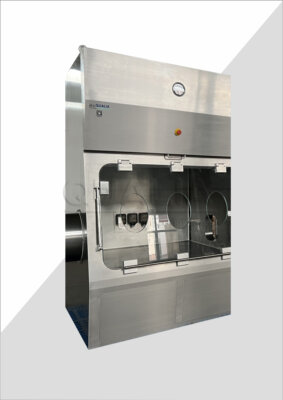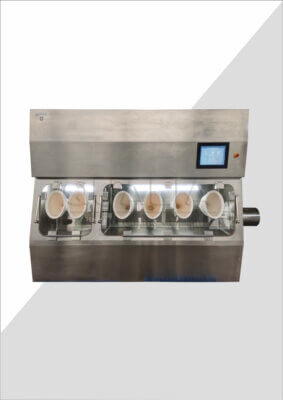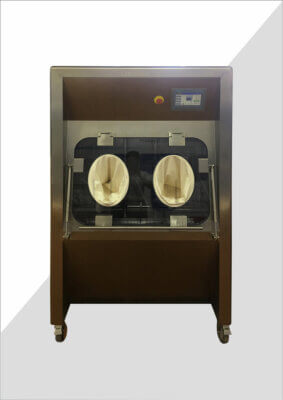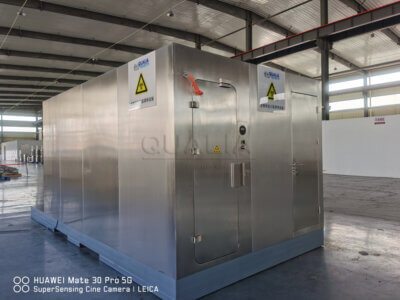
For professionals handling moderately potent pharmaceutical ingredients, selecting the right containment strategy is a critical operational decision. The choice between an open downflow booth and a closed isolator hinges on balancing workflow efficiency against operator safety. Misconceptions persist that any ventilated enclosure provides adequate protection for Occupational Exposure Band (OEB) 2-3 compounds, leading to under-specified equipment and potential exposure risks.
This balance is now under greater scrutiny. Regulatory expectations for contamination control are tightening globally, and the financial and reputational costs of a containment failure are significant. A precise understanding of downflow booth specifications, their validated performance limits, and the mandatory risk assessment process is essential for sustainable, compliant operations.
Understanding OEB 2-3 and Downflow Booth Fundamentals
Defining the OEB Framework and Containment Philosophy
Occupational Exposure Bands (OEBs) provide a critical framework for selecting containment strategies based on compound potency. OEB 2 (OEL 100–1000 µg/m³) and OEB 3 (OEL 50–100 µg/m³) encompass moderately toxic, highly active pharmaceutical ingredients. For open handling tasks like weighing and dispensing, downflow booths (DFBs) serve as the primary engineered control. Their design represents a strategic compromise, offering a balance between operator protection and the operational flexibility required for manual tasks.
The “Gloveless” Design Compromise
This “gloveless” design philosophy prioritizes workflow efficiency for OEB 2-3, consciously accepting a marginally higher theoretical risk than a closed isolator in exchange for productivity gains. The open front allows for easier material transfer and manipulation compared to gloveports. However, this trade-off mandates strict procedural adherence and a flawless aerodynamic performance to be effective. The booth’s containment is not physical but aerodynamic, a fact that fundamentally shapes all operational protocols.
Application Scope and Strategic Role
Downflow booths are not universal solutions. They are point-of-use controls designed for specific unit operations where open access provides a tangible benefit. Common applications include manual weighing, sampling, and small-scale dispensing of powders. Their role is often as the primary layer in a defense-in-depth strategy, where their performance is supplemented by room controls and rigorous SOPs. Industry experts recommend their use be strictly defined and validated per process, not just per OEB classification.
Key Airflow Specifications for Effective Containment
The Principle of Unidirectional Laminar Flow
The containment efficacy of a downflow booth hinges entirely on its engineered airflow regime. The primary mechanism is unidirectional laminar airflow, where HEPA-filtered air moves vertically from the ceiling at a critical face velocity. This column of clean air acts as a barrier, directing particle clouds downward and away from the operator’s breathing zone. Maintaining this designed laminar flow integrity is more critical for safety than the physical structure itself.
Critical Velocity and Containment Dynamics
Face velocity is the non-negotiable parameter. A typical range of 0.45 m/s to 0.5 m/s creates a clean air sweep that suppresses dust clouds and directs particles toward rear or base exhaust intakes. Velocity that is too low fails to contain; velocity that is too high can cause turbulence, potentially lifting particles into the breathing zone. The system achieves ISO Class 5 air quality at rest and utilizes a single-pass airflow configuration for powder handling, ensuring contaminated air is exhausted and not recirculated back into the room or the work zone.
The Aerodynamic Envelope as the Primary Barrier
This creates the central tenet of downflow booth safety: the aerodynamic envelope is the primary protective barrier. Turbulence from improper technique, rapid arm movements, or placing equipment too close to the open front can compromise this envelope. From our analysis of validation reports, the most common root cause of test failure is not equipment malfunction, but practice-induced turbulence that disrupts laminar flow. The following table outlines the core airflow parameters that define this critical envelope.
Core Airflow Performance Parameters
The specifications below define the engineered performance required to establish a protective aerodynamic barrier for OEB 2-3 handling.
| Parameter | Specification | Critical Function |
|---|---|---|
| Face Velocity | 0.45 – 0.5 m/s | Creates clean air sweep |
| Airflow Type | Unidirectional laminar | Suppresses dust clouds |
| Air Quality (at rest) | ISO Class 5 | Ensures particle-free zone |
| Airflow Configuration | Single-pass | Prevents air recirculation |
| Primary Safety Factor | Flow integrity | More critical than structure |
Source: ANSI/ASHRAE 110: Method of Testing Performance of Laboratory Fume Hoods. This standard establishes foundational principles for evaluating containment performance through airflow and face velocity testing, which are directly applicable to validating the safety of downflow booth aerodynamic envelopes.
Critical Technical Specifications and Design Features
Construction and Filtration: The Foundation of Integrity
Downflow booths are highly modular systems, with specifications that directly impact long-term performance and cost. Construction typically uses cGMP-compliant, cleanable materials like 304 or 316 stainless steel. The filtration strategy is a major operational and financial driver; a standard train includes pre-filters (G4/F8) to protect the terminal HEPA filters (H13/H14). Safe-change mechanisms for these filters are essential for maintaining containment integrity during routine maintenance, preventing exposure during filter replacement.
Control Systems and Operational Intelligence
Modern control systems with PLC/HMI interfaces transform the booth from passive equipment into a smart asset. These systems enable closed-loop fan control to maintain set face velocity despite filter loading, real-time monitoring of differential pressure, and data logging for compliance. Features like LED lighting and low-noise EC fans reflect a market shift where energy efficiency and operator comfort are key differentiators for workforce acceptability and sustainable operation.
Key Components and Their Impact
Selecting a downflow booth requires evaluating how each component contributes to safety, compliance, and total cost of ownership.
| Component | Key Feature | Operational Impact |
|---|---|---|
| Construction Material | cGMP stainless steel | Cleanability, compliance |
| Filtration Train | Pre-filter + HEPA (H13/H14) | Protects terminal filter |
| Filter Change Mechanism | Safe-change design | Maintains containment during maintenance |
| Control System | PLC/HMI interface | Enables real-time monitoring |
| Fan Technology | Low-noise EC fans | Energy efficiency, operator comfort |
Source: ISO 14644-7: Cleanrooms and associated controlled environments — Part 7: Separative devices. This standard specifies design and construction requirements for separative devices like clean air hoods, directly governing the materials, filtration, and integrity features outlined in the table.
Conducting a Process-Specific Risk Assessment
Moving Beyond the OEB Classification
A formal OEB classification alone is an incomplete specification for equipment selection. A detailed process risk assessment is mandatory to validate a downflow booth’s suitability. Key variables include the product’s dustiness and aerodynamic properties, the energy of the operation (e.g., simple transfer vs. milling), the quantity handled, and task duration. A low-OEB but highly dusty powder can present a greater airborne challenge than a high-OEB but non-dusty compound.
Implementing a Defense-in-Depth Strategy
For higher-risk OEB 3 applications involving very dusty powders, the standard booth may be insufficient. This necessitates a defense-in-depth strategy, where the DFB serves as the primary layer supplemented by secondary controls. These can include higher containment screens, integrated drum lifters to minimize manual pouring, or placement within a controlled-access anteroom to manage personnel traffic. The assessment must also anticipate future regulatory tightening, favoring flexible, upgradeable solutions.
Documenting the Rationale and Boundaries
The output of this assessment is not just a purchase order, but a documented rationale. This document should clearly state the process parameters the booth is validated for and define the boundaries of safe use. It should also identify the trigger points—such as a change in powder characteristics or scale—that would necessitate a re-assessment and potentially a move to closed containment. This proactive documentation is a cornerstone of quality by design and regulatory due diligence.
Limitations and When to Consider Closed Containment
Recognizing the Inherent Limit of Open Systems
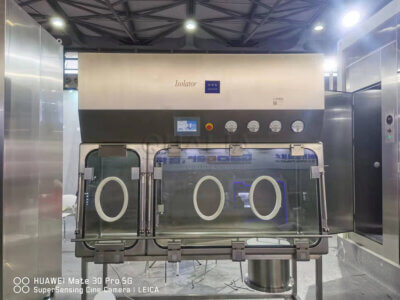
It is critical to recognize the inherent limitation of downflow booths as an “open” handling system. Their protection is probabilistic, relying on consistent airflow and perfect practice. For compounds with OELs below 50 µg/m³ (OEB 4 and higher), or for highly potent, genotoxic, or cytotoxic agents, closed containment using isolator (glovebox) technology is often mandated by internal guidelines or regulatory expectation. The open design cannot guarantee the level of exposure control required for these substances.
The Fundamental Efficiency vs. Assurance Trade-off
The decision between an open DFB and a closed isolator is the fundamental choice between workflow efficiency and maximum containment assurance. For OEB 2-3, the downflow booth remains effective, but the risk assessment must clearly identify the threshold where process characteristics outweigh its benefits. Extremely high dust generation, large-scale open handling, or processes involving volatile solvents are typical scenarios that push the risk beyond what an open booth can reliably manage.
Decision Framework: Open vs. Closed Containment
This comparison highlights the critical factors that should guide the selection between an open downflow booth and a closed isolator system.
| Decision Factor | Downflow Booth (Open) | Closed Isolator (Glovebox) |
|---|---|---|
| Suitable OEB Range | OEB 2 – OEB 3 | OEB 4 and higher |
| Containment Assurance | Marginally higher theoretical risk | Maximum containment assurance |
| Operational Priority | Workflow efficiency, flexibility | Operator protection, safety |
| Key Application Threshold | OEL above 50 µg/m³ | OEL below 50 µg/m³ |
| Handling for High Risk | Requires secondary controls | Often mandated |
Source: EU GMP Annex 1: Manufacture of Sterile Medicinal Products. This guideline provides the regulatory framework for contamination control strategies, informing the critical decision between open and closed systems based on product risk and required protection levels.
Installation, Validation, and Ongoing Performance Testing
Holistic Integration with Facility Design
Successful implementation extends beyond procurement. Installation must integrate the booth holistically with facility design. This involves coordinating with room pressure regimes—often requiring the booth to be in a negative pressure room—and planning material and personnel flows to minimize cross-contamination. The goal is to create a cohesive containment strategy where the booth functions as a controlled node within a larger controlled environment.
Performance Validation via Challenge Testing
Performance validation through standardized airborne particle challenge tests is essential to demonstrate the booth achieves its designed containment level. Tests typically use surrogate materials like lactose to simulate powder behavior, with sampling conducted at the operator breathing zone to verify exposure would be below the applicable OEL. This quantitative test, not just a particle count at rest, is the definitive proof of operational safety.
Ensuring Continuous Compliance through Monitoring
Ongoing performance is ensured through a rigorous monitoring and maintenance schedule. This relies on the advanced control systems to provide real-time alerts for low airflow or filter blockage and to maintain automated data logs. These logs serve as objective evidence of continuous compliance and due diligence. The validation and monitoring approach must align with relevant standards like GB/T 25915.7, the Chinese adoption of ISO 14644-7, to ensure acceptance in target markets.
Lifecycle Phases and Key Activities
A downflow booth’s effectiveness is secured through activities across its entire lifecycle, from installation to decommissioning.
| Phase | Key Activity | Objective / Standard |
|---|---|---|
| Validation Testing | Airborne particle challenge test | Demonstrate containment below OEL |
| Surrogate Material | Lactose (common) | Simulates powder behavior |
| Ongoing Monitoring | Real-time airflow monitoring | Alerts for performance deviation |
| Compliance Evidence | Automated data logging | Proof of continuous compliance |
| Integration Consideration | Room pressure regimes | Cohesive facility strategy |
Source: GB/T 25915.7: Cleanrooms and associated controlled environments — Part 7: Separative devices. As the Chinese adoption of ISO 14644-7, this standard provides the authoritative basis for the testing, installation, and performance monitoring requirements of separative devices in regulated markets.
Operational Best Practices and Operator Training
Training as a Non-Negotiable Investment
The best-engineered booth can be compromised by poor practice. Effective training is therefore non-negotiable and must be competency-based, not just theoretical. Operators must internalize that they are working within a dynamic airflow envelope. Training should reinforce that the aerodynamic envelope is the primary protective barrier, making their technique a critical control point.
Core Techniques for Maintaining Containment
Operators must be trained to work within the high-velocity downflow zone at the rear of the work surface, minimize turbulent movements, and use appropriate, slow techniques for powder handling. Procedures must enforce correct gowning to avoid shedding, the use of ancillary controls like local exhaust ventilation (LEV) arms for specific tasks such as vessel charging, and meticulous cleaning protocols that do not disrupt the HEPA filter integrity.
Cultivating a Safety-First Mindset
Ultimately, training aims to cultivate a safety-first mindset where operators understand the “why” behind every procedure. This includes recognizing signs of potential booth failure, such as unusual airflow sounds or visual turbulence indicators. This human-factor focus ensures the engineered controls perform as designed, mitigating the accepted risk of the open-front configuration and turning procedural adherence from a compliance task into a core safety behavior.
Selecting the Right Downflow Booth for Your Application
Engaging in a Detailed Technical Dialogue
Selection requires navigating a complex landscape of modular options. Buyers must engage in detailed technical dialogues with suppliers to avoid under- or over-specification. Present the complete findings of your process risk assessment, including powder characteristics and worst-case scenarios. A competent supplier will ask probing questions about your validation requirements and total cost of ownership, not just quote a standard model.
Strategic Consideration: Point Solution or Integrated Node?
A key strategic consideration is whether the need is for a standalone point solution or a node within an integrated powder transfer system. For complex, multi-step processes, partners offering end-to-end process safety architecture may provide better long-term containment integrity than piecing together equipment from multiple vendors. Consider interfaces with split butterfly valves, drum dumpers, or continuous liner systems for a closed transfer solution.
Procurement Based on Total Cost of Ownership
Procurement criteria should balance immediate containment needs with total cost of ownership. Factor in energy consumption of EC vs. AC fans, filter lifecycle costs and change-out frequency, upgradeability for handling future potent compounds, and features that ensure operational sustainability. The right selection marries technical compliance with operational pragmatism, ensuring the booth is used correctly and consistently for its entire service life. For applications demanding high flexibility and performance, exploring advanced modular containment isolator systems may be a prudent step in the evaluation process.
The decision to implement a downflow booth for OEB 2-3 containment rests on three pillars: a rigorously documented process risk assessment, specification of equipment with validated aerodynamic performance, and an uncompromising commitment to operator training and procedural control. Each pillar is interdependent; weakness in one compromises the entire containment strategy. Prioritize solutions that provide data-driven proof of performance and design flexibility to adapt to evolving compound pipelines.
Need professional guidance to specify, validate, and integrate a containment strategy tailored to your specific potent compound handling processes? The engineering team at QUALIA specializes in translating operational requirements into technically sound, compliant containment solutions. Contact us to discuss your application challenges.
Frequently Asked Questions
Q: What are the critical airflow specifications for a downflow booth to ensure OEB 3 containment?
A: The primary safety mechanism is a unidirectional laminar airflow with a face velocity between 0.45 and 0.5 meters per second. This HEPA-filtered vertical air sweep directs particles away from the operator and toward exhaust intakes, maintaining ISO Class 5 air quality. If your process involves highly dusty OEB 3 powders, you should validate that this velocity profile remains laminar and unturbulent during actual operations, as per testing methods in ANSI/ASHRAE 110.
Q: How do you conduct a risk assessment to determine if a downflow booth is sufficient for your process?
A: A formal OEB classification is just the starting point. You must analyze specific process variables including the powder’s dustiness, the energy and duration of the operation, and the quantity handled. For high-energy tasks with very dusty OEB 3 materials, the standard booth may require supplemental controls like containment screens. This means facilities handling diverse potent compounds should design their assessment to identify the threshold where process risk outweighs the booth’s open-design benefits.
Q: When should you select a closed isolator over an open downflow booth for OEB 2-3 applications?
A: Choose a closed isolator when handling compounds with Occupational Exposure Limits below 50 µg/m³ (OEB 4+), or for highly potent, genotoxic, or cytotoxic agents where maximum containment is non-negotiable. The decision fundamentally trades the operational flexibility of a downflow booth for the absolute containment assurance of an isolator. For projects where future compounds may approach these potency levels, plan for a flexible containment strategy that can be upgraded.
Q: What are the key technical features to prioritize in a modern downflow booth for long-term operational efficiency?
A: Prioritize a PLC/HMI control system for closed-loop fan control and compliance data logging, alongside safe-change filter mechanisms for maintenance without exposure. Energy-efficient EC fans and cleanable, cGMP-compliant materials like stainless steel also reduce total cost of ownership. This means facilities focused on sustainable, data-driven operations should evaluate these smart features as critical differentiators, not just optional upgrades, during vendor selection.
Q: How is the ongoing performance of a downflow booth validated and monitored to ensure continuous compliance?
A: Initial validation requires standardized airborne particle challenge tests to prove the unit achieves exposure below the target OEL. Ongoing assurance relies on a rigorous schedule of performance monitoring, enabled by the booth’s control systems to alert for low airflow or filter issues and maintain audit-ready data logs. If your operation is subject to strict regulatory audits, you should plan for this integrated validation and monitoring protocol from the installation phase, referencing standards like ISO 14644-7.
Q: Why is operator training considered non-negotiable for downflow booth safety, even with proper engineering controls?
A: The aerodynamic envelope is the primary protective barrier, and poor technique can create turbulence that compromises containment. Effective training ensures operators work within the high-velocity zone, minimize disruptive movements, and use correct powder handling and cleaning methods. This human-factor focus means that procuring a technically superior booth is insufficient; you must budget for and enforce comprehensive procedural training to mitigate the inherent risk of the open-front design.
Q: What should you discuss with a vendor to avoid under- or over-specifying a downflow booth?
A: Engage in a detailed technical dialogue covering your specific process risk assessment, required work surface dimensions for equipment, and whether the booth is a standalone unit or part of an integrated powder transfer system. Discuss filtration strategy, energy consumption, and potential for future upgrades. For complex multi-step processes, this means you should evaluate suppliers who offer end-to-end process safety architecture rather than just selling isolated equipment.
Related Contents:
- OEB 3 vs OEB 4 vs OEB 5: Equipment Requirements and Containment Strategy Differences
- Airflow Testing for Biosafety Cabinets: Key Checks
- Cleanroom Air Shower Booths: Complete Systems
- How to Choose the Right OEB Isolator: Expert Guide
- How to Calculate Required Containment Level for API and HPAPI Using Toxicology Data
- What Are OEB Levels in Pharmaceutical Manufacturing and How Are They Determined?
- Unveiling the Best RABS for Your Facility
- Isolators vs RABS vs Downflow Booths for OEB 4-5 Applications: Performance and Cost Comparison 2025
- How to Calculate Required BSC Airflow Velocity (FPM) for Different BSL-Level Containment Standards