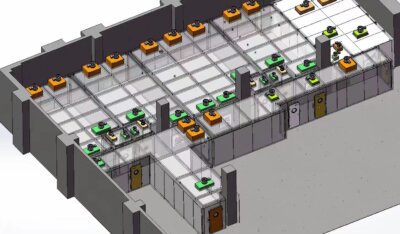

In multi-room cleanroom suites, the pressure cascade is the primary engineered defense against cross-contamination. Yet achieving stable differentials between zones remains a persistent challenge, complicated by door traffic, HVAC imbalances, and construction tolerances. Professionals often treat this as an HVAC balancing act rather than a foundational architectural principle, leading to costly rework and compliance failures during validation. The core decision isn’t just about specifying pressure values; it’s about designing a holistic, stable system from the outset.
This focus is critical now as industries from biopharma to advanced electronics push for higher containment and sterility assurances under evolving standards like the revised EU GMP Annex 1. The subtle pressure gradients required—often as low as 7.5 Pascals—are easily disrupted. A robust cascade design, therefore, is non-negotiable for protecting product integrity, ensuring regulatory compliance, and enabling efficient, predictable facility operations.
Fundamentals of Cleanroom Pressure Differentials & Cascades
Defining the Aerodynamic Barrier
Differential pressure creates directional airflow, acting as an invisible barrier. By maintaining a cleanroom at a higher (positive) or lower (negative) pressure than adjacent areas, air flows from the cleanest zone to less clean areas, preventing particulate ingress. This principle is measured in Pascals (Pa) or inches of water column. The cascade systematically applies this across a suite, enforcing a logical flow from the highest-pressure, highest-classification core (e.g., ISO Class 5) through progressively lower-pressure buffer zones. This is a core control system, not an optional feature.
The Cascade as an Integrated System
A pressure cascade functions as an integrated environmental control system. Its stability depends on the precise interaction of HVAC airflow, room volume, and envelope integrity. A common oversight is designing rooms in isolation rather than as interdependent pressure zones. In my experience, treating the entire suite as a single pressure organism during the design phase prevents the instability that arises from piecemeal adjustments later. The minute gradients involved demand sensitive design; a 5 Pa differential is roughly equivalent to the pressure from a sheet of paper, highlighting how easily it can be compromised by poor construction or balancing.
Key Design Parameters for a Robust Pressure Cascade
Establishing the Pressure Step
The fundamental parameter is the pressure differential between adjacent rooms of different classifications. Industry standards and guidelines typically mandate a minimum step, though the exact value can be project-specific. This differential is achieved through meticulous HVAC balancing, where supply airflow into a room is calibrated to exceed exhaust and return airflow, forcing the excess out through designed leakage paths. The goal is to ensure this directional flow is maintained consistently, not just at a static setpoint.
Critical Components for Stability
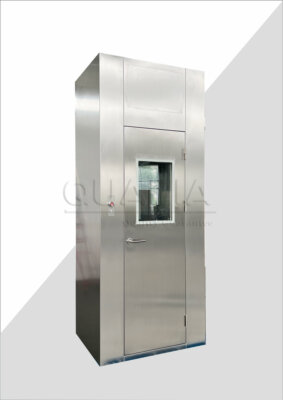
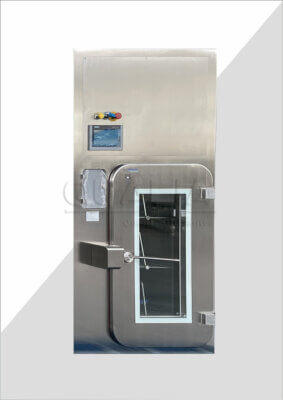
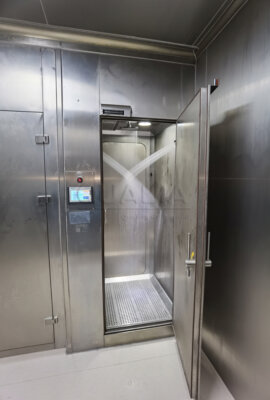
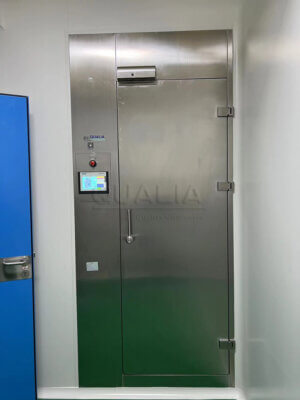
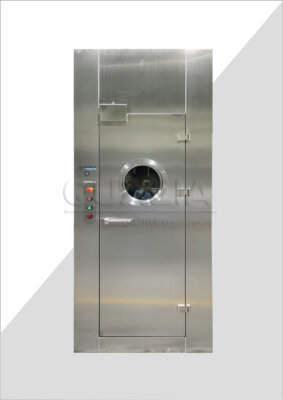
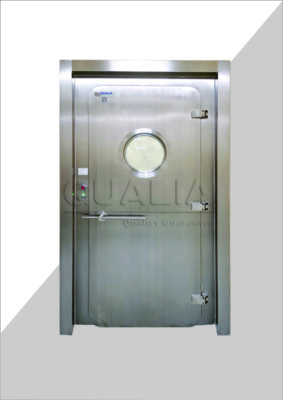
Beyond airflow, physical components are vital. Airlocks with interlocked doors are essential, preventing the simultaneous breaching of two pressure boundaries. The role of an anteroom is often misunderstood; its pressure specification is not fixed but is entirely dependent on the contamination control strategy of the primary space it serves. It acts as a dynamic buffer, which could be positive or negative relative to the spaces on either side. We compared several failed validations and found that underspecified door seals and missing door interlocks were among the most frequent root causes for cascade failure.
The following table outlines the core parameters that define a functional pressure cascade.
| Parameter | Typical Range / Value | Key Consideration |
|---|---|---|
| Pressure Step (Adjacent Rooms) | 0.03″ – 0.05″ w.g. | Minimum differential required |
| Pressure Step (Pascals) | 7.5 – 12.5 Pa | Metric equivalent |
| HVAC Balancing Principle | Supply > Exhaust | Creates positive pressure |
| Critical Component | Airlocks | Interlocked doors essential |
| Anteroom Pressure Role | Strategy-dependent | Buffer for primary space |
Source: EU GMP Annex 1. This guideline mandates pressure differentials as a key engineering control for sterility, directly informing the design parameters for cascades between cleanrooms and buffer zones.
Monitoring & Control Systems for Pressure Integrity
From Manual Readouts to Digital Intelligence
Monitoring verifies the designed cascade is operational. Technologies range from simple analog Magnehelic gauges for local visual checks to networked digital pressure sensors. This creates an operational data hierarchy: analog provides point-in-time verification, while digital systems enable continuous oversight. The progression to digital transforms compliance from a manual checklist item into a continuous, data-driven asset, allowing for real-time alerts and predictive trend analysis before a deviation becomes a breach.
The Value of Integrated Control
For facility managers, integrated Building Management System (BMS) control is becoming indispensable. A BMS centralizes data from all pressure sensors, enabling automated logging, historical analysis, and even dynamic control responses to events like door openings. This integration is a key differentiator for suppliers, shifting competition from mere construction to the value of the digital ecosystem for long-term operational intelligence and audit readiness. Easily overlooked details include sensor calibration frequency and the placement of sensors away from turbulent airflow near doors or supply vents.
The choice of monitoring technology directly impacts data reliability and response capability.
| System Type | Primary Function | Data Output |
|---|---|---|
| Analog Gauges (e.g., Magnehelic) | Local visual readout | Manual, point-in-time |
| Digital Pressure Sensors | Continuous monitoring | Real-time data transmission |
| Building Management System (BMS) | Centralized control | Alerts, logging, trend analysis |
Source: ISO 14644-2. This standard establishes requirements for monitoring plans to provide evidence of cleanroom performance, including the consistent maintenance of pressure differentials as per design.
Advantages of Prefabricated Modular Construction
Precision and Predictability from the Factory
Prefabricated modular construction offers distinct advantages for implementing precise pressure cascades. Wall and ceiling panels are manufactured in controlled factory conditions to exacting tolerances, resulting in exceptionally airtight seals. This inherent precision minimizes unintended leakage—the primary enemy of stable pressure gradients. Furthermore, integrated utility chases and pre-defined airflow pathways allow for optimized HVAC routing from the initial design phase, reducing on-site guesswork and improvisation.
Risk Reduction Through Factory Acceptance
The modular model fundamentally shifts risk from the chaotic construction site to the controlled factory floor. Factory Acceptance Testing (FAT) is a critical phase where the assembled module or suite is validated against design specifications, including pressure decay testing, before it ever ships. This process identifies and rectifies issues in a clean, controlled environment, dramatically reducing on-site variables, contamination risks, and overall commissioning time. The predictability this offers for project timelines and validation outcomes is a primary driver for its adoption in fast-paced sectors.
Pressure Cascade Alignment with ISO & GMP Standards
The Foundational ISO Framework
Pressure cascade design is a supportive requirement for achieving and maintaining air cleanliness per ISO 14644-1. ISO 14644-4 provides the essential design and construction guidance, while ISO 14644-2 specifies the monitoring requirements. This ISO foundation establishes the technical methodology for creating and proving a cascade. However, compliance in regulated industries requires a second, mandatory layer.
Layering Industry-Specific Mandates
For pharmaceutical or biotechnology applications, regulations like EU GMP Annex 1 or USP <797> impose additional, enforceable mandates. These documents layer specific requirements for microbial control, operational procedures, and defined cascade sequences for handling hazardous or sterile materials onto the ISO foundation. A properly designed prefabricated suite with a certified cascade simplifies adherence to these complex, overlapping standards by providing documented, pre-validated performance data from the outset.
Navigating the regulatory landscape requires understanding how different standards apply.
| Standard / Guideline | Primary Focus | Role for Pressure Cascade |
|---|---|---|
| ISO 14644-4 | Design & construction | Foundational design guidance |
| ISO 14644-2 | Performance monitoring | Specifies monitoring requirements |
| EU GMP Annex 1 | Sterile manufacturing | Mandates specific cascade sequences |
| USP <797> | Sterile compounding | Defines cascade for buffer/ante-areas |
Source: ISO 14644-4 and USP General Chapter <797>. ISO 14644-4 provides the core design framework, while USP <797> layers enforceable operational requirements for specific healthcare applications, both governing cascade implementation.
Common Design Challenges & Mitigation Strategies
Addressing Instability at the Source
Common challenges to cascade stability include door openings, internal equipment changes, filter loading, and HVAC system hiccups. The low tolerance for error makes airtight construction the first line of defense. Mitigation strategies start with specifying high-performance doors with superior seals and implementing anterooms with interlocked doors to compartmentalize pressure breaches. Furthermore, designing HVAC systems with sufficient flexibility and excess capacity allows for rebalancing airflow to accommodate future changes in room use or equipment layout.
The Silent Driver: Energy Efficiency
Energy efficiency emerges as a critical, often silent driver in cascade design. Maintaining high air-change rates and strict pressure differentials is energy-intensive. Superior modular construction with minimal leakage reduces the amount of conditioned air wasted. Advanced BMS controls that make precise, minimal adjustments to maintain setpoints, rather than gross over-compensation, further cut energy consumption. This operational ROI makes investing in a high-integrity, well-controlled cascade a financially sound decision beyond compliance alone.
Calculating Airflow Requirements for Cascade Stability
Building the Foundation with Air Changes
The calculation begins with the air change rate (ACH) required for the target ISO classification, which determines the base supply airflow for each room. To create positive pressure, the supply volume must intentionally exceed the combined exhaust and return airflow for that space. The precise differential is then engineered by carefully balancing these flows room-by-room, creating a calculated excess that flows into adjacent, lower-pressure zones. This process must account for all designed leakage paths, such as door undercuts or pass-throughs.
Factoring in Dynamic Loads
A static calculation is insufficient. The heat load from process equipment, lighting, and personnel must be integrated, as it may require additional cooling airflow that impacts the pressure balance. The precision of prefabricated systems is a major advantage here; with factory-tested and predictable envelope leakage rates, airflow calculations become more reliable. This predictability translates directly into a more stable and easier-to-balance cascade from the moment of commissioning, reducing the time and uncertainty during critical on-site tuning.
Accurate calculation requires synthesizing multiple interdependent factors.
| Calculation Factor | Determines | Impact on Cascade |
|---|---|---|
| ISO Class Air Change Rate | Base supply airflow | Foundation for all flows |
| Room Pressure (Positive) | Supply > Exhaust/Return | Creates differential |
| Designed Leakage Paths | Undercut allowances | Fine-tuning balance |
| Heat Load (Equipment/People) | Additional cooling needs | Adjusts total airflow |
Source: Technical documentation and industry specifications.
Implementing & Validating Your Pressure Cascade Design
The Integrated Path from FAT to IQ/OQ
Successful implementation integrates design, factory testing, and on-site validation. For modular suites, this begins with rigorous Factory Acceptance Testing (FAT), where pressure decay and cascade logic are verified. On-site commissioning involves fine-tuning the HVAC system with actual site conditions to achieve and map design pressures across all zones. This is followed by Installation Qualification (IQ) and Operational Qualification (OQ), which provide documented evidence of performance under static and dynamic conditions, such as with doors opening and equipment operating.
The Shift Toward Predictable Deployment
The need for predictable, rapid, and right-first-time deployment is accelerating modular adoption. Sectors like cell and gene therapy cannot afford prolonged validation delays. The model of pre-validated modular cleanrooms, including advanced mobile BSL-3/4 containment laboratories, reduces timeline risk significantly. This trend points toward a future where pre-qualified, plug-and-play cleanroom PODs could reshape facility planning, treating high-containment space as a rapidly deployable utility that accelerates time-to-market for critical therapies.
The decision framework for a pressure cascade hinges on three priorities: treating it as an integrated architectural system from day one, selecting a construction method that guarantees envelope integrity and offers factory validation, and implementing a monitoring and control scheme that provides continuous intelligence, not just compliance checks. This approach transforms the cascade from a persistent challenge into a reliable, efficient cornerstone of contamination control.
Need a professional partner to design and validate a pressure cascade for your critical environment? QUALIA specializes in engineered, prefabricated cleanroom solutions that integrate cascade design from the ground up, ensuring compliance and operational stability. For a detailed discussion on your specific containment requirements, you can also Contact Us.
Frequently Asked Questions
Q: What are the minimum pressure differentials required between cleanroom zones in a cascade?
A: A stable pressure cascade typically requires a minimum differential of 0.03″ to 0.05″ water gauge (7.5 to 12.5 Pa) between adjacent rooms of different classifications. This gradient is engineered by precisely balancing HVAC supply and exhaust airflows in each zone. For projects where contamination control is critical, you should design for the higher end of this range to provide a buffer against routine operational disruptions like door openings.
Q: How do prefabricated modular cleanrooms improve pressure cascade stability compared to traditional build?
A: Prefabricated construction achieves superior airtightness through factory-manufactured panels with exacting tolerances, which minimizes unintended air leakage that destabilizes subtle pressure gradients. This model also shifts performance validation to the factory (FAT), reducing on-site variables. This means facilities with strict ISO or GMP timelines should prioritize modular solutions to reduce commissioning risk and achieve reliable cascade performance faster.
Q: Which standards specifically govern the design and monitoring of a cleanroom pressure cascade?
A: The design principles are outlined in ISO 14644-4, while ongoing performance monitoring requirements are specified in ISO 14644-2. For pharmaceutical applications, regulations like EU GMP Annex 1 layer mandatory operational controls on this foundation. This dual-layer compliance means your design must satisfy both the foundational ISO framework and your specific industry’s regulatory mandates.
Q: What is the operational role of an anteroom in a pressure cascade design?
A: An anteroom acts as a dynamic pressure buffer, but its specific pressure (positive or negative) is not fixed. Its specification depends entirely on the contamination control strategy of the primary space it serves, such as containing hazardous powder or protecting a sterile core. This means you must define the anteroom’s function early in design, as it dictates the direction of airflow for the entire suite segment.
Q: How do digital monitoring systems transform pressure cascade compliance?
A: Digital pressure sensors connected to a Building Management System (BMS) enable real-time alerts, data logging, and trend analysis, moving compliance from manual checks to continuous intelligence. This creates an operational data hierarchy that supports predictive maintenance. If your operation requires audit-ready documentation and proactive risk management, you should plan for integrated digital monitoring as a core system component, not just an add-on.
Q: Why is calculating airflow critical for maintaining a pressure cascade, and how does modular construction help?
A: Cascade stability depends on precisely balancing supply and exhaust airflows in each room to create the designed pressure differential. Prefabricated modular systems have predictable and minimal leakage rates, making these airflow calculations more reliable and the resulting cascade inherently more stable from commissioning onward. For facilities anticipating future equipment changes, this predictable baseline simplifies the rebalancing process.
Q: What is the validation process for a prefabricated cleanroom’s pressure cascade?
A: Validation begins with Factory Acceptance Testing (FAT) to verify design performance before shipment. On-site commissioning fine-tunes the HVAC to achieve target pressures, followed by documented testing under static and dynamic conditions. This means projects in fast-moving sectors like biotech should leverage the pre-validated nature of modular units to accelerate the overall qualification timeline and reduce deployment risk.
Related Contents:
- ISO 14644 and Biosafety Cabinets: Clean Air Standards
- Biosafety Isolators: ISO 14644 Compliance Guide
- BSL-4 Pressure Cascades: Advanced System Design
- OEB4/OEB5 Isolators: Achieving ISO 14644-7 Compliance
- Modular BSL-4 Labs: Cutting Costs Without Compromising
- Pressure Differential Design and Monitoring for Modular BSL-3 Containment: Engineering Best Practices
- ISO 7 vs ISO 8 Prefabricated Cleanrooms: Airflow Pattern & Air Change Rate Requirements for Pharmaceutical Packaging
- ISO 14644-1 Classification Requirements for Prefabricated Cleanrooms: ISO 4 to ISO 8 Design Standards & Particle Count Specifications
- Prefabricated Cleanroom HVAC System Design & Specifications: Air Handling, Filtration & Pressure Control for cGMP Compliance