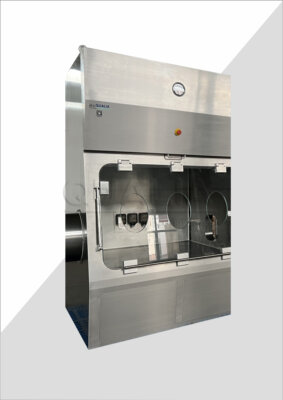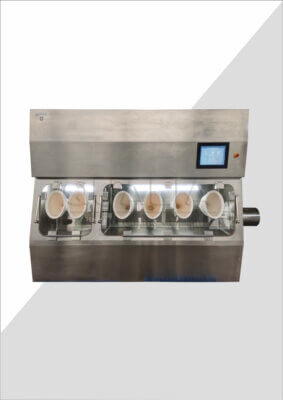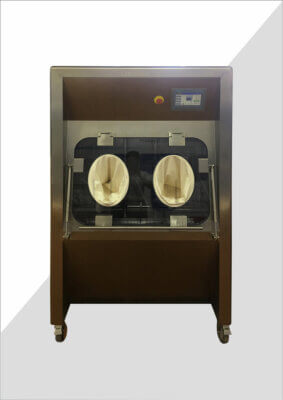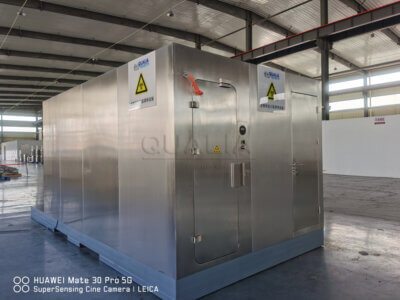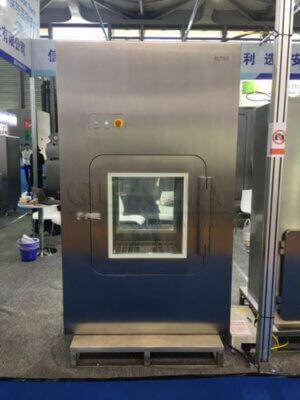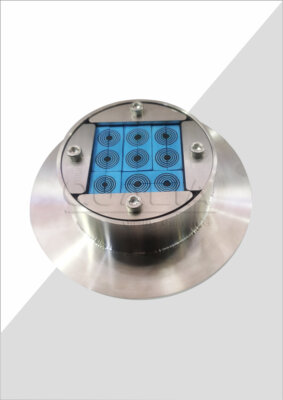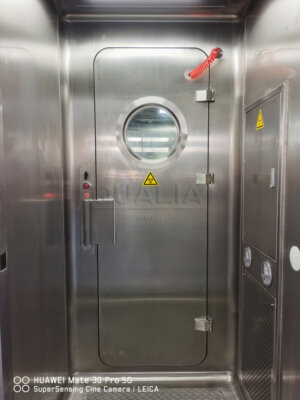

Most BIBO housing specifications for negative-pressure exhaust systems fail not because of wrong product selection, but because critical geometry, structural, and access decisions get deferred until after duct fabrication is complete. When those decisions surface during commissioning or a first filter change, the cost of correction multiplies quickly — offset transitions, temporary duct modifications, and compromised scan sections are expensive field problems. The governing judgment is recognizing which housing parameters are load-bearing for containment and which are merely dimensional preferences, and resolving the first category before a single weld is made. Understanding that distinction early is what separates a system that validates cleanly from one that creates recurring operational friction.
Negative-pressure exhaust duties that change BIBO housing design
A BIBO housing serving a standard supply-side application and one serving a BSL-3 exhaust stream are not interchangeable designs — even if the airflow figures look similar. The exhaust duty introduces a combination of sustained negative pressure, biological hazard potential, and decontamination compatibility that governs every structural and sealing decision in the housing.
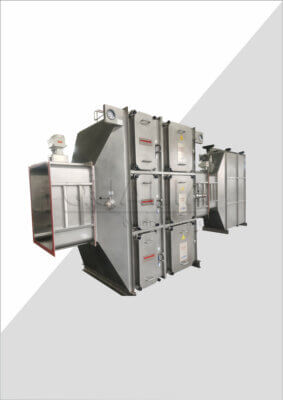
The structural threshold is not academic. Housing bodies on negative-pressure exhaust systems must be designed to sustain pressure differentials up to -5,000 Pa without deformation or seal failure. At that load, panel deflection in a conventionally stiffened housing becomes a real containment risk, not a cosmetic concern. Gastight welded construction — rather than gasketed panel assembly — is the appropriate response because it eliminates the seam-leakage failure mode that mechanical assembly introduces over time, particularly under cycling pressure loads and repeated decontamination chemical exposure.
The analogy to nuclear air treatment standards is instructive here. ASME AG-1 requires housing designs in that domain to demonstrate structural and leakage integrity under defined pressure loads through a combination of design analysis and physical testing. Biosafety exhaust applications face a comparable logic: the consequence of a housing leak is not equipment damage but potential exposure to a contained pathogen.
What engineers often underestimate is that the exhaust duty also drives material compatibility decisions upstream. If decontamination agents such as vaporized hydrogen peroxide or formaldehyde will be used, housing body materials, gasket compounds, and internal coatings all need to be chemically vetted before housing fabrication, not during procurement of the decontamination system.
| What to Specify | Why It Matters | Evidence/Threshold |
|---|---|---|
| Design housing structure and sealing for sustained negative pressure differentials. | Ensures structural integrity and prevents containment failure under high exhaust loads. | Up to -5000 Pa. |
| Specify gastight welded construction for the housing body. | Prevents leakage of contaminated material, meeting high containment tightness requirements. | Analogy to nuclear applications. |
The choice between standard construction and gastight welded housing is sometimes framed as a cost optimization. On a negative-pressure exhaust path serving a containment laboratory, it is not — it is a containment integrity decision with no acceptable shortcut.
Housing orientation, door swing, and bag deployment clearances
Orientation is often treated as an architectural accommodation when it is actually a maintenance access and containment procedure decision. Locking in the wrong orientation relative to corridor width, adjacent ductwork, or ceiling structure means operators will be performing filter bag-outs in constrained, non-standard positions — which increases procedural error risk and may require temporary duct disconnection to achieve the required clearance.
Side-exhaust orientation for embedded wall installations resolves the depth conflict in tight mechanical corridors, but it shifts the inlet placement in a way that must be reconciled with the upstream duct run. If that reconciliation is not modeled early, the result is an offset transition immediately upstream of the housing — which disrupts velocity uniformity across the filter face and can make individual filter scanning less credible during integrity testing.
Door fastening geometry deserves more specification precision than it typically receives. A four-bolt fastening pattern provides the clamping load distribution needed to maintain inner seal integrity under sustained negative pressure, while still allowing removal without special tooling. The common mistake is specifying a fastening system that works well under static conditions but loses sealing performance after repeated thermal cycling or chemical exposure. Hatch retention — often handled with knobs on fixed rods — prevents hardware components from dropping into the filter bag during a change-out sequence, which is a procedural failure that is entirely avoidable by design.
The bag deployment clearance dimension is the one most frequently underspecified. The minimum clear working envelope in front of the door must accommodate not just door swing but the full bag-out sleeve extension and the operator’s working posture. Where that clearance is tight, the housing manufacturer needs to know before fabrication whether a reduced-depth door or a side-hinged door variant is required.
| Design Aspect | What to Specify | Why It Matters |
|---|---|---|
| Orientation | Define side-exhaust orientation for embedded wall installation. | Impacts inlet placement, clearance for maintenance, and architectural integration. |
| Door Fastening | Specify a door fastening system (e.g., four-bolt) that balances easy removal with reliable inner sealing. | Enables efficient filter changes while maintaining containment integrity during operation. |
| Hatch Retention | Design hatch retention (e.g., knobs on fixed rods) to prevent loss of components. | Eliminates a procedural risk that can compromise safety and efficiency during filter bag-out. |
Once the housing is installed and integrated into the duct system, changing orientation or door-swing direction is a fabrication replacement, not a modification. That single fact is why these decisions belong at concept stage.
Loaded-filter pressure drop and fan reserve calculations
Sizing the housing around nominal airflow is the most common and most consequential calculation error in negative-pressure exhaust system design. At nominal conditions with clean filters, fan performance looks adequate. As filters load, the combined pressure drop across a pre-filter and one or two HEPA stages in series can increase by several hundred Pascals above the clean-filter baseline. If the fan was sized without sufficient reserve for that loaded condition, the result is either reduced airflow below the minimum required for containment or unstable control behavior as the fan operates near its pressure limit.
The reserve calculation must account for the full filter stack in series, not individual filter elements in isolation. A pre-filter, primary HEPA, and secondary HEPA each contribute incrementally to total system resistance. The loaded pressure drop of that stack — typically evaluated at filter replacement threshold, not end-of-life — defines the actual design point the fan must sustain while still maintaining the negative pressure differential required by the containment envelope.
This matters particularly for BSL-3 applications where pressure differential monitoring is continuous and a loss of negative pressure relative to adjacent corridors is a containment event, not just an operational deviation. The Pressure Differential Design and Monitoring for Modular BSL-3 Containment: Engineering Best Practices framework reinforces why the fan reserve margin cannot be treated as a comfort factor — it is the buffer that prevents a loading-driven pressure drift from becoming a safety incident.
The fan selection exercise should also account for the control strategy. Variable frequency drive control provides the adjustment range to compensate for filter loading, but only within the fan’s stable operating region. Specifying a housing with a wide operating pressure drop range without confirming that the selected fan covers that range in its stable curve region is a mismatch that surfaces during commissioning, not during design review.
One additional threshold that changes the calculation: if the system uses dual redundant fans, each fan must be capable of sustaining the loaded-filter pressure drop independently, not just in combined operation. Redundancy that only works with both fans running is not functional redundancy for a containment exhaust system.
Test ports, scan sections, and leak-check access requirements
A HEPA filter installed in a BIBO housing with no provision for in-place integrity testing is not a verified containment barrier — it is an assumed one. The distinction matters because filter bypass, gasket failure, and media damage are not always detectable from differential pressure monitoring alone. Periodic in-place scanning is the method that confirms the filter and its installed seal are performing to specification.
Integrated scanner mounting means the scan port geometry, probe insertion angle, and downstream scan section dimensions are engineered into the housing body. Retrofitting scan access after fabrication typically requires cutting into the housing casing — which compromises the gastight welded construction and may void the housing’s pressure integrity certification. The time and cost to do it right post-fabrication are multiples of the time and cost to specify it correctly upfront.
The differential pressure gauge with a dedicated output port serves two functions: it provides the operational signal for filter loading status, and it provides the permanent reference point for leak-check procedures. Omitting the output port — specifying a gauge but no output — means technicians are improvising leak-check connections in the field, which introduces consistency problems across test cycles.
Compliance with ASME N510 or equivalent test standards is not satisfied by the presence of a scan section alone. The scan section dimensions, upstream flow conditioning, and probe traverse pattern must together produce a credible and repeatable test. WHERE architectural ceiling constraints force offset duct transitions upstream of the housing, the resulting non-uniform velocity profile at the filter face is precisely the condition that makes individual filter scanning less reliable. That is the friction point where low-profile housing design and valid integrity testing come into direct conflict — and it must be resolved at layout stage, not at the first commissioning scan.
| Requirement | What to Confirm/Include | Why It Matters |
|---|---|---|
| Scanner Access | Specify integrated scanner mounting and access for on-site HEPA filter integrity testing. | Enables routine leak testing and efficiency verification without temporary modifications. |
| Pressure Monitoring | Ensure a differential pressure gauge with an output port is standard on the housing. | Provides a permanent point for monitoring filter loading and performing system leak checks. |
| Regulatory Compliance | Design scan sections and leak-check access to comply with specific test standards (e.g., ASME N510, JG/T 497-2016). | Validates containment reliability to meet regulatory and certification requirements. |
The WHO Laboratory Biosafety Manual 4th Edition positions HEPA filter integrity testing as a required element of containment verification for higher biosafety levels, which anchors the scan access requirement not just to good engineering practice but to the facility’s regulatory compliance baseline.
Duct transitions and support details that affect containment reliability
The housing body’s structural integrity is only as good as its connection to the duct system. Under sustained negative pressure, poorly detailed duct transitions introduce two failure modes: mechanical stress concentration at the housing-to-duct interface, and air infiltration through joint gaps that bypass the housing’s gastight construction.
Full-welded housing construction with defined material thickness — 2mm SUS304 stainless is a common specification — provides the corrosion resistance and dimensional stability needed for the duct connection to remain airtight over the housing’s service life. Thinner gauge materials may meet initial pressure test criteria but are more susceptible to distortion under repeated pressure cycling and to localized corrosion where cleaning agents pool at low points in the duct run.
The flanged versus flangeless circular connection decision affects more than installation method. Flanged connections allow for controlled bolt torque, defined gasket compression, and field re-sealing without cutting into the duct run. Flangeless slip connections are faster to install but depend on field adhesive or sealant application for airtightness — a variable that is difficult to verify without pressure testing each joint individually. On a negative-pressure exhaust path where any infiltration represents a leak past containment, the flanged approach provides more reliable, inspectable, and remediable joint integrity.
Support structure is another detail that migrates from structural engineering to containment engineering on negative-pressure systems. Housings carrying loaded HEPA filter banks are substantially heavier than their nominal weight suggests — water absorption in filter media during decontamination cycles adds significant load. Support brackets designed for nominal housing weight without that loading factor can produce casing deflection that opens gasket faces or distorts duct connection geometry over time.
| Design Decision | What to Specify | Why It Matters |
|---|---|---|
| Housing Construction | Specify full-welded construction with defined material thickness (e.g., 2mm SUS304). | Ensures long-term corrosion resistance and air tightness at duct connections under negative pressure. |
| Duct Connection Type | Decide early between flanged or flangeless circular connections for duct transitions. | Affects installation method, sealing approach, and field adaptability of the housing-to-duct interface. |
The practical rule is that every duct connection to a BIBO housing on a negative-pressure exhaust path should be specified with the same leak-tightness standard as the housing body itself. Specifying the housing to a gastight standard and the connecting ductwork to a general industrial standard creates a containment discontinuity at the first joint outside the housing.
Early design decisions that prevent retrofit rework
The decisions that are most expensive to revisit are the ones that change the housing’s internal geometry or require penetrations through its welded body. Three categories consistently drive retrofit cost: decontamination connections, biosafety containment valves, and filtration stage configuration.
Decontamination port placement is governed by the distribution pattern of the decontamination agent and the need for both supply and return connections to produce a uniform concentration throughout the housing interior. In a BSL-3 or BSL-4 application, verifying that decontamination has reached the required contact time and concentration inside the housing before bag-out is a procedural safety requirement. A housing with no dedicated decontamination connections leaves operators with improvised access points — which may be adequate for the decontamination chemistry but are rarely adequate for confirming distribution uniformity and completion.
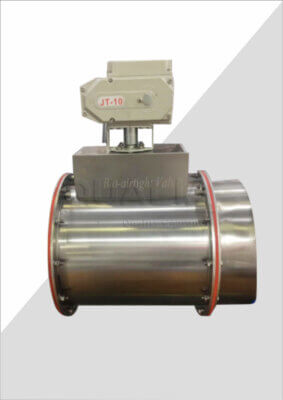
Biosafety isolation dampers or containment valves integrated into the housing allow the exhaust path to be isolated for decontamination, filter change-out preparation, or emergency shutdown without requiring the upstream duct to be taken out of service. Specifying this component at concept stage means it is engineered into the housing body geometry and structural loading. Attempting to add it post-fabrication typically requires a housing section replacement, not a modification — and on an installed system, that means duct disconnection, housing removal, and recommissioning. The Bio-safety Isolation Damper function is most valuable precisely when system design doesn’t leave it as an afterthought.
Filtration stage finalization — specifically whether the configuration requires pre-filter plus single HEPA, pre-filter plus double HEPA, or an additional carbon stage — defines the housing’s internal length, filter cell count, and intermediate scan access points. A housing built for a single HEPA stage cannot accept a second HEPA stage without a full casing extension. Engineers sometimes defer this decision waiting for risk assessment finalization, but the housing fabrication timeline does not accommodate late changes without schedule impact.
For applications where these decisions are being made for the first time, the HEPA Filtration System Specifications for Modular Biosafety Laboratories selection framework provides a practical basis for resolving filtration stage count and media type before housing design is locked.
| Early Design Decision | What to Specify | Risk if Unclear or Omitted |
|---|---|---|
| Decontamination Connections | Confirm inclusion of dedicated connections for safe decontamination (e.g., for BSL-3/4 applications). | Adding decontamination ports post-fabrication is costly and may compromise containment. |
| Containment Valve | Specify the need for an integrated biosafety containment valve at the concept stage. | This optional component is difficult and expensive to retrofit, and is critical for safe isolation. |
| Filtration Stages | Finalize the number of filtration stages and filter media types (e.g., pre, HEPA, carbon). | The housing internal configuration and dimensions are built to accommodate a specific filter stack. |
The pattern across all three categories is the same: decisions that feel optional or premature at concept stage become mandatory and expensive at installation or commissioning. Front-loading them is not over-engineering — it is the minimum required to avoid a redesign cycle that the project schedule has no room to absorb.
The most concrete takeaway from this sequence of decisions is that BIBO housing design for negative-pressure exhaust is not reducible to filter sizing and airflow matching. It is a systems problem in which structural integrity, fan reserve, maintenance ergonomics, decontamination access, and integrity testing credibility are all constrained by decisions made before fabrication begins. Getting the Bag in Bag Out housing specification right means treating those constraints as design inputs, not installation-phase adjustments.
Engineers who have worked through a commissioning cycle on a containment exhaust system will recognize the common failure pattern: the housing performs structurally, the filters are correctly sized, but the first integrity test requires a temporary scan port, the first filter change requires a ladder and a constrained working position, and the first decontamination cycle produces an unverifiable distribution result. Each of those outcomes traces back to a decision that was deferred or underspecified at concept stage. Resolving them early, with the specificity the inputs here describe, is what separates a housing design that validates and operates as intended from one that creates ongoing procedural risk.
Frequently Asked Questions
Q: Does this design guidance apply if the exhaust system serves a BSL-2 laboratory rather than BSL-3 or BSL-4?
A: The structural and access requirements scale with the containment level, so some provisions — particularly decontamination port specification and biosafety isolation valve integration — are primarily critical at BSL-3 and above. However, the loaded-filter pressure drop calculation, scan access geometry, and duct transition leak-tightness requirements apply regardless of biosafety level. Under-specifying those elements on a BSL-2 exhaust system still produces the same commissioning and maintenance friction; it just carries a lower consequence threshold if containment is compromised.
Q: Once the housing is installed and passing its initial pressure test, what should engineers verify before the first operational filter change?
A: Confirm that the complete bag-out procedure can be executed without temporary duct modifications, improvised scan access, or non-standard operator positioning. The first filter change is the practical proof-of-design for maintenance ergonomics, decontamination port accessibility, and bag deployment clearance — all of which were committed at concept stage. If any step requires a workaround, that workaround will be repeated every subsequent change cycle and represents an unresolved design deficiency, not a one-time field adaptation.
Q: At what point does adding a second HEPA stage stop improving containment reliability and start creating fan control problems?
A: The crossover point depends on whether the fan reserve was sized for the full loaded-filter pressure drop of the extended filter stack. A second HEPA stage meaningfully improves containment redundancy, but it adds several hundred Pascals to loaded system resistance. If the fan curve does not cover that extended range within its stable operating region — particularly under variable frequency drive control — the additional filtration stage creates pressure instability that can cause the system to drop below the required negative pressure differential. The containment benefit is only realized if the fan selection is revisited simultaneously with the filtration stage decision.
Q: How does specifying flanged duct connections compare to welded direct connections at the housing interface in terms of long-term containment reliability?
A: Flanged connections are more reliably maintainable over the housing’s service life, but welded direct connections can provide superior initial leak-tightness if executed to a gastight weld standard consistent with the housing body itself. The practical trade-off is that a welded connection cannot be re-sealed or inspected at the joint face without cutting — so any leak that develops at the weld requires duct modification to remediate. Flanged connections allow gasket replacement and controlled re-torquing in place, which makes them the more operationally defensible choice on containment exhaust paths where joint integrity must be verifiable and remediable without duct surgery.
Q: Is it worth specifying an integrated biosafety isolation damper on a single-exhaust-path system with no redundant fan, or is that component only justified for multi-path configurations?
A: An isolation damper is arguably more critical on a single-path system, not less. Without it, any event requiring housing isolation — filter change-out preparation, emergency shutdown, or decontamination cycle — forces the entire upstream duct run out of service simultaneously. On a single-path containment exhaust system, that means the connected laboratory loses negative pressure during the isolation period unless a bypass or compensating arrangement was designed in. The damper provides the boundary that allows housing-side operations to proceed without propagating an isolation condition upstream, which is its primary operational value regardless of whether redundant fans are present.
Related Contents:
- Bag-In-Bag-Out Housing Applications in Pharmaceutical Manufacturing
- Bag In Bag Out Systems for BSL-3 Labs: How to Specify Safe Containment Changeout
- Bag-In-Bag-Out Housing Systems – ISO 14644 Compliant Filtration Specifications
- Bag-In-Bag-Out Containment for Biopharmaceutical Processing – 27 CFR Compliance
- Bag-In-Bag-Out Containment Standards – ISO 14644 Implementation
- Bag-In-Bag-Out Containment Market Growth – 2025 Industry Analysis
- Bag-In-Bag-Out Filter Replacement | Safety Protocols Guide
- Bag-in Bag-out System Market Trends 2025 – Biosafety Integration Data
- Essential BIBO System Maintenance Checklist