Facilities that commission a new containment suite often discover the filter change problem only after qualification testing is complete—when maintenance leaders first walk through the actual changeout procedure and realize that the SOPs written for the hazard class don’t account for the physical geometry of the filter housing, the dust loading profile of the upstream process, or the absence of a validated decontamination step before the bag-out sequence begins. At that point, adding engineered containment means a retrofit cost and a requalification cycle, both of which are expensive and schedule-disruptive. The decision that prevents this outcome is a structured risk assessment that evaluates filter maintenance as its own exposure event, not as an extension of routine room-level biosafety controls. By the end of this article, you will be able to identify the specific conditions—hazard characteristics, process behaviors, and control gaps—that make contained filter removal a hard requirement rather than a recommended upgrade.
Hazard characteristics that make filter change a high-exposure task
Filter change is not a routine maintenance task with a hazardous label attached to it. It is, in terms of exposure potential, among the highest-risk activities in a containment facility because it requires direct physical interaction with a surface that has accumulated the concentrated output of every process run since the last service interval. The distinction matters for risk assessment because the hazard category of the upstream process sets the exposure floor, not the ceiling.
Two hazard characteristics consistently change the decision logic. The first is direct filter contact with high concentrations of hazardous drugs or potent APIs. A filter that has been capturing pharmaceutical aerosol over weeks or months presents a fundamentally different exposure scenario than a filter downstream of a non-hazardous process—even if both are housed in identical ductwork. The concern is not a guaranteed acute event during changeout, but a credible worst-case scenario in which a single particle release during bag manipulation or housing separation reaches a worker who has no engineered barrier between themselves and the filter face. That credible worst case is enough to change the assessment outcome.
The second characteristic is the presence of radioactive particles, toxic industrial chemicals, or infectious agents on the filter media. These hazard types matter not only because of their intrinsic potency, but because decontamination before changeout either cannot be fully validated or cannot neutralize the hazard in place. For infectious agents in particular, a surface wipe or fumigation cycle may reduce surface contamination but does not eliminate the risk that disturbing the filter media will re-aerosolize trapped particles. That limitation undermines the assumption that pre-treatment alone can bring residual risk to an acceptable level.
| Hazard Characteristic | Why It Matters for Risk Assessment |
|---|---|
| Filter in direct contact with high concentrations of hazardous drugs or potent APIs | Direct contact with concentrated compounds creates a high-stakes exposure risk where one stray particle can cause serious health problems. |
| Filter contains radioactive particles, toxic industrial chemicals, or infectious agents | These specific hazard types elevate the risk to a level where standard changeout procedures are insufficient, mandating higher containment. |
The practical implication for risk assessment is that hazard category should be used to define the exposure category for the changeout task specifically—not just for the process it serves. A facility can have a well-controlled BSL-2 manufacturing process and still face a high-exposure filter change event if the filter has been loaded with concentrated biological aerosol over an extended service interval. Conflating the process hazard classification with the maintenance task risk is one of the most common early errors in facility commissioning, and it tends to surface only when a QA or biosafety committee reviews the maintenance SOP for the first time.
How filter loading and service frequency alter maintenance risk
Even when the base hazard is well characterized, the actual exposure risk at the moment of changeout is driven by how the filter has accumulated material over its service life—and how often that service life is reached. These operational factors can shift a manageable risk profile into one that is difficult to defend with procedural controls alone.
Dust morphology is the most commonly underestimated variable. When a process generates particles that are fine, low-density, and easily re-aerosolized—sometimes described as “light and fluffy” in industrial hygiene literature—the filter media becomes a reservoir that releases material readily when disturbed. A changeout procedure that would be adequate for a dense, low-mobility particle becomes inadequate for a material that responds to air currents generated by opening a housing panel. The risk assessment must account for particle behavior under worst-case handling conditions, not average conditions.
Collector design compounds this problem in specific configurations. Where high air inlets create a “hopper-sweep” effect—keeping fine particles suspended and repeatedly recycled back into the filter rather than settling—pressure drop builds faster, cleaning cycles occur more frequently, and each cleaning event becomes an additional exposure opportunity. The consequence is not just that changeout is more frequent; it is that the filter may be carrying a higher active particle load at the time of service, because poorly settled material remains in suspension rather than compacting into the media.
| Process Factor | Consequence for Risk Assessment |
|---|---|
| Process generates “light and fluffy” dust that is easily aerosolized | This characteristic significantly increases the risk of airborne release during maintenance activities like filter changes, altering the risk profile. |
| Dust collector is poorly designed with high air inlets | This can cause “hopper-sweep,” keeping fine dust suspended and repeatedly drawing it back into filters, which increases pressure drop, cleaning frequency, and exposure opportunities. |
The risk-multiplier effect of service frequency deserves explicit attention in a formal assessment. A facility that changes filters quarterly under favorable dust conditions may be able to defend procedural controls with documented air monitoring data. A facility that changes filters monthly under unfavorable dust morphology and poor collector design is accumulating exposure opportunities faster than any monitoring program can validate. When frequency and dust characteristics are both unfavorable, the burden of proof shifts: demonstrating that procedural controls are sufficient becomes substantially harder, and the argument for engineered containment becomes substantially easier to make.
Failure scenarios that SOPs and PPE cannot fully control
A well-written SOP and an appropriate PPE ensemble are necessary controls for any hazardous maintenance task. They are not, by themselves, sufficient controls when the failure consequence is a single-event exposure to a high-potency or infectious material. Understanding why requires applying a hierarchy-of-controls logic specifically to the filter changeout procedure.
Sole reliance on SOPs and PPE places the entire exposure barrier on human execution at the moment of highest risk. There is no engineered redundancy. If a technician makes one procedural error—misaligns the bag collar, releases tension prematurely, opens the housing before the upstream damper is confirmed closed—the filter contents are directly accessible with no secondary barrier to arrest the release. This is not a hypothetical failure mode; it is a credible one that any formal risk assessment should treat as a realistic scenario, not an edge case to be dismissed by reference to training records.
The failure mode that defeats SOPs most reliably is not deliberate non-compliance; it is the interaction between task complexity and physical constraints. Filter housing access is often awkward—confined spaces, overhead positioning, restricted arm movement in full PPE—and the procedures that look clean on paper become difficult to execute without adaptation in the field. When technicians adapt, they introduce variations that were not reviewed or validated. Over repeated changeout cycles, those adaptations become informal practice, and the SOP becomes a document that describes what is supposed to happen rather than what does happen.
PPE adds a related failure path. Suit integrity degradation, glove-to-sleeve interface gaps, and fogging that limits visibility during critical steps are all realistic degradation modes in a contained filter change environment. None of them are detectable without independent monitoring, and most PPE programs rely on pre-task inspection rather than continuous verification. The result is that PPE functions as a single-point-of-failure barrier—adequate when fully intact, but unable to signal its own compromise before an exposure event occurs.
The appropriate response in a risk assessment is not to argue that SOPs and PPE are useless, but to treat them as the weakest tier in a control hierarchy and ask whether any credible failure at that tier still leaves a meaningful exposure path. If the answer is yes, the assessment should not conclude with a recommendation to strengthen the SOP. It should conclude with a recommendation to add an engineered barrier that does not depend on flawless human execution.
Risk-ranking factors for open changeout versus contained removal
Choosing between open changeout and contained removal is ultimately an engineering and operational trade-off, not a binary compliance decision. The risk-ranking exercise should weight four factors that interact rather than act independently: hazard category, dust characteristics, demonstrated containment performance, and the waste-handling route from filter removal to final disposal.
Hazard category sets the floor for acceptable risk. For potent APIs and biologically active agents, even a low-probability release event carries a high consequence, which compresses the acceptable risk range regardless of how favorable the other factors are. For lower-potency materials, the other three factors carry more weight in the ranking.
Dust characteristics and collector design, as discussed in the previous section, determine how much material is likely to be mobilized during the changeout event itself. But they also affect the waste-handling route: a filter loaded with fine, easily re-aerosolized material presents a secondary exposure risk during bagging, transport through the facility, and staging for disposal. Risk ranking that treats the changeout event in isolation—without considering what happens to the spent filter after removal—will systematically underestimate total exposure.
Demonstrated containment performance is the factor most often missing from preliminary risk assessments. Surrogate testing, in which a tracer material mimicking the API or biological agent is used to evaluate actual containment under worst-case conditions, provides direct evidence about whether the proposed procedure achieves the exposure levels assumed in the assessment. Without that data, the risk ranking is based on engineering judgment rather than empirical validation. That distinction matters if the assessment is later reviewed during an audit: a ranking supported by surrogate test data is substantially easier to defend than one based on design assumptions alone. For facilities considering open changeout as the assessed approach, the absence of surrogate data is a gap that should be documented explicitly, not treated as a neutral absence.
The practical friction point in this comparison is capital timing. Open changeout hardware costs less to procure and install. Contained removal systems—including bag in bag out configurations—require a higher upfront investment. What the risk ranking should make explicit is that lower-containment hardware does not eliminate the cost of procedural dependency; it defers it. Every additional shutdown window, every monitoring event required to validate that concentrations stayed within acceptable limits, and every regulatory response to a changeout-related exceedance is a lifecycle cost that was accepted at the procurement decision point. For facilities where change frequency is likely to increase or where potency thresholds may tighten as the product pipeline evolves, the lifecycle cost comparison often favors engineered containment even when the initial capital comparison does not.
When room pressure and shutdown controls are not enough
Negative pressure rooms and shutdown protocols are standard first-line controls for hazardous maintenance tasks. They reduce the probability of contaminant migration beyond the work zone and limit the volume of material that is actively airborne when the changeout begins. What they do not do is prevent exposure at the filter face during the physical removal sequence.
Room pressure controls the direction of air movement between zones. It does not contain what is released inside the room when a filter housing is opened. A technician working in a well-maintained negative pressure space is protected against migrating contamination to adjacent areas, but they are not protected against the particle cloud generated at the moment the filter is disturbed. That is the exposure event that room pressure cannot address, and it is the one most likely to result in a personal exposure exceedance.
Shutdown protocols reduce the upstream aerosol load before maintenance begins, but their effectiveness depends on whether decontamination can be validated before the bag-out step starts. For chemical hazards, surface decontamination is measurable and can be confirmed with wipe sampling. For biological agents in BSL-3/4 environments, fumigation validation is more complex, and residual infectivity on filter media may not be fully neutralized by gaseous decontamination alone. ISO 35001:2019 provides a biorisk management framework that addresses this validation gap in laboratory contexts, and the principle applies directly to filter maintenance planning: if decontamination before bag-out cannot be validated to a defined residual risk level, the shutdown protocol cannot be treated as a complete control.
| Condition | Why Standard Controls Are Inadequate |
|---|---|
| Handling BSL-3/4 agents, radioactive, or high-potency chemical hazards | For these highest hazard levels, standard room pressure and shutdown are inadequate, necessitating additional engineered controls like Bubble Tight Dampers for isolation. |
| Using standard filter replacement methods for hazardous substances | Standard methods do not provide adequate protection for hazardous substances, indicating a need for sealed containment like BIBO. |
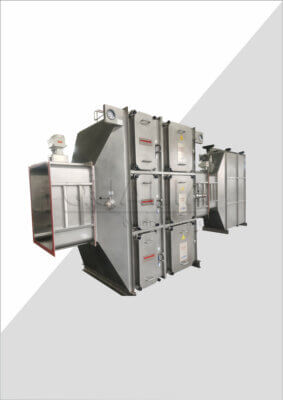
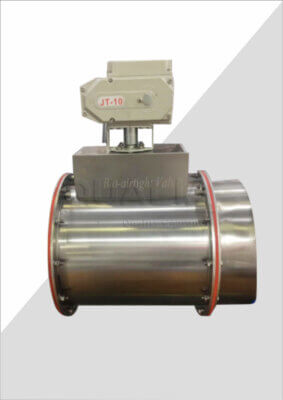
The point at which room pressure and shutdown controls become insufficient is not defined by a single threshold—it is defined by whether any credible failure in those controls still leaves an exposure path. For BSL-3/4 agents, high-potency APIs, and radioactive materials, that failure path exists even with well-executed standard controls, which is why additional engineered isolation—such as bubble-tight dampers that fully isolate the filter housing before the bag-out sequence begins—is a design requirement in those contexts, not an upgrade option. Facilities evaluating whether their current ventilation controls are sufficient should ask this question directly: if room pressure fluctuates during changeout, or if the shutdown decontamination step is incomplete, what happens? If the honest answer includes a meaningful exposure event, the controls are not sufficient.
Thresholds for declaring BIBO mandatory in a formal assessment
A formal risk assessment does not declare BIBO mandatory because a hazard classification checkbox is filled in. It declares BIBO mandatory when the assessment cannot document a credible path to acceptable residual risk using lower-tier controls. That distinction changes how the assessment should be structured and what evidence is required to close it.
The hazard categories that most consistently drive this conclusion are potent APIs, infectious agents, radioactive particles, and toxic industrial chemicals. These are not arbitrary groupings; they represent cases where the consequence of a single exposure event is severe enough that the acceptable failure probability for the control system is extremely low—lower than human-execution-dependent controls can reliably achieve across a realistic number of changeout cycles. ICH Q9(R1) provides a risk management framework that supports this reasoning: risk acceptability depends on both the probability and severity of harm, and for these hazard categories, severity is high enough that even low-probability procedural failures fall outside an acceptable risk range.
The regulatory performance threshold provides a second, more operationally concrete trigger. Where airborne concentrations during changeout cannot be consistently maintained within applicable occupational exposure limits—including OSHA PEL or 8-hour TWA benchmarks in US-regulated facilities—the control approach has already failed its design objective. NIOSH guidance on biomanufacturing and occupational safety identifies engineering controls as the preferred means of achieving exposure reduction, above administrative controls and PPE. If air monitoring data from changeout events shows exceedances, or if worst-case modeling indicates that the procedural approach cannot reliably prevent exceedances, that is a documented compliance-safety basis for mandating engineered containment. The monitoring data becomes both a design input and an audit defense.
| Assessment Threshold | Why It Matters for the Decision |
|---|---|
| Contaminated filters pose serious health risks from potent APIs, infectious agents, radioactive particles, or toxic chemicals | These hazard categories are explicit thresholds where BIBO systems are designed to be used, signaling mandatory containment. |
| Dust collection equipment cannot consistently keep airborne concentrations within OSHA PELs (8-hour TWA) during and after changeout | Failure to meet this regulatory performance threshold during maintenance activities is a clear driver for mandating contained removal systems. |
The threshold that practitioners most often miss is not the hazard category or the OEL comparison—it is the residual-failure-mode test. After all procedural controls, PPE measures, room controls, and shutdown protocols are documented and applied, the assessment must ask: does any credible failure mode still leave a meaningful exposure path? Credible failure modes in this context include hopper-sweep re-entrainment that leaves the filter loaded at the moment of service, bag-slip under positive pressure transients, or a decontamination step that cannot be validated before the bag-out sequence begins. If one of those failure modes survives the full control stack, the assessment is not closed—and adding more procedural layers to a stack that has already reached its defensible limit is not a valid solution. At that point, a biosafety isolator or equivalent engineered containment is not an upgrade; it is the control that closes the gap the procedural stack cannot close.
Facilities approaching this decision for the first time can also use the OEB level upgrade logic as a parallel reference framework. The same reasoning that governs when to move from open handling to closed systems for primary processing applies directly to the maintenance task: when the exposure consequence of a single control failure exceeds what the control tier can reliably prevent, the tier must change. The article on OEB level upgrade decisions addresses that parallel decision in detail and is worth reviewing alongside this assessment if the facility is working through both questions simultaneously.
The most useful thing a formal BIBO risk assessment can produce is not a conclusion—it is a documented residual risk map that shows, after every available control is applied, which failure modes remain plausible and what their consequence would be. That map is what a QA committee, a biosafety officer, or a regulatory reviewer will use to judge whether the chosen control approach is defensible. If the map shows an open exposure path through any credible single failure—bag handling error, hopper-sweep loading, unvalidated decontamination—the conclusion follows from the evidence, not from a classification threshold.
Before finalizing a changeout approach, confirm three things: whether the worst-case dust load and particle morphology have been characterized under actual process conditions; whether decontamination before bag-out can be validated to a defined residual risk level for the specific agent or chemical involved; and whether air monitoring data from comparable changeout events exists or can be generated through surrogate testing. Those three data points, more than any hazard classification alone, determine whether procedural controls are defensible or whether engineered containment is the only path to a closed assessment.
Frequently Asked Questions
Q: What should we do immediately after completing a BIBO risk assessment to move toward procurement or retrofit?
A: The next step is to translate the residual risk map into a hardware specification before approaching vendors. Once the assessment has identified which failure modes survive your full procedural control stack, those failure modes define the minimum engineering performance requirements—bag-collar geometry, damper bubble-tightness rating, decontamination port positioning—that any containment solution must meet. Bringing a specification built from documented failure modes to procurement is substantially more defensible than selecting equipment on catalogue specifications alone, and it gives your QA or biosafety committee a clear basis for approving the capital request.
Q: Does the BIBO mandatory threshold change if our facility operates under a regional regulatory framework that doesn’t reference OSHA PELs or ICH Q9(R1)?
A: Yes, the specific performance benchmarks change, but the underlying logic does not. The OEL comparison and the residual-failure-mode test are both framework-agnostic: if your jurisdiction references EH40 WELs, EU occupational exposure limits, or national biosafety standards, substitute those thresholds into the same assessment structure. What does not change is the requirement to demonstrate that no credible single failure mode leaves an open exposure path after all controls are applied. The regulatory citation is the compliance anchor; the failure-mode test is the engineering test, and both must be satisfied regardless of which authority’s limits apply.
Q: How should the risk assessment handle a situation where surrogate testing data is not yet available but a decision on containment hardware is needed now?
A: Proceed with a conservative worst-case assumption and document the data gap explicitly rather than treating its absence as neutral. Where surrogate data is missing, the assessment should model the highest plausible particle mobilization scenario given the dust morphology and collector design, apply that to the consequence calculation, and note that the risk ranking will require validation once surrogate testing is completed. An assessment closed on conservative assumptions with a defined validation timeline is auditable; one that assumes adequate performance without evidence is not. If the conservative model pushes the ranking past the mandatory threshold, that outcome should drive the hardware decision before testing confirms it.
Q: Is it ever defensible to choose open changeout over contained removal for a BSL-3 process if the SOP and room controls are exceptionally well-developed?
A: No, not as a permanent control posture for BSL-3 agents. The article’s residual-failure-mode test explains why: for infectious agents at BSL-3, decontamination before bag-out cannot always be validated to a defined residual risk level, and fumigation does not guarantee that disturbing filter media will not re-aerosolize trapped particles. That failure path survives even an exceptionally well-written SOP and well-maintained negative pressure regime, because neither control addresses what happens at the filter face during the physical removal sequence. Well-developed procedural controls may be defensible for interim operations under specific time-limited conditions with enhanced monitoring, but they do not replace the engineering requirement for this hazard tier.
Q: How do you weigh the lifecycle cost argument for engineered containment when finance teams are focused only on the initial capital difference?
A: Frame the comparison around the costs that low-containment hardware does not eliminate—it defers them. The capital saving from open changeout hardware is real at procurement, but the facility then carries the ongoing cost of every additional shutdown window required to keep changeout risk manageable, every air monitoring event needed to demonstrate that concentrations stayed within limits, and every schedule disruption associated with a changeout-related exceedance or regulatory response. For facilities where change frequency is likely to increase as throughput grows, or where product pipeline evolution may tighten potency thresholds, those deferred costs compound over the asset life. A lifecycle cost model that includes realistic monitoring frequency, shutdown duration, and the probability-weighted cost of a single exceedance event typically narrows the capital gap considerably and sometimes reverses it.
Related Contents:
- BIBO vs Push-Push in OEB5 Isolators: Which Containment Strategy Fits Your Risk Level?
- Bag-In-Bag-Out Housing Applications in Pharmaceutical Manufacturing
- Bag-In-Bag-Out Containment for Biopharmaceutical Processing – 27 CFR Compliance
- Bag-In-Bag-Out Containment Market Growth – 2025 Industry Analysis
- Bag-in Bag-out System Market Trends 2025 – Biosafety Integration Data
- Bag-In-Bag-Out Filter Replacement | Safety Protocols Guide
- Bag-In-Bag-Out Containment Standards – ISO 14644 Implementation
- Bag-In-Bag-Out Containment Systems – 2025 Technical Specifications
- Bag-In-Bag-Out Housing Systems – ISO 14644 Compliant Filtration Specifications