
Integrating Individual Ventilated Cage (IVC) systems into an ABSL-3 laboratory is a systems engineering challenge, not a simple equipment purchase. The primary risk is a failure in layered containment, where a breach in the primary barrier (the cage) coincides with a failure in the secondary barrier (the facility). Common misconceptions center on treating IVC selection as a standalone procurement, underestimating the critical integration points with HVAC, waste streams, and operational protocols.
Attention to this integration is paramount now due to evolving global standards and a strategic shift toward more flexible, high-throughput research. New guidelines, like ANSI/ASSP Z9.14, are formalizing commissioning and recertification requirements, making compliance more rigorous. Simultaneously, the demand for capacity to study multiple high-consequence pathogens is driving adoption of advanced containment solutions that maximize research output within existing physical footprints.
Key Design Specifications for BSL-3 IVC Integration
The “Keep-In” Containment Paradigm
The foundational principle for BSL-3 IVC design is maintaining negative pressure within the cage or isolator. This “keep-in” approach ensures any aerosolized agent is contained at the source. The system must be engineered to prevent escape, mandating HEPA-filtered exhaust and safety interlocks that prevent positive pressurization. According to research from containment engineering, a common mistake is specifying equipment based on animal comfort alone without this primary biosafety driver. The entire design must start with this non-negotiable requirement.
Material Integrity for Longevity
Surfaces must be impervious and resistant to aggressive chemical decontamination over decades. Compromising on material quality for upfront cost savings risks pathogen penetration and leads to costly, disruptive retrofits. Industry experts recommend a lifecycle cost analysis over initial purchase price. We compared various polymeric and stainless-steel finishes and found that long-term integrity under repeated vaporized hydrogen peroxide or chlorine dioxide exposure is the critical differentiator.
Engineering for Fault Tolerance
Redundancy is not an optional feature but a core design specification. This requires dual blower motors with automatic switchover and integrated battery backup to maintain negative pressure during power events. Easily overlooked details include the fail-safe position of dampers and the programming of the control system. The goal is to ensure no single point of failure—whether mechanical, electrical, or human—can compromise the primary containment boundary.
Key Design Specifications for BSL-3 IVC Integration
| Design Principle | Core Specification | Critical Feature |
|---|---|---|
| Primary Containment | Negative cage pressure | “Keep-in” paradigm |
| Exhaust Air | HEPA-filtered exhaust | Prevents agent escape |
| Material Integrity | Impervious, chemical-resistant | Withstands repeated decontamination |
| System Redundancy | Dual blower motors | Automatic switchover |
| Power Resilience | Battery backup systems | Maintains containment during outages |
Source: ISO 10648-2:1994 Containment enclosures — Part 2: Classification according to leak tightness and associated checking methods. This standard provides the classification and test methods for verifying the leak tightness of containment enclosures, directly relevant to ensuring the sealed construction and negative pressure integrity of IVC systems as a primary barrier.
Integrating IVC Systems with ABSL-3 Facility HVAC
Managing the Pressure Cascade
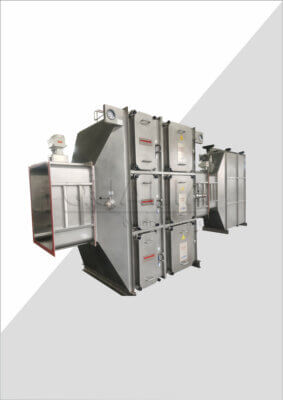
Successful integration hinges on the pressure differential interface between the IVC and the room. The facility HVAC must maintain a negative cascade, but the IVC system must maintain a more negative pressure internally. Exhaust management is a key decision point: IVC exhaust should be directly ducted to a dedicated, HEPA-filtered exhaust system or safely exhausted into the room for immediate capture by the general exhaust. In our experience, direct ducting is preferred for maximum containment assurance but requires more complex facility integration.
Interfacing with Building Automation
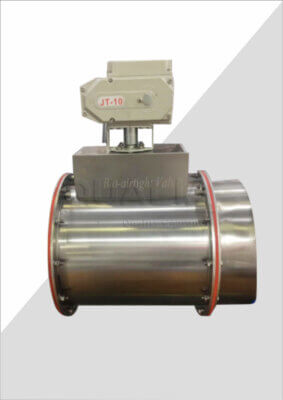
All penetrations for power, data, and ducting must be permanently sealed to maintain the laboratory envelope. Electrical interlocks are critical; IVC blower motors should be wired to fail in the “off” position and be integrated with the Building Automation System (BAS). This integration allows for continuous monitoring of pressure differentials, airflow, and filter status, providing real-time alerts for any parameter drift. The BAS becomes the central nervous system for containment verification.
Integrating IVC Systems with ABSL-3 Facility HVAC
| Integration Point | Key Requirement | System Interface |
|---|---|---|
| Pressure Differential | Negative pressure maintained | IVC to room interface |
| Exhaust Management | Direct ducting or room exhaust | HEPA filtration mandatory |
| Electrical Interlocks | Fail-safe “off” position | Integrated with BAS |
| Penetration Sealing | Permanent seals required | Power and data lines |
| Facility Redundancy | Backup exhaust fans | No single point of failure |
Source: Technical documentation and industry specifications.
Performance Verification and CFD Analysis for Containment
Simulating Failure Before It Occurs
Verifying containment integrity requires testing under simulated failure conditions. Computational Fluid Dynamics (CFD) analysis is now an essential pre-validation engineering tool. CFD models air movement and particle dispersion to simulate breach scenarios, such as a torn cage sleeve with normal or failed exhaust. This modeling provides a data-driven safety case, demonstrating that a catastrophic breach would require two simultaneous, improbable failures. This evidence is crucial for justifying novel containment designs to institutional biosafety committees.
Shifting to Predictive Maintenance
The validation process establishes a performance baseline. The ongoing trend is integrating IoT sensors with the BAS to enable a shift from scheduled maintenance to predictive, condition-based protocols. Continuous monitoring of vibration, motor current, and filter differential pressure can pre-empt parameter drift and component failure. This proactive approach minimizes downtime and reduces the risk of operating outside validated containment parameters between annual recertifications.
Performance Verification and CFD Analysis for Containment
| Verification Stage | Primary Tool/Method | Key Output/Metric |
|---|---|---|
| Pre-Validation Modeling | Computational Fluid Dynamics (CFD) | Simulates breach scenarios |
| Failure Simulation | Two simultaneous failures | Data-driven safety case |
| Regulatory Justification | CFD evidence | Approval for novel designs |
| Ongoing Monitoring | IoT sensors with BAS | Predictive maintenance |
| Maintenance Shift | Condition-based data | Pre-empts parameter drift |
Source: Technical documentation and industry specifications.
Material Selection and Decontamination Integration
Beyond the Cage: The Secondary Barrier Shell
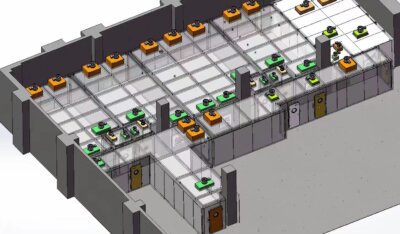
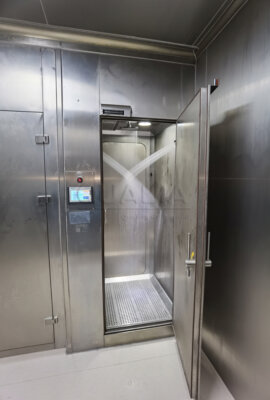
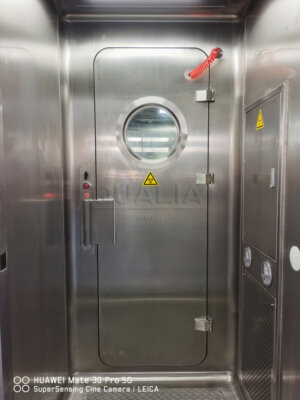
Material specifications extend beyond the IVC to the entire ABSL-3 envelope. The secondary barrier—epoxy resin flooring with integral coving, sealed monolithic wall systems, and gasketed ceilings—must withstand the same harsh decontamination cycles as the primary equipment. Compromising on sealant or surface quality here risks creating a reservoir for contamination and a potential breach point. The passive shell is a fundamental, long-term component of the containment strategy.
Integrating Waste Streams
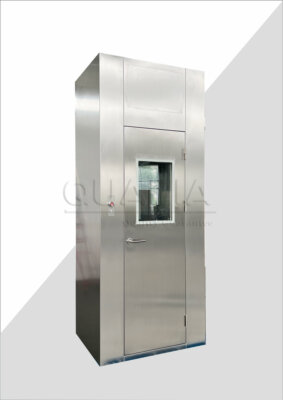
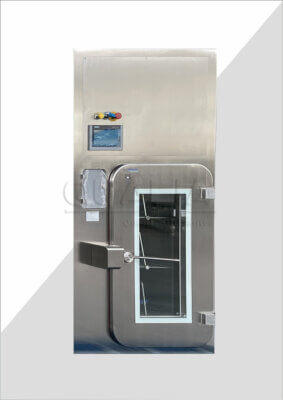
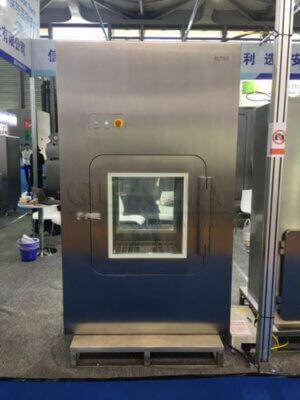
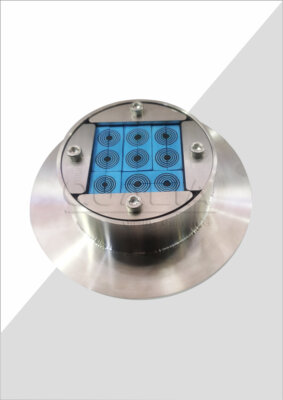
Decontamination integration must address all effluent paths. Liquid waste from sinks and cage wash must be treated by a central Effluent Decontamination System (EDS). Pass-through autoclaves and dunk tanks require bioseal flanges to maintain the containment boundary during waste transfer. The material and mechanical design of these interfaces are as critical as the IVC itself, ensuring the containment boundary remains intact during all operational procedures.
Commissioning and Ongoing Recertification Protocols
Establishing the Performance Baseline
Commissioning is the comprehensive, documented process of verifying that all integrated systems perform according to design specifications under operational and failure conditions. It is not merely an installation check. This phase includes testing alarm sequences, verifying pressure differentials across all barriers, and performing HEPA filter integrity scans on both supply and exhaust. The commissioning report becomes the facility’s performance baseline and a key regulatory document.
Budgeting for Continuous Compliance
Annual recertification is a permanent operational and financial requirement. Operating budgets must allocate funds for this mandated activity, which requires specialized contractor services. The process repeats key commissioning tests to ensure no degradation has occurred. Failure to plan for this recurring cost ensures compliance lapses and risks facility shutdown. Adopting standardized methodologies, like those in ANSI/ASSP Z9.14, simplifies the process and creates a clear benchmark.
Commissioning and Ongoing Recertification Protocols
| Protocol Phase | Key Activities | Required Frequency |
|---|---|---|
| Initial Commissioning | Full system performance verification | Once at project start |
| Alarm Testing | Verifies all containment alarms | Annual recertification |
| Pressure Verification | Checks room and cage differentials | Annual recertification |
| HEPA Filter Testing | Integrity scan and leak test | Annual recertification |
| Budget Planning | Allocate funds for recertification | Permanent operational cost |
Source: Technical documentation and industry specifications.
Operational SOPs and Personnel Safety Workflows
Bridging Engineering and Practice
Engineering controls are only effective when paired with rigorous, practiced Standard Operating Procedures. SOPs must govern every workflow: animal handling, material transfer via pass-throughs, waste removal, and emergency response to alarms or power loss. Personnel training in these SOPs and in the correct use of PPE—the tertiary barrier—is non-negotiable. The complexity of integrated systems makes ongoing vendor support for training updates a key factor in long-term safety.
Defining the Operational Objective
The “keep-in vs. keep-out” paradigm dictates equipment configuration. Understanding whether the primary risk is containing an agent within the cage (keep-in) or protecting animals from external pathogens (keep-out) is critical for specifying the correct pressure regime. This fundamental risk assessment must be clearly defined in the SOPs to ensure all personnel understand the purpose behind each protocol and engineered control.
Selecting the Right IVC System for Your BSL-3 Lab
Isolators for Flexibility and Throughput
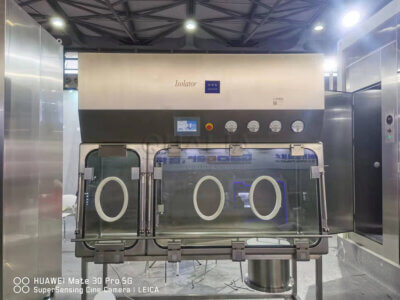
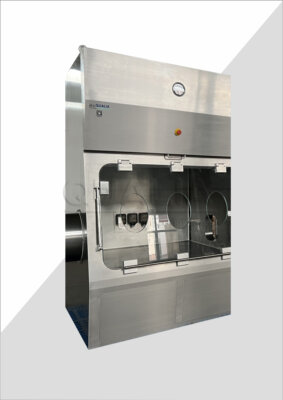
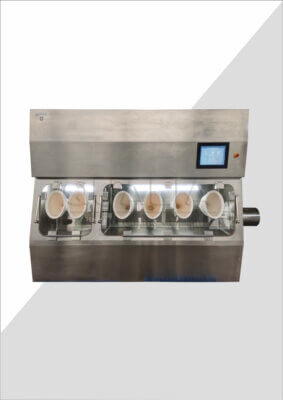
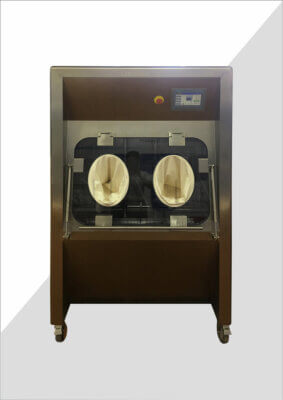
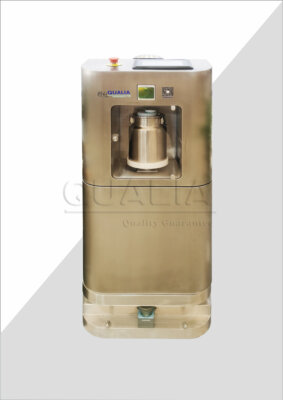
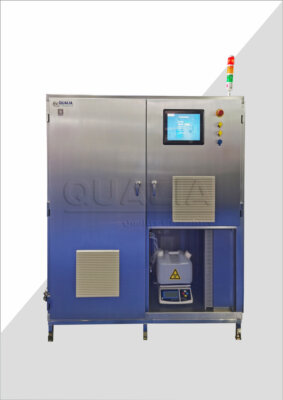
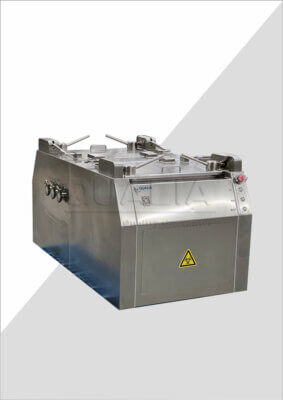
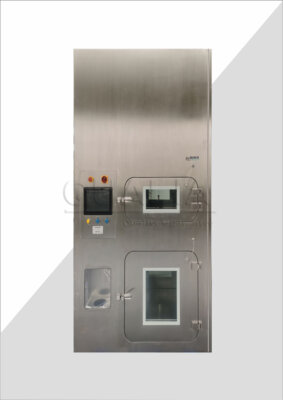
For maximum flexibility, modified semi-rigid isolators provide a validated, self-contained primary barrier that can house standard cages. This design is a strategic advantage, allowing simultaneous, distinct BSL-3 agent studies within a single room by preventing cross-contamination. It effectively multiplies research capacity without constructing additional expensive containment suites. The choice between this and traditional IVC racks should be driven by research protocols and species.
Evaluating the Full Lifecycle Partnership
Vendor selection is shifting from a focus on initial equipment cost to an evaluation of full lifecycle support capabilities. Key criteria now include the depth of integration support with facility HVAC/BAS, comprehensiveness of training programs, availability and cost of recertification services, and responsiveness of technical support. The right partner ensures operational resilience and compliance throughout the facility’s lifespan. For labs seeking validated, flexible primary containment, exploring advanced modular containment isolator systems is a critical step.
Selecting the Right IVC System for Your BSL-3 Lab
| System Type | Primary Advantage | Ideal Application |
|---|---|---|
| Modified Semi-Rigid Isolator | Validated primary barrier | Standard cage housing |
| Isolator-based Systems | Prevents cross-contamination | Multiple agent studies |
| Traditional IVC Racks | Protocol-specific flexibility | Established research models |
| Vendor Selection Criteria | Lifecycle support capabilities | Long-term operational resilience |
| Strategic Goal | Increases research throughput | Capacity multiplication |
Source: Technical documentation and industry specifications.
Implementation Roadmap and Vendor Selection Criteria
A Phased Systems Engineering Approach
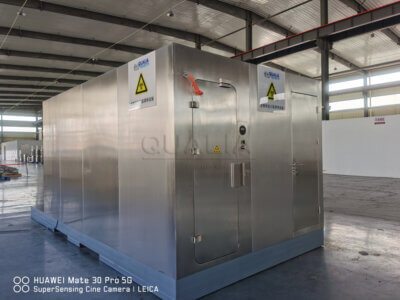
A successful implementation follows a deliberate roadmap: risk assessment to define needs, detailed design, CFD validation, commissioning, and SOP development. Each phase requires input from biosafety officers, facility engineers, researchers, and the vendor. This holistic view treats the IVC not as furniture but as an integral component of the containment system. The trend toward pre-validated, mobile BSL-3 units offers an alternative for rapid deployment, changing traditional facility planning models.
Strategic Procurement Scoring
Procurement must use a weighted scoring model that heavily emphasizes long-term service and support. Evaluate vendors on their documentation packages, training curriculum, spare parts logistics, and recertification service team expertise. The contract should clearly define post-commissioning support responsibilities. The goal is to select a partner who will ensure the facility’s operational integrity and compliance for the next 15-20 years, not just the lowest bidder for equipment.
Successful integration of IVC systems in BSL-3 labs hinges on three priorities: treating containment as a integrated system of primary, secondary, and tertiary barriers; planning for the full lifecycle cost, especially mandated recertification; and selecting technology partners based on long-term support, not just initial specifications. The decision framework must start with a clear risk assessment that defines the operational objective, which then drives every subsequent design and procurement choice.
Need professional guidance on designing or validating your high-containment animal research space? The integration experts at QUALIA specialize in the seamless implementation of advanced primary containment solutions within complex BSL-3 environments. Contact us to discuss your project requirements and strategic capacity goals.
Frequently Asked Questions
Q: How do you ensure containment integrity when integrating IVC exhaust with the facility’s HVAC system?
A: The IVC’s primary barrier must interface seamlessly with the laboratory’s secondary HVAC barrier. This requires direct ducting of IVC exhaust to a HEPA-filtered system or safe room exhaust, with all service penetrations permanently sealed. Critical electrical interlocks must ensure blower motors fail to a safe “off” state and are monitored by the Building Automation System. For facilities planning integration, expect to engineer layered redundancy, including backup facility exhaust fans, to eliminate single points of failure in the containment chain.
Q: What role does CFD analysis play in the validation of a BSL-3 containment system?
A: Computational Fluid Dynamics provides a data-driven, pre-commissioning method to verify containment by modeling airflows and particle dispersion during simulated breach scenarios. These analyses prove that a catastrophic failure would require two simultaneous, improbable events, building a robust safety case for regulatory approval. This means projects with novel containment designs or those seeking to justify operational protocols to biosafety committees should budget for CFD studies early in the design phase to streamline validation.
Q: Why is material selection critical beyond just the IVC units themselves in an ABSL-3 lab?
A: Long-term containment integrity depends on the entire facility envelope resisting repeated chemical decontamination. This includes specifying epoxy resin flooring with integral coving and sealed monolithic wall systems as part of the passive secondary barrier. If your operational plan involves frequent decontamination cycles, compromising on material or sealant quality for upfront savings risks catastrophic containment failure and necessitates far more expensive retrofits later.
Q: How should operational budgets plan for the ongoing costs of a BSL-3 facility with integrated IVCs?
A: Budgets must permanently allocate funds for mandated annual recertification, which includes testing alarms, pressure differentials, and HEPA filter integrity. This specialized process requires contractor services and establishes a continuous operational cost, not a one-time capital expense. Facilities that fail to plan for this recurring financial commitment will face compliance lapses and risk operational shutdown, making lifecycle cost analysis more strategic than initial purchase price.
Q: What is the key differentiator between a traditional IVC rack and a modified isolator system for BSL-3 research?
A: Modified semi-rigid isolators act as a validated, self-contained primary barrier that can house standard cages, enabling distinct BSL-3 agent studies within a single room by preventing cross-contamination. This design effectively multiplies research capacity without constructing additional suites. For labs aiming to maximize protocol flexibility and throughput with multiple agents or species, the isolator-based approach offers a strategic advantage over traditional rack systems.
Q: What criteria are most important for selecting a vendor for BSL-3 IVC integration?
A: Vendor selection should prioritize demonstrated expertise in integrating their equipment with facility HVAC and Building Automation Systems, plus robust post-commissioning support for training and SOP updates. Procurement must score partners heavily on these long-term service capabilities over initial equipment cost. This means for ensuring decades of operational resilience and compliance, you should evaluate vendors as lifecycle support partners, not just equipment suppliers.
Q: Which standards are directly applicable for classifying the leak-tightness of BSL-3 containment enclosures?
A: The design and qualification of sealed containment systems, such as IVCs, should reference ISO 10648-2:1994 for leak-tightness classification and associated test methods. Furthermore, maintaining the classified air cleanliness of the surrounding controlled environment is governed by ISO 14644-1:2015. This establishes a global compliance benchmark, simplifying validation for facilities that must meet international collaboration or regulatory requirements.
Related Contents:
- Which Ventilation System Type Is Best for Animal BSL-3 Laboratory Airflow Control?
- Advanced Features & Performance Specifications in Modern Animal BSL-3 Laboratory Construction
- BSL-3 Lab Ventilation: Design for Optimal Safety
- How to Select Specialized Equipment for Aerosol-Transmissible Agents in BSL-3 Animal Labs
- BSL-4 Air Handling: Critical System Requirements
- Air Handling in BSL-3 vs BSL-4: System Comparison
- BSL-4 Pressure Cascades: Advanced System Design
- Commissioning Your BSL-3 Lab: Step-by-Step Guide
- Animal BSL-3 Laboratory Technical Design Principles for Handling Aerosol-Transmissible Agents