
Maintaining reliable biocontainment in a BSL-3 facility is a systemic engineering challenge. The core problem is not a lack of design guidelines but a critical gap in proving that the integrated network of ventilation, filtration, and containment devices performs as required under all conditions. Many facilities operate on prescriptive checklists, missing the performance-based verification that demonstrates true operational safety and resilience.
This gap carries significant risk. Regulatory scrutiny is intensifying, and liability hinges on demonstrable due diligence. The ANSI/ASSE Z9.14 standard directly addresses this by providing a unified, performance-based methodology for verification testing. Adopting this protocol shifts compliance from a design aspiration to an auditable reality, safeguarding personnel, research integrity, and institutional reputation.
Key Components of ANSI/ASSE Z9.14 Verification Testing
From Prescriptive Design to Performance Verification
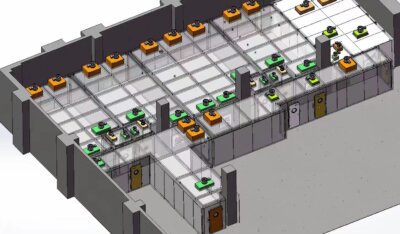
Foundational documents like the BMBL establish design principles, but they leave a critical implementation gap. ANSI/ASSE Z9.14 fills this void with a unified methodology for verifying that BSL-3 ventilation systems perform as intended. Its scope is intentionally comprehensive, addressing the entire integrated network—directional airflow, primary containment, building HVAC, and exhaust systems—as a single containment envelope. This holistic view is essential; effective biocontainment is an emergent property of the system, not merely the sum of functional parts.
The Core Verification Framework
The standard’s framework targets several interconnected performance areas. It mandates testing for directional airflow and stable room pressure cascades, which form the fundamental containment principle. It outlines rigorous protocols for primary containment devices, including biosafety cabinets. The building’s ventilation and HEPA filtration systems require verification of air volumes and filter integrity. Crucially, Z9.14 also requires testing system responses to failures like fan loss or power interruption. Adopting this standard transforms an organization’s safety approach from passive compliance to active, demonstrable assurance.
Strategic Implications for Facility Management
This shift has direct operational and strategic consequences. Moving to a performance-based model places the onus on facility owners to define specific performance criteria through risk assessment. It demands greater in-house expertise or reliance on highly qualified external partners. The requirement for comprehensive, permanent documentation creates an auditable trail that influences liability and insurance assessments. Implementing Z9.14 is therefore not a maintenance task but a strategic risk mitigation and financial decision.
Verifying Directional Airflow and Room Pressure Cascades
The Foundation of Containment
The directional airflow cascade—from lower to higher hazard areas—is the non-negotiable principle of BSL-3 containment. Maintaining specific, stable pressure differentials between adjacent spaces (e.g., lab, anteroom, corridor) ensures air moves predictably, containing aerosols. A failure in this cascade compromises the entire containment envelope. Verification proves this principle is operational, not just theoretical.
Measurement Protocols and Risk-Based Criteria
Z9.14 provides the technical protocols for this verification. Testing involves precise measurement of pressure differentials using calibrated manometers and visualization of airflow direction at doorways and pass-throughs using smoke tubes or fog generators. A key evolution in the standard is its risk-based philosophy. While it provides the methodology, the specific performance criteria (e.g., exact pressure differentials) must be determined through a facility-specific risk assessment, reflecting the procedures and agents in use.
Introducing Performance Verification Metrics
The following table outlines the core parameters and methods for verifying this foundational system.
Core Parameters for Airflow and Pressure Verification
| Parameter | Measurement Method | Performance Criteria |
|---|---|---|
| Pressure Differentials | Calibrated manometers | Facility-specific risk assessment |
| Airflow Direction | Smoke tubes / fog | Lower to higher hazard |
| Cascade Stability | Continuous monitoring | Stable under normal operation |
Source: [ANSI/ASSE Z9.14 Testing and Performance Verification Methodologies for BSL3 and ABSL3 Ventilation Systems](). This standard provides the technical protocols for verifying pressure cascades and directional airflow, mandating that performance criteria be determined through a facility-specific risk assessment.
In our experience, the most common oversight is verifying stability under dynamic conditions, such as when doors open or equipment cycles on; true verification must account for these transient states.
Testing Primary Containment Devices and Biosafety Cabinets
Beyond Face Velocity
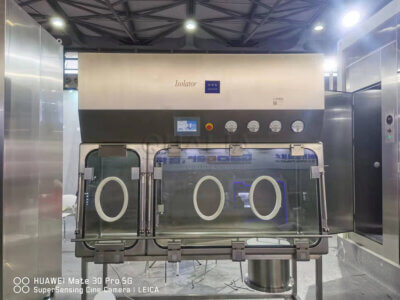
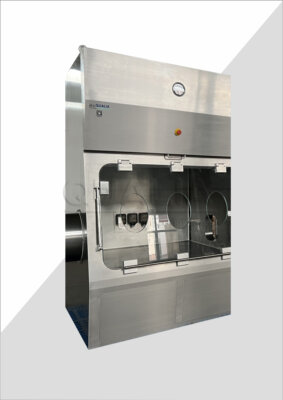
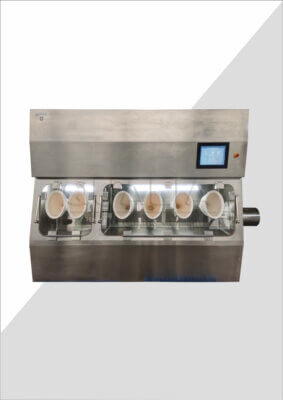
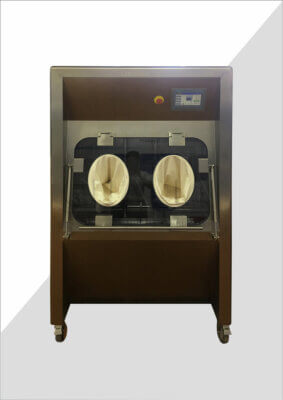
Biosafety cabinets (BSCs) are the first line of defense, but a passing face velocity check does not guarantee containment. Z9.14 outlines rigorous testing that assesses overall containment performance and integrity. For Class III cabinets, this includes verifying gas-tight integrity. The standard references established methodologies like ASHRAE 110 Method of Testing Performance of Laboratory Fume Hoods for quantitative containment assessment, applying proven engineering principles to biosafety.
The Competency Mandate
A critical strategic implication of Z9.14 is the formal elevation of tester competency to a requirement. Verifying a BSC is not a generic maintenance task. It demands personnel with specialized knowledge of airflow dynamics, calibration standards, and the specific requirements of NSF/ANSI 49 Biosafety Cabinetry: Design, Construction, Performance, and Field Certification. This necessitates a deliberate decision: budget for the certification of internal staff or engage highly qualified external vendors. The cost of qualified verification is an investment in validated safety.
Device Testing Requirements
The table below categorizes the testing rigor required for different primary containment devices.
Testing Protocols for Primary Containment
| Device Type | Key Test | Tester Competency |
|---|---|---|
| Class II BSC | Face velocity checks | Specialized knowledge required |
| Class III Cabinet | Gas-tight integrity | Certified internal staff |
| All BSCs | ASHRAE 110 containment test | Calibrated equipment essential |
Source: NSF/ANSI 49 Biosafety Cabinetry: Design, Construction, Performance, and Field Certification. This is the primary U.S. standard for BSC field certification, specifying requirements for performance and testing. ASHRAE 110 Method of Testing Performance of Laboratory Fume Hoods provides the foundational quantitative containment test methodology referenced for performance verification.
Assessing Building Ventilation and HEPA Filtration Systems
The Containment Engine
The building’s HVAC system is the engine that drives containment. Z9.14 requires verification that supply and exhaust systems deliver the specified air change rates and volumes necessary to maintain design pressures. A critical component is assessing HEPA filtration integrity on exhaust streams—and sometimes supply—through scan testing and challenging filter seals to ensure 99.97% efficiency at 0.3 µm.
Consolidating a Fragmented Landscape
Facilities often navigate overlapping requirements from CDC, NIH, USDA, and ASHRAE. Z9.14 acts as a powerful consolidation tool, providing a single, harmonized protocol to meet these benchmarks. It ensures all ventilation and filtration performance criteria are addressed comprehensively, simplifying compliance for facilities answering to multiple agencies. This unified approach is essential for maintaining environments that meet stringent particulate cleanliness classifications as defined in standards like ISO 14644-1 Cleanrooms and associated controlled environments — Part 1: Classification of air cleanliness by particle concentration.
System Component Verification
Verification of the building system breaks down into specific tests for each critical component.
HVAC and Filtration Verification Benchmarks
| System Component | Verification Test | Compliance Benchmark |
|---|---|---|
| HVAC Air Volumes | Supply/exhaust flow rates | Maintains design pressures |
| HEPA Filter Integrity | Scan testing, seal challenge | 99.97% efficiency at 0.3 µm |
| Air Cleanliness | Particle concentration measurement | ISO 14644-1 classification |
Source: ISO 14644-1 Cleanrooms and associated controlled environments — Part 1: Classification of air cleanliness by particle concentration. This standard provides the classification system for particulate cleanliness, which serves as a key benchmark for the environments BSL-3 ventilation systems protect. ANSI/ASSE Z9.14 consolidates protocols for HEPA and ventilation performance against such benchmarks.
Conducting System Failure and Redundancy Testing
Proving Resilience
True system integrity is proven under failure conditions. Z9.14 mandates testing the response to scenarios like exhaust fan failure, loss of power, or simulated filter blockage. The objective is to verify that backup systems engage correctly to prevent dangerous pressure reversals, or that the system fails in a predictable, safe manner. This moves safety validation from a static snapshot to a dynamic proof of resilience.
The Drive for Continuous Monitoring
This requirement is a major driver for the strategic adoption of digital twins and continuous monitoring via Building Automation Systems (BAS). While annual physical failure tests are required, integrating BAS with advanced analytics enables real-time performance tracking and predictive alerts. This transforms compliance from a periodic, disruptive event to a continuous state of operational assurance, allowing for immediate response to anomalies.
Failure Scenario Testing
The standard defines specific failure modes that must be tested to verify redundancy and safe failure modes.
Testing for System Failures
| Failure Scenario | Test Objective | Verification Method |
|---|---|---|
| Exhaust Fan Loss | Backup system engagement | Prevent pressure reversal |
| Power Loss | Predictable, safe failure | Manual or BAS monitoring |
| Filter Blockage | Maintain containment | Pressure/flow alarms |
Source: [ANSI/ASSE Z9.14 Testing and Performance Verification Methodologies for BSL3 and ABSL3 Ventilation Systems](). The standard mandates testing system response to failure scenarios to verify redundancy and safe failure modes, driving the strategic adoption of continuous monitoring via Building Automation Systems (BAS).
Implementing a Risk-Based Performance Verification Program
An Ongoing Framework, Not a Checklist
Z9.14 establishes a framework for an ongoing verification program, not a one-time checklist. It requires initial commissioning for new systems and periodic re-verification, typically at least annually, coordinated with preventive maintenance schedules. The program’s core is dynamic; it demands continuous assessment of facility-specific hazards and procedures to define and adjust performance criteria.
Influencing Liability and Strategic Planning
This risk-based philosophy has broad implications. As the standard gains acceptance—evidenced by its adoption into NASA’s stringent safety requirements—it sets a benchmark that directly influences liability judgments and insurance premiums. Documented adherence becomes a core risk mitigation strategy. Furthermore, the complexity of managing this program fuels demand for specialized biosafety compliance and consulting services, making vendor selection and management a key operational competency.
Program Structure and Drivers
A sustainable verification program is built on defined elements and frequencies.
Elements of a Verification Program
| Program Element | Frequency | Strategic Driver |
|---|---|---|
| Initial Commissioning | Once for new systems | Establishes baseline performance |
| Periodic Re-verification | Minimum: Annually | Coordinated with preventive maintenance |
| Continuous Assessment | Ongoing, dynamic | Facility-specific hazard analysis |
Note: The risk-based philosophy places the onus on facility owners to define performance criteria.
Source: [ANSI/ASSE Z9.14 Testing and Performance Verification Methodologies for BSL3 and ABSL3 Ventilation Systems](). The standard establishes a framework for an ongoing, risk-based verification program, requiring initial and periodic testing while influencing liability and insurance assessments.
Documentation and Record-Keeping for Compliance
The Auditable Trail
Comprehensive, permanent documentation is a non-negotiable pillar of Z9.14. The standard requires detailed records of all verification activities, results, system certifications, and instrument calibrations. This creates an auditable trail that demonstrates due diligence to regulators, accrediting bodies, and insurers. In a litigation or incident investigation scenario, this documentation is the primary evidence of a facility’s commitment to operational safety.
A Growing Specialized Market
The rigor and volume of required documentation are significant. This burden is a key factor driving the expansion of a specialized market for compliance software and professional services. Organizations must therefore develop robust internal document management protocols or carefully select qualified partners to fulfill this critical function. The choice between building internal capacity or outsourcing is a strategic one, with implications for cost, control, and expertise.
Next Steps: Scheduling Your Z9.14 Verification Testing
Transitioning to Z9.14 compliance requires deliberate planning. Begin by assembling a cross-functional team of biosafety officers, facility engineers, and HVAC specialists to conduct a gap analysis against the standard. This team must then engage or develop qualified verification personnel, recognizing the specialized competency required. Capital planning should consider investments in smart building infrastructure to enable the continuous monitoring that aligns with the standard’s proactive philosophy.
As global biocontainment standards converge on performance-based models, implementing ANSI/ASSE Z9.14 positions a facility at the forefront of safety, interoperability, and institutional reputation. Proactive adoption is a strategic decision with far-reaching implications for risk management.
Need professional guidance to navigate the implementation of a Z9.14 verification program or require certified testing services? QUALIA provides the expertise and strategic partnership to ensure your containment systems meet the highest standards of performance and compliance. Contact Us to discuss your facility’s specific requirements.
Frequently Asked Questions
Q: How does ANSI/ASSE Z9.14 change the approach to BSL-3 ventilation compliance?
A: It shifts compliance from a prescriptive design checklist to a performance-based verification of the entire integrated containment system. The standard mandates testing of airflow cascades, primary containment devices, HEPA filtration, and system failure responses to prove operational safety. This means facilities must now develop a risk-based verification program with documented evidence, requiring greater in-house expertise or qualified external partners for execution.
Q: What is involved in verifying directional airflow and room pressure cascades for BSL-3 containment?
A: Verification requires precise measurement of pressure differentials between adjacent spaces using calibrated manometers and visualization of airflow patterns at openings with smoke or fog. Performance criteria are not rigidly prescribed but must be defined through a facility-specific risk assessment. For projects where containment integrity is critical, you should plan for this foundational testing during commissioning and at least annual re-verification to prevent envelope compromise.
Q: Beyond face velocity, what performance aspects of biosafety cabinets does Z9.14 require testing?
A: The protocol requires rigorous assessment of overall containment performance, cabinet integrity, and internal airflow patterns, referencing quantitative methods like ASHRAE 110. It formally mandates that personnel performing this testing possess specialized competency. This means facilities must budget for either certified internal staff or highly qualified external vendors, impacting operational costs and procurement strategies for maintaining NSF/ANSI 49 compliance.
Q: How does Z9.14 help navigate overlapping requirements for HEPA filtration and building ventilation systems?
A: The standard consolidates disparate inputs from agencies like CDC, NIH, and standards like ISO 14644-1 into a single, harmonized verification protocol. It requires testing for supply/exhaust air volumes, HEPA filter integrity via scan testing, and seal challenges. If your facility answers to multiple regulatory or funding bodies, implementing this unified protocol simplifies compliance and ensures all performance benchmarks are met comprehensively.
Q: Why does the standard mandate testing for system failures, and how can this be managed?
A: Testing scenarios like exhaust fan failure or power loss verifies that backup systems engage correctly to maintain containment or fail safely. This requirement is a major driver for adopting Building Automation Systems (BAS) with advanced analytics for continuous monitoring. For operations seeking resilience, expect to invest in smart building infrastructure to enable predictive maintenance, transforming compliance from an annual event to a state of continuous assurance.
Q: What are the strategic implications of Z9.14’s documentation requirements?
A: The standard mandates permanent, detailed records of all verification activities, results, and instrument calibrations to create an auditable trail of due diligence. This documentation increasingly influences liability judgments and insurance premiums. This means organizations must develop robust internal document management protocols or carefully select specialized compliance service partners, making vendor management a key competency for risk mitigation.
Q: What is the first step in planning a transition to Z9.14 compliance?
A: The initial action is to assemble a cross-functional team of biosafety officers, facility engineers, and HVAC specialists to conduct a gap analysis against the standard’s requirements. Engaging qualified verification personnel is paramount from the outset. This strategic planning step ensures that capital investments and operational changes are aligned, positioning the facility at the forefront of safety and global interoperability.
Related Contents:
- NSF/ANSI 49: Biosafety Cabinet Standard Explained
- BSL-3 Lab Ventilation: Design for Optimal Safety
- Which Ventilation System Type Is Best for Animal BSL-3 Laboratory Airflow Control?
- BSL-3 Lab Ventilation: Key Requirements for 2025
- Bio-safety Dampers for Virology Lab Containment
- BSL 2/3/4 HVAC System Design: Pressure Cascade, ACH Rates & Directional Airflow Engineering Requirements
- Biological Safety Cabinet Selection for BSL 2/3/4 Labs: Class I, II, III Comparison & NSF/ANSI 49 Compliance Requirements
- Annual Biosafety Cabinet Certification & NSF/ANSI 49 Testing Schedule for BSL 2/3 Compliance
- NSF/ANSI 49 Class III Biosafety Cabinet Certification: Complete Field Testing and Compliance Requirements Guide