
Whether the VHP source is integrated into the pass box assembly or supplied externally is a project boundary question before it is a performance question. The answer depends on two things you can define early: who is responsible for supplying the source equipment and its connections, and whether the source will serve this pass box alone or be shared across multiple transfer points. When those two variables are unresolved, two packages with identical labels can deliver very different scopes—and the gap usually surfaces at installation or qualification, not at quotation.
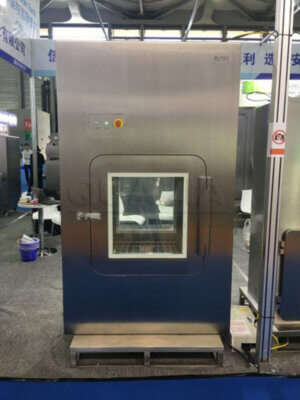
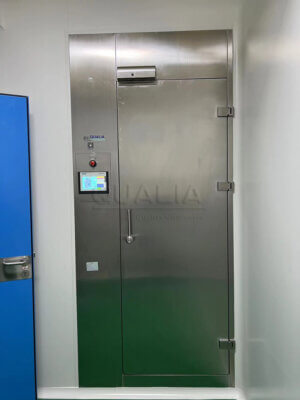
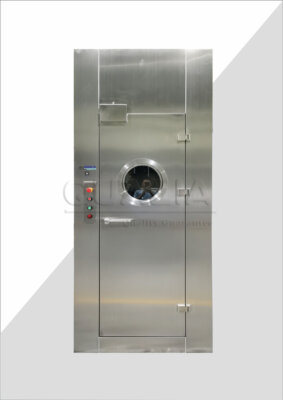
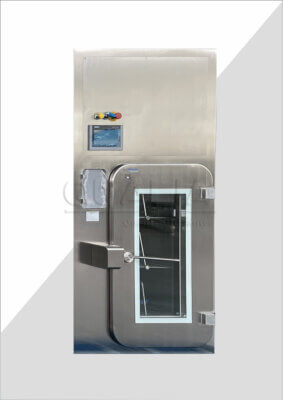
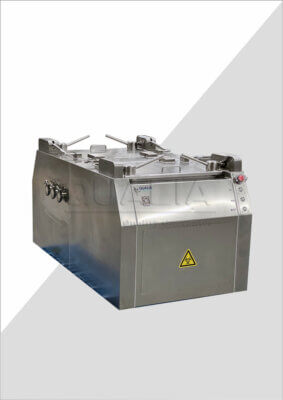
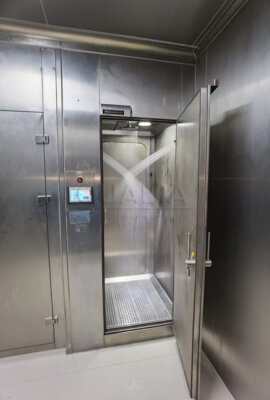
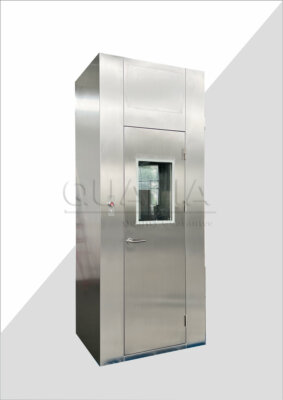
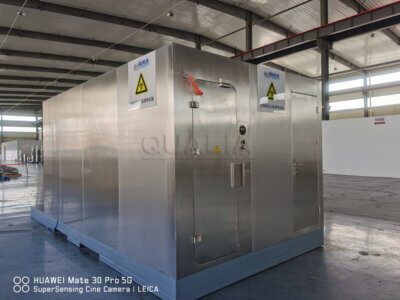
VHP pass box refers here to a transfer chamber equipped with ports, distribution and exhaust paths designed to receive vaporized hydrogen peroxide from a generator, run a decontamination cycle on a transferred load, and aerate before the receiving-side door opens.
Define What the VHP Supply Must Include
Every VHP transfer arrangement depends on the same set of physical elements, and knowing what those elements are is what makes a supplier’s scope statement legible.
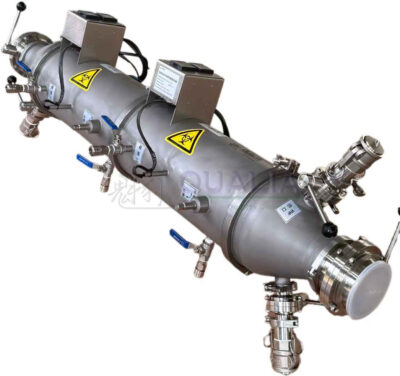
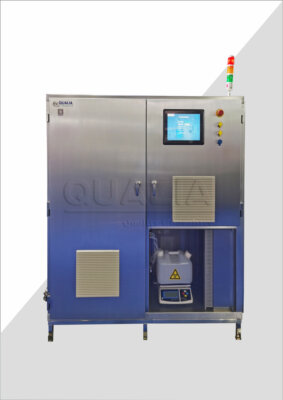
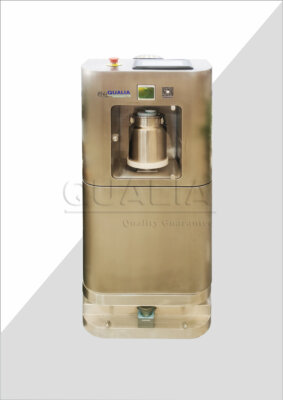
The generator itself—the device that heats or flashes liquid hydrogen peroxide into vapor—is only one element. Around it sit the injection connection or duct from generator to chamber, any distribution manifold inside the chamber, the exhaust path and catalyst or scrubber if aeration is handled internally, the control interface that initiates and monitors the cycle, and the sensors that confirm concentration and cycle completion. Each of these can be packaged inside the pass box enclosure, mounted externally on the wall or frame, or supplied from a building or facility generator that serves multiple points.
Related Products
- VHP Pass Box — Identify the chamber package when requesting the integrated-versus-external supply boundary.
- VHP Hydrogen Peroxide Generator Type I — Discuss a separately identified source-equipment offer where appropriate; compatibility and included connections require confirmation.
- Portable VHP Hydrogen Peroxide Generator ( Type II, Type III ) — Consider a portable source offer only if the buyer is comparing that supply route; no compatibility or shared-use capability is assumed.
When you receive a VHP pass box quotation, the first question is not which generator model is proposed. It is which of these elements is in the supplier’s scope and which is assumed to come from elsewhere.
This distinction matters because qualification evidence is tied to the boundary. If the generator is in your scope and the pass box is in the supplier’s scope, the cycle validation spans two separate purchase orders, two sets of documentation, and potentially two organizations with different assumptions about what a completed cycle looks like. If the entire assembly—chamber, generator, controls, connections—comes from one source, the qualification starts from a single delivered system.
Where you need to draw the line early: list every element above and assign it to a party before reviewing any quotation. That list becomes the boundary sheet you send for confirmation.
Compare Integrated and External Offer Boundaries
The two arrangements create genuinely different equipment and facility interfaces, and each has a natural fit.
Compare Integrated and External Offer Boundaries: Buyer Review Matrix
| Purchase boundary | Integrated offer | External offer |
|---|---|---|
| Source equipment | Identify included assembly items | Identify supplied source and owner |
| Connections and controls | List included items and exclusions | Allocate items between source and chamber scopes |
| Shared use | State any dependencies in the offer | Identify dedicated or shared source |
| Support documents | Name supplied deliverables | Name deliverables from each supplier |
An integrated arrangement places the generator and its associated controls within or immediately on the pass box assembly. The supplier delivers a single physical unit with defined electrical and utilities connections—typically power, compressed air if required, and a drain for condensate—and the injection, distribution and exhaust paths are factory-engineered as part of the product. What you receive at site is a tested assembly; what you connect is a short list of building utilities.
The case for an integrated arrangement is strongest when the pass box is a standalone transfer point, when the installation is in a room where running additional services from a remote generator is impractical, or when the project timeline does not allow for separate procurement and coordination of source equipment. It is also the natural starting point when a single installation team is responsible for the whole handover. The limitation is that the generator is committed to that chamber; if throughput demands grow or the number of transfer points increases, each pass box carries its own source.
An external arrangement supplies the generator separately—either dedicated to this pass box and mounted nearby, or shared among several transfer points from a central location. The pass box itself contains the chamber, the injection port or ports, the internal distribution path, and the control interface that accepts a cycle signal. The generator, the interconnecting duct or tubing, any isolation valves, and the control wiring that links the two are either buyer-supplied or defined as a separate supply item.
The external arrangement is better suited to projects where multiple pass boxes or isolators will share a generator to manage procurement cost, where a facility generator with validated performance already exists and is being extended, or where the generator must be located outside the controlled room for maintenance access reasons. The design and coordination load is higher: every connecting item, every valve, and every signal crossing the two packages must be explicitly owned by someone.
An external arrangement is not inherently more complex than an integrated one, but it is less forgiving of an incomplete boundary definition.
Consider a project where three pass boxes serve adjacent controlled rooms off a single corridor, all feeding material into the same processing suite. An external shared generator mounted in the corridor technical space can serve all three via dedicated lines, with individual cycle control at each chamber. The cost of one generator instead of three is real. So is the scheduling dependency: if the generator is unavailable or in a maintenance cycle, all three transfer points are affected simultaneously. That tradeoff belongs in the project decision, not in the installation debrief.
Allocate Connections, Controls and Documentation
The items between packages—the connections and controls that cross from one supplier’s scope to another’s—are where unresolved boundaries become defects.
For any external arrangement, produce a list that includes: the injection line from generator outlet to pass box port (material, length, insulation if required), any manual or automatic isolation valve and who operates it during a cycle, the exhaust or aeration path and where it terminates, the electrical signal or hardwired interlock that tells the pass box a cycle is complete and the door can release, and the catalyst or scrubber unit if aeration is not handled inside the pass box. For each item, assign a supplying party and a documentation owner.
Documentation ownership is not the same as physical supply. A buyer who self-supplies the interconnecting duct still needs someone to produce the design drawing, the material compatibility statement, and the entry in the qualification protocol that confirms the connection was made correctly. If the pass box supplier and the generator supplier each assume the other produced that document, neither did.
This gap appears frequently with control signals. The pass box door interlock—the mechanism that prevents the receiving-side door from opening until a cycle is confirmed complete and aeration is verified—must receive a signal from the cycle controller. When the controller is integrated, this connection is internal and factory-tested. When the controller is external, the signal path crosses the supply boundary. The specification for that signal (voltage level, normally open or closed contact, response time) must appear in both suppliers’ documents or in a buyer-held interface specification that both reference.
QUALIA designs the pass box side of this interface to accept a defined input signal, with the interlock logic and the door release sequence documented as part of the chamber’s delivered package. When an external generator is proposed, that interface specification is part of the boundary sheet the project team must confirm before procurement closes.
For qualification support, ask any supplier for a list of named deliverables—IQ protocol, OQ protocol, cycle parameter record, sensor calibration certificate—and for each deliverable, identify what buyer-side inputs it depends on. A supplier who offers qualification support but whose protocol depends on a cycle validation that the buyer runs separately has described a support boundary, not a complete qualification. That distinction should appear in the contract, not emerge during the qualification phase.
Related Reading
- VHP Pass Box RFQ Checklist: Chamber Size Door Interlocks Cycle Data and Documentation — Prepare the pass box quotation questions before comparing supply boundaries.
- Portable VHP Generator vs Integrated VHP Pass Box: Scope and Validation Differences — Compare the source-equipment boundary and documentation questions in the two offer routes.
- Validation and Handover Documentation for BSL and Containment Projects: URS, FAT, SAT, IQ/OQ/PQ and Final Acceptance — Follow the agreed split-supplier deliverables into final document handover.
Identify Shared-Use and Handover Dependencies
A shared external generator introduces a category of dependency that a dedicated source—integrated or external—does not: scheduling and responsibility across multiple users.
When a generator serves more than one pass box, each cycle request competes with others. In practice, this usually means a control system queues requests or a facility procedure assigns priority. Either approach requires a governance decision: who owns the generator schedule, who is notified when the generator is taken offline for maintenance, and who has authority to clear a failed cycle before the next request is accepted. These are not equipment questions; they are handover questions that should be resolved between the facility owner and the team responsible for the generator before the system is commissioned.
A dedicated external generator assigned to a single pass box removes the scheduling conflict but preserves the other boundary questions—supply, documentation, control signal—described above. It is the intermediate case: more coordination than an integrated unit, less facility-wide dependency than a shared one.
Contracted supply of an external generator by the pass box supplier can close the shared-use question. If the pass box supplier contracts to deliver the generator, the interconnecting items, and the interface documentation as a single package, the boundary is defined in one contract even if the generator physically sits outside the chamber. The key phrase to look for in that contract is whether the supplier takes responsibility for the cycle performance of the combined system, not only for the chamber in isolation.
For handover, identify three documents before procurement closes: the cycle parameter record that defines the validated process (concentration target, dwell time, aeration endpoint), the interlock test record that confirms the door cannot open before aeration is complete, and the maintenance schedule that specifies who services the generator and at what interval. If any of these will be produced by a party other than the equipment supplier, name that party in the project scope before you place the order.
When you are ready to send a scope sheet to a supplier for confirmation, have the following prepared: the number and location of transfer points, whether a shared or dedicated source is being considered and who will own it, the room pressure relationships on each side of the pass box, the utilities available at the installation location, and the qualification deliverables you need and from which party. Those inputs define the offer boundary precisely enough that two competing quotations can be compared on scope, not only on price.
References
- EU GMP Annex 1 – Manufacture of Sterile Medicinal Products (2022) — Use the sterile-manufacturing contamination-control context to identify equipment and site interfaces for review; it supplies no project-specific pass box or cRABS acceptance values.
- EudraLex Volume 4 Annex 15 – Qualification and Validation — Distinguish supplier documentation from project qualification and acceptance decisions; reported conditions and deviations remain specific to the represented system.
- ISO 14644-7:2004 Separative Devices — Frame separative-device requirements and customer–supplier questions within the standard’s verified summary scope; detailed clauses and equipment limits are outside this summary.
- WHO Laboratory Biosafety Manual 4th Edition (Core Document) — Put the laboratory use and risk-assessment basis ahead of a generic equipment label; this summary is not a door specification or a facility approval.
Frequently Asked Questions
Q: Is an integrated arrangement always the simpler purchase?
A: Compare the actual included source equipment, connections, access and support. An integrated label can describe a convenient package, but the scope still needs an itemized response.
Q: Can an existing external source reduce the quoted equipment scope?
A: It may, if the project identifies the existing source owner and the documentation and connection dependencies. Keep those buyer-supplied items visible when comparing the price with a complete integrated offer.
Q: Should the buyer compare cycle-performance promises at this scope-definition stage?
A: Keep performance claims separate from the itemized supply comparison and require their applicable evidence. The integrated or external label alone gives no basis for a cycle-performance conclusion.