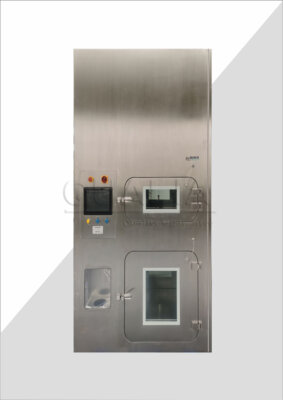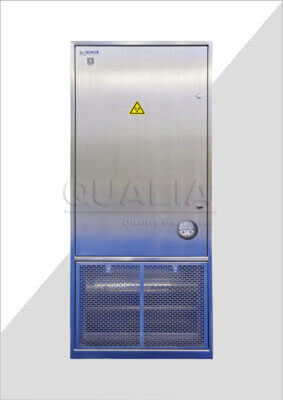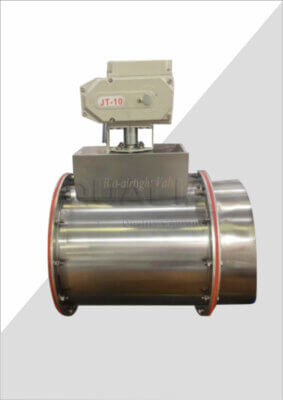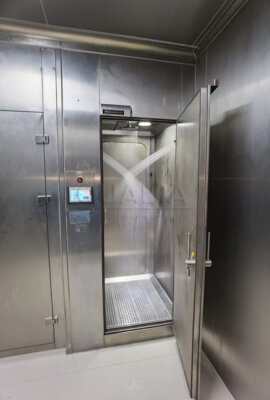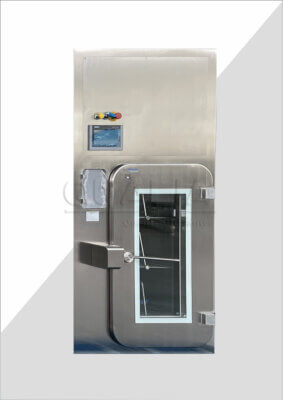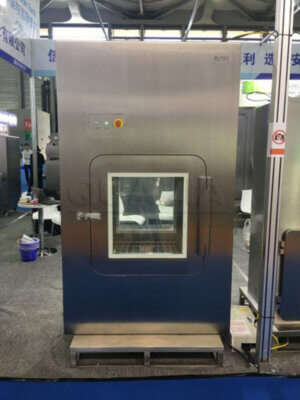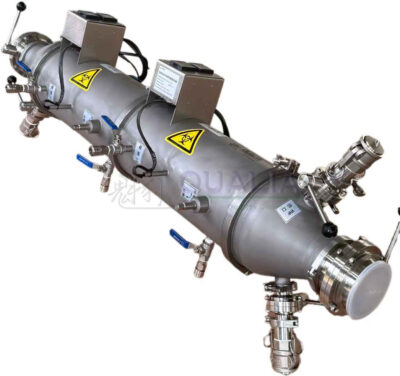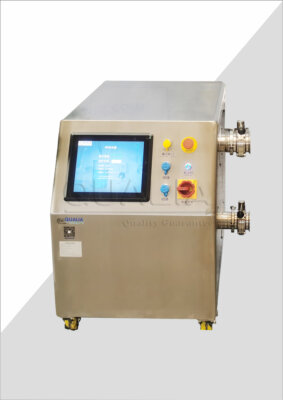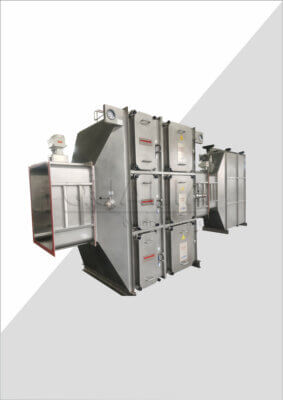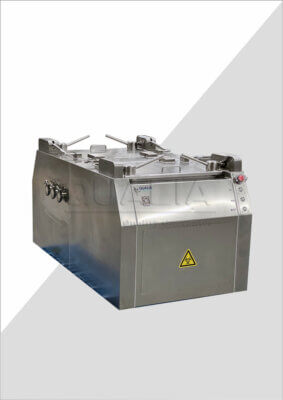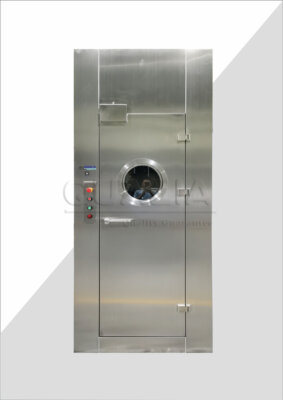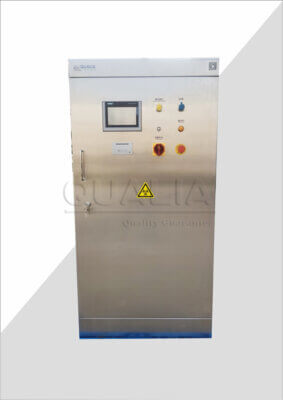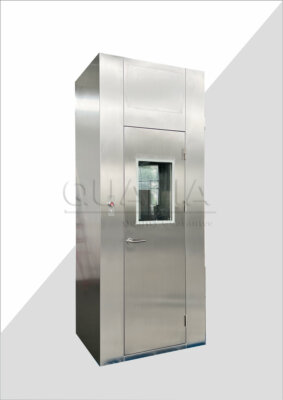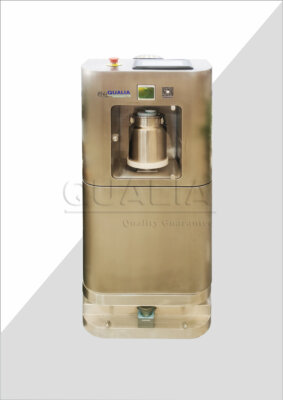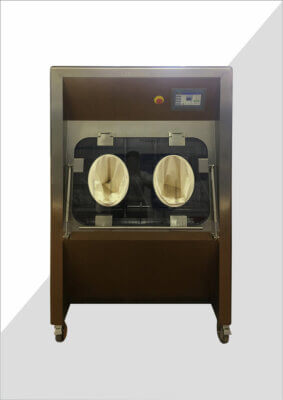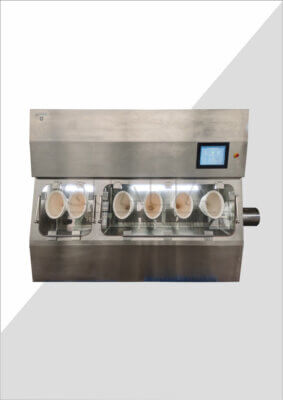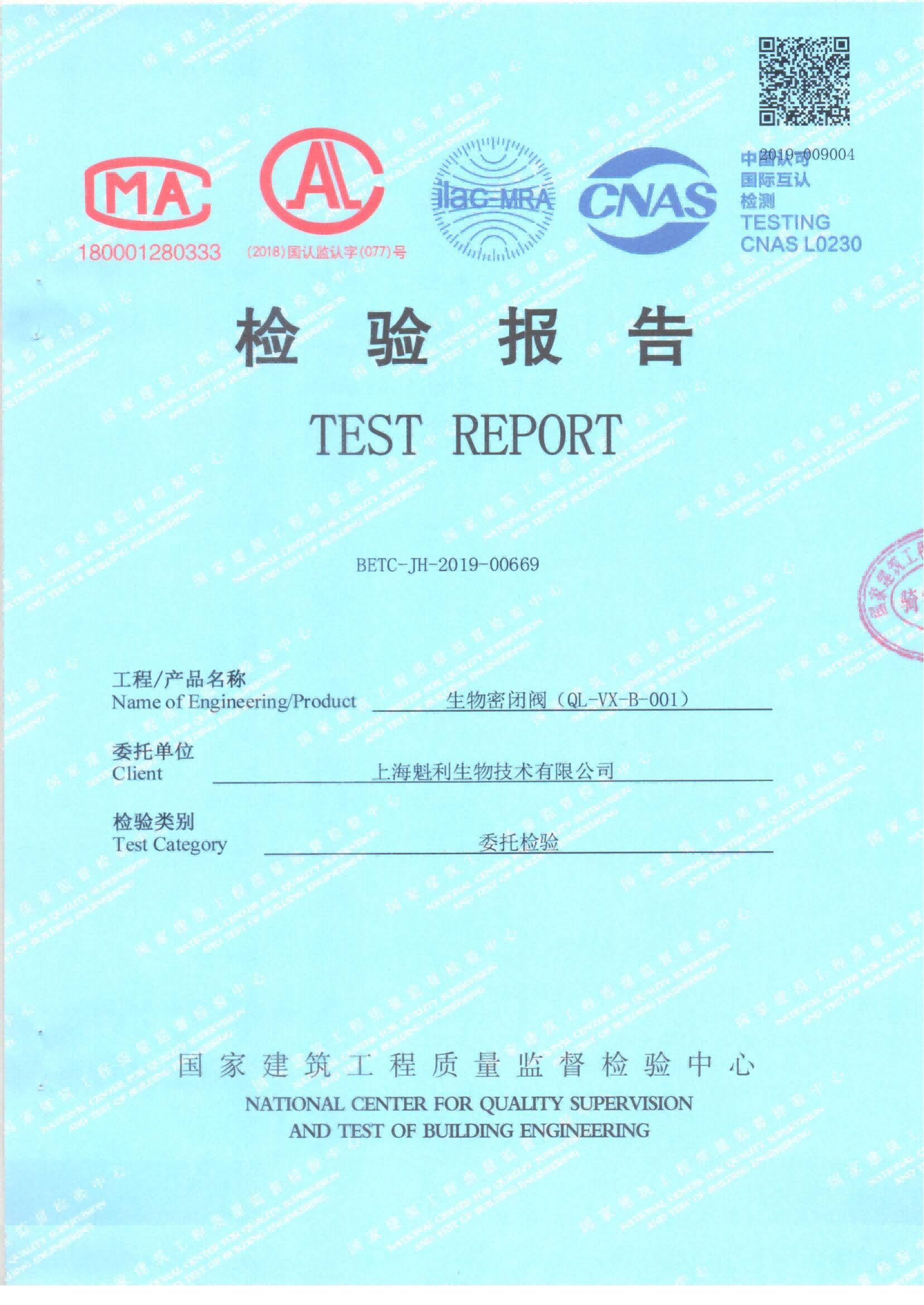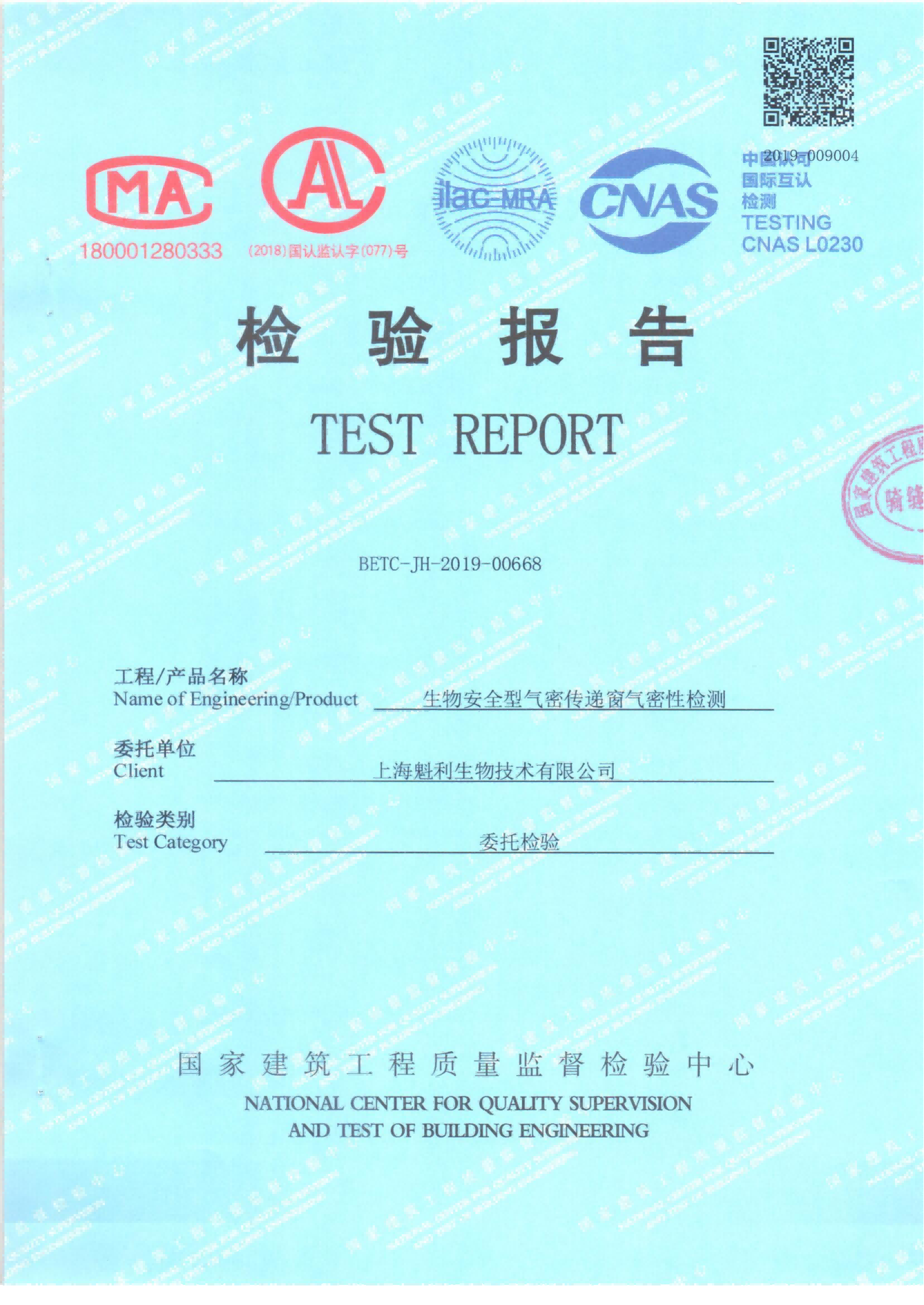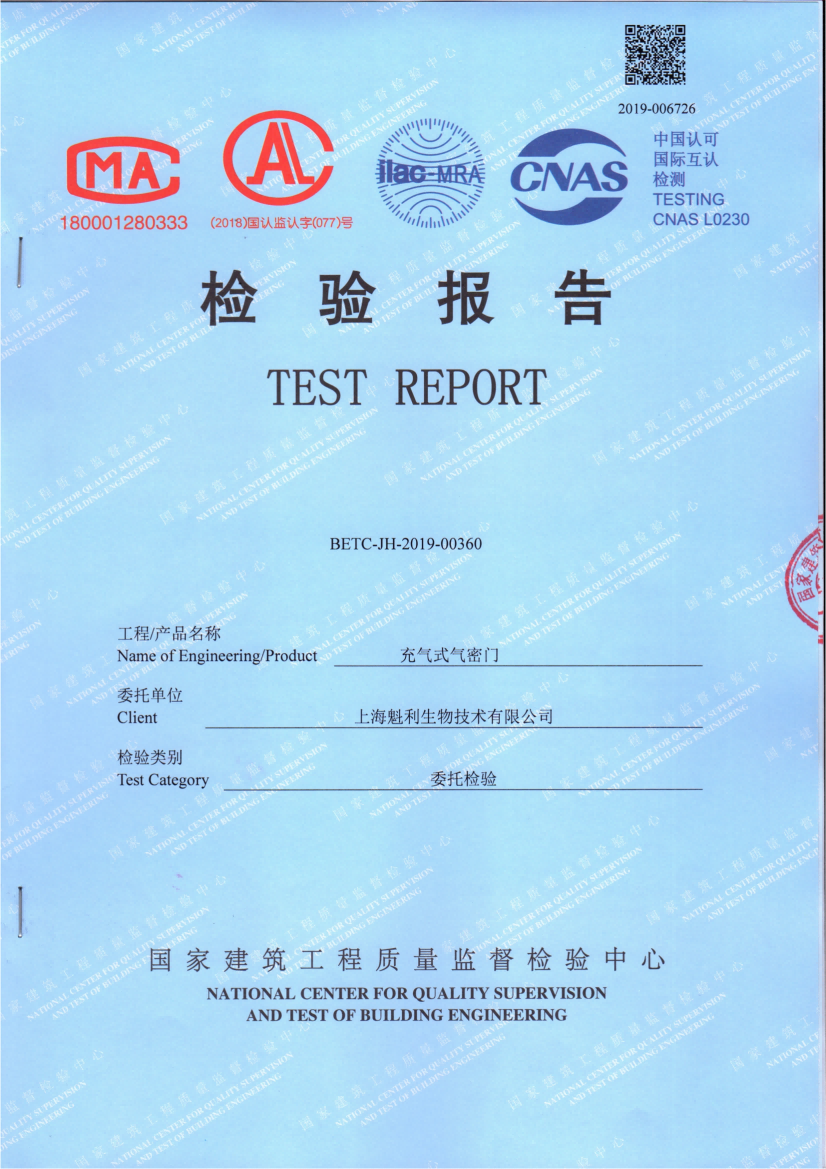
When compressed air is lost in a pass box that uses an inflatable seal, the door and seal state depends entirely on what the supplier has designed and what the buyer has specified — there is no universal behavior. Some configurations are designed to hold the last sealed position; others allow the seal to deflate and the door to become manually operable; a few are designed to trigger an interlock that prevents the opposite door from opening. Which of these applies to any given unit is a design and procurement question, not an assumption the project team should import from a general idea of what “fail-safe” means. Projects increasingly ask for this behavior to be documented before equipment selection is finalized, because the answer affects pressure boundary integrity, operator response and facility interface design.
Define the Buyer Decision for Utility Loss
The first step is to treat compressed-air loss as a defined project risk rather than an edge case left to the supplier’s default.
A pass box transfers materials across a boundary — between a cleanroom corridor and a production suite, between a biosafety containment zone and a support area, or between a sterile core and an adjacent classified space. During normal operation, the inflatable seal at each door keeps that boundary closed while the other door is opened and the contents are moved. When the utility that inflates the seal is interrupted, the question is not simply whether the door can be opened: the question is whether the boundary condition the pass box maintains is preserved, degraded or undefined until someone intervenes.
Related Products
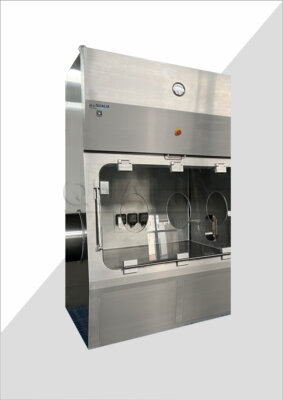
- Biosafety Pass Box — Use the relevant assembly listing to start a configuration-specific RFQ; seal type, hardware, utilities, spares and service scope require an itemized response.
That framing matters because the answer is not the same in every project context. A unit serving a potent-compound containment suite carries a different consequence for seal loss than one serving a Grade C corridor in a vaccine fill facility. What the buyer should define, before reviewing quotations, is the protection goal the pass box is serving — product protection, personnel protection or biosafety containment — and the acceptable boundary state if the utility is interrupted. That defined requirement is then the standard against which the supplier’s described behavior is evaluated. Without that definition, it is easy to accept a configuration that behaves acceptably in one context and inadequately in another.
Request the Offered Door-State Description
The practical action when evaluating a pass box offer is to ask the supplier to describe, specifically, what happens to each door and the seal when compressed air is lost.
This request should not be framed as a general question about safety. It should ask the supplier to describe the offered configuration: whether the seal deflates immediately or holds pressure from a stored volume; whether the door can be pushed open by hand once the seal is deflated or whether a mechanical latch is engaged independently of the pneumatic seal; and whether the interlock between the two doors continues to operate, fails open or fails locked.
Request the Offered Door-State Description: Buyer Review Matrix
| Supplier statement | Clarification requested | Reason for comparison |
|---|---|---|
| Door or seal state | Offered configuration and represented circumstance | Replaces an assumed utility-loss behavior |
| Fail-safe label | Function and state meant by the term | Separates different possible meanings |
| Available indication | Offered alarm or indication document | Separates visibility from mechanical behavior |
| Restoration behavior | Supplier description and site decision owner | Keeps recovery expectation explicit |
Fail-safe is a term that appears often in supplier responses and quotation documents, and it needs to be unpacked before it is accepted. The term can describe any of several different design intentions: that the door remains in its last commanded position, that it moves to a locked state, that it defaults to open to allow egress, or that it defaults to closed to preserve containment. Each of these is a legitimate engineering choice in a specific context. None of them is universally correct, and accepting the label without the description leaves the buyer without the information needed to evaluate whether the design fits the project. If the offer uses the term without further explanation, the follow-up question is: which function, in which state, under which circumstance does that label describe?
Request the offered door-state description as a configuration document, not as a verbal assurance during a site visit.
A referenced configuration document may already contain the definition the supplier intends, so it is worth asking whether such a document exists before treating the absence of an explanation as a gap. If no document is offered, the description requested in writing becomes a technical clarification that belongs in the procurement record.
Consider a project where the pass box separates a BSL-2 corridor from a BSL-3 anteroom. If the compressed-air supply to the box is interrupted and the inflatable seal deflates, a door that becomes freely operable in that moment creates an uncontrolled pathway between pressure zones at exactly the moment when the zone differential may also be affected. Whether the mechanical design prevents this — through a latch, a spring-loaded mechanism or a redundant seal element — is a supplier design question, and the answer should be documented before the unit is selected, not after it is installed.
Related Reading
- URS for High-Containment Equipment: What QA, Engineering and Procurement Should Define Before RFQ — Identify the buyer decision and responsible reviewers before requesting a behavior description.
- Controls and Interlock Requirements in High-Containment Equipment RFQs: PLC, HMI, BMS and Alarm Evidence — Develop the supplier-document questions for indication and control scope.
- How to Trace URS Requirements Through DQ, FAT, SAT, IQ, and OQ — Keep the agreed behavior requirement traceable to its supplied documentation.
Allocate Indication and Recovery Responsibilities
Knowing what the door and seal do is necessary, but it is not sufficient: the project also needs to define what operators will see when the event occurs, and which system is responsible for communicating it.
Utility-loss indication is a separate interface question from door behavior. A pass box may be designed to generate a local alarm, a signal to the building management system, a signal to the facility’s compressed-air monitoring panel, or some combination of these. It may also generate no signal at all if the buyer has not specified one. These are not equivalent outcomes. If an operator does not know that the seal is deflated, the boundary behavior of the door may change without any visible cue, and the response — whether that is stopping a transfer, isolating the utility or escalating to a maintenance hold — cannot happen on time.
The indication question has an interface component that projects frequently leave unresolved: when both the pass box and the facility compressed-air system have visibility into the utility state, it is not automatically clear which system is responsible for communicating the event to the operator. The pass box controller may detect a low-pressure condition at the seal and generate a local panel alarm. The facility system may detect a drop at the distribution header and generate a building alarm. These two signals may reach different people at different times. Without an explicit assignment in the project documentation — naming which system provides the utility-status information and which personnel or system receives it — a gap can remain even when both systems are supplied and both are technically capable of detecting the condition.
Name the information source and the information receiver in the project scope before equipment is ordered.
Recovery behavior belongs in the same conversation. When compressed air is restored, the pass box may be designed to re-inflate the seal and return to normal operation automatically, or it may be designed to require a manual reset or a reconfirmation step before normal operation resumes. Automatic recovery is not inherently wrong, but it is a site decision: an automatic return to normal operation may be appropriate in a facility where the compressed-air supply is highly reliable and brief interruptions are routine maintenance events. In a facility where a compressed-air loss is treated as a containment event requiring investigation before operations resume, automatic recovery may be inconsistent with the site’s response procedure.
The recovery expectation should be agreed in the project review and documented as a site decision, not assumed from the supplier’s default configuration.
Record Unresolved Behavior Before Purchase
Procurement decisions in this area sometimes move forward without full technical alignment on compressed-air loss behavior, and the resulting gaps tend to surface during commissioning, qualification or the first real utility event.
If a supplier cannot confirm the proposed door and seal behavior at the quotation stage — either because the configuration is not yet defined or because the question has not previously been asked in that project context — the right response is to record the behavior as an open technical clarification and treat it as a condition affecting selection. This is not a reason to disqualify the supplier automatically; it is a reason to hold the selection open until the description is provided.
Comparing two offers without this information means comparing explicit conditions against an undefined safety promise. The offer that provides a clear configuration description — even if the described behavior requires a site adaptation — gives the project team something to evaluate. The offer that provides only a label gives the team nothing to verify during commissioning qualification, and no documented basis for the operator procedure that will govern what to do when the event occurs.
Before a final specification is submitted to any supplier, the project team should have ready answers to four questions: what protection goal does this pass box serve; what boundary state is acceptable during a utility interruption; which system will communicate the event and to whom; and who owns the site decision on recovery. QUALIA’s pass boxes are designed to be specified with these conditions defined, and the project engineering stage is the right point to resolve them — when the answers can still shape the configuration rather than require a retrofit.
References
- EU GMP Annex 1 – Manufacture of Sterile Medicinal Products (2022) — Use the sterile-manufacturing contamination-control context to identify equipment and site interfaces for review; it supplies no project-specific pass box or cRABS acceptance values.
- EudraLex Volume 4 Annex 15 – Qualification and Validation — Distinguish supplier documentation from project qualification and acceptance decisions; reported conditions and deviations remain specific to the represented system.
- ISO 14644-7:2004 Separative Devices — Frame separative-device requirements and customer–supplier questions within the standard’s verified summary scope; detailed clauses and equipment limits are outside this summary.
- WHO Laboratory Biosafety Manual 4th Edition (Core Document) — Put the laboratory use and risk-assessment basis ahead of a generic equipment label; this summary is not a door specification or a facility approval.
Frequently Asked Questions
Q: Can a procurement team specify the label fail-safe and leave the detail to the supplier?
A: It can request a proposal, but it should require the proposed meaning and configuration to be documented. Otherwise bidders may price different behaviors under the same label.
Q: Does this utility-loss discussion authorize operators to open or restart the equipment?
A: No operating permission follows from the purchase discussion. The deliverable here is a description for the responsible project review, with recovery responsibility identified.
Q: What if two bidders describe different restoration behavior?
A: Keep both descriptions intact and compare them against the buyer requirement through the assigned project review. Do not normalize away a difference that could affect selection or scope.