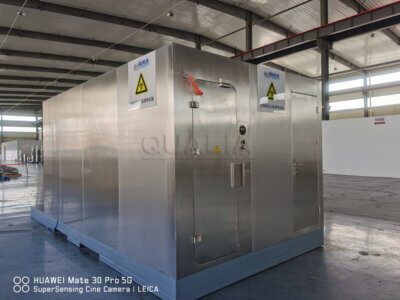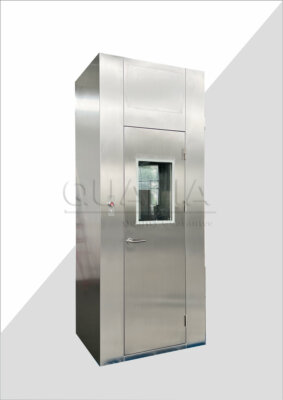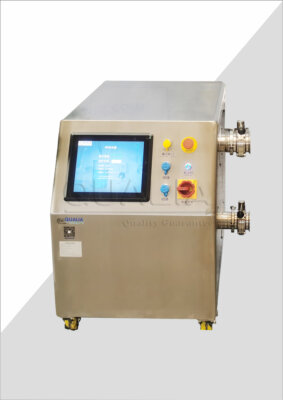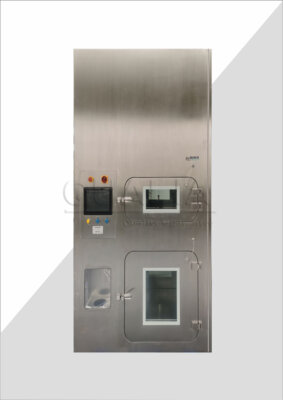

Structuring an in-situ filtration RFQ comparison starts before the quotes arrive: define the deliverables line by line so every offer answers the same question. When quotes bundle installation, commissioning, test reports, and site attendance differently, the lowest number rarely reflects the smallest total obligation—it usually reflects the narrowest scope. The variable that decides which offer holds up under scrutiny is not unit price but how completely each supplier documented what they included, what they excluded, and what they assumed the buyer would provide.
Align the base scope
Every comparison starts from a shared scope definition, and the first task is confirming that all offers are answering the same request.
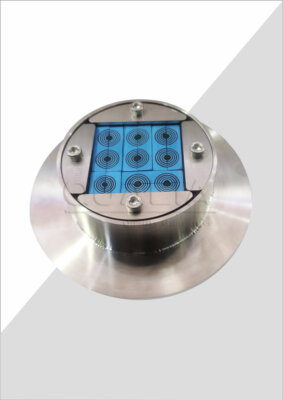
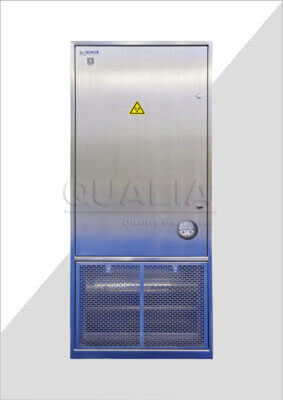
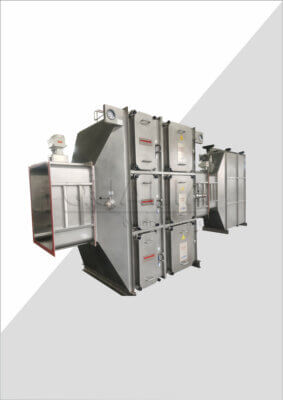
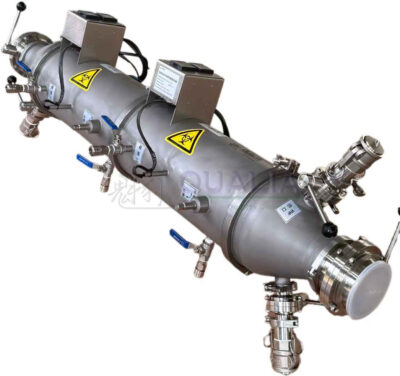
In-situ filtration supply typically includes the housing or mounting assembly, the filter media, connecting ductwork interfaces, instrumentation taps, and any factory acceptance procedures. It may or may not include site installation labor, field leak testing equipment, commissioning support, qualification documentation templates, or access hardware for filter change. Suppliers read the same RFQ differently, and a document that lists “supply, deliver, and commission” can be priced as three distinct line items or compressed into a single figure—with sharply different assumptions about who coordinates each phase.
Related Products
- AirSeriers Archives — Compare the family name in each offer before asking bidders to align the quoted scope.
- Product Archives — Use the cross-family listing to identify any separately named equipment lines that need separate prices.
Build the comparison by listing every supplier’s inclusions and exclusions against the same RFQ line. Use the original request as the reference column, not any supplier’s response. When a line item appears in some offers and not others, the difference is real scope, not presentation.
The lowest total can reflect a smaller scope. Use the written scope, not the summary price, to run the comparison.
A common mistake is treating a supplier’s clarification note as a minor footnote. If a supplier writes “installation by others” or “commissioning subject to site readiness,” those phrases carry budget and schedule consequences that belong in the comparison table, not in a separate read-later file. Flag each one, estimate whether the buyer or another contractor is absorbing that cost, and re-enter the adjusted figure before scoring.
When a material item is genuinely unclear—not just phrased differently but actually ambiguous—ask for a revised quote before the comparison closes. An incomplete line is not a zero; it is an unknown, and unknowns compound during commissioning.
Compare separately priced options
Options need their own column in the comparison, with price, validity period, and any prerequisite purchase recorded explicitly.
Suppliers routinely offer base-scope items at one price and companion items—extended warranty, spare filter sets, additional pressure gauges, VHP-compatible gasket upgrades, or factory witness testing—as line-item options. When a buyer awards only the base and defers options, the deferred price may no longer be valid, the prerequisite purchase may no longer qualify, and the companion item may need to be re-sourced at open-market cost. Recording the option as “available” without capturing its conditions is a planning gap.
The structured approach: for each option in each offer, record four things—the stated price, the date through which it is valid, the prerequisite (if the supplier requires the base award or a minimum quantity), and whether a bundled discount applies to the base scope when the option is taken together. Some suppliers discount the base when a service contract or spare parts package is added; that bundled price should be evaluated against the written scope it covers, not the headline figure.
Consider a project where a supplier prices the housing and filter at a competitive base rate, but the VHP-compatible seal upgrade—essential for a transfer process that includes hydrogen peroxide decontamination—is listed as an option at a validity window of thirty days from quote issue. If the award is delayed by four weeks for internal approvals, the option may need to be re-quoted, and the originally competitive base price may no longer carry the same discount logic. Capturing validity dates prevents that outcome from arriving as a surprise.
Bundled discounts complicate comparison when only some suppliers offer them. The discipline is to evaluate base awards and selected options on separate footing first—what does each base scope cost, what does each option cost—and then assess whether any bundle changes the preferred combination. Never let a discount on the bundle obscure whether the base scope itself is complete.
Clarify supplier test support
Test support ranges from an administrative deliverable to a billed field service, and the difference changes both the budget and the qualification timeline.
When a quote includes test support, three questions resolve the ambiguity: who provides the named report, when is it due relative to commissioning milestones, and is site attendance separately priced or included. A supplier who lists “factory test report” as a deliverable may be committing to a document generated during factory acceptance, with no field component. A supplier who lists “commissioning test support” may mean a technician on site for two days, or may mean a template emailed after installation. The written quote is the only authoritative answer; ask for explicit clarification if the description does not answer all three questions.
Compare who pays for supplier test support
| Quote wording | Written clarification to request | Comparison status |
|---|---|---|
| Supplier attendance included | Identify the quoted allowance and confirm what is billed separately | Included subject to written limit |
| Attendance available at additional cost | Confirm price basis and buyer authorization for the charge | Separate option |
| Test records mentioned without a delivery commitment | Ask who supplies the record and whether delivery is included | Unresolved scope |
Test support is a billed service or an administrative deliverable; the written quote establishes which one.
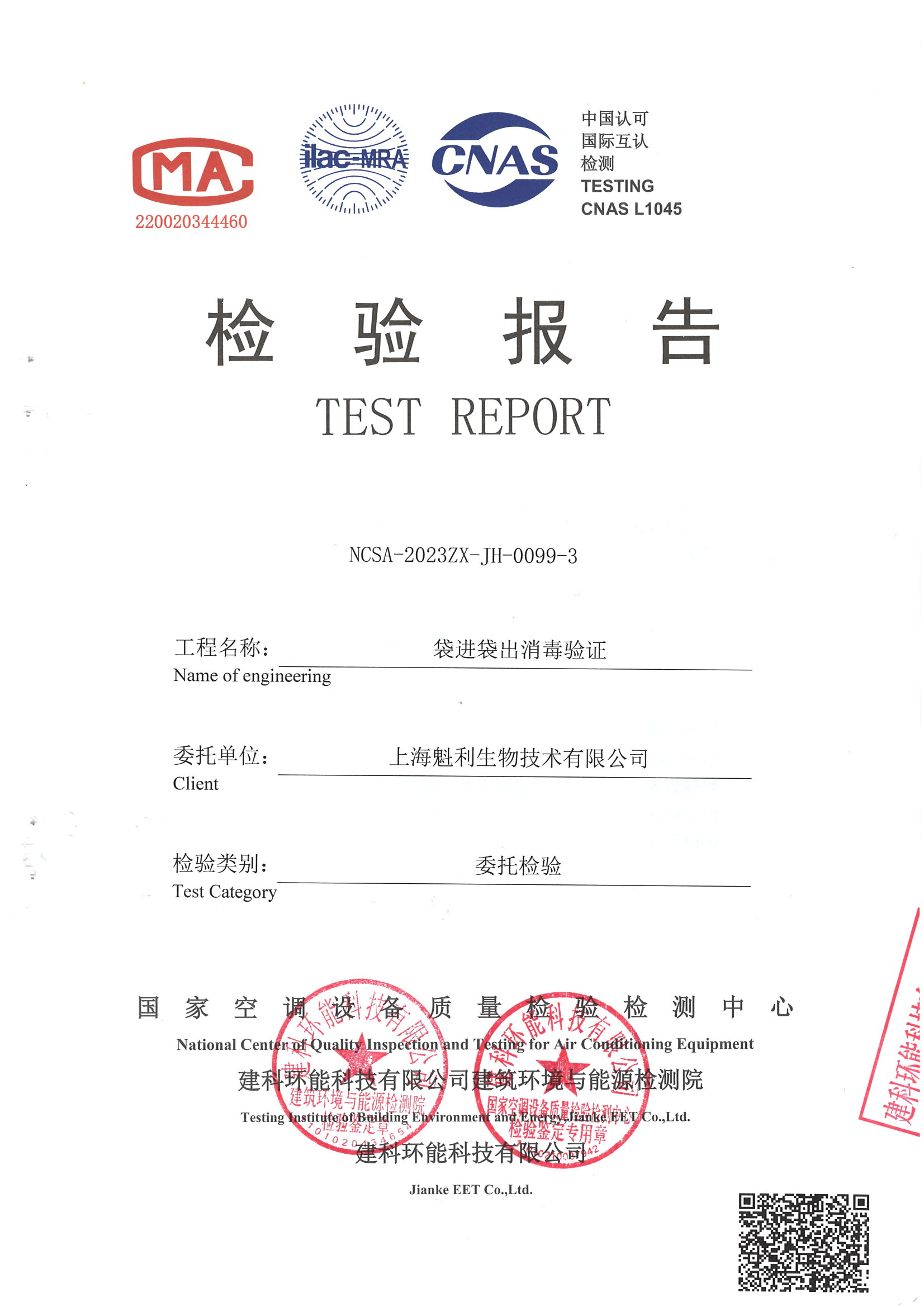
HEPA integrity testing for in-situ installations—whether photometer scan, particle count, or pressure-drop verification—requires calibrated equipment, a qualified technician, and a report format acceptable to the site’s quality system. If the supplier’s quote covers the report but not the attendance, the buyer must arrange a qualified third-party service and confirm that the supplier’s document format integrates with the site validation package. That coordination step takes time and sometimes requires an additional instrument calibration record.
When a supplier offers only a sample report format rather than a project-specific report commitment, mark the sample separately from the promised deliverable in the comparison. A sample demonstrates format and content structure; it does not constitute a commitment. The commitment is what appears in the written quote as a named deliverable with a due date and an identified issuing party. If the quote is ambiguous—if “sample report included” could mean either—confirm in writing which interpretation governs before award.
Acceptance of test deliverables stays with the role the project designates: the validation engineer, the qualified person, or the site commissioning lead, depending on the quality framework. A supplier cannot accept their own test results on the buyer’s behalf, and no quote language changes that boundary. Record who within the buyer’s organization will review and accept each named deliverable; if that role is not yet assigned, the supplier’s timeline assumption may not be realistic.
Site access assumptions interact with test support pricing in ways that surface late. If a supplier has priced test attendance assuming a confirmed site window of a specific duration, and the site is not ready on the assumed date, a rescheduling charge or a lost-visit cost may apply. Those conditions belong in the comparison as disclosed assumptions tied to a buyer action: who schedules the window, what constitutes site readiness, and what the written quote states about rescheduling costs.
Related Reading
- Budget Quote or Binding Bid? Evidence to Request at Each Stage — Flag price assumptions and expiry terms that still need written confirmation.
- How to Compare Spares, Training, Warranty, and Service in Containment Bids — Separate support commitments from independently priced options when comparing bids.
- Which Supplier Quote Revision Belongs on a Cleanroom Equipment Purchase Order? — After selecting an offer, use this guide to carry the accepted quotation revision and its attachments into the purchase order.
Resolve quote exceptions before award
Quote exceptions—conditions, deviations, and assumptions embedded in the offer—are the variables most likely to become disputes during delivery, and they must be resolved before the award is placed.
An exception is any supplier statement that modifies the RFQ requirement: “installation not included,” “HEPA scan to be performed by others,” “lead time subject to material availability at time of order,” or “pressure boundary verification to customer specification, not supplier scope.” Each one is a gap between what was requested and what was offered. Gaps that are acceptable—because the buyer has already arranged the missing piece—should be documented as such. Gaps that are not acceptable need a revised offer.
The process: list every exception from every offer against the original RFQ requirement. Classify each as acceptable with a documented buyer plan, acceptable pending clarification, or not acceptable. For the third category, return to the supplier with a specific question: can the exception be removed, revised, or priced as an add? Do not interpret an exception charitably and award on that interpretation; the written condition submitted with the offer is the governing document.
When a clarification would change the request for all bidders—for example, when one supplier raises a site condition that the original RFQ did not address—issue the same approved revision to every bidder before comparing final offers. A shared revision supports a like-for-like comparison; a revision sent to one supplier and not others produces offers that cannot be fairly ranked. Procurement owns the decision about which clarifications require broad distribution and when bidder-specific questions can be answered individually without affecting comparability.
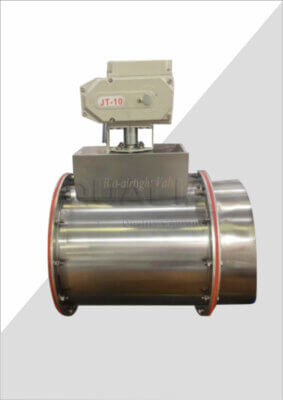
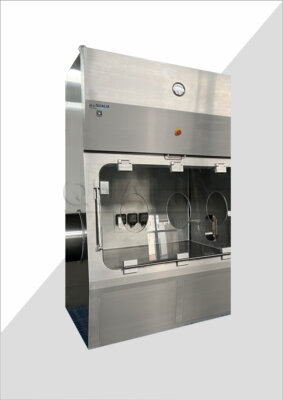
Pressure boundary assumptions and filter change access conditions are two areas where in-situ filtration quotes frequently carry hidden exceptions. A supplier may price a housing designed for a stated room pressure differential but exclude the interlock verification or the fail-safe damper integration needed to maintain that differential during filter change. If the RFQ did not explicitly call out those elements, the exception may be technically valid—but the buyer still carries the uncosted work. Bag-in/bag-out housings and biosafety isolation dampers, for instance, involve mechanical sequences during maintenance that must be scoped explicitly to avoid ambiguity about who supplies, installs, and commissions each component.
Before the award meeting, have ready: the aligned scope table with inclusions and exclusions by supplier, the options register with price, validity and prerequisites, the test support classification for each deliverable, the site access assumptions each supplier recorded, and the disposition of every exception. That set of documents is what allows an award recommendation to hold when it is reviewed by procurement, engineering, and the site quality team—and it is what QUALIA’s project teams ask for when coordinating supply and qualification scope on installations where the boundary between supplied scope and site responsibility needs to be unambiguous from the first day on site.
References
- FAR 15.204-1 — Uniform contract format — See how this U.S. federal solicitation format distinguishes scope, line items and deliverables.
- FAR 4.1005-1 — Required line-item data — See how U.S. federal procurement identifies each priced line and its associated delivery or performance information.
- FAR 15.304 — Evaluation factors — See this U.S. federal example of stating which factors will count in bid evaluation.
- FAR Subpart 15.4 — Contract pricing — See why U.S. federal price analysis accounts for differences in the offers being compared.
- FAR 15.206 — Amending the solicitation — See how U.S. negotiated federal acquisitions issue a formal amendment when requirements change.
Frequently Asked Questions
Q: What if a bidder rolls all options into one price?
A: Request an itemized alternative on the same base scope so an optional service does not look mandatory.
Q: How should we handle an offer submitted against an older RFQ revision?
A: Ask the bidder for a written response to the current revision and keep the original separately for the procurement record.
Q: Can a call resolve a quote exception?
A: Use the call to identify the issue, then ask the bidder to state the agreed wording in writing before the offer is selected.