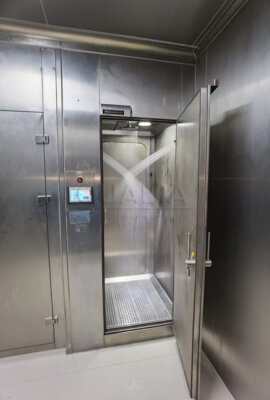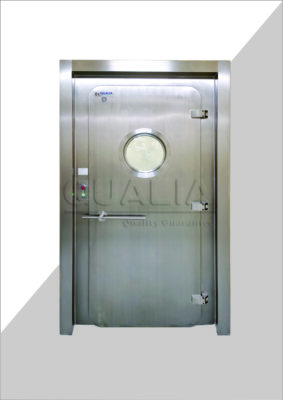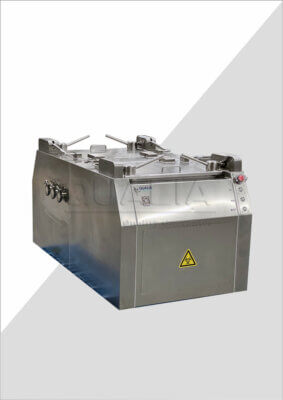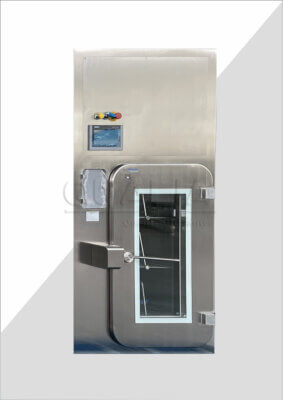


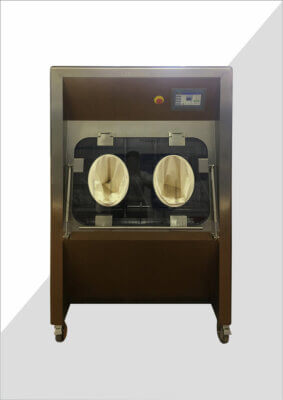
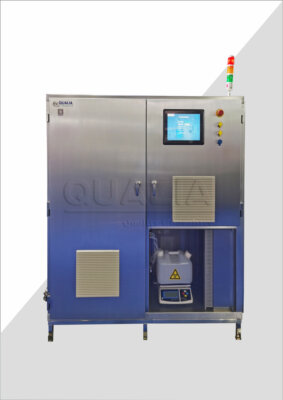
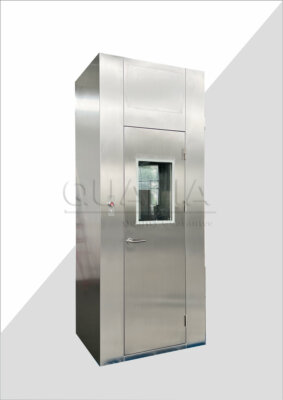
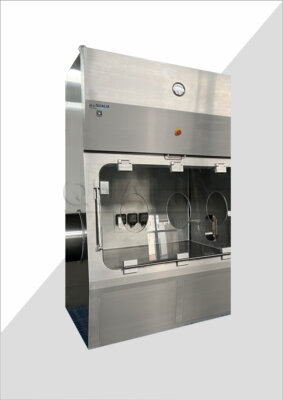
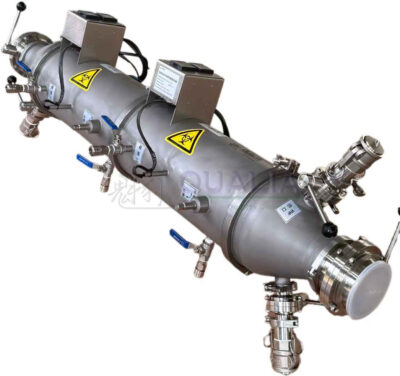

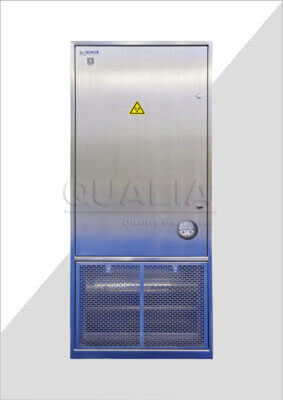
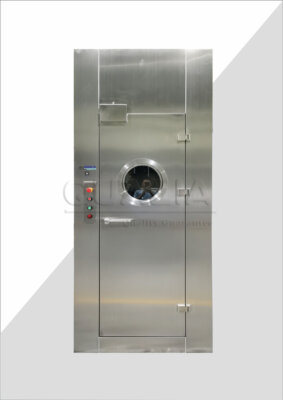
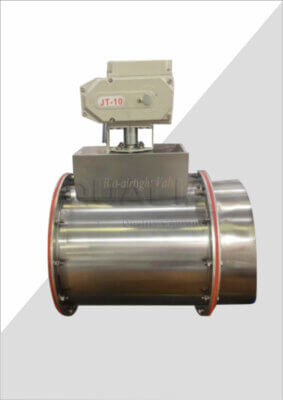
An in-situ filtration URS needs to answer one question before every other: does the filter housing stay in place through a contaminated change, or does the system depend on a confirmed safe-change sequence to protect the person removing it? That boundary condition decides the mechanical configuration, the pressure class, the access geometry and the qualification evidence the supplier must provide. A URS that blurs this question produces bids that cannot be compared on the terms that actually matter.
Define the purchase scope
A URS covering more than one purchase item must give each item its own reference number, its own named deliverable and a named recipient for that deliverable.
In-situ filtration projects frequently bundle a bag-in/bag-out housing, an isolation damper, a biosafety interlock and a duct penetration seal into a single specification document. That is a reasonable way to manage the interface, but it creates a risk: a supplier responding to one item absorbs a scope that belongs to another, and no one notices until the bid comparison. The cleaner approach is to list each item in a schedule at the front of the document, give it a line reference (for example, ISF-01, ISF-02, ISF-03), name the drawing or certificate or test report that is the deliverable for that item, and state who receives it and when. This is the structure that lets a bid response be checked line by line.
Related Products
- AirSeriers Archives — Check the catalog family name against the equipment named in the requirements list.
- Product Archives — When the requirements cover multiple equipment families, identify which named families need separate requirement and document entries.
Where one of those items is separately contracted — an installation subcontract, a ducting package, a commissioning authority — that item needs its own owner and its own URS scope. A reference in the main URS is enough to define the interface; the full requirement and its review responsibility belong in the instrument that governs that contract.
The same logic applies to filter classifications and airflow direction. A HEPA filter installed in an exhaust position in a BSL-3 corridor is not the same purchase as the same housing installed in a supply position in a GMP cleanroom suite, even if the housings look identical in a catalogue. If the URS does not distinguish these by reference, the response cannot reliably address both. Define each housing by its position in the system, the direction of flow, the room pressure relationship on each face and the hazard class of the airstream.
Make requirements answerable
Every requirement that will affect supplier selection must say clearly whether it is mandatory or preferred, and must ask for a direct supplier response — including any exception — rather than a general statement of compliance.
Turn buyer requirements into comparable responses
| Requirement wording | Supplier response to request | How procurement records it |
|---|---|---|
| A document is required but unnamed | Name the deliverable and state any exclusion | Open item until the deliverable is identified |
| A responsibility is shared | Name the supplier contact and identify the buyer dependency | Separate commitments from dependencies |
| A requirement cannot be met as written | Cite the requirement and give the proposed exception | Queue the exception for the named buyer reviewer |
A requirement written as “the housing shall comply with all applicable standards” is not answerable. A supplier cannot respond with a yes or a no because the requirement does not name the standard, the clause or the test. The same information written as “the housing shall pass a scan test to EN 1822 Class H14, with a test certificate dated within 24 months of delivery, mandatory” gives the supplier a specific obligation and gives the buyer a specific check at receipt. Mark each requirement as mandatory or preferred so bidders can distinguish an award condition from a design preference. Request a direct response to each mandatory requirement, including any exception the bidder intends to take, with the alternative wording and the commercial effect of that exception.
Where a supplier marks a requirement conditional — “compliant subject to site duct dimensions being within X range” — the URS should ask for the specific wording of that condition, the line item it attaches to and what changes in the offer if the condition is not met. A condition buried in a covering letter can alter the entire basis for price comparison without being visible in the technical evaluation. Routing every exception back to its requirement line prevents that.
This same discipline applies to pressure performance. A housing rated to a static pressure differential is not interchangeable with one rated to a dynamic surge. If the system has a fan-failure scenario where the pressure briefly reverses across the filter, the URS must name that scenario and ask whether the housing and its seals are rated for it. The supplier’s answer is then part of the evaluation, not a gap discovered during installation.
One practical starting point: draft the mandatory requirements list first, then add preferred items as a second tier. If the mandatory list is longer than the preferred list, the URS is probably well-calibrated for the purchase. If the preferred list dominates, the team may be over-specifying preferences that will score heavily without reflecting what genuinely decides fitness for purpose.
A requirement is only as useful as the evidence that closes it. If the URS cannot name what the evidence looks like, the requirement is not yet ready to issue.
Specify the supplier documents
The URS should list each required supplier document by name, identify which quoted line item it covers, state the submission date and name the person who reviews it.
This is not bureaucracy. It is the mechanism that makes a sample submittal distinguishable from a project commitment. A supplier data sheet that shows a bag-in/bag-out housing with a stainless steel filter cell frame is a sample. A signed drawing with the project tag number, the customer reference and a revision block is a commitment. The URS must ask for the second type, and must say when it is due and who accepts it, because without that instruction the supplier will often provide the first type at no extra effort and both parties may not notice the difference until qualification.
Consider a project where a biosafety isolation damper is ordered alongside the filter housing. The damper’s leak test certificate, the housing’s material traceability record and the filter manufacturer’s scan certificate are three different documents, with three different authors and potentially three different submission windows. If the URS lists them as “supplier documentation to be agreed,” the project has no mechanism to chase the one that is late. If the URS names each document, its item reference, its due date and its reviewer, a delayed submittal becomes a visible open action rather than a late discovery.
Document types to consider for an in-situ filtration package typically include: dimensional and interface drawings, material certificates for wetted parts and filter seals, pressure test records, filter scan certificates, interlock and actuator test records for any integral damper, and — where the system is part of a GMP installation — the design qualification summary. The URS does not need to invent a format for any of these; it needs to name which ones it requires, when and from whom.
Where the supplier relies on buyer-provided information — for example, the final duct connection coordinates, the room pressure differential target or the utility supply voltage — the URS must record who owns that input, when it is due and what happens to the schedule if it arrives late. A missing utility specification discovered after the housing is fabricated is a change order. The same information missing before the URS is closed is a planning action. Record the dependency, name the owner and set the due date in the URS itself. If the dependency is unresolved when the URS is issued, refer it explicitly to the project owner responsible for resolving it, and do not issue the URS as if the dependency does not exist.
Where the supplier’s document list and the buyer’s document register do not match at award, the gap should be resolved before the first milestone payment, not at the final inspection.
Related Reading
- Budget Quote or Binding Bid? Evidence to Request at Each Stage — Distinguish preliminary price assumptions from commitments when deciding which requirements need written bidder confirmation.
Assign review and change ownership
Every requirement in a live URS has an owner, and every change to a live URS has a revision, a list of superseded requirements and a confirmed distribution to all bidders still in the tender.
This matters most when a URS change occurs during the tender period — after bids have been invited but before they close. If the buyer updates a pressure class, adds a mandatory test or changes the filter grade without issuing a formal revision, some bidders will price against the original requirement and others against the correction. The comparison is then built on different baselines. The fix is straightforward: give the revised document a new issue number, identify every requirement that changed, state what it replaces and distribute it to all affected bidders under the tender’s governing rules. The purchasing team’s approved process governs distribution; the URS change process creates the content for that distribution.
Change ownership during design and manufacture follows the same principle. A change request that arrives informally — an email asking whether a housing could be supplied with a different connection standard — may have a commercial effect, a schedule effect and a qualification effect, none of which are visible until the change is formally assessed against the URS requirement it touches. The URS should state who is authorised to issue a change, what assessment is required before a change is accepted, and what happens to the documentation package when a change is accepted after key manufacturing milestones.
Assigning review ownership works best when it is specific. A single reviewer for the entire document produces a bottleneck; a list of reviewers with no named areas produces gaps. The practical structure is to assign each section or each item reference to a named role: the facility engineer owns the pressure and airflow requirements, the biosafety officer owns the containment performance requirements, the quality lead owns the GMP documentation requirements. Conflicts between reviewers are resolved by the project owner before the response is accepted.
The last task before issuing the URS is a dependency audit: for every requirement that depends on a buyer-supplied input, confirm the input is either already captured or has a named owner and a due date. For every document the supplier must provide, confirm there is a named reviewer and a review window that fits the project programme. For every mandatory requirement, confirm that it names the evidence that will close it. A URS that passes this check is ready to tender; one that does not will produce exactly the gap it leaves open.
References
- FAR 11.002 — Describing agency needs — Use this U.S. federal procurement policy as an example of stating the buyer’s need before writing the solicitation.
- FAR 15.204-1 — Uniform contract format — See how this U.S. federal solicitation format distinguishes scope, line items and deliverables.
- FAR 4.1005-1 — Required line-item data — See how U.S. federal procurement identifies each priced line and its associated delivery or performance information.
- FAR 15.304 — Evaluation factors — See this U.S. federal example of stating which factors will count in bid evaluation.
- FAR 15.206 — Amending the solicitation — See how U.S. negotiated federal acquisitions issue a formal amendment when requirements change.
- FAR 4.801 — Contract file purpose — See how U.S. federal procurement uses a contract file to retain the basis for decisions.
Frequently Asked Questions
Q: Can we send an unfinished requirements list to bidders?
A: Label it as a draft and give all bidders the same revision. Record additions before asking for comparable final offers.
Q: What if a bidder answers with a brochure reference?
A: Ask for a page reference and a direct statement of what the bidder commits to deliver. Log the answer against the requirement.
Q: Who should reconcile contradictory answers from one bidder?
A: Ask the bidder’s commercial contact for one written response and record which earlier answer it replaces.