Comparing Portable Decontamination Equipment: Avoid an Unsupported Product Ranking

A best-of list needs a defined comparison

A ranking of portable decontamination units is not reliable without identified models, current supporting information and a common intended task. This article does not name a winning unit or present an unverified current market survey.

Use comparable purchase boundaries

Compare the unit, included accessories, documentation, training and service as separate items. Confirm whether the offer concerns equipment supply or a wider service. Portability can change movement and storage responsibilities but does not establish suitability for every location or application.

Make a shortlist from evidence

Ask each supplier to identify supported intended uses, relevant evidence and exclusions. Qualified project reviewers should assess suitability. Avoid ranking by a reduction headline or a generic claim of regulatory approval; neither substitutes for the actual offer and application review.

Picture of Barry Liu

Barry Liu

Hi, I’m Barry Liu, a Sales Engineer at QUALIA. I’ve worked with laboratory biosafety equipment since 2010 and have conducted more than 200 on-site biosafety cabinet certifications. I write about evaluating containment filtration, vaporized hydrogen peroxide (VHP) generators and cycle validation, and effluent decontamination systems.
Related News

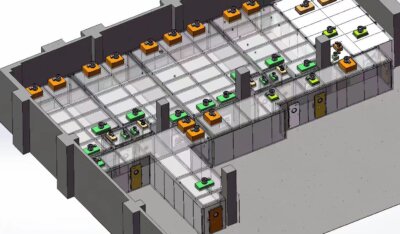
How to Design a Cleanroom?

In the pursuit of perfection in sterile environments, the concept of a cleanroom has become a cornerstone in industries such as pharmaceuticals, biotechnology, and electronics production. These specially designed spaces maintain extremely low levels of airborne particles, dust, and other contaminants, making them crucial for ensuring the integrity of sensitive processes. Here’s a comprehensive guide on how to design a cleanroom, highlighting the innovative solutions offered by QUALIA. Understanding Cleanroom Classifications The first step in designing a cleanroom is to determine its classification based on the acceptable levels of non-viable and viable particulate contamination. This is often governed by regulatory agencies, client organizations, or company protocols. For instance, Federal Standard 209 sets guidelines for particle counts in "At Rest" and "Operational" modes, ensuring the cleanroom

Scroll to Top

Contact Us Now

Contact us directly: [email protected]