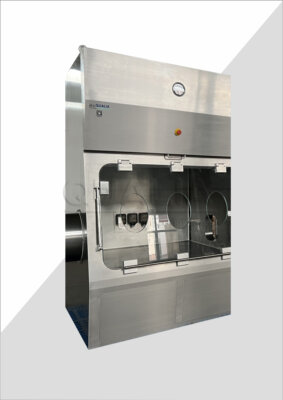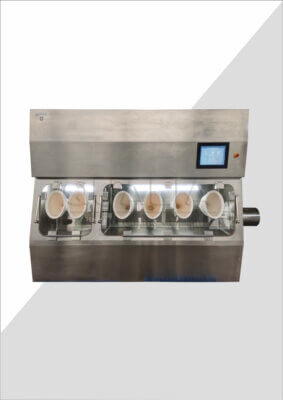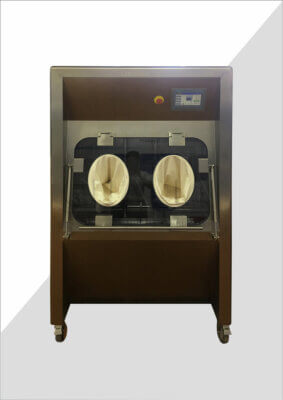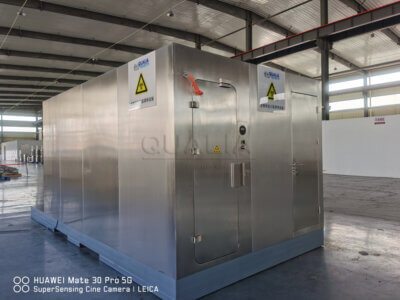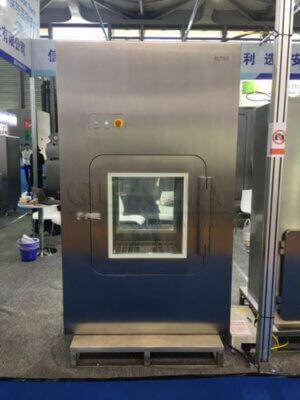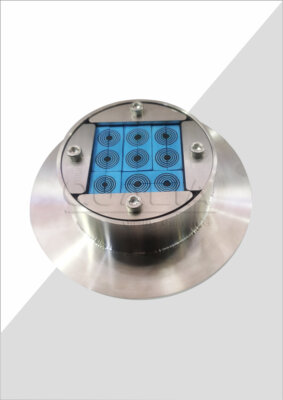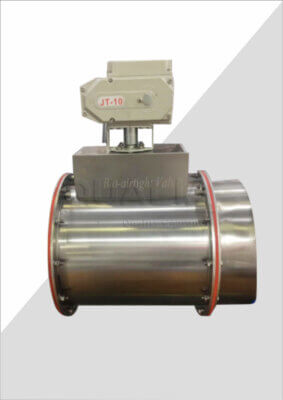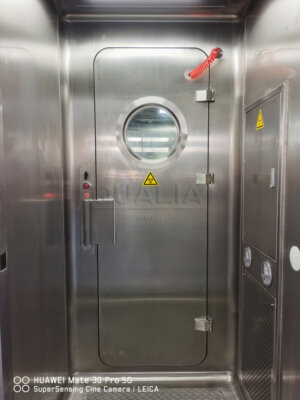

Procurement teams that treat a pass box order as a fabrication purchase routinely discover the gap during IQ/OQ — when the supplier cannot produce revision-tracked drawings, the punch list grows, and the qualification schedule slips by weeks. The damage is not in the unit price; it is in the engineering hours spent correcting documentation that should have been complete at delivery. Selecting a supplier capable of regulated-project execution, not just stainless steel fabrication, is the decision that separates a smooth qualification from one that stalls at commissioning. By the end of this article, you will be better equipped to evaluate supplier evidence, structure a comparable bid, and identify the documentation markers that predict whether a pass box manufacturer will perform through qualification or only through delivery.
Supplier evidence that matters in GMP projects
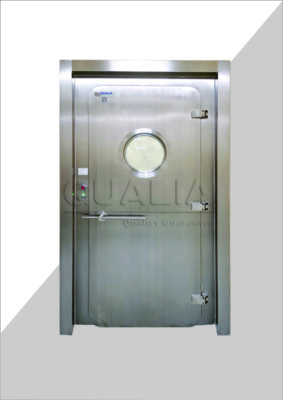
The practical distinction between a fabrication-first vendor and a GMP-capable supplier rarely shows up in a catalogue — it shows up in the evidence a manufacturer can produce before any commercial alignment begins. HEPA H14 filtration rated at 99.99% efficiency at 0.3 µm is a useful design figure for comparing supplier offerings, and when a manufacturer cannot provide the underlying filter test reports to support that figure, it signals that documentation discipline may be weak across the entire project dossier.
Material grade is a planning criterion that separates vendors more clearly than most procurement teams expect. AISI 316L stainless steel provides the corrosion resistance and cleanability that pharmaceutical environments demand, particularly under aggressive cleaning agents. A supplier offering 304 steel without acknowledging the trade-off, or without explaining where 316L is required, is signalling limited familiarity with GMP environments rather than a deliberate cost decision.
Interlock availability and panel integration capability are the less visible differentiators. A manufacturer that can provide both mechanical interlocks — required in ATEX-classified zones where power interruption must not compromise containment — and electronic interlocks with timed sequences and status indicators is demonstrating engineering breadth that a general fabricator typically does not carry. Similarly, the ability to size units to specific wall thicknesses and integrate cleanly with modular, drywall, or sandwich panel construction affects installation planning in retrofit projects where clearances are constrained and rework is expensive.
| Evidence Factor | Що потрібно підтвердити | Чому це важливо |
|---|---|---|
| HEPA H14 filtration (99.99% at 0.3 µm) | Confirm filter efficiency data and test reports | Measurable indicator beyond general claims |
| AISI 316L stainless steel construction | Verify material grade and corrosion resistance | Cleanability and durability in pharmaceutical environments |
| Mechanical and electronic interlock availability | Check both interlock types for ATEX and standard needs | Capability to meet varied regulatory constraints without custom work |
| Custom sizing & panel integration | Confirm sizing to wall thickness and integration with modular, drywall, or sandwich panels | Essential for retrofit planning and installation timeline |
| Optional features (UV-C, Magnehelic gauges, air pressure drain valves, LED lights) | Review completeness of optional engineering features | Indicates mature product engineering and supports validation |
The presence of optional features — UV-C germicidal lights, Magnehelic pressure gauges, air pressure drain valves — is less about those specific items and more about what their availability signals. A manufacturer that has engineered a complete feature set across its product range has worked through the validation implications of each addition. That engineering depth is what predicts whether a supplier can support a qualification protocol or only a factory acceptance test.
Documentation and change-control markers of real maturity
A supplier’s documentation quality before contract award is the most reliable predictor of what the validation dossier will look like after delivery. Technical data sheets that include precise dimensions, stated material grades, filter efficiency data, and tolerance ranges are not a courtesy — they reflect whether a manufacturer operates under controlled document management or produces specifications reactively when requested.
The distinction becomes consequential during qualification. IQ protocols require cross-referencing installed equipment against design documentation. If drawings are undated, revision history is missing, or material callouts are inconsistent between the data sheet and the fabrication record, every discrepancy becomes a punch-list item that requires supplier response. A manufacturer who cannot produce a clean sample dossier at the pre-commercial stage is unlikely to produce one that survives regulatory scrutiny during installation qualification.
Catalogue completeness is a useful indirect proxy for this discipline. Manufacturers who publish detailed model families with clear application guidance, optional configurations, and dimensional data have typically invested in a documentation system that extends to project-specific deliverables. Vendors whose only available documentation is a single-page product sheet, or who produce technical drawings only after a purchase order is placed, are signalling that controlled document release is not a routine capability. That gap does not become visible in a price comparison — it appears when the first revision is needed, when a deviation must be documented, or when an auditor requests design history during a pre-approval inspection.
The practical discipline recommended here is to request a sample dossier before commercial alignment, not after. Ask for a drawing with revision history, a filter test certificate traceable to a specific unit or batch, and a sample IQ protocol or factory test record. The completeness of that package, evaluated before any commercial pressure exists, is a more reliable selection signal than any self-reported capability statement.
Cost tradeoffs between specialist and fabrication-first vendors
The initial unit price comparison between a specialist GMP manufacturer and a general fabricator almost always favours the fabricator — and almost always understates the real cost difference. The mechanism is straightforward: lower-overhead vendors price for fabrication and delivery, while GMP-experienced manufacturers price for documentation, revision management, and qualification support. That overhead difference looks like margin until the punch list arrives.
The more controllable cost variable is in specifying the correct product type at bid stage. Static pass boxes — units with no filtration — are the lowest-cost option, but they are unsuitable for ISO 5 or ISO 6 environments. If the required cleanroom classification on either side of the transfer is not specified in the bid package, suppliers will often quote a static unit because it meets the letter of an underspecified request. Upgrading to an active or dynamic model after bids are returned, or — worse — after procurement, introduces delay and budget revision that a clearly specified RFQ would have avoided entirely.
Semi-active models introduce a different hidden cost: they require an HVAC connection that rarely appears in the unit price but adds installation scope that must be costed separately. Dynamic pass boxes with recirculating integrated fan-filter units eliminate the HVAC ducting requirement, which is a genuine cost advantage in new construction or in spaces where duct routing is difficult, but they introduce ongoing electrical consumption and scheduled filter replacement expenses that shift the lifecycle budget.
| Фактор прийняття рішення | Cost Advantage | Hidden Cost or Risk |
|---|---|---|
| Static pass box (no filtration) | Lowest initial cost | Not suitable for ISO 5-6; upgrade to active/dynamic later incurs cost and delay |
| Semi-active pass box (requires HVAC) | Lower unit cost than fully self-contained | HVAC ducting adds installation scope, often overlooked in bids |
| Dynamic pass box (recirculation, integrated fan/filter) | Eliminates HVAC ducting cost | Adds electrical consumption and scheduled filter replacement expense |
| 304 stainless steel instead of 316L | Material cost saving | Potential corrosion in harsh cleaning environments, earlier replacement, GMP non-compliance |
The material grade decision follows the same pattern. Specifying 304 stainless steel over 316L reduces the unit cost, but in environments where cleaning agents contain chlorinated compounds or where frequent aggressive disinfection is standard practice, corrosion can develop faster than the equipment’s expected service life — creating both a replacement cost and a potential GMP non-compliance at the next facility inspection. The correct decision depends on the specific cleaning regime, but the trade-off needs to be made explicitly, not absorbed by default into the lowest bid.
Experienced GMP manufacturers generally carry higher overhead than fabrication-first vendors, and that overhead reflects the cost of structured documentation, deviation management, and qualification-ready deliverables. In projects where IQ/OQ is on the critical path, the time saved by avoiding punch-list corrections typically offsets that overhead within the first qualification cycle.
Bid-review issues that block clear comparison
Incomparable supplier bids are not usually the result of supplier dishonesty — they are the predictable outcome of an underspecified request. When a bid package does not define the cleanroom classification on each side of the transfer, suppliers respond with products calibrated to different assumptions. A static pass box quoted for a zone one supplier interprets as ISO 7 and an active unit quoted for the same zone by another are not the same product at different prices; they are different products, and comparing them on unit cost produces a misleading result.
The cleanroom class on each side is the most consequential missing specification. Static units are appropriate for ISO 7–8 environments; active and dynamic models are required when either side reaches ISO 5–6. Without that boundary defined in the RFQ, the lowest bid will often describe a product the project cannot actually use, and the revision required to correct it after award creates both schedule and commercial friction.
The interlock specification is a parallel gap. Mechanical interlocks operate without power and are appropriate where ATEX compliance is required; electronic interlocks provide timed sequences, status indicators, and audit trail options that mechanical systems cannot support. A bid that does not specify which type is needed will receive both, making technical comparison harder, or will receive whichever type the vendor defaults to, which may not match the regulatory constraint.
| Пункт специфікації | Risk if Unspecified | Що потрібно уточнити |
|---|---|---|
| Cleanroom class on each side | Bids mix static, semi-active, active, dynamic without matching cleanliness needs | Confirm ISO class (5-6 vs 7-8) for each side |
| Transfer method (manual/trolley) | Inconsistent handling assumptions | Specify manual or trolley-based transfer |
| Час витримки | Missing validation parameter | Define required dwell time in seconds or minutes |
| Filtration grade | Variation in HEPA efficiency offered | Specify HEPA class (e.g., H14) and DOP test requirement |
| Wall type integration | Fabrication mismatches | Clarify drywall, modular, or sandwich panel construction |
| Interlock type (mechanical vs electronic) | Non-ATEX-compliant selection, or missing status indicators | Specify ATEX-safe mechanical or electronic with timed indicators |
The resolution practice that consistently reduces bid friction is to treat the specification document as a checklist that forces structural comparability, not as a description of the desired product. Specifying cleanroom class on each side, transfer method, required dwell time, filtration grade including HEPA class and DOP test requirement, wall type, and interlock type removes the interpretive freedom that produces structurally incomparable responses. A supplier who cannot respond to a fully specified RFQ with complete answers is also demonstrating — at no cost to the project — that their documentation discipline is below the threshold for GMP qualification support.
Qualification-ready execution as the manufacturer threshold
The threshold that separates a qualification-capable manufacturer from a capable fabricator is not material grade or catalogue depth. It is whether the manufacturer designs products and prepares deliverables for regulatory review as a routine output, not as a special request.
ISO 14644-1 provides the particle-count testing framework that defines cleanroom classifications, and EU GMP Annex 1 uses Grades A through D with defined limits for both At Rest and In Operation states. A pass box manufacturer whose equipment is positioned for GMP environments should be able to identify which grade the unit supports, provide performance data to that standard, and supply documentation structured to support the IQ protocol’s requirement to verify installed performance against design specification. This is not a guarantee of regulatory approval — it is the baseline that makes qualification feasible without extensive supplementary testing.
For specific applications in hospital pharmacy and compounding environments, USP <797> compliance introduces additional requirements that not all manufacturers have addressed. This is a context-specific threshold, not a universal one, but for procurement teams sourcing pass boxes for sterile compounding suites, confirming whether a supplier has tested and documented against USP <797> criteria is a critical pre-selection check.
The most direct evidence of qualification-ready design intent is the inclusion of PAO injection ports — also referred to as DOP ports — on HEPA filter housings. These ports allow filter integrity testing using aerosol challenge methods after installation, which is the standard method for confirming that a filter has been installed without bypass or seal failure. A manufacturer that includes these ports as a standard or configured feature is demonstrating that the equipment has been designed for post-installation qualification, not merely for initial factory testing. A manufacturer that omits them, or who adds them only when specifically requested, is indicating that qualification protocols were not part of the original design consideration.
| Qualification Marker | Що перевіряти | Importance for GMP Selection |
|---|---|---|
| ISO 14644-1 and EU GMP Grades A–D compliance | Confirm equipment classification and particle limit data for ‘At Rest’ and ‘In Operation’ | Baseline regulatory qualification for cleanroom pass boxes |
| HEPA efficiency 99.999% at 0.3 µm claim | Require DOP/PAO test evidence, not just datasheet | Exceeding standard H14 requires proof; avoid false claims |
| USP <797> compliance for hospital/pharmacy | Confirm if needed for compounding applications | Critical regulatory requirement that not all manufacturers meet |
| PAO injection (DOP) ports provision | Verify inclusion of test ports for filter integrity tests | Direct evidence manufacturer designs for qualification, not just fabrication |
When suppliers claim HEPA efficiency of 99.999% at 0.3 µm — exceeding the standard H14 figure of 99.99% — that claim requires verification through DOP or PAO test evidence traceable to specific units, not just a datasheet entry. The distinction between a stated specification and a tested specification is the difference between a marketing figure and a qualification data point. Requesting that evidence before award, and confirming that the test methodology is documented and repeatable, is the final check that confirms a manufacturer is operating at the threshold that GMP projects require.
The decision that most directly affects project outcome is not which unit to buy — it is which supplier’s execution model to trust across documentation, revision management, and qualification support. A manufacturer who can produce a sample dossier with DOP-tested filter data, PAO port provision, and revision-tracked drawings before commercial alignment signals that qualification will be supported by structured evidence rather than retrofitted paperwork.
Before issuing a final RFQ, confirm the cleanroom classification on each side of the transfer, the required interlock type, the filtration grade with test method, and the wall construction. Those six specification items determine whether supplier responses are structurally comparable. After bids are received, evaluate documentation quality independently from unit price — a supplier whose response is complete, precise, and traceable to tested performance data is carrying the overhead of GMP competence, and that competence is what the qualification schedule is actually depending on.
Поширені запитання
Q: Does this supplier evaluation approach still apply if the pass box is going into a non-GMP research facility rather than a regulated pharmaceutical environment?
A: The full framework only applies where IQ/OQ qualification is required and regulatory documentation will be audited. For non-GMP research settings without a formal qualification obligation, a fabrication-first vendor may be entirely adequate — the overhead of controlled document release and revision management adds cost that does not return value if no inspector will ever review the dossier. The supplier evidence criteria described here are specifically calibrated to projects where qualification failure carries a schedule and compliance cost.
Q: After selecting a qualified supplier and issuing a purchase order, what should the project team request before fabrication begins?
A: Request a design freeze confirmation package before fabrication starts — specifically, final revision-stamped drawings with material callouts, a confirmed filter test certificate reference tied to the specified unit configuration, and a draft IQ protocol or FAT checklist that cross-references installed equipment against those drawings. This package, agreed before manufacturing begins, prevents the most common punch-list scenario: drawings that do not match the delivered unit because revisions occurred during fabrication without controlled document release.
Q: At what cleanroom classification does a dynamic pass box stop being the right specification, and a more controlled transfer method become necessary?
A: Dynamic pass boxes with integrated fan-filter units are typically the ceiling of appropriate specification at ISO 5. For transfers into ISO 4 environments or Grade A zones under EU GMP Annex 1, the pressure differential management and contamination risk of any pass-through aperture — regardless of filtration grade — often makes a pass box architecturally unsuitable, and rapid transfer ports or isolator-integrated transfer systems become the appropriate solution. If the destination zone is Grade A, confirm with your validation team whether a pass box of any type meets the contamination control strategy requirements before specifying one.
Q: Is there a meaningful performance difference between a supplier claiming 99.99% HEPA H14 efficiency and one claiming 99.999%, and how should that affect the bid comparison?
A: The difference only becomes meaningful if it is supported by DOP or PAO test data traceable to specific units — without that evidence, it is a datasheet distinction, not a qualification data point. For most ISO 6–7 applications, verified H14 at 99.99% is sufficient. The 99.999% figure matters in ISO 5 environments or where the regulatory submission references a specific efficiency threshold. In a bid comparison, treat an unverified 99.999% claim from a supplier who cannot produce test records as equivalent to — or weaker than — a verified 99.99% claim from a supplier with traceable DOP documentation, because the tested figure is what the IQ protocol will rely on.
Q: If two suppliers both pass the documentation and interlock specification checks, what is the deciding factor between a higher-cost GMP specialist and a lower-cost vendor who appears technically capable?
A: The deciding factor is demonstrated regulated-project execution history, not technical specification alone. Request references or redacted project records from comparable GMP or biosafety projects — specifically asking whether the supplier managed and released controlled document revisions during the project, responded to deviations with formal documentation, and delivered a qualification dossier that passed IQ without supplementary testing. A vendor who meets the specification checklist but has no trackable history of supporting a qualification through to regulatory acceptance is carrying an execution risk that does not appear in the unit price or the bid documentation.
Пов'язаний вміст:
- Виробники статичних турнікетів: Кваліфікаційні критерії постачальників
- Фармацевтична перепустка: Технічні характеристики та сертифікація класів
- Пропускна коробка GMP: Стандарти дизайну матеріалів та документації
- Виробники динамічних турнікетів: Контрольний список можливостей
- Пропускний пункт у фармацевтиці: вимоги GMP та посібник з конфігурації
- Вибір постачальника генераторів VHP | Критерії оцінки постачальника та найкращі практики
- Типи боксів пропуску: Динамічний статичний УФ-ВХП та варіанти біобезпеки
- Бокс для пропуску в чисте приміщення: Вимоги до вибору та інтеграції
- Лабораторна перепустка: Конфігурація для дослідницьких та випробувальних центрів