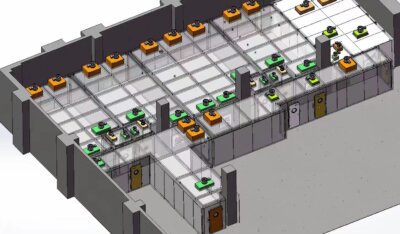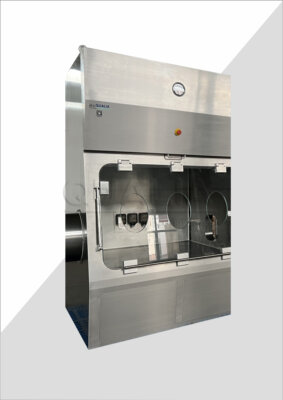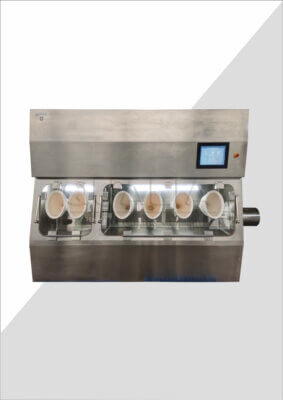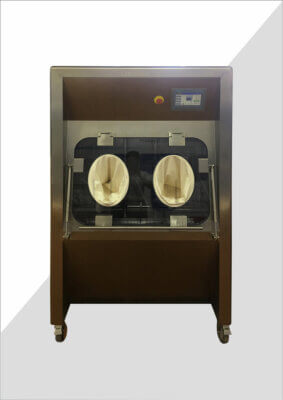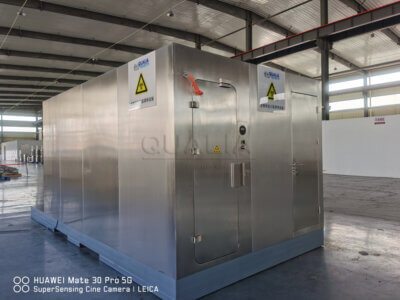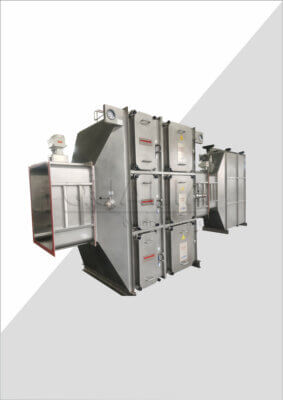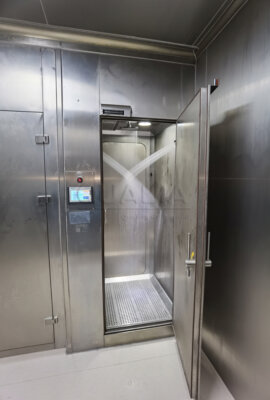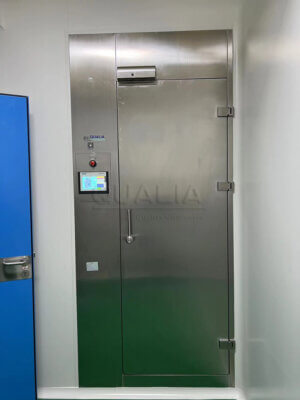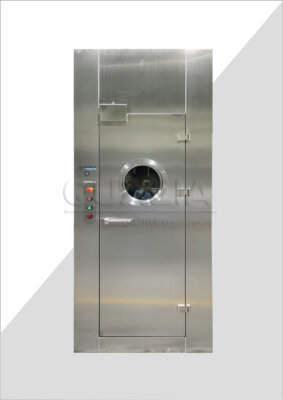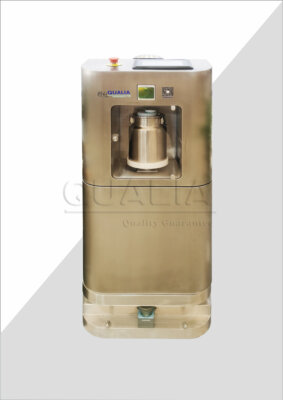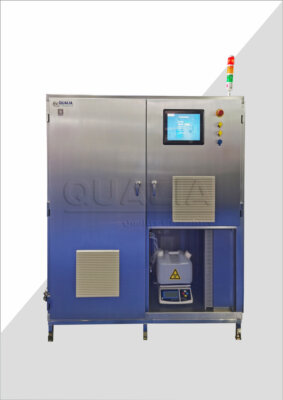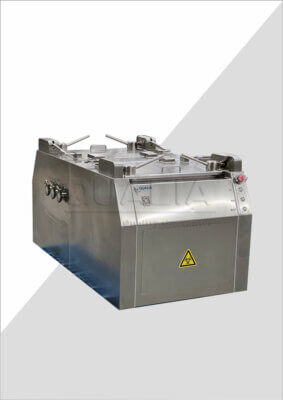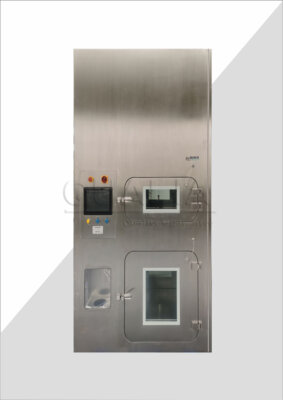
Procurement teams that select a pass box by product name rather than by the contamination problem it is meant to solve often discover the error at commissioning, when a UV-equipped unit fails to meet the decontamination documentation a GMP audit requires. The rework is not a hardware swap — it is a full re-specification, re-procurement, and in some cases a facility modification to accommodate the utilities and airflow a dynamic or VHP system needs. The underlying judgment that prevents this is not technical complexity; it is agreeing early on whether the transfer scenario demands passive segregation, cleanliness support, or repeatable kill assurance, because each of those demands maps to a different category of equipment. What follows will help you distinguish the categories by their actual protection role, identify the threshold conditions where one type becomes functionally inadequate, and recognize the maintenance and qualification commitments that come with moving up the capability scale.
Transfer-control problems that define pass box categories
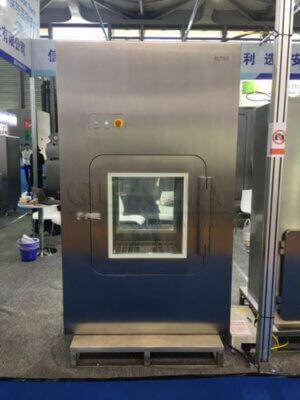
Every pass box is an answer to a transfer-control problem, but the problem varies significantly by the cleanliness relationship between the rooms on each side of the unit. When both rooms share the same ISO classification, the dominant risk is cross-contamination through the opening event itself — personnel moving through doors, or unsecured materials exchanging environments. A static pass box with a mechanical interlock addresses this directly: only one door opens at a time, so the two environments are never simultaneously exposed. No airflow or filtration is required because neither side poses a contamination gradient threat to the other.
The problem changes when a cleanliness gap exists. A one-class ISO difference introduces the possibility that air from the lower-class room migrates into the higher-class room during a transfer. Whether a static box with UV is adequate in that scenario is risk-dependent — it is not a universal fit. Multiple-level differences, such as transfers between an ISO 8 corridor and an ISO 5 aseptic core, create a sustained contamination pressure that passive construction alone cannot reliably oppose. That gap demands a dynamic HEPA pass box that actively maintains a pressure differential and delivers filtered airflow inside the chamber during the transfer window.
The practical value of framing selection around the cleanliness gap rather than around product categories is that it gives teams a measurable criterion before they open vendor catalogs. Specification meetings that skip this step tend to anchor on cost or familiarity, then retrofit the protection logic afterward — which is where mismatches originate.
| Cleanliness Gap Between Rooms | Recommended Pass Box Type |
|---|---|
| Same ISO class (no gap) | Static pass box with interlock |
| One ISO class difference | Static pass box with UV (risk-dependent) |
| Multiple-level difference | Dynamic HEPA pass box |
The gap-to-type mapping in the table above should be treated as a planning criterion grounded in design practice, not as a formally codified regulatory ladder. Its value is in forcing early agreement on the magnitude of the cleanliness difference rather than leaving that question open until qualification.
Static and dynamic models compared by protection role
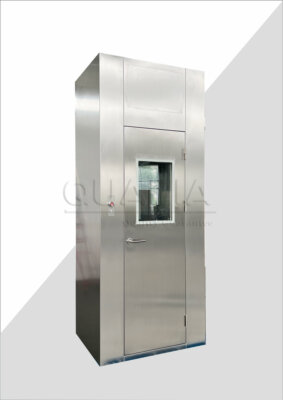
The protection mechanism of a static pass box is entirely passive: sealed construction combined with a door interlock that prevents simultaneous access from both sides. There is no airflow, no filtration, and no internal cleanliness class — the chamber is simply a controlled barrier. That is not a deficiency in the context it is designed for; it is an appropriate match for same-class transfers where the transfer event, not a contamination gradient, is the primary risk. Static boxes are low-maintenance, operationally quiet, and carry long service lives because they have no mechanical air-handling components to sustain.
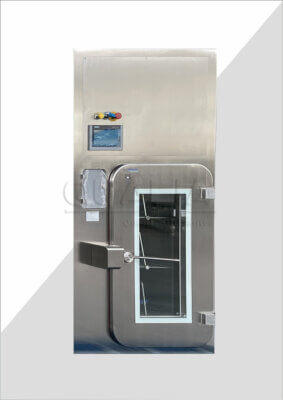
Dynamic HEPA pass boxes operate on an entirely different principle. Internally, they generate unidirectional laminar airflow through HEPA filtration, creating a local environment that can reach ISO Class 5 or higher — the cleanliness level associated with Grade A/B pharmaceutical environments. Positive pressure inside the chamber prevents air from the lower-class side from entering during the transfer. This is the specific mechanism that makes dynamic boxes suitable for aseptic and sterile workflows where a static unit would be functionally inadequate regardless of how well it is sealed.
The trade-off that teams consistently underweight is not the upfront cost difference but the operational and qualification commitment that dynamic systems carry. HEPA filter replacement cycles, blower maintenance schedules, utility loads, and the documentation required to qualify and re-qualify airflow performance are ongoing obligations that static boxes never create. Selecting a dynamic box for safety margin without budgeting for that workload produces friction across the operational life of the equipment, not just during installation.
| Аспект | Static Pass Box | Dynamic HEPA Pass Box |
|---|---|---|
| Protection mechanism | Passive barrier: sealed construction and door interlocking | Active barrier: laminar flow with HEPA filtration |
| Airflow / filtration | Ні. | HEPA-filtered unidirectional airflow |
| Clean environment | No controlled cleanliness class | ISO Class 5 (Grade A/B) or higher |
| Позитивний тиск | Ні. | Yes, prevents ingress from lower-class area |
| Maintenance and utilities | Low maintenance, minimal noise, long service life | Higher utilities, maintenance, qualification workload |
The ISO Class 5 capability listed for dynamic pass boxes is a design performance figure indicating what the equipment can achieve under proper installation and maintenance conditions. It reflects the maximum achievable performance of the category and does not eliminate the qualification work required to confirm and document that performance in a specific facility context.
UV limitations in regulated transfer environments
UV-C lamps operating at 254 nm reduce microbial load on exposed surfaces inside the pass box chamber. That is a meaningful supplemental control in the right context, and it is the only thing UV reliably delivers. The common planning error is treating UV as an upgrade path from a static box to something closer to a dynamic unit — as if adding a lamp produces an intermediate tier of decontamination capability. It does not. UV does not address airborne contamination, does not generate a controlled cleanliness class inside the chamber, and does not substitute for HEPA filtration or cleaning SOPs for critical transfers.
The risk surface that UV misses is precisely what matters most in higher-grade cleanroom environments. A UV pass box is often suitable for medium- to high-risk areas where surface microbial reduction provides meaningful protection and the regulatory expectations do not require a validated sporicidal claim or documented kill assurance. Once a workflow operates in a stricter sterile environment — or where regulatory reviewers expect evidence of reproducible decontamination — UV exposure alone is difficult to defend as a primary control. The gap is not always obvious during specification, which is why UV pass boxes sometimes get approved for applications that actually require a dynamic HEPA unit. The mismatch typically surfaces during qualification or audit, after procurement is closed.
There is also an operational dimension that is easy to overlook: UV-C lamps carry a typical service life of approximately 4,000 hours, and their output degrades before visible failure. Without a monitoring and replacement procedure, a team may operate under the assumption that UV decontamination is active when lamp performance has already fallen below useful levels. This is a maintenance planning obligation, not a minor accessory detail.
| Обмеження | What It Means | What to Clarify |
|---|---|---|
| Surface-only action | UV-C (254 nm) reduces microbial load on surfaces but does not address airborne contamination | Clarify that UV does not replace HEPA filtration or cleaning SOPs for critical transfers |
| Insufficient for sterile environments | UV pass boxes are suitable for medium to high-risk areas, but stricter sterile or high-grade cleanroom workflows typically require dynamic HEPA | Confirm risk level of your transfer environment and whether UV alone meets regulatory expectations |
| UV lamp service life | Lamps have a typical service life of 4,000 hours; performance must be monitored and faulty lamps replaced | Verify monitoring and replacement procedures to sustain decontamination effectiveness |
The three limitations in the table above are not hypothetical concerns — they are the specific points where UV-based transfer control fails to hold under scrutiny. Confirming which of these conditions applies to a given workflow is a more useful pre-specification exercise than comparing lamp wattage or chamber size.
VHP and biosafety designs matched to higher-risk use
When the transfer risk involves biohazardous materials, potent compounds, or live organisms that require containment rather than simply cleanliness support, the equipment category shifts in kind, not just in degree. VHP (vaporized hydrogen peroxide) pass boxes introduce a validated sporicidal agent into the chamber as part of a defined cycle, achieving a repeatable log-reduction in microbial and spore populations that surface UV cannot approach. The distinction matters at qualification: VHP cycles can be validated with biological indicators and documented against a reproducible protocol, which creates the kill-assurance evidence record that aseptic and sterile operations require. UV surface exposure does not produce that evidence.
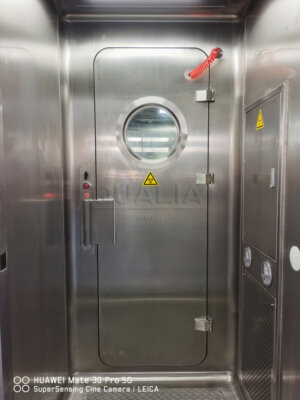
Biosafety pass boxes used in research and BSL-level environments address a different but related problem — not just decontamination, but physical containment integrity during the transfer event. Rapid Transfer Port (RTP) designs maintain a sealed connection between the chamber and the receiving enclosure through a locking mechanism that prevents the hazardous environment from being exposed during material handoff. The WHO Laboratory Biosafety Manual 4th Edition frames the principle of containment as the governing concern in these environments, and the RTP locking design reflects that principle in hardware. In practice, biosafety labs handling higher-risk workflows often combine dynamic HEPA pass boxes with supplemental UV as an added control layer — not as a replacement for HEPA filtration, but as a secondary measure for surface reduction at the margin.
The planning implication is that VHP and biosafety-specific designs are not premium variants of a standard pass box; they are responses to qualitatively different transfer problems. A VHP Pass Box is appropriate when the process requires a documented kill claim as part of its contamination control strategy. A Скринька для перепусток з біозахисту is appropriate when physical containment integrity during transfer is the primary requirement — where breach of the sealed pathway is the failure mode being engineered against, not merely surface contamination. Conflating these two problems at specification leads to equipment that meets one requirement while leaving the other unaddressed. For environments with hoods and biosafety cabinets requiring full decontamination before removal, a dedicated Bio Safety Hood Decontamination Chamber addresses the specific geometry and cycle requirements that a standard pass box chamber cannot accommodate.
Required kill assurance as the category selection threshold
Kill assurance is the criterion that determines whether a static or UV model remains viable or is functionally excluded from consideration. The term is worth defining precisely: kill assurance is the ability to demonstrate, with documented and repeatable evidence, that a microbial population has been reduced to an acceptable level through a specific intervention. Passive segregation — what a static interlock pass box provides — makes no kill claim and is not designed to. That is the right answer for same-class material transfers where contamination control is achieved through barrier integrity, not active decontamination. The problem arises when a process that actually requires kill assurance is specified with equipment that only offers segregation, because the documentation gap will not become visible until qualification or audit.
The progression from basic segregation to surface decontamination to repeatable kill assurance is a planning criterion hierarchy, not a formally codified regulatory ladder. Its practical use is as a specification anchor: it forces a team to name the required protection level before selecting equipment, rather than selecting equipment and then rationalizing the protection level afterward. In pharmaceutical aseptic and sterile manufacturing, GMP design practice points toward dynamic laminar flow HEPA pass boxes as the expected standard — not because static units are prohibited by name, but because the documentation and performance expectations of those environments cannot be met by equipment that provides no filtration, no pressure control, and no kill evidence.
The downstream consequence of undersizing kill assurance is rarely recoverable at low cost. A UV pass box installed in a workflow that requires validated decontamination will need to be replaced, not upgraded. The utility connections, spatial footprint, qualification protocol, and cycle validation requirements of a VHP or dynamic system are different enough from a UV unit that rework is effectively a re-procurement. Teams that treat the selection threshold as a preference rather than a structural constraint tend to discover this at the worst possible project stage.
| Required Kill Assurance Level | Типове застосування | Тип скриньки для перепусток |
|---|---|---|
| Basic segregation (no kill claim) | Material transfer between equal-class cleanrooms | Static (mechanical interlock) pass box |
| Знезараження поверхні | Transfer in medium-risk areas | Clean (HEPA) pass box; UV may supplement but not replace |
| Repeatable kill assurance (sterile/aseptic) | Aseptic processing, sterile manufacturing (GxP) | Dynamic laminar flow (HEPA) pass box |
The three tiers in the table above define the selection threshold by consequence rather than by product name. Once an application sits in the third row — repeatable kill assurance for aseptic or sterile processing — the first two rows are no longer viable options regardless of cost or schedule pressure. For teams building or auditing contamination control strategies, the Advanced Biosafety Pass Boxes overview provides additional operational context for how higher-assurance designs are applied in practice.
The most useful step before comparing specific models is to write down the contamination problem the pass box is expected to solve — including the ISO class relationship between the two rooms, whether the transfer involves hazardous or biologically active materials, and whether the process requires a documented kill claim. That written statement will resolve the category question for most applications before a single product specification is reviewed.
Where the selection does require dynamic, VHP, or biosafety-specific equipment, the qualification and maintenance obligations attached to those categories should be budgeted and scheduled as part of the same procurement decision. The protection capability of those systems is real, but it is conditional on sustained filter integrity, cycle validation, and lamp or generator performance — none of which are passive or self-maintaining. Specifying the right equipment category and then underresourcing its operational requirements produces the same practical outcome as specifying the wrong category from the start.
Поширені запитання
Q: Our facility has no dedicated biosafety classification — does the pass box selection framework still apply?
A: Yes, because the framework is built around the cleanliness gap between two rooms, not the facility’s biosafety designation. If you can identify the ISO class on each side of the transfer point and whether the material being transferred carries a biological or contamination risk, the selection logic applies directly. Facilities without formal BSL ratings still generate cleanliness gradients and transfer events that create contamination pressure, and those conditions determine which category of equipment is appropriate regardless of how the facility is labeled overall.
Q: After the pass box type is selected, what should the procurement team do before sending an RFQ?
A: Write a brief contamination control statement that specifies the ISO class relationship between the two rooms, whether the transfer involves hazardous or biologically active materials, and whether a documented kill claim is required by the process or its regulatory context. This statement should be agreed on internally before any vendor contact, because it converts the category decision into selection criteria that vendors can respond to accurately — and it prevents the specification drift that occurs when teams anchor on product names rather than on the protection problem those names are supposed to solve.
Q: At what point does a dynamic HEPA pass box become insufficient on its own and require VHP capability as well?
A: When the process requires a documented, repeatable sporicidal kill claim rather than cleanliness maintenance alone. Dynamic HEPA pass boxes achieve ISO Class 5 local environments and control airborne contamination effectively, but they do not generate kill-assurance evidence against spores. Once a workflow — typically aseptic fill, sterile drug product manufacturing, or high-risk research involving spore-forming organisms — requires biological indicator validation and cycle documentation as part of its contamination control strategy, HEPA filtration alone cannot satisfy that requirement and VHP or equivalent sporicidal intervention becomes necessary.
Q: Is a UV pass box ever the right choice over a dynamic HEPA unit on cost grounds when the ISO class gap is only one level?
A: Only if the risk assessment explicitly supports it and the regulatory context does not require documented kill assurance. A one-class ISO difference does not automatically mandate a dynamic unit, and if the materials being transferred are not sterile-critical and the process carries no GMP documentation requirement for decontamination performance, UV surface reduction may be defensible as the primary control. The decision ceases to be cost-driven the moment the workflow enters a sterile or aseptic classification, at which point UV cannot produce the qualification evidence required regardless of the size of the cleanliness gap or the budget available.
Q: How significant is the long-term operational cost difference between a static and a dynamic pass box compared to the upfront price gap?
A: For most facilities, the operational gap is more consequential over the equipment lifetime than the purchase price difference. Static pass boxes carry no air-handling components, which means no HEPA filter replacement cycles, no blower maintenance, no utility load for continuous filtration, and no recurring airflow qualification work. Dynamic systems require all of these on ongoing schedules. Teams that select a dynamic box for perceived safety margin without budgeting the qualification, maintenance, and utility obligations often find that the total cost of ownership significantly exceeds their initial estimate — and that the qualification workload in particular creates project-phase friction that compounds beyond the hardware cost alone.
Пов'язаний вміст:
- Types of Pass Box in Pharma: Static Dynamic UV or VHP?
- Pass Box in Pharma: GMP Requirements and Configuration Guide
- Laboratory Pass Box: Configuration for Research and Testing Facilities
- Pass Box in Microbiology Lab: Contamination Prevention Features
- Cleanroom Static Pass Box: Interlock and Classification Requirements
- Cleanroom Pass Box: Selection and Integration Requirements
- Скринька для перепусток з біологічної безпеки: Типи та посібник з вибору для застосування BSL
- Pharmaceutical Pass Box: Grade Specifications and Certifications
- Ізолятор або бардачок OEB4: Що підходить саме вам?