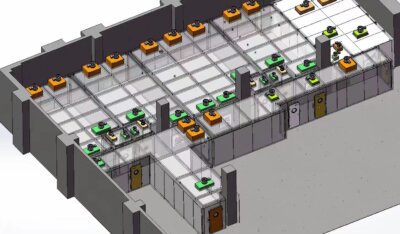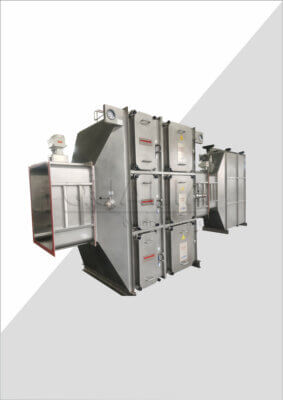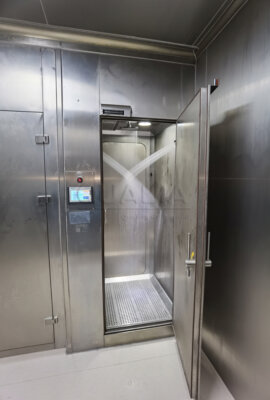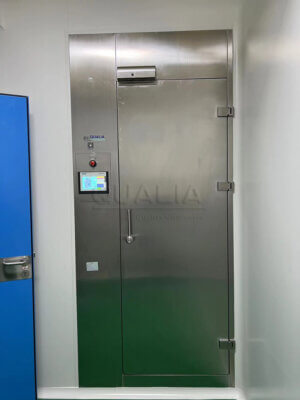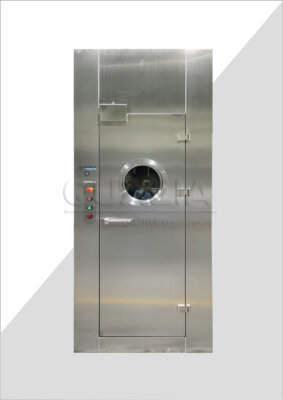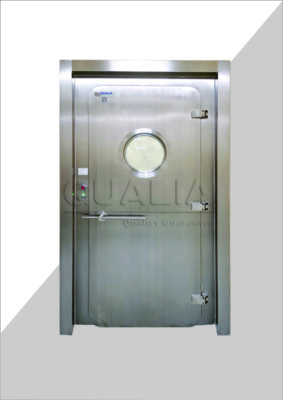

Most BSL-3 pass box procurement failures don’t start with the wrong hardware — they start with an undefined transfer boundary in the user requirement specification. When a project team hasn’t specified whether the chamber is protecting the lab suite, the corridor, or both directions simultaneously, the downstream consequences arrive later: airtightness targets are set without a clear threat model, interlock logic is configured without knowing which door is the containment side, and decontamination validation lands in a gap between the equipment supplier, the BMS integrator, and the biosafety officer with no assigned owner. The qualification timeline then stalls, sometimes by months, because no one can produce a validated decontamination cycle protocol for a unit that was installed with the interface port but without an agreed-upon procedure. Understanding where the engineered containment envelope ends and procedural reliance begins is the judgment that changes every specification decision that follows.
BSL-3 transfer boundaries that shape pass box specs
The most consequential design decision is also the one most often deferred: defining the direction and scope of the containment obligation at the transfer point before any hardware is specified. A pass box in a BSL-3 application can be configured to protect the clean corridor from suite contamination, to protect the suite from external ingress, or to hold a true bidirectional pressure boundary — and each of those functions produces meaningfully different airtightness requirements, sealing strategies, and interlock logic.
The CDC BMBL 6th Edition is clear that BSL-3 operations require directional containment at all transfer points, not just at the primary barriers. That principle doesn’t prescribe a specific sealing mechanism, but it does mean that the chamber must reliably maintain the boundary condition regardless of transfer direction. Some design approaches use mechanical sealing at the door frame; others add inflatable seals that activate under pressure to close residual gaps between the door and housing. Either can work, but the choice should follow from the pressure differential the chamber will be asked to hold, which in turn follows from the suite design specification — not from a catalog default.
The practical mistake is treating the pass box as a procurement line item independent of the suite pressure cascade. If the suite operates at a specified negative pressure relative to the corridor, the pass box structural envelope needs to maintain integrity within that cascade, not just at ambient. A chamber specified only to common interlock and clean-room particulate standards won’t necessarily hold at the negative pressures a BSL-3 suite generates under normal ventilation. Clarifying the transfer boundary in the URS first means that airtightness targets, seal selection, and structural pressure resistance requirements follow from the same documented decision — and can be audited as a coherent specification rather than assembled post-procurement.
Interlock logic required for containment discipline
Door interlock is necessary but frequently overweighted as the primary containment measure. The interlock prevents both doors from opening simultaneously, which preserves the pressure boundary and limits aerosol escape — but it only addresses that one failure mode. The more common operational gap is what happens after a contaminated item is placed in the chamber and before the external door is authorized to open. Without an engineered decontamination sequence in that interval, the interlock is preventing the wrong failure while the actual contamination risk moves through the transfer.
Within the interlock mechanism itself, two implementation choices carry different downstream implications. Solenoid valve-based locks integrate well with pneumatic or pressure-driven control systems and are generally compatible with continuous-purge designs. Electric plug-in locks are simpler to install and maintain but depend more directly on stable power supply and controller logic. The power-failure behavior is the most important edge case: a correctly designed fail-safe configuration releases electromagnetic door locks on power loss to prevent personnel entrapment, but teams should confirm during design review that this release behavior doesn’t simultaneously create an uncontrolled path through the chamber. The fail-safe logic needs to be traceable to the facility’s emergency power and pressure control response, not treated as an independent feature.
Audible and visual alerts — a buzzer and indicator light activated when one door opens — reinforce discipline by notifying the operator on the opposite side to hold position, but these signals only function as a containment measure when operators are trained to respond to them consistently. In high-throughput operations, alert fatigue is a realistic degradation risk. If the containment argument relies on staff response to the buzzer rather than on a physical or software-enforced hold, the design has shifted from engineered control to procedural control — a distinction that matters during biosafety review.
| Функція блокування | Specification/Behavior | Чому це важливо для стримування |
|---|---|---|
| Power failure response | Electromagnetic door locks release automatically for safe exit. | Prevents personnel entrapment while maintaining fail-safe containment discipline. |
| Door-open alert | Buzzer sounds and indicator light notifies the opposite side when a door opens. | Reinforces interlock discipline by alerting operators to avoid simultaneous door opening. |
| Implementation method | Solenoid valve or electric plug-in lock, selected based on facility requirements. | Allows integration that matches existing infrastructure; choice affects reliability and control logic. |
Decontamination methods used before material release
The outgoing decontamination sequence is where most BSL-3 pass box specifications are weakest, and it is the gap that most consistently delays commissioning. A chamber with a VHP interface port, a disinfection injection port, and a verification port has the built-in capability to support a validated sterilization cycle — but those ports are not a validated cycle. The distinction matters because at commissioning, the question won’t be whether the hardware is present; it will be whether a documented cycle protocol exists, who owns it, and what evidence demonstrates that a defined contact time and concentration achieved the required log reduction inside the loaded chamber.
VHP decontamination is well-suited for pass box applications because vaporized hydrogen peroxide is effective against the range of biological agents relevant to BSL-3 operations, leaves no toxic residue at appropriate aeration concentrations, and can be delivered through a generator connection at the interface port without manual handling of liquid sterilants. The verification port is the functional complement to the injection port: it allows sampling or sensor placement to confirm that the cycle conditions were actually achieved inside the chamber during a specific run, not just at the generator output. Skipping verification port use during cycle development produces cycle parameters that may perform in an empty chamber but drift in a loaded one.
Self-cleaning fan filtration achieving A-level cleanliness addresses particulate burden but does not provide microbial decontamination against the agents driving the BSL-3 classification. It is appropriate when the transfer involves items that need particulate-controlled handling before entering the suite rather than items exiting a contaminated space. Teams should be explicit in the URS about which direction of transfer — inbound or outbound — requires what decontamination method, because conflating particulate control with biocontamination control produces a procedure that satisfies one requirement while creating a false assurance about the other.
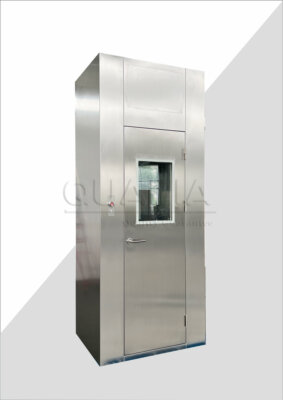
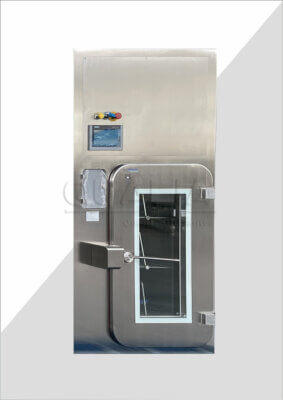
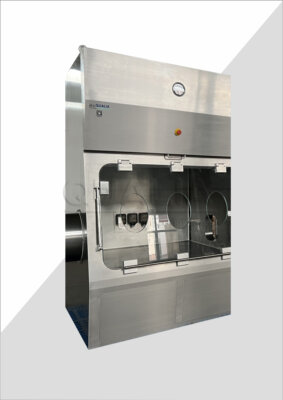
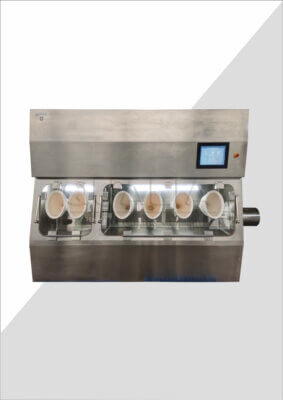
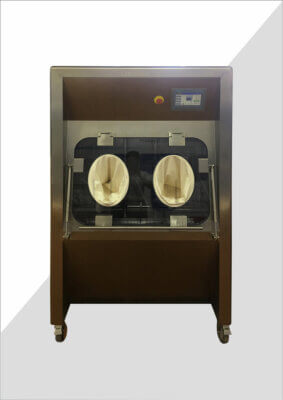
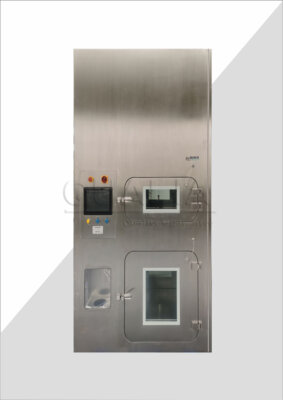
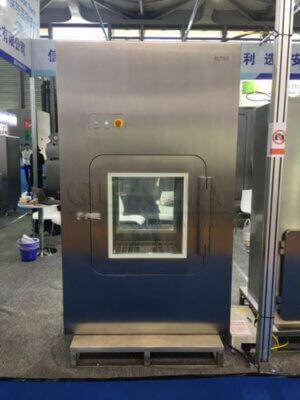
For projects evaluating purpose-built transfer systems, the VHP Pass Box integrates the VHP interface, injection, and verification ports as a configured system rather than field-added components — a relevant distinction when cycle validation timelines are already constrained.
| Функція знезараження | Мета | Ключова деталь |
|---|---|---|
| VHP disinfection interface | Sterilize items inside the chamber with vaporized hydrogen peroxide. | Connection port allows coupling an external VHP generator. |
| Disinfection injection and verification ports | Inject sterilant and verify cycle effectiveness. | Built-in ports enable both injection and validation of decontamination. |
| Self-cleaning fan | Remove particulates to reach A-level cleanliness. | Provides an alternative method for particulate decontamination when chemical sterilization is not required. |
Integration gaps between chamber design and suite systems
A pass box arrives as a standalone unit. It becomes part of a BSL-3 infrastructure only when the interlock logic, decontamination sequencing, alarm outputs, and monitoring data are connected to the suite’s control and monitoring systems. That integration step is routinely underscoped at procurement, and the gap between the chamber’s available interface capabilities and what the suite BMS is actually configured to receive is one of the most consistent sources of commissioning delay.
PLC communication through RS232, RS485, or TCP/IP gives the chamber the technical capability to exchange data with a suite BMS or central monitoring platform. Whether that exchange actually happens depends on decisions that need to be made during project scoping, not during installation: which protocol the BMS requires, who owns the interface configuration on each side, and what data the BMS is expected to log and alarm on. These are not hardware questions — they are project scope and responsibility questions that should be resolved in the design review, not discovered during functional testing.
Real-time monitoring of temperature, humidity, and pressure differential inside the chamber supports continuous parameter oversight, but the value of that monitoring depends entirely on whether the alarm thresholds are integrated into the facility’s alarm response plan. A pressure depression alarm at the chamber level — flagging when the internal pressure drops below a defined threshold — only contributes to containment assurance if the BMS acknowledges it, logs it, and triggers an escalation response. If the alarm fires locally but isn’t integrated into the facility monitoring system, it produces a record gap that will surface during audit.
| Можливість інтеграції | What It Provides | What to Clarify in Project Scope |
|---|---|---|
| PLC communication (RS232, RS485, TCP/IP) | Enables connection to suite BMS and control systems. | Required protocol, interface ownership, and who configures the data exchange. |
| Real-time monitoring of temperature, humidity, pressure | Allows continuous parameter oversight and alarm integration. | Monitoring points, expected ranges, and integration with facility monitoring/alarm logic. |
| Pressure depression alarm (<0.15 MPa) | Alerts operators to pressure loss that could compromise containment. | Alarm setpoints, escalation rules, and whether the BMS must acknowledge and log the alarm. |
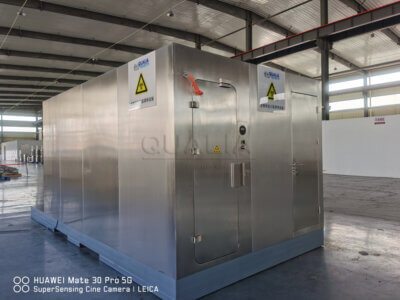
The clearest signal that integration scope was underestimated is when the biosafety officer, the BMS integrator, and the pass box supplier are each waiting on the others to define alarm setpoints and escalation logic. Assigning integration ownership explicitly — at the URS stage, not at commissioning — is the structural fix. For teams building new BSL-3 infrastructure, reviewing how modular system designs address this coordination problem early can help scope the integration work realistically; the Модульна лабораторія BSL-3/BSL-4 offers one reference for how suite-level systems can be pre-integrated.
Dependence on built-in decon as the BSL-3 specification threshold
The decision point that separates a simple interlock pass box from a BSL-3-grade transfer unit is whether the containment argument depends on engineered decontamination or on staff discipline at the transfer point. That threshold is not primarily about cost or feature count — it is about what the biosafety risk profile at the specific transfer point actually requires, and whether a procedural control is a defensible primary barrier for that risk level.
Structural and airtightness performance specifications define the minimum hardware baseline. An air leakage rate below 0.5% vol/h at –500 Pa and a structural pressure resistance at or above 2500 Pa are design figures that indicate whether a chamber can hold the pressure boundary a BSL-3 suite imposes on it. These are measurable, test-verifiable parameters — not implicit in the appearance of the hardware, and not equivalent to the cleanliness classifications used in pharmaceutical cleanroom design. They need to be confirmed through factory testing documentation and ideally through a third-party verification report, not assumed from product category labeling. The broader containment performance framework established in standards like GB 50346-2011 provides the reference context for why structural and airtightness performance are treated as primary design obligations at the transfer boundary, rather than secondary considerations.
| Параметр | Вимоги | Верифікація |
|---|---|---|
| Air leakage rate at -500 Pa | <0.5% vol/h | Confirm via factory test and third-party verification report. |
| Structural pressure resistance | ≥2500 Pa | Confirm structural design specifications and test documentation. |
| Валідаційна документація | 3Q (IQ/OQ/PQ) documentation available | Ensure documentation covers decontamination cycle validation, interlock logic, and alarm functionality. |
The 3Q validation documentation — IQ, OQ, and PQ — provides a compliance baseline, but it is a baseline for site-specific execution, not a substitute for it. A pass box with available 3Q documentation has a defined documentation structure; whether that structure covers the actual decontamination cycle, interlock behavior, and alarm functionality for a specific installation depends on how the site-level validation scope was defined and executed. Teams that treat documentation availability as equivalent to validation completion create an audit exposure that is entirely avoidable by assigning validation ownership at project initiation rather than at handover. Higher-control designs carry the cost and maintenance commitment of integrated decon and PLC-connected monitoring — but they eliminate the need to defend procedural reliance on a risk category where that defense is structurally difficult to sustain.
For a practical overview of how built-in decontamination and interlock capabilities are implemented in purpose-built transfer units, the Скринька для перепусток з біозахисту specification documentation provides a useful hardware reference point alongside the design decisions covered here.
The clearest pre-procurement check for a BSL-3 pass box project is whether three things are defined in writing before hardware is specified: the transfer boundary direction and pressure obligations, the decontamination method and validation ownership for each transfer direction, and the integration scope for alarms and BMS communication. If any of those three items is still open when procurement begins, the cost of resolving it will be higher after the unit is installed than it would have been at the URS stage.
The structural and airtightness figures — leakage rate, pressure resistance, and the validated decontamination cycle — are the measurable design thresholds that determine whether a chamber is genuinely spec’d for BSL-3 conditions or just configured with BSL-3-adjacent features. Confirming those figures in factory test documentation, third-party verification reports, and site validation scope is the concrete next step before any commissioning timeline is finalized.
Поширені запитання
Q: What happens if the BSL-3 pass box decontamination cycle was validated on an empty chamber but routine transfers involve loaded configurations?
A: An empty-chamber validation is insufficient for BSL-3 transfer operations — cycle parameters that achieve the required log reduction in an unloaded chamber will often fail to do so under loaded conditions because item geometry, mass, and material density affect VHP penetration and contact time. The verification port exists specifically to allow sensor placement during cycle development under representative load conditions. Any cycle protocol used for ongoing operations should be developed and documented with a worst-case load configuration, and the validation scope should explicitly state this boundary. Using empty-chamber data for loaded transfers creates an audit exposure that is difficult to defend during biosafety review.
Q: At what point does procedural discipline become an inadequate substitute for engineered containment at a BSL-3 transfer boundary?
A: Procedural controls become inadequate as the primary containment argument when the consequences of a single operator error are an uncontrolled release of a BSL-3-classified agent into a shared corridor or uncontrolled space. If the only barrier preventing that outcome is consistent staff response to an audible alert or a trained sequence that isn’t enforced by hardware or software, the design has crossed the threshold where biosafety review will require an engineered control instead. The practical indicator is straightforward: if a reviewer asked what physically prevents the external door from opening before decontamination is complete, and the honest answer involves human judgment rather than a locked state enforced by the interlock or PLC sequence, the containment argument depends on discipline rather than engineering.
Q: Should a BSL-3 pass box be specified before or after the suite pressure cascade design is finalized?
A: Pass box specification should follow suite pressure cascade finalization, not precede it. The chamber’s airtightness targets, seal selection, and structural pressure resistance requirements are directly derived from the pressure differential the suite imposes on the transfer boundary. Specifying the chamber before those parameters are fixed means the hardware may be selected against assumptions that change during detailed design — leaving the installed unit either over- or under-engineered for the actual operating condition. The URS for the pass box should reference the confirmed suite pressure figures as input constraints, not treat them as variables to be resolved after procurement.
Q: How does a team determine whether a solenoid valve interlock or an electric plug-in lock is the right implementation for their facility?
A: The selection should be driven by the facility’s control architecture and emergency power design rather than by the simpler installation of one option over the other. Solenoid valve-based locks are more compatible with pneumatic or pressure-integrated control systems and tend to be better suited for continuous-purge chamber designs where pressure-state data is already being managed at the controller level. Electric plug-in locks are appropriate where the control system is straightforward and power supply is stable and backed by UPS with confirmed response times. The critical evaluation point for either option is the fail-safe behavior under power loss — specifically whether automatic door release on power failure creates an uncontrolled path through the chamber given the facility’s emergency ventilation and pressure response sequence.
Q: Is third-party verification documentation from the manufacturer sufficient to satisfy site qualification, or does a separate site-level validation need to be conducted?
A: Factory third-party verification and available 3Q documentation establish a baseline structure but do not substitute for site-level validation. Factory testing confirms that the unit met its design specifications under controlled conditions at the point of manufacture; it does not confirm that the installed unit performs to those same parameters within the specific suite pressure cascade, BMS alarm configuration, and decontamination cycle protocol of the receiving facility. Site IQ, OQ, and PQ need to address the actual installation conditions, including the integrated interlock behavior with facility systems, the validated decontamination cycle under representative load, and the alarm threshold configuration. Treating documentation availability as equivalent to site validation completion is the most common audit exposure in BSL-3 transfer equipment qualification.
Пов'язаний вміст:
- Скринька для перепусток з біологічної безпеки: Типи та посібник з вибору для застосування BSL
- Інтеграція системи управління будівлею (BMS) для модульних лабораторій біобезпеки: Управління, сигналізація та блокування
- Статична перепустка: Конструкція блокування та критерії застосування
- Бокс для пропуску в чисте приміщення: Вимоги до вибору та інтеграції
- Пропускний турнікет для чистих приміщень: Вимоги до дверного механізму
- Бюро перепусток для лабораторії біозахисту: Вимоги до рівня BSL
- Встановлення системи туманного душу: Вимоги до зливу APR Блокування дверей і витяжка відпрацьованого повітря
- Камери перенесення в ізоляторах для тестування стерильності
- Пропускний пункт у фармацевтиці: вимоги GMP та посібник з конфігурації