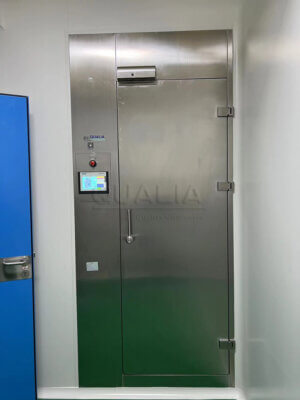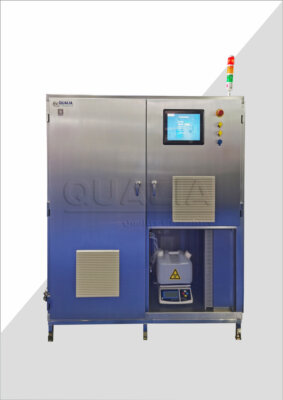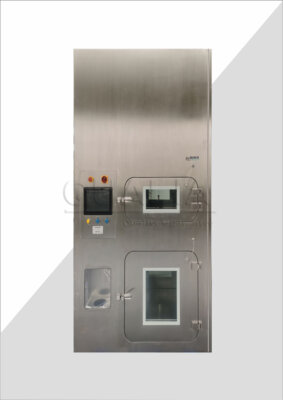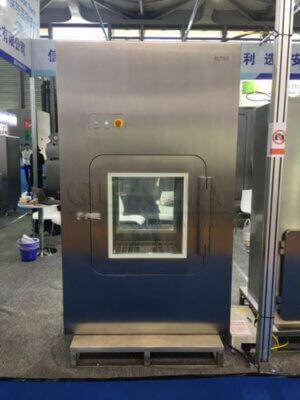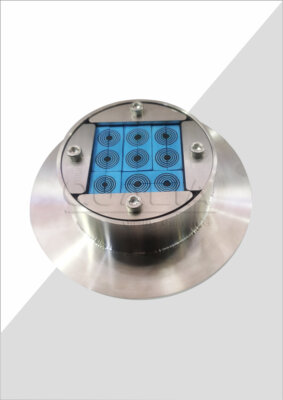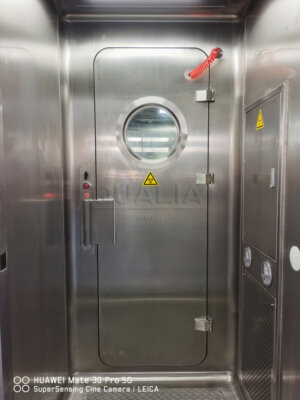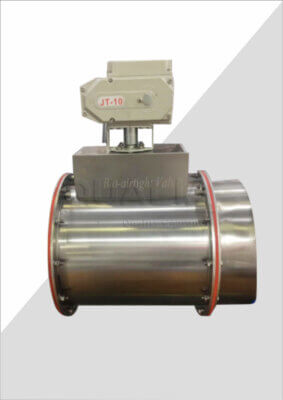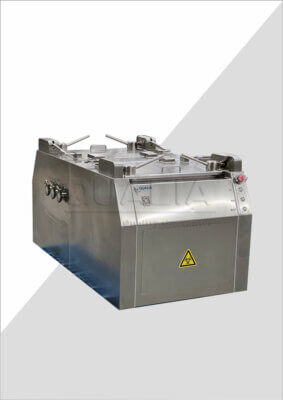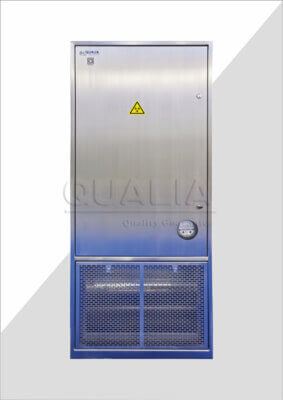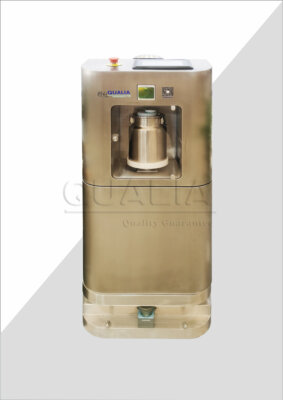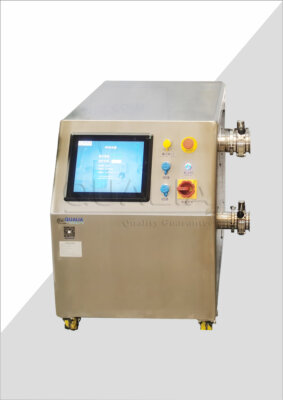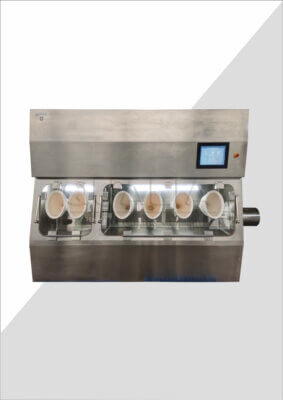

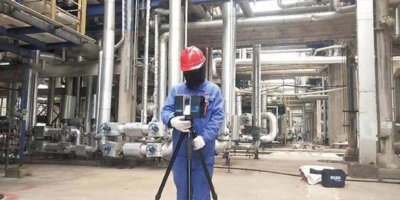
A facility generating liquid waste from BSL-rated or hazardous-pharmaceutical work faces a structural question before any equipment selection begins: should treatment be consolidated into one system, or should it stay distributed at or near each point where waste arises? This is a containment and discharge-control decision, not a convenience choice, and it shapes piping layout, maintenance access, and outage planning for the life of the facility.
Identify Waste Streams That Need Controlled Collection and Treatment
The starting point is not the treatment technology but the waste itself. A project needs an inventory of where infectious or hazardous liquid actually arises across the facility — which rooms, which processes, which equipment drains generate a stream that requires decontamination before it can leave the controlled area. This inventory has to distinguish between streams that are genuinely hazardous at the point of generation and streams that only become a concern once mixed with something else, because that distinction determines whether segregation is even possible.
Segregation is the second question the inventory has to answer. Where waste streams can be kept physically separate from generation through to treatment, the facility retains the option of routing some streams to a shared system while managing others independently. Where streams mix upstream of any control point — in a shared floor drain, a common sink line, or a general lab-waste line — segregation is no longer available as a design choice, and the facility has effectively already decided that whatever reaches that point must be treated as the most hazardous contributor to it.
The third element is how each stream reaches treatment. A stream identified as hazardous does not automatically travel to a treatment system in a controlled way. If transfer depends on someone manually carrying or pouring waste from a point of use to a treatment inlet, the inventory has exposed a gap: the hazard exists at the source, but control does not exist along the path. Closing that gap is a design decision, not an operational fix, because it usually means adding dedicated piping, gravity drainage, or a closed transfer line rather than relying on procedure alone.
This inventory work matters because it precedes and constrains every later decision in this article. A facility cannot compare treatment routes, size a treatment train, or assign discharge ownership until it knows which streams exist, whether they can be kept apart, and whether the physical path from source to treatment is already controlled or still needs to be built. Where the inventory shows many streams converging into one path with no segregation option, the facility has effectively narrowed itself toward a central answer before formally comparing alternatives. Where segregation is genuinely available, the comparison in the next section stays open.
Compare Central Treatment with Point-of-Generation and Segregated Routes
| Treatment route | Applicability question | Evidence and discharge-control question | Interface boundary to assess |
|---|---|---|---|
| Central treatment | Can the relevant liquid waste streams reach one treatment system through controlled collection? | Would consolidated treatment evidence and discharge control improve oversight? | Collection piping, transfer, storage, and common-failure interfaces |
| Point-of-generation treatment | Is treatment at the place where the liquid arises viable for the project-specific stream and facility? | How will treatment evidence and each release be verified at every treatment point? | Maintenance access and the boundary between the source and downstream discharge |
| Segregated routes | Which streams can remain segregated, and how will each reach treatment without uncontrolled manual transfer? | How will treatment evidence and release control be maintained for each route? | Separation, routing, and downstream discharge boundaries |
Once the waste-stream inventory is in hand, the project has three structural options, and each carries a different applicability question, a different evidence burden, and a different interface to manage.
Central treatment asks whether the relevant streams can physically reach one treatment system through collection piping that stays under control from source to inlet. Its appeal is consolidation: one treatment train, one set of treatment records, one discharge-control point, which can simplify the evidence picture the facility has to maintain. But that consolidation is bought at the cost of a longer physical path — collection piping, transfer lines, storage vessels — and each of those is an interface where a leak, blockage, or common-mode failure can affect every stream feeding it, not just one.
Point-of-generation treatment asks a different question: is treatment viable at the specific place the liquid arises, for that stream, in that facility. This avoids the long collection path and its associated interfaces, but it multiplies the number of treatment points that need independent verification. Where a facility has many generation points, each one needs its own evidence of treatment performance and its own release check, which is a different evidence burden than a single consolidated train, not necessarily a lighter one.
Segregated routing sits between the two. It asks which streams can remain apart and how each reaches its own treatment point without relying on uncontrolled manual transfer. This preserves the ability to apply different treatment approaches to different hazard levels, but it requires the facility to maintain separation discipline throughout the piping layout — any point where segregated lines are allowed to combine collapses the segregation and reintroduces the central-system question for that combined stream.
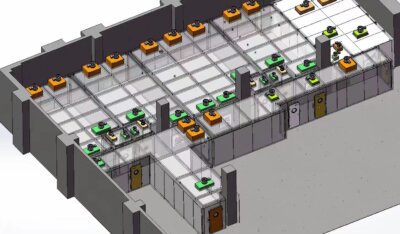
The condition that moves a project from one column to another is rarely the treatment chemistry itself; it is the physical layout and the number of generation points relative to how far apart they sit. Where generation points are numerous and dispersed, point-of-generation or segregated routing avoids building an extensive collection network. Where generation points are few and physically close, or where the facility already needs a single discharge-control point for other reasons, central treatment’s consolidation advantage becomes easier to realize without an extended piping burden offsetting it. The related question of batch-based treatment sizing for a given facility scale is a separate sizing exercise once the routing choice is made.
Size the Decision Around Peak Load, Storage, and Utility Resilience
| Decision input | Project-specific value or condition to establish | Decision consequence |
|---|---|---|
| Routine load | Expected routine liquid load | Establishes the normal treatment demand |
| Peak load | Expected peak liquid load | Tests whether peak conditions change the treatment decision |
| Outage storage | Available storage while the treatment train is unavailable | Shows whether waste can remain controlled during an outage |
| Utility resilience | Utility dependencies and the effect of their loss | Identifies utility failures that can make treatment unavailable |
| Blocked or unavailable treatment train | Consequences and project response when treatment cannot operate | Defines the unresolved outage risk that must be closed before approval |
Choosing a route does not size the system. A facility leaning toward central treatment still has to establish what the treatment train must handle under routine conditions and under peak conditions, because a train sized only to routine load can be overwhelmed the moment multiple generation points discharge together — a condition that a segregated or point-of-generation approach may not create in the same way, since each treatment point only ever sees its own local load.
Storage during an outage is the next input, and it is where central systems carry a distinct exposure. If the treatment train becomes unavailable — whether from a fault in the train itself or from a dependency it relies on — waste generation upstream does not necessarily stop. The facility needs to know how much storage exists to hold that waste in a controlled state while treatment is restored, and what happens if generation continues beyond what that storage can absorb. A distributed approach spreads this risk across multiple smaller treatment points, so the failure of one point does not necessarily leave the whole facility without any treatment capability; a central approach concentrates the exposure into a single train whose unavailability affects every stream that depends on it.
Utility resilience is closely linked. A treatment train depends on utilities — power, water, steam, or others depending on the technology — and the facility has to establish what happens to treatment capability if any of those utilities is lost. This is where the central-versus-distributed comparison becomes concrete without needing a real example: where a single central train depends on a shared utility feed, loss of that feed removes treatment capability for the entire facility at once; where treatment is distributed across multiple independent points, a utility loss affecting one location does not necessarily affect the others, though it may affect all of them simultaneously if they share the same utility source regardless of physical location.
The consequence the project has to define explicitly is what happens when the treatment train is blocked or unavailable for any reason — mechanical fault, utility loss, or maintenance need. This is not a hypothetical for the supplier conversation; it is a design input. The facility has to decide, before approval, whether storage capacity, redundancy, or an alternative route will absorb that outage, because a central EDS without an answer to this question has an open risk sitting underneath whatever consolidation benefit it offers.
Map Piping, Vent, Sampling, and Maintenance Boundaries
| Interface | Boundary to define | Decision relevance |
|---|---|---|
| Upstream drains and collection piping | Ownership and the route from each relevant source to treatment | Confirms whether liquid reaches treatment through controlled collection |
| Transfer and storage | Where transfer begins and ends, and where liquid is held | Exposes transfer, storage, and common-failure interfaces |
| Vent treatment | Ownership of the vent-treatment boundary | Keeps the vent interface within the project boundary assessment |
| Eșantionarea | Where sampling supports verification of each release | Connects the physical sampling boundary to release verification |
| Acces pentru întreținere | Access needed to maintain the treatment train | Tests whether maintenance constraints can make treatment unavailable |
A central system’s advantages and exposures both live in its physical interfaces, and mapping them is a distinct exercise from sizing the treatment train itself.
Upstream drains and collection piping are the first boundary. The project needs to define, for each relevant source, the physical route the liquid takes to reach treatment and who owns that route — the facility’s building infrastructure, the process equipment supplier, or the treatment system supplier. Without this ownership defined, a leak or blockage partway along that route becomes a gap no one is clearly responsible for closing.
Transfer and storage form the second boundary. Wherever waste is held or moved between generation and treatment, the project needs to know exactly where transfer begins and ends and where the liquid sits in a held state. This is the same interface that carries the common-failure exposure raised earlier: a storage vessel or transfer line serving multiple streams is a point where one stream’s problem can become every stream’s problem.
Vent treatment is a boundary that is easy to leave outside the main piping discussion but that belongs inside the same project boundary assessment. If the treatment train or the collection system vents to atmosphere or to a building exhaust system, ownership of that vent path — whether it is treated, filtered, or otherwise controlled — needs to sit inside the same interface map as the liquid path, not be assumed as someone else’s separate scope.
Sampling is the boundary that connects the physical system to verification. Wherever a release decision depends on a sample, the project needs to define where that sample is taken relative to the treatment train and the discharge point, because a sample taken upstream of the last treatment step tells the facility something different than one taken immediately before discharge.
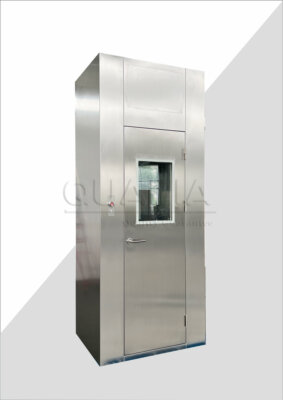
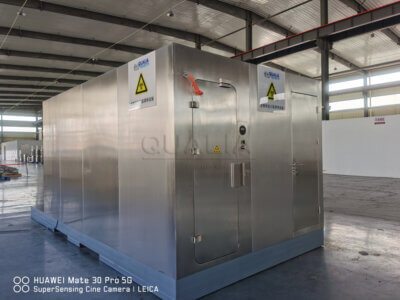
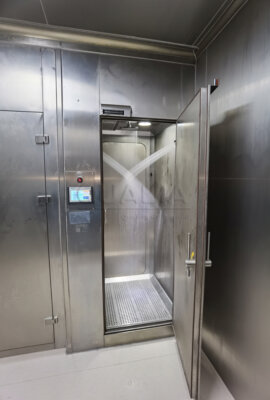
Acces pentru întreținere is the final boundary, and it circles back to the outage question. A treatment train that cannot be accessed for maintenance without interrupting the whole collection system creates the same unavailability exposure described earlier, so the physical layout — valves, isolation points, bypass provisions — needs to be assessed for whether maintenance can occur without stopping treatment for every stream feeding that train. QUALIA’s EDS equipment, where selected for a project, is configured around these interface boundaries as part of the project review rather than supplied as a fixed physical layout independent of the facility’s own piping and utility design.
Assign Release Criteria, Records, and Discharge Ownership
| Control item | Project-specific assignment | Evidence boundary |
|---|---|---|
| Release criteria | Define the criteria applied before each release | Criteria must reflect the site-specific risk assessment and applicable national rules |
| Date științifice privind tratamentul | Define the evidence used to support a release decision | General guidance does not establish project-specific treatment conditions |
| Release records | Define what is recorded for each release and who owns the record | Records should show the basis used for that release decision |
| Release verification | Assign who verifies each release against the defined criteria and evidence | Verification does not by itself establish downstream discharge approval |
| Downstream discharge approval | Assign who owns approval against the applicable discharge limits | Treatment evidence does not replace the applicable discharge approval |
Consolidating treatment does not consolidate accountability automatically; the project has to assign it explicitly across several distinct roles.
Release criteria come first: the facility needs criteria that define what “treated” means for each stream before any liquid is released downstream. These criteria are not generic — the Manualul OMS de biosecuritate în laborator, ediția a 4-a, frames proportionate control measures as flowing from a site-specific risk assessment, which means the release criteria for a given facility need to reflect that facility’s own risk profile and the national rules that apply to it, not a general standard applied without adjustment.
Treatment evidence is the next assignment, and it is distinct from the criteria themselves. The facility needs to define what evidence demonstrates that treatment has actually met the release criteria for a given batch or stream. General guidance sources describe the scope of decontamination and waste management as a subject area but do not establish the specific treatment conditions or parameters a given facility must achieve — the WHO LBM 4th Edition Decontamination and Waste Management Monograph supports the scope of the subject, not project-specific treatment conditions, so those conditions still need to be established for the facility’s own risk assessment and equipment.
Release records are a separate assignment from the evidence itself: who records that a given release met the criteria, what that record contains, and who retains it. This record is what supports inspection readiness later, so its ownership needs to be fixed before the system is approved, not worked out after the first release occurs.
Release verification is a distinct role again — someone has to check the record and the evidence against the defined criteria before release is authorized, and this verification does not by itself constitute downstream discharge approval. That approval is the final and separate assignment: someone owns the decision that a release meets the discharge limits that apply to the facility’s location and permit conditions. The WHO GMP guidance for pharmaceutical products containing hazardous substances (TRS 957 Annex 3) supports the general principle that hazardous liquid effluent posing a safety or contamination risk is treated before municipal discharge, but that guidance sits in a chemical and hazardous-pharmaceutical context — infectious-waste parameters for a BSL-rated facility need their own biosafety-specific evidence, not a substitution from that chemical-context guidance.
Approve a Central EDS Only After Interface and Outage Risks Are Closed
Bringing these threads together, a central EDS earns approval when the project can show that consolidation’s benefit is real for its own waste-stream layout and that the interfaces and outage exposures a central system introduces have each been closed rather than left implicit.
Where the waste-stream inventory shows many streams converging on a single controlled path with no viable segregation, and where the facility’s generation points sit close enough together that the collection piping does not become an extended, hard-to-monitor network, central treatment’s consolidation advantage is well matched to the layout. Where the inventory instead shows dispersed generation points that could be segregated or treated locally, the facility should treat central treatment as one option among the three rather than a default, and weigh it against the added collection-piping and common-failure interfaces it introduces.
Regardless of which route the layout favors, approval depends on the outage question having a defined answer: what storage exists, what utility dependencies exist, and what happens when the treatment train is blocked or unavailable. A central system without a closed answer to that question carries an exposure that a distributed approach may not carry in the same form, because the central system concentrates every upstream stream’s fate into one train’s availability.
The interface map — collection piping, transfer and storage, vent treatment, sampling, and maintenance access — needs each boundary assigned to an owner before approval, not discovered during commissioning. And the release-and-discharge chain — criteria, evidence, records, verification, and discharge approval — needs each role assigned to a specific party, with the discharge approval itself resting on the facility’s own applicable limits rather than on the treatment evidence alone.
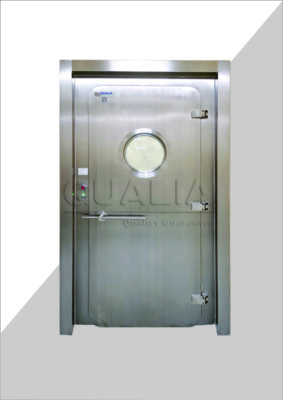
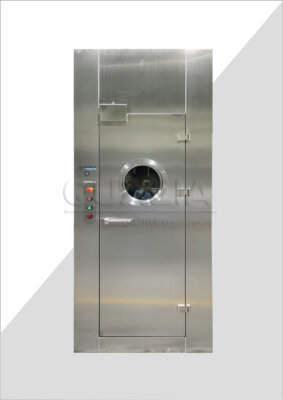
When a project brings this information into a supplier conversation — the waste-stream inventory, the load and outage figures, the interface boundaries already identified, and the release-and-discharge ownership already assigned — that information is what allows a system such as QUALIA’s EDS for BSL 1-4 liquid waste to be configured against the facility’s actual layout and risk assessment during project review, rather than approved against a generic specification that has not been tested against the facility’s own interfaces and outage exposures.
Întrebări frecvente
Q: Does the presence of infectious or hazardous liquid automatically justify a central EDS?
A: No. First determine which streams need controlled treatment, which can remain segregated, and whether they can reach a central system without uncontrolled manual transfer. A central route is justified only when its consolidated control benefit outweighs the added piping, transfer, storage, and common-failure interfaces for the specific facility.
Q: What information should the project team prepare before comparing treatment routes?
A: Prepare an inventory of liquid sources, segregation options, collection routes, routine and peak loads, outage storage, utility dependencies, and maintenance access. This information allows central, point-of-generation, and segregated routes to be compared against the same operating conditions.
Q: How should a facility plan for a blocked or unavailable central treatment train?
A: Define how incoming liquid will remain controlled during the outage, how much storage is available, which utility losses could extend the interruption, and what operating response applies. Approval should wait until the consequences and responsibilities for this condition are clear.
Q: Does consolidated treatment evidence replace downstream discharge approval?
A: No. The project still needs defined release criteria, evidence for each release decision, records, verification ownership, and separate ownership of approval against applicable discharge limits. Those criteria must reflect the site-specific risk assessment and applicable national rules.
Q: Which responsibilities should be assigned before a central EDS is approved?
A: Assign ownership for upstream drains and collection piping, transfer and storage, vent treatment, sampling, maintenance access, release verification, and downstream discharge approval. Gaps at these boundaries can leave waste transfer, system availability, or release decisions without a clear accountable party.