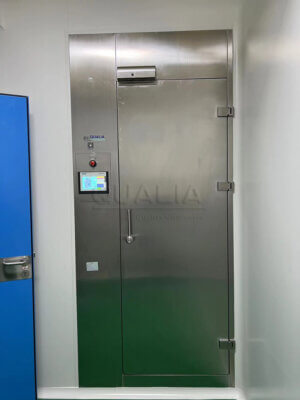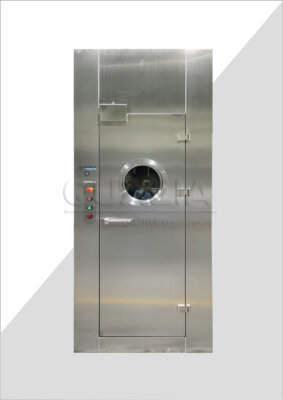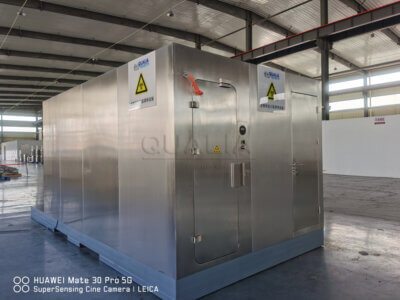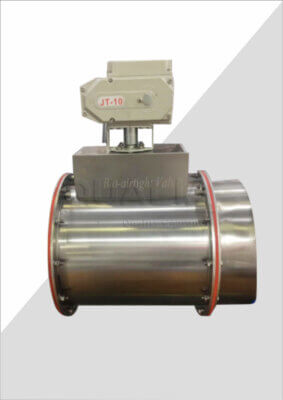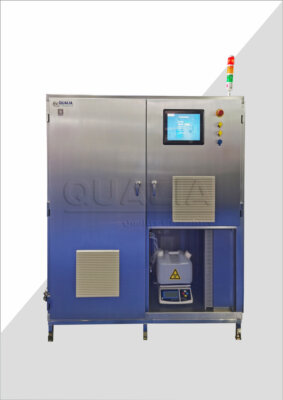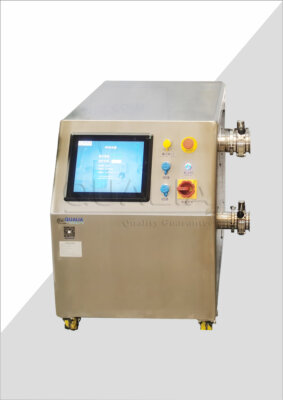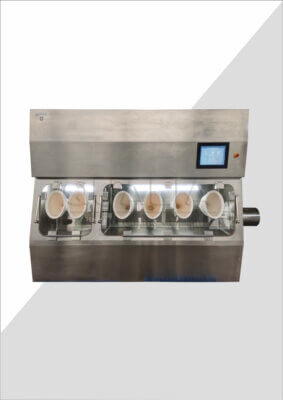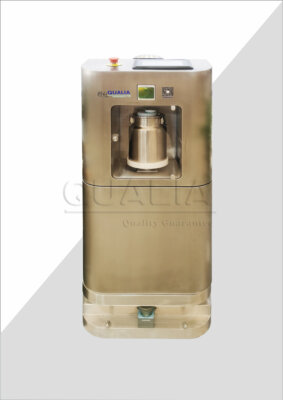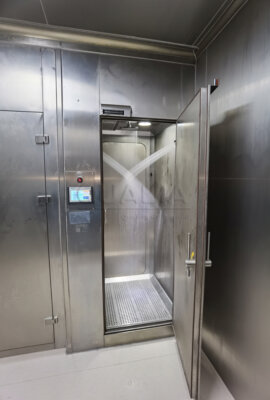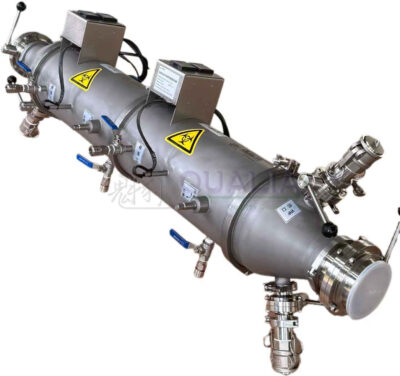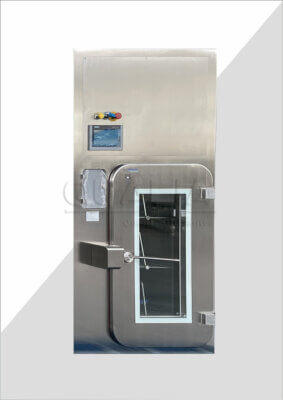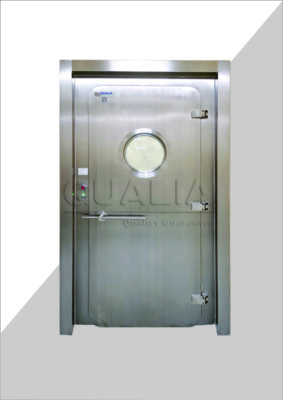

Specifying the wrong pass box configuration for a transfer step rarely surfaces as a clear error at the time of purchase — it appears later, during installation qualification, cleaning validation review, or an FDA or EU GMP audit, when the justification cannot be reconstructed from catalog sheets. Teams that treat pass box selection as a generic procurement line item rather than a use-case-specific engineering decision tend to discover the gap only after the unit is built into the wall. The downstream cost is real: rework at the wall penetration, delayed qualification documentation packages, and in some cases a complete unit replacement when the contamination control capability does not match the transfer risk. The decision that resolves most of these problems is made earlier than most teams think — at the point where transfer scenario, cleanroom grade differential, and material risk are mapped to configuration type before a supplier is contacted.
Pharma transfer scenarios that change pass box requirements
The selection logic for a pass box starts with a single, specific question: what is actually moving between which zones, and what is the cleanliness and containment relationship between those zones? That question cannot be answered generically, and the answer directly determines whether a static unit is defensible or whether a dynamic, RTP, or VHP configuration is required.
A static pass box — which relies entirely on interlock and sealed construction — is appropriate when both sides of the transfer are operating at the same cleanroom grade. In that context, the interlock prevents both doors from opening simultaneously, and the risk of cross-contamination is controlled by the equivalence of the surrounding environments. The moment the zones on either side differ in cleanliness grade, or one side is unclassified space, that logic breaks down. A static box cannot restore grade equivalence; it simply prevents simultaneous door opening while uncontrolled air migrates through the chamber during each cycle.
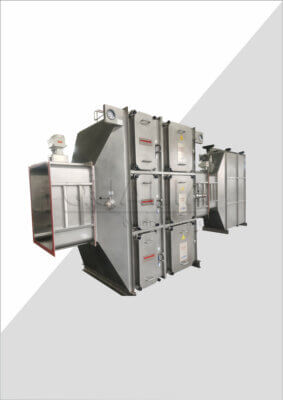
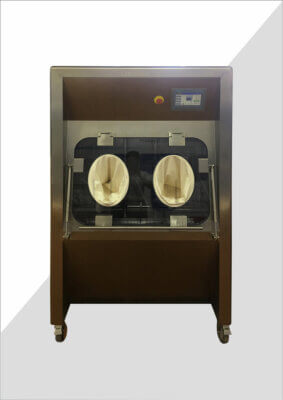
For transfers into or out of Grade A or B environments, a dynamic pass box with HEPA filtration is the more appropriate design choice. The chamber itself maintains ISO Class 5 conditions during operation, which means the transfer event does not depend on both sides being equivalent — the box provides the protection. For hazardous material movement, the calculus shifts again: VHP-capable units or rapid transfer ports become planning criteria driven by containment and personnel protection requirements, not by cleanliness grade alone.
The practical risk of mismatching configuration to scenario is a compliance gap that does not announce itself during commissioning but tends to surface when a qualified person is asked to justify the contamination control rationale in a regulatory submission.
| Scenariu de transfer | Appropriate Pass Box | Considerații cheie |
|---|---|---|
| Same-grade cleanroom to same-grade cleanroom | Cutie de transfer statică | Interlock and sealed surfaces sufficient; no active contamination control needed |
| Different-grade cleanrooms or non-cleanroom to cleanroom | Cutie de transfer dinamică | HEPA filtration prevents cross-contamination across cleanliness zones |
| Grade A/B sensitive material transfer | Cutie de transfer dinamică | Active ISO 5 cleanliness protects sensitive pharmaceutical products |
| Hazardous materials transfer | RTP or VHP pass box | Required for containment and personnel protection |
One consequence that teams underestimate is that a pass box selected for one transfer scenario — say, component entry from a corridor — may later be repurposed informally for sampling returns or waste movement. Each of those scenarios carries a different contamination risk profile and may require a different justification in the batch record or audit trail. The configuration that was defensible for one use case may not be defensible for the other without additional procedural controls, and those controls rarely survive over time without engineering support.
Material and surface criteria expected in GMP service
Calling a pass box GMP-compliant without specifying its interior material, surface finish, and corner geometry creates a documentation gap that surfaces during qualification, not during procurement. These are not cosmetic design preferences — they are the material prerequisites for cleaning validation, and their absence forces rework after the unit is already installed.
The interior chamber should be constructed from 304 stainless steel. This is the industry-standard material for GMP contact surfaces in cleanroom equipment because of its cleanability, corrosion resistance, and compatibility with the range of cleaning agents and disinfectants used in pharmaceutical environments. The exterior surface is more flexible — 304 SS, 201 SS, or powder-coated steel are all used in practice, with the selection driven by the specific environmental exposure and cost considerations of the installation.
Surface roughness is where many specifications fall short. An interior roughness of ≤1.2 Ra is the commonly applied design figure in GMP-aligned dynamic pass box specifications. This threshold is not an arbitrary cosmetic requirement; surfaces above that roughness value harbor microbial contamination and particulate matter in ways that resist routine cleaning, and cleaning validation becomes difficult to sustain. Corner geometry carries the same logic: sharp interior corners accumulate contamination and are structurally resistant to effective wiping. Rounded or coved corners eliminate that trap and are a standard element of a defensible cleaning validation strategy.
The wall penetration detail — specifically, the flange finish where the pass box integrates with the wall cut-out — is a location that often creates hidden contamination sources when it is not specified. An impervious finish with no gaps at the wall interface prevents contamination from accumulating in spaces that routine cleaning cannot reach.
| Specification Element | Cerința GMP | De ce este important |
|---|---|---|
| Interior chamber material | 304 stainless steel | Cleanability, corrosion resistance, and GMP suitability |
| Exterior surface | 304 SS, 201 SS, or powder-coated steel | Balances cost, durability, and cleanroom environment |
| Corner design (interior) | Rounded or coved corners | Eliminates dirt traps that resist cleaning |
| Interior surface roughness | ≤ 1.2 Ra | Prevents microbial and particle harboring; supports cleaning validation |
| Wall cut-out flanges | Impervious finish, no gaps | Avoids hidden contamination at the wall penetration |
The inspection consequence of insufficient surface specification is that auditors can and do challenge cleaning validation when the physical construction does not support the claimed procedure. A unit with sharp corners and an unverified interior roughness may have passed visual inspection at delivery while still being indefensible under a cleaning validation protocol. Confirming these specifications from the supplier before purchase — not from a catalog, but from a material certificate and surface finish record — is the procurement check that prevents this outcome.
Configuration options tied to contamination risk
The airflow architecture of a pass box is the primary engineering variable that determines how much contamination control the transfer step can actually deliver. Three configurations are used in practice, and the differences between them are not interchangeable depending on the transfer risk level.
A recirculating dynamic pass box uses HEPA-filtered air that circulates within the chamber continuously, maintaining ISO Class 5 conditions during operation. This is the appropriate configuration when sustained cleanliness inside the chamber is required — for example, when the transfer cycle takes time and the chamber environment needs to be reliably maintained throughout. The trade-off is meaningful: recirculating designs carry more validation scope, require ongoing HEPA integrity testing, and accumulate particles internally rather than exhausting them, which is a consideration for certain material types.
A single-pass exhaust configuration filters air through the chamber once and exhausts it, rather than recirculating. This reduces the risk of internal particle accumulation but may allow some particle ingress after door cycles, and it places a demand on facility exhaust capacity. A semi-active configuration that connects to facility HVAC is lower cost and simpler to maintain but provides considerably less control over chamber cleanliness and introduces dependence on the facility system’s own validated performance.
Add-on features create their own qualification obligations and should not be treated as standard upgrades that come without cost.
| Configurația fluxului de aer | Descriere | Controlul contaminării | Trade-off |
|---|---|---|---|
| Recirculating (dynamic) | HEPA-filtered air recirculates within chamber | Sustained ISO Class 5 cleanliness | Higher validation and maintenance effort; contains particles internally |
| Single-pass exhaust (active) | Filtered air flows through once then exhausted | Reduces cross-contamination risk from recirculated air | Potential particle ingress after door cycles; higher exhaust demand |
| Facility HVAC (semi-active) | Chamber connected to building HVAC supply | Lower cost; basic ventilation | Less control over cleanliness; dependent on facility system |
UV-C lamps add a surface bioburden reduction step, but they require exposure time and intensity validation before they can be included in a contamination control rationale. The lamp’s effective dose depends on the geometry of the chamber, the reflectivity of the interior surfaces, and the positioning of transferred items — none of which are automatically controlled. Air shower configurations operating in the 18–30 m/s velocity range are effective at removing surface particles from materials, but velocity verification is a qualification requirement, and high-velocity air jets can disturb light or sensitive items in ways that create secondary problems. VHP integration provides sporicidal assurance that HEPA filtration alone cannot deliver — relevant for high-risk bioburden situations — but it adds cycle development, added validation scope, and ongoing maintenance to the project scope.
The decision rule across all of these options is that contamination risk level should drive configuration selection, not cost alone. A dynamic pass box with HEPA filtration is a significantly different project commitment than a static unit, and a VHP-capable unit is a different commitment again. Each step up adds capability and adds qualification and maintenance scope in proportion.
Documentation packages needed for QA approval
The most predictable delay in pass box commissioning is not a hardware problem — it is a documentation gap at QA review. Suppliers routinely submit catalog literature in response to documentation requests, and QA teams require something different: material certifications, surface finish records, filter test data, and the hardware prerequisites that generate ongoing qualification evidence. Identifying this gap before purchase is the only way to avoid it extending the commissioning timeline.
Three hardware features directly enable the documentation that QA needs to close a qualification package. The DOP or PAO test port gives access to the HEPA filter downstream so that filter integrity can be verified under challenge. Without that port, the filter cannot be leak-tested in place, which means filter performance cannot be documented — and a HEPA filter whose integrity has not been verified in its installed position is not a validated contamination control measure. This is a hardware prerequisite, not a procedural one, and it must be specified before the unit is manufactured.
The differential pressure gauge and digital display provide continuous monitoring of filter condition over the equipment’s operational life. This is not simply a maintenance convenience: pressure differential data supports the validation lifecycle by documenting that the filter is performing within its qualified range between scheduled integrity tests. Units without data logging capability may satisfy routine maintenance needs but create a gap in the evidence chain that a QA package is expected to contain.
| Documentation Evidence | Ce verifică | Associated Equipment/Record |
|---|---|---|
| HEPA filter integrity test (DOP/PAO) | Filter leak-free and particle challenge performance | Test port access |
| Material transfer log | Every transfer event recorded for audit trail | Process recording per SOP |
| Filter condition monitoring | Continuous differential pressure data for maintenance and validation | Differential pressure gauge with digital display/logging |
The material transfer log is the audit trail element that demonstrates the pass box was used as specified. It does not by itself demonstrate compliance, but its absence during an inspection creates an immediate challenge to the transfer procedure’s controlled status. The log is a procedural requirement, but the completeness of the equipment documentation determines whether the procedure can be maintained consistently — which is why the hardware and the documentation package must be treated as a single package, not as separate workstreams.
Built-in contamination reduction as the configuration threshold
There is a configuration boundary that divides pass boxes into two fundamentally different categories of contamination control capability, and crossing that boundary changes the nature of the equipment, the validation scope, and the appropriate transfer use case. A static pass box has no active filtration. It relies on the interlock mechanism and the quality of its sealed surfaces to limit contamination movement between zones. That design logic is defensible in specific scenarios, but it is structurally insufficient for transfers that require built-in contamination reduction.
A dynamic pass box with H13 or H14 HEPA filtration, electronic interlock with timed purge, and positive pressure maintains ISO Class 5 / Grade A conditions inside the chamber during operation. The positive pressure is the active mechanism: it prevents ambient air from entering the chamber when a door is opened, and it sustains the internal environment throughout the transfer cycle. This is meaningfully different from a static box in a Grade A surrounding room — the chamber itself provides the protection rather than borrowing it from the surrounding environment, which is why the dynamic configuration is the minimum appropriate design for sterile product transfers. This framing reflects a strong industry design principle rather than a universally codified regulatory floor, but it is the planning criterion that qualified persons and auditors apply when reviewing the contamination control rationale for sterile transfers.
A VHP pass box adds sporicidal assurance beyond what HEPA filtration can deliver. HEPA removes airborne particles and reduces bioburden by filtration; it does not inactivate microorganisms on the surfaces of transferred items. Hydrogen peroxide vapor achieves sporicidal kill across the interior surfaces and transferred material surfaces within the chamber, which is the required performance level for high-risk bioburden scenarios. That capability comes with added validation scope: cycle development, biological indicator qualification, material compatibility verification, and ongoing cycle performance monitoring.
| Capacitate | Cutie de transfer statică | Dynamic Pass Box | Caseta de legitimații VHP |
|---|---|---|---|
| Active filtration | Nici unul | HEPA filtration (H13/H14) | HEPA + vapor-phase H₂O₂ |
| ISO classification during operation | Not rated; relies on surrounding room | ISO Class 5 / Grade A | ISO Class 5 with sporicidal assurance |
| Presiune pozitivă | Nu | Da | Da |
| Suitable for sterile transfers | Nu | Yes (minimum acceptable configuration) | Yes (high-risk sporicidal control) |
| Decontamination type | Interlock + surface finish only | Airborne particle control | Sporicidal surface decontamination |
The practical implication is that the fit threshold is not a matter of preference or budget optimization — it follows from the transfer risk profile. Once a transfer step involves sterile product, movement across grade boundaries, or materials with sporicidal control requirements, a static pass box cannot be justified on engineering grounds, and the attempt to qualify one for that use case will produce a documentation gap that cannot be closed by procedure alone. Recognizing where that threshold sits before specifying the unit is the decision that prevents a procurement choice from becoming a qualification problem.
For teams specifying biosafety-classified transfers, Qualia’s biosafety pass box și Cutie de transfer VHP configurations represent two distinct points on the capability spectrum described in this section, each suited to a different contamination risk profile.
The concrete decision that this article is structured to support is selecting the right configuration before procurement, not diagnosing the wrong one during qualification. The selection hinges on three things that should be defined in writing before any supplier conversation: the exact transfer scenario including zone grade differential, the material or contamination risk profile of what is being transferred, and the documentation evidence chain that QA will require to close the qualification package. Each of those inputs changes the configuration requirement, and treating any one of them as a detail to be resolved later typically creates the rework problem.
When reviewing supplier proposals, the questions that prevent the most common failure patterns are: Does the quoted unit include a DOP/PAO test port, differential pressure monitoring with logging, and documented surface finish data? Are the interior corners coved and the interior roughness specified at ≤1.2 Ra, with material certificates to support the claim? And does the airflow configuration — recirculating, single-pass, or HVAC-connected — actually match the contamination risk level of the transfer step as specified, or only the transfer step as it was described loosely in the inquiry? The gap between those two descriptions is where most compliance problems begin.
Întrebări frecvente
Q: What happens if the pass box is later repurposed for a different transfer type than the one it was originally specified for?
A: The original configuration and qualification documentation may no longer be defensible for the new use case, and additional procedural or engineering controls will be required to close the gap. A pass box justified for component entry from a corridor carries a different contamination control rationale than one used for sampling returns or waste movement — the risk profile changes, the justification in the batch record changes, and procedural controls added after the fact rarely hold up reliably over time without the engineering support that the original specification should have provided.
Q: Is a dynamic pass box with HEPA filtration sufficient for transfers involving biological agents, or does a VHP unit become necessary at some point?
A: Once the transfer involves materials with sporicidal control requirements — or biological agents where surface decontamination of transferred items is part of the containment strategy — a standard dynamic pass box with HEPA filtration is insufficient. HEPA filtration removes airborne particles and reduces bioburden by filtration; it does not inactivate microorganisms on the surfaces of transferred materials. VHP delivers sporicidal kill across interior chamber surfaces and transferred item surfaces, which is the performance level that high-risk bioburden scenarios require. The boundary is not grade-based — it is determined by whether surface inactivation is part of the required contamination control rationale.
Q: After the pass box is installed and the qualification package is submitted, what ongoing documentation is QA typically expected to maintain?
A: At minimum, QA should maintain periodic HEPA filter integrity test records generated through the DOP/PAO test port, differential pressure monitoring logs confirming the filter is performing within its qualified range, and material transfer logs demonstrating the unit is being used according to the validated procedure. For VHP-capable units, ongoing cycle performance monitoring with biological indicator records is an additional requirement. These are not independent workstreams — the completeness of the initial equipment documentation determines whether the ongoing evidence chain can be sustained consistently, which is why hardware prerequisites like the test port and data logging must be specified before manufacture.
Q: How does the decision between a recirculating dynamic pass box and a single-pass exhaust configuration affect total project cost and scope beyond the purchase price?
A: A recirculating dynamic pass box carries greater ongoing qualification and maintenance commitment than a single-pass unit — it requires scheduled HEPA integrity testing, accumulates particles internally rather than exhausting them, and produces a longer validation scope. A single-pass configuration is less demanding on internal qualification resources but places a load on facility exhaust capacity and may allow some particle ingress after door cycles. The cost difference at procurement understates the total lifecycle difference: the right choice depends on whether sustained ISO Class 5 conditions throughout the transfer cycle are required, or whether a lower-control configuration is defensible given the transfer scenario and grade boundary involved.
Q: If a facility does not yet have a defined cleaning validation protocol, is it worth specifying the higher surface finish and corner geometry standards before that protocol is developed?
A: Yes — specifying ≤1.2 Ra interior roughness and coved corners before procurement is the correct sequence regardless of where the cleaning validation protocol stands. These are hardware characteristics that cannot be retrofitted after the unit is manufactured and installed. A cleaning validation protocol developed later must be matched to the physical construction of the equipment it covers; if the unit was built with sharp corners or unverified roughness, the protocol has no path to defensible validation regardless of how it is written. Confirming these specifications from the supplier through material certificates and surface finish records at purchase is the step that keeps future validation options open rather than foreclosing them.