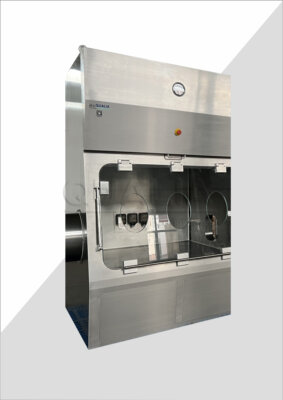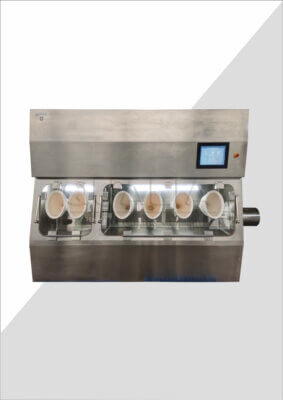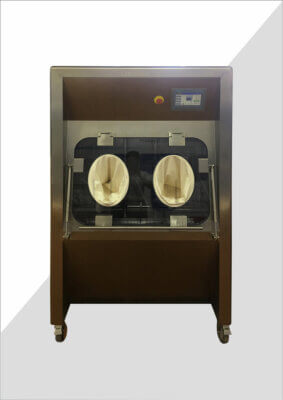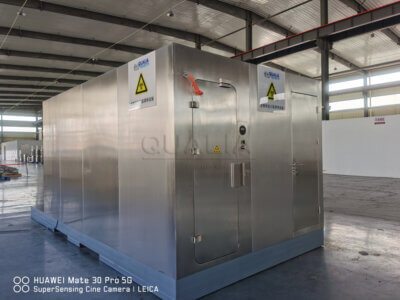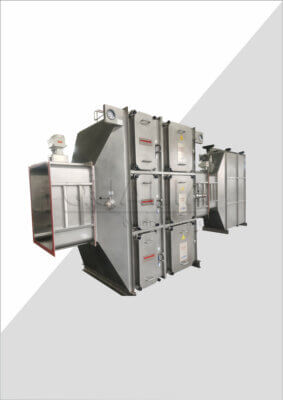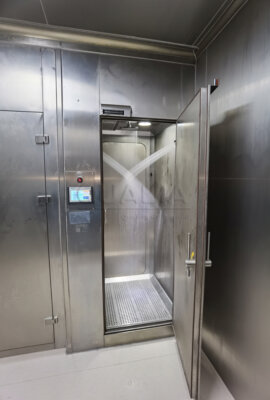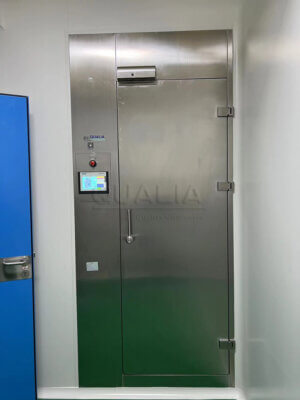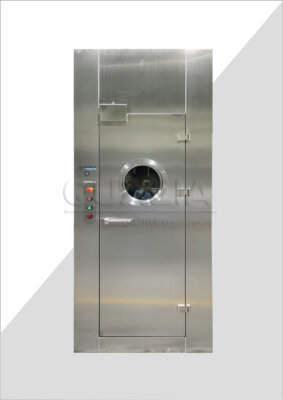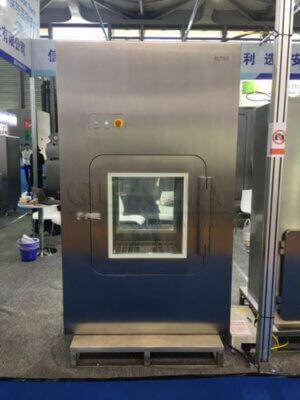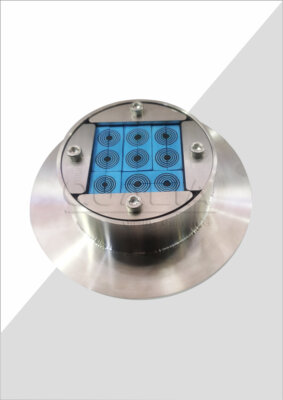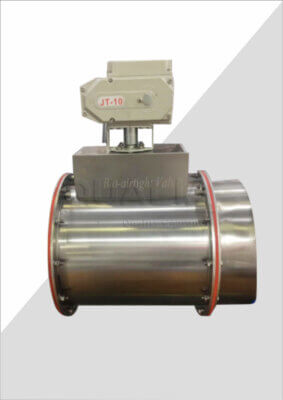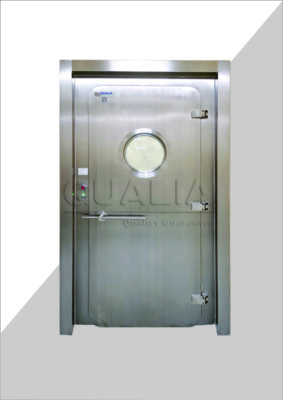

A supplier submitting an OEB5 isolator claim with a CPT report from a different process configuration than what the buyer intends to run is one of the most common and costly mismatches in HPAPI project specification. The downstream consequence is not just a documentation gap — it surfaces as a requalification obligation after installation, when commercial timelines have no tolerance for it. The specific failure usually traces back to one unresolved question at specification stage: was the containment claim tested against the buyer’s actual task sequence, including sampling, filter changeout, and charged material transfers, or against a simplified simulation that looked credible but excluded the highest-risk operations? Resolving that question before supplier selection — by aligning EHS, validation, process engineering, and procurement on what evidence counts — is what separates a defensible containment design from one that will face QA challenge at every review gate.
Measured Containment Starts With the HPAPI Task, Not the Equipment Label
An OEB rating on a data sheet describes what a piece of equipment was tested to achieve under the conditions it was tested. It does not describe what it will achieve during your specific process. That distinction matters most at the tasks where containment is hardest to maintain: dispensing, sampling, and contained transfer between equipment.
Dispensing carries the highest exposure risk in early-stage processing because API concentration is at its maximum and material is in an open or semi-open state. Containment design that is appropriate for downstream blend handling may be undersized at this stage. The dispensing task should drive the containment specification, not the average across the process train.
Sampling is the task most frequently excluded from CPT planning, and it is also the task most likely to require breaking the primary barrier. When sampling is left out of the containment test protocol, the declared performance level has a gap that corresponds directly to a routine operational activity. In practice, that gap becomes visible during commissioning or first regulatory inspection, not during procurement — which is when the cost to address it is highest.
Multipurpose CDMO facilities carry a compounding planning burden. When the same containment equipment is used across different HPAPIs with different toxicological profiles, a generic OEB label cannot replace a task-based risk assessment. Cross-contamination risk is compound-specific and process-step-specific; a label cannot account for either variable.
| Process Task | Higher Exposure Risk Factor | Containment Implication |
|---|---|---|
| Dispensing | Highest API concentration; early process stage | Requires highest initial containment design to match peak exposure risk |
| Eșantionarea | Often breaks containment; frequently overlooked in planning | Critical risk for OEB4/OEB5 if sampling tasks are excluded from CPT |
| Multipurpose CDMO operations | Mix of different HPAPIs with varying toxicology | Task-based risk assessment required; a generic equipment OEB label is insufficient to prevent cross-contamination |
The practical implication is that the containment specification document should name tasks explicitly — by process step, operator position, and material form — before any equipment comparison begins. Equipment selection that precedes that document almost always requires revision after the risk assessment is completed, which adds qualification scope that was preventable.
OEL, OEB Banding and CPT Inputs That Shape the Test Boundary
OEB classification and OEL are related but not interchangeable, and the distinction has direct consequences for how containment acceptance criteria are written in CPT reports. OEB banding is based on the toxicological properties of the pure substance — it is a categorical tool useful for equipment selection and early-stage hazard communication, particularly when full toxicology data is still provisional. OEL is a time-averaged air concentration derived from the Acceptable Daily Exposure, expressed in µg/m³ for a defined work period. When CPT acceptance criteria are written using OEB band labels alone, the result is a qualitative claim; when they are written against a confirmed OEL value, the result is a defensible numeric threshold that can be directly compared to measured airborne concentrations during testing.
That distinction matters more than it appears during procurement. OEB-band-based acceptance language is useful at specification stage and for early supplier screening. But at validation and audit, it becomes difficult to defend unless the OEB band has been translated into a specific airborne concentration target that the CPT report was designed to test against. Tying acceptance language to the confirmed OEL from an ADE calculation gives the test protocol a boundary that can survive QA review.
The engineering control implications of the bands are well-established in industry practice. OEB3 compounds can generally be handled in a basic glovebox with HEPA filtration. OEB4 requires a step change in containment engineering: negative pressure isolation, dual filtration, and safe-change filter systems. OEB5 extends that further, with CPT evidence below 1 µg/m³ required to substantiate the claim. For ADC programs where OEB6 thresholds below 0.1 µg/m³ apply, supplier capability at that level needs individual verification — not all isolator configurations tested to OEB5 will meet that boundary. These are design figures from industry practice, not universally mandated regulatory limits, but they function as the practical acceptance standard during CPT protocol design.
| OEB Band | Airborne Concentration (µg/m³) | Typical Engineering Control Requirement |
|---|---|---|
| OEB3 | 10–100 | Basic glovebox with HEPA filtration |
| OEB4 | 1–10 | Negative pressure isolator with dual filtration and safe-change systems |
| OEB5 | <1 | Negative pressure isolator with dual HEPA filtration, safe-change, and CPT evidence below 1 µg/m³ |
| OEB6 (for ADCs) | <0.1 | Enhanced isolator design with validated containment below 0.1 µg/m³ (confirm supplier capability) |
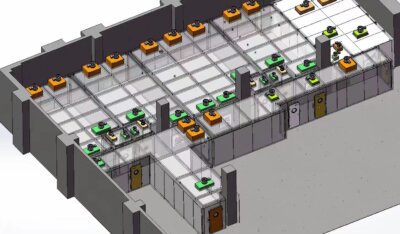
Facility inputs — negative pressure rooms, air change rates, pressure differential cascades, and continuous monitoring — are part of the containment boundary, not separate from it. SMEPAC testing conducted in a facility that does not replicate the buyer’s pressure cascade and HVAC design will produce results that may not translate to installed performance. These facility parameters need to be defined in the test protocol as boundary conditions, not treated as background assumptions.
SMEPAC Evidence Needed for Airborne Release and Surface Deposition
Containment Performance Testing conducted under simulated operational conditions is the evidentiary standard for OEB4/OEB5 claims. The ISPE Good Practice Guide: SMEPAC provides the industry-standard framework for this methodology, covering both airborne release and surface deposition as measurable outputs. What separates a credible CPT report from a marketing document is whether the simulation was designed to replicate the buyer’s actual task sequence — including charging, sampling, and filter changeout — or whether it was limited to a controlled, static test that does not reflect how the equipment will be used in production.
Static testing captures a baseline. It does not capture the release events that occur during dynamic operations: opening containment for sampling, connecting and disconnecting transfer interfaces, removing and replacing gloves, and performing filter changeouts under operational pressure. These events are where the real-world airborne concentration diverges from the declared containment level, and they are the events that regulators and QA reviewers are most likely to examine when evaluating a containment validation package.
Transfer steps between process equipment are, by a clear margin, the highest-risk locations for containment failure. Open or unvalidated transfer interfaces create release points that exist outside the primary containment boundary of the isolator itself. If the SMEPAC protocol does not include transfer interfaces in the test sequence, the CPT report is incomplete with respect to the full containment boundary — even if the isolator body itself tests below the target threshold.
| Test Aspect | Cerință | Justificare |
|---|---|---|
| Operational simulation | Replicate actual tasks (charging, sampling, changeout) during testing | Static testing fails to capture release during dynamic operations |
| Airborne release | Quantify airborne API concentration | Direct measurement against OEL/OEB threshold for containment performance |
| Surface deposition | Measure surface contamination within and around equipment | Addresses cross-contamination risk and informs cleaning validation |
| Transfer interfaces | Include all transfer steps between equipment in the test protocol | Transfer points are the highest-risk locations for containment failure |
Surface deposition data adds a dimension that airborne measurement alone cannot capture. Residue on equipment surfaces inside and immediately outside the containment boundary informs cleaning validation scope and cross-contamination risk assessment. For multipurpose facilities, surface deposition results from CPT should feed directly into the cleaning validation strategy, not be treated as a separate exercise. The connection between CPT output and cleaning validation input is a practical integration point that project teams frequently leave unresolved until the qualification stage, when it becomes a scope gap rather than a planning decision.
Isolator, cRABS, BIBO and Transfer Interfaces That Change the Risk Profile
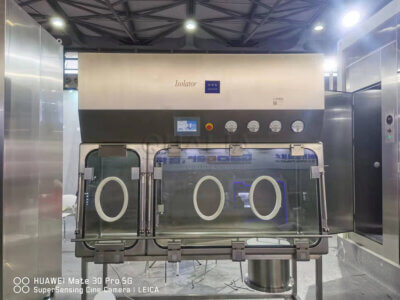
Technology selection for OEB4/OEB5 operations is not a flat comparison between equivalent options. Isolators are the accepted engineering standard for compounds in these bands. That is not a regulatory prohibition on other technologies, but it is the defensible procurement position: if a containment system is not an isolator, it requires specific CPT data at OEB4/OEB5 conditions before it can be treated as equivalent. Verbal equivalence claims and label-based assertions do not meet that standard.
cRABS occupies an ambiguous position in this comparison. It provides meaningful contamination control and can satisfy aseptic processing requirements under ISO 13408-6:2021 for pharmaceutical isolator system design contexts, but it is not automatically equivalent to an isolator for high-potency containment. The question is not whether cRABS technology can be designed for OEB4 or OEB5 conditions — some configurations can — but whether the specific system being evaluated has CPT data that covers the buyer’s powder-handling tasks at those performance levels. Absent that data, accepting cRABS as OEB4/OEB5 equivalent introduces a qualification risk that will not resolve itself during commissioning.
For a closer look at how OEB4 and OEB5 isolator configurations are designed and differentiated, Viitorul izolării: Izolatoare OEB4 vs OEB5 addresses the engineering distinctions in more detail.
At the interface level, split butterfly valves have a well-documented operational history — over two decades of use as contained powder transfer devices — with demonstrated performance below 1 µg/m³ for OEB5-relevant applications. That operational track record is meaningful evidence of interface-level containment, but it applies to the valve in a correctly integrated configuration. The valve’s contribution to containment performance depends on how it is integrated into the overall isolator boundary and whether that integrated configuration was included in CPT testing. Isolating the valve performance claim from the full system test is a common procurement error.
Bag-in/bag-out systems and single-use liners eliminate open powder handling at process interfaces. Their function in the containment boundary needs to be confirmed as part of CPT — not assumed on the basis that the technology is inherently contained. The Bag in Bag Out configuration at filter housings and transfer points is a standard risk reduction measure, but whether it was tested as part of the full containment boundary is the question that determines whether it contributes to the validated claim.
| Tehnologie | Typical OEB Capability Claim | What to Confirm Before Accepting OEB4/OEB5 Equivalence |
|---|---|---|
| Izolator | Accepted standard for OEB4–5 | CPT report covering all powder-handling steps, including transfers, under simulated conditions |
| cRABS | Not automatically equivalent to isolator | Dedicated OEB4/OEB5 CPT data; do not accept verbal or label-based equivalence |
| Supape fluture divizate | Proven <1 µg/m³ for powder transfer (OEB5 capable) | Verify integration with the overall isolator containment boundary and material compatibility |
| Bag‑in/bag‑out & single‑use liners | Eliminate open powder handling between process steps | Confirm these interfaces are included in the full containment boundary CPT |
Interface containment must be verified as part of the full containment boundary CPT, not assessed in isolation. A system where the isolator body tests to OEB5 but the transfer interfaces were not included in the test protocol has an incomplete containment boundary — the overall claim is only as strong as the weakest tested interface.
Supplier Evidence Checklist Before Accepting an OEB4/OEB5 Claim
A supplier’s OEB5 capability claim means something specific only if it is backed by documentation that matches the buyer’s task sequence. The most defensible starting position for any procurement review is to request the CPT report first and map it against the intended process before evaluating anything else. If the simulated conditions in the report differ materially from the buyer’s charging, sampling, cleaning, and changeout tasks, the report does not substantiate the claim for that application, regardless of the headline performance figure.
Cleaning validation is a distinct but directly connected evidence requirement. Health-based limits derived from ADE/PDE values are the current regulatory expectation for HPAPI cleaning; legacy approaches based on 10 ppm limits or dose-fraction methods are increasingly difficult to defend in inspection. The analytical method used to verify cleaning results needs a validated Limit of Quantitation below the calculated MACO value. Compound-specific methods — typically HPLC — are generally preferred over total organic carbon for this purpose because TOC cannot distinguish between API residue and cleaning agent or process excipient residue. These are technical evaluation criteria that should appear in the supplier qualification review, not questions deferred to post-installation validation.
The dedicated versus shared equipment decision also belongs in this review. Dedicated equipment eliminates inter-product cleaning validation as a project obligation; shared equipment introduces a defined cleaning validation requirement with documented changeover procedures and method qualification. Neither is inherently preferable, but treating them as equivalent during procurement understates the validation scope difference and can cause significant schedule impact when the cleaning validation strategy is defined after equipment selection.
Independent third-party exposure control testing provides a meaningful differentiator when evaluating supplier claims. Self-assessed CPT data is not automatically unreliable, but data generated by an external laboratory under conditions specified by the buyer carries demonstrably higher credibility at QA review and regulatory inspection. Where OEB5 claims are central to the project risk profile, independent verification should be part of the supplier evaluation criteria, not an optional enhancement.
| Evidence Item | Ce trebuie verificat | Risk if Missing or Ambiguous |
|---|---|---|
| CPT reports | Simulated operational conditions covering the buyer’s task sequence | Unsubstantiated OEB claim that may fail QA review |
| Validarea curățării | Health‑based limits (ADE/PDE) applied, not legacy 10 ppm or dose‑fraction | Regulatory non‑compliance and residual cross‑contamination exposure |
| Analytical method | Validated LOQ below the calculated MACO; compound‑specific method (HPLC) preferred | Inadequate residue detection; risk of unnoticed cleaning failure |
| Maximum validated OEB level | Documented OEB level achieved under operational testing | Supplier capability overstated; containment breach during actual use |
| Contained transfer at every powder step | Evidence of split butterfly valves, single‑use liners, or equivalent at all interfaces | Process steps outside the containment boundary create release points |
| Real‑time ventilation monitoring | Monitoring system installed and functional on the isolator and suite | Undetected pressure or airflow loss leading to operator exposure |
| Recent regulatory inspection outcome | Satisfactory inspection record from a recognized authority | Hidden non‑compliance issues that could delay project approval |
| Independent third‑party testing | Exposure control verification performed by an external laboratory | Data may reflect supplier‑biased self‑assessment |
Reviewing a supplier’s most recent regulatory inspection outcome is a check that is frequently skipped in procurement because it feels adjacent to the technical evaluation. It is not adjacent — it is direct evidence of whether the supplier’s quality system and containment operations have been reviewed by a competent authority and found acceptable. Hidden non-compliance issues that are not visible in a technical proposal will surface when the regulator reviews the buyer’s qualification package and traces the supply chain. For Izolator OEB4/OEB5 projects with long qualification timelines and high regulatory scrutiny, that check belongs in the supplier qualification step, not after contract award.
The practical sequence that reduces qualification risk in OEB4/OEB5 projects is consistent: define the task list and target concentration before selecting technology, obtain CPT evidence that matches that task list, and confirm that transfer interfaces are included in the tested containment boundary. Organizations that skip or compress the task-definition step to accelerate supplier selection almost always recover that time as requalification cost after installation.
Before moving to a final supplier comparison, the evidence items that must be named in writing are: the confirmed OEL or OEB band with its numeric threshold, the specific process tasks the CPT protocol must cover, the sampling approach and analytical method required to validate cleaning, and the documentation format needed to support IQ/OQ/PQ and regulatory submission. Supplier comparison conducted without those inputs fixed tends to select on commercial terms rather than qualification readiness — which is a decision that compounds in cost at every subsequent project gate.
Întrebări frecvente
Q: What happens if full toxicology data is not yet available when the containment specification needs to be written?
A: Use OEB banding as a provisional classification tool and write acceptance criteria against the band’s numeric threshold rather than a confirmed OEL. OEB banding is specifically designed for early-stage hazard communication when ADE-derived OEL values are still pending. The critical discipline is to treat that threshold as a placeholder that must be replaced by a confirmed OEL-based acceptance criterion before CPT reports are used to support validation or regulatory submission — the two documents need to be reconciled before the qualification package is assembled, not after.
Q: Once CPT evidence has been reviewed and a supplier selected, what is the immediate next step before IQ/OQ/PQ begins?
A: Confirm that the facility parameters used in the supplier’s CPT — pressure differential cascade, air change rates, and HVAC boundary conditions — will be replicated in the buyer’s installed environment. If the facility design deviates from the tested conditions, the CPT results may not translate to installed performance, and supplemental testing will be required as part of qualification. Resolving that comparison before IQ commences prevents it from becoming an open qualification item that delays OQ approval.
Q: Does a cRABS configuration ever satisfy OEB4/OEB5 requirements, or is an isolator always required?
A: A cRABS can satisfy OEB4/OEB5 requirements only if it has CPT data covering the buyer’s specific powder-handling tasks at those performance levels. The technology is not automatically disqualified, but the evidentiary standard is the same as for an isolator: task-matched CPT evidence below the target threshold, including transfer interfaces and dynamic operations. Without that data, accepting cRABS as equivalent introduces a qualification risk that an isolator with matching CPT evidence does not carry. The Sistem închis de bariere cu acces restricționat - cRABS is worth evaluating only when that documentation can be produced.
Q: At what point does dedicating equipment to a single HPAPI become more practical than validating shared equipment for multiple compounds?
A: Dedicated equipment becomes the lower-risk path when the compounds being handled have significantly different toxicological profiles, when cleaning analytical methods cannot be validated to a common MACO threshold, or when campaign scheduling would make defined changeover procedures operationally unworkable. Shared equipment is viable when robust compound-specific cleaning validation can be completed and maintained, and when changeover procedures are fully documented and regularly executed. Treating the two as equivalent during procurement understates the validation scope difference; the cleaning validation strategy should be fixed before equipment selection is finalized, not after.
Q: Is self-assessed CPT data from a supplier ever sufficient, or is independent third-party testing always required for OEB5 projects?
A: Self-assessed CPT data is not automatically insufficient, but it carries a credibility disadvantage at QA review and regulatory inspection compared to data generated by an external laboratory under buyer-specified conditions. For projects where OEB5 containment is a primary risk driver — particularly those with long qualification timelines or high regulatory scrutiny — independent verification should be treated as a supplier evaluation criterion rather than an optional enhancement. The practical question is whether the project’s regulatory and audit risk profile justifies the additional cost of third-party testing; for most OEB5 applications, it does.
Conținut înrudit:
- Ce nivel de izolare oferă un izolator OEB5?
- Viitorul izolării: Izolatoare OEB4 vs OEB5
- Ghid de conformitate GMP pentru utilizarea izolatorului OEB4/OEB5
- Specificații esențiale ale izolatorului OEB4 pe care trebuie să le cunoașteți
- Curățarea izolatorului OEB4/OEB5: Protocoale eficiente
- Avansuri în tehnologia izolatoarelor OEB4 și OEB5
- Izolatoare OEB4/OEB5 pentru manipularea pulberilor farmaceutice
- Izolatoare de biosecuritate OEB4/OEB5: Ghid complet de protecție
- Gestionarea fluxului de aer în izolatoarele OEB4/OEB5: Cele mai bune practici