
Accepting individual equipment while the integrated containment system remains untested is one of the most common and costly errors in high-containment laboratory commissioning. A project team can verify that each HEPA unit, autoclave, airlock, and VHP generator passes its standalone factory or installation check—and still arrive at occupancy with unproven pressure cascade behavior, decontamination pathways that were never traced to biological outcomes, and interlock sequences that conflict at the system level. The downstream consequences are revalidation under schedule pressure, extended occupancy delays, and in the worst case, undetected biosafety exposure after the facility is already in use. What resolves the issue is a structured, interface-by-interface acceptance framework that maps every containment-critical function to a specific test method, a responsible owner, and a record that can defend handover. The sections below give you the criteria and thresholds to judge whether your system is actually ready—not just whether its components passed their individual checkouts.
Integrated containment functions that require acceptance evidence
Equipment-level acceptance is not the same as system acceptance, and the gap between the two is where integration failures hide. A HEPA unit that passes a factory scan, an autoclave that completes its cycle qualification, and an airlock that passes interlock logic testing in isolation can still produce an unsafe integrated facility if no one has tested how those components interact under the dynamic conditions that exist once the lab is fully connected and pressurized.
The five test methods that together constitute integrated containment evidence—airflow visualization, pressure mapping, HEPA integrity in situ, room tightness, and decontamination verification—each address a different class of integration failure. Airflow visualization confirms that directional flow and boundary containment hold at the actual room-to-room interface, not just at the equipment discharge. Pressure mapping under dynamic conditions reveals cascade instability that only appears when adjacent zones are simultaneously occupied and doors cycle. Room tightness testing detects envelope gaps at duct connections, service penetrations, and structural interfaces that were not present during equipment-only testing. Decontamination verification closes the loop by confirming that bio-decontamination efficacy is maintained across connected spaces, not just within the chamber of a single device.
The key implication is that integration gaps are systematically invisible until cross-boundary conditions are tested together. A single room may appear containment-sound in isolation while leaking directly into an adjacent lower-classification corridor under conditions that only arise when the full HVAC system is active. CDC BMBL and WHO Laboratory Biosafety Manual provide the overarching testing-framework context, but neither prescribes this five-method sequence as a mandatory fixed protocol; the sequence is a practical scaffold derived from documented failure patterns in high-containment commissioning. Accepting any of these five methods as optional at the system level should be treated as leaving integrated behavior unproven.
| Metoda de testare | What It Verifies | Risk If Performed Only at Equipment Level |
|---|---|---|
| Vizualizarea fluxului de aer | Directional airflow and containment at boundaries | May miss cross-boundary leakage from inter-room influence |
| Cartografierea presiunii | Room-to-room cascade stability under dynamic conditions | Unstable zones and nuisance alarms from unverified interactions |
| Integritatea HEPA | Filter media, seals and housing integrity in situ | Undetected bypass or installation damage undermining exhaust safety |
| Room Tightness | Envelope leakage rate under pressure differential | Integration gaps (penetrations, duct connections) overlooked |
| Verificarea decontaminării | Full-cycle bio-decontamination efficacy across connected spaces | Incomplete kill or residual contamination from non-validated pathways |
Even small design changes—a revised duct connection, a new exhaust balancing damper, a penetration added for a new instrument line—can trigger full containment rebalancing that makes previously accepted test records invalid for their adjacent boundaries. The practical standard is to treat the five-method test framework as a re-verification trigger any time the physical or control-system boundary changes, not as a one-time commissioning deliverable.
Pressure cascade and airflow tests that connect rooms
Pressure cascade is the most sensitive integrated function in a BSL-3 or BSL-4 facility, and it is the one most likely to be destabilized by adjacency changes that appear minor at the individual room level. Adding a new corridor connection, expanding into an adjacent module, or even rebalancing exhaust to accommodate a new exhaust device in one room can shift differential pressures across zones that were previously stable and accepted.
The foreseeable operational risk from unverified cascade behavior is not trivial. Zones that drift into incorrect differential relationships can produce nuisance alarms at a frequency that trains personnel to dismiss them—which is precisely the condition that allows a real containment event to go undetected. More directly, a pressure cascade that has not been tested in its connected state may fail to maintain the directional flow hierarchy under realistic transient conditions: simultaneous door cycling in adjacent airlocks, HVAC demand changes during peak occupancy, or a single exhaust fan switching state.
The threshold that should govern acceptance planning is straightforward: any time a room gains or loses a physical connection, any time exhaust or supply capacity changes, and any time a new control device influences differential pressure in a zone, integrated pressure cascade testing is required before that zone is considered accepted. This is not a conservative interpretation of the standard—it reflects the documented failure pattern in which pressure zone instability propagates beyond the modified room and is only discovered when adjacent zones are mapped together under dynamic conditions.
For BSL-3/4 facilities, the commissioning sequence should confirm cascade stability under simultaneous worst-case airflow transients—not only under steady-state conditions. Steady-state pressure mapping demonstrates that the design was achieved; dynamic pressure mapping demonstrates that containment holds when the facility is actually used. Both records should be available before handover. For a detailed treatment of pressure cascade design requirements and ACH engineering, the BSL 2/3/4 HVAC System Design article provides supporting technical context on how these parameters are established before commissioning begins.
HEPA exhaust and BIBO evidence in installed condition
Factory filter scans and component-level testing establish that a HEPA unit was intact when it left the manufacturer. They do not establish that it is intact in the installed condition, that its housing seals are sound after integration into the exhaust plenum, that its control sequences coordinate with room cascade logic, or that a technician can replace it safely without breaking containment. Each of those questions requires installed-condition evidence, and each has a distinct failure mode if left unverified.
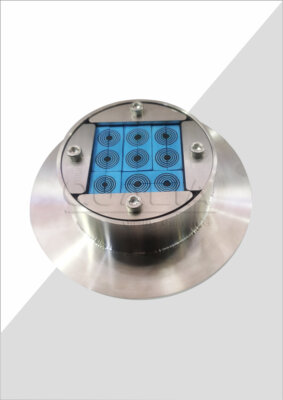
The distinction between factory acceptance and installed-condition evidence is especially consequential for BIBO (bag-in-bag-out) filter housings in high-containment exhaust systems. A BIBO system that passes its factory pressure test may have a seal compromised during installation, or may have been installed in a configuration that makes the bag replacement procedure physically impractical under the constraints of the actual maintenance space. Design-dense BSL-3 and BSL-4 systems frequently face access constraints that were not fully resolved during design—service aisles narrowed by late-stage equipment additions, isolation valve handles blocked by duct modifications, emergency repair paths that were not walked through under realistic conditions. When maintenance access is inadequate, the practical consequence is that filter replacement gets deferred, deferred maintenance introduces unverified performance drift, and the containment record for the exhaust system becomes undefendable at audit.
| Review Aspect | Ce trebuie să confirmați | Potential Consequence If Overlooked |
|---|---|---|
| Filtration stages and duct pressure drop | Design matches capacity expansion and room pressure requirements | Insufficient exhaust or pressure imbalance after modification |
| Control logic integration | HEPA/BIBO sequences align with room cascade and alarm management | Uncoordinated response during demand changes or failure |
| Filter replacement access | Safe replacement possible without breaking containment | Maintenance event compromises containment strategy |
| Calibration and service isolation access | Instruments and isolation valves reachable for routine service | Drift and unverified performance from deferred maintenance |
| Emergency repair access | Critical components can be reached under emergency procedures | Extended downtime with containment breach risk |
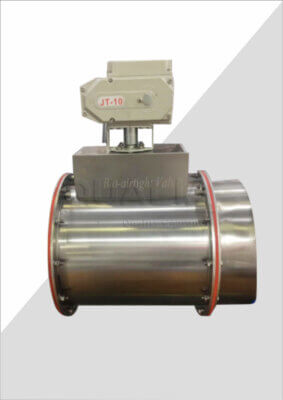
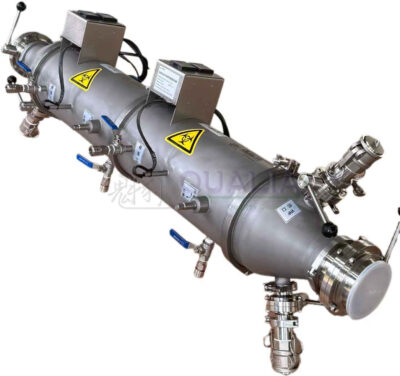
Control logic integration deserves specific attention at the system level. HEPA and BIBO sequences that were programmed during equipment-level checkout may not have been validated against the room cascade and alarm management logic that governs the rest of the facility. An uncoordinated response during an exhaust demand change—for example, a filter-change isolation that drops exhaust capacity in one zone while the adjacent zone continues at full supply—can temporarily invert the intended pressure relationship without triggering the alarm that would alert personnel. Confirming that the installed HEPA and BIBO control sequences behave correctly within the integrated building automation and safety system is a distinct step from confirming that the filter scan passed. Qualia Bio’s Bag In Bag Out system is designed with this maintenance access and containment continuity requirement as a core specification input.
Airlocks, transfer devices and personnel exit boundaries
Any single change to a transfer boundary—a new autoclave, a pass-through installation, an effluent line penetration, a revised airlock door—has the potential to expand the scope of what must be revalidated, often well beyond the modified element itself. This is the hidden procurement and scheduling constraint that catches projects when change orders are treated as isolated modifications rather than system-level events.
The mechanism is not difficult to understand. A new pass-through introduces a physical opening between two zones. The opening changes the pressure relationship between those zones, which may affect the cascade across adjacent areas. The interlock sequence for the pass-through must be integrated with door logic, occupancy sensing, and decontamination protocols for the connected zones. If any of those dependencies were previously accepted on the assumption that no new opening existed at that boundary, the prior acceptance evidence may no longer cover the current configuration. The same logic applies to autoclave additions that change room heat load and humidity balance, effluent line connections that create new containment barrier penetrations, and airlock door modifications that affect pressure recovery timing and personnel exit sequencing.
The planning criterion that prevents this from becoming a handover crisis is a pre-acceptance scoping review triggered by any boundary change. Before a change is accepted in contract or scope, the team should answer: does this element share an interface with an accepted containment boundary? If yes, what prior test records does it potentially affect, and which of those records will need to be reconfirmed in the integrated state? That review takes less time to conduct before the change is installed than it does to reconstruct under schedule pressure after the facility is otherwise ready for occupancy.
| Change Element | Potential Impact on Acceptance Evidence | What to Clarify Before Accepting |
|---|---|---|
| Autoclave addition or modification | May alter room heat load, humidity, air balance; could affect room classification and adjacent pressure cascade | Verify room classification calculations, airflow rebalancing, and emergency exhaust paths |
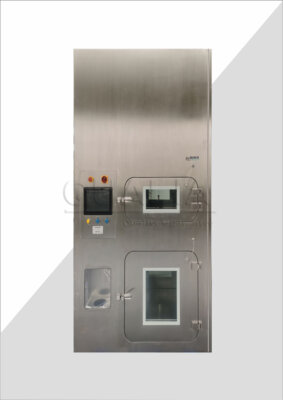
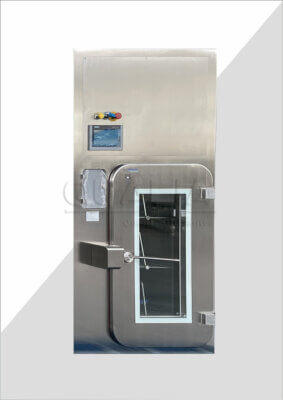
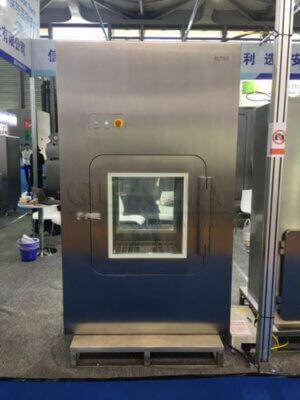
| Pass box installation | Introduces a new opening between zones; can alter pressure relationships and material flow | Confirm interlock sequence, pressure differential across zones, and decontamination protocol |
| Effluent line connection | New penetration in containment barrier; risk of contaminated backflow or air leakage | Validate containment barrier integrity, drain trap seals, and isolation capability |
| Airlock door modification | Changes door operation timing, interlock logic; may affect pressure recovery and personnel exit protocol | Test dynamic pressure recovery and interlock/escape procedure under fault conditions |
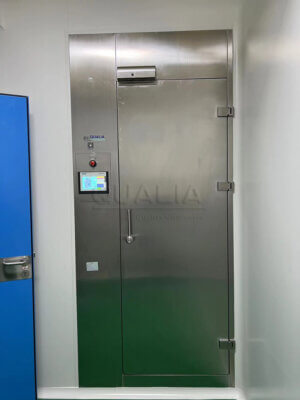
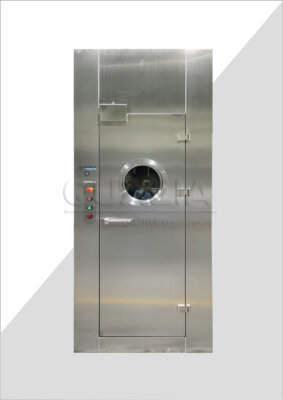
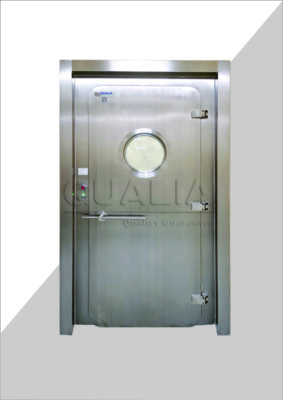
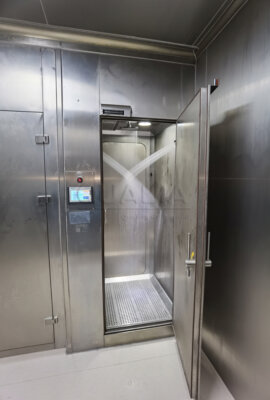
Personnel exit boundaries carry a specific additional consideration. An airlock door modification that changes interlock timing affects not only normal-operation material flow but also the emergency egress procedure. If the escape procedure was written and drilled against a door configuration that no longer matches the installed hardware, the procedure must be revised and the new configuration must be tested under fault conditions before the zone is considered accepted. That consequence rarely appears in the change order scope, and it is one of the more reliable sources of late-stage occupancy delays. Qualia Bio’s Pneumatic Seal APR Doors incorporate interlocking logic designed to coordinate with facility-level emergency egress and pressure recovery requirements, but integration testing with facility control systems remains essential regardless of equipment design.
VHP, EDS and controls readiness before operation
Decontamination system readiness is often the last major acceptance milestone, and it is the one where traceability between process parameters and biological outcomes is most frequently incomplete at handover. A VHP generator that has completed its factory qualification and has been installed and connected is not the same as a VHP system whose cycle parameters have been demonstrated to achieve the required log reduction across every zone it is expected to treat.
The four stages of validation that establish decontamination readiness—pretreatment conditioning, cyclic inactivation, end-point residual testing, and process-to-biological-outcome traceability—are not interchangeable, and they cannot be compressed without leaving gaps in the acceptance record. Pretreatment conditioning confirms that the environmental window for VHP efficacy (temperature and relative humidity within the specified range) is reliably achievable in the installed space. This matters because a room that was designed and tested without the full heat and moisture load from connected equipment may behave differently once all systems are active. Cyclic inactivation with biological indicator placement maps confirms that VHP concentration and contact time achieve the target log reduction at the most challenging locations in the actual space, not only at a reference point near the generator. End-point residual testing confirms that the aeration phase has driven residual hydrogen peroxide below the allowable limit before any personnel entry is authorized. Each of these stages requires documented records that can be traced to calibrated instrumentation and to the biological indicator results.
The traceability requirement is where many projects fall short of what is needed to defend acceptance. Standard performance qualification demonstrates that a cycle achieved the target result under nominal conditions. What distinguishes a defensible decontamination acceptance record is the ability to show how a deviation in cycle parameters—a temperature excursion, an early generator shutdown, a humidity spike—relates to the inactivation outcome for that cycle. Without that correlation established in advance, any cycle deviation produces an unresolvable question about whether the decontamination was effective. ISO 35001:2019 provides biorisk management context for understanding why that traceability requirement elevates acceptance beyond standard PQ; ISO 15714:2025 or equivalent standards for VHP process validation set out the technical framework, though specific applicability depends on the regulatory jurisdiction.
| Etapa de validare | Ce trebuie să confirmați | Record / Traceability Requirement |
|---|---|---|
| Pretreatment conditioning | Environmental parameters (temperature, humidity) meet specified window for VHP efficacy | Documented pretreatment logs and sensor verification |
| Cyclic inactivation | VHP concentration, contact time, and distribution achieve target log reduction across all zones | Cycle data with biological indicator (BI) placement maps and kill results |
| End-point residual testing | Residual hydrogen peroxide levels below allowable limits prior to entry | Validated aeration-phase data and clearance certification |
| Process-to-biological outcome traceability | Relationship between cycle parameters and BI inactivation demonstrated beyond standard PQ | Correlated documentation linking parameter deviations to inactivation outcome for every cycle |
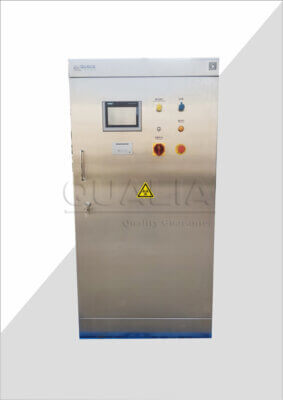
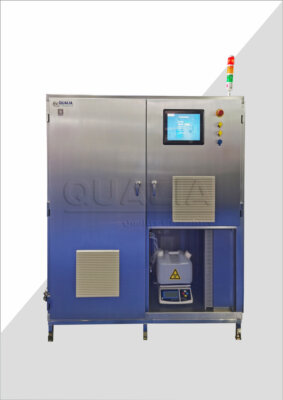
Effluent decontamination systems (EDS) carry the same traceability requirement in the liquid waste stream. A fully operational EDS with completed installation qualification is not an accepted EDS if there is no validated record confirming that the pretreatment and inactivation cycle achieves the required biological inactivation under the range of conditions the system will actually process. Control system integration—confirming that EDS interlocks, alarms, and process data logging are coordinated with facility-level monitoring—must also be verified in the integrated state before any BSL-3 or BSL-4 facility is considered operationally ready.
Handover threshold for unresolved system interfaces
The most reliable predictor of interface failures at handover is deferring integrated functional testing until the end of commissioning rather than beginning it as soon as systems are interconnected. Control sequence conflicts, alarm coordination gaps, and interlock logic errors are consistently easier to resolve during commissioning than at handover—not because the problems are different, but because the schedule pressure is less and the responsible parties are still engaged on site. When functional testing is deferred, the expected outcome is not that problems are avoided; it is that problems surface at the moment when resolving them is most disruptive.
The practical criterion for early integrated commissioning is to define the scope of integrated testing at the same time that individual system checkout schedules are set—not after equipment-level acceptance is complete. This means the HVAC controls, decontamination system PLC logic, access control interlocks, and alarm management platform should all be tested against each other before the commissioning schedule reaches its final phase. Hidden conflicts in control sequences—such as an HVAC demand response that suppresses a containment alarm under conditions where both are simultaneously triggered—are not visible during equipment-level checkout and only appear when the systems run together.
The threshold that expands validation scope beyond the modified room is reached when a component change is shown to affect an adjacent room’s classification, material flow, or emergency procedures. That threshold is conditional, not automatic; not every change crosses it. But determining whether the threshold has been crossed requires a deliberate scoping review, and that review should be completed before handover documentation is assembled, not after gaps are discovered during an audit. The practical standard, consistent with what CDC BMBL and WHO LBM describe as the expected level of containment assurance, is that no containment-critical system interface should enter the handover record as unresolved. An approved deviation with a documented remediation plan and timeline is defensible; an undocumented gap is not.
| Interface Issue | Risk If Unresolved | What to Confirm Before Handover |
|---|---|---|
| Control sequence conflicts | Unintended equipment interactions during normal or transient states | Validate integrated sequence logic across HVAC, decontamination, and access systems |
| Alarm dependencies | Nuisance alarms or missed containment alerts due to uncoordinated alarm philosophy | Test alarm generation, suppression, and prioritization across systems |
| Interlock logic gaps | Personnel or material movement that bypasses containment interlocks | Verify interlock hardwiring and software under all operating modes |
| Recovery mode interactions | Systems fail to return to safe state after power loss, fire alarm, or emergency stop | Execute recovery scenarios and record re-establishment of pressure cascade and alarm states |
| Un-scoped validation impact | A change in one room introduces unvalidated safety impact on adjacent areas | Expand validation scope to confirm classification, material flow, and emergency procedures for interconnected spaces |
The downstream consequence of unresolved interface issues is not limited to the occupancy delay. If an interface failure involves the boundary between a high-containment zone and a support area—a recovery mode that fails to re-establish pressure cascade after a power restoration, an interlock gap that allows a personnel movement that bypasses the intended decontamination sequence—the issue is a biosafety exposure, not simply an operational inconvenience. Treating the lab as not ready when any critical containment path lacks an integrated test record is the standard that reflects this consequence. Accepting a facility with known interface gaps on the assumption that they will be resolved post-occupancy is a risk allocation decision with consequences that extend beyond the project team.
The central judgment this framework supports is distinguishing between a facility where components have been accepted and a facility where the integrated containment system has been accepted. Those are not the same condition, and conflating them is the origin of most late-stage revalidation events and occupancy delays in high-containment projects. Before any handover record is assembled, the team should be able to confirm, for each containment-critical interface, that an integrated test was performed, that the record is complete and traceable, and that the responsible party has signed off. If any interface lacks that record, the question is not whether to accept the facility—it is whether an approved deviation with a documented remediation timeline exists, or whether additional testing is required before occupancy is authorized.
For projects approaching handover with open items, the practical next step is a structured interface gap review that maps every unresolved system dependency against the five containment test methods, the decontamination validation stages, and the interlock/recovery scenarios. That review will surface which gaps are administrative—missing records for testing that was actually completed—and which are substantive, meaning integrated tests that were planned but not performed. Only the second category represents real biosafety risk, and identifying it before occupancy is exactly what a system-level acceptance framework is designed to achieve.
Întrebări frecvente
Q: What happens to previously accepted test records when a single component—such as an autoclave or pass-through—is added to an already-accepted containment boundary?
A: Prior acceptance records for adjacent boundaries may no longer be valid and will need to be reconfirmed in the integrated state. A new component introduces physical, pressure, and interlock dependencies that did not exist when original testing was conducted; the scope of what must be re-tested is determined by a pre-change scoping review that maps every interface the new element shares with accepted containment boundaries.
Q: Is integrated pressure cascade testing required even if steady-state pressure mapping already shows the design targets have been met?
A: Steady-state mapping alone is not sufficient for handover. It confirms the design was achieved under static conditions, but it does not demonstrate that containment holds during realistic transients—simultaneous door cycling in adjacent airlocks, exhaust fan state changes, or peak occupancy demand shifts. Both steady-state and dynamic pressure records should be present in the acceptance package before a zone is considered accepted.
Q: How should a team handle a cycle parameter deviation during VHP validation if no prior correlation between process parameters and biological outcomes has been established?
A: Without that correlation established in advance, a deviation produces an unresolvable question about whether inactivation was effective for that cycle, and the cycle record cannot defend decontamination readiness. The traceability framework—linking temperature, humidity, concentration, and contact time to biological indicator results—must be defined before validation cycles begin, not constructed retrospectively after a deviation occurs.
Q: At what point does deferring integrated functional testing stop being a scheduling decision and become a biosafety risk?
A: It becomes a biosafety risk the moment an undetected interface failure could allow a containment breach to go unrecognized—for example, a recovery mode that fails to re-establish pressure cascade after power restoration, or an interlock gap that bypasses a required decontamination step. Control sequence conflicts and alarm coordination gaps that are only visible when systems run together cannot be treated as administrative clean-up items if the affected interface is a containment-critical boundary.
Q: Can a facility proceed to occupancy if a containment-critical interface has a known gap but the responsible parties agree it will be resolved post-occupancy?
A: No, unless an approved deviation with a documented remediation plan and a defined timeline exists in the handover record. An undocumented gap is not a defensible acceptance position regardless of verbal agreement. The distinction the framework draws is between an approved deviation—which is defensible—and an unrecorded open item, which represents unallocated biosafety risk that extends beyond the project team once occupancy begins.