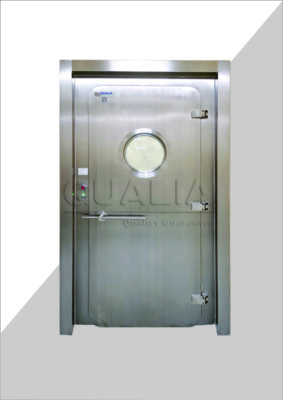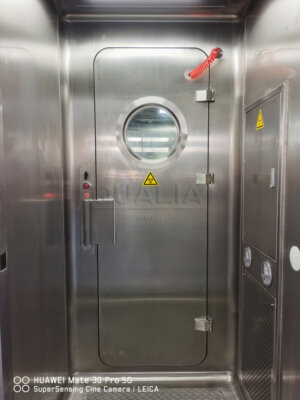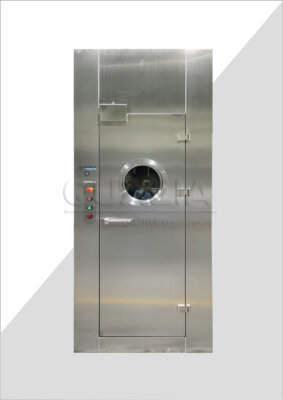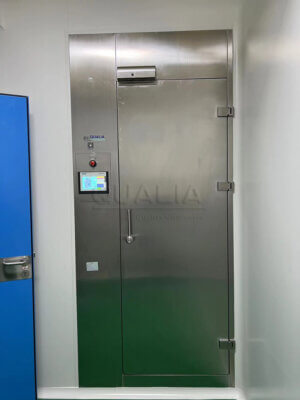

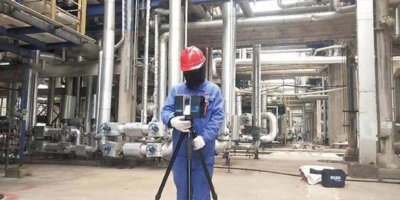
A fixed VHP system is often qualified against the room it was installed in, but the room on qualification day rarely matches the room during routine operation. Equipment gets moved in, consumables get restocked, and configurations shift between campaigns. Before any cycle is developed or released, the project team needs a clear answer to a prior question: what room state and what load does this cycle actually need to decontaminate, and does the compatibility evidence on hand actually cover that state?
Begin with the Intended Room State and Representative Load
A fixed VHP cycle is only as meaningful as the room condition it was built around. Cycle parameters, aeration time, and release criteria all respond to what is physically present when the vapor is introduced: the surface area and material composition of the room itself, plus whatever is loaded into it for routine use. If the cycle was developed and qualified against an empty or near-empty room, that evidence describes a different physical problem than the one the room faces once movable equipment, consumables, and product-contact items are placed inside it for actual operation.
This is why the starting question is not “does our VHP system work” but “what room state and load are we actually trying to decontaminate.” Where a room is used for a single consistent process with a stable equipment set, the intended room state may be close to one configuration. Where the room supports rotating equipment, seasonal consumable types, or multiple product campaigns, the intended room state is a range, and the project team has to decide which configuration within that range becomes the basis for qualification.
The representative load matters because vapor distribution is sensitive to geometry. A room’s vapor demand and contact pattern change with what is placed inside it, how it is packaged, and how it is arranged relative to the generator and airflow path. A load that looks similar on paper can behave differently depending on whether items are stacked, wrapped, or oriented in ways that create shadowed or low-exchange zones. Defining the intended room state early, before any material compatibility work begins, gives the rest of the assessment a fixed reference point rather than a moving target. Without that reference point, compatibility findings for one configuration risk being applied to a different one, which weakens the basis for both cycle development and eventual release.
Separate Construction Materials from Movable Equipment and Consumables
| Assessment group | Items to separate | Evidence and decision boundary |
|---|---|---|
| Room construction | Sealed, cleanable room surfaces | Assess suitability for whole-room decontamination; BSL-3 guidance does not specify a universal gaseous-decontamination cycle. |
| Penetrations and sealing materials | Penetrations, seals and elastomers | Check chemical resistance and porosity; the cited structural guidance is nonbinding and does not prove universal VHP compatibility. |
| Movable equipment | Equipment and instruments placed in the room | Require evidence for the planned repeated exposure; room-construction evidence does not establish compatibility. |
| Consumables and product-contact items | Consumables and items that contact product | Assess separately for the actual exposure pattern; room-material evidence does not establish suitability. |
| Eletrônicos | Electronic items within the planned load | Record supplier-data gaps for targeted trials; a single visible check does not establish repeated-exposure compatibility. |
Room construction materials and the items brought into a room for operation are not interchangeable from a compatibility standpoint, even though both sit inside the same vapor-exposed space. Sealed, cleanable room surfaces are generally selected and installed with whole-room decontamination in mind, and BSL-3 guidance frames sealed cleanable surfaces and provisions for whole-laboratory decontamination as a structural expectation following defined events, as described in the CDC/NIH BMBL, 6ª edição. But that expectation concerns the fixed enclosure itself, not the equipment, consumables, or product-contact items that pass through it during routine use.
Penetrations and sealing materials occupy a middle position. The Swiss Expert Committee for Biosafety’s recommendation on structural and technical safety measures identifies penetrations as part of the fumigatable boundary and flags the chemical resistance and porosity of sealing materials as a design concern, which means seals deserve their own compatibility attention distinct from both the surrounding wall surface and the equipment inside the room. A seal that has not been evaluated for repeated vapor exposure can degrade in ways that are not visible from a single inspection, and its failure mode has little to do with how the equipment in the room behaves.
Movable equipment, consumables, elastomers, electronics, and product-contact items each carry different exposure sensitivities and different consequences if compatibility is wrong. Electronics may tolerate a single exposure without visible change while degrading internally over repeated cycles. Elastomers may hold their shape while losing mechanical properties. Product-contact items raise a separate concern entirely, since any residue or surface change could affect the product they later touch. Treating all of these categories as covered by room-level evidence, or by each other, removes the basis for judging any one of them correctly. Where a project substitutes one item for a similar-looking item from a different supplier or material batch, the compatibility question reopens for that item specifically, regardless of what was previously confirmed for the room or for other equipment.
Map Shadowed Surfaces, Vapor Demand and Candidate Indicator Locations
| Mapping element | What to record | How it informs the trial |
|---|---|---|
| Hard-to-reach or shadowed surface | Location plus relevant geometry, packaging or load arrangement | Identifies challenging vapor-contact points and candidate indicator locations. |
| Vapor-demand concern | Actual room material or loaded item associated with the concern | Keeps the concern project-specific for cycle trials; no universal cycle follows from the cited guidance. |
| Physical measurement location | Suitable location within the intended room and load state | Provides physical validation evidence for the actual configuration. |
| Indicator location | Suitable candidate location, where appropriate | Indicator results complement physical measurements but do not replace process parameters or define a universal VHP cycle. |
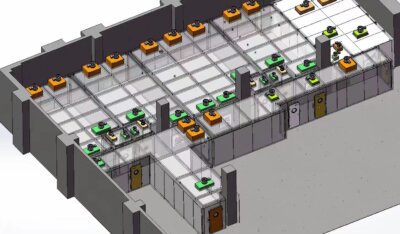
Once construction materials and movable items are separated into distinct evidence categories, the next task is physical: identifying where in the intended room and load configuration the vapor is least likely to reach consistently, and where measurement or indicator evidence should be gathered to test that assumption. Shadowed surfaces are not a fixed property of a room; they emerge from the interaction between room geometry, equipment placement, and packaging. A surface that is fully exposed in one load arrangement can become shadowed once additional equipment or consumables are introduced nearby, which is why this mapping has to be done against the representative and worst-case load rather than against the empty room.
Vapor demand follows a similar logic. Certain materials and surface types consume or interact with vapor differently than others, and a room’s overall vapor demand reflects the combined contribution of its construction materials and everything loaded into it. A change in load composition, such as introducing a new consumable type or a different packaging format, can shift the room’s vapor demand even if the room itself has not changed. This is a project-specific condition to document rather than a fixed property to assume from prior cycles, and Anexo 1 das BPF da UE frames the broader principle: sterilization validation relies on physical measurements and, where appropriate, biological indicators placed at suitable locations, rather than on indicator results alone.
Candidate locations for physical measurement and for indicators should follow from the shadowed-surface and vapor-demand mapping, not precede it. A location chosen because it was convenient in a previous qualification may not correspond to the most informative point in a different room or load configuration. Where the load arrangement changes meaningfully between campaigns, the candidate locations identified for one configuration may no longer represent the limiting points for another, and the mapping exercise needs to be repeated rather than assumed to still apply.
Test Compatibility Gaps Across the Planned Exposure Pattern
| Evidence condition | O que estabelece | Decision |
|---|---|---|
| Supplier data covers the actual material and planned repeated exposure | Relevant compatibility evidence for that material and exposure pattern | Use it as material-specific evidence while keeping cycle and release criteria specific to the actual room and load. |
| Only one exposure or a visible inspection is available | Does not establish repeated-exposure compatibility | Keep the gap open and target it in trials. |
| Supplier data is absent or incomplete | Compatibility remains a project-specific unknown | Record the gap and target the material or item in trials. |
| Evidence covers room construction only | Does not establish suitability for movable equipment, consumables, elastomers, electronics or product-contact items | Obtain separate evidence for the affected category. |
Compatibility evidence is only useful if it was generated under conditions that resemble how the material or item will actually be exposed. A single visible inspection after one exposure answers a narrow question: did this item show obvious damage once. It does not answer whether the item will hold up across the exposure pattern the room’s operational cycle actually imposes, which may involve repeated cycles over the item’s service life. Treating a single-exposure check as proof of ongoing compatibility conflates two different kinds of evidence.
Supplier data can close this gap, but only where it actually covers the material in question and the exposure pattern the project plans to use. Supplier data developed for a different material grade, a different exposure frequency, or a different vapor concentration profile does not transfer cleanly to the project’s own planned use, even if the material name looks the same on a data sheet. Where supplier data is absent or incomplete, that absence should be recorded as an open gap rather than quietly assumed to be acceptable, since the gap identifies exactly which material or item needs a targeted trial before it can be included in a qualified load with confidence.
This distinction also applies across categories. Evidence developed for room construction materials, however strong, does not extend to movable equipment, consumables, elastomers, electronics, or product-contact items, since each of these categories can respond differently to repeated exposure even within the same room and cycle. A project team moving toward cycle development benefits from treating this as a structured gap analysis: for each material or item in the planned load, is there compatibility evidence that matches both the actual material and the actual repeated-exposure pattern, or does a trial need to be run. Where that information is incomplete, the open gap itself becomes part of what a supplier conversation needs to address, since it defines which trials are still required before the load can be treated as qualified.
Define Load Boundaries Before Cycle Development and Release
| Boundary | Definition to document | Limite das evidências |
|---|---|---|
| Intended room state | Actual room condition and materials for planned operation | Forms the basis for cycle, aeration and release decisions; an endpoint borrowed from another enclosure is not universal. |
| Carga representativa | Intended load arrangement, geometry, packaging and hard-to-reach surfaces | Loaded trial evidence applies to the defined representative configuration. |
| Worst-case load | Most challenging planned load arrangement and hardest-to-reach surfaces | Must be defined before cycle development and supports evaluation within the declared boundary. |
| Empty-room evidence | Evidence generated without the representative or worst-case load | Does not prove loaded operation. |
Cycle development and release decisions only mean what they claim to mean if the room state and load they were built against are explicitly defined and documented beforehand. The intended room state, the representative load, and the worst-case load are three distinct references, and each supports a different claim. The intended room state describes the actual condition the room will be in during routine operation. The representative load describes a typical configuration within that state, useful for routine cycle performance. The worst-case load describes the most challenging arrangement the room is expected to encounter, including its hardest-to-reach surfaces, and it is this boundary that cycle development needs to address before any claim of adequacy can be made with confidence.
Empty-room evidence sits outside all three of these references. It can establish baseline vapor behavior for the enclosure itself, but it does not demonstrate performance for either the representative or worst-case loaded condition, since the presence of equipment, consumables, and packaging changes vapor distribution in ways the empty room cannot reveal. A cycle qualified only against an empty room, then applied operationally to a loaded one, carries an evidence gap between what was tested and what is actually happening during routine use.
Aeration and release criteria follow the same logic. An endpoint borrowed from a different enclosure, a different load type, or a different room’s qualification does not establish that the same endpoint applies to this room and this load, since aeration behavior depends on the same material and geometry factors that shape vapor distribution during the exposure phase itself. Where a project changes its representative or worst-case load definition after initial cycle development, for example by introducing a new equipment type or consumable packaging, that change reopens the load-boundary question and may call for renewed trials rather than an assumption that the original boundaries still hold. Information the project team assembles about intended room state, representative load, and worst-case load during this stage is the same information a supplier needs during configuration or quotation review for a Gerador de peróxido de hidrogênio VHP Tipo I, since generator sizing and cycle approach depend on the room and load boundaries the project defines rather than on the enclosure alone. Documenting these boundaries clearly before cycle development begins gives both the project team and the equipment supplier a shared, stable reference for what the cycle is actually meant to demonstrate.
Perguntas frequentes
Q: What should be documented before fixed VHP cycle trials begin?
A: Document the intended room state, construction materials, seals, movable items, consumables, electronics, and product-contact items, then define representative and worst-case load arrangements. Include geometry, packaging, hard-to-reach surfaces, candidate monitoring locations, and any supplier-data gaps so the trial addresses the actual operating condition.
Q: Can empty-room evidence be used to support routine loaded operation?
A: No. Empty-room evidence applies only to the state that was tested and does not prove performance with a representative or worst-case load. Loaded trials should use the declared arrangement and include challenging vapor-contact locations created by the load, packaging, and room geometry.
Q: Can compatibility evidence for room surfaces be applied to equipment and consumables?
A: Do not transfer it automatically. Room construction, seals and elastomers, movable equipment, electronics, consumables, and product-contact items may require separate evidence for their actual materials and planned repeated exposure; any uncovered category should remain an explicit trial gap.
Q: Which compatibility gaps should be prioritized for targeted trials?
A: Prioritize items with absent or incomplete supplier data, evidence limited to one exposure or visual inspection, and materials used in the most challenging planned load. Record the exact item, material category, and exposure pattern so trial findings are not generalized beyond what was assessed.
Q: When should a room or load change trigger a fresh compatibility and distribution review?
A: Review the evidence boundary whenever a change affects materials, seals, instruments, electronics, geometry, packaging, load arrangement, or hard-to-reach surfaces. If the revised condition is outside the documented representative or worst-case state, treat it as a new evidence gap and define the required checks before relying on the previous cycle basis.