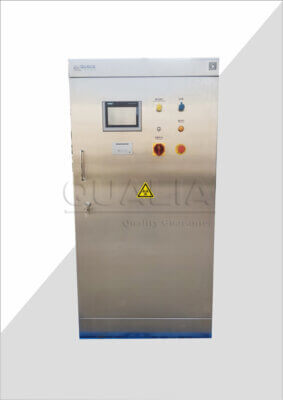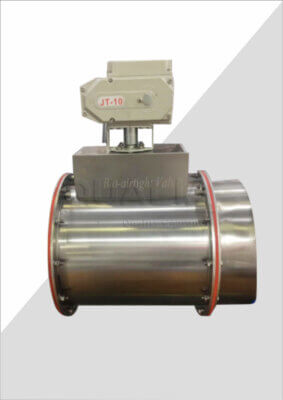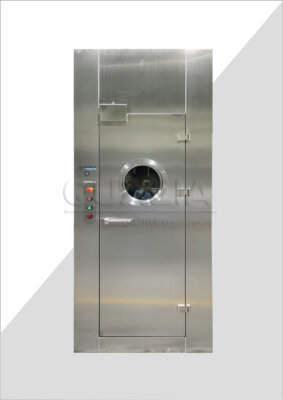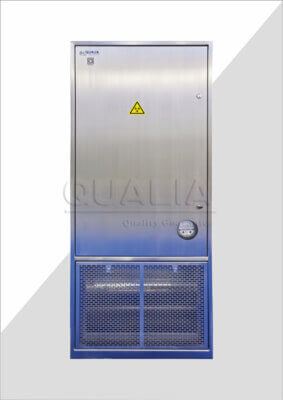

Containment projects that reach occupancy review without a structured evidence package tend to surface the same problem at the worst possible moment: QA cannot demonstrate that a specific containment function was tested, accepted, and handed to operations under defined conditions. The remediation path at that stage is rarely a missing signature — it is requalification, which means rescheduling qualification engineers, rerunning test protocols against installed systems, and resolving deviations that were never formally closed. The decision that prevents this is treating the documentation package as a structured evidence chain with defined phase boundaries, not as a collection of reports assembled at closeout. Understanding where each phase begins and ends, what supplier evidence can and cannot substitute for, and when a handover package is genuinely complete will determine whether your QA and biosafety approvals hold under inspection.
Document package boundaries from URS to final acceptance
The most practical function of a phase-structured document package is traceability — the ability to connect a containment requirement stated in the URS to the test record that demonstrates it was satisfied in the installed system. Without that chain, an inspector or biosafety reviewer cannot determine whether a pass result reflects the actual operating conditions or a factory setting that was never re-verified on site.
EudraLex Annex 15 frames qualification as a continuous, evidence-based process rather than a project milestone, which means each phase must produce records that the next phase can build on rather than replace. The URS and design basis set the functional baseline. FAT supplier records confirm build quality and control logic. SAT records confirm installed performance under site conditions. IQ/OQ/PQ protocols convert those site-condition results into a formal defensibility record. Final acceptance sign-offs confirm the evidence package is complete and the system is ready for operational transfer.
A common structural error is treating the phases as sequential checkboxes rather than as interdependent boundaries. When the URS is vague about containment performance thresholds, FAT test criteria inherit that vagueness, and OQ acceptance criteria become difficult to define without ambiguity. The gap rarely appears until PQ, when results cannot be compared against an agreed baseline.
Each boundary in the following breakdown reflects the typical evidence expected at that stage to support IQ/OQ/PQ integrity — not an exhaustive regulatory checklist, but the minimum defensible structure for a containment project.
| Fase | Typical Documentation | Boundary It Defines |
|---|---|---|
| URS / Design Basis | User requirements, containment specifications, design qualifications | Sets the functional baseline against which all later tests are measured |
| Supplier Test Records (FAT) | Factory acceptance test reports, build verification, control logic tests | Confirms the unit was built and functions correctly before shipment |
| Site Commissioning Records (SAT) | Site acceptance test reports, utility connection checks, room interface alarms | Verifies installed performance under site conditions, not just factory settings |
| Qualification Protocols (IQ/OQ/PQ) | Installation, operational, and performance qualification records | Demonstrates the system works as intended in its actual operating environment |
| Final Acceptance Sign-Offs | QA approval, biosafety sign-off, handover acceptance certificates | Marks the point where the evidence package is complete and the system is handed to operations |
One practical implication of this structure: final acceptance sign-off cannot substitute for gaps in earlier phases. If FAT records are missing for a critical control function and that function was not retested during SAT, PQ cannot retroactively validate it. The phase boundary is also the liability boundary.
Supplier evidence that can support site qualification
Supplier documentation can support site qualification, but it cannot replace it. The distinction matters because teams under schedule pressure often treat a complete O&M manual package as evidence of system readiness, when those documents actually describe what the system was designed to do — not what the installed system is doing under site-specific conditions.
The defensibility step is cross-referencing. Before IQ/OQ proceeds, supplier evidence should be reviewed against the installed state: O&M manual part numbers against installed equipment nameplates, approved submittal versions against the configuration on the floor, as-built drawing revision status against the open change order log, and warranty start dates against the actual substantial completion date. None of these checks are mandated at a prescriptive regulatory level for every project, but each one addresses a failure risk that, if undetected, can undermine the entire site qualification.
Warranty-date misalignment is worth calling out specifically because it creates a quiet liability gap. If a warranty start date is tied to factory shipment rather than site commissioning, early operational failures may fall outside coverage even though the facility has not yet reached full operational status. This rarely surfaces until something fails.
The table below maps the typical supplier evidence types against the discrepancy flags that should trigger a hold on qualification progress.
| Supplier Evidence Type | Discrepancy Flag | Why It Matters for Site Qualification |
|---|---|---|
| O&M Manuals | Manual references original equipment model after substitution | Leads to incorrect maintenance intervals and possible warranty voids |
| Approved Submittals | Submittal versions do not match installed configuration | Site qualification cannot confirm the as-built state meets approved design |
| As-Built Drawings | Open change orders or undocumented material substitutions | Drawings remain unverified, making IQ/OQ against as-built conditions unreliable |
| Project Schedules | Warranty start dates misaligned with substantial completion | Misalignment can shift liability and unclear coverage during early operations |
A submittal version that does not match the installed configuration is not a guaranteed disqualifier, but it creates qualification uncertainty that must be resolved before IQ/OQ proceeds. The installed state either matches the approved design or it does not — and if it does not, the deviation needs a disposition before test execution begins, not after.
Factory records versus installed-system records
The gap between what the factory shipped and what is installed on site is the most common source of rework-intensive closeout problems in containment projects. It is also the one that teams tend to underestimate because it accumulates gradually — a substituted component here, an undocumented change there — until as-built drawings cannot be finalized because open change orders are still pending.
The core failure risk is that O&M manuals and warranty documents that were written against original equipment specifications become unreliable the moment undocumented substitutions occur. Maintenance intervals, spare part numbers, and calibration requirements may no longer apply to the hardware that is physically installed. In containment systems where maintenance schedule integrity is a biosafety condition, not just a reliability preference, this matters more than it does in standard process equipment.
The practical reconciliation check is serial number-level. Before qualification lock-down, compare manual part numbers to installed equipment nameplates and purchase records, verify the change order log against drawing revision status, and reconcile the factory-supplied parts list with the physical inventory on site. These checks are recommendations derived from qualification traceability principles, not regulatory mandates — but skipping them propagates disconnects through maintenance planning and into the regulatory defensibility of the qualification record itself.
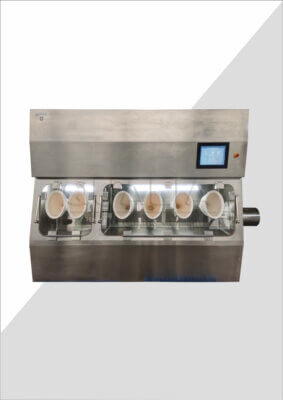
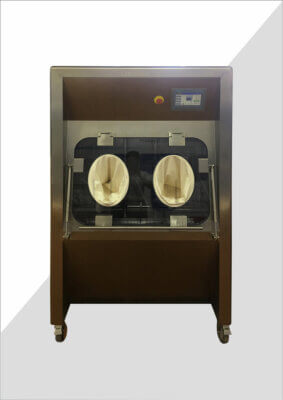
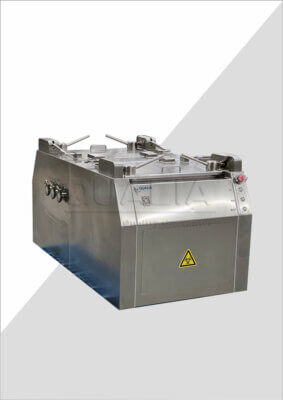
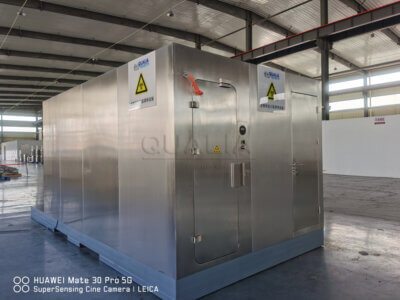
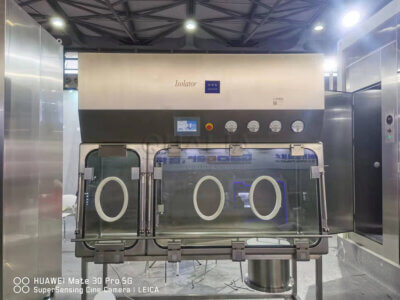
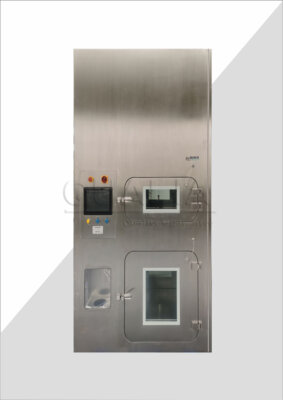
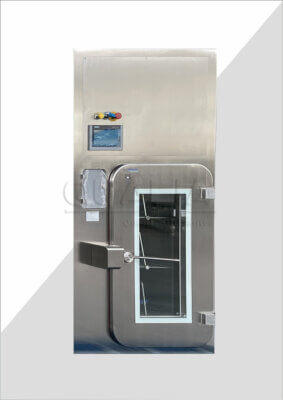
For isolators and pass-through systems that require periodic requalification, an unreliable O&M manual is not a one-time problem. It creates compounding uncertainty across every maintenance cycle and requalification event for the life of the system. The Aislador OEB4/OEB5 y Caja de pases VHP are examples of containment hardware where serial number-level traceability between factory records and installed configuration directly affects whether periodic requalification protocols can be executed reliably against a known baseline.
| Disconnect Issue | Validation Consequence | What to Cross-Reference |
|---|---|---|
| O&M manuals and warranty docs reference original equipment after substitution | Incorrect maintenance plans, voided warranties, preventable equipment failures | Compare manual part numbers to installed equipment nameplates and purchase records |
| Open change orders prevent as-built drawing finalization | As-built drawings do not reflect site reality, compromising IQ/OQ accuracy | Verify change order log against drawing revision status before qualification |
| Unmatched parts inventories between factory lists and on-site spares | Maintenance procedures become unreliable, and spare part availability is uncertain | Reconcile factory-supplied parts list with physical inventory and procurement records |
FAT creates a real but easily misread trade-off here. A clean FAT record confirms that the unit was built correctly and control logic was verified before shipment. It does not confirm that the installed unit is the same configuration that left the factory, and it does not verify site utilities, room pressure interfaces, or alarm integrations. Treating FAT as a precondition for SAT — rather than a substitute for it — is the correct read. The installed-system record must stand independently of the factory record.
Deviation closure before QA and biosafety approval
An open deviation at handover is not an administrative gap — it is an unresolved question about whether the system performs a documented function under defined conditions. QA and biosafety approvals built on incomplete deviation records create audit exposure that does not diminish over time; it compounds, because every subsequent inspection can revisit the original acceptance basis.
The process control that prevents premature sign-off is real-time status tracking of handover package completeness, with automatic re-evaluation triggered whenever an addendum or change order alters the documentation scope. When scope changes are absorbed without re-evaluating the evidence package, the result is a package that appears complete against the original requirements but has gaps against the current design basis. That discrepancy typically surfaces during QA review, not during project execution — at which point it requires rework rather than prevention.
The threshold for treating a handover package as complete is straightforward as a project-control criterion: every remaining limitation must be documented with a named owner and a review date. This is not a universal regulatory definition, but it is the minimum traceable accountability structure required to prevent open-ended gaps from reaching final approval. A deviation without an owner is a deviation that will not be resolved.
| Trigger or Condition | Required Closure Action | Why It Prevents Premature Sign‑Off |
|---|---|---|
| Addendum or change order alters documentation requirements | Automatic re‑evaluation of handover package completeness against updated scope | Ensures modified scope is reflected in the evidence package before approval |
| Unresolved deviation or limitation exists | Each limitation documented with an assigned owner and a review date | Creates traceable accountability so no gap is left unattended |
| Deviation lacks documented owner or review date | Confirm every open item has a named responsible person and a date for re‑inspection | Prevents handover with open-ended gaps that could delay final regulatory acceptance |
One specific mechanism worth implementing: whenever a change order is issued during construction or commissioning, it should trigger an automatic comparison between the new scope and the existing documentation requirements list. If the change order affects a containment function — HVAC control logic, interlock sequencing, pressure cascade setpoints — the affected test records and as-built drawings should be flagged for re-verification before the deviation log is updated. Without this linkage, change orders close financially while documentation gaps remain open.
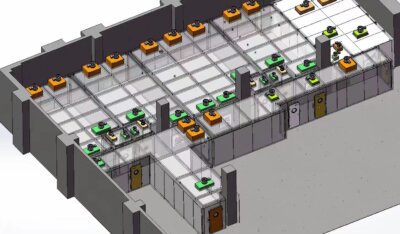
For projects involving complex containment infrastructure, the Puesta en marcha de su laboratorio BSL-3: Guía paso a paso outlines how deviation tracking integrates with commissioning sequencing before QA handover.
Handover index by system, room and serial number
The slowest point in most containment project closeouts is not getting documents produced — it is matching them to the right equipment. Drawings, calibration certificates, test reports, and deviation dispositions written against original specifications become unreliable the moment a substitution occurs on site without a corresponding update to the document index. The result is a package where individual records exist but cannot be reliably attributed to the specific hardware installed in a specific room.
The serial number is the linchpin. It is the single identifier that should connect every drawing, calibration record, test report, and deviation closure to the physical unit on the floor. A handover index organized by system, room, and serial number makes that connection explicit and auditable. Without it, a biosafety reviewer or QA auditor must manually reconstruct the attribution chain — a process that is slow, error-prone, and often incomplete.
The index structure described here is a practical recommendation derived from the traceability principles underlying Annex 15 qualification documentation — not a format prescribed by any single authority. Its value is that it creates a single-line audit trail from requirement through installation through qualification for each installed unit, indexed in a way that matches how engineers and biosafety officers actually conduct field reviews: by location and equipment, not by document type.
| Index Field | What It Captures | Why It Is Critical |
|---|---|---|
| System / Room | Containment zone or room identifier where equipment is installed | Groups records by physical location for ease of biosafety and engineering review |
| Equipment Serial Number | Unique identifier of each installed unit | The linchpin for matching drawings, calibration records, and test reports to the actual hardware |
| Document Reference(s) | Links to FAT, SAT, IQ/OQ, calibration certificates, and as‑built drawings for that serial number | Provides a single‑line audit trail from requirement through installation to qualification |
| Deviation Closure Status | Any open limitations, owners, and review dates tied to that equipment | Confirms that no critical containment function lacks an approved test record or disposition before handover |
A handover index is most useful when it is treated as a live document during construction, not assembled at closeout. If the index is built prospectively — populated during commissioning as each unit is installed and each record is produced — serial number reconciliation becomes a routine check rather than a closeout crisis. If it is assembled retrospectively, open change orders and undocumented substitutions will have already created gaps that require investigation to resolve.
Acceptance trigger for unresolved containment functions
A containment function with an unresolved test record, an unowned deviation, or an ambiguous acceptance basis should be treated as an incomplete package — not a minor administrative issue pending clearance. The distinction matters because biosafety sign-off and QA approval are not confirmations that the system is approximately ready; they are formal assertions that the evidence package demonstrates the system performs its containment function under defined conditions. An incomplete package at that stage creates a regulatory record with a gap in it.
The acceptance trigger for transferring a containment function to operations is a set of conditions that, taken together, confirm the system is in a stable and documented state — not individually sufficient, but collectively required. WHO Laboratory Biosafety Manual guidance and the qualification-readiness principles in Annex 15 both support the underlying concept: documented readiness must be confirmed before operational transfer, and that confirmation must be traceable. The five conditions below define what that stable state looks like in practice.
| Acceptance Condition | What It Means in Practice | Why It Must Be Confirmed |
|---|---|---|
| Read‑only behavior is stable | Containment logic and data outputs are locked from unauthorized changes | Guards against post‑validation alterations that could invalidate test results |
| Source references are understandable | Every data point, threshold, or alarm can be traced back to the URS or design basis | Ensures reviewers can interpret validation evidence without ambiguity |
| Missing‑data behavior is clear | The system’s response to missing or failed inputs is defined and documented | Prevents unanticipated safety gaps when sensors or data feeds fail |
| Approval and audit records are captured | All sign‑offs, review dates, and audit trails are complete and retrievable | Provides the regulatory record that the containment function was accepted under defined conditions |
| Operating owners have accepted the handover package | The team responsible for routine operation has formally acknowledged readiness | Transfers accountability from project delivery to ongoing operations |
Two conditions in this set deserve specific attention. Missing-data behavior — how the system responds when a sensor fails or a data feed drops — is frequently underdocumented in containment projects because it requires deliberate test scenarios that go beyond normal operating-range verification. If the system’s response to a failed pressure sensor or a missed interlock signal is not defined and tested, that gap is not a calibration issue; it is an unverified safety case. Similarly, operating-owner acceptance is not a formality. The team responsible for routine operation should formally acknowledge readiness because they are the ones who will manage the system when something unexpected occurs. Handover without that acknowledgment transfers risk without transferring informed accountability.
For containment functions involving VHP decontamination cycles, the Protocolo de validación de VHP: IQ, OQ y PQ para sistemas de peróxido de hidrógeno details how missing-data scenarios and cycle completion criteria should be treated within the IQ/OQ/PQ framework before acceptance sign-off.
A containment project’s document package is only as strong as its weakest unresolved link — and that link is almost always discovered late. The practical implication is that the quality of the package should be assessed continuously against a structured index, not assembled and reviewed as a block at closeout. The phase boundaries, serial number reconciliation, deviation ownership, and acceptance conditions described here are not procedural formalities; they are the mechanisms that make QA and biosafety approvals defensible under inspection, and that make operational handover a genuine transfer of accountability rather than a project team’s exit.
Before approving any handover package, confirm three things independently: that every critical containment function has an approved test record traceable to the installed serial number, that every open deviation has a named owner and a review date, and that the operating team has formally acknowledged readiness. If any of those three conditions is unresolved, the package is incomplete regardless of what the project schedule says.
Preguntas frecuentes
Q: Does the phase-structured evidence package apply if the project uses a design-build contractor rather than a traditional supplier-plus-integrator model?
A: Yes, but the boundary between supplier evidence and site qualification evidence becomes harder to enforce, not easier to ignore. In a design-build arrangement, the same entity produces both factory records and site commissioning records, which creates pressure to treat those records as interchangeable. They are not — FAT records still document factory conditions, and SAT and IQ/OQ/PQ records must still document installed-system performance under site-specific utilities, room interfaces, and alarm integrations. The phase boundaries exist because the conditions differ, not because the parties differ.
Q: Once QA and biosafety have signed off on the handover package, what should happen before the operating team takes formal control?
A: The operating team should complete a formal readiness acknowledgment tied to the same indexed package that received QA and biosafety sign-off — not a separate verbal confirmation. This acknowledgment should confirm that the team has reviewed the approved test records, understands the deviation dispositions and any residual limitations, and accepts accountability for the containment functions being transferred. Without this step, handover transfers the regulatory record without transferring informed operational accountability, which creates a gap the next inspection or incident investigation will expose.
Q: At what point does a deviation become serious enough to block final acceptance rather than carry forward with an owner and review date?
A: Any deviation that affects a critical containment function — pressure cascade setpoints, interlock sequencing, HVAC control logic, or decontamination cycle completion criteria — should block acceptance until it is formally closed, not carried forward. The owner-and-review-date mechanism is appropriate for administrative gaps and non-critical documentation discrepancies, not for unverified safety cases. If the system’s response to a failure mode has not been tested or the test result was outside acceptance criteria, the containment function is unqualified, and sign-off on an unqualified function creates a regulatory record with a structural gap rather than a managed risk.
Q: How does the serial number reconciliation requirement change when modular or prefabricated laboratory systems are used instead of site-built construction?
A: The reconciliation requirement becomes more critical, not less, because prefabricated systems often arrive on site with integrated components — HVAC units, interlocks, control panels — whose individual serial numbers may not be reflected in the overall system documentation. Each embedded component that has its own calibration interval, maintenance schedule, or requalification requirement needs to appear in the handover index under its own identifier, not only under the parent system’s serial number. If it does not, the first requalification event will require investigators to reconstruct which components are physically installed, at which point the index has already failed its core function.
Q: Is full IQ/OQ/PQ qualification always necessary, or are there containment project types where a commissioning-only approach is defensible?
A: A commissioning-only approach is not defensible for any containment system where the performance of a specific function is a biosafety condition or a GMP requirement — which, in BSL-3/4 and pharmaceutical containment contexts, includes pressure cascade maintenance, interlock performance, decontamination cycle completion, and alarm integration. Commissioning confirms that systems are installed and operating; IQ/OQ/PQ converts that into a formal, inspectable record that a specific function performs within defined limits under documented conditions. Annex 15 and WHO Laboratory Biosafety Manual guidance both treat that documented confirmation as a prerequisite for operational use, not an optional enhancement.