
Containment equipment change control fails most often not during the work itself, but in the framing around it. A technician replaces a door gasket, a work order gets signed, and the equipment returns to live-agent use—without anyone having confirmed which containment function was at risk, what the barrier state was before the change, or whether post-change conditions were verified against anything more than visual inspection. The downstream cost is not hypothetical: contamination events, unplanned shutdowns, and regulatory findings during inspection have each been traced to changes that passed internal work-order review while silently degrading the containment envelope. The judgment that prevents this is not more documentation volume—it is the discipline to start the checklist at the right place, which is always the affected containment function, not the maintenance task name.
Affected Containment Function as Checklist Starting Point
The first question on any containment equipment change-control checklist should not be “what maintenance is being done?” It should be “which containment function could this change affect, and how?” That reframing changes what gets reviewed before work starts, what test scope gets assigned, and who needs to approve the change before return to service.
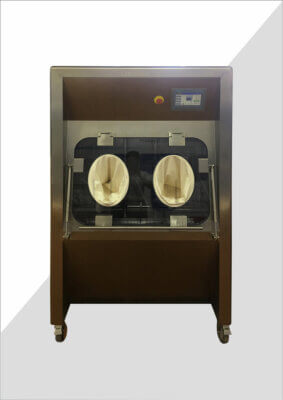
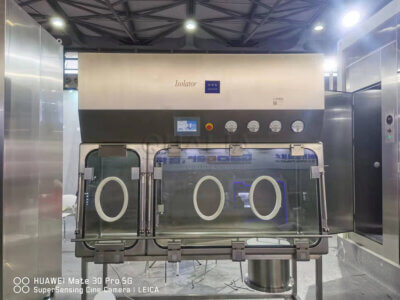
Under U.S. Select Agent Program guidance, primary containment equipment categories—biological safety cabinets, animal and arthropod caging systems, and plant growth chambers—are explicitly named as the containment functions that require focused protection. This is a useful planning criterion even for facilities not regulated under select agent requirements, because it anchors the change-control intake question to the physical barrier rather than the task. A filter replacement in a Class II BSC is not a “filter replacement” from a change-control perspective—it is a potential modification to airflow pattern and HEPA integrity, which are the barrier functions the BSC provides. The same logic applies to a ventilation adjustment on an IVC rack or a seal repair on a controlled environment room.
The table below maps containment functions to their change-control focus, providing the starting frame for checklist scoping. These examples are not exhaustive, but the column structure—function, equipment type, change-control focus, and clarification question—is the format that prevents task-based framing from narrowing the review prematurely.
| Containment Function | Equipment Examples | Change-Control Focus | Was zu klären ist |
|---|---|---|---|
| Biologische Sicherheitswerkbank | Class II BSC, isolator | Airflow pattern, HEPA filters, sash operation | Has airflow or filter integrity been altered? |
| Animal/Arthropod Caging System | IVC racks, sealed cages | Ventilation, seal integrity, waste containment | Are barriers against allergen/agent release maintained? |
| Plant Growth Chamber | Controlled environment rooms | Air handling, light cycle, containment integrity | Could changes disrupt containment of pollen, spores, or vectors? |
Skipping this step produces a specific failure mode: the change-control record describes what was done to the equipment, but not what containment function was potentially disturbed. That gap cannot be closed after the fact during an audit. An inspector reviewing a change-control record for a BSC gasket replacement will expect to see evidence that airflow integrity was considered and verified—not just that a part was swapped to specification.
Before-and-After Equipment State Definition
A change-control checklist that captures only what will be done after the change, without documenting the verified state before it, cannot support a meaningful impact assessment. The before state is not the baseline assumption—it is the confirmed condition. If the current pressure setpoints, alarm windows, equipment class eligibility, and validation status are not recorded at the point of change initiation, the “after” comparison has no reference, and requalification scope becomes a guess.
Requalification scope defined without a confirmed before-state is not risk-based—it is assumption-based.
U.S. Select Agent guidance treats exposure monitoring before and after a containment equipment change as a safeguard specific to facilities working with regulated agents, where the expectation is that the post-change state results in lower or unchanged exposure risk. Even where that specific monitoring requirement does not apply, the underlying logic is sound and defensible across containment contexts: the checklist should force the team to state what they believe the post-change state will be, and then prove that assumption holds before return to service. The “assumption to prove” column in an impact assessment is where most teams underinvest.
The four state aspects that should always be documented are equipment class eligibility, parameter setpoints and tolerances, requalification scope, and exposure monitoring baseline where applicable. The table below structures these comparisons with explicit identification of the assumption each comparison must resolve.
| State Aspect | Before Change | After Change | Assumption to Prove |
|---|---|---|---|
| Equipment Class Eligibility | Current approved classes | Proposed classes after change | New class does not introduce unvalidated conditions |
| Parameter Setpoints & Tolerances | Baseline setpoints, alarm windows | Intended setpoints and tolerance bands | Operating parameters will remain within safe containment boundaries |
| Requalification Scope | Existing validation status | Additional tests or recertification needed | Change has not compromised validated containment performance |
| Überwachung der Exposition | Current exposure baseline (if applicable) | Post-change exposure expectations | Change results in lower or unchanged exposure risk |
In practice, the most common omission is the tolerance band comparison. Teams document that a new controller has been configured to the same nominal setpoint as the old one, without confirming that the alarm windows and control response behavior are equivalent. A narrower or wider tolerance band on a pressure differential controller can change how the containment envelope responds to door-opening events or supply/exhaust imbalance—a performance difference that may not appear in commissioning data but will show up under operational load.
Test Scope by Barrier Type
Generic commissioning tests applied uniformly across all containment changes are one of the most reliable ways to produce a change-control record that passes review while leaving a real risk unresolved. The test scope must be built from the affected barrier, not from a standard commissioning checklist attached to the work-order type.
Five barrier types cover the majority of containment equipment change scenarios: airflow and exhaust filtration, seal and pressure integrity, transfer and cycle integrity, effluent decontamination, and autoclave and chemical decontamination. For BSL-3 and BSL-4 environments, exhaust air must be directly discharged to outside with HEPA-Filterung where applicable—confirming filter integrity, directional airflow, and exhaust continuity after any change affecting the air system is therefore a minimum test expectation, not an optional verification. For facilities with Effluent Decontamination Systems, post-change test scope must include sterilization verification of the EDS, including thermocouple placement and holding time confirmation, before liquid waste streams are reconnected to the treated discharge path.
Decontamination equipment presents a specific scoping risk: autoclave changes require biological indicator placement at the geometric center of the load, positioned to present the maximum steam-penetration challenge, not at an accessible surface. Chemische Dekontaminierung changes must verify that the agent concentration, contact time, and shelf-life or freshness requirements are still met by the post-change procedure—a reformulated disinfectant, a changed contact dwell protocol, or a different solution preparation interval each represents a change in the decontamination barrier that needs its own confirmation.
| Barriere Typ | Testumfang | Key Evidence | Risiko bei Unklarheit |
|---|---|---|---|
| Airflow & Exhaust Filtration | HEPA filter integrity, directional airflow verification, direct exhaust confirmation | Particle counts, pressure drops, smoke patterns | Contaminated air may remain in workspace or recirculate |
| Seal & Pressure Integrity | Door/gasket seal checks, room or enclosure pressure differential tests | Manometer readings, bubble or tracer tests | Pathogen escape if pressure cascade fails |
| Transfer & Cycle Integrity | Interlock functionality, door seal timing, sterilization cycle effectiveness | Cycle records, biological indicators (where applicable) | Contamination during material transfer between zones |
| Dekontamination des Abwassers | EDS sterilization verification, thermocouple placement, holding time confirmation | Temperature/pressure charts, validation report | Biohazardous liquid bypassing treatment |
| Autoclave & Chemical Decontamination | Autoclave: BI placement in load center; Chemical: concentration, contact time, shelf-life compliance | BI results, chemical logs, procedure records | Incomplete sterilization, residual agent |
Rahmenwerke wie EudraLex Annex 15 und ASTM E2500 provide useful approaches for defining verification scope based on criticality and risk, though neither prescribes a fixed test list for containment equipment. The practical value is in the logic they support: prioritize tests based on what the barrier actually does, what failure mode the change could introduce, and what evidence would confirm the barrier is functioning as required. A gasket replacement on a room-to-room APR door, for example, triggers seal and pressure integrity testing—not HEPA filter testing, unless the door modification also disturbed the air system interface.
Engineering QA and Biosafety Approval Roles
Containment equipment changes frequently enter approval routing as engineering or maintenance items, with QA added for documentation review. Biosafety review is either siloed into a parallel process or skipped entirely on changes classified as low-impact by engineering. This routing pattern creates a specific compliance gap: a change that is mechanically correct can still alter exposure or release risk in ways that only biosafety review is positioned to catch.
U.S. Select Agent regulations require that the biosafety and biocontainment plan address safeguards and associated work practices—specifically including BSCs, animal caging systems, centrifuge safety containers, administrative controls, and PPE. Any change affecting those safeguards should carry biosafety input as part of the approval path, not as a downstream notification. The distinction matters because biosafety review at approval stage can redirect test scope, require additional controls, or flag that a work-practice update is needed alongside the equipment change. Biosafety review after the fact cannot do any of those things without forcing a retroactive change-control record.
| Rolle | Approval Responsibility | When Input Is Critical | Risiko bei Unterlassung |
|---|---|---|---|
| Technik | Confirm mechanical/electrical design, equipment specifications, and barrier modifications | Change affects HEPA, seals, pressure controls, or structural integrity of containment barriers | Non-compliance with engineering standards, equipment failure |
| QA | Verify documentation completeness, validation status, and requalification evidence | Change alters validated parameters, equipment class, or requires re-validation | Uncontrolled change leading to regulatory deviation |
| Biologische Sicherheit | Assess impact on exposure or release risk, ensure safeguards remain effective | Change could affect BSCs, caging, decontamination, or work practices that protect personnel and environment | Increased biohazard exposure or environmental release |
A change classified as low-impact by engineering is not automatically low-impact for biosafety—those are different assessments from different risk frames.
The table above structures responsibility by role, but the prose point it should anchor is this: the three roles ask different questions, and missing any one of them leaves a category of risk unreviewed. Engineering asks whether the physical change is correct. QA asks whether the validated state is maintained. Biosafety asks whether exposure or release risk has changed. All three questions must be answered before a change affecting containment barriers enters the approval pathway for return to service.
Evidence Review Before Return to Service
Work-order completion is an administrative milestone. Return to service is a risk decision. Treating them as equivalent is the single most common failure pattern in containment equipment change control, and it is the pattern most likely to produce a cross-contamination event, an unplanned facility shutdown, or a significant finding during regulatory inspection.
Before any containment equipment returns to live-agent or active pharmaceutical ingredient use following a change, the evidence package assembled during the change process must be reviewed against the questions the change originally raised. If the before-and-after state definition identified assumptions that needed proving, those assumptions must appear in the evidence package with results attached. Decontamination status of affected laboratory surfaces and equipment must be confirmed, and relevant personnel must be informed of the status—this is a facility-level checkpoint from U.S. Select Agent guidance, but the underlying discipline is sound for any high-containment environment where personnel or the environment could be exposed through incomplete decontamination before re-entry or re-use.
The evidence review checkpoint should ask four questions explicitly: Are all required tests complete, with results meeting acceptance criteria? Is the decontamination status of affected surfaces and equipment confirmed? Has the change-control record been reviewed for completeness by QA? Has biosafety confirmed that the post-change safeguards remain effective? A return-to-service decision made without affirmative answers to all four is not a risk-based decision—it is a work-schedule decision.
The practical way to enforce this checkpoint is to make it a separate, dated sign-off in the change-control record, distinct from work-order closure. If those two events share the same signature line or the same date field, the review is structurally invisible and will not hold up under audit scrutiny.
Change-Control Closure Beyond Work-Order Completion
Change-control closure should confirm that the containment function is restored, the evidence supports that judgment, and the facility is ready to return to the work the equipment supports—not just that the repair or modification task is complete. Conflating the two produces records that show a closed work order against a change that has not been validated as complete from a containment standpoint.
For facilities working with select agents, or transitioning equipment between agent types or strains, closure must explicitly confirm that laboratory work surfaces and equipment have been decontaminated to prevent cross-contamination between select agents and non-select agents, or between different strains. This is not a general housekeeping check—it is a boundary condition for safe re-use of the space, and it belongs in the change-control closure record rather than in a separate maintenance log that may never be cross-referenced during an inspection.
Closure that precedes decontamination confirmation is not administrative efficiency—it is an uncontrolled transition.
EudraLex Annex 15 is applicable as a qualification and requalification framework where pharmaceutical production or testing environments are involved. It supports the principle that requalification evidence must be reviewed and accepted before a validated system returns to use—a principle that directly applies to containment equipment change control when the change has touched a qualified barrier or parameter. The closure record should reference the requalification evidence by document number, confirm that results met acceptance criteria, and state explicitly that the change-control process is closed as a result of that confirmation, not as a result of the work being finished.
Closure should also capture whether any follow-on actions were generated by the change—updated procedures, revised risk assessments, new PPE requirements, or periodic re-verification milestones—and assign ownership and due dates. A change-control record that closes without capturing follow-on obligations creates the conditions for drift: the containment function is returned to service correctly, but the procedural or monitoring infrastructure that was supposed to be updated alongside the equipment change remains at its pre-change state.
The practical test of a containment equipment change-control checklist is not whether it is thorough by volume, but whether it forces a team to answer five questions in sequence: which containment function is affected, what is the confirmed state before the change, what assumptions must the post-change evidence prove, who has reviewed the change from engineering, QA, and biosafety perspectives, and what evidence has been reviewed before the return-to-service decision is made. A checklist that skips or merges any of those questions is not a simplified process—it is a process with an unreviewed risk category.
Before closing any containment equipment change-control record, confirm that the evidence package addresses the affected barrier type specifically, that decontamination status is documented rather than assumed, and that return-to-service authorization is a distinct sign-off with an identified reviewer. Where requalification is involved, the closure record should trace directly to the qualification evidence, not to the work-order completion date.
Häufig gestellte Fragen
Q: We do not work with select agents or operate a BSL-3/4 facility. Is this change-control checklist still relevant for our BSL-2 or general aseptic processing suite?
A: Yes, the core logic applies, but test scope and approval rigor can be scaled to your risk class. The sequence—identify the affected containment function, confirm the before-and-after state, match testing to the barrier, and separate return-to-service from work-order closure—is just as valuable at lower containment levels. Adapt the specific tests and which roles must sign off, but replacing the function-first framing with a task-based shortcut creates the same audit-exposure gaps in any controlled environment.
Q: After we close a change-control record with a return-to-service decision, what is the immediate next step for the maintenance and operations teams?
A: Immediately update the equipment’s validated-state documentation and any connected operational procedures. That means revising the master asset record with new setpoints, alarm bands, requalification due dates, and maintenance schedules. If the change altered control-system limits or user interfaces, align those operational screens and alarm-response protocols before routine use; otherwise the facility operates with a discrepancy between the as-changed equipment and the as-documented configuration.
Q: If we replace a part with an identical, OEM-approved component, can we skip the full before-and-after state definition and just document the work order?
A: No. Even a like-for-like replacement needs a recorded before-state for the barrier parameters that could have been disturbed. You may not need full requalification if no setpoints or tolerances change, but you must confirm that the containment function—seal integrity, airflow pattern, pressure cascade—was not compromised during the swap. A compressed checklist capturing the pre-replacement measurement and a post-installation barrier-specific verification is the minimum defensible record.
Q: How does a function-based change-control approach compare with a standard, task-based engineering change-control process in terms of time and audit defensibility?
A: The function-based approach demands more upfront scoping—identifying the barrier, documenting pre-change parameters, and routing through biosafety and QA—but it consistently yields stronger audit defensibility and catches risk interactions that task-based processes miss. Task-based records describe what was done to the equipment, not what containment function was affected; that gap cannot be closed during an inspection. The extra planning time pays back through fewer unplanned requalifications and reduced contamination-event risk.
Q: Is this rigorous change-control checklist practical for a small biotech startup with a single QA person and limited resources?
A: Yes, when applied proportionally. The non-negotiable elements—identifying the affected containment function, recording the before-state, verifying the barrier after the change, and making return-to-service a distinct decision—need a disciplined template, not a large department. A lean one-page checklist with dropdowns for barrier type and approval routing is easily maintained. The checklist protects against precisely the kind of containment failure that would be far more damaging to a small company than the effort to document it correctly.