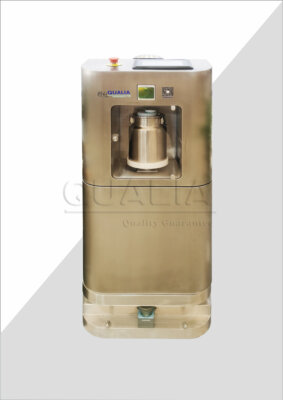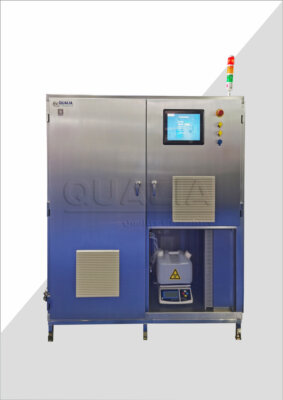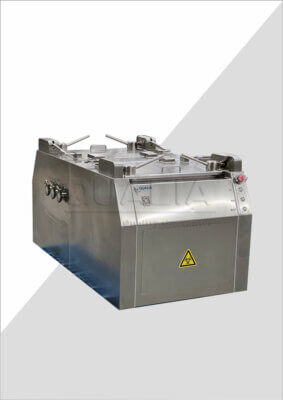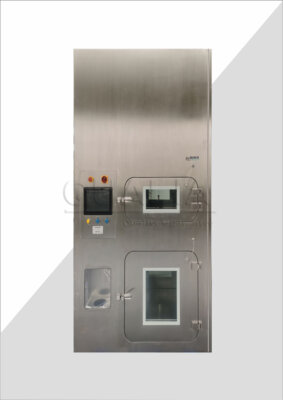

Procurement teams often finalize pass box specifications before the contamination workflows are fully mapped, which means the mismatch between equipment capability and actual transfer risk tends to appear at commissioning or during the first external audit rather than at the order stage. The cost is not abstract: a static unit installed for a transfer route that moves material from an uncontrolled corridor into a controlled lab cannot be retrofitted with HEPA filtration after the wall penetration is built, and the redesign delay can hold up a facility qualification for weeks. The decision that prevents this is straightforward but requires translation work that rarely happens — converting qualitative contamination concerns into specific equipment requirements before procurement closes. Reading through what follows, you will be better positioned to match pass box configuration to transfer risk, identify the maintenance gaps that erode performance over time, and recognize when a standard design is structurally insufficient for the job it is being asked to do.
Microbiology transfer scenarios that change feature needs
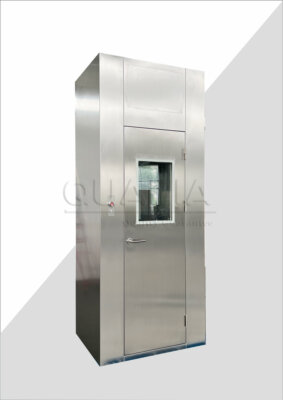
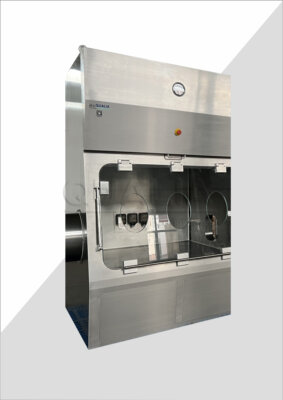
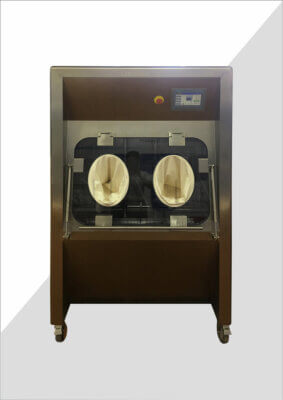
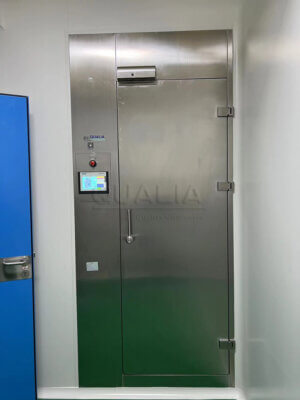
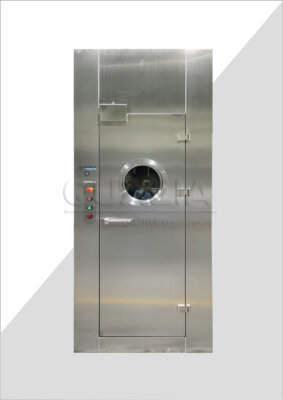
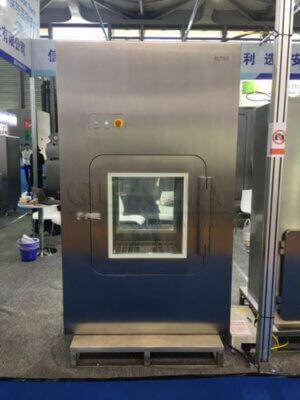
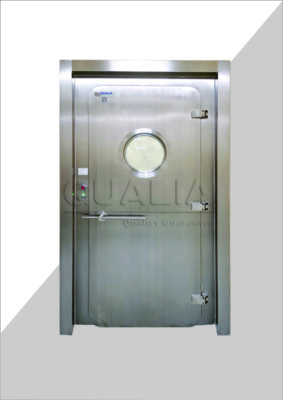
The static-versus-dynamic choice is a planning criterion tied to one concrete variable: whether the areas on either side of the pass box operate at the same cleanliness level. If they do, a static unit — no active airflow, no HEPA filtration, containment maintained through interlocked doors alone — is technically appropriate. If they do not, or if one side is an uncontrolled environment such as a corridor or receiving area, a static box is misapplied from the first transfer.
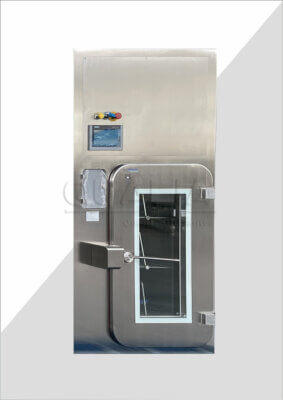
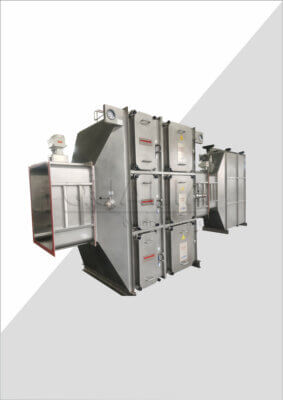
The misapplication rarely looks like a visible failure. It looks like slightly elevated particle counts, microbiological monitoring results trending toward action limits, and an SOP that asks staff to wipe down incoming items before placing them in the chamber — a procedural compensating measure that acknowledges what the equipment cannot do. The dynamic pass box addresses this directly: its suction HEPA filter and motor blower pull air through the chamber to remove airborne particulate before it can enter the controlled side, which is the mechanism that justifies its use for uncontrolled-to-controlled transfers. That mechanism has a maintenance cost attached to it, but the relevant point at the selection stage is that no cleaning protocol on a static box achieves the same outcome.
| نوع صندوق المرور | Transfer Scenario | الميزات الرئيسية | Risk of Misapplication |
|---|---|---|---|
| صندوق التصاريح الثابتة | Same cleanliness level (e.g., cleanroom to cleanroom) | No active airflow; relies on interlocked doors | Cross-contamination between areas of different cleanliness levels |
| Dynamic Pass Box | Uncontrolled to controlled area, or differing cleanliness levels | Suction HEPA filter and motor blower to remove dust particles | Premature filter loading or missed maintenance leads to particle carryover |
The risk-of-misapplication column in this comparison is worth treating as a procurement checkpoint rather than a theoretical concern. A static box installed in a scenario requiring active airflow creates a contamination pathway that is difficult to close through procedure alone, and the correction — replacing the unit or retrofitting the wall opening — is expensive after construction is complete.
Interlock and surface controls that prevent carryover
Interlocked doors are the mechanism most people point to when asked how a pass box prevents cross-contamination, and that answer is correct but incomplete. The interlock prevents both doors from opening simultaneously, which stops direct airflow between the two rooms and eliminates the shortcut path for particles and aerosols. What it does not address is residue accumulation on interior surfaces between transfers, or the leakage that occurs at door seals over time.
Surface material and geometry are where the interlock’s gap becomes a practical specification question. A 304 stainless steel inner chamber is a common design choice for cleanable pass box interiors because the surface resists corrosion and tolerates the repeated application of 70% IPA and other disinfectants without degrading in ways that create particle-shedding risk. Internal covings — the rounded corners where walls meet the floor and ceiling of the chamber — are specified for the same reason: right-angle corners accumulate cleaning-resistant residue, and a coved interior removes the geometry that makes that accumulation likely. Neither of these features is dramatic, but together they determine how reliably the chamber can be returned to a clean state between uses.
Door seal integrity follows the same logic. Tempered glass windows with feather-edge rubber seals are intended to prevent airborne particle migration through the gap around each door. The seal’s condition degrades with use and with cleaning chemical exposure, which means it belongs on a regular inspection checklist rather than being treated as a set-and-forget component. A failing seal at the door margin is not visible during normal operation, but it allows particle leakage that the interlock cannot compensate for. These surface and seal details tend to get evaluated quickly during equipment selection — they should be evaluated as part of the same decision framework as the airflow configuration, because they determine baseline performance between decontamination cycles.
Decontamination options for higher-risk sample movement
Routine surface cleaning with 70% IPA is the baseline for pass box interior maintenance, and it is appropriate as a process-level procedure for low- to medium-risk transfers. For situations where the transferred material itself carries contamination risk — outgoing samples, higher-risk biological materials, or items moving from a hot zone toward a cleaner area — cleaning alone is not sufficient because it does not provide a verified reduction in viable organisms.
UVC irradiation is the most common upgrade added to address this gap. A typical cycle uses around 15 minutes of UVC exposure, and the effectiveness of that cycle depends entirely on validated performance against the target organisms used in commissioning. The conventional validation approach uses a العصيات الرقيقة العصوية spore challenge, which is a conservatively resistant organism; passing that challenge provides a credible basis for operational confidence in the UV system. The critical planning implication is that exposure time alone does not confirm effectiveness — a 15-minute cycle that was never challenged microbiologically cannot be treated as equivalent to one that was. This distinction matters when UVC pass boxes are specified during procurement: the question is not whether UV is included, but whether the system has been validated and whether that validation is documented.
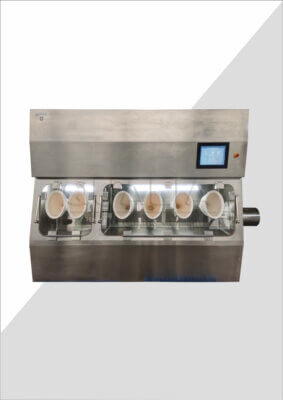
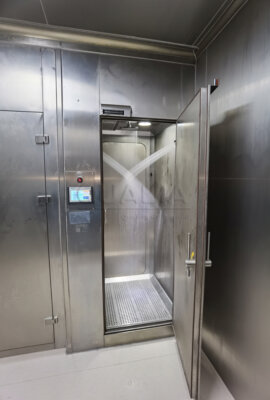
VHP — vaporized hydrogen peroxide — represents a meaningfully higher decontamination tier. Unlike UVC, which has known limitations around surface shadowing and lamp degradation, VHP achieves validated sporicidal performance throughout the chamber volume and is the appropriate choice when the facility requires confirmed contamination reduction as part of the transfer process rather than as a best-effort measure. The صندوق مرور السلامة البيولوجية configurations available for higher-risk scenarios reflect this distinction, with VHP capability specified as an upgrade path for facilities that cannot accept the procedural uncertainty of UV-only decontamination.
Chemical disinfection, UVC, and VHP are not interchangeable options across the same risk level. Each represents a different decontamination assurance tier, and selecting among them without reference to the transfer scenario and the validation requirement attached to it is where specification errors are most likely to create audit exposure.
Requirement gaps that surface late in lab projects
The performance of a dynamic or UV-equipped pass box at installation is not the performance it delivers eighteen months later if the maintenance schedule has not been followed. This is where the largest gap between specification intent and operational outcome tends to open — not because the equipment fails suddenly, but because it degrades incrementally against a maintenance calendar that was never written into the facility’s SOPs.
UV lamp service life is the most commonly overlooked single variable. Published service life figures vary: some operational references cite 4,000 hours; some SOPs set the replacement threshold at 1,000 hours, presumably to maintain a conservative performance margin. That range is not a minor discrepancy — a facility operating on the 4,000-hour assumption that should be using a 1,000-hour threshold may be running significantly degraded UVC output for extended periods without knowing it. The practical requirement is a lamp hour counter that is actually monitored, a documented replacement schedule, and clarity in the SOP about which threshold the facility has adopted and why.
Filter replacement and qualification testing carry similar consequences if missed. The table below summarizes the checks that are most often absent from project documentation at handover.
| Requirement / Check | المخاطر إذا تم التغاضي عنها | ما الذي يجب تأكيده |
|---|---|---|
| UV lamp replacement (service life: 4000 hours; some SOPs specify 1000 hours) | Reduced decontamination reliability; UV may not inactivate target organisms | Confirm lamp hour counter and replacement schedule in SOPs |
| Interlock system functionality check | Both doors can open simultaneously, breaking containment | Confirm regular inspection procedure and manufacturer repair contact |
| Pre-filter (G4) replacement every 6 months; HEPA replacement every 6–12 months | Reduced air quality and increased contamination risk | Confirm filter replacement schedule and responsible party |
| Differential pressure gauge check on dynamic pass box | Undetected filter clogging or leakage affecting containment | Confirm monitoring frequency and acceptable pressure range |
| Qualification tests (PAO/DOP, particle count, air velocity) every 6 months | Undetected HEPA penetration or particle contamination; non-compliance | Confirm testing schedule, acceptance criteria (HEPA penetration <0.01%, particle count 0.5µ NMT 100/ft³, 5µ 0/ft³, air velocity 90±20 ft/min) and documentation |
The acceptance criteria in the qualification row — HEPA penetration below 0.01%, particle count at 0.5 µm not more than 100 per cubic foot, zero counts at 5 µm, air velocity at 90 ± 20 feet per minute — are figures that define whether the dynamic pass box is performing as specified. A unit that passes these criteria at installation and is never retested six months later may still be within specification, or it may not be; without the test, the facility has no basis for claiming it is. That documentation gap is the kind of finding that surfaces during regulatory inspections and qualification audits, and it is almost always attributable to the fact that the testing requirement was not built into the operational readiness plan at the time of procurement.
Viable contamination risk as the threshold for upgraded features
The decision to upgrade beyond a static pass box is not a judgment call that can be made qualitatively. There is a concrete threshold: if the transfer scenario requires verified contamination reduction for outgoing or high-risk materials, a static box is structurally below the minimum acceptable configuration, and no procedural supplement changes that. This is the point in the specification process where the lab user’s description of the transfer risk needs to be translated into an equipment requirement rather than an assurance that staff will be careful.
Microbiological monitoring limits provide an operational signal that can reinforce this threshold. Active air sampling results above 200 CFU/m³ or passive sampling above 100 CFU/plate in the areas served by the pass box are figures that, when exceeded, indicate the current configuration is not maintaining the intended environment. These are design-figure thresholds that point toward the need for corrective action or an equipment upgrade; they are not universal regulatory limits, but they are useful anchors for a conversation between lab users and procurement teams about when the current setup has reached its limit.
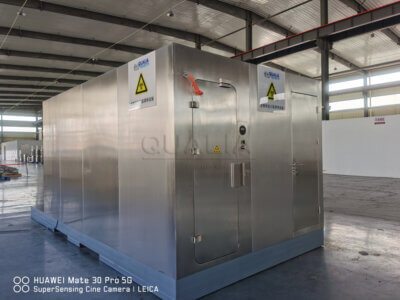
For operations involving hazardous materials where containment integrity is the primary concern rather than particle cleanliness alone, an RTP (Rapid Transfer Port) configuration represents a further upgrade beyond VHP — one designed specifically to maintain the pressure and containment boundary between zones during the transfer event itself. This is distinct from the cleanroom contamination control applications that dominate most pass box selection discussions, and it reflects that the risk spectrum across microbiology facilities is wider than the static-versus-dynamic binary suggests.
| مستوى المخاطرة | Minimum Pass Box Configuration | Typical Transfer Scenario | Viable Monitoring Trigger (if exceeded) |
|---|---|---|---|
| منخفضة | Static pass box (no HEPA) | Same cleanliness level; no contamination reduction requirement | Active air sampling NMT 200 CFU/m³, passive NMT 100 CFU/plate; exceeding indicates need for upgraded features |
| متوسط | Dynamic pass box with HEPA and differential pressure gauge; UV pass box | Transfers between different cleanliness levels or medium-risk materials | Same; exceeding may trigger upgrade to high-level configuration |
| عالية | Dynamic or VHP pass box; RTP passbox for hazardous materials | Verified contamination reduction for outgoing or high-risk materials; hazardous material transfer | Same; static configuration is below acceptable threshold; limits must be maintained |
The upgrade path — static to dynamic to UV to VHP to RTP — is not a linear progression where higher is always better. It is a matching exercise: each configuration carries acquisition cost, cycle time, and maintenance obligations that are only justified when the transfer risk level demands them. The planning error runs in both directions: under-specifying for a high-risk transfer is the more dangerous mistake, but over-specifying for a low-risk one creates maintenance burden and cycle delay without a corresponding contamination benefit. The Advanced Biosafety Pass Boxes by QUALIA article covers specific design configurations for higher-risk scenarios in more detail. Getting the match right requires that the contamination scenario — not the facility class alone — drives the specification.
The most useful single action before finalizing a pass box specification is to document the transfer direction, the cleanliness differential between the two areas, and whether the chamber must provide verified decontamination of outgoing materials. Those three factors determine whether a static unit is appropriate, whether HEPA airflow is required, and whether UV or VHP decontamination belongs in the specification. If any of those factors points toward a dynamic or decontamination-capable unit, the maintenance schedule, lamp replacement threshold, filter replacement intervals, and six-month qualification testing criteria need to be written into the facility’s operational documentation at the same time the equipment is specified — not added later when the first audit raises the question.
Facilities that treat interlock doors and chamber cleaning as the full contamination control answer for all transfer scenarios will typically discover the gap at commissioning or during an early qualification round. The retrofit cost, the qualification delay, and the procedural difficulty of compensating for a configuration that cannot meet the transfer requirement are all avoidable if the risk-level-to-configuration mapping is done before procurement closes.
الأسئلة المتداولة
Q: What happens if the pass box was already installed as a static unit but the transfer route actually connects an uncontrolled corridor to a controlled lab?
A: The static unit cannot be made adequate through procedure alone — the wall penetration would need to be reworked to accommodate a dynamic unit with HEPA filtration, which means construction delay and potential facility requalification. If the transfer volume is low and the risk level permits it, some facilities manage the gap temporarily by restricting the route to pre-cleaned, sealed items only, but this is a documented compensating measure with audit exposure, not a permanent fix. The correct resolution is to treat the retrofit cost as the consequence of a specification error and escalate the change before the facility reaches its qualification milestone.
Q: After commissioning a VHP pass box, what should be done before it is handed over to the lab team for routine use?
A: The immediate next step is ensuring that the VHP cycle validation, the microbiological challenge results, and the equipment-specific maintenance schedule are written into the facility’s SOPs before the first operational transfer. Validation documentation without a corresponding SOP that defines cycle parameters, lamp or generator service intervals, and the responsible role for each maintenance check creates a qualification gap that will surface at the first external audit. The handover package should include the acceptance criteria from commissioning qualification — HEPA penetration, particle counts, air velocity figures — so that the six-month requalification has a documented baseline to compare against.
Q: Does a higher biosafety level in the lab automatically mean a VHP or RTP pass box is required, or does the transfer scenario still need to be evaluated separately?
A: The biosafety level is an input, not the sole decision driver — the transfer scenario still needs to be evaluated on its own terms. A BSL-3 lab that only uses the pass box to bring in clean consumables from a controlled corridor may be adequately served by a dynamic unit with HEPA filtration, while a lower-classification facility moving contaminated samples outward may require VHP because the direction and content of the transfer create a verified decontamination requirement. The relevant question is whether the chamber must provide confirmed reduction of viable organisms on outgoing or high-risk materials, and that question depends on what is being moved and in which direction, not on the room classification alone.
Q: Is a UVC-equipped pass box a cost-effective middle ground between a basic dynamic unit and a full VHP system, or does the validation burden make it closer in complexity to VHP anyway?
A: UVC sits meaningfully below VHP in both acquisition cost and cycle complexity, but the validation requirement narrows that gap more than buyers typically expect. A UVC system that has not been challenged with a العصيات الرقيقة العصوية spore test cannot be operationally treated as providing verified contamination reduction — it is providing timed irradiation of uncertain efficacy. Once the challenge testing, lamp hour monitoring, replacement schedule, and periodic revalidation are factored in, the ongoing administrative burden is substantial. For facilities where the transfer risk genuinely requires only a moderate decontamination tier and where the validation program is already in place, UV is a defensible choice. For facilities that need sporicidal assurance or that lack the infrastructure to maintain a rigorous UV validation program, the step up to VHP often proves more cost-effective over the equipment lifecycle than managing a UV system that is never quite fully validated.
Q: If microbiological monitoring results in the areas served by the pass box are trending toward action limits but have not yet exceeded them, is that a signal to upgrade the equipment or to review the cleaning and usage procedure first?
A: Procedure review should come first, but it must be structured rather than general. The specific questions are whether the interlock is functioning correctly, whether UV lamp hours are within the replacement threshold, whether filter replacement intervals have been met, and whether the cleaning procedure is actually being followed between transfers. If all of those checks are current and results are still trending upward, the contamination source is more likely to be a configuration mismatch — a static or UV-only unit being used for a transfer route that needs HEPA filtration or a higher decontamination tier — than a procedure failure. Trending results that do not respond to confirmed procedural compliance are a strong signal that the equipment configuration has reached its functional limit for the transfer scenario it is serving.
المحتويات ذات الصلة:
- صندوق المرور في مجال الأدوية: دليل متطلبات ممارسات التصنيع الجيدة والتهيئة
- أنواع صناديق المرور في مجال الأدوية: الأشعة فوق البنفسجية الديناميكية الثابتة أو الأشعة فوق البنفسجية الديناميكية الثابتة؟
- صندوق المرور الصيدلاني: مواصفات الصف والشهادات
- صندوق المرور الديناميكي في مجال الأدوية: الامتثال لـ HEPA لمناطق ممارسات التصنيع الجيدة
- صندوق مرور السلامة البيولوجية: الأنواع ودليل الاختيار لتطبيقات BSL
- صندوق المرور الساكن في الغرف النظيفة: متطلبات التعشيق والتصنيف
- صندوق مرور الغرف النظيفة: متطلبات الاختيار والتكامل
- صندوق المرور الديناميكي لغرف التنظيف: التصنيف والتركيب
- صندوق المرور الثابت: تصميم التعشيق ومعايير التطبيق