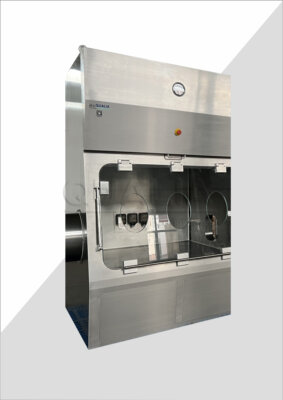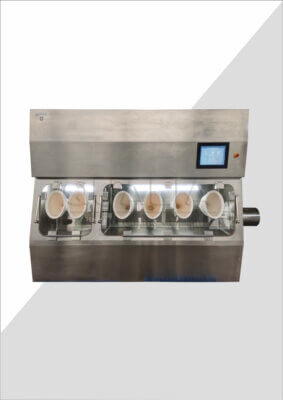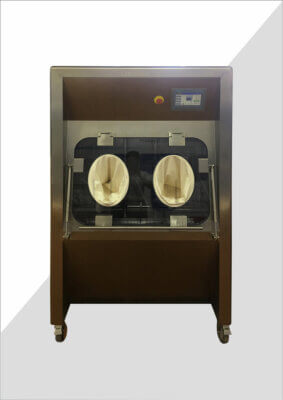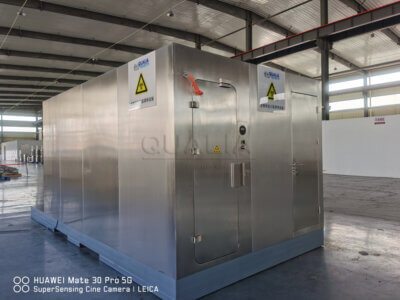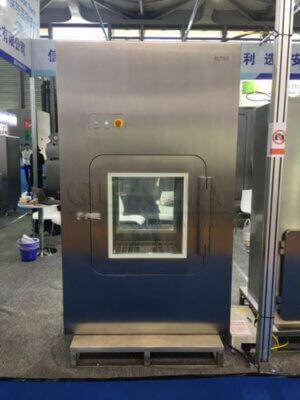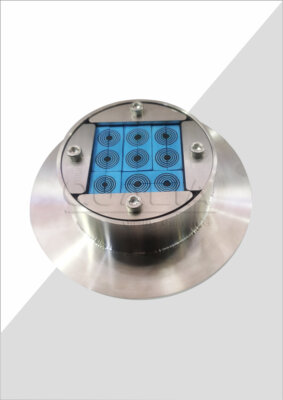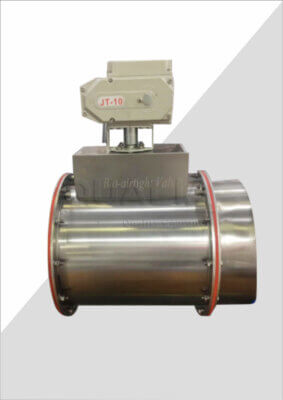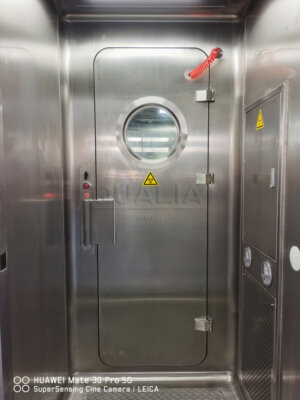

معظم مشاكل التركيب في تركيبات صناديق المرور لا يتم اكتشافها أثناء مراجعة التصميم - فهي تظهر أثناء العمل في الموقع، عندما تكون الجدران مغلقة بالفعل ويتم تثبيت أعماق الأكمام. في تلك المرحلة، يعتبر تصحيح شفة غير متناسقة أو لوحة غير مدعومة أو تفاصيل حشية لم يتم إدراجها في الرسم مشكلة في البناء، وليس محادثة مواصفات. دائمًا ما يكون السبب في المنبع هو نفسه تقريبًا: تم التعامل مع نوع الغرفة وتكامل الجدار وتخصيص المرافق كقرارات منفصلة تم حلها من قبل تخصصات منفصلة، دون لحظة مشتركة حيث تم تأكيد الموقع وحدود التصنيف والوصول إلى الصيانة معًا. يجب حل القرارات الأكثر أهمية - مكان وضع الوحدة، ونوع الغرفة المناسب لحدود التصنيف، وكيفية ارتباط نوع التعشيق بالحاجة إلى فرق الضغط - قبل الشراء، لأن كل واحد منها يقيد القرارات الأخرى. ستعطيك قراءة الأقسام أدناه أساسًا منظمًا لتقييم هذه الخيارات في مرحلة المشروع المناسبة.
تحليل مسار النقل قبل اختيار الغرفة
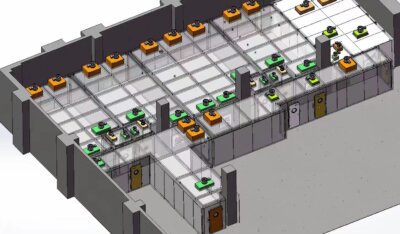
إن موقع صندوق المرور داخل تخطيط الغرفة ينطوي على عواقب أكثر مما تعينه الفرق عادةً أثناء التصميم المبكر. فالوحدة الموضوعة بجوار طاولة العمل أو المعدات الأساسية تقلل من الحركة المطلوبة لنقل المواد وتمنع حركة الموظفين من عبور مناطق العمل النشطة. عندما يتم تأجيل وضع الصندوق إلى مراجعة متأخرة للتخطيط، غالبًا ما ينتهي الأمر بالصندوق في موضع حائط ملائم من الناحية الهيكلية ولكنه غير فعال من الناحية العملية - مما يؤدي إلى حركة مرور مائلة للأقدام تزيد من أحداث التعرض وتعقد بروتوكولات التنظيف.
الموقع هو أحد مدخلات التخطيط. وما يتضمنه النقل في الواقع هو المدخل الآخر. قبل أن يتم تحديد نوع الغرفة بشكل هادف، يجب تأكيد أربعة معايير كتابيًا: تصنيف ISO على كل جانب من جوانب الجدار، وما إذا كان النقل يدويًا أو يتضمن عربة أو حامل، والوقت المتوقع لبقاء المواد داخل الغرفة، وحجم الإنتاجية عند ذروة الطلب. هذه ليست مجاملات إدارية. يحدد التصنيف على كلا الجانبين ما إذا كانت الوحدة الثابتة يمكن الدفاع عنها أو ما إذا كان الترشيح المعاد تدويره مطلوبًا. وقت السكون هو المتغير الذي غالبًا ما يفاجئ الفرق في أغلب الأحيان - فالصندوق المخصص لعمليات المرور اليدوي السريع قد يستخدم عمليًا لتخزين المواد على مراحل، مما يغير ما إذا كان الترشيح النشط أو الديناميكي له ما يبرره. يحدد الإنتاجية ما إذا كان تصميم التعشيق ودورة الباب يمكن أن يلبي الطلب دون خلق عنق زجاجة يضغط على المشغلين لدعم الأبواب المفتوحة.
يجب تأكيد كل بند من هذه البنود قبل عرض أسعار المعدات، وليس أثناء مراجعة التقديم.
| عنصر التخطيط | ما الذي يجب تأكيده | ما أهمية ذلك |
|---|---|---|
| موقع صندوق المرور | ضعها بالقرب من المعدات عالية الاستخدام؛ تجنب المرور العابر وازدحام الموظفين. | يمنع عدم كفاءة سير العمل والتلوث المتبادل من الحركة غير الضرورية. |
| تصنيف الغرف النظيفة (كلا الجانبين) | توثيق فئة ISO لكل غرفة متجاورة. | يحدد نوع الحجرة المطلوبة ومستوى حماية الحدود. |
| طريقة النقل والحمل | توضيح النقل اليدوي باليد أو النقل بالعربة/الحامل. | يؤثر على حجم الغرفة، وتدفق الأرضية، واحتياجات الدعم الهيكلي. |
| وقت مكوث المواد | تقدير الوقت النموذجي والحد الأقصى لبقاء المواد داخل الحجرة. | يؤثر على ما إذا كان هناك ما يبرر الترشيح النشط أو الديناميكي. |
| حجم الإنتاجية | تحديد التحويلات في الساعة والحمل في ساعة الذروة. | يضمن قدرة تصميم التعشيق ودورة الباب على تلبية الطلب دون حدوث اختناقات. |
إن تخطي هذه المراجعة لا ينتج عنه فقط اختيار غرفة غير متطابقة. بل ينتج عنه سلسلة من التصحيحات النهائية: وحدة صغيرة جدًا بالنسبة لأحمال العربة تتطلب دورة مواصفات ثانية؛ صندوق ثابت مثبت على حدود ISO حيث تكون فروق الضغط مهمة يتطلب استبدال أو هندسة تكميلية؛ وحدة ذات وضع سيء تولد نوعًا من حركة التدفق المتقاطع التي كان من المفترض التخلص منها. تكون تكلفة حل هذه المشكلات بعد الشراء أعلى باستمرار من تكلفة مراجعة المواصفات المسبقة المنظمة.
تفاصيل الجدار واللوحة التي تؤثر على التكامل النظيف
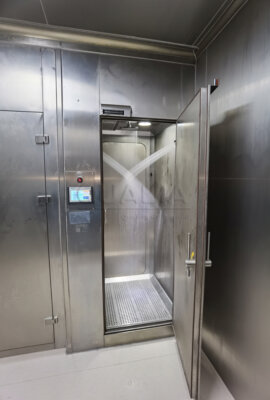
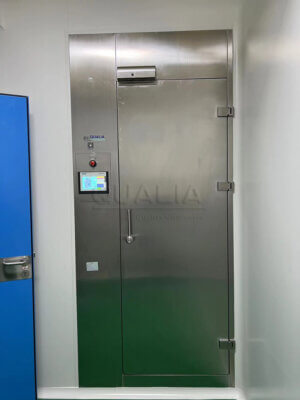
تفاصيل تكامل الجدار هي المكان الذي تصبح فيه فجوات المواصفات أكثر موثوقية مشاكل في البناء. يتطلب الاتصال بين صندوق التمرير ونظام الألواح المحيط به ثلاثة أشياء للحفاظ على الحدود النظيفة: فجوة محكمة الإغلاق في المحيط، ودعم هيكلي مناسب لوزن الوحدة، وأسطح داخلية يمكن تنظيفها دون أن تحبس التلوث. عندما لا يتم حل أي من هذه الأمور في وقت التركيب، فإن النتيجة ليست مشكلة تحمل جمالية بسيطة - بل هي مسار تلوث في نقطة واحدة في الغلاف الذي يتم فتحه مرارًا وتكرارًا أثناء العمليات.
مانع تسرب الحافة إلى الجدار هو نقطة الفشل الأكثر شيوعًا. يجب أن يتطابق عمق الغلاف مع سُمك الجدار الفعلي. إذا تم تحديد الغلاف من الرسم القياسي دون التحقق الميداني، فإن الحافة إما أن تكون متغطرسة عن السطح - تاركة فجوة خلفها - أو تنخفض إلى الأسفل قبل أن تتدفق الخزانة، مما يخلق حافة تحبس الجسيمات وتقاوم التنظيف. تمثل جدران الألواح العازلة مشكلة هيكلية إضافية: فهي ليست قادرة دائمًا على تحمل الحمل الساكن لصندوق تمرير مركب دون تشوه موضعي، وهذا هو السبب في أن حوامل الدعم هي عنصر تصميم مطلوب لتجميعات الألواح الرقيقة، وليست ترقية اختيارية. يؤدي تشوه اللوحة في محيط التركيب إلى كسر هندسة الختم حتى لو كانت الحافة صحيحة في البداية.
تتبع تفاصيل الحجرة الداخلية نفس المنطق. تصبح الشفة الأرضية - حتى لو كانت صغيرة - مصيدة تنظيف في بيئة منظمة وتخلق حاجز نقل للعربات أو الرفوف. تعمل حشيات الأبواب ذات الحواف الصلبة بشكل أكثر قابلية للتنبؤ خلال دورات فتح وإغلاق متكررة أكثر من الأختام الناعمة على غرار المساحات، والتي تتساقط منها الجسيمات أثناء تحللها. هذه هي مواصفات الملاءمة ومستوى العملية التي يجب أن تكون على الرسم قبل بناء الجدار.
| تفاصيل التكامل | ما الذي يجب تحديده | المخاطر في حالة إهمالها |
|---|---|---|
| ختم فتحة الحائط | استخدم الشفاه لسد الفجوة؛ تأكد من أن عمق الغلاف يطابق سُمك الجدار. | تؤدي الثغرات في التركيب إلى حدوث ثغرات في العازل وتسرب التلوث عبر الحدود. |
| سعة حمولة اللوحة | توفير حوامل دعم عندما تكون ألواح الحائط رقيقة (مثل الألواح العازلة). | يمكن أن يؤدي وزن صندوق المرور إلى تشويه الألواح، مما يؤدي إلى كسر الحاجز النظيف. |
| الملف الشخصي لأرضية الغرفة | حدد أرضية خزانة مسطحة بدون شفة. | تحبس الشقوق التلوث وتعقد عملية التنظيف، مما يعرض التصنيف للخطر. |
| تفاصيل حشية الباب | تتطلب حشيات أبواب صلبة الحواف؛ تجنب المساحات الناعمة التي تتحلل. | يمنع تساقط الجسيمات ويحافظ على سلامة مانع التسرب على مدار الدورات المتكررة. |
لا يكون نمط النتيجة، عندما تُترك هذه التفاصيل مفتوحة، غير واضح على الفور. يبدو التركيب الأولي مقبولاً. تظهر المشكلة أثناء عمليات تدقيق التأهيل أو التنظيف الروتيني، عندما يتم تحديد الفجوة خلف الحافة كمسار محتمل للتلوث، أو عندما يتبين أن الحشية المتدهورة تتساقط. يتطلب إعادة تركيب مانع تسرب الحافة الصحيح أو استبدال نوع الحشية بعد إغلاق الجدار تفكيك جزئي لمفصل اللوحة - وهو عمل أكثر اضطرابًا بكثير من تحديده بشكل صحيح في المرة الأولى. لا تكون الحدود النظيفة عند فتحة صندوق المرور قوية إلا بقدر قوة أقل تفاصيل التكامل التي تم حلها في هذا الجزء من الجدار.
أنواع الغرف المطابقة لمستويات مخاطر غرف التنظيف
القرار الأكثر تبعية من نوع الغرفة هو ما إذا كان صندوق المرور يحمل الترشيح الخاص به أو يعتمد على المرفق. يحدد هذا الاعتماد ما إذا كانت الوحدة يمكنها الحفاظ على تصنيفها الداخلي أثناء النقل، وما يحدث عندما تتغير الظروف على جانبي الجدار.
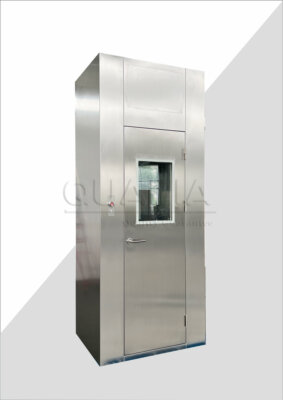
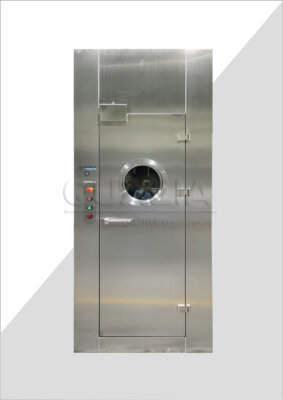
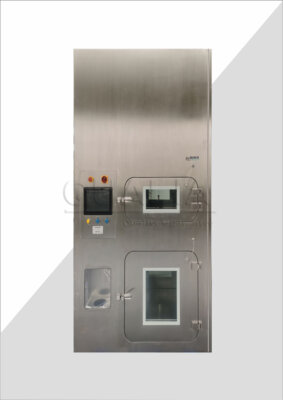
يعتبر صندوق المرور الساكن - أبواب متشابكة، بدون ترشيح نشط، وداخلية قابلة للتنظيف - مناسبًا عندما تشترك الغرفتان المتجاورتان في نفس تصنيف ISO ولا يلزم الحفاظ على فارق الضغط عبر الفتحة. يمنع التعشيق فتح كلا البابين في وقت واحد، مما يحد من الاتصال المباشر للهواء، ولكنه لا يستعيد النظافة داخل الغرفة بشكل نشط بين الاستخدامات. إذا كان وقت مكوث المواد قصيرًا وكانت كلتا الغرفتين ISO 7 أو ISO 8، فغالبًا ما يكون ذلك كافيًا. يحدث وضع الفشل عندما يتم تركيب وحدة ساكنة عند الحد الفاصل بين التصنيفات المختلفة: لا يمكن للتشابك وحده أن يحافظ على علاقة الضغط، ولا تتم إزالة الملوثات المنقولة مع المواد من جانب التصنيف الأدنى قبل فتح الباب الداخلي.
تقدم التصاميم شبه النشطة وصلة إمداد من نظام التدفئة والتهوية وتكييف الهواء في المنشأة للحفاظ على النظافة داخل الحجرة، مع وجود ترشيح HEPA اختياري. تكون هذه التصاميم مناسبة عندما تكون المنشأة قادرة على الحفاظ على التصنيف الداخلي لصندوق المرور من خلال تدفق الهواء الخاص بها وعندما تتوفر وصلة مجرى الهواء في موقع التركيب. التبعية حقيقية: إذا تم عزل نظام التدفئة والتهوية وتكييف الهواء الذي يخدم الصندوق أو ترقيته أو إعادة توازنه، يتغير افتراض نظافة صندوق المرور. يجب توثيق هذه التبعية أثناء التصميم، وليس اكتشافها أثناء مسح التكليف.
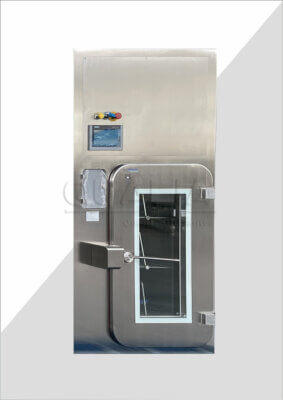
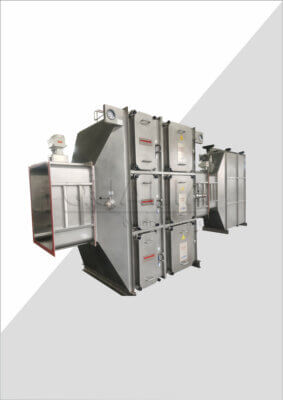
تعالج الوحدات النشطة - وحدات الترشيح بمروحة قائمة بذاتها مزودة بمروحة ذاتية مع HEPA وضغط زائد إيجابي - الاعتماد على HVAC من خلال توفير ترشيح مستقل. وهي خيار عملي لأهداف ISO 6-7 عندما لا تتوفر وصلة مجرى هواء مخصصة أو عندما تكون المرونة المستقبلية ذات قيمة. تذهب صناديق التمرير الديناميكية إلى أبعد من ذلك من خلال إعادة تدوير الهواء من خلال HEPA باستمرار، مما يجعلها مناسبة لتطبيقات ISO 5-7 ولأي نقل ينطوي على وقت مكوث المواد الممتد. تعني إعادة التدوير الحفاظ على النظافة داخل الحجرة حتى عند إغلاق كلا البابين بين الاستخدامات، وهو ما لا يمكن أن تضمنه التصميمات السلبية وشبه النشطة.
| نوع الغرفة | نطاق ISO القابل للتطبيق | الميزات والتبعيات الرئيسية | وقت الاستخدام |
|---|---|---|---|
| ثابت | ISO 7-8 | Interlocked doors, no active filtration, cleanable interior. | Transfers between rooms of identical cleanliness; no pressure differential needed. |
| شبه نشط | ISO 7-8 | HEPA optional; relies on ducted HVAC supply from facility. | When facility HVAC can maintain pass box cleanliness; requires duct connection. |
| Active (FFU + HEPA) | ISO 6–7 | Self-contained fan filter unit with HEPA and overpressure; no facility HVAC needed. | When dedicated HVAC connection is unavailable but ISO 6–7 cleanliness is required. |
| Dynamic (recirculated HEPA + monitoring) | ISO 5–7 | Recirculated HEPA filtration, differential pressure monitoring; stand-alone boundary. | Extended dwell times; transfers between differing cleanliness levels, including non-cleanroom to cleanroom. |
| Aseptic (welded body) | ISO 5 and aseptic zones | Full welded body with smooth radius corners; integrated HEPA filtration. | Aseptic manufacturing where particle traps must be eliminated. |
For aseptic manufacturing environments, the chamber construction itself becomes a specification variable. Smooth-radius, fully welded interiors eliminate the crevices and joints that collect particles, and they are necessary where classification demands it — not as a general upgrade applicable to any installation. The practical implication is that chamber type selection is not a single axis of choice. It is the intersection of classification boundary, HVAC availability, dwell time, and whether the application is aseptic. Teams that flatten that into a binary static-versus-dynamic decision tend to either over-specify for lower-risk areas or, more consequentially, under-protect classification boundaries where recirculated filtration and differential pressure monitoring were actually required.
Coordination items among architecture MEP and equipment teams
The items that reliably cause installation delays are not the ones that show up in equipment submittals — they are the ones absent from the first layout issue. Access for filter replacement, service panel clearance, and duct connection geometry tend to be discovered at construction coordination meetings rather than resolved in early design, which means they arrive as constraints against an already-fixed layout rather than as inputs into it.
Filter maintenance requirements establish minimum clear space around the unit that must be allocated in the room layout. Pre-filters at roughly G4 grade typically need replacement on a six-month cycle; HEPA filters on a six-to-twelve-month cycle depending on loading. That is a physical access requirement, not an abstract maintenance note. If the pass box is installed flush in a corridor wall with no service-side clearance, filter access requires either partial disassembly of adjacent panels or a maintenance interruption that was not factored into the facility’s operating schedule. Neither outcome is necessary if access dimensions are confirmed during architectural coordination.
For dynamic pass boxes, HEPA integrity requires more than visual access — DOP or PAO test ports need to be physically accessible with test equipment, and a differential pressure gauge must be present and readable for ongoing monitoring. These are validation and compliance requirements that should be treated as mandatory features at specification, not optional add-ons reviewed at submittal. The WHO Laboratory Biosafety Manual (4th edition) frames ongoing monitoring of filtration performance as part of continuous containment assurance, which supports treating these features as inherent to the design intent rather than negotiable.
UV-C germicidal lamp replacement, where decontamination capability is part of the specification, follows a roughly 4,000-hour service interval. That interval needs to appear in the facility’s maintenance schedule before commissioning, not after the first lamp failure reveals it was never planned for. Power allocation follows a parallel logic: dynamic and active pass boxes require dedicated circuits for fan motors, and semi-active units require ducted HVAC connections. Both are utility commitments that must appear in the MEP design. When they are confirmed late — after panel schedules and duct routing are finalized — they require rework that is disproportionately expensive relative to early resolution.
| عنصر التنسيق | ما الذي يجب تأكيده | ما أهمية ذلك |
|---|---|---|
| Filter maintenance access | Plan G4 pre-filter replacement every 6 months, HEPA every 6–12 months; ensure access space around pass box. | Avoids unplanned downtime and maintains continuous filtration performance. |
| HEPA integrity testing | Confirm dynamic pass boxes include DOP/PAO test ports and a differential pressure gauge. | Required for validation and ongoing compliance of containment. |
| UV-C lamp replacement | Schedule lamp replacement at approximately 4,000 operating hours. | Prevents loss of decontamination capability from unexpected lamp failure. |
| توصيلات المرافق | Allocate dedicated power for dynamic/active fan motors; provide ducted HVAC supply for semi-active units. | Prevents utility mismatch at installation that causes delays and rework. |
| Optional features | Specify door interlock timers, LED lights, magnehelic gauges, ATEX-rated versions early in design. | Late specification triggers coordination changes and potential integration issues. |
Optional features — interlock timers, magnehelic gauges, LED lighting, ATEX-rated construction — should be specified at the beginning of the design phase, before the equipment is quoted. Not because they are difficult to add individually, but because each one affects integration scope. An ATEX-rated unit, for example, has different utility and installation requirements than a standard unit. Discovering that requirement after procurement produces a specification change, a new submittal cycle, and a coordination adjustment that will delay installation.
Boundary protection needs as the integration threshold
An interlocked pass box controls physical access to one door at a time. It does not manage pressure differentials, remove particles introduced during a transfer, or restore the chamber’s internal classification between uses. For transfers between rooms of identical cleanliness with short dwell times, that may be adequate. For transfers across differing ISO zones, it is not — and conflating the two scenarios is where the most consequential boundary-protection errors occur.
The interlock type is a related but distinct decision. Mechanical interlocks operate without power and maintain fail-safe integrity during power loss. They require no sensors or control logic, which means their maintenance burden is low and their failure mode — physical jamming — is immediately visible. Electronic interlocks enable timed sequencing, remote status monitoring, and integration with building management systems, but they require power and periodic testing of sensors, wiring, and control logic. If an electronic interlock fails open — allowing both doors to be operated simultaneously — the result is a direct pressure connection between adjacent zones, which can cause a cleanroom classification loss and trigger a facility shutdown until the event is investigated and the classification is re-verified. That failure mode should not be treated as a likely outcome, but it justifies treating interlock selection as a safety-critical decision rather than a hardware preference.
| الميزة | التعشيق الميكانيكي | التعشيق الإلكتروني |
|---|---|---|
| Operation principle | Purely mechanical; one door physically blocks the other. Inherent fail-safe. | Electrically controlled; sensors and actuators sequence door opening. |
| Fail-safe characteristic | Fail-safe without power; interlock integrity maintained during power loss. | Requires power and programming; may need backup to achieve fail-safe state. |
| Maintenance requirement | Maintenance-free mechanical operation under normal use. | Requires periodic testing of sensors, wiring, and control logic. |
| Integration capability | No remote status or timed sequencing. | Enables timed sequencing, remote status, and BMS integration. |
| Risk if malfunction | Physical jamming may prevent door opening. | Sensor or logic failure could allow both doors to open, causing pressure loss and potential cleanroom shutdown. |
The threshold that changes the recommendation is a classification boundary with a differential pressure requirement. Once a transfer crosses between zones that must maintain a measurable pressure relationship — ISO 5 to ISO 7, for example, or a non-cleanroom anteroom to a classified space — a mechanical interlock alone is not a sufficient boundary. The pass box itself must maintain the differential, which requires recirculated HEPA filtration, a differential pressure gauge, and a design that holds the pressure relationship even with both doors closed. That is the design condition that makes a dynamic pass box with integrated monitoring the appropriate selection rather than an upgrade from a static unit. It is also the condition that makes interlock type and chamber type a combined boundary-protection decision: the interlock manages access sequencing, but the chamber design is what actually sustains the clean boundary between transfers.
For applications at that threshold, the صندوق مرور السلامة البيولوجية is a relevant equipment category — designed specifically for containment-critical boundaries where passive interlock alone is insufficient and differential pressure integrity must be maintained continuously. Additional context on how biosafety-rated pass boxes function in practice is available in this application overview.
The decisions in this article interact in a specific direction: position and transfer path define what the boundary condition actually is; the boundary condition determines whether active or dynamic filtration is required; filtration requirement drives utility allocation; and all of those dependencies need to be resolved before wall construction begins, because each one left open at that stage becomes a constraint that the next discipline discovers too late to absorb without rework. The most useful pre-procurement check is to confirm, in a single document, the ISO class on each side of each proposed pass box location, the transfer method and peak throughput, the HVAC availability at each location, and the maintenance access envelope available around each installed unit. If any of those four items cannot be answered before specification, the specification is premature — and the cost of that gap will appear somewhere later in the project, at a stage where it is harder and more expensive to correct.
الأسئلة المتداولة
Q: What happens if the cleanroom uses a modular or demountable wall system instead of a fixed panel — does the integration approach change?
A: Yes, significantly. Demountable and modular wall systems typically cannot bear the static load of a mounted pass box without dedicated sub-framing, and their joint geometry may not accept a standard flange seal without custom adapter plates. The sleeve depth, flange bearing surface, and support structure all need to be designed around the specific modular system in use, not carried over from a fixed-panel specification. Confirming the wall system’s structural capacity and joint tolerances before the pass box is specified prevents the most common fit-up failure in modular cleanroom builds.
Q: Once the pass box is installed and qualified, what is the first operational failure to watch for?
A: Differential pressure drift is the earliest and most reliable indicator that something has changed — either a filter is loading, a seal has degraded, or an interlock is not cycling correctly. For dynamic pass boxes, the differential pressure gauge should be read and logged at a defined interval from the first week of operation, not only during scheduled maintenance visits. A gauge reading that shifts outside the validated range before the next scheduled filter service is a signal to investigate before classification integrity is compromised, rather than after a deviation event is filed.
Q: Is an air shower a reasonable alternative to a dynamic pass box when the transfer involves personnel carrying materials rather than an unaccompanied load?
A: They address different contamination vectors and are not interchangeable. An air shower removes surface particles from personnel and garments through high-velocity impingement — it is a personnel decontamination step, not a material transfer boundary. A dynamic pass box controls the air environment around the transferred material itself and maintains the pressure relationship between adjacent zones. When the transfer involves personnel carrying materials, both may be required in sequence: the air shower for the person, the pass box for the material. Substituting one for the other leaves either the personnel contamination pathway or the material transfer boundary uncontrolled.
Q: At what point does the project justify moving from a pass box solution to a full transfer isolator or airlock module?
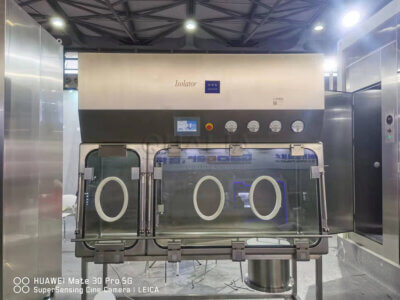
A: The threshold is when the transfer itself must remain within a controlled, unbroken containment envelope rather than crossing a boundary that is temporarily opened and resealed. A pass box, even a dynamic one with differential pressure monitoring, involves two doors and two boundary crossings within a single chamber. When the material being transferred is highly potent, capable of aerosolization, or classified at BSL-3 or BSL-4 containment levels, that sequential-door model is no longer sufficient — the transfer must occur within a sealed system that never allows the material to be exposed to an intermediate uncontrolled volume. At that threshold, a modular laboratory infrastructure designed for biosafety containment replaces the pass box as the transfer architecture.
Q: If the facility HVAC is rebalanced or extended after installation, does a semi-active pass box need to be re-qualified?
A: Yes. A semi-active pass box depends on the facility’s supply airflow to maintain its internal classification, so any change to the HVAC system serving that wall segment — rebalancing, added branch loads, or system extension — changes the flow conditions the pass box was qualified against. The original validation assumption ties cleanliness performance to a specific supply volume and pressure relationship. If those parameters shift, the unit’s ability to maintain its specified ISO class is no longer verified, and a re-qualification scope covering airflow, particle counts, and differential pressure should be initiated before the modified HVAC configuration is formally accepted.
المحتويات ذات الصلة:
- صندوق مرور السلامة البيولوجية: الأنواع ودليل الاختيار لتطبيقات BSL
- صندوق المرور الثابت: تصميم التعشيق ومعايير التطبيق
- صندوق المرور الديناميكي لغرف التنظيف: التصنيف والتركيب
- صندوق المرور في مجال الأدوية: دليل متطلبات ممارسات التصنيع الجيدة والتهيئة
- صندوق المرور الساكن في الغرف النظيفة: متطلبات التعشيق والتصنيف
- صندوق المرور الديناميكي في مجال الأدوية: الامتثال لـ HEPA لمناطق ممارسات التصنيع الجيدة
- صندوق المرور الديناميكي: عند الحاجة إلى إمداد هواء HEPA النشط
- صندوق المرور الصيدلاني: مواصفات الصف والشهادات
- أنواع صناديق المرور في مجال الأدوية: الأشعة فوق البنفسجية الديناميكية الثابتة أو الأشعة فوق البنفسجية الديناميكية الثابتة؟