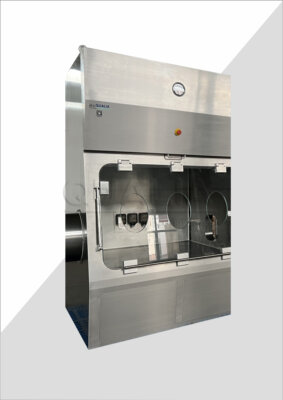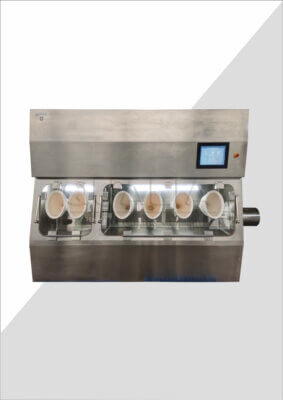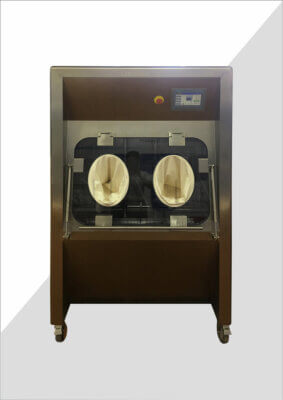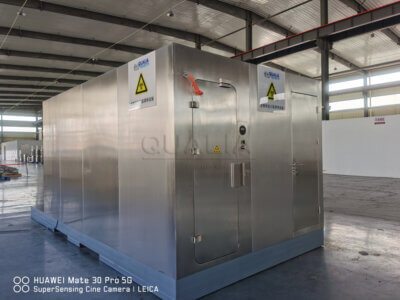

Procurement decisions that look clean at bid stage can fracture during commissioning when engineering depth that was never documented becomes the problem. A supplier who answers a technical specification with a catalog link and a contact number has told you something important about how they will behave when a qualification test fails at two in the morning. The damage at that point is not just schedule—it is the cost of substituting equipment in a validated environment, the audit exposure of an incomplete change record, and the rework of installation documentation that referenced a product no longer in the project. What separates a defensible supplier selection from a recoverable mistake is whether the evaluation structure was fixed before bids were issued, because the criteria you set at that moment determine whether the comparison you receive is meaningful or cosmetic.
Bid criteria that reveal regulated-project supplier quality
The fastest way to make a bid comparison structurally useless is to leave performance criteria unspecified and let each supplier describe their product on their own terms. Two suppliers can both claim “HEPA filtered” and deliver meaningfully different air cleanliness capability depending on whether efficiency is measured at 99.97% or 99.995% at 0.3µm. Specifying ≥99.995% at 0.3µm in the bid document does not impose a universal regulatory floor—it establishes a minimum comparability criterion so that responses can be evaluated against the same performance reference rather than filtered through marketing language.
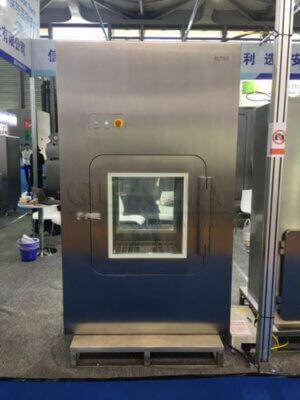
Interlock type is a design selection point that carries real consequences in regulated environments, and it should be treated as one in the bid document. Mechanical interlocks operate without power and suit explosion-proof zone classifications where electronic interlocks may not comply with area classification requirements. Electronic interlocks offer more monitoring flexibility but introduce a power dependency. If the bid document omits zone classification and asks suppliers to specify interlock type at their discretion, responses become incompatible and no direct comparison is possible. The specification has to resolve that question before bids go out, not after responses arrive.
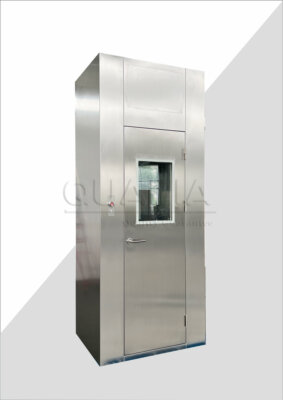
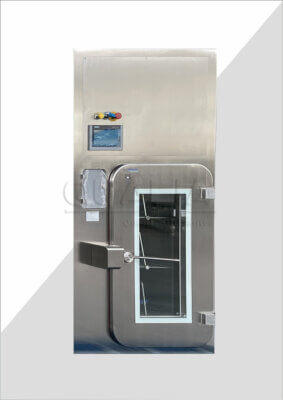
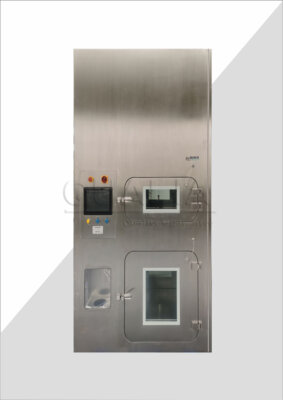
Dynamic air-lock design is a third criterion that belongs in the specification rather than in a post-award clarification. A pass box without pressure cascade control cannot reliably maintain cleanroom differential pressure, and the consequence is not theoretical—it is a qualification failure during IQ/OQ that requires engineering remediation on installed equipment.
Each of these three criteria belongs in the bid document as a defined requirement. Together they establish a minimum technical comparability threshold across bidders.
| Критерій | Що потрібно вказати | Чому це важливо |
|---|---|---|
| Ефективність HEPA-фільтра | ≥99.995% at 0.3µm | Directly comparable air cleanliness performance across bidders |
| Interlock type | Electronic or mechanical, based on explosion-proof classification and power availability | Mechanical interlocks need no power and suit hazardous zones; electronic may not comply |
| Pass box air‑lock design | Dynamic air‑lock with pressure cascade control | Prevents high‑pressure leakage and maintains cleanroom differential pressure |
Documentation depth needed for fair supplier comparison
When a supplier responds to a technical RFQ by directing procurement to a PDF catalog or suggesting a contact for further details, that is a signal worth taking seriously. It does not prove non-compliance, but it indicates that controlled submittals—the kind of structured documentation that supports design review, equipment qualification, and change control—are not part of the supplier’s standard response set. In a regulated project, that gap does not surface as an administrative inconvenience. It surfaces when the qualification team requires documented evidence of a feature and the supplier’s file contains only a product brochure.
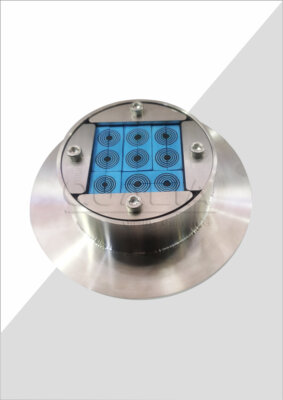
One specific documentation gap that is easy to miss at bid stage is the PAO injection port. Pass boxes intended for regulated environments require periodic HEPA filter integrity testing, and that testing requires access to an injection port upstream of the filter. If the submittal does not explicitly document the provision of a PAO injection port, there is no basis to confirm that the equipment supports testing at all—and that absence may not become apparent until filter integrity testing is required during qualification. The omission does not necessarily mean the feature is absent, but its absence from documentation means there is no engineering record to rely on when the question is asked.
The practitioner standard for avoiding this problem is consistent: require the same documentation package from every bidder before evaluation begins. A comparison built on unequal levels of disclosure is structurally unfair and creates downstream audit risk when the documentation trail for a selected supplier is thinner than the evaluation suggested. Submittals should include filter specifications, interlock schematics, pressure control data, and explicit callouts for testability features. Suppliers unable to provide that level of documentation at bid stage are showing you what change-order support and qualification assistance will look like once the equipment is on site.
After-sales and startup support tradeoffs
Startup support is the phase where the gap between a supplier’s sales capability and their technical capability becomes visible. A supplier who can respond to commissioning issues within hours, dispatch a qualified technician when remote support is insufficient, and produce documentation at the pace of a regulated startup is worth a different evaluation weight than a supplier whose after-sales commitment is a 24-hour email or WhatsApp response window.
That 24-hour window framing matters because it is a response time, not a resolution time—and it reflects a communication channel, not a technical support structure. In a regulated commissioning environment where a startup delay carries real schedule and cash-flow consequences, 24 hours to an initial acknowledgment may be the difference between a one-day recovery and a week-long hold. That framing does not mean email-only support is always disqualifying; the context of the project, the complexity of the equipment, and the availability of in-house commissioning expertise all affect how much supplier responsiveness is genuinely required. But treating it as a planning criterion rather than ignoring it entirely is the appropriate standard for any procurement affecting a regulated environment.
The related failure mode is accepting broad after-sales language—phrases like “perfect after-sales service” appear in supplier literature with some frequency—and treating that language as a commitment. It is not. The only version of after-sales support that provides actual project protection is a contractual SLA with defined response tiers, escalation paths, and named technical contacts. The evaluation process should require verifiable service commitments as part of the bid response, and vague language should trigger a clarification request before award rather than a good-faith assumption after it.
Commercial exclusions that distort procurement decisions
Hidden exclusions are the most predictable source of late-stage procurement damage, and they are preventable. The mechanism is consistent: a base price appears competitive, the bid is shortlisted or awarded, and then a scope-of-supply clarification reveals that sterilization lamps, intercoms, buzzers, display panels, or structural reinforcing legs were optional add-ons not included in the quoted package. At that point the budget comparison that justified the award is no longer valid, but the project is already committed.
The downstream consequence of this pattern is not just cost overrun. It is procurement control risk: a change to scope after award in a regulated project may require documentation of the change, re-evaluation of the equipment against the original URS, and in some cases a design qualification amendment. The commercial issue becomes a quality management issue.
| Exclusion / Clarification Needed | How It Distorts Procurement | Що потрібно підтвердити |
|---|---|---|
| Sterilization lamps | May be excluded from base price, inflating total cost later | Confirm inclusion or itemise separately |
| Intercoms | Base price may omit this, leading to unexpected add‑on costs | Require explicit pricing for integration |
| Buzzers | Hidden optional feature distorts side‑by‑side bid comparison | Ask for clear scope‑of‑supply list |
| Display panels | Excluded from base price, discovered only at procurement stage | Verify whether included in the quoted package |
| Reinforcing legs | Optional structural component that can increase overall equipment cost | Clarify if required for installation and whether included |
| Payment terms: 30% deposit, 70% before shipment | Misaligns with regulated project stage payments and increases pre‑delivery exposure | Request inspection‑ or milestone‑based holdbacks |
Payment terms deserve the same scrutiny as feature inclusions. A 30% deposit and 70% before shipment structure is a standard commercial arrangement in some equipment markets, but it misaligns with regulated project stage-gate controls and concentrates financial exposure ahead of any inspection milestone. Inspection- or milestone-based holdbacks give procurement teams meaningful leverage at FAT, delivery, and commissioning—holdback against a witnessed test is a different kind of assurance than a payment already made before the equipment leaves the factory. This is a practical recommendation for regulated procurement management, not a universal industry requirement, but it is a reasonable position to take in any project where project-stage documentation is a contract deliverable.
Travel costs and FAT scope are a related exclusion pattern. It is not uncommon for a quoted FAT to assume a remote witness or a partial scope, with on-site travel treated as a project-negotiated addition. Confirming what is and is not included in the FAT price before award is straightforward. Discovering the exclusion after award is not.
Lifecycle support as the supplier acceptance threshold
A 12-month warranty against manufacturing defects tells you something specific about how a supplier conceptualizes their obligation to the project. It ends at shipment in any practical sense—the 12 months runs from delivery, not from commissioning, and it covers fabrication defects, not the ongoing maintenance, HEPA filter replacement, and requalification support that a regulated environment actually requires over a three-to-five-year equipment lifecycle.
This is not a claim that 12 months is universally insufficient for all equipment categories. It is a planning criterion: for pass boxes installed in BSL or GMP environments where filter replacement intervals, periodic requalification, and pressure decay testing are recurring obligations, a manufacturing-defect-only warranty does not address the lifecycle risk that matters. The question for procurement is not whether the warranty term is technically valid—it is whether the supplier has the capability and intent to support the equipment beyond the warranty window.
ISO 35001:2019 frames biorisk management as an ongoing organizational process rather than a point-in-time equipment selection event. That framing is useful here: if lifecycle risk management is a process obligation, then a supplier whose commitment ends at shipment is structurally misaligned with that obligation. The same principle applies to the ABSA/WHO Laboratory Biosafety Manual framework, which treats containment as a continuous operational discipline. Neither source prescribes a specific warranty length, but both support the principle that equipment support is not separable from containment performance over time.
The practical threshold for regulated procurement is this: if a supplier cannot articulate support beyond delivery—filter replacement sourcing, scheduled maintenance capability, requalification support documentation, and a response path for post-warranty issues—they are below the acceptance floor for a project where lifecycle performance is an operational and audit requirement. A supplier who ships and disappears is not a partner in containment; they are a vendor in the narrowest sense, and that distinction matters when a DQ or URS review asks who is responsible for ongoing performance.
For teams evaluating containment equipment in BSL environments, this lifecycle question applies equally to products like the Скринька для перепусток з біозахисту and to more complex decontamination-integrated options like the VHP Pass Box, where ongoing cycle validation and consumable support represent a larger share of total lifecycle cost than the capital price suggests.
The evaluation structure you define before issuing bids determines the quality of the decision you can make afterward. If the criteria are vague, the documentation requirements are unspecified, and the commercial scope is left to each supplier’s discretion, no amount of post-bid analysis recovers the comparability that was never established. The practical implication is that the checklist—technical thresholds, documentation requirements, service SLAs, scope-of-supply confirmation, and payment structure—should be finalized as part of bid document preparation, not as a clarification exercise after responses arrive.
The most useful pre-award confirmation step is a structured scope-of-supply review against every item that could otherwise appear as a post-award addition: decontamination features, structural components, commissioning support scope, travel coverage in FAT, and lifecycle service commitments. Suppliers who can answer that review completely and consistently at bid stage are demonstrating something about their project management capability that no brochure can substitute for.
Поширені запитання
Q: Does the evaluation framework still apply if the pass box is being procured for a non-GMP BSL environment rather than a pharmaceutical cleanroom?
A: Yes, with only minor adjustments to the technical thresholds. The core framework—fixed criteria, controlled submittals, verified service SLAs, and confirmed scope of supply—is relevant wherever a containment failure carries regulatory or audit consequences. In a BSL-3 environment, pressure cascade control and filter integrity testability remain operational requirements regardless of whether GMP documentation frameworks apply. ISO 35001:2019 and the ABSA/WHO Laboratory Biosafety Manual both treat containment as a continuous performance obligation, which means the supplier acceptance threshold around lifecycle support applies even when pharmaceutical qualification protocols do not.
Q: Once a supplier is selected using this framework, what should happen immediately before contract execution?
A: Conduct a structured scope-of-supply confirmation against every item that could appear as a post-award addition—decontamination features, structural components, PAO injection port provision, FAT scope and travel coverage, spare parts sourcing, and any post-commissioning service commitments. This step is most effective when completed before the contract is signed rather than treated as a clarification exercise afterward, because exclusions discovered at that stage can still be priced and documented as contract deliverables. Suppliers who cannot answer that review completely are signaling the same execution risk as those who provided thin submittals at bid stage.
Q: At what point does paying a premium for a higher-tier supplier stop being justified against a tighter capital budget?
A: The threshold is lifecycle cost, not capital price. A lower-cost supplier who cannot provide commissioning support, has no documented spare-parts sourcing path, and responds to technical issues through a 24-hour email window introduces schedule risk during startup and requalification costs over the equipment lifecycle that typically exceed the initial price difference. The premium becomes unjustified only when the lower-cost supplier can demonstrate equivalent documentation depth, verifiable service SLAs, and confirmed post-warranty support capability—at which point the comparison is genuinely competitive rather than cosmetically so.
Q: What changes in the evaluation if a project requires both a standard biosafety pass box and a VHP-integrated unit within the same facility?
A: Treating them as a single procurement package changes the lifecycle support question significantly. A VHP Pass Box introduces ongoing cycle validation, consumable supply, and decontamination performance requalification as recurring obligations that a standard unit does not carry. When both types are in scope, the supplier’s capability to support cycle development documentation and consumable sourcing for the VHP unit should be evaluated as a separate line item in the service SLA review—not bundled into a generic after-sales commitment that was written with simpler equipment in mind. A supplier qualified for the standard unit is not automatically qualified for the decontamination-integrated one.
Q: Is a 12-month warranty ever sufficient grounds to proceed if the supplier is otherwise technically strong and the project timeline is constrained?
A: Only if lifecycle support is secured contractually outside the warranty terms. A 12-month manufacturing-defect warranty by itself does not cover filter replacement intervals, scheduled pressure decay testing, or requalification support—and in a regulated environment those are not discretionary. If the supplier is technically capable but offers a short warranty, the correct response is to negotiate a separate maintenance and support agreement as a contract deliverable before award, not to accept the warranty as-is and resolve the gap later. Proceeding without that agreement treats a known lifecycle risk as a post-award assumption, which is the same structural mistake as accepting vague after-sales language in the bid response.
Пов'язаний вміст:
- Гарантії кабінету біобезпеки: Що покривається?
- Постачальник обладнання для ЕЦП | Критерії оцінки | Посібник з вибору
- Найкращі постачальники пневматичних ущільнювачів дверей APR | Посібник з вибору постачальника
- Вибір постачальника генераторів VHP | Критерії оцінки постачальника та найкращі практики
- Pass Box Manufacturers: Qualifying Suppliers for GMP Projects
- Критерії вибору постачальника для генераторів VHP | Посібник з оцінки постачальників
- Виробники статичних турнікетів: Кваліфікаційні критерії постачальників
- Посібник з вибору постачальників BIBO | Процес кваліфікації постачальників
- Як оцінити постачальників BIBO для EPC-проектів, що вимагають валідаційної документації