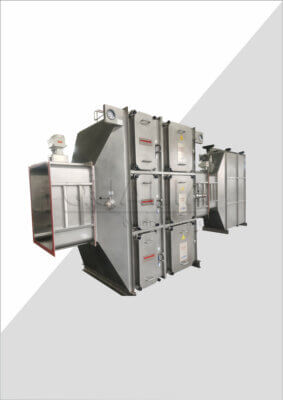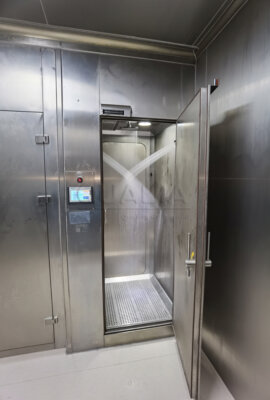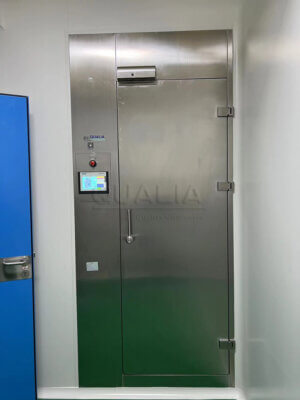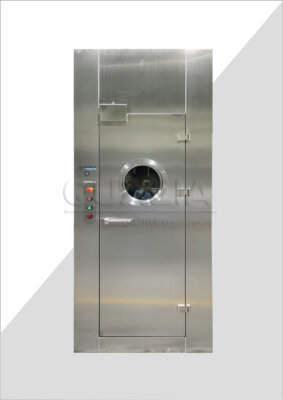
Selecting an exit route for BSL materials is rarely a single-method decision, but facilities frequently treat it as one until commissioning reveals otherwise. The consequence is not just a missed load type—it is a forced retrofit of process equipment, re-validation of boundary procedures, and in some cases, audit findings tied to the gap between what the SOP describes and what the installed equipment can actually support. The underlying friction is that material tolerance, downstream status, and facility layout interact in ways that a single decontamination method cannot accommodate across all load categories. Understanding where each method’s compatibility boundary lies, and what it costs to ignore that boundary during design, is the decision that separates a defensible multi-route strategy from a facility that works around its own infrastructure.
Material Tolerance Across Liquid Heat and VHP Exposure
No single decontamination method is materially neutral. The choice of exit route imposes constraints on what can be treated, and assuming a method is broadly compatible before confirming load-specific tolerance is one of the more common sources of commissioning-stage rework in BSL facilities.
Steam autoclaving operates at high temperature and pressure, which delivers reliable, cost-effective treatment for heat-tolerant loads but excludes any material that will degrade, melt, or lose functional integrity under those conditions. The selection criterion here is straightforward, but it is frequently underestimated for mixed-composition loads—a container may be heat-stable while its label adhesive, internal packing, or electronic component is not.
VHP operates at low temperature and is often selected on that basis alone, but low temperature does not mean universal compatibility. In systems that add heat to drive vapor concentration, surface condensation can occur at hydrogen peroxide concentrations significantly higher than the starting solution. This is a system-specific failure mode rather than a universal degradation risk, but it means that confirming material compatibility for a specific VHP system requires more than referencing the low-temperature characteristic. Materials expected to be compatible may behave differently when condensation forms at elevated concentrations, and that difference may not surface until cycle development or, later, during IQ/OQ evidence review.
Dunk tank immersion with peracetic acid operates at ambient temperature through liquid chemical contact, which removes the thermal risk but introduces a different set of constraints tied to immersion tolerance and chemical compatibility. The material-selection question shifts from heat and pressure resistance to surface-level chemical inertness—including whether coatings, anodized finishes, or bonded components will remain intact after repeated immersion exposure.
| Метод | Temperature Profile | Material Constraints | Key Risks |
|---|---|---|---|
| Dunk Tank (peracetic acid) | Ambient; liquid chemical | Limited to immersible instruments; aluminum anodized coating may be incompatible | No sterile storage; concentrated solution can cause serious eye and skin damage |
| Autoclave (steam) | High temperature/ pressure | Requires heat- and pressure-tolerant items; least affected by organic/inorganic soils | Не підходить для термочутливих матеріалів |
| VHP Transfer (vaporized H₂O₂) | Low temperature; added heat in some systems | Suitable for heat-sensitive materials; cannot process cellulose, linens, or liquids | Surface condensation at elevated concentrations may degrade some materials; aeration required to reduce residual H₂O₂ |
The more useful framing for planning is not which method is most compatible in general, but which method is compatible with each specific load category the facility needs to move. Exit route decisions made at the method level before load characterization is complete tend to require correction once real materials are tested against real process conditions.
Dunk Tank Use for Immersion-Compatible Boundary Transfer
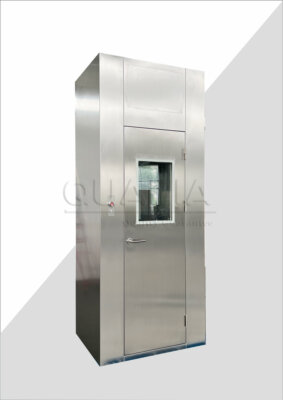
A dunk tank’s primary function in a BSL facility is boundary transfer—enabling the movement of immersion-compatible items across the containment interface without breaking pressure cascade or creating an uncontrolled exit path. That function is distinct from terminal sterilization and should not be conflated with it during procurement or validation planning.
The point-of-use, no-sterile-storage characteristic has a direct consequence that is easy to understate: items exiting a dunk tank must move immediately into their downstream process. There is no hold time, no sterile storage interval, and no ability to stage treated items for later use. If the downstream step is not operationally ready when the dunk cycle completes, the process design has a gap. This is not a minor logistical consideration—it affects scheduling, staffing, and the procedural sequencing documented in the SOP, all of which need to be aligned before the exit route is validated.
Biological indicator use is a separate planning constraint. Standard biological indicators may not be suitable for routine monitoring of peracetic acid liquid immersion cycles, which means that process assurance may rely on parametric or chemical indicator methods instead. Teams specifying the dunk tank’s qualification protocol should confirm the appropriate monitoring approach early, because substituting chemical indicator evidence for conventional BI data affects what the OQ and PQ records will look like and how they can be defended during inspection.
Chemical safety cannot be treated as a background concern. Concentrated peracetic acid poses a serious risk of eye and skin damage on contact, and the handling protocols, secondary containment measures, and spill response procedures associated with dunk tank operation need to be integrated into the facility’s EHS documentation—not left as an appendix to the equipment SOP.
| Операційний фактор | Dunk Tank Characteristic | What It Means for Exit-Route Planning |
|---|---|---|
| Load Type | Limited to immersible instruments only | Non-immersible loads must use an alternative exit route |
| Сумісність матеріалів | Some materials (e.g., aluminum anodized coating) may be incompatible | Confirm component surface compatibility before specifying dunk tank use |
| Sterile Storage | Point-of-use system; no sterile storage after cycle | Post-exit handling must be immediate; cannot hold sterilised items for later use |
| Біологічний моніторинг | Biological indicator may not be suitable for routine monitoring | Process proof may rely on parametric or chemical indicators rather than conventional BI |
| Хімічна безпека | Concentrated peracetic acid solution poses serious eye and skin damage risk | Handling protocols and secondary containment are essential for operator safety |
For exit-route planning purposes, the dunk tank is best understood as a method that solves a specific problem—immersible load boundary transfer—but introduces three distinct compliance burdens: immediate-use process design, non-standard process monitoring, and chemical hazard control. Facilities that select it without resolving all three during design will encounter them later as qualification gaps or safety findings.
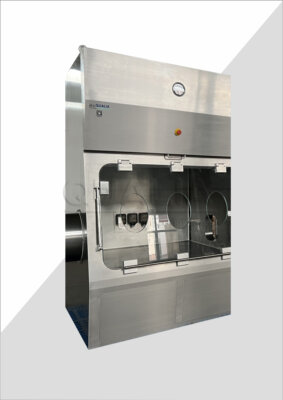
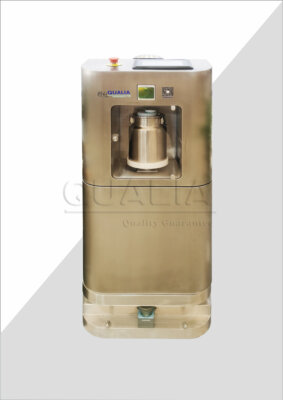
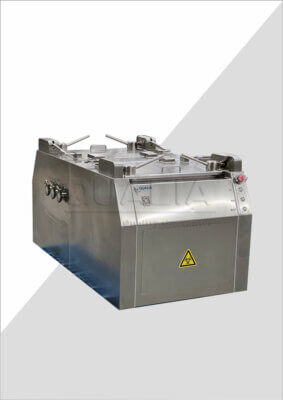
Qualia Bio’s Біозахисний відстійник для занурення is designed for BSL boundary transfer applications where immersion compatibility and containment interface integrity are the primary design requirements.
Autoclave Use for Thermal Treatment and Waste
For heat- and pressure-tolerant loads, steam autoclaving offers a reliability and cost-effectiveness profile that few alternative methods match. The process is well-characterized, the validation framework is mature, and the CDC BMBL 6th Edition references steam sterilization as a core method for biosafety waste treatment in containment environments. That combination makes autoclave treatment a strong default for waste streams and bulk materials where thermal tolerance has been confirmed.
The comparative advantage that matters most for BSL waste planning is resistance to organic and inorganic soil loading. Steam sterilization is less disrupted by the contamination burden typical of biological waste than many other methods, which is relevant for facilities managing heterogeneous waste streams that include tissue, media, and process residues. This does not mean that heavy contamination is inconsequential—validated cycle parameters still need to account for load density, packaging, and soil load—but it does mean that autoclave performance is more predictable under variable waste conditions than liquid chemical or vapor methods.
The constraint that determines whether autoclave is the right choice is straightforward but non-negotiable: the load must tolerate steam temperature and pressure. The reliability argument collapses the moment a heat-sensitive component enters an autoclave cycle. Mixed loads that combine heat-stable waste with heat-sensitive materials—sample containers with reagent labels, sealed media bottles with plastic components, or composite instruments—require load segregation before specifying autoclave as the exit route. Treating segregation as an operational detail to be resolved post-installation is a recurring source of SOPs that do not match actual practice, and therefore do not survive inspection.
For liquids specifically, autoclave is often the only viable exit route, since neither dunk tank nor VHP transfer can safely process liquid loads. Liquid autoclave cycles require separate validation from porous or wrapped-load cycles, and the distinction between cycle types should be reflected in the URS before equipment specification begins.
VHP Transfer for Dry Compatible Loads
VHP transfer is frequently specified for heat-sensitive loads that cannot enter an autoclave, but the compatibility criteria are stricter than the temperature profile alone suggests. Cellulose-based materials—paper, linens, documents—cannot be processed by VHP and must be categorically excluded from any transfer load. This is not an advisory; it is a load-exclusion criterion that needs to be enforced at the point of load preparation, not discovered during cycle development. Facilities that design VHP transfer procedures without a formal load compatibility check step at the point of preparation create a reliable route to failed cycles and contaminated loads.
Packaging compatibility is the second constraint that tends to surface late. VHP transfer requires synthetic packaging—polypropylene wraps, polyolefin pouches, or compatible container trays. Cellulosic packaging materials, including standard kraft paper pouches common in many laboratory environments, are incompatible. If packaging procurement is not aligned with VHP cycle requirements during the design phase, teams frequently reach commissioning with packaging stock that cannot be used, which forces procurement delays and repackaging decisions that were avoidable. ISO 22441:2022 provides the testing framework for VHP sterilization cycle validation and performance requirements; it does not prescribe specific material compatibility conclusions, but it establishes the evidence standard against which packaging and cycle parameters need to be demonstrated.
Aeration is the constraint that most directly affects cycle time and downstream handling. Residual hydrogen peroxide vapor must be reduced to below 1 ppm time-weighted average before items can be safely handled—a threshold grounded in occupational exposure considerations. The aeration phase is part of the validated cycle, not an optional extension, and loads cannot be removed from the transfer unit at the end of the exposure phase alone. Cycle time planning that does not include a confirmed aeration interval produces process timelines that do not match operational reality, and commissioning teams that discover this during OQ will need to revalidate the complete cycle sequence.
| Constraint Area | Detail | Planning Implication |
|---|---|---|
| Load Compatibility | Cannot process cellulose (paper), linens, or liquids; suitable for dry heat-sensitive items | Exclude loads containing these materials; verify entire transfer load is dry and non-cellulosic |
| Пакування | Requires synthetic packaging (polypropylene wraps, polyolefin pouches) and compatible container trays | Procurement of validated packaging must be part of the transfer process design |
| Вимоги до аерації | Aeration phase needed to remove residual H₂O₂ vapor before safe handling | Cycle time must include aeration; loads cannot be removed immediately after exposure |
| Occupational Exposure Limit | H₂O₂ may be toxic above 1 ppm time-weighted average (TWA) | Aeration must reduce concentrations below 1 ppm TWA; area monitoring may be needed |
| Post-Cycle Residue | H₂O₂ breaks down into water vapor and oxygen; no toxic residues remain after proper aeration | Treated items are safe for use once aeration is complete; no additional neutralisation required |
For facilities where VHP transfer is the right choice, the post-cycle residue profile is genuinely favorable: hydrogen peroxide breaks down into water vapor and oxygen, leaving no toxic residues once aeration is complete. That benefit is real, but it is conditional on validated aeration having occurred. It cannot be used to justify abbreviated aeration or to characterize items as safe for use before the cycle’s aeration phase has completed and been confirmed.
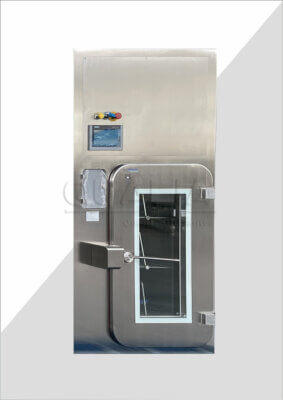
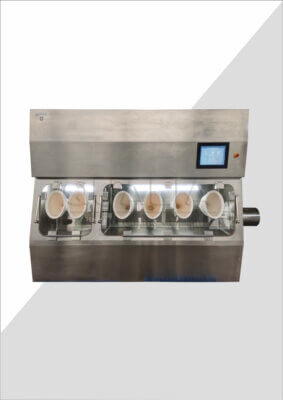
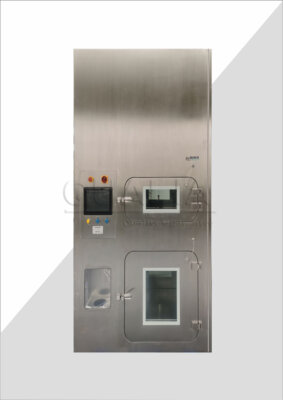
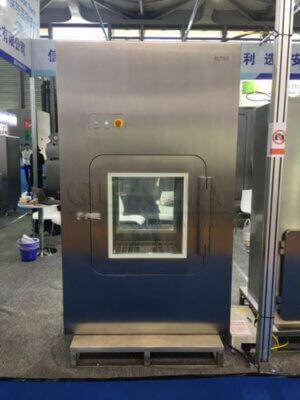
Qualia Bio’s VHP Pass Box supports dry load transfer across containment boundaries where validated hydrogen peroxide exposure and confirmed aeration are required before items can be safely received outside the containment zone. Additional context on VHP cycle requirements for BSL-3/4 environments is available in Обладнання для дезактивації VHP та стандарти для об'єктів BSL-3/4.
Downstream Status After Exit Route Selection
Exit route selection does not end at the boundary interface. The method chosen determines the downstream status of the material—whether it is immediately usable, requires a hold period, can be stored sterile, or must enter a specific handling sequence—and that status has direct consequences for the processes receiving it.
VHP transfer, after confirmed aeration, yields items with no toxic residues and no additional neutralization requirement. That is a practical benefit for items moving into downstream use—but readiness for use is conditional on the aeration phase being complete and validated. The no-residue claim does not translate to immediate post-cycle availability; it means that once the validated cycle, including aeration, is finished, the items do not require chemical neutralization steps before handling. Teams designing receiving procedures on the outside of the containment boundary need to understand this distinction, because it affects both the timing of material handoff and the documentation that confirms the item’s status.
Dunk tank exit imposes the most constrained downstream situation. There is no sterile storage interval and no ability to defer use. Items must move directly from the dunk tank into their next process step, which means the downstream operation must be staged and ready before the dunk cycle begins. If the receiving process is interrupted or delayed, the procedural response—whether the item cycles again, is held, or is discarded—needs to be pre-defined and documented. Discovering that this decision rule does not exist in the SOP during an audit creates a finding that is difficult to close without re-validation.
Autoclave treatment for waste is typically terminal—the downstream status is disposal-ready material—but for items intended for reuse or further testing, the autoclave cycle type, packaging, and load configuration all affect whether the item exits in a condition that supports the intended next step. A porous load cycle that treats wrapped reusable instruments is not the same validation basis as a liquid waste cycle, and conflating the two in process documentation is a recurring inspection point.
The broader planning implication is that downstream status—whether for reuse, disposal, testing, or cleanroom entry—should be defined as part of exit route selection, not after the equipment is installed. Evaluating downstream handling requirements only once the exit route is fixed forces procedural rework and, in some cases, re-validation that a complete design review at the outset would have avoided.
Multi-Route Strategy for BSL Material Movement
The assumption that a single exit route can handle all BSL material categories is the most common planning error in BSL facility design, and it tends to surface at the worst possible time—during commissioning qualification or during the first regulatory inspection after a facility opens. No single method covers the full range of load types that a functioning BSL-3 or BSL-4 laboratory generates: liquids, heat-sensitive dry instruments, biological waste, and cellulosic materials each have different compatibility profiles, and the methods that fit one category may be incompatible with another.
The trade-off that makes single-route planning attractive is simplicity—one qualification effort, one SOP family, one training program. The problem is that simplicity at the design stage transfers the complexity to the operational stage, where it appears as workarounds, exclusions, and procedures that do not align with the installed equipment’s validated capability. Facilities operating under a single exit route that does not cover all their load types are either excluding certain loads from formal exit procedures (a containment risk) or running loads through an incompatible method (a material and process integrity risk). Both create audit exposure that is difficult to close retroactively.
A multi-route strategy does not require redundant equipment for every load category. It requires an accurate load inventory during design, matched against the compatibility boundaries of each candidate method, so that the exit routes specified are sufficient to cover all material types the facility will actually handle. The CDC BMBL 6th Edition grounds this approach in risk assessment rather than prescribing specific equipment configurations—the biosafety principle is that the decontamination method must be matched to the material and the risk, not that any particular piece of equipment is universally required.
| Load/Material Type | Most Suitable Exit Route | Key Compatibility Check |
|---|---|---|
| Heat-sensitive dry items | VHP Transfer | Verify no cellulose, linens, or liquids are included; synthetic packaging must be used |
| Heat-tolerant waste/materials | Автоклав | Confirm item can withstand steam temperature and pressure; soil load least disruptive |
| Immersible instruments needing boundary transfer | Вигрібна яма | Confirm material compatibility (avoid aluminum anodised coating); plan for immediate point-of-use handling |
| Liquids | Автоклав | Neither VHP nor dunk tank supports liquid loads; steam process must be validated for liquid cycle |
| Cellulose-based items (paper, linens) | Автоклав | VHP is incompatible; autoclave acceptable if load is heat-tolerant; else assess alternative containment strategies |
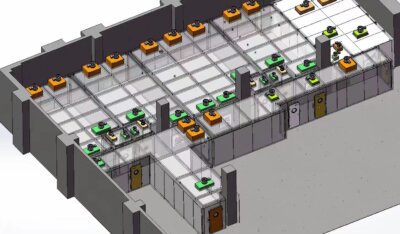
Integration across routes also requires that the facility’s pressure cascade, spatial layout, and maintenance access are designed to support multiple boundary-crossing methods operating in parallel or in sequence. A dunk tank, a VHP pass box, and an autoclave pass-through serving the same containment zone each have different service access requirements, different maintenance intervals, and different validation update triggers. Planning these as independent equipment items rather than as an integrated exit-route system often produces maintenance conflicts, spatial constraints at the boundary, and qualification scope gaps that affect how a complete IQ/OQ/PQ package can be assembled across the full system.
Exit route selection for BSL materials is ultimately a load characterization exercise before it is an equipment selection exercise. The decision becomes defensible—and the validation package becomes coherent—when the load inventory is complete, the downstream status requirements are defined, and the compatibility boundaries of each method are mapped against real material categories rather than assumed from general descriptions.
For facilities moving toward equipment specification or facility design review, the most productive next step is confirming whether the current exit route design covers all load types that will be generated during normal operation, and whether the downstream handling requirements for each route have been defined in sufficient detail to support SOP development and eventual qualification documentation. Gaps identified at that stage are far less costly to resolve than gaps discovered during commissioning or inspection readiness review.
Поширені запитання
Q: What if my facility already has an autoclave installed, but I’m now discovering loads that can’t be processed—can I add a dunk tank or VHP pass box without redesigning the containment boundary?
A: Yes, a supplementary exit route can often be integrated without redesigning the entire boundary, but you must verify that the existing pressure cascade, service access, and validation documentation can accommodate the new equipment’s requirements. Retrofitting a VHP pass box or dunk tank adjacent to an existing autoclave pass-through is feasible only if spatial layout and maintenance clearances permit; otherwise, forced proximity can create hidden qualification gaps across the combined system.
Q: After we’ve identified that our load inventory doesn’t match any single exit method, what should we do immediately—before reaching out to equipment vendors or drafting specifications?
A: Map each load category to its required downstream status—reuse, disposal, testing, or cleanroom entry. This step determines which method’s post-treatment constraints are operationally viable and prevents specifying equipment that solves material compatibility but creates an unworkable handoff condition. Without it, even a technically compatible method may force a procedural dead end.
Q: Under what BSL-3/4 operational conditions does a dunk tank cease to be an acceptable sole exit route, even for immersion-compatible loads?
A: The dunk tank is no longer sufficient when materials are destined for sterile storage or delayed downstream use. Its point-of-use, no-sterile-storage characteristic means that any need for hold time, inventory staging, or batch release after exit invalidates it as the primary route. At that point, a VHP or autoclave method—capable of validated sterile storage or terminal treatment—becomes necessary to close the process gap.
Q: Between autoclave and VHP transfer for mixed dry loads that are heat-sensitive, which offers a more predictable validation pathway when inspected under ISO 22441:2022 or BMBL guidance?
A: VHP transfer typically provides a more predictable validation pathway for heat-sensitive dry loads because the cycle parameters and aeration endpoints are explicitly addressed by ISO 22441, and the method avoids the load-segregation risk that autoclaving introduces for mixed-temperature-tolerance items. Autoclaving’s validation advantage applies to thermally robust loads, where steam’s soil-loading tolerance simplifies cycle demonstration; for heat-sensitive mixed loads, that advantage disappears.
Q: If our facility only generates one or two predictable load types, is the added complexity of a multi-route strategy genuinely worth the investment?
A: In most cases, yes—if the predictable load types include even one category that is incompatible with the primary method, the cost of a forced workaround or incomplete decontamination far exceeds the cost of adding a targeted secondary route. The investment becomes unjustified only when a rigorous load audit confirms that all generated materials are processed without exception by a single validated method, and no future protocol changes are anticipated.
Пов'язаний вміст:
- When to Use a Dunk Tank Instead of a VHP Pass Box in High-Containment Transfer
- BSL-3/4 Dunk Tank Design Questions: Tank Size Lid Seals Drainage and Operator Access
- Biosafety Dunk Tank Transfer Risk and Acceptance Criteria for BSL Laboratories
- Common Dunk Tank Transfer Failures: Floating Loads Air Pockets and Incomplete Wetting
- Вибір прохідної камери та занурювальної камери класу BSL-3 для передачі матеріалів високого ризику
- Material Compatibility for Biosafety Dunk Tanks: Packaging Containers and Disinfectant Exposure
- Dunk Tank Maintenance and Solution Change Control in High-Containment Labs
- BSL-3 Laboratory Decontamination Planning: VHP, Chemical Shower, Waste Routes and Room Recovery
- Як підключити двостулкові автоклавні прохідні системи до шаф біологічного захисту класу III