Qualification failures in BSL-3 and BSL-4 decontamination programs rarely trace back to a single wrong decision. More often, they compound: a room humidity map that was never run before commissioning, an HVAC schematic that no one requested until IQ week, a biological indicator carrier that absorbs the sterilant and distorts every data point in the qualification dataset. The cost is not just a failed cycle — it is a forced redevelopment timeline, regulatory scrutiny of the entire protocol, and potentially weeks of facility downtime before operations resume. Getting VHP decontamination right in high-containment environments depends on resolving several interdependent planning decisions early enough that they don’t collide during validation. What follows will help you identify where those decisions sit, what thresholds change the recommendation, and which omissions are most likely to surface as expensive problems downstream.
Decontamination Methods for BSL-3 and BSL-4 Facilities
BSL-3 and BSL-4 facilities present a constraint that most standard pharmaceutical cleanroom applications do not: the decontamination method must provide reliable broad-spectrum inactivation under conditions where the room itself is a containment boundary, not just a processing environment. VHP has become the dominant method for room-level and isolator-level decontamination in these settings because it achieves high-level disinfection or sterilization without the residue profile of liquid sporicidal agents and without the long dwell requirements and material compatibility concerns of formaldehyde fumigation.
The cycle structure follows four distinct phases. During conditioning, the room or chamber is dried to a relative humidity at or below approximately 20% to ensure that incoming hydrogen peroxide vapor does not immediately condense on cooler surfaces. During gassing, H₂O₂ concentration is built up — typically in the 500–800 ppm range — while relative humidity is controlled in the 90–95% range for high-humidity cycles, or held substantially lower for dry-process cycles. The decontamination hold sustains those conditions long enough to achieve the required log reduction. Aeration then drives residual H₂O₂ below 1 ppm and restores relative humidity to an occupancy-compatible range, typically 40–60%. These are process design figures derived from VHP cycle development practice; they are not uniform regulatory mandates applicable across all jurisdictions and configurations. The CDC/NIH Biosafety in Microbiological and Biomedical Laboratories (BMBL) 6th Edition establishes the biosafety framework that defines when a validated decontamination method is required for BSL-3 and BSL-4 operations, and WHO Laboratory Biosafety Manual 4th Edition provides comparable design-principles guidance at the international level — but neither document prescribes these specific cycle parameters. Cycle development must match those parameters to the actual room geometry, surface materials, agent, and intended efficacy tier.
The practical implication is that teams who borrow cycle parameters from a smaller or differently configured space without revalidating are building on an assumption, not a baseline. Room volume, surface area, HVAC configuration, and material composition all influence how the vapor distributes and how quickly condensation can occur. For BSL-4 facilities in particular, where even entry for cycle troubleshooting carries significant operational burden, getting the cycle development right before formal qualification is not a conservative choice — it is the only recoverable path.
Room Preparation and Leak Integrity for VHP Cycles
Before a VHP cycle begins, the room must be treated as a sealed system. That standard is not met by simply closing the door. Every penetration through which VHP can escape — or through which ambient air can enter and dilute the sterilant — must be identified and addressed in the pre-cycle preparation plan.
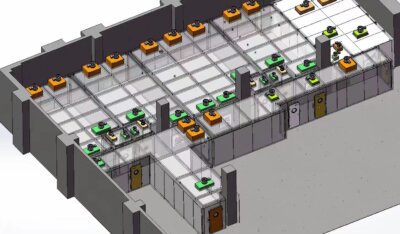
The floor plan review is the starting point. It must define which rooms are targeted in each campaign, how they are grouped for sequential treatment, their containment classifications, and exactly where portable equipment will be deployed. One planning constraint that matters here: only non-piped portable units should be placed inside the target area. Piped portable configurations and fixed systems connect to the room from outside, which allows the operator to remain out of the decontaminated zone. Placing a non-piped unit inside the room while personnel remain nearby is not a viable operation — the room must be vacated and sealed before the gassing phase begins.
The safety risk assessment for each campaign must address HVAC shutdown and vent sealing, doorway and penetration containment, gas detection at the room boundary, signage and PPE requirements, and aeration endpoint verification. None of these are optional elements or best practices that can be deferred — they are required planning inputs. A room leak rate above approximately 1% of chamber volume per minute before the conditioning phase begins is a practical signal that containment has not been established; proceeding under those conditions risks both cycle failure and personnel exposure at boundary areas.
| Підготовчий етап | Основні вимоги |
|---|---|
| Floor plan setup | Identify target rooms, perimeters, group treatments, room classification; deploy only portable non-piped units inside target area |
| Safety risk assessment | Contain doorways and penetrations, shut down and seal HVAC, post signage, provide PPE, place gas detectors at boundary, verify aeration endpoint |
The downstream consequence of inadequate sealing is not always visible in cycle monitoring data until biological indicator results come back. Localized dilution from a poorly sealed HVAC damper can create a zone of reduced sterilant concentration that does not register on room-level sensors but does produce BI failures at nearby placement locations. When that happens mid-qualification, the investigation must determine whether the failure was a sensor placement issue, a cycle parameter issue, or a containment issue — and that distinction is difficult to make quickly under regulatory and operational pressure.
Condensation Risks in Large-Volume VHP Decontamination
Condensation is the most commonly underestimated failure mode in large-volume VHP cycle development. The mechanism is straightforward: if the relative humidity during gassing climbs to or above 100%, water vapor condenses on room surfaces and carries H₂O₂ with it. Surface wetting produces visible liquid, blocks vapor penetration into irregular geometries, and can leave behind inactivated material that gives a false sense of process completion. The problem is that at room volumes above approximately 150 m³, achieving and holding a uniform relative humidity across the space is substantially more difficult than the sensor count and placement in many qualification protocols assumes.
Two process approaches address this differently. A high-humidity cycle intentionally drives relative humidity toward the upper end of the gassing range — around 90–95% — because micro-condensation at that level supports direct surface inactivation. The risk is overshoot: in large rooms, the combination of uneven vapor distribution and localized cool surfaces can push specific zones past 100% rH before the room-average reading reflects it. A dry-process cycle avoids this by maintaining low relative humidity throughout gassing and compensating with higher H₂O₂ concentration. The tradeoff is that achieving the required log reduction without micro-condensation demands a sterilant concentration that may not be compatible with all materials in the room.
| Підхід | Humidity Condition | Механізм інактивації | Condensation Risk |
|---|---|---|---|
| High-humidity (micro-condensation) | Conditioning to ≤20% rH, then gassing at 90–95% rH | Surface inactivation via H₂O₂ micro-condensation | Risk of excessive condensation if rH exceeds 100%, especially in large volumes |
| Dry process (low-humidity) | Conditioning to ≤20% rH, gassing at low rH with high H₂O₂ concentration | High sterilant concentration without condensation | Low condensation risk; may require higher H₂O₂ levels to achieve required lethality |
The decision between these approaches is not primarily a regulatory one — it is an engineering one driven by room geometry, material inventory, and the practicality of achieving uniform distribution at scale. Teams that skip a relative humidity mapping exercise before cycle development commit to this choice without the data needed to defend it. When biological indicators fail and the investigation opens, surface wetting is often the first suspected cause, but confirming it requires going back to temperature and humidity mapping that was never performed. That retroactive work takes time that formal qualification timelines rarely accommodate.
Regulatory Standards for VHP Equipment
Equipment selection cannot be separated from the compliance context in which that equipment will operate. CFR 21 Part 11 requirements apply to electronic records and electronic signatures generated by the VHP system — meaning the generator must support user administration, a full audit trail, and alarm and trend logging in a form that can be reviewed and defended during an FDA inspection. UL or CE marking addresses the electrical and functional safety of the equipment itself. These are planning criteria for equipment selection; their applicability depends on the jurisdiction and facility type, but they should be resolved before procurement, not during commissioning.
Consumable registration adds a layer that procurement teams sometimes miss: hydrogen peroxide solutions used in VHP systems must be registered under EPA requirements (US) or EU Biocidal Products Regulation (EU BPR), and these are jurisdiction-specific — not interchangeable. Some equipment configurations support automatic transfer of lot numbers and expiration dates into the cycle record, which simplifies traceability. Where that integration is absent, the documentation burden falls on the operator, and gaps in consumable traceability are exactly the kind of finding that invites broader scrutiny during an audit.
For isolators, the efficacy requirement is specific. EU GMP Annex 1 requires that isolator decontamination achieve a sterility assurance level demonstrating a 6-log reduction. That target defines the validation endpoint for isolator cycle qualification and shapes every downstream decision about BI placement, cycle hold duration, and hydrogen peroxide concentration.
| Requirement Area | Стандарт / Настанова | Key Implication |
|---|---|---|
| Electronic records and user access | CFR 21 Part 11 | Requires user administration, audit trail, and alarm/trend logs |
| Equipment safety marking | UL or CE marking | Required for electrical and functional safety |
| Consumables registration | EPA or EU BPR | Lot numbers and expiration dates may need automatic data transfer |
| Ефективність знезараження | EU GMP Annex 1 (isolators) | Must demonstrate a 6‑log reduction (SAL) |
| BI reliability concerns | MHRA observations | Risk of false‑positive biological indicators due to VHP fragility; requires careful BI selection and cycle development |
The MHRA has documented concern about what it describes as VHP “fragility” for sterilization — specifically, the risk of false-positive biological indicators, sometimes called rogue BIs. This is not a finding that VHP is unreliable as a method, but it is a documented regulatory signal that cycle development and BI selection require more rigor than the method’s apparent simplicity sometimes suggests. The implication for cycle development is that BI selection, placement, and data interpretation cannot be treated as secondary decisions made after the cycle parameters are set. They are part of the same integrated qualification design.
Portable Versus Fixed VHP Generator Configurations
The choice between portable and fixed VHP generator configurations is often framed as a capital cost decision. That framing is correct but incomplete. The operational consequences of each configuration — in labor, cycle throughput, and aeration scheduling — accumulate over the facility’s lifecycle and should be part of the procurement analysis before a purchase order is issued.
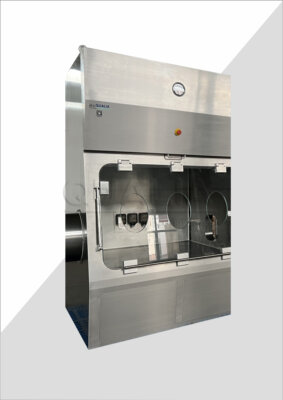
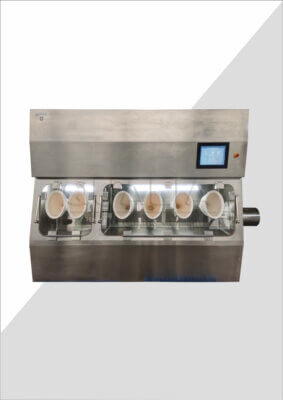
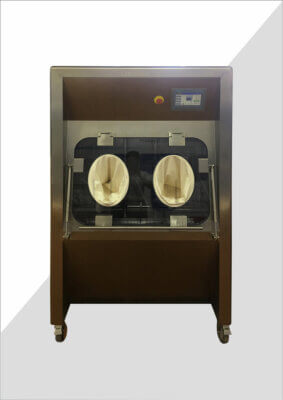
A non-piped portable unit placed inside the target room is the lowest-barrier entry point. It requires no installation, no piping, and no facility integration. The tradeoff is that once the cycle begins, the generator is committed to that room until aeration is complete and the unit can be safely removed — which can take several hours depending on room volume and aeration approach. In a facility running decontamination campaigns across multiple rooms, this serialization creates scheduling pressure and limits throughput.
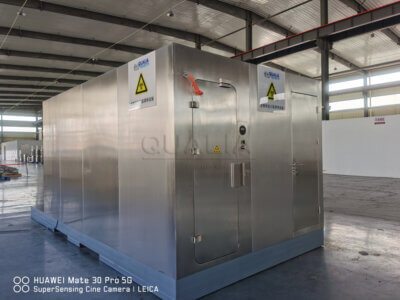
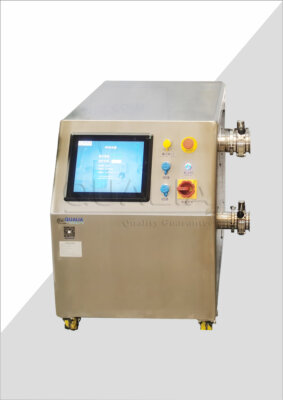
A piped portable generator — placed outside the room and connected through a penetration — allows the generator to be disconnected and redeployed to a second room while the first aerates. This is a meaningful operational advantage in multi-room campaigns, and it reduces the handling and transit burden on operators. The fixed integrated system takes this further: once installed, it eliminates most operator handling entirely, running cycles through a building-level system with minimal per-cycle labor.
| Конфігурація | Installation Effort | Operator Handling | Найкраще підходить для |
|---|---|---|---|
| Non-piped portable (placed inside room) | None; plug‑and‑operate | Longer redeployment times per room | Infrequent, sequential decontamination of smaller rooms |
| Piped portable (placed outside room) | Minor piping setup | Can redeploy while first room aerates; reduced downtime | Multi‑room campaigns, moderate frequency |
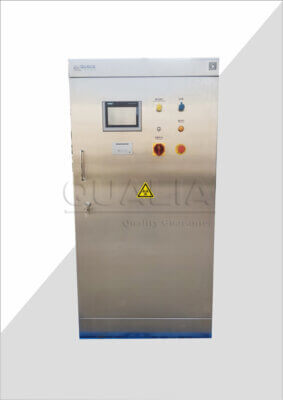
| Fixed (integrated) system | High (requires facility integration) | Minimal operator involvement; fully automated | High‑frequency cycles and large facility footprints |
The decision logic here connects directly to cycle frequency and room volume. For occasional decontamination of a single moderate-sized room, a portable configuration is a practical and cost-appropriate choice. As frequency increases and room volumes grow, the accumulated labor cost of portable redeployment and extended aeration timelines begins to close the gap with the installation premium of a fixed system. That crossover point is the subject of the final section; but the key planning note is that equipment type decisions made at project budget stage should be made with a realistic projection of operational demand — not the current baseline, which in BSL-3/4 facilities often increases as programs scale.
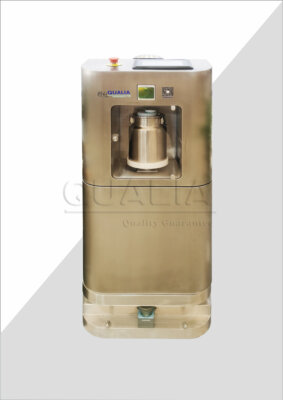
For facilities operating at lower frequency or managing multiple rooms sequentially, a portable VHP generator offers operational flexibility without fixed infrastructure commitments.
HVAC Integration Documentation for IQ/OQ
HVAC integration is the single most common source of IQ/OQ delay in VHP system qualification, and the cause is almost always a scoping omission rather than a technical problem. Validation teams arrive at the IQ phase without air exchange rates, without P&IDs that reflect the as-built HVAC configuration, or without a defined communication protocol for the VHP system to interface with the building management system. Any one of these gaps can stall qualification while the missing documentation is retrieved, generated, or in some cases discovered not to exist.
The minimum documentation scope for HVAC integration includes airflow performance data — air exchanges per hour, flow rates, percentage make-up air, and materials of construction — along with a schematic or P&ID. On the controls side, the communication protocol must be specified before equipment is ordered: Ethernet/IP, BACnet, Profinet, and Modbus are not interchangeable, and a protocol mismatch between the VHP generator and the building management system is not a minor commissioning issue. It requires either hardware modification or protocol conversion, both of which introduce cost and schedule impact.
| Document Category | Items to Include |
|---|---|
| HVAC performance data | Air exchanges per hour, airflow rates, % make‑up air, schematic/P&ID, materials of construction |
| Control integration specifications | Communication protocol (Ethernet/IP, BacNet, Profinet, Modbus), network diagram |
| IQ/OQ deliverable package | User manual, P&ID, electrical schematics, functional specification, spare parts list, controls interface documentation, SOPs |
The ISPE Good Practice Guide on HVAC for Pharmaceutical Facilities provides process-reference guidance on documentation expectations for HVAC systems in regulated environments, and its framework aligns with what auditors and validation engineers expect to find in the IQ/OQ package. The deliverable package itself — user manual, P&ID, electrical schematics, functional specification, spare parts list, controls interface documentation, and SOPs — should be specified as a contractual deliverable from the equipment supplier before procurement is finalized. Discovering during IQ that controls documentation or the functional specification is not included in the supplier’s standard scope is a delay that could have been avoided with a pre-purchase deliverable checklist.
Biological Indicator Selection for Cycle Qualification
Biological indicator selection is a qualification design decision, not a procurement afterthought. Getting it wrong does not just affect a single cycle result — it can compromise the entire qualification dataset in a way that is difficult to recover from under regulatory review.
Geobacillus stearothermophilus is the standard organism for VHP cycle qualification. The carrier material matters as much as the organism: cellulosic carriers absorb hydrogen peroxide and can interfere with spore exposure, producing results that do not accurately reflect actual cycle performance. Inert carriers — glass fiber or similar — are the appropriate choice for VHP applications. This is not a regulatory mandate from a specific standard but a planning criterion grounded in a known failure mechanism that produces unreliable data.
BI spore clumping is a related but distinct problem. Clumped spores present a reduced surface area to the sterilant, which can cause a portion of the BI population to survive a cycle that has otherwise achieved the required log reduction. When a small number of BIs in a qualification run show growth while the majority do not, the question becomes: is this a genuine cycle failure, a rogue BI, or a placement artifact? The MHRA has specifically documented concern about rogue BIs in VHP qualification. Using three replicate BIs per placement location and applying Most Probable Number (MPN) calculations to interpret the results is the protocol design feature that makes the data defensible — without it, a single positive result has no statistical context.
| Фактор відбору | Requirement / Recommendation |
|---|---|
| Indicator organism | Спори Geobacillus stearothermophilus |
| Carrier material | Avoid cellulosic carriers (absorb H₂O₂, may cause false results) |
| Replicates per location | Typically 3 BIs per location; use Most Probable Number (MPN) method to account for spore clumping |
| Placement locations | Critical worst‑case spots: high‑touch areas, upper room corners, extended gloves, hanging items |
| Target log reduction | Log 6 (sterilizing) for isolators; log 4 (disinfecting), log 2 (sanitising) for other contexts |
| Alternative indicator | Enzyme Indicators (EI) provide instant quantitative log reduction reading without incubation, suitable for routine production monitoring |
Enzyme indicators provide a faster alternative for routine production monitoring: they generate a quantitative log reduction reading without incubation, which eliminates the 48–72 hour hold associated with traditional BIs. They are not a replacement for biological indicator-based qualification, but they are a practical tool for ongoing cycle verification between formal qualification events. Understanding what each indicator type contributes — and where its limitations sit — shapes how the overall monitoring program is structured.
Placement logic matters independently of indicator type. Upper room corners are often worst-case locations because VHP, being heavier than air, settles lower in the room. High-touch surfaces, extended gloves in isolator applications, and hanging items represent contact-based worst cases. A placement map that does not include these locations may pass qualification while leaving untested zones that would fail — a gap that can surface during an inspection or a subsequent routine monitoring result.
Lifecycle Cost Considerations for VHP Equipment
The capital cost of a fixed integrated VHP system is higher than a portable unit by a margin that is visible in a project budget. The labor cost of operating a portable system across years of decontamination campaigns is distributed across operational budgets in ways that often don’t get modeled at the procurement stage. This is the core lifecycle cost tension.
Fixed systems reduce per-cycle operator handling substantially. Once validated and integrated, they can run with minimal intervention — which, across hundreds of cycles over the operational life of a facility, represents a meaningful labor offset. Portable systems require the operator to move the unit, connect it, monitor cycle initiation, disconnect it, manage aeration, and confirm the endpoint before the room can be returned to use. For low-frequency applications, this handling burden is manageable. For facilities running decontamination campaigns multiple times per week across large room volumes, the hours accumulate.
The procurement decision should include a realistic projection of cycle frequency over at least a three-to-five year horizon, not just current demand. BSL-3 and BSL-4 programs tend to scale as research programs expand, as additional products are added to the manufacturing portfolio, or as regulatory requirements for decontamination intervals are revised. A portable system purchased for a facility running two cycles per month may be the wrong configuration within 18 months if that facility’s scope expands. Revisiting the configuration at that point means a new capital decision, potentially a revalidation, and a period of operational disruption that would have been avoided by selecting the fixed system at the outset. That reasoning applies in the other direction too — a facility with genuinely infrequent decontamination needs should not bear the installation complexity of a fixed system that will rarely run. The key is that the projection needs to be made explicitly, not assumed.
Transition Threshold from Portable to Fixed VHP Systems
Two operational variables together define the practical crossover point between portable and fixed VHP configurations: room volume and cycle frequency. Individually, either one can justify continued use of portable equipment. Combined, they shift the cost-benefit relationship in a direction that a fixed system typically addresses more efficiently.
As a practical planning guide, room volumes consistently exceeding 200 m³ introduce aeration timelines and vapor distribution challenges that portable units handle less efficiently than fixed systems. Below that threshold, a well-managed portable campaign can achieve the required cycle parameters without the infrastructure commitment of a fixed installation. Once volumes reliably exceed 200 m³, the extended conditioning and aeration times per cycle begin to create scheduling pressure that compounds with each additional run.
Cycle frequency is the multiplier. Three or more decontamination runs per week represents a sustained operational demand that accumulates handling time, aeration scheduling conflicts, and per-cycle operator commitment. At that frequency, the per-cycle labor cost of a portable configuration — which includes staging, connection, monitoring, and aeration management — starts to meaningfully close the gap with the installation premium of a fixed system. When both thresholds are met simultaneously, a dual-port fixed VHP system is generally the more cost-effective configuration, because it can service multiple rooms with reduced operator involvement and without the serialization constraint of portable redeployment.
| Критерій | Поріг | System Recommendation |
|---|---|---|
| Average room volume | >200 m³ | Fixed system tends to be more cost-effective |
| Частота циклу | >3 decontamination runs per week | Fixed system significantly reduces handling time and labor |
| Combined condition | Both thresholds met | A dual‑port fixed VHP system is usually the most efficient option |
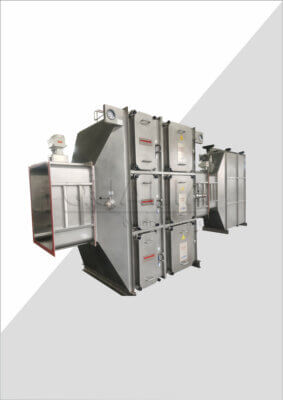
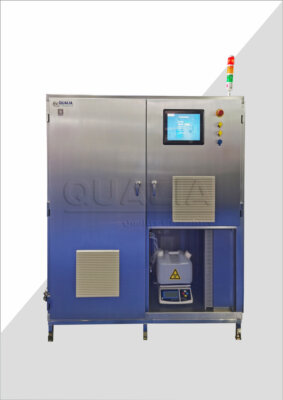
These thresholds are operational planning figures, not published regulatory benchmarks. They reflect the point at which accumulated labor cost and scheduling inefficiency typically outweigh the fixed system’s installation premium, based on practical operational reasoning. Facilities that are near either threshold should model both options against a realistic cycle frequency projection rather than defaulting to the lower-capital choice. A fixed VHP Type I generator eliminates most of the per-cycle handling burden that drives this cost crossover and is worth evaluating as part of any new facility design or major program expansion.
Effective VHP decontamination in BSL-3/4 environments depends less on any single equipment decision and more on how well the interdependencies between those decisions are resolved before qualification begins. Condensation risk must be characterized through humidity mapping before cycle parameters are fixed, not after biological indicators fail. HVAC documentation — P&IDs, air exchange data, communication protocol specifications — must be confirmed as in-scope before the equipment order closes, not discovered missing at IQ. BI selection, placement, and statistical interpretation must be designed as a coherent protocol, not assembled from default choices made at different project stages.
The portable-versus-fixed decision is where procurement framing most often diverges from operational reality. If your facility’s projected cycle frequency and room volumes are approaching the thresholds described above, the configuration analysis should be done with actual operational projections and a lifecycle cost model — not a capital-only comparison. For facility planners and validation teams working on new BSL-3/4 construction or program expansion, the right time to make these decisions is during design, when changes cost planning effort. After commissioning begins, they cost schedule.
Поширені запитання
Q: Can VHP decontamination cycles developed for a BSL-3 suite be adapted for use in a BSL-4 facility without full revalidation?
A: No — a cycle developed for a BSL-3 suite cannot be transferred to a BSL-4 environment without revalidation, even if room volumes are similar. BSL-4 facilities impose additional containment requirements, different HVAC configurations, and more restrictive access conditions during cycle troubleshooting. Any difference in room geometry, surface material inventory, or airflow pattern requires cycle redevelopment from the conditioning phase forward. Borrowing parameters from a lower-containment space and treating them as a qualified baseline is a documented path to biological indicator failures that are difficult to investigate under BSL-4 operational constraints.
Q: What should be confirmed with the equipment supplier before a purchase order is issued to avoid IQ/OQ delays?
A: The deliverable package should be contractually specified before procurement closes, not requested during commissioning. At minimum, confirm that the supplier will provide P&IDs reflecting the as-installed configuration, electrical schematics, a functional specification, controls interface documentation, and SOPs. Also confirm the communication protocol supported by the generator — Ethernet/IP, BACnet, Profinet, and Modbus are not interchangeable, and a mismatch with your building management system requires hardware modification or protocol conversion after installation. Discovering that any of these items fall outside the supplier’s standard scope at IQ is a schedule and cost impact that a pre-purchase deliverable checklist would have prevented.
Q: How does the choice between a high-humidity and dry-process VHP cycle affect material compatibility decisions during facility fit-out?
A: The process approach should influence material selection before construction is finalized, not after. A high-humidity cycle operates near 90–95% relative humidity during gassing, which creates micro-condensation conditions that are incompatible with certain metals, electronics, and absorbent materials present in the room. A dry-process cycle avoids condensation but requires higher H₂O₂ concentrations to achieve equivalent log reduction — and some polymers, coatings, and sensitive instruments degrade under sustained high-concentration VHP exposure. If material compatibility constraints in the room rule out one approach, the other must be validated to compensate. Making this determination after equipment is installed forces a cycle development path that the room’s contents may not support.
Q: If enzyme indicators give an instantaneous log reduction reading, why are biological indicators still required for formal cycle qualification?
A: Enzyme indicators are a monitoring tool, not a qualification standard. They confirm that cycle conditions were sufficient to inactivate the enzyme chemistry in the carrier, but they do not provide the direct evidence of microbial kill that regulatory reviewers and auditors expect in a qualification dataset. Biological indicators using Geobacillus stearothermophilus spores remain the accepted basis for demonstrating that a cycle achieves the required log reduction — including the 6-log sterilization threshold required by EU GMP Annex 1 for isolator applications. Enzyme indicators are appropriate for routine production monitoring between formal qualification events, where their faster turnaround reduces operational hold time, but substituting them for BIs in the qualification protocol introduces a data gap that is unlikely to survive regulatory scrutiny.
Q: Is a portable VHP configuration still appropriate when a facility is close to but not yet consistently above the 200 m³ and three-runs-per-week thresholds?
A: A facility near but not reliably above both thresholds should model the decision against a realistic three-to-five year cycle frequency projection rather than current demand. BSL-3/4 programs typically scale as research portfolios expand or regulatory decontamination interval requirements are revised, so a portable configuration adequate for today’s schedule may become the wrong configuration within 18 months. If projected growth will cross both thresholds, selecting a fixed system during initial facility design avoids a subsequent capital decision, revalidation, and operational disruption. The key is that the projection must be made explicitly with operational data — defaulting to the lower-capital option without modeling forward demand transfers the cost into a future period when changing configurations is more disruptive.
Пов'язаний вміст:
- Портативна лабораторія BSL-3: Гнучкі варіанти утримання
- Переносні установки BSL-4: Найсучасніша ізоляція
- Знезараження чистих приміщень: Портативні варіанти 2025 року
- Портативні генератори VHP: Зміна правил гри у сфері дезактивації
- Комплексні портативні рішення для знезараження
- Знезараження лікарень: Портативні рішення 2025
- Стерилізація VHP для невеликих приміщень | Портативні генератори для ізоляторів та прохідних боксів
- Лабораторні портативні системи знезараження 2025
- Революційна стерилізація: Портативні VHP-генератори проти традиційних методів