Procurement teams evaluating decontamination systems for high-containment laboratory exits often reach a selection decision on the basis of efficacy data alone — and then encounter the real constraints during commissioning. The most common version of this problem is a facility that identifies VHP’s sporicidal breadth as superior, configures an exit strategy around it, and then discovers that the cycle physics make routine personnel throughput operationally impossible. The rework — facility layout changes, PPE ensemble qualification, procurement of parallel systems — arrives after capital has already been committed. Understanding where each method’s capabilities genuinely apply, and where they structurally cannot, is what separates a functional decontamination programme from one that requires redesign before first occupancy.
How chemical shower decontaminates: disinfectant contact mechanism, target pathogens, and typical cycle duration
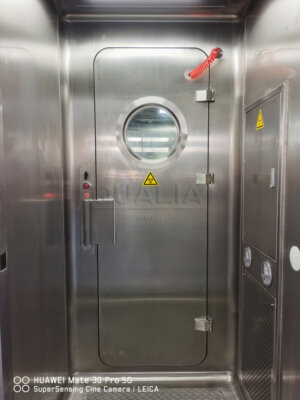
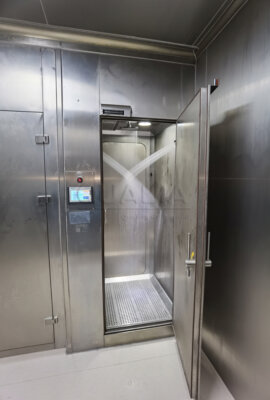
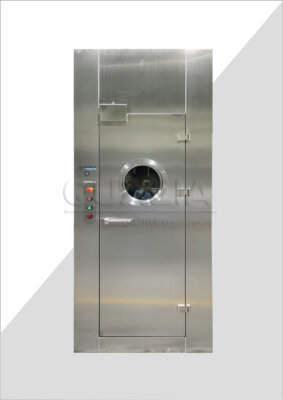
A chemical shower decontaminates by delivering a liquid disinfectant — most commonly sodium hypochlorite — as a pressurised spray or mist directly onto the outer surfaces of a PPE ensemble while the wearer is still dressed. The mechanism is contact-dependent: free chlorine reacts with protein structures and lipid membranes on contact, inactivating bacteria, enveloped viruses, and many non-enveloped viruses within seconds of exposure. For biosafety-sensitive exits, this surface-level coverage of the PPE outer layer is the target, since the PPE itself is the primary contamination boundary after work in the containment zone.
The operational speed of chemical shower is its defining practical advantage. A validated sodium hypochlorite cycle can complete in under 60 seconds, a figure drawn from validated practice rather than from a single codified regulatory standard. That duration is sufficient for meaningful surface inactivation against the pathogens chemical shower is designed to address, provided the disinfectant concentration and contact coverage across the suit surface are confirmed during validation. The WHO Laboratory Biosafety Manual (4th Edition) frames personnel decontamination on exit as a procedural requirement within the containment tier, and chemical shower functions as the standard implementation of that requirement at the exit anteroom for BSL-3 facilities.
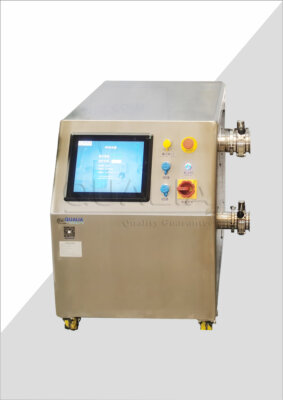
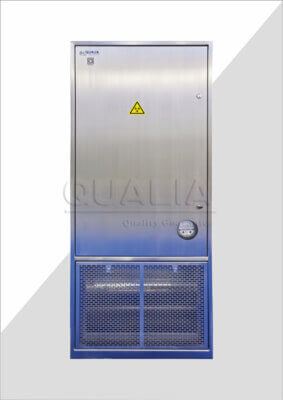
The honest limitation is that liquid disinfectant does not penetrate materials. It acts on whatever is exposed at the outer surface of the ensemble and does not reach interior layers, crevices, or occluded surfaces. For agents that are reliably sensitive to free chlorine and that would realistically be present only on the PPE exterior, this limitation is operationally acceptable. The relevant planning criterion is agent-specific: if the target pathogen is not susceptible to sodium hypochlorite, or if the contamination scenario involves material penetration rather than surface contamination, a different or supplemental decontamination method is needed. Qualia Bio’s Хімічний душ is designed around this validated surface-contact mechanism, with cycle parameters and nozzle coverage geometry configured for full-suit coverage.
How VHP shower decontaminates: vapour-phase penetration, sporicidal efficacy, and cycle time requirements
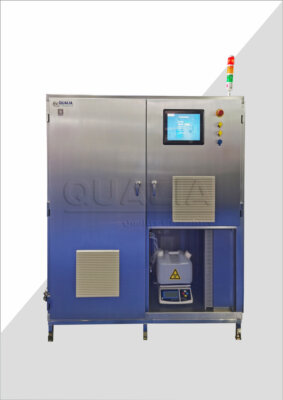
Vaporised hydrogen peroxide works through a fundamentally different physical mechanism. Rather than relying on surface contact with a liquid agent, VHP distributes hydrogen peroxide as a vapour throughout an enclosed space, where it condenses onto surfaces — including recessed areas, inner packaging folds, and the interstices of equipment components — and inactivates microorganisms through oxidative damage to cellular structures. The penetration capability that makes VHP valuable is a function of vapour-phase behaviour: the agent reaches geometries that a spray cannot, provided the enclosure design, concentration, relative humidity, and temperature parameters are controlled within the validated operating range.
The sporicidal performance of VHP under controlled conditions is well-established. At concentrations in the range of 250–300 ppm at the target surface, with sufficient dwell time, VHP achieves ≥6-log reduction against Geobacillus stearothermophilus spores, which represent the standard worst-case validation organism for high-level disinfection and sterilisation processes. ISO 22441:2022 defines the technical framework for low-temperature vaporised hydrogen peroxide sterilisation and the conditions under which these efficacy levels are achieved.
The constraint that matters for exit decontamination is cycle duration. Achieving the dwell time required for validated sporicidal efficacy takes 15–30 minutes at the exposure phase alone. When the full VHP process is considered — conditioning, exposure, and the aeration phase required before the enclosure is safe to open — the total cycle time for a pass-through or chamber process extends to a few hours. That duration reflects the physics of the process, not a regulatory conservatism that can be engineered around. The vapour-phase penetration advantage that makes VHP efficacious in a sealed enclosure is inseparable from the extended cycle time that makes it structurally incompatible with routine personnel exit use.
Efficacy comparison: what each method achieves in log-reduction terms and for which biological threat categories
The efficacy gap between chemical shower and VHP is real, but it applies specifically to spore-forming organisms and to certain resistant non-enveloped viruses. Against enveloped viruses — which include many of the BSL-3 and BSL-4 select agents — sodium hypochlorite at appropriate concentration delivers rapid and effective inactivation. The practical question is not which method is universally superior, but which method is sufficient for the specific threat category the facility is designed to handle.
VHP’s sporicidal efficacy — ≥6-log reduction against Geobacillus stearothermophilus spores under validated conditions — represents the upper end of disinfection performance and the standard by which high-level processes are benchmarked. Chemical shower with sodium hypochlorite does not achieve the same breadth of sporicidal kill, which is the legitimate basis for evaluating VHP in facilities handling spore-forming agents such as Bacillus anthracis. For those threat categories, the efficacy case for VHP is strong.
The complication is that VHP efficacy is not uniformly guaranteed across all pathogen types, even among organisms that vapour-phase processes are assumed to address. Some viruses — foot-and-mouth disease virus is one documented example — show resistance profiles that do not map cleanly onto standard spore-indicator benchmarks, requiring threat-specific validation rather than reliance on the G. stearothermophilus reference organism. This matters for procurement decisions because a facility that selects VHP on the basis of general sporicidal efficacy data may still need additional validation work before that efficacy claim is defensible against the specific agents in its risk assessment. Treating VHP’s ≥6-log reduction figure as universally applicable across all threat categories without threat-specific confirmation is a gap that auditors and biosafety committees will identify.
Chemical shower’s efficacy, by contrast, is bounded and well-characterised: it delivers rapid surface inactivation against susceptible organisms in under 60 seconds, and its limitations — no material penetration, no sporicidal breadth — are known and documentable. For most BSL-3 personnel exit scenarios involving agents sensitive to free chlorine, that bounded efficacy is operationally sufficient and more practically defensible than a VHP programme that cannot be run on the exit throughput timeline the facility actually requires.
Materials compatibility: PPE components and equipment surfaces that are VHP-compatible versus those that are not
Materials compatibility is where the VHP evaluation process most commonly surfaces problems that were not anticipated during planning. VHP is oxidative, and that oxidative mechanism that makes it effective against microorganisms also degrades specific material categories. Natural rubber is the most consistently affected: repeated or prolonged VHP exposure causes cracking, swelling, and loss of elasticity. Certain polymer gaskets — particularly those based on EPDM or neoprene formulations — may show accelerated degradation depending on concentration and cycle frequency. Adhesive coatings used in some laminated PPE fabrics and certain visor seal bonds are also at risk.
The compatibility verification requirement this creates is not trivial. Before any VHP shower programme can be qualified, every component of the PPE ensemble the wearer will be wearing during the cycle must be individually confirmed as VHP-compatible through material testing — not assumed compatible on the basis of general VHP-compatibility claims for the ensemble as a whole. ISO 22441:2022 frames compatibility verification as part of the sterilisation process qualification framework, and that framing applies here: compatibility is a check to be confirmed for specific materials and configurations, not a property that can be read across from manufacturer datasheets without component-level verification.
The downstream consequence in practice is that this qualification step frequently reveals incompatibilities. Facilities that have selected their PPE ensemble before undertaking compatibility verification — which is most of them, because PPE procurement and decontamination system design often happen on parallel tracks — find themselves either replacing components of the ensemble, substituting the entire ensemble, or reconsidering the VHP strategy altogether. Each of these outcomes adds procurement delay and re-qualification work. The check that prevents this is straightforward: complete material compatibility verification before finalising either the decontamination system selection or the PPE procurement, not after both decisions have already shaped the facility design.
For equipment surfaces rather than PPE, VHP compatibility is generally broader. Stainless steel, glass, hard anodised aluminium, and many engineering plastics used in laboratory equipment are well-established as VHP-compatible, and this is the context in which VHP’s material compatibility profile is typically characterised. The pass-through enclosure application — equipment and materials transfer rather than personnel exit — operates in this more favourable materials environment and is where VHP’s compatibility record is most reliably supported.
Cycle time and operational impact: why VHP’s efficacy advantage does not translate to personnel exit utility
The operational consequence of VHP’s cycle time is not just inconvenience — it is a structural incompatibility with personnel exit throughput at any facility running standard operational patterns. A chemical shower cycle of under 60 seconds allows personnel to exit the containment zone at the pace the workflow demands: one person every few minutes, multiple times per shift. A VHP cycle that requires 15–30 minutes of exposure dwell plus aeration time means that each exit event effectively suspends exit throughput for the duration of the cycle. At a facility where multiple personnel need to exit after a work session, that constraint rapidly translates into either sequenced delays that extend post-work time inside the containment zone, or operational decisions to reduce exit decontamination rigour to maintain throughput — neither of which is acceptable.
The more consequential version of this problem is that the 15–30 minute dwell requirement is not a conservative design choice that can be shortened through equipment optimisation. It is a product of the concentration and contact-time relationship required to achieve validated sporicidal efficacy. Reducing dwell time to make personnel exit practical would mean reducing the cycle to a sub-sporicidal process — at which point VHP’s efficacy advantage over chemical shower largely disappears, and the cycle-time burden remains. This is the trade-off that procurement teams frequently do not encounter until commissioning: the efficacy claim that made VHP attractive is only realised at the cycle duration that makes routine personnel exit unworkable.
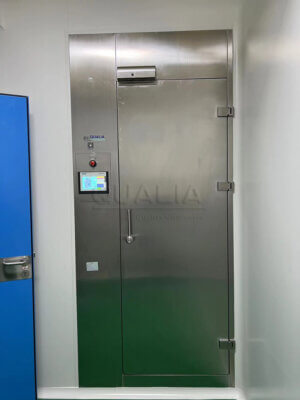
What VHP’s cycle time does suit is precisely the application where the enclosure is sealed, throughput is not a per-person constraint, and the process is run between work sessions rather than at exit: equipment transfer pass-throughs, room decontamination after incidents or maintenance, and material transfer between containment zones. In these contexts, a multi-hour cycle is operationally acceptable and the efficacy advantage is fully accessible. Facilities that attempt to consolidate personnel exit decontamination and equipment transfer decontamination into a single VHP system will typically end up maintaining chemical shower anyway, having committed capital to a system that cannot serve its intended primary function.
Regulatory and validation requirements: how chemical shower and VHP validation documentation differ under BMBL and EU GMP Annex 1
Chemical shower validation is comparatively straightforward. The core documentation requirement is demonstrating that the disinfectant concentration, spray coverage geometry, and contact time consistently achieve the intended surface inactivation. This typically involves concentration verification of the sodium hypochlorite solution, coverage testing across the suit surface, and cycle-time documentation. The validation scope is contained because the process is reproducible, the mechanism is well-characterised, and the parameters that matter — concentration and contact — are directly measurable.
VHP validation carries a significantly heavier documentation burden, and that burden exists because the process physics are more complex and the efficacy claims are more demanding. Biological indicators placed throughout the validated enclosure are the evidence base; chemical indicators alone confirm fumigant exposure but do not establish microbial inactivation, and validation documentation that relies only on chemical indicator results is difficult to defend under both BMBL guidance and EU GMP Annex 1 review. The two frameworks share the requirement for biological evidence of kill but apply it within different regulatory contexts: BMBL frames it as biosafety programme requirements, while EU GMP Annex 1 addresses it within the sterility assurance context for pharmaceutical manufacturing.
Each of the core validation requirements for VHP introduces documentation obligations that compound in complexity:
| Вимога до валідації | Ключовий момент | Чому це важливо |
|---|---|---|
| Evidence of microbial inactivation | Biological indicators (e.g., Geobacillus stearothermophilus spores) are the gold standard. | Validation requires proof of biological kill, not just fumigant exposure. |
| Use of chemical indicators | Chemical indicators confirm fumigant contact but do not correlate with biological kill. | Both indicator types are required for a complete validation. |
| Placement of validation indicators | Indicators must be in all corners, under/inside equipment, and in hard-to-reach areas. | This proves fumigant penetration throughout the entire enclosure. |
| Monitoring of physical parameters | Hydrogen peroxide concentration, relative humidity, and temperature must be monitored and documented. | These parameters are critical for validation and add to documentation complexity. |
The practical implication is that a VHP validation programme requires multi-parameter monitoring — hydrogen peroxide concentration, relative humidity, and temperature throughout the cycle — biological indicator placement mapped to worst-case locations, and revalidation when any of those parameters changes. Facilities that discover mid-qualification that their enclosure geometry creates concentration gradients in corners or under equipment face cycle redesign, not just documentation revision. This is where the validation burden becomes an operational constraint: the effort required to maintain a defensible VHP validation package over time is substantially greater than what a chemical shower programme requires, and that effort must be factored into the total cost of ownership comparison, not just the capital equipment line.
Selecting the right method: the application criteria that determine which system is appropriate for each use case
The selection between chemical shower and VHP is not primarily a question of efficacy — it is a question of what the decontamination event is, and whether the process physics of each method are compatible with that application. That framing changes the evaluation framework considerably.
Chemical shower is the indicated method for routine BSL-3 personnel exit decontamination when the target agents are susceptible to sodium hypochlorite. The sub-60-second cycle time is compatible with operational throughput, the validation documentation burden is manageable, and the mechanism — surface contact inactivation of the PPE outer layer — maps directly to what the exit step is designed to achieve. For facilities where the threat profile includes agents sensitive to free chlorine and the PPE ensemble is configured for a chemical shower environment, this is the default selection without a compelling reason to deviate from it. Qualia Bio’s Туманний душ represents a refined implementation of this surface-contact approach, designed for consistent coverage delivery across the suit exterior within operational cycle constraints. For further context on how mist-based decontamination functions in practice, the Qualia Mist Shower overview details coverage geometry and application parameters.
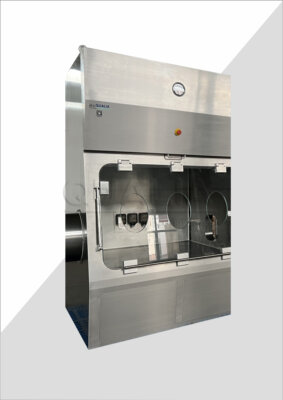
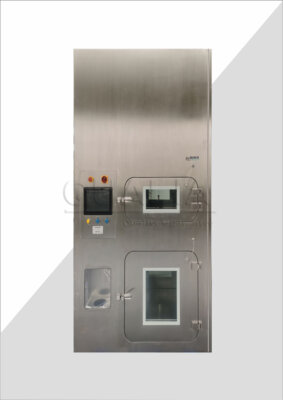
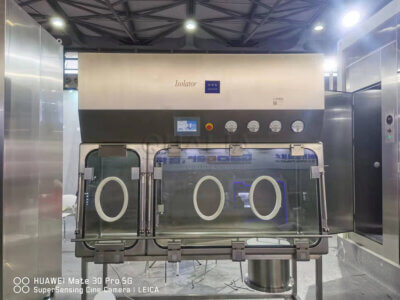
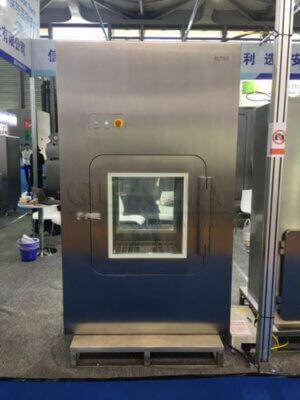
VHP becomes the appropriate method when the application is equipment or material transfer through a sealed pass-through enclosure, room decontamination following a spill or maintenance event, or any scenario where a multi-hour cycle is operationally acceptable and the enclosure can be fully sealed and aerated before personnel access. These are the conditions in which VHP’s vapour-phase penetration and sporicidal breadth are actually accessible, and where the materials compatibility verification and biological indicator validation programme required to support the process can be operationalised without disrupting throughput.
The safety clearance step after a VHP cycle adds workflow complexity that is easy to underestimate at the planning stage. Residual hydrogen peroxide must be measured after aeration before the enclosure is considered safe to open, with clearance confirmed at a level safe for personnel exposure — approximately 1 ppm is a commonly referenced target, though the specific threshold to apply should be confirmed against the applicable occupational exposure guidelines and local regulatory requirements rather than treated as a universal fixed value. That aeration and clearance step is not a formality: it is a process-critical confirmation that adds time and instrumentation requirements to every cycle.
Facilities that need to address both routine personnel exit and equipment transfer decontamination should plan for both methods from the outset, configured for their respective applications, rather than attempting to serve both functions with a single system. The capital and validation cost of maintaining two parallel methods is lower than the rework cost of discovering, after commissioning, that the consolidated system cannot perform the personnel exit function it was selected to serve.
Найбільш чітка перевірка перед прийняттям рішення полягає у визначенні події дезактивації перед вибором методу: це етап виходу персоналу, етап перенесення обладнання або подія дезактивації приміщення? Кожна з них має різний допуск на час циклу, різний профіль впливу матеріалів і різні вимоги до валідаційної документації. Якщо відповідь - вихід персоналу, особливо на БСЛ-3 з агентами, чутливими до вільного хлору, - то експлуатаційне обґрунтування для хімічного душу є вагомим, а обґрунтування для ВХП як основного методу дуже складно підтримувати, коли застосовуються обмеження на час циклу.
Якщо ЛЗР розглядається для будь-якої частини програми дезактивації, аналіз сумісності матеріалів повинен бути завершений до завершення закупівлі ЗІЗ і до того, як буде визначена конструкція приміщення для дезактивації. Виявлення несумісності ЗІЗ після прийняття обох рішень призводить до необхідності повторної кваліфікації, якої можна було б уникнути за умови більш ранньої послідовності. Обсяг документації з валідації програми VHP також слід оцінювати з урахуванням довгострокових ресурсів об'єкта, а не лише початкових зусиль з кваліфікації, оскільки повторна валідація після зміни параметрів, поповнення запасів біологічних індикаторів і багатопараметричний моніторинг циклу є постійними зобов'язаннями, а не одноразовими витратами.
Поширені запитання
З: Що станеться, якщо цільовий патоген на об'єкті не чутливий до гіпохлориту натрію - чи автоматично це зробить VHP правильним методом евакуації персоналу?
В: Не автоматично, і в більшості випадків обмеження тривалості циклу все одно зробить ДХП непридатним для рутинної обробки персоналу, навіть якщо профіль збудника вимагає більш потужного спорицидного процесу. Якщо категорія загрози не чутлива до вільного хлору, правильним рішенням буде спочатку оцінити, чи може інший рідкий дезінфікуючий засіб з більш широким спектром дії, але сумісний з швидким циклом евакуації, використовуватися на етапі евакуації, перш ніж розглядати VHP як стандартний засіб для оновлення за замовчуванням. Спорицидна активність VHP доступна лише в герметичних приміщеннях з багатогодинним циклом обробки; якщо мова йде про вихід персоналу, ця умова доступу не виконується, незалежно від збудника.
З: Закупівлю ЗІЗ слід завершити до чи після вибору системи знезараження?
В: Закупівлю ЗІЗ не слід завершувати доти, доки не буде обрано систему дезактивації, а якщо розглядається можливість застосування ЛГП у будь-якій частині програми, доки не буде завершено перевірку сумісності матеріалів на рівні компонентів. Ризик порушення послідовності існує в одному напрямку: якщо спочатку закуповуються ЗІЗ, а потім у проект включається ДХП, перевірка сумісності часто показує, що компоненти з натурального каучуку, певні склади прокладок або клейові з'єднання в обраному ансамблі є несумісними, що призводить до заміни ансамблю або до перепроектування системи дезактивації. Перевірка сумісності до того, як обидва рішення будуть зафіксовані - це перевірка, яка дозволяє уникнути подібних переробок.
З: В який момент перевага ефективності VHP над хімічним душем стає дійсно вирішальною для вибору?
В: Перевага ефективності VHP стає вирішальною, коли одночасно виконуються три умови: профіль загрози включає спороутворюючі агенти або організми з підтвердженою резистентністю до гіпохлориту натрію, застосування - це передача герметичного корпусу або знезараження приміщення, а не вихід персоналу, і об'єкт може оперативно поглинати багатогодинний цикл, не порушуючи пропускної спроможності. Коли застосовуються всі три способи, VHP забезпечує ≥6-кратне зменшення спор Geobacillus stearothermophilus та їх проникнення в паровій фазі в заглиблення є дійсно доступним і диференційованим. Якщо застосування пов'язане з виходом персоналу або допуск на час циклу недоступний, перевага в ефективності є теоретичною - фізика процесу, яка забезпечує її, не може бути реалізована в цьому контексті.
З: Наскільки більшими є поточні витрати ресурсів на підтримку програми валідації VHP порівняно з програмою хімічного душу?
В: Значно більше, і цей розрив збільшується з часом, а не зменшується після початкової кваліфікації. Програма хімічного душу вимагає періодичної перевірки концентрації та документування тривалості циклу - параметрів, які є стабільними та простими для моніторингу. Програма VHP вимагає багатопараметричного циклічного моніторингу концентрації перекису водню, відносної вологості і температури; тестування біологічних індикаторів у нанесених на карту найнесприятливіших місцях; і офіційної повторної перевірки щоразу, коли змінюється будь-який з цих параметрів або змінюється конфігурація огороджувальних конструкцій. Поповнення запасів біологічних індикаторів, калібрування приладів і час персоналу, необхідний для інтерпретації та документування кожного циклу, додають постійних витрат, яких немає при експлуатації хімічного душу. Об'єкти, які оцінюють VHP лише за капітальними витратами та початковими кваліфікаційними зусиллями, систематично занижують загальну вартість володіння.
З: Якщо на об'єкті встановлені ВІЗ для передачі обладнання та хімічний душ для виходу персоналу, чи потрібно при валідації ВІЗ враховувати ЗІЗ, які використовуються під час завантаження обладнання?
В: Так, і це деталь послідовності, яку легко не помітити. Коли персонал завантажує або розвантажує предмети в прохідний бокс VHP у відповідному одязі, зовнішні поверхні комплексу ЗІЗ піддаються впливу залишкової пари, навіть якщо персонал не перебуває всередині корпусу під час активного циклу. Відповідна перевірка полягає в тому, чи компоненти ЗІЗ, які можуть контактувати з отвором корпусу або присутні в зоні перенесення під час аерації, підтверджують сумісність з концентраціями ЛЗР, присутніми на цій стадії циклу. Це вужчий сценарій впливу, ніж повний душ з НХР, але це не нульовий вплив, і він повинен бути чітко визначений у документації з перевірки сумісності, а не вважатися вирішеним кваліфікацією персоналу, який працює під хімічним душем на виході з приміщення.