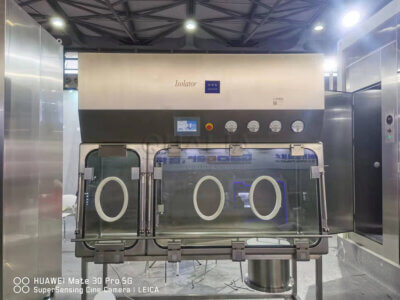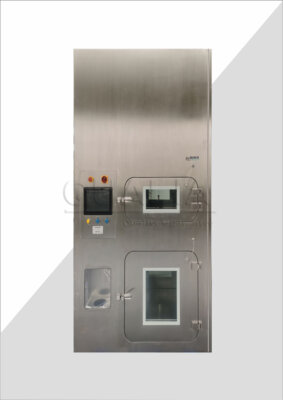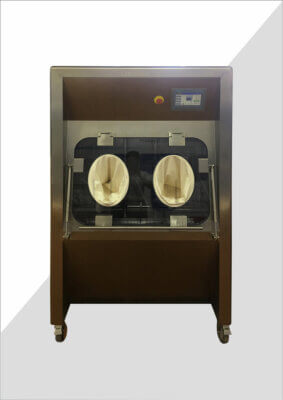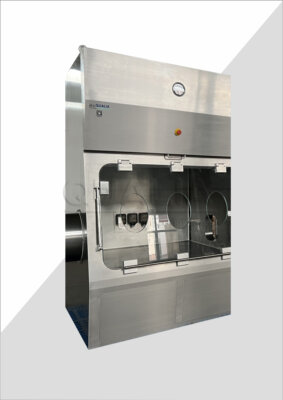
Routing live biological waste through an EDS before completing a structured acceptance review is one of the more defensible-sounding but practically consequential shortcuts in BSL facility commissioning. The immediate pressure is usually schedule — a lab ready to go live, a drain infrastructure already fixed in place, and a system that appears to be cycling correctly. What gets deferred is the evidence layer: treatment method validation against the actual waste stream, alarm verification, batch record completeness, and a defined drain boundary. Once live waste is flowing, reconstructing a treatment failure from incomplete records is difficult, and in some cases impossible to defend under regulatory review. The sections below address what acceptance must confirm — and where ambiguity in ownership, waste characterization, or startup criteria creates downstream risk.
Waste stream assumptions and treatment method
The most consequential early omission in EDS acceptance is failing to characterize the waste stream before selecting or validating the treatment method. Organic load and solids content are not secondary detail — they determine whether a chemical EDS can reliably achieve the free chlorine concentration needed for spore inactivation, or whether the interference from organics and particulates will compromise efficacy under actual process conditions.
For chemical EDS, 5,700 ppm free chlorine over two hours represents a validated testing framework for spore inactivation, as supported by biological validation studies in liquid matrices. That figure is meaningful only if the waste stream composition the system will actually encounter has been characterized and accounted for in the validation. High organic load reduces available chlorine; variable solids content creates inconsistent contact conditions. Teams that treat the concentration parameter as the acceptance criterion without confirming it holds under their specific waste stream composition often discover the gap mid-commissioning — after drain infrastructure is already fixed.
Thermal batch EDS handles solids and organic material without the same efficacy sensitivity, making it the more appropriate selection when waste stream composition is variable or difficult to control. That suitability is conditional, not absolute: a thermal system deviating from 121°C for 30 minutes carries its own incomplete-kill risk. Where chemical treatment is retained, mitigation measures — drain screens, grinder pumps, additional filtration, and SOP controls on what enters the drain — should be part of the acceptance package, not afterthoughts addressed after validation.
| Metoda de tratament | Critical Parameter & Time | Suitability & Limitations | Risk if Not Validated |
|---|---|---|---|
| EDS chimic | 5,700 ppm free chlorine for 2 hours | Efficacy reduced by organic/particulate load; may fail with variable high-solids streams | Incomplete decontamination if organic interference is not accounted for |
| EDS termic pe loturi | 121°C for 30 minutes | Handles solids and organic material without efficacy loss; suitable for variable waste streams | Deviation from time/temperature can result in incomplete kill |
The practical decision is not chemical versus thermal in the abstract. It is whether the waste stream assumptions used during system design still hold at the time of acceptance, and whether any changes in process or occupancy since design have altered the organic load, solids content, or chemical compatibility of what will actually flow through the system.
Batch or flow records for BSL liquid waste
Batch records serve two purposes that are easy to conflate but distinct in consequence: they demonstrate operational repeatability during acceptance, and they provide the evidentiary base for failure reconstruction if something goes wrong after live waste is routed. Both purposes depend on the same record quality, but the second one is often not considered until it is too late.
For chemical EDS, a planning criterion for acceptance confirmation is achieving the target free chlorine concentration — for example, 6,500 ppm — across five sequential cycles with less than 10% variation between tanks. That criterion is not a formally codified regulatory standard; it is grounded in operational reliability logic. What it tests is whether the system performs consistently enough to be trusted across the range of process variation it will encounter. Variation beyond that threshold suggests instrumentation, dosing, or mixing issues that need resolution before live waste routing.
Biological indicator selection is a review check that teams consistently underestimate. Commercial biological indicators are designed and validated for specific matrices and exposure methods. In liquid decontamination systems, they may not respond predictably to the actual contact conditions inside the EDS tank. Laboratory-prepared spore test packets provide a more defensible validation framework for liquid matrices, as supported by published biological validation methodology for chemical effluent decontamination systems. Using an inappropriate indicator can produce a false-negative result — a passing validation that masks a system that would not achieve adequate kill under actual process conditions.
Written procedures must document concentration, contact time, and verification frequency before acceptance closes. The absence of any one of those elements does not just create a compliance gap — it makes failure reconstruction materially harder. If an abnormal cycle occurs after live waste is flowing and the batch record lacks verification frequency documentation, there is no baseline against which the deviation can be measured.
| Criteriu de acceptare | Cerință | De ce este important |
|---|---|---|
| Free chlorine consistency | Achieve ≥6,500 ppm target in 5 sequential cycles with <10% variation across tanks | Proves operational repeatability and reduces treatment failure risk |
| Biological indicator suitability | Use laboratory-prepared spore test packets instead of commercial biological indicators | Commercial BIs may be inappropriate for liquid matrices and produce false-negative validation results |
| Written procedure completeness | Document concentration, contact time, and verification frequency (biological or parametric) | Missing elements invalidate batch records and hinder failure reconstruction |
The downstream consequence of incomplete batch records is not primarily a documentation penalty. It is that a treatment failure, if one occurs, becomes difficult or impossible to reconstruct in a way that satisfies either internal investigation or external regulatory review.
Alarm response and abnormal-event reconstruction
An EDS that cycles correctly under normal conditions but lacks alarm coverage for failure modes is not a validated system — it is a system that has been tested under favorable conditions. The distinction matters because the failure modes that alarm systems are meant to catch are precisely the ones that do not announce themselves during standard operational checks.
The 2007 foot-and-mouth disease outbreak in the UK illustrates the consequence of unmonitored drain boundary integrity. Untreated wastewater bypassed the containment system through drains that were not routed to the EDS, and because there was no alarm coverage detecting that bypass, the failure went undetected long enough to cause widespread environmental contamination. That outcome is not cited here as a regulatory precedent — it is a failure-risk analogy that illustrates what happens when alarm specification focuses on the treatment process itself while leaving the drain boundary unmonitored.
Alarm coverage for EDS acceptance should address three distinct failure patterns: drain boundary bypass, system-level degradation, and flow-path anomalies. Leaks and corrosion compromise sterilization and create personnel safety hazards; they need to be detectable through pressure monitoring and liquid detection before they reach a threshold of operational consequence. Valve failures and dead legs are less visible failure modes — a valve that does not achieve its target position may allow partial bypass, and stagnant dead legs can prevent complete treatment by excluding sections of piping from the active decontamination cycle. Without alarms covering these conditions, a post-event reconstruction may not be able to determine when the failure began or how many cycles were affected.
| System Component / Failure Mode | De ce este important | Ce trebuie specificat |
|---|---|---|
| Drain boundary integrity (bypass detection) | Untreated wastewater can escape unnoticed, as in the 2007 foot-and-mouth outbreak | Alarm monitoring to detect any flow bypassing the EDS |
| System leaks and corrosion | Leaks and corrosion compromise sterilization and create safety hazards | Alarms for pressure loss, liquid detection, and material degradation |
| Valve failures and dead legs | Malfunctioning valves or stagnant dead legs can prevent complete treatment | Alarms for valve position deviation and flow stagnation in dead legs |
The acceptance check for alarm response should include verified actuation testing — not just confirmation that alarms are wired and labeled, but documented evidence that each alarm condition triggers the correct response and that the response is captured in a retrievable record. If that test is deferred past live waste routing, the evidentiary gap it creates cannot be filled retroactively.
Drain boundary and maintenance isolation
Defining the drain boundary is distinct from validating the treatment method, and the two are often handled by different parties on different timelines. The practical consequence is that drain boundary gaps — drains that appear to be served by the EDS but are not actually routed to it — can persist undetected through commissioning and into live operation. The 2007 outbreak failure was partly attributable to this exact gap: decontamination showers were not isolated to the EDS, and untreated wastewater left the containment perimeter as a result.
For acceptance purposes, the drain boundary must be physically verified, not inferred from design drawings. Every drain point that could generate BSL-classified liquid waste — sinks, floor drains, autoclaves, showers, pass-through equipment — needs to be confirmed as routing to the EDS, or explicitly documented as excluded with a defined control rationale. Drawings that are accurate at design but reflect changes made during construction or fit-out are a common source of boundary assumptions that do not match the installed condition.
Maintenance isolation introduces a second boundary consideration: how the EDS is isolated for service without interrupting waste treatment or creating an untreated bypass path. A backup sparger or parallel treatment path is a practical operational redundancy measure — not a code requirement, but a design detail that prevents a maintenance window from halting critical waste processing entirely. Where backup capacity is not available, the acceptance package should define the isolation procedure explicitly, including what waste generation activities must be suspended during maintenance and who is responsible for enforcing that suspension.
The combination of drain boundary verification and maintenance isolation planning should be treated as a single scope item during acceptance, not two separate administrative tasks. Gaps in either one create the same type of defensibility problem if a contamination event is traced back to the containment boundary.
Controls and plumbing ownership during acceptance
The ownership boundary between the EDS equipment skid and the building drainage system is the most consistently underresolved acceptance issue in BSL facility commissioning. It rarely creates a problem during acceptance itself — both parties are present, both systems appear functional, and the handoff point seems self-evident. The problem surfaces later, during maintenance, during audit, or when an abnormal event requires clear accountability for a specific pipe segment or control loop.
Whether the EDS is lab-integrated at the point of waste generation or building-integrated as a centralized system determines the default ownership model. In a lab-integrated configuration, the equipment skid supplier typically owns the treatment train and local plumbing up to the defined handoff point. In a building-integrated configuration, the facility drainage owner typically assumes responsibility for the main collection infrastructure, with the skid handoff ending at a defined connection point. Both models are valid engineering configurations; neither is inherently safer. What is consequential is whether the handoff point is explicitly documented at acceptance, including which party owns each isolation valve, which party is responsible for each alarm point, and which party’s maintenance SOP applies to the shared boundary segment.
| Integration Type | Ownership Scope | What to Confirm During Acceptance |
|---|---|---|
| Lab-integrated (point-of-generation) | Equipment skid typically owns treatment train and local plumbing | Verify skid supplier acceptance responsibilities and isolation points |
| Building-integrated (centralized) | Building drainage system owner typically owns main collection and treatment | Verify where skid handoff ends and facility drainage ownership begins |
Leaving ownership ambiguous at acceptance is not a neutral outcome. It predictably produces unassigned maintenance responsibilities, compliance gaps that appear during audit, and disputes when a component at or near the boundary needs repair or documentation. The acceptance package should include a named ownership table — not a general reference to the skid supplier agreement — that specifies the physical handoff point and the responsibility allocation for each system element within three meters of that boundary.
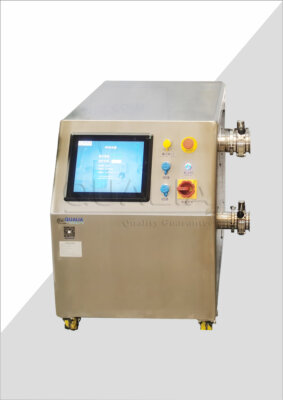
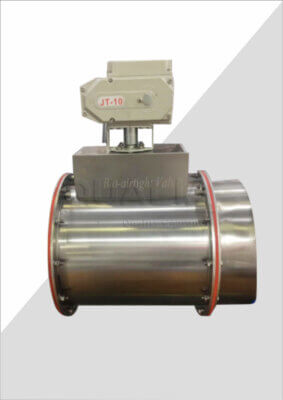
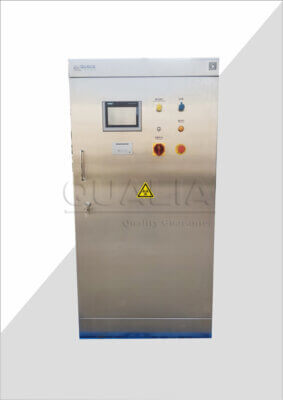
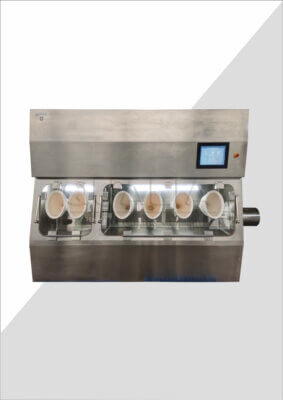
For facilities evaluating point-of-generation versus centralized EDS configurations, the Sistem de decontaminare a efluenților - EDS | BSL 1-4 product documentation provides configuration-specific technical detail that can inform how ownership scope is defined during procurement, before acceptance language is finalized.
Pragul de pornire înainte de dirijarea deșeurilor în timp real
The go/no-go decision for live BSL waste routing should be treated as a hard prerequisite with documented evidence, not a project milestone that is checked off when the system appears to be working. The distinction matters because an EDS that cycles correctly under favorable conditions during commissioning may not perform adequately under the organic load variability, temperature fluctuation, or chemical interference that actual waste streams introduce.
Two criteria function as the minimum validation threshold before live waste routing. The first is parametric: five sequential cycles meeting the target treatment parameter — for a chemical EDS, this means achieving the target free chlorine concentration with less than 10% variation across tanks. This criterion is grounded in operational reliability logic, not a universally mandated regulatory minimum. Its function is to confirm that the system is stable enough that normal process variation will not push a cycle below the treatment threshold. A system that achieves the target in three cycles and misses in the fourth has not demonstrated that stability.
The second criterion is biological: ≥6 log kill under worst-case conditions, meaning maximum organic load and minimum contact time. This is where the validation methodology matters. The worst-case condition tests are not conservative versions of normal operating conditions — they are the conditions under which the EDS is most likely to fail, and they are the conditions that a system validated only under favorable parameters has never actually been tested against. Biological validation using spore test packets, rather than commercial biological indicators, provides the most defensible evidence for liquid matrix systems, as supported by published biological validation methodology for chemical effluent decontamination systems. For context on how sterilization parameters and biological kill criteria interact across the validation framework, the article on sterilization parameters in EDS provides additional process detail.
| Validation Criterion | Threshold / Requirement | Metoda de validare |
|---|---|---|
| Operational cycle consistency | 5 sequential cycles meeting target parameters (e.g., ≥6,500 ppm free chlorine) | Parametric monitoring of cycle records |
| Biological kill efficacy | ≥6 log kill under worst-case conditions (maximum organic load, minimum contact time) | Biological validation using spore test packets |
Routing live waste before either criterion is met does not make the EDS less capable — it makes it unvalidated against the conditions it will actually encounter. And unlike a treatment failure detected during commissioning with surrogate waste, a failure detected after live BSL waste is flowing creates a contamination accountability problem that no retroactive documentation can fully correct.
The practical output of a complete EDS acceptance process is not a thicker documentation package — it is a defensible record that a specific system, treating a defined waste stream, under confirmed alarm coverage, with resolved ownership boundaries, has demonstrated the treatment performance required before live biological waste was introduced. The two points where most projects carry unresolved risk at acceptance are waste stream characterization and ownership boundary definition. Both are recoverable before live waste routing and very difficult to resolve after it.
Before finalizing acceptance, confirm that waste stream composition assumptions from design are still accurate for the actual lab occupancy, that biological validation was conducted under worst-case rather than nominal conditions, and that every drain point in the containment boundary is physically verified as routed to the EDS. Those three confirmations do more to protect operational defensibility than any other acceptance activity.
Întrebări frecvente
Q: What happens if the waste stream composition changes after EDS acceptance is complete but before live operations scale up?
A: A post-acceptance change in waste stream composition — such as increased organic load from new reagents, added biosafety cabinet drain connections, or higher solids from cell culture processes — invalidates the treatment parameters established during validation. The acceptance record is tied to the waste stream it was tested against, not the system in isolation. Any material change in composition requires re-characterization and, depending on the magnitude, re-validation of the treatment method under the new conditions before live BSL waste is routed through the affected configuration.
Q: If biological validation passes but parametric batch records show variation above 10% across tanks, should acceptance proceed?
A: No — passing biological validation does not override failing parametric consistency. The two criteria test different things. Biological kill confirms the system can achieve adequate treatment under the specific conditions of the validation run; parametric consistency confirms the system is stable enough to replicate those conditions across normal operational variation. A system that achieves ≥6 log kill in one validated run but shows greater than 10% variation in free chlorine concentration across sequential cycles has demonstrated that it cannot reliably reproduce the conditions that produced the passing biological result. Both criteria must be satisfied before live waste routing.
Q: Is there a defined regulatory standard that mandates the 5-cycle parametric criterion, or is it facility-defined?
A: The 5-sequential-cycle criterion with less than 10% variation is not a universally codified regulatory minimum — it is grounded in operational reliability logic drawn from biological validation methodology and facility commissioning practice. WHO LBM 4th Edition and CDC BMBL 6th Edition establish the framework for decontamination validation requirements but leave specific parametric thresholds to the facility’s validation protocol. This means the criterion must be formally defined in the site’s acceptance protocol before commissioning begins, so it functions as a documented go/no-go standard rather than a post-hoc judgment call.
Q: When the EDS is a building-integrated centralized system rather than a lab-integrated skid, who is responsible for alarm points near the ownership boundary?
A: Responsibility for alarm points near the ownership boundary does not resolve automatically from the configuration type — it must be explicitly assigned in the acceptance package. In a centralized configuration, the facility drainage owner typically holds responsibility for collection infrastructure, but alarm points at or within the handoff zone are frequently contested during maintenance and audit if ownership is not named at acceptance. The acceptance documentation should include a physical handoff point with a named responsibility table specifying, for each alarm point and isolation valve near that boundary, which party’s maintenance SOP and compliance documentation applies.
Q: Is thermal EDS always the safer choice when waste stream composition is uncertain, or are there conditions where chemical treatment remains appropriate?
A: Thermal batch EDS is the more operationally resilient choice under variable or poorly characterized waste streams because it is not subject to efficacy loss from organic interference — but it is not unconditionally safer. The 121°C for 30-minute sterilization parameter carries its own failure risk if temperature uniformity or hold time is not verified across the full liquid volume, particularly in systems handling variable fill levels. Chemical EDS remains appropriate when waste stream composition is well-characterized, organic load is controlled through drain screens and SOP-level restrictions, and the validated 5,700 ppm free chlorine concentration can be reliably achieved and monitored. The decision criterion is not treatment type in the abstract — it is whether the waste stream can be characterized precisely enough to sustain the chemical efficacy assumptions the validation depends on.