
Most procurement decisions for high-containment laboratory infrastructure break down not at the specification stage but at the commissioning stage — specifically when no single party can accept responsibility for how the HVAC redundancy controls interact with the directional airflow failure test. That gap rarely appears on a vendor quote. It appears during SAT, after the budget has been fixed and the schedule has been committed, often because air handling, waste treatment, and transfer equipment were priced separately from a supply chain logic rather than evaluated from an integration-ownership logic. The practical consequence is that resolving the deviation requires renegotiating accountability between vendors in real time, which is expensive and slow. The judgment that prevents this from happening is upstream and procurement-level: how each supplier defines the boundary of its scope and who owns the interfaces between systems.
Supplier Scope Across Modules, Airlocks, HEPA Exhaust, and Decontamination
The first question to resolve with any candidate supplier is whether their scope is a shell with equipment mounted inside it, or a fully integrated system that includes self-contained utilities. That distinction matters because a modular BSL-3 lab that ships without integrated power, water, and waste connections — or that treats those utilities as the buyer’s coordination problem — creates dependency gaps that only surface during commissioning or site acceptance. A supplier scoping only the structural module while leaving HEPA exhaust routing, effluent handling, and airlock interlock controls to separate trades is not offering a containment solution; they are offering a starting point.
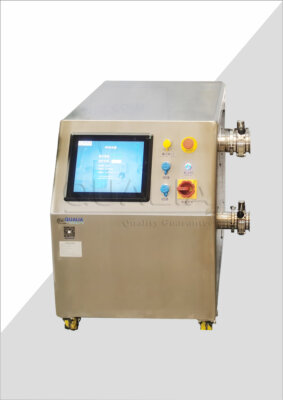
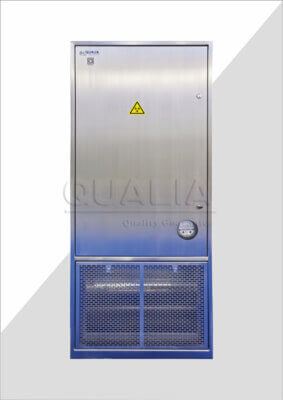
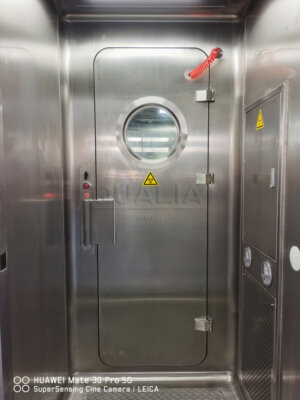
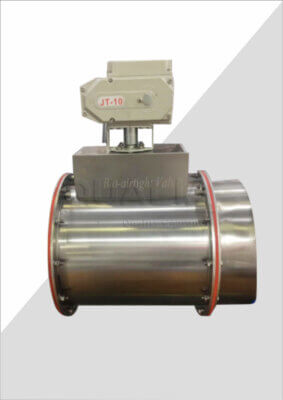
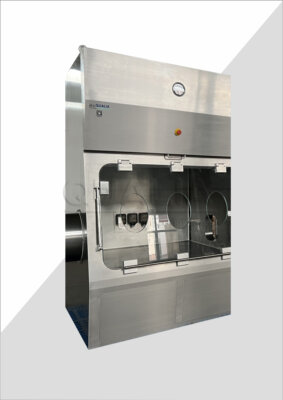
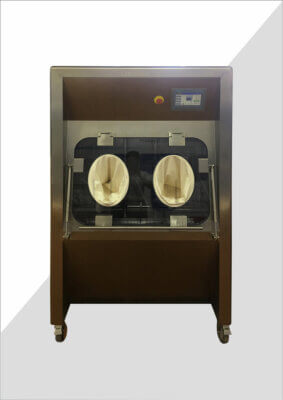
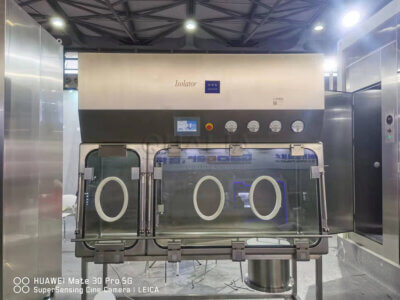
A full-scope BSL-3 modular supplier should be able to specify and deliver the containment features that define the environment: Class III biological safety cabinets or appropriate primary containment, inward directional airflow maintained through negative pressure, HEPA-filtered exhaust, seamless primary wall construction, low wall returns for directional flow management, and airlock sequencing logic. These are not optional additions to a shell — they are the containment design. A supplier who treats them as separately procured accessories shifts the interface ownership problem directly to the buyer.
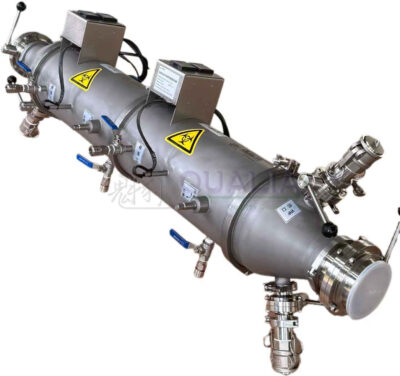
Decontamination scope is often where the gap becomes visible. Some suppliers offer decontamination at the BSC level — surface and small equipment — but lack the capability to support room-level or full-facility decontamination for post-incident or regulatory-exit scenarios. Others offer both scales but only as a service, not as integrated equipment with documented protocols. Distinguishing those capability levels early prevents discovering during handover planning that decontamination was assumed but never formally scoped.
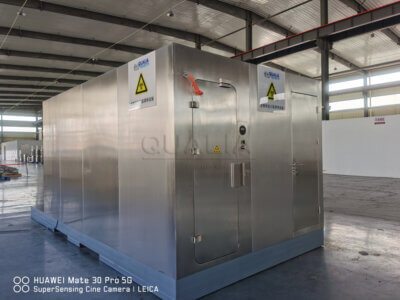
For projects where deployment flexibility is a constraint, the Laborator mobil cu module BSL-3/BSL-4 represents a configuration where utilities, containment systems, and decontamination infrastructure are integrated within a transportable structure — which by design forces the integration-ownership question to be resolved at the factory rather than at the site.
Documentation Proof Behind FAT, SAT, Commissioning, and Handover
A supplier’s documentation position at handover is a more reliable capability signal than their initial technical proposal. Proposals can be written by sales engineers drawing on reference projects; commissioning records, SAT deviations logs, and validation protocols are produced by the actual team that built and tested the system. Asking to review prior documentation packages before contract award is one of the most direct ways to evaluate whether a supplier’s commissioning capability matches their proposal language.
The records that matter at handover for a BSL-3 facility are specific. Room differential pressure monitoring must be calibrated and documented against defined setpoints. Room integrity testing must be conducted and recorded with methodology that can be reviewed by a third party. HVAC redundancy and failure mode testing must be executed with real-time differential pressure data logging that shows the system maintains containment during transition states, not just during steady-state operation. A supplier who has performed these tests for prior projects should be able to produce the records on request. Absence of records — or records that are generic rather than facility-specific — suggests the tests were either not performed to the expected standard or were not documented in a way that supports regulatory review.
The performance verification protocol is a particularly useful pre-award indicator. A qualified supplier should be able to provide a facility-specific protocol that references applicable CDC, NIH, and USDA guidance for BSL-3 containment. This does not mean the protocol must cite every document in every section, but the structure of the protocol should reflect familiarity with how those agencies define containment performance. A generic template adapted from a lower-containment project or a pharmaceutical cleanroom is not the same document. ISO 14644-3:2019 provides a useful framework for cleanroom test methods including airflow, pressure differential measurement, and HEPA filter integrity — but BSL-3 commissioning documentation requires containment-specific overlays that a cleanroom-experienced supplier may not automatically include.
Where a supplier has delivered mobile BSL-3 installations that have gone through CDC select agent registration or equivalent regulatory approval, that licensing history represents the strongest available evidence of a functional commissioning and handover process. It is not a guarantee that the next project will proceed identically, but it indicates the team has navigated the actual regulatory pathway rather than just describing it.
Integration Risks When Air Handling and Waste Treatment Are Split
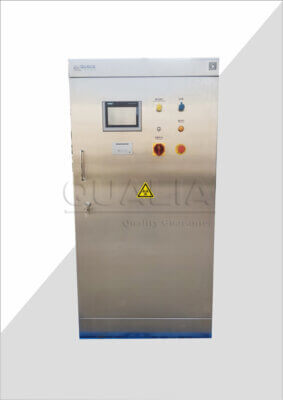
The structural problem with splitting vendors across BSC certification, HEPA exhaust certification, controlled environment testing, and annual verification services is that no single party holds accountability for the combined test result. Each vendor can deliver a passing report for their own scope, yet the acceptance test that evaluates the system as a whole — directional airflow performance under simulated HVAC failure, for instance — may fail precisely because the controls from two separate systems were never tested together under one acceptance plan.
This failure pattern is predictable and consistently underestimated at the procurement stage because the cost of splitting vendors appears as a saving on the quote and the cost of coordination failure appears as a delay during commissioning. Those two costs occur at different project stages and are owned by different budget lines, which is why the split looks financially reasonable until it is not.
| Risk of Splitting Vendors | Consecințe potențiale | Ce trebuie clarificat |
|---|---|---|
| Multiple vendors for BSC certification, HEPA certification, controlled environment testing, and annual verification | Coordination gaps; unresolved acceptance deviations | Whether a single vendor can provide all certification and testing services |
| Separate vendors for air handling, waste treatment, and transfer equipment | Unclear interface ownership; integration gaps | Who owns each interface and how integration testing will be coordinated |
| Split control of air handling and containment systems | HVAC redundancy and directional airflow failure test deviations; handover delays | How combined system testing will be executed and accepted under one plan |
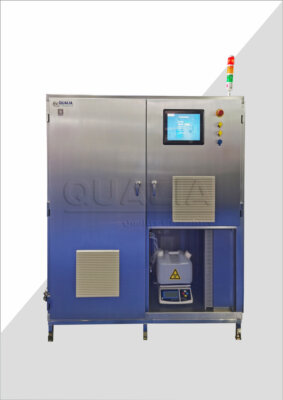
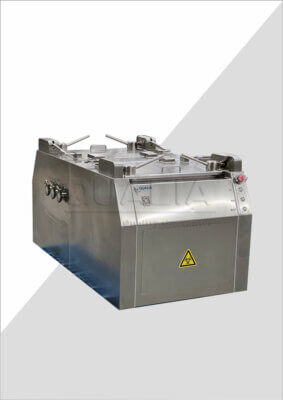
The interface ownership question is particularly acute for effluent decontamination. An Sistem de decontaminare a efluenților supplied separately from the HVAC and containment controls creates a scenario where the interlock between liquid waste treatment status and room access controls may be designed by neither vendor — or designed by both with incompatible logic. Resolving that during site acceptance is a significant deviation and often requires a design change rather than a configuration adjustment. For a broader look at how EDS requirements escalate at higher containment levels, the technical coverage of BSL-4 EDS systems provides useful framing even when the current project is at BSL-3.
The strongest risk-reduction measure is not necessarily to use a single supplier for everything — it is to require, before contract award, a written interface definition document that names the owner of each system boundary and specifies how combined acceptance testing will be coordinated and accepted under one plan.
System Supplier Versus Separate Vendor Tradeoffs
Neither procurement model is categorically superior. The choice between a broad system supplier and a collection of specialist vendors is a trade-off that depends primarily on where integration expertise sits — with the supplier or with the buyer’s internal team.
A system supplier that manufactures, integrates, and commissions the modular lab compresses the handover path because it holds a single validation record set. FAT, SAT, commissioning records, and the performance verification protocol are all produced within one quality system, reviewed by one team, and defended by one accountable party during regulatory review. That compression has direct value when the buyer lacks internal BSL-3 engineering depth to run a combined acceptance plan across multiple vendors — which describes most buyer organizations procuring their first or second high-containment facility.
Separate specialist vendors are a viable path when the buyer has the internal engineering capacity to own interface definitions, write a combined acceptance plan, and manage deviations that cross vendor boundaries. Under those conditions, the component flexibility argument becomes real — a buyer with strong BSL-3 in-house capability can specify best-in-class components for each subsystem and integrate them effectively. Without that internal capability, the component flexibility argument often becomes a procurement liability.
| Factor | System Supplier | Separate Specialist Vendors |
|---|---|---|
| Responsabilitate | Single point for equipment, validation, and licensing | Divided across multiple vendors |
| Component Selection | Pre-integrated suite may limit component choice | Greater flexibility to choose best-in-class components |
| Sarcina integrării | Supplier manages all interfaces; lower buyer burden | Buyer must coordinate interface ownership and testing |
| Handover Risk | Reduced risk; accelerated handover | Higher risk of delays from coordination gaps and SAT deviations |
The asymmetry in the table is worth naming explicitly: the system supplier compresses risk at handover, while separate vendors concentrate risk at integration. A buyer who underestimates the complexity of writing a combined acceptance plan for a multi-vendor BSL-3 installation typically discovers the problem during SAT — when it is expensive to fix and difficult to renegotiate.
Questions That Reveal Weak BSL-3 Engineering Support
Technical proposals from suppliers with limited BSL-3 experience tend to describe systems accurately but fail to demonstrate the process knowledge required to commission and hand over a regulatory-compliant facility. Three specific questions, asked directly and with a request for documentation, reliably distinguish capable suppliers from capable writers of proposals.
The first is whether the supplier can provide a facility-specific performance verification protocol that references USDA, NIH, and CDC guidelines for BSL-3 containment. A supplier with actual commissioning experience for these facilities will have such a document in their project library and will be able to adapt it to the current scope. A supplier who offers a generic commissioning checklist or redirects the question to a third-party validator they would engage after contract award does not yet have the process infrastructure to manage commissioning themselves.
The second question is whether the supplier can provide a documented annual testing plan that covers room integrity, HEPA filter certification, and differential pressure calibration specific to BSL-3 requirements. This question reveals post-handover support depth. A supplier who has maintained BSL-3 facilities in operation will have structured annual plans. A supplier who has only delivered facilities — not maintained them — often cannot produce a plan that goes beyond the initial commissioning scope.
The third is whether the supplier can show evidence of third-party validation or regulatory licensing for comparable installations. For mobile or modular BSL-3 configurations, CDC select agent registration history is a relevant reference point. An inability to produce that evidence does not disqualify a supplier, but it raises the question of whether the handover path they are describing has ever been completed under the regulatory conditions the buyer will face.
| Question | Indication of Weak Support | De ce este important |
|---|---|---|
| Do you provide a facility-specific performance verification protocol referencing USDA, NIH, CDC guidelines? | Absence or inability to produce such a protocol | Suggests lack of experience with regulatory-compliant commissioning |
| Can you supply a documented annual testing plan for room integrity, HEPA filter certification, and differential pressure calibration? | No plan or generic plan not specific to BSL-3 | Indicates insufficient post-handover maintenance planning, risking containment breaches |
| Can you show evidence of third-party validation or CDC licensing for similar mobile BSL-3 installations? | Unable to provide evidence | Signals weak handover proof and unverified compliance history |
These questions work because they require documentation rather than description. A supplier who cannot produce records from a past project similar in scope and containment level is asking the buyer to accept assurances in place of evidence — and in BSL-3 procurement, that is a material risk.
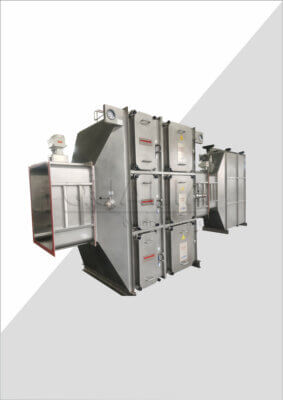
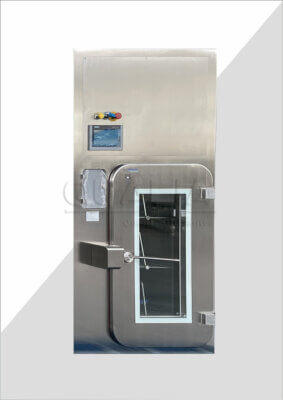
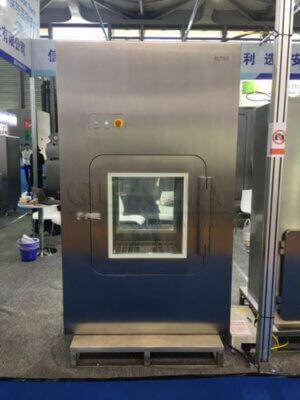
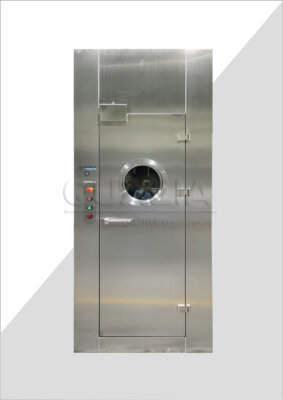
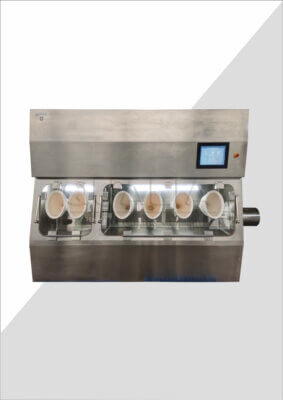
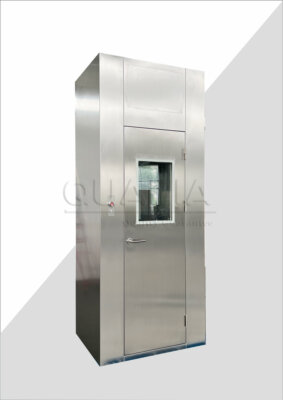
For buyers evaluating pass-box or transfer equipment scope, the distinction between static and dynamic configurations carries its own interface risk that is worth examining before finalizing scope. The dynamic pass box technical overview explains the conditions under which active HEPA air supply becomes necessary, which affects how airlock and transfer equipment should be specified and who holds interface accountability for the HEPA supply connection.
Shortlist Criteria for Qualified BSL-3 Laboratory Suppliers
Shortlisting on price or on component specification alone produces a procurement decision that looks defensible until commissioning begins. The criteria that reliably predict a smooth path from FAT through occupancy approval are process-oriented rather than equipment-oriented.
The first criterion is equipment-to-documentation traceability. A qualified supplier should be able to map each major equipment item — biological safety cabinets, autoclaves, HEPA filter assemblies, decontamination equipment — to specific FAT, SAT, commissioning, and validation records. This is not a request for future documentation; it is a request for evidence from prior projects showing that the supplier’s quality system produces the record structure that regulatory review requires. A supplier who cannot demonstrate this mapping for past projects will not reliably produce it for the current one.
The second criterion is a proven track record with the specific platform being proposed. For modular BSL-3 laboratories, this means prior commissionings of similar configurations that have proceeded through regulatory approval — not reference projects at lower containment levels or fixed-facility BSL-3 labs offered as equivalent to a modular deployment. Platform differences matter because modular and mobile configurations introduce structural, utility, and commissioning variables that fixed-facility experience does not fully address.
The third criterion is post-delivery support infrastructure. ISO 9001 certification is a useful baseline signal that a quality management system exists, but it is not sufficient on its own. The practical indicators are: subject matter experts available for facility performance issues after handover, customized documentation that reflects the actual installed system rather than a generic template, and accessible records for ongoing compliance verification. A supplier who delivers a facility and disengages from ongoing support creates operational risk that is difficult to manage in a BSL-3 environment where containment performance must be demonstrated on an ongoing basis.
| Shortlist Criterion | Ce trebuie să confirmați | De ce este important |
|---|---|---|
| Equipment-to-Documentation Traceability | Supplier maps each equipment item (BSC, autoclave, HEPA, decontamination) to specific FAT, SAT, commissioning, validation records | Ensures complete traceability and reduces acceptance risk |
| Proven Mobile Biocontainment Platform | Supplier demonstrates a track record of commissioning and CDC licensing for mobile BSL-3 labs | Reduces risk of unproven designs and regulatory delays |
| Responsive Service and Documentation Support | Supplier provides subject matter experts, customized documentation, online access to equipment inventory, and ISO 9001-certified quality system | Ensures ongoing compliance and accessible records for post-delivery operations |
For buyers evaluating modular BSL-3 configurations with fixed installation requirements, the Laboratorul modulului BSL-3/BSL-4 product line reflects an integrated design approach — and the relevant shortlist question is whether the supplier behind it can provide FAT and SAT records from comparable prior installations, not just describe the configuration.
The core procurement judgment in BSL-3 laboratory sourcing is not which supplier offers the best individual components — it is which supplier holds clear accountability for all of the interfaces between them, and can demonstrate that accountability with documentation from comparable prior projects. Buyers who separate this judgment from the initial supplier evaluation typically encounter it again during SAT, under conditions where the cost of resolving it has already multiplied.
Before finalizing a shortlist, confirm three things independently: that the supplier can produce a facility-specific performance verification protocol aligned with applicable agency guidance, that they can map each installed system to a commissioning and validation record, and that their post-handover support infrastructure extends to ongoing facility performance, not just the delivery milestone. Those three confirmations, requested with documentation rather than accepted as assurances, are the clearest available filter between a supplier who can deliver a compliant BSL-3 facility and one who can describe delivering one.
Întrebări frecvente
Q: What happens if our internal engineering team has BSL-3 experience — does the case for a system supplier still hold?
A: Not necessarily. The system supplier advantage is strongest when the buyer lacks internal capacity to own interface definitions and write a combined acceptance plan across vendors. If your team has direct BSL-3 commissioning experience and can manage cross-vendor deviation resolution during SAT, separate specialist vendors become a viable path that may offer better component flexibility. The critical test is whether your team can produce and enforce a single acceptance plan that covers air handling, waste treatment, and transfer equipment together — not just manage each vendor relationship independently.
Q: At what point in the procurement timeline should interface ownership be formally defined in writing?
A: Before contract award, not after. The interface definition document — naming the owner of each system boundary and specifying how combined acceptance testing will be coordinated — must exist as a contractual deliverable, not a post-award discussion. Once budget is fixed and schedule committed, renegotiating interface accountability between vendors during SAT is both expensive and slow. Requiring this document during the shortlisting stage also functions as a supplier qualification filter: a capable system supplier will produce it readily; one with limited BSL-3 integration experience will struggle to define boundaries they have not previously managed.
Q: Does a supplier’s fixed-facility BSL-3 track record translate directly to modular or mobile deployments?
A: No, and treating it as equivalent is a material evaluation error. Modular and mobile BSL-3 configurations introduce structural, utility connection, and commissioning variables that fixed-facility experience does not address — including self-contained utility integration, transport-related integrity verification, and site acceptance testing under conditions where the facility has already been factory-commissioned. A supplier should be asked specifically for commissioning records and regulatory approval history from modular or mobile deployments of comparable containment level, not fixed-facility references offered as analogous.
Q: How does the integration risk change if the effluent decontamination system is added later as a change order rather than included in the original scope?
A: The risk increases significantly. An EDS added post-contract as a change order is typically specified and integrated without a coordinated acceptance plan that covers its interlocks with room access controls and HVAC status. The interlock logic between liquid waste treatment state and containment control may fall into a gap where neither the original supplier nor the change-order vendor owns the combined design. Resolving that during site acceptance typically requires a design change rather than a configuration adjustment, which carries both cost and schedule consequences. EDS scope and its interface with containment controls should be defined before the primary contract is awarded, not after.
Q: Is ISO 9001 certification a reliable enough signal to shortlist a BSL-3 supplier’s documentation capability?
A: No — it is a necessary baseline but not a sufficient qualifier. ISO 9001 confirms that a quality management system exists; it does not confirm that the system produces BSL-3-specific documentation structures such as facility-specific performance verification protocols referencing CDC, NIH, and USDA guidance, or SAT deviation logs and HVAC failure mode records at the containment level required. The more reliable signal is requesting actual FAT and SAT records from a prior BSL-3 installation of comparable scope and asking whether those records are facility-specific or adapted from a lower-containment template. Documentation quality from past projects predicts documentation quality on the current one more accurately than certification status alone.