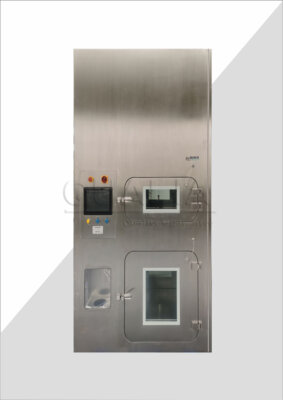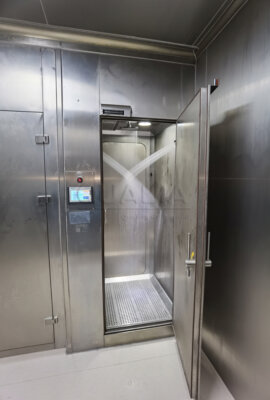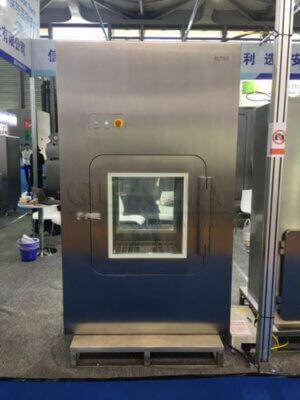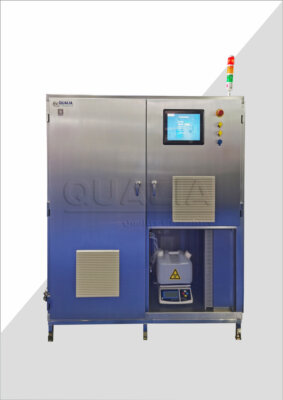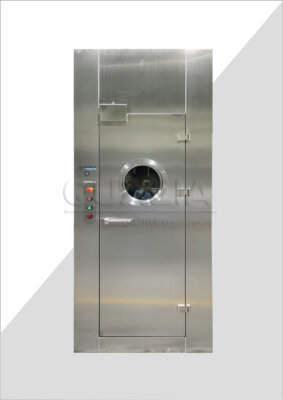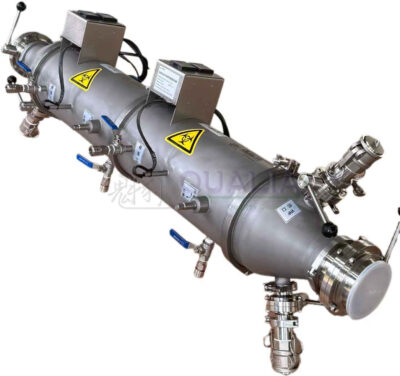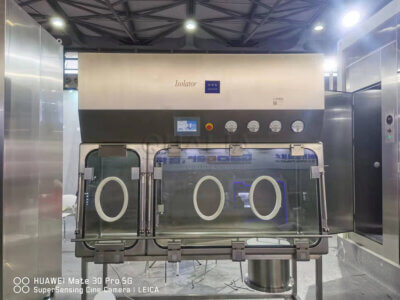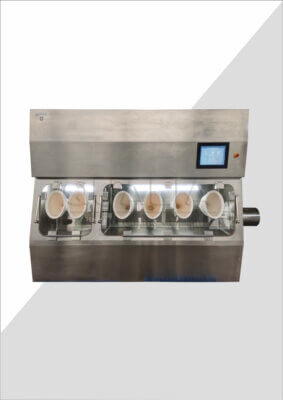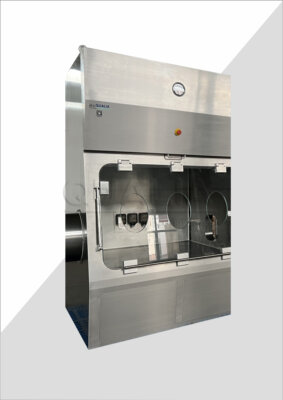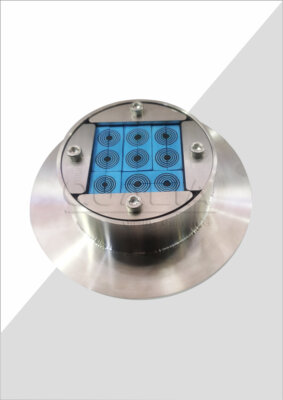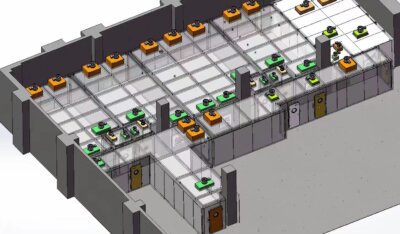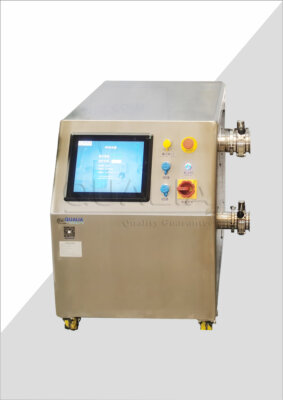

When a Caixa de passes VHP validation package arrives with cycle logs and BI results but no documented load configuration or aeration endpoint data, the receiving QA team faces a choice that compounds over time: accept the package and hope routine transfers reproduce the untested conditions, or pause the project to generate missing evidence. The cost surfaces later—in sterility failures, operator exposure complaints, audit observations, and revalidation cycles that disrupt production. The judgment that separates a defensible package from a risky one is whether the documented cycle, BI/CI placement rationale, aeration endpoint, and material compatibility evidence align with the site’s actual routine load configurations and release criteria, not just with a factory default.
Cycle recipe and load pattern assumptions
A cycle recipe that produces a 6-log reduction in an empty or lightly loaded chamber does not automatically scale to the dense, wrapped, or stacked loads that operators move through a pass box daily. When a validation package defines H₂O₂ concentration, exposure time, temperature, humidity, and aeration parameters without tying them to a specific load pattern, it leaves QA without the means to verify that the cycle was challenged under conditions resembling routine use. The decision the reviewer must make is not simply whether the cycle parameters were recorded, but whether they were selected and proven against a load configuration that represents the transfer items the facility will actually process.
The evidence needed extends beyond the cycle log. Load size, item count, surface materials, packaging type, spacing, and orientation all influence vapour distribution and penetration. A validation package that omits a load configuration drawing, mass limits, material list, or photo documentation creates a gap that auditors can exploit easily—especially when operators inevitably deviate from an assumed arrangement. The site should treat the cycle recipe and load pattern as a paired set of planning criteria, where each parameter is justified relative to the load, not abstracted from it.
| Parameter / Factor | Provas necessárias | Risk if Not Defined |
|---|---|---|
| H₂O₂ concentration | Specified in cycle recipe and validated against sensor data | Inadequate bioburden reduction; 6-log kill not assured |
| Chamber temperature | Thermocouple records showing stable temperature during exposure | Condensation or reduced vapour distribution |
| Humidity level | Humidity sensor data confirms preconditioning control | Inconsistent microbial kill kinetics |
| Tempo de exposição | Cycle log with start/end time stamps at target concentration | Insufficient contact time; positive BI results |
| Aeration phase parameters | Aeration time, air exchange rate, and residual monitoring plan | Load released with unacceptable H₂O₂ residuals |
| Load size (item count, packaging) | Load configuration drawing and mass limits documented | Overload creates cold spots and shielding |
| Surface material(s) of load items | Material list with compatibility notes | Absorption or material degradation may compromise cycle or articles |
| Load arrangement (spacing, orientation) | Photo documentation or load pattern map | Poor vapour penetration; false confidence in validated cycle |
An empty-chamber cycle tells you the pass box works; a loaded-chamber cycle tells you it works for what you actually transfer.
The most common mistake is assuming that a supplier’s generic cycle parameters cover all loads. If the routine load includes absorbent packaging, dense wrapped sets, or items that create shielding, the development runs must reflect those conditions. Without that, a passing BI result during validation may simply indicate that the challenge was placed where kill was easiest, not where survival was most likely.
BI and CI placement rationale
Biological and chemical indicator placement is not a checklist exercise; it is a worst-case challenge methodology that must be adapted to the chamber geometry, airflow pattern, and load obstructions specific to each facility. A validation protocol that defines organism type, population, placement map, number of cycles, and pass/fail criteria before testing is essential for defensibility, but the real test is whether the chosen locations forced the cycle to prove kill where vapour penetration is most difficult.
The table below describes typical worst-case locations and the risk of omitting them. What matters for approval is not that every listed spot was used, but that the placement rationale explains why the selected locations represent the hardest-to-reach areas given the actual load and chamber design. If BIs are placed only on open shelves away from obstructions, near the H₂O₂ injection point, or in positions where airflow is known to be strong, the resulting negative BI results create false confidence. The reviewer should look for a placement map that deliberately includes cold corners, behind and beneath items, within dense or wrapped loads, near gaskets and door seals, and in areas where airflow modelling or smoke studies indicate stagnation.
| Placement Location | Why It Is Worst-Case | Risco em caso de omissão |
|---|---|---|
| Corners of the chamber | Potential dead air zone; low vapour movement | Surviving microorganisms may remain undetected |
| Behind or beneath load items | Shielding from direct H₂O₂ exposure | Hidden contamination could persist after cycle |
| Within dense or wrapped loads | Limited vapour penetration and flow restriction | Misleading negative BI result despite incomplete kill |
| Near gaskets, seals, and door interfaces | Possible cool spots or condensation areas | Loss of sterility assurance at containment barriers |
| Near shelves and transfer interfaces | Physical obstructions altering air distribution | Inactivation missed in complex geometries |
| Areas with slower airflow or stagnation | Reduced H₂O₂ concentration and exposure uniformity | BI survival due to heterogeneous vapour distribution |
If your worst-case BI doesn’t survive somewhere in development, you haven’t found your worst case yet.
A package that lacks a placement rationale forces QA to accept on faith that the worst case was tested. The practical consequence emerges later, when a routine load differs slightly and no one can determine whether the new arrangement falls inside or outside the validated envelope. Without a documented worst-case map and the logic behind it, every load change becomes a debate, and revalidation demands multiply unnecessarily.
Aeration endpoint and residual release criteria
The aeration phase is where many validation packages lose their ability to defend routine release. Insufficient aeration time, absence of residual H₂O₂ measurements on the load itself, or reliance solely on chamber sensor readings create a gap between what the cycle log shows and what the operator actually handles. A commonly used acceptance criterion—residual H₂O₂ below 1 ppm after aeration—is a design figure drawn from operational qualification tables, not a universal regulatory threshold. Its usefulness depends entirely on whether that level was validated on the loaded configuration, not just in an empty chamber.
The critical decision for QA and EHS is whether the aeration endpoint defined in the cycle achieves residual levels that are safe for the specific materials being transferred and for personnel in the receiving area. Absorbent items, such as cardboard secondary packaging or certain polymer wraps, can retain peroxide long after chamber sensors indicate clean conditions. If the validation package only provides aeration time and final chamber sensor readings without direct residual measurement on load surfaces or within wrapped items, the release criteria become nearly impossible to defend when a post-aeration alarm triggers or an operator reports irritation. The package should include an aeration verification plan that accounts for air exchange rate, aeration duration, and residual monitoring at multiple points, including inside the load where absorption risks are highest.
A clean chamber sensor reading doesn’t mean the load is safe to handle.
Failing to lock down aeration endpoint data that matches real loads forces sites into reactive decisions: operators may hold loads longer than the cycle specifies, undermining throughput, or release items with unknown residuals, shifting risk to downstream areas. Both outcomes erode the validation’s value.
Registros de calibração e desvio dos sensores
Validation data is only as trustworthy as the instruments that generated it and the integrity of the investigation process when things go wrong. Calibration certificates for H₂O₂ sensors, temperature probes, humidity sensors, and airflow monitors form the traceable backbone of the package. If any instrument was outside its calibration validity window during cycle development, the entire dataset becomes questionable, and the cycle may need to be repeated.
Beyond calibration, deviation records reveal whether the validation ran cleanly or whether issues were encountered and resolved. A deviation that is documented but left without root cause analysis, impact assessment, corrective actions, and retest evidence is not closed—it is an open vulnerability that will resurface during regulatory inspection or when a similar event occurs in routine operation. The reviewer should check that every deviation includes a description of the failure, an explanation of why it occurred, a justification of whether it invalidated any test results, and confirmation that acceptance criteria were ultimately met after corrective actions.
| Tipo de registro | Evidence to Include | Risk if Absent |
|---|---|---|
| Instrument calibration certificates | List of calibrated sensors, traceable certificates within validity period | Unknown accuracy of monitoring data; invalid cycle decisions |
| Deviation investigation report | Description of deviation, root cause analysis, impact on validation outcome | Unresolved issues may repeat in routine use |
| Deviation closure evidence | Corrective actions, retest or supplementary data, confirmation that acceptance criteria were met | Lack of confidence in cycle robustness; approval on incomplete data |
A deviation left open is a gap in your sterility assurance, waiting for an auditor to find it.
The downstream risk is not just audit findings. Unresolved deviations can mask a cycle that only passed because a sensor drifted favourably or because a failed run was excluded without documented rationale. For a pass box that will be used daily for critical transfers, that uncertainty translates directly into sterility assurance risk.
Material compatibility friction in VHP transfer
Even when a cycle achieves a 6-log kill and meets aeration residuals, material compatibility remains a persistent friction point that sits between supplier data and site QA policy. VHP can degrade certain materials over repeated exposure—elastomer seals, adhesives on labels, some polymer packaging, and surface coatings may absorb peroxide, become brittle, or crack. A validation package that relies solely on a one-time compatibility statement from the pass box manufacturer without testing the actual combination of load items and cycle parameters leaves a blind spot that grows with cumulative cycles.
The decision the site must make is not whether materials are universally compatible or incompatible, but whether the validation scope includes a documented assessment of the materials that will be transferred and a plan for periodic inspection of reusable items. If the package defines the challenge load’s materials and notes any known vulnerabilities, it creates a baseline for future change control. When a new item type is introduced later, the impact on both decontamination efficacy and material degradation can be evaluated against that baseline instead of starting from zero.
Material compatibility friction often surfaces only after months of routine use, when operators notice discolouration, odour, or visible damage. Without upfront compatibility testing at the worst-case peroxide concentration and exposure duration, the site has no data to distinguish between acceptable cosmetic change and a developing integrity risk. The validation package should at minimum record the materials used in the challenge load and state the cycle conditions under which compatibility was assessed, so that the boundary of the validated state is clear.
Validation approval for routine load configuration
The final approval decision turns on whether the challenge load actually represents the loads that will move through the pass box during routine operations. A cycle validated only with an empty chamber or a light, open load creates a dangerous misalignment: the validated condition never occurs in real use, and the real condition was never tested. The package must include evidence that the load used during cycle development mirrors either the exact routine configuration or a defined worst-case that bounds all expected transfers.
QA reviewers should look for a load mapping record, a justification of why the chosen configuration is worst-case (considering item density, wrapping, material absorbance, and orientation), and photo documentation that freezes the arrangement. If the site intends to transfer multiple load types, the validation should either cover the most challenging one with a rationale explaining why it envelopes the others, or include separate challenge data for each distinct configuration. Approving without this alignment means the pass box enters service with an unquantified sterility assurance gap.
| Approval Condition | Evidence Required | Risk of Inadequate Testing |
|---|---|---|
| Challenge load represents routine or worst-case configuration | Load mapping record, justification of worst-case selection, photo documentation | Validation that only covers an empty chamber or unrepresentative load |
| Decontamination efficacy demonstrated on the challenge load | BI/CI kill data, cycle log showing all critical parameters within spec | Unexposed areas or surviving organisms in real loads |
| Release conditions met for the challenge load | Residual H₂O₂ measurements post-aeration (<1 ppm), aeration endpoint record | Loads released with unacceptable peroxide residuals in routine use |
Approve the package when the routine load is represented in the records, not before.
The risk of inadequate testing crystallizes at the first deviation from the undocumented load. When an operator adds an extra wrapped tray or changes packaging, the site cannot determine whether the validated cycle still provides the required lethality without additional testing. That uncertainty leads to either an ad-hoc risk assessment under pressure or an unplanned revalidation, both of which cost more than defining the routine configuration upfront.
The validation package for a VHP pass box becomes defendable only when the load configuration, cycle parameters, BI/CI placement, aeration endpoint, sensor calibration, deviation closure, and material compatibility evidence all align with the site’s operating reality. The package reviewer’s task is not to check that documents exist, but to verify that the recorded conditions match the loads and release criteria the facility will live with every day. Any mismatch between the validated state and routine use will eventually surface as a sterility event, an operator safety complaint, or an audit finding—usually at a time when correcting it is far more expensive than getting the evidence right at approval.
Perguntas frequentes
Q: Our pass box transfers a wide variety of items; there’s no fixed load pattern we can document. How do we meet the validation requirement for a defined load configuration?
A: Use a bracketing strategy. Define one or two worst‑case load envelopes (e.g., densest, most absorbent, largest mass, or most shielding arrangement) that bound all routine transfers, then validate the cycle against those. Document the rationale so any load falling within the envelope is covered without needing a separate test for every variation.
Q: We’ve discovered our validation package only has aeration data from chamber sensors, not on the load itself. What’s the first step to close that gap?
A: Run a cycle with your actual routine load and directly measure residual H₂O₂ on load surfaces and inside wrapped items at the end of the aeration phase. If residuals exceed your release limit, extend aeration time or adjust parameters until the load consistently meets the limit, then lock that evidence into the package before signing off routine use.
Q: Is the <1 ppm residual H₂O₂ limit a universal regulatory requirement, or can our site adopt a different threshold?
A: The 1 ppm value is a common design target from operational qualification tables, not a binding regulatory limit. Your site must set a residual level based on material off‑gassing characteristics, occupational exposure standards, and EHS policy. Where absorbent materials or sensitive downstream areas exist, a lower limit may be necessary and should be validated directly on the load.
Q: If the pass box manufacturer already performed a factory validation, isn’t that enough to demonstrate the cycle works?
A: Not for routine use. Factory validations typically use empty or lightly loaded chambers that don’t reproduce the shielding, absorption, and airflow disruption caused by real transfer items. A cycle that passes in an empty chamber can fail when challenged with dense, wrapped, or stacked loads. Site‑specific validation with your actual or worst‑case load is essential to defend sterility assurance.
Q: We run low throughput and transfer only low‑risk materials. Is the full validation package with load mapping and load‑surface aeration monitoring really worth the effort?
A: Yes. Even infrequent use carries the same sterility and operator‑exposure consequences if something goes wrong. A thin validation package leaves you unable to defend the process during audits or incidents. The upfront cost of documenting your real load and challenging the cycle against it is small compared to the disruption and expense of a revalidation forced by a failure or regulatory observation.