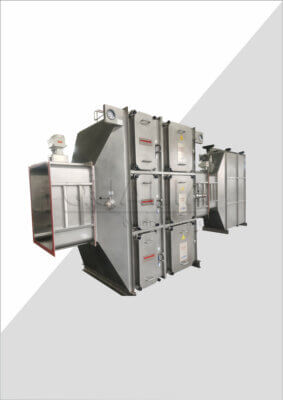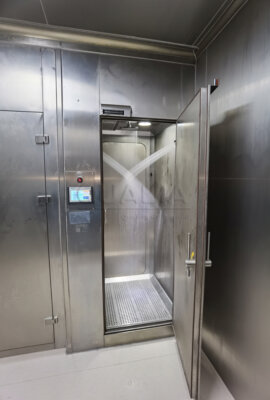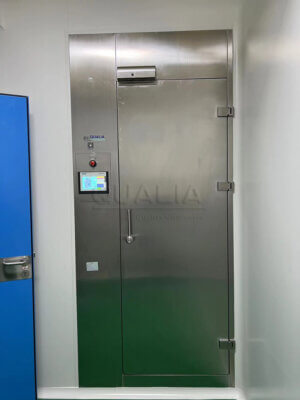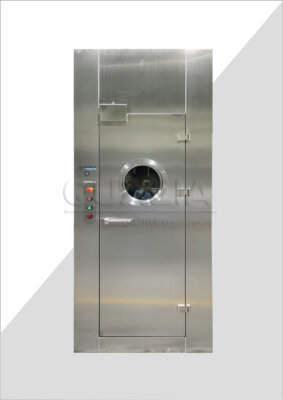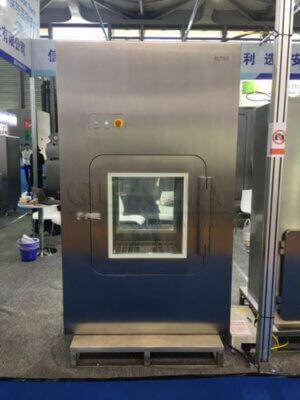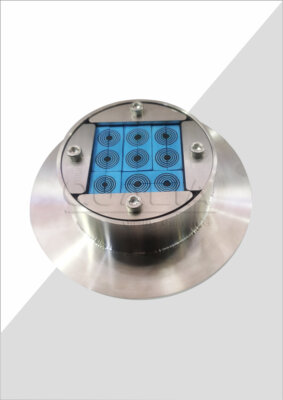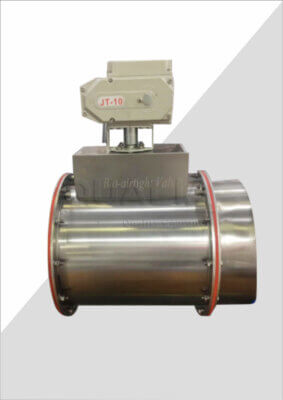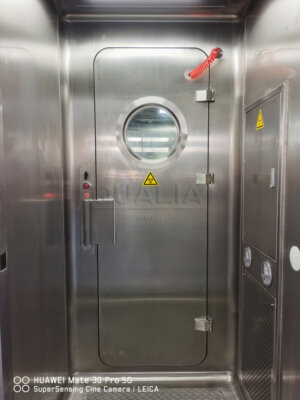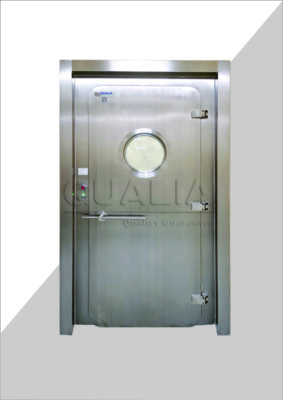


Starting OQ before IQ punch items are fully closed is the single most expensive sequencing mistake in mist shower commissioning — not because it violates a procedural checkbox, but because it invalidates the entire dataset. If pressure calibration is unresolved or interlock signal pathways remain unverified when spray coverage testing begins, there is no defensible basis for attributing the performance result to a qualified installation. The consequence is a full OQ repeat after IQ remediation, rarely budgeted and almost always disruptive to facility startup timelines. Understanding where those sequencing boundaries sit, which test method decisions affect them, and what scope decisions during PQ create inspection exposure years later is what separates a qualification package that holds up from one that does not.
IQ documentation requirements: what the Installation Qualification must verify and record before OQ can begin
IQ is a technical baseline, not an administrative formality. Its function is to establish that the installed system matches the design intent completely enough that any performance result generated during OQ can be attributed to the installation rather than to an unknown variable. When that baseline is incomplete — particularly when pressure calibration or interlock wiring has not been confirmed — the OQ data cannot be defended as a product of a known, controlled state.
The highest-risk IQ gap in mist shower installations is incomplete interlock verification. Every signal pathway between the shower controller and the adjacent pressure room or APR door panel must be traced against the as-built wiring diagram before OQ begins. This is not simply a matter of confirming that the door opens and closes; it is a matter of verifying that each interlock signal behaves as designed under the documented operating conditions. A facility that accepts a passing door-status test without completing the full signal pathway audit may find, during a regulatory inspection, that it cannot demonstrate the interlock system was qualified prior to the performance data it is now presenting.
Material and dimensional verification carries similar consequence. GMP-grade surface specifications — 304 or 316L stainless steel with a surface roughness of Ra ≤0.8 μm — are not only material quality indicators; they are cleanability and corrosion-resistance conditions that affect the long-term integrity of every decontamination cycle the system will perform. Dimensional conformance matters for a different reason: if the installed chamber geometry deviates from the design, the spray coverage mapping conducted during OQ may be accurate for the as-built chamber but inconsistent with the validated design, creating a discrepancy that becomes visible only when the qualification package is reviewed against the URS.
Each of these verification points carries a specific specification that must be documented before OQ can commence.
| Verification Point | Waarom het belangrijk is | Specification/Evidence |
|---|---|---|
| Interlock systems (door sensors, pressure monitoring) wired per as-built diagram | Required to ensure performance data is attributed to a qualified installation. | Must match as-built wiring diagram. |
| Construction materials and surface finishes | Confirms GMP-grade material specifications for cleanability and corrosion resistance. | 304/316L stainless steel with surface roughness (Ra) ≤0.8 μm. |
| Chamber dimensional specifications | Ensures physical installation matches design, critical for spray coverage and operator safety. | Standard single-person: 1000-1200 mm width, 1000-1200 mm depth, 2200-2400 mm height. |
One practical discipline worth building into the IQ protocol is a formal punch-item closure gate — a signed record confirming that every open IQ item, including any instrument calibration or drain gradient check, has been resolved before OQ scheduling begins. Facilities that treat unresolved punch items as “in-progress” rather than “blocking” are the ones that absorb the full cost of OQ invalidation after the fact. As EudraLex Deel 4 Bijlage 15 makes clear in its qualification sequencing principles, each phase must be satisfactorily completed before the next phase commences — a sequencing logic that applies directly here.
OQ test methods for spray coverage: fluorescent tracer versus biological indicator approaches and when to use each
The choice between fluorescent tracer dye and biological indicator testing is not a regulatory mandate — it is an engineering and timeline trade-off that depends on what the qualification is being asked to prove and at what stage of the system’s lifecycle it is being conducted.
Fluorescent tracer dye produces fast, visual evidence of surface contact. Spray coverage can be mapped across defined body-surface reference positions, photographed, and documented within hours of a test cycle. That speed makes tracer dye the practical primary method for initial qualification, where the goal is to confirm that the nozzle array achieves uniform coverage across the chamber interior before more resource-intensive testing is layered on top. What tracer dye does not confirm is microbial inactivation. A surface that is visibly wetted has not necessarily received a lethal dose of decontaminant — coverage mapping and kill efficacy are related but distinct questions.
Biological indicator testing with Bacillus atrophaeus spore strips placed at defined body-surface positions answers the inactivation question directly, providing quantitative log-reduction data that fluorescent mapping cannot. The cost of that rigor is time: biological indicator results typically require 7 to 14 days per test cycle, a constraint that tends to be underestimated when commissioning schedules are built. That timeline becomes a meaningful project constraint in post-renovation or post-significant-change qualifications, where the re-qualification cannot be closed until biological indicator results are available.
The practical protocol that balances both constraints is to use tracer dye as the primary coverage test for initial qualification and to reserve full biological indicator OQ for post-renovation or post-significant-change scenarios where equipment modification has altered spray geometry.
| Methode | Primary Output | Tijd tot resultaat | When to Use |
|---|---|---|---|
| Fluorescent tracer dye | Visual coverage mapping (surface contact evidence) | Snel (uren) | Primary coverage test for initial qualification. |
| Biological indicator (Bacillus atrophaeus spore strips) | Quantitative log-reduction data (microbial inactivation) | 7–14 days | Post-renovation, post-significant-change, or periodic confirmatory qualifications. |
One technical detail worth embedding in the OQ protocol regardless of which method is used: droplet size is a controllable variable that directly affects contact efficiency. Mist showers operating within the 5–15 μm droplet size range achieve optimal particle capture; droplets larger than 20 μm reduce contact efficiency measurably. Atomization performance should be characterized during OQ so that nozzle wear or supply pressure drift, which both shift the droplet size distribution, can be detected during subsequent PQ cycles rather than attributed to unexplained coverage variability.
OQ acceptance criteria: the coverage percentage and concentration threshold that constitutes a passing result
Passing OQ requires more than generating a coverage map — it requires a quantitative basis for the acceptance decision. Without defined thresholds, a result that looks acceptable on inspection may not be defensible under audit scrutiny, and a result that falls marginally short has no defined path for deviation handling.
Two numeric targets give the acceptance decision a defensible basis in mist shower qualification practice. The first is the coverage coefficient — the ratio of actual measured coverage to theoretical coverage based on the nozzle array design. A coefficient exceeding 0.85 is the qualification threshold for uniform spray coverage. A result below that level does not automatically disqualify the system, but it does trigger the deviation handling process: the result must be investigated, root-caused, and remediated before re-testing, not simply averaged against other passing positions. The second target is droplet size, with the 5–15 μm range defining the atomization performance window for optimal particle capture.
| Criterion | Drempel | Waarom het belangrijk is |
|---|---|---|
| Nozzle array coverage coefficient (actual/theoretical coverage) | >0.85 | Provides a quantitative acceptance criterion for spray coverage uniformity. |
| Water droplet size for optimal particle capture | 5-15 μm (optimal); >20 μm reduces efficiency | Provides a measurable target for evaluating and tuning atomization performance. |
The important distinction here is that these thresholds are quantitative acceptance criteria grounded in qualification practice and equipment design specifications — they are not universally codified regulatory limits. What they provide is a numeric basis that makes the acceptance decision auditable. A qualification package that documents the acceptance criteria in the protocol, records the measured results against those criteria, and handles deviations through the site’s deviation management system is materially more defensible than one where the acceptance decision rests on reviewer judgment alone. For facilities evaluating Qualia Bio’s Neveldouche specifically, confirming that these acceptance criteria are incorporated into the supplied qualification documentation package is a useful pre-qualification check.
PQ scope and duration: how many cycles must be verified and what conditions must be represented
PQ scope is where mist shower qualification most commonly under-delivers relative to the actual operational risk — not because teams skip cycles, but because they confine testing to commissioning conditions without representing the range of conditions the system will actually face during routine operation.
The most consequential gap is seasonal chemical degradation. Sodium hypochlorite, the decontaminant used in most mist shower applications, degrades at an accelerated rate at elevated ambient temperatures. A PQ completed during winter commissioning at a controlled ambient temperature will generate chemical concentration data that does not reflect what happens to the same solution stored or circulated through the system during summer operating conditions. If a regulatory inspection occurs during a warmer period, and the PQ documentation does not include concentration verification across the facility’s ambient temperature range, the facility is in the position of asserting performance under conditions it has not demonstrated.
Worst-case condition representation is a core principle of process validation, reflected in the FDA Guidance on Process Validation under its continued process verification framework. For mist showers, that translates to PQ cycles that explicitly bracket the temperature range, include chemical concentration measurement at the start and end of each cycle, and document the results against defined acceptance criteria. The number of cycles required is a site-specific determination based on risk assessment and operational frequency, but the conditions those cycles must represent — including worst-case temperature — are not optional scope items.
PQ also serves as the point where any variability introduced by differences in operators, shift timing, or chemical batch becomes visible. A qualification program that runs all PQ cycles under identical controlled conditions conducted by the same operator may not surface the variability that normal operations will introduce. Building realistic operational diversity into the PQ cycle set strengthens the qualification’s predictive value and reduces the likelihood of performance anomalies emerging during routine monitoring.
Handling OQ deviations: the remediation and re-qualification protocol when a nozzle position or pressure test fails
A deviation during OQ is a defined event with a defined response path — not a project failure and not a decision to be resolved informally. The most important discipline is distinguishing between the remediation step and the re-qualification step, because they are not the same action and cannot be collapsed into each other.
When a nozzle position fails to meet the coverage coefficient threshold, the root cause must be identified before any remediation is applied. Common causes include nozzle blockage or wear, supply pressure below setpoint, or physical misalignment relative to the as-built drawing. Each of those root causes has a different corrective action, and the corrective action taken must be documented in the deviation record before re-testing begins. Applying a fix and immediately re-running the failed test position without a documented root cause and corrective action creates an unresolved gap in the qualification record — one that is visible during inspection.
For pressure-related failures, the remediation protocol must trace the pressure drop back to its source before any system adjustment is made. A pressure test failure that is resolved by adjusting the setpoint without confirming calibration instrument accuracy leaves the qualification data vulnerable: the result may pass on re-test but the calibration status of the measuring instrument remains unverified. Instrument calibration must be confirmed as part of the deviation investigation, not assumed after the fact.
HEPA filter integrity is a specific sub-case with a quantitative trigger: a leak result exceeding 0.01% requires filter repair or replacement and a repeated integrity test before the qualification can proceed. That threshold is the actionable remediation criterion, and the repair or replacement action must be recorded with the test result — not in a separate maintenance log that may not be reviewed as part of the qualification package.
The broader principle is that the site’s deviation management and re-qualification SOPs must define in advance what constitutes a re-test, what constitutes a partial re-qualification, and what constitutes a full OQ repeat. A deviation that is resolved by nozzle adjustment may require re-testing only the affected positions; a deviation that reflects a systemic calibration failure may require re-testing all positions under confirmed calibration conditions. Those boundaries should be defined in protocol rather than resolved in real time under project schedule pressure.
Documentation retention requirements under EU GMP Annex 1 and FDA cGMP for mist shower qualification records
A qualification package that performed correctly but cannot be reconstructed during inspection provides no regulatory protection. Documentation retention is not a filing exercise — it is the mechanism by which the qualification remains auditable for the life of the system and through any subsequent change control event.
Three document types constitute the minimum defensible package for a mist shower qualification. Material test certificates confirm that the installed equipment meets the material specifications documented in the IQ. Calibration certificates for all instruments used during qualification testing confirm that the measurement tools were accurate at the time the qualification data was generated. Testing reports — covering IQ verification records, OQ spray coverage maps, biological indicator results where applicable, and PQ cycle data — constitute the evidentiary record of the qualification itself.
| Documenttype | Why It Is Required |
|---|---|
| Material test certificates | Required evidence for material specifications. |
| Calibration certificates for all instruments | Required evidence for instrument accuracy. |
| All testing reports | Required evidence for qualification testing. |
The consequence of a missing element in this package is not simply a documentation gap — it is an evidentiary gap. If a calibration certificate is missing for an instrument used during OQ pressure testing, the OQ data generated by that instrument cannot be confirmed as accurate, and the qualification result it supports becomes difficult to defend. EU GMP Annex 1 and FDA cGMP both establish retention obligations for qualification records; the specific retention period is jurisdiction- and site-specific and should be confirmed in the site’s document management procedures rather than assumed from a general industry convention.
One frequently overlooked retention requirement is the as-built wiring diagram referenced during IQ interlock verification. That document is not simply a construction record — it is part of the IQ evidence base. If the as-built diagram is archived separately from the IQ package and becomes inaccessible or superseded by an uncontrolled revision, the interlock verification record in the IQ loses its reference anchor. Keeping the as-built drawing version-controlled and cross-referenced within the IQ package is a practical retention discipline that prevents that gap.
Facilities working through initial setup of their qualification documentation framework may also find it useful to review the scope of Qualia Bio’s Inspection and Testing of Commissioning Services, which can inform what supplier-provided documentation should be expected as part of the equipment delivery package.
Change control for mist shower modifications: which post-installation changes require partial or full re-qualification
Post-installation changes to a mist shower are not all equivalent, and the qualification response should not be either. The classification decision — partial re-qualification versus full re-qualification — should be driven by what the modification does to the variables that the original qualification was designed to characterize.
Changes that do not alter spray geometry, chemical delivery, or interlock function generally support a partial re-qualification approach: verifying that the affected subsystem still meets its acceptance criteria without repeating the full qualification cycle. Replacing a nozzle with an identical part number and specification, for example, may require verification that the affected spray position still meets the coverage coefficient threshold, documented as a change-controlled re-test rather than a full OQ repeat.
Changes that alter spray geometry require a different response. Nozzle repositioning — even minor adjustment — changes the geometric relationship between the spray source and the body-surface reference positions that the coverage mapping was built around. That change invalidates the original coverage characterization for the affected positions and, depending on the nozzle’s contribution to overall array uniformity, may affect the coverage coefficient across a broader zone. In those cases, full biological indicator OQ for re-qualification is the most conservative and defensible response, because it directly confirms that decontamination efficacy is maintained under the modified geometry. Tracer dye alone does not answer that question after a geometry change — it maps coverage but does not confirm kill efficacy at the modified nozzle positions.
This distinction should be embedded in the site’s change control classification criteria before any modification is proposed. The relevant Annex 15 change control principles support a risk-based classification approach, but they do not specify the exact boundary between partial and full re-qualification for mist shower modifications — that determination requires practitioner judgment applied to the specific geometry and risk of the change. The critical discipline is making that determination in the change control record before work begins, not retroactively after the modification is complete and re-qualification scope is being negotiated under schedule pressure.
For broader context on how mist shower design principles interact with qualification requirements, Qualia Bio’s overview of mist shower contamination control provides useful background on the engineering basis for the systems being qualified.
The three decisions that most reliably determine whether a mist shower qualification package holds up under inspection — IQ sequencing discipline, OQ test method selection, and PQ scope breadth — are also the three most commonly underestimated during project planning. Pressure calibration and interlock verification must be closed before OQ begins; the fluorescent tracer versus biological indicator choice must be matched to the qualification stage and change history; and PQ scope must explicitly represent worst-case temperature conditions, not just commissioning conditions. Each of these is a scope decision, not a documentation task.
Before finalizing a qualification protocol, the most useful pre-execution check is to confirm that every acceptance criterion is defined in the protocol document itself, that the deviation response path is specified for each test rather than deferred to general SOP reference, and that the documentation package structure accounts for supplier-provided certificates as part of the qualification record rather than a separate project file. A qualification that was executed correctly but cannot be reconstructed from its documentation is indistinguishable, during inspection, from one that was not.
Veelgestelde vragen
Q: Can the mist shower qualification protocol be applied if the facility has not yet finalized its URS?
A: No — the URS must be approved before IQ can begin, because IQ is structured around verifying that the installed system matches design intent. Without a finalized URS, there is no documented basis against which to confirm nozzle positions, operating pressure setpoints, interlock wiring, or dimensional specifications. Starting IQ against an incomplete or draft URS creates the same evidentiary problem as starting OQ with open IQ punch items: the qualification data cannot be attributed to a verified, agreed-upon design, leaving the entire package vulnerable during regulatory review.
Q: After OQ is complete and accepted, what should be the immediate next step before PQ cycles begin?
A: The immediate next step is to confirm that the chemical concentration verification protocol for PQ explicitly covers the facility’s full ambient temperature range — not just the conditions present at the time OQ was conducted. OQ closing does not automatically establish PQ readiness; the PQ protocol must be reviewed to confirm that sodium hypochlorite concentration measurements are scheduled across seasonal temperature brackets and that acceptance criteria for those measurements are defined in the protocol document before any PQ cycle is initiated.
Q: At what point does fluorescent tracer dye testing become insufficient on its own, even for facilities with straightforward initial qualifications?
A: Tracer dye becomes insufficient as the sole method at any point where the qualification is being asked to confirm decontamination efficacy rather than surface contact coverage — specifically after any modification that alters spray geometry. A nozzle repositioning changes the geometric relationship between spray source and body-surface reference positions, which invalidates the original coverage characterization. At that stage, tracer dye maps wetted surfaces but cannot confirm that the modified geometry delivers a lethal dose at previously qualifying positions. Full biological indicator OQ is required to answer the inactivation question after a geometry-altering change.
Q: How does sodium hypochlorite degradation during PQ compare to using a more chemically stable decontaminant to reduce seasonal variability?
A: Chemical stability is a genuine trade-off, but the choice of decontaminant is constrained by regulatory acceptance and compatibility with GMP-grade surfaces — not only by seasonal performance. The more operationally manageable response to sodium hypochlorite degradation is to build worst-case temperature conditions into PQ scope rather than substitute the agent, since any decontaminant change would itself trigger a change control review and potentially a full re-qualification to establish efficacy data for the new agent. Representing the temperature range in PQ resolves the seasonal variability problem without creating a new qualification event.
Q: Is a mist shower qualification package defensible if biological indicator testing was never conducted during the system’s qualification history?
A: It depends on whether a geometry-altering modification has occurred since initial qualification. For a system qualified initially with fluorescent tracer dye and maintained without nozzle repositioning or spray geometry changes, a tracer-based OQ record combined with periodic concentration verification during PQ may be defensible — provided the qualification rationale explicitly documents why biological indicator testing was not required at that stage. However, if the qualification history includes any post-installation change that altered spray geometry and biological indicator OQ was not performed at that point, the efficacy of the current decontamination configuration has not been demonstrated quantitatively, which creates a documentable gap that an inspection could surface.
Gerelateerde inhoud:
- Neveldouchesystemen: Een technische referentie voor BSL-3 en BSL-4 personeelontsmetting
- Hoe neveldouches werken: Verstuivingsmechanisme Contacttijd en druppelverdeling in afgesloten uitgangen
- Neveldouche vs Luchtdouche voor decontaminatie van BSL-3-personeel: Welk ontsmettingsprotocol is geschikt?
- Testen van luchtdouches: Prestatieverificatie
- Validatie van luchtdouches: Prestaties garanderen
- Vereisten voor neveldouches volgens BMBL 5e editie: Wat BSL-3 Exit Protocols moeten bevatten
- Onderhoud van luchtdouches: Tips voor preventief onderhoud
- Luchtdouche certificering: Naleving garanderen
- Veiligheid van luchtdouches: Naleving van regelgeving