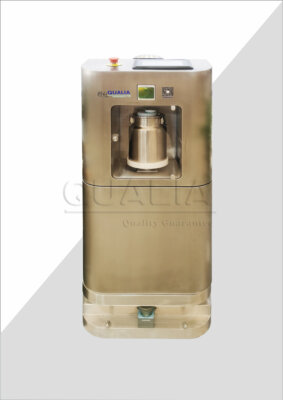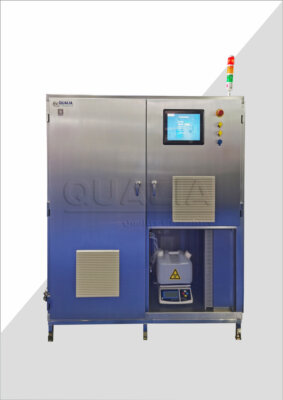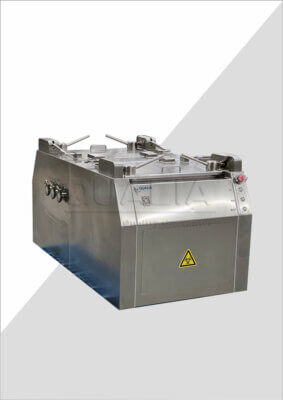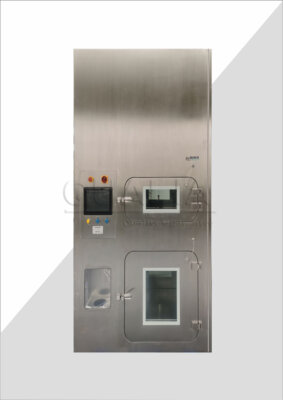

Portable VHP room decontamination cycles in BSL-3/4 facilities fail more often in the setup phase than during injection itself — and those failures are expensive. A dwell-phase concentration that drops by 15–25% because of an unsealed drain trap does not just mean a failed biological indicator; it means a repeat cycle, a documented deviation, and a validation gap that will appear in the next regulatory inspection. The judgment that separates a clean first-pass cycle from a rework scenario comes down to pre-injection decisions: generator placement, seal integrity verification, gap sealing, cycle parameter trade-offs, and aeration endpoint confirmation. Understanding where each of those decisions has a downstream consequence allows operators and validation teams to sequence their setup correctly before the generator switch is thrown.
Portable Generator Positioning for Optimal Vapour Distribution
Generator placement is routinely treated as a secondary commissioning detail, resolved on the day the cycle begins rather than during cycle development. That approach consistently creates distribution problems that are difficult to diagnose once injection is underway.
The primary positioning objective is to minimise the vapour travel distance to the farthest wall or surface. As a practical benchmark, each metre of distribution path beyond approximately 10 metres reduces H₂O₂ concentration at the return air point by roughly 0.3 mg/L — a meaningful loss in rooms where dwell-phase concentration tolerances are already narrow. Positioning the generator at or near the geometric centre of the room is the most straightforward way to balance distribution distance across all surfaces, but in irregularly shaped rooms or those with substantial fixed equipment, a geometric centre placement may not correspond to the actual aerodynamic centre. In those cases, the generator location should be chosen based on observed vapour distribution during a trial run with a tracer or during the conditioning phase itself.
Fan power is the variable that operators underweight until commissioning reveals a problem. Varying fan output between 40% and 70% produces meaningfully different H₂O₂ concentrations at the same measurement point within the same room. A room that passes cycle verification at 65% fan power may not pass at 45%, even with identical injection parameters. This sensitivity means that generator positioning and fan settings need to be established and locked together as a single configuration, not treated as independently adjustable variables. Once a configuration is validated, any change to fan speed should be treated as a potential cycle re-qualification trigger.
For larger rooms or environments with significant surface complexity, a Robot VHP with programmable movement capability can eliminate the fixed-placement limitation by distributing vapour dynamically across the room volume, reducing reliance on a single static fan configuration.
HVAC Grille Sealing and Pressure Decay Verification
Sealing the HVAC system is the step teams feel most confident about — which makes it the step where overconfidence creates problems. Grilles are sealed, HVAC is shut down, and the team moves forward. The problem is that sealing without verification treats the seal as a binary condition rather than a performance boundary.
Gas-tight covers rated to at least 250 Pa positive pressure are the appropriate specification for supply and exhaust grilles in a room VHP cycle. The pressure rating matters because dwell-phase H₂O₂ concentrations create internal positive pressure differentials relative to unsealed corridor spaces, and covers that lack adequate pressure resistance will deform or leak progressively during the cycle rather than failing immediately during setup where the problem would be visible.
Pressure decay verification — conducted before injection begins — confirms whether the sealed room holds pressure under a defined test load. A room that fails pressure decay will also fail to hold dwell-phase concentration, but the pressure decay result is available before any H₂O₂ is consumed. Boundary gas detection adds a complementary check: using a gas detector around the perimeter of the sealed treatment area before injection verifies that vapour will not migrate into adjacent occupied zones. This is consistent with containment principles outlined in the CDC/NIH BMBL 6th Edition framework, which treats boundary confirmation as part of responsible BSL-3/4 operations, even though the BMBL does not govern this specific sealing method directly.
Each verification step and its rationale is summarised here:
| Verification Step | Mengapa Ini Penting | How to Verify |
|---|---|---|
| Seal all supply and exhaust grilles with gas‑tight covers | Unsealed grilles create leakage paths that compromise containment and reduce dwell‑phase H₂O₂ concentration | Shut down HVAC; visually inspect after fitting covers to confirm no gaps remain |
| Perform boundary gas detection | Confirms that the sealed treatment area prevents vapour from escaping into adjacent zones | Use a gas detector around the perimeter of the sealed area before starting VHP injection |
The table carries the structural sequence. The consequence logic is worth stating directly: an unsealed or under-pressure grille creates a continuous leakage path throughout the dwell phase, not a momentary gap at the start. Concentration loss from a leaking grille accumulates over the full dwell period, and by the time a post-cycle biological indicator returns a failure result, the cause is already gone — the covers were removed during aeration. Without pre-cycle verification on record, the deviation investigation cannot distinguish between a seal failure and a cycle parameter problem.
Drain Trap and Under-Door Gap Sealing
Drain traps and under-door gaps are overlooked with remarkable consistency in BSL-3/4 room VHP setups, often because the team completing the sealing checklist is working from a list designed for isolator work rather than room-scale decontamination. Isolator cycles do not involve floor drains or sweep gaps; room cycles do.
An unsealed drain trap creates a direct gas pathway between the treated room volume and the building drainage system. H₂O₂ vapour follows the lowest-resistance path, and an open drain trap — particularly one that has partially dried out — provides a near-zero-resistance leakage route. Under-door gaps, especially on doors that are not equipped with door bottom seals, behave similarly. The combined effect of multiple small unsealed penetrations can reduce dwell-phase H₂O₂ concentration by 15–25%, based on operational experience with room-scale cycles. That range does not represent guaranteed cycle failure in every case, but it does represent a concentration reduction large enough to invalidate the cycle parameters that were established during development and validation.
The practical sealing approach for drain traps is to pour a plug of water into the trap immediately before sealing, then cover the drain grate with a gas-tight plate or tape-sealed cover. Under-door gaps can be addressed with foam draught excluders or purpose-made inflatable seals, confirmed by low-pressure smoke or gas detection at the gap after fitting. Neither method is technically complex, but both require explicit inclusion on the pre-cycle setup checklist — and that checklist needs to be site-specific rather than adapted from an isolator qualification protocol.
The downstream consequence of missing either seal is not confined to the cycle that fails. If the concentration drop is sufficient to invalidate a biological indicator result, the event enters the deviation management system. Regulatory inspectors reviewing deviation records for a BSL-3/4 facility will probe root cause analysis on cycle failures, and a root cause of “drain trap not sealed” is difficult to defend as a one-time oversight if the pre-cycle checklist did not include it as a required step.
Cycle Parameter Adjustment for Room Volume and Surface Area
Room decontamination cycles cannot be derived directly from isolator cycle parameters, and the differences are not just scalar. An isolator cycle scales primarily by volume. A room cycle scales by both volume and surface area, and those two dimensions do not always move in proportion — a room with extensive shelving, equipment, and wall penetrations presents substantially more surface area per cubic metre than an empty room of the same dimensions.
For rooms up to 150 m³, injection rates in the range of 5–8 g/min are typically required to achieve and maintain target dwell-phase concentrations, with a conditioning phase that is meaningfully longer than a comparable isolator cycle. The conditioning phase serves to bring the room to the target relative humidity before injection begins, because the humidity-concentration relationship introduces a trade-off that must be resolved before cycle parameters are locked.
At lower conditioning humidity, H₂O₂ requires higher vapour concentrations to achieve equivalent microbial kill. At higher conditioning humidity, the concentration requirement is more flexible but condensation risk increases — particularly on cold surfaces such as equipment housings, cable trays, and stainless steel shelving. Running a high-humidity conditioning phase in a room with a large cold surface area can trigger condensation that damages equipment and creates non-uniform deposition. Running a low-humidity conditioning phase reduces that risk but requires the generator to deliver higher injection rates to compensate, which in a large room means longer cycle times and increased H₂O₂ consumption. Neither option is universally preferable; the correct balance depends on the room’s specific surface area, the thermal profile of fixed equipment, and the capacity of the generator.
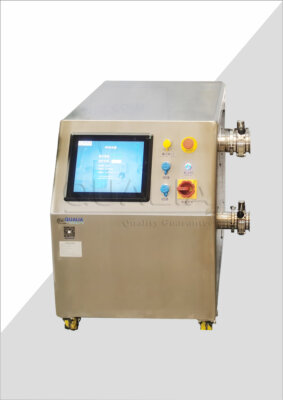
The ISPE Baseline Guide Vol. 3 and ISPE HVAC Good Practice Guide provide useful testing-framework principles for establishing and documenting cycle parameters, though they do not mandate specific concentration or humidity values for room decontamination. The practical implication is that cycle parameters for a specific room must be established through site-specific development, and that the humidity-concentration trade-off must be resolved before the first biological indicator run — not diagnosed from a failed result afterward. A portable VHP generator with Type II or Type III configuration provides the injection rate range and conditioning phase control needed to explore that trade-off during cycle development without being locked into a fixed parameter set.
For a broader reference on the interaction between cycle phases and concentration management, the Proses Sterilisasi VHP: Panduan Komprehensif 2025 covers the underlying phase mechanics in detail.
Real-Time H2O2 Monitoring for Aeration Endpoint
The aeration phase is where teams most commonly shift from active management to passive assumption. Catalytic aeration systems are engaged, time elapses, and re-entry is judged on elapsed time rather than confirmed concentration. That approach is operationally convenient and analytically indefensible.
Residual H₂O₂ concentration after catalytic removal can persist above 10 ppm in room-scale cycles — a level that exceeds safe occupational exposure limits and, more practically, a level that cannot be predicted reliably from elapsed time alone. Room geometry, surface area, temperature variation, and the efficiency of the catalytic unit all affect the decay curve. Two cycles run in the same room under nominally identical conditions can reach the same elapsed aeration time with meaningfully different residual concentrations if temperature or airflow shifted between runs. Treating elapsed time as a proxy for concentration confirmation is precisely the kind of undocumented assumption that creates compliance defensibility problems during regulatory inspection of BSL-3/4 decontamination records.
Real-time monitoring at operator breathing height is the functional standard — using either in-situ continuous monitors or calibrated hand-held gas detectors, with personnel remaining in appropriate breathing apparatus until the confirmed reading drops below 1 ppm. The 1 ppm threshold is the target for confirmed operator re-entry; 10 ppm is cited here as a realistic post-catalytic residual level that illustrates why passive aeration without monitoring is insufficient, not as a universally legislated limit. The BMBL 6th Edition framework supports the principle of confirmed safe re-entry conditions as part of BSL-3/4 containment operations, even though it does not prescribe this specific monitoring method.
The documentation requirement is not separable from the monitoring requirement. The aeration endpoint confirmation — the specific concentration reading, the time, the monitoring instrument, and the operator — must be part of the cycle record. An aeration endpoint documented as “time elapsed per protocol” rather than “real-time H₂O₂ reading below 1 ppm confirmed at breathing height” is a gap that will be identified in any serious audit of the facility’s decontamination programme. The monitoring record is what converts the aeration endpoint from an assumption into evidence.
For a detailed treatment of H₂O₂ exposure risks, detection methods, and safe handling principles, the Panduan Keamanan Uap Hidrogen Peroksida 2025 provides relevant operational context.
The most defensible position in a BSL-3/4 VHP room decontamination programme is one where every decision point before injection begins is documented as a confirmed condition rather than an assumed one — seal integrity, generator placement, gap coverage, cycle parameters, and aeration endpoint each need a verification step that generates a record, not just a checklist tick. The failure modes that create repeated cycles and deviation records are almost always traceable to setup assumptions that were never tested.
Before locking cycle parameters for a new room or a new generator configuration, confirm that the humidity-concentration trade-off has been explicitly evaluated against the room’s surface area and thermal profile, that the sealing checklist addresses drains and door gaps as required items rather than optional checks, and that the aeration endpoint documentation standard specifies real-time monitoring data rather than elapsed time. Those three confirmations eliminate the majority of first-cycle failures and the compliance vulnerabilities that follow them.
Pertanyaan yang Sering Diajukan
Q: Can this setup approach be applied to a room that cannot be fully isolated from an adjacent occupied BSL-3/4 zone during the decontamination cycle?
A: No — the portable VHP room decontamination method described here requires the treatment area to be physically isolatable and verifiably sealed before injection begins. If an adjacent occupied zone shares an air boundary, ducting, or unsealed penetration with the treatment room that cannot be rendered gas-tight and pressure-verified, the cycle cannot be safely or compliantly executed as a portable generator room cycle. The correct approach in that scenario is to either schedule the cycle during a full facility shutdown or redesign the room boundary conditions before proceeding with cycle development.
Q: After the aeration endpoint is confirmed and documented, what is the required sequence before the room can return to normal BSL-3/4 operations?
A: Aeration endpoint confirmation is a necessary condition for re-entry but not the final step before resuming normal operations. Once the real-time H₂O₂ reading is confirmed below 1 ppm at breathing height, the remaining sequence typically includes: removing and inspecting all temporary seals from grilles, drains, and door gaps; restoring and verifying HVAC operation to confirm the room returns to its validated pressure differential and airflow parameters; reviewing biological indicator results once available; and closing the cycle record with all verification data attached before the deviation window closes. Restoring HVAC without verifying differential pressure recovery is a common post-cycle oversight that can compromise containment status even after a successful decontamination.
Q: At what room volume or surface complexity does a single portable generator with a fixed position stop being a reliable solution for achieving uniform vapour distribution?
A: A fixed-position portable generator becomes increasingly unreliable as rooms exceed roughly 150 m³ or when fixed equipment creates significant aerodynamic shadow zones that a single fan configuration cannot overcome. Beyond that threshold, the 0.3 mg/L concentration loss per metre of distribution path beyond 10 metres begins to create dwell-phase deficits at far-wall surfaces even with optimised fan settings, and no adjustment to fan speed alone will compensate for an unfavourable room geometry. At that point, either a second generator unit or a mobile distribution solution with programmable movement becomes necessary to achieve uniform concentration across the full room volume.
Q: Is a portable VHP generator approach defensible for BSL-3/4 room decontamination compared to a fixed, room-integrated VHP system from a regulatory inspection standpoint?
A: A portable generator approach is defensible provided the cycle is fully developed, validated, and documented at the site-specific level — the regulatory concern is with the cycle record, not the equipment type. A fixed integrated system simplifies some sealing and distribution variables, but it does not eliminate the requirement for cycle development, biological indicator validation, and aeration endpoint documentation. The portable approach introduces more operator-dependent setup steps, which means the pre-cycle checklist and verification records carry more weight during inspection. If those records are complete and show confirmed seal integrity, validated cycle parameters, and real-time aeration endpoint data, the equipment format is not the differentiating factor in regulatory review.
Q: What is the practical consequence of using elapsed time rather than real-time monitoring to call the aeration endpoint if cycle records are later reviewed during a regulatory inspection?
A: An elapsed-time aeration endpoint will likely be identified as an undocumented assumption rather than a confirmed safe condition, and that distinction has direct consequences. Inspectors reviewing BSL-3/4 decontamination records will look for evidence that residual H₂O₂ concentration was confirmed below a stated threshold at operator breathing height — not that a fixed time elapsed. If the record shows only elapsed time, the facility cannot demonstrate that safe re-entry conditions were verified for that specific cycle, because room temperature shifts, airflow variation, and catalytic unit performance all affect the actual decay curve independently of time. That gap can result in a finding that requires retrospective risk assessment of prior cycles and prospective procedural revision, neither of which is resolved quickly in a regulated BSL-3/4 environment.
Konten Terkait:
- Peralatan dan Standar Dekontaminasi VHP untuk Fasilitas BSL-3/4
- Memilih Mesin VHP untuk Kinerja dan Keandalan Siklus
- Laboratorium BSL-3 portabel: Opsi Penahanan yang Fleksibel
- How to Prepare Rooms for VHP Fumigation and Ensure Safe Aeration
- Dekontaminasi Kamar Bersih: Opsi Portabel 2025
- Unit BSL-4 Portabel: Penahanan Mutakhir
- Sterilisasi VHP Ruang Kecil | Generator Portabel untuk Isolator & Kotak Masuk
- Generator VHP Portabel: Sterilisasi Sederhana
- Solusi Dekontaminasi Portabel yang Komprehensif