
A SMEPAC report lands on your desk showing a clean task-average result, and the review team treats it as confirmation that the containment system is working. That assumption can be wrong in ways that only surface later—during an audit, a cleaning validation excursion, or a maintenance investigation into recurring surface contamination. The problem is not the measurement itself but what the task average obscures: transient spikes, surface residue patterns, and data gaps below the limit of quantification that never appear in summary statistics. Accepting a report without resolving those components leaves engineering decisions without an adequate evidence base, and leaves corrective actions without a defensible trigger. Reading SMEPAC results well means knowing which components of the report carry which decisions, and recognising when a clean number still requires a follow-up action.
Task Average, Spike and Background Result Differences
The task average is useful for long-term exposure assessment, but it is the weakest component of a SMEPAC report for diagnosing containment failure or justifying engineering changes. Conflating the three result components—task average, short emission spike, and background reading—into a single pass/fail judgment discards the information that typically explains why a system is underperforming.
The three components serve different analytical purposes:
| Result Component | What It Measures | Key Interpretation Risk |
|---|---|---|
| Task Average | Long-term exposure level over an operation | May mask transient high emissions that drive cleaning burden or local exposure concern |
| Short Emission Spike | Short-duration peak concentration during specific actions | If overlooked, can lead to underestimating cleaning needs or point-source exposure |
| Background Reading | Ambient room concentration before or after the task | Can misattribute room contamination to the activity if not separated |
The most consequential conflation error is treating a low task average as evidence that short emission spikes are also acceptable. Spikes that occur during transfer operations, connection and disconnection events, or container opening moments can drive localised exposure concentrations well above the task average without meaningfully shifting the time-weighted summary. If the report does not include time-resolved sampling data, there is no way to detect or characterise those spikes—the statistical tools introduced in the third edition of the ISPE SMEPAC guide specifically address variability mediation during data interpretation, but they require the underlying time-series data to function. A report built only on summary statistics cannot use those tools, and cannot separate components that may have materially different containment implications.
Background readings create a separate misattribution risk. If room contamination from a prior operation, adjacent process, or incomplete cleaning was present during the test, that contribution adds to the measured result without reflecting the equipment’s actual performance. A high background can make containment look worse than it is; a suppressed background can mask a marginal result. Both conditions need to be identified and separated in the report before the task average is used as an acceptance value.
Surface Deposition as Cleaning and Migration Evidence
Surface sampling results are not a surrogate for airborne containment performance—they answer a different question. Where airborne measurements characterise operator inhalation exposure during the activity, surface deposition data shows where material settled, migrated, and accumulated. That distinction matters for cleaning validation, maintenance risk assessment, and identifying migration pathways to uncontrolled zones.
The third edition of the SMEPAC guide includes indications for evaluating surface-sampling data, treating it as part of the overall containment assessment rather than an optional supplementary exercise. When surface sampling is included in the test protocol, the results can identify which surfaces accumulate the highest residue burden, whether deposition patterns correspond to identified spike events in the airborne data, and whether contamination has migrated outside the primary containment boundary. These are planning and verification questions that airborne monitoring alone cannot answer.
The engineering consequence of omitting surface sampling is that cleaning validation assumptions cannot be confirmed against actual deposition evidence. If your cleaning frequency and method were designed around expected airborne performance, but deposition is concentrated in locations or at levels that the airborne data did not predict, the cleaning protocol may be inadequate without any monitoring signal indicating a problem. Surface data creates that signal. Its inclusion in the test protocol should be treated as a planning criterion during URS development, particularly where high-potency compounds, sticky materials, or complex equipment geometry create conditions for localised accumulation or cross-surface migration.
Where surface sampling is included, results should be evaluated against cleaning limits that are established independently of the SMEPAC containment assessment. The two datasets inform each other but should not be used interchangeably.
Why a Clean Average Can Still Need Corrective Action
A clean task-average result does not close the review. It closes one question—whether long-term time-weighted exposure during the test fell below the containment performance target—but it leaves several other questions open that can each independently require engineering response.
The table below identifies the hidden issues that a clean average routinely misses and what the report needs to address before each can be excluded:
| Hidden Issue | Why a Clean Average Misses It | What to Clarify in the Report |
|---|---|---|
| Short emission spikes | Averaging smooths out transient peaks | Whether time-resolved data was analysed for disconnect spikes |
| Surface contamination | Airborne monitoring does not capture surface residue | Whether surface sampling was included and evaluated |
| API sublimation | Test method is only valid for powders | Whether the API can sublime and if the method accounted for it |
| Data below limit of quantification | Below-LOQ values may be omitted or underestimated | How data below LOQ was estimated and contributed |
The sublimation limitation is worth flagging early in any test planning process because it affects whether SMEPAC methodology is applicable at all. The method is valid for powders. If the API can sublime under processing conditions, the airborne measurement may not capture the actual exposure route, and the result—clean or otherwise—may be unreliable. This is a commercial technical guidance point, not an ISPE requirement, but it represents a concept-stage omission that is difficult to correct after testing is complete. Confirming whether the API meets the powder-only applicability condition should happen before the test protocol is finalised, not during report review.
Below-LOQ data management is a subtler problem. Results reported as below the limit of quantification can be assigned as zero, as half the LOQ, or estimated using the statistical methods available in the updated SMEPAC guide. The choice affects how close the aggregate result sits to the containment performance target, and in some configurations it can determine whether a marginally compliant result remains below or crosses the CPT. The report should document how below-LOQ values were handled, and the review should verify that the approach is consistent with the test protocol and defensible in context.
None of these issues are visible in a summary result table. Corrective action decisions that depend only on the summary statistics are, by construction, decisions made with incomplete information.
Connecting Lab Results to Operator Event Logs
The test conditions at time of measurement are the only conditions the SMEPAC result applies to. If the actual operating process differs in API mass handled, equipment configuration, activity duration, room environment, or operator technique, the test result does not describe current exposure risk—it describes a prior test scenario. That gap between test conditions and current operations is not a minor discrepancy; it is a validity boundary.
The factors that most commonly create a mismatch between test conditions and production reality are:
| Factor Affecting Results | Why It Must Align with Event Logs | Apa yang harus diverifikasi |
|---|---|---|
| Amount of API processed | Test exposure scales with mass handled | Check batch record mass vs test protocol mass |
| Equipment configuration | Enclosure, transfer systems and settings affect containment | Confirm test setup matches current equipment state |
| Activity duration | Longer tasks can accumulate higher exposure | Compare logged activity time with test duration |
| Room environment and ventilation | Air quality, airflow and HVAC influence background | Verify room conditions during test match production log |
| Operator technique | Movement and handling style affect emission profile | Review operator log entries and technique observations |
The SMEPAC guide’s testing strategy chapter calls for multidisciplinary input from site engineers, operators, occupational hygienists, and process safety personnel specifically to ensure that the test design reflects the real-world process. That multidisciplinary checklist functions as a planning criterion for building a defensible test strategy, not as a GMP mandate—but its absence during planning creates the alignment problem that surfaces during report review. If the test protocol was designed without operator input, the activity durations and handling sequences in the test log may not match what operators actually do.
The practical verification step is cross-referencing the test protocol and report against batch records, equipment qualification records, and operator event logs. API mass in the batch record should match the test protocol mass. Equipment settings and configurations at time of test should match the current equipment qualification state. If room conditions during the test were documented—HVAC setpoints, air change rates, room differential pressure—those should be compared against the production environment log for the same period. Where any of these factors diverged from normal operating conditions during the test, the report’s containment conclusions should be scoped accordingly, and the engineering team should assess whether a repeat test under aligned conditions is needed before the result is used for exposure assessment or equipment acceptance.
Report Acceptance Criteria for Engineering Decisions
A SMEPAC report should answer two questions: did the containment system meet the defined target, and what engineering action follows from that conclusion? Reports that answer only the first question are documentation artifacts, not decision aids. Accepting a report that does not specify a next engineering action—whether that is confirmation of fitness for purpose, a corrective action, a repeat test timeline, or a design change—leaves the review process incomplete.
The structured acceptance checkpoints that should be confirmed before a report is accepted for engineering decisions are:
| Acceptance Checkpoint | Apa yang Harus Dikonfirmasi | Risiko jika Tidak Jelas |
|---|---|---|
| CPT defined in URS | Containment Performance Target is stated in user requirements | Supplier may design to an incorrect or unknown target |
| Results below CPT | All test values are below the defined CPT | Underperforming equipment could be accepted |
| Non-compliant test procedure | A documented process exists for managing failed tests | No agreed path for corrective action |
| Frequency of repeat assessments | Recurring test interval is specified | Containment verification degrades over lifecycle |
| Report links to engineering action | Conclusion and next engineering step are explained | Report becomes documentation without an actionable decision |
The containment performance target should be defined in the URS before equipment is specified. If the CPT was not stated in the URS, the supplier may have designed and tested to a different target, and the test result cannot be reliably compared against the actual performance requirement. That misalignment is not correctable at the report review stage without either revisiting the URS or repeating the test against a formally agreed CPT. This is a procurement-stage decision that becomes an expensive problem at acceptance.
The SMEPAC guide provides indications on managing non-compliant tests and determining reassessment frequency over the lifecycle of a containment system. These indications should inform the site’s containment verification programme, but the guide does not prescribe exact repeat intervals—those should be defined in the site programme based on process risk, API potency, and equipment age. What the report must confirm is that an agreed frequency exists and is documented. Without a specified reassessment interval, containment verification defaults to an uncontrolled state, and performance degradation over time will not be detected until it manifests as an exposure event or audit finding.
A report that passes all five acceptance checkpoints is a report that can drive an engineering decision. A report that passes the CPT comparison but leaves the other checkpoints unresolved has confirmed one data point and deferred the rest of the decision.
Before accepting any SMEPAC report as a containment conclusion, confirm that the result components have been separated—task average, spikes, and background—and that surface sampling data, where included, has been evaluated against cleaning and migration criteria specific to the test setup. A clean average that was generated under conditions that do not match current operations, from a method not applicable to the API form, or from a report that handles below-LOQ data inconsistently, does not support the engineering or exposure decision being made against it.
The CPT should be traceable to the URS, the test conditions should be verifiable against operator event logs, and the report should close with a documented engineering action—not just a pass/fail line. If any of those three elements are absent, the gap should be resolved before the report is filed, not after the next audit finds the discrepancy.
Pertanyaan yang Sering Diajukan
Q: Can SMEPAC testing be used if we process liquids or if the API sublimates?
A: No—SMEPAC methodology is only valid for powders. If your API can sublime under processing conditions, the airborne measurement may not capture the actual exposure route and the result becomes unreliable. For liquids, vapours, or gases the method is not applicable at all, and an alternative containment verification approach must be selected.
Q: What should I do if my SMEPAC report provides only task-average values without time-resolved data?
A: Request the underlying time-series sampling data. Without it you cannot detect or characterise short emission spikes that may drive local exposure concerns or cleaning burdens, and you cannot apply the statistical variability tools introduced in the third edition of the ISPE SMEPAC guide. A report built solely on summary statistics is insufficient for diagnostic or corrective action decisions.
Q: How much change in batch size invalidates an existing SMEPAC test result?
A: There is no universal tolerance. SMEPAC results are valid only for the specific test conditions, including the API mass processed, equipment configuration, and activity duration. Any deviation means the result no longer describes the current process. Instead of assuming a fixed threshold, the engineering team should assess whether the change is material to containment and, if it is, schedule a repeat test under aligned conditions.
Q: Is it ever acceptable to rely on a summary-only SMEPAC report without time-resolved data?
A: For long-term exposure trending against an occupational exposure limit, a summary may be sufficient. However, for diagnosing containment faults, comparing equipment configurations, or justifying engineering changes, time-resolved data is essential—short spikes during transfer or connection events are invisible in a task average, and the data needed to isolate their cause cannot be recovered from a summary result alone.
Q: Is surface sampling necessary for every SMEPAC test, or can it be skipped for lower-potency compounds?
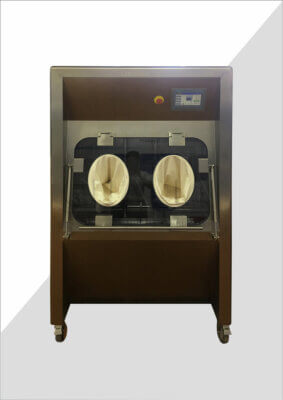
A: It is not mandatory for every test, but its value is highest where airborne data alone may leave cleaning and migration risks unseen. For well-characterised low-potency operations with simple equipment geometry, surface sampling may be deferred based on a documented risk assessment. For high-potency, sticky compounds or complex systems—such as an Isolator OEB4 / OEB5—surface deposition data is strongly recommended to verify cleaning assumptions and identify accumulation pathways that airborne monitoring cannot reveal.