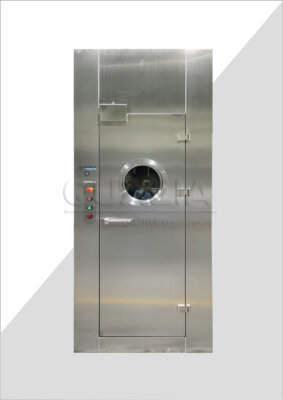
Specifying transfer equipment late in facility design—or without a clear grade boundary map—is one of the more reliable ways to trigger mid-validation rework. Teams often arrive at factory acceptance testing with a dynamic pass box that has an H14 HEPA filter and electromagnetic interlocks, only to discover that nobody defined the cleaning procedure, requalification schedule, or documentation package the unit would require to stay compliant post-handover. The premium specification becomes a liability instead of a control measure, and the hardware that was meant to protect the GMP zone is now the reason qualification is stalled. The decision that resolves most of this is earlier than equipment selection: it is the grade boundary analysis, because whether a transfer point needs active airflow at all depends on where the box sits in the process, not on the fact that the facility is pharmaceutical.
GMP zone exposure during material handoff
Every material transfer across a GMP grade boundary is a contamination event that has to be managed, not assumed away. The question is whether the physical design of the transfer point can manage that risk reliably enough to be defended during audit, and the answer depends on what happens at the aperture during the actual sequence of loading, waiting, and unloading.
A static pass box—two interlocked doors and a chamber with no active airflow—works by ensuring only one door is open at any given time. That mechanical barrier prevents direct airflow communication between the two sides, but it does not control what accumulates in the chamber during dwell, and it cannot flush contaminants introduced when the lower-grade door opens. If the material sits inside for any meaningful period, or if the lower-grade side introduces particulate burden that settles before the higher-grade door opens, the chamber itself becomes an exposure pathway rather than a control point.
Dynamic designs address this by running HEPA-filtered supply air through the chamber continuously, creating a local purged environment that dilutes and displaces contamination between transfers. The time-delay purge cycle—where airflow runs for a defined period after the lower-grade door closes before the higher-grade door can be opened—is the operational mechanism that makes this protection measurable rather than assumed. The electromagnetic interlock enforces the sequence; it does not merely indicate which door should be open. That distinction matters during qualification, because interlocking logic is a testable parameter, not a design intention.
The contamination exposure that dynamic air control addresses is not hypothetical. When a transfer aperture connects a Grade D corridor to a Grade C room, the pressure differential and door-opening event create transient airflow reversal that a static box cannot counteract. The active design maintains a positive-pressure air barrier inside the chamber, so that even during the brief period when the lower-grade door is open, the net airflow direction is away from the higher-grade side. That mechanism is what makes the dynamic specification defensible at grade boundaries—not the HEPA filter in isolation, but the combination of continuous purging, verified velocity, and enforced door sequencing working together.
The practical implication for facility design is that the grade boundary must be identified before equipment is specified. If the transfer point sits between two zones of the same classification, the dynamic mechanism adds cost and complexity without a corresponding contamination control benefit. If it sits at a genuine grade differential, a static design is difficult to defend once a regulator or QA reviewer asks how the chamber environment is controlled during loading or dwell.
HEPA and finish criteria expected in pharma transfer equipment
The cleanliness specification inside a dynamic pass box chamber is not a preference—it is the performance claim the unit must sustain under operational conditions to justify its role at a grade boundary. When a transfer box is positioned as a material airlock between classified zones, the expectation under frameworks such as Revised Annex 1 EU GMP is that the chamber environment itself reaches ISO Class 5 (Grade A) conditions. That is the threshold against which filter selection, airflow design, and interior finish must all align.
Filter specification is the most visible element, but it is not sufficient on its own. An H14 HEPA filter rated at greater than 99.995% efficiency at the most penetrating particle size delivers air quality capable of meeting Grade A particle limits—but only if the filter is correctly installed, integrity-tested, and supported by upstream prefiltration that prevents premature loading. The G4 prefilter serves that second function: it extends the working life of the main filter by capturing coarse particulate before it reaches the HEPA stage, which has a direct effect on filter replacement frequency and the requalification cycle it triggers. Specifying the H14 without the prefilter arrangement is a common omission that shortens filter life and accelerates the maintenance burden the facility will carry.
Interior finish criteria are less immediately visible but equally consequential for compliance. Surface roughness at or below 1.2 Ra, coved interior corners, and a stainless steel construction in SS304 or SS316L are not cosmetic specifications—they determine whether the chamber can be cleaned and sanitized effectively enough to support the microbial limits the unit will be monitored against. Rough surfaces, sharp internal corners, and weld treatments that leave pitting or crevices create areas where cleaning agents cannot reliably reach, which eventually shows up in passive or active air sampling results. By the time that failure appears in monitoring data, the chamber has already been accepted into service and the finish cannot be corrected without major rework.
The specification table below consolidates the criteria that QA and engineering teams should confirm before purchase order, because misalignment on any single row typically generates an open item during FAT that delays qualification.
| Kategori Spesifikasi | Required Criteria | Regulatory / Quality Rationale |
|---|---|---|
| Chamber Cleanliness | ISO Class 5 (Grade A) per Revised Annex 1 EU GMP | Defines the required environment for the material airlock; maintains protection of the higher-grade zone. |
| Efisiensi Filter HEPA | H14, >99.995% at MPPS (0.3 µm) | Ensures supply air quality meets Grade A particle limits at the point of use. |
| Prefilter | G4 prefilter | Protects the HEPA filter from coarse particulates, extending main filter life. |
| Bahan Konstruksi | SS304 or SS316L, 1.5 mm thickness | Provides cleanable, chemical-resistant structure compatible with pharma disinfection agents. |
| Interior Finish | Coved corners, surface roughness ≤1.2 Ra, flanges for impervious wall finish | Eliminates particle traps and facilitates effective cleaning and sanitization. |
| Standard Components | Built-in fan, HEPA filter, prefilter, differential pressure gauge, DOP/PAO test ports, electronic interlock | Enables validation, routine monitoring, and GMP-compliant operation. |
One point the table cannot fully capture is the consequence of getting these criteria wrong in sequence. A unit built with SS304 instead of SS316L may be acceptable depending on the disinfection agents used in the facility, but that determination needs to happen at specification stage, not after the unit is fabricated. Similarly, DOP/PAO test ports are not an afterthought—they are the physical access point that makes filter integrity testing possible at all, and a unit delivered without them cannot be properly qualified without retrofit work that may void weld integrity and require re-inspection.
Qualification evidence that regulators and QA will request
Qualification for a dynamic pass box is not a single event. It is a recurring obligation that begins at installation and continues on a schedule driven by both calendar intervals and operational trigger events. Understanding that structure before commissioning is what separates a facility that maintains a defensible compliance posture from one that treats qualification as a box-checking exercise until an audit reveals the gap.
The core qualification package covers three measurable parameters: filter integrity, particle count, and air velocity. Each of these parameters tests a different aspect of the system’s performance, and a deficiency in any one of them undermines the others. A filter that passes integrity testing but operates at velocity outside the acceptable range may still fail to maintain the particle count specification under real transfer conditions, because the airflow pattern inside the chamber changes with velocity. These tests are interdependent, and the qualification package should be reviewed as a system demonstration rather than as three independent pass/fail items.
Microbial monitoring introduces a second layer of ongoing evidence that regulators will look for in addition to the physical qualification tests. Passive and active air sampling on a weekly routine basis generates the trend data that distinguishes a chamber performing consistently from one that has drifted from its validated state between formal requalification cycles. This distinction matters because formal requalification on a six-month schedule only confirms performance at a point in time. Microbial trending is what detects gradual deterioration—a filter beginning to load, a UV lamp losing output, a seal starting to fail—before it becomes a formal excursion.
The requalification trigger events deserve particular attention in operational SOPs. Relocation, maintenance, and any failure event each independently require requalification regardless of where the calendar interval stands. This means a single maintenance call—a prefilter swap followed by a HEPA replacement—can trigger a full requalification cycle that the scheduling team did not anticipate. Facilities that plan maintenance and requalification independently often find that unscheduled maintenance events create qualification gaps that are discovered retrospectively, either during internal audit or external inspection.
| Test / Monitoring Activity | Kriteria Penerimaan | Frequency & Triggers |
|---|---|---|
| DOP/PAO Filter Integrity Test | Penetration <0.01% | Initial qualification; every 6 months ±15 days; after failure, breakdown, maintenance, or relocation. |
| Jumlah Partikel di Udara | ≤100 particles/ft³ (≥0.5 µm), 0 particles/ft³ (≥5 µm) | Initial qualification; every 6 months ±15 days; after failure, breakdown, maintenance, or relocation. |
| Pengukuran Kecepatan Udara | 90 ± 20 ft/min | Initial qualification; every 6 months ±15 days; after failure, breakdown, maintenance, or relocation. |
| Passive Air Sampling (Microbial) | NMT 100 CFU/plate | Weekly routine monitoring. |
| Active Air Sampling (Microbial) | NMT 200 CFU/m³ | Weekly routine monitoring. |
The WHO Laboratory Biosafety Manual’s emphasis on documented risk controls and systematic equipment qualification provides a useful conceptual reference for the general principle that transfer-point controls must be tested, not assumed—though the specific acceptance values in the table above reflect common industry practice and should be confirmed against the applicable site standard and regulatory jurisdiction rather than treated as universally mandated limits. The underlying principle holds regardless of jurisdiction: a qualification package that cannot demonstrate sustained performance against defined acceptance criteria cannot be defended when a QA reviewer or inspector asks for evidence.
Cleaning and maintenance burdens introduced by active airflow
Dynamic pass boxes are more capable than static designs at grade boundaries, and they are also more demanding to operate compliantly. That trade-off is not a reason to avoid active airflow where zone risk justifies it, but it is a reason to plan for the operational overhead before the unit enters service rather than discovering it during the first compliance review after installation.
The surface cleaning requirement—daily, with a disinfecting agent and lint-free cloth—is the most visible routine burden, but it is also the most manageable because it follows the same pattern as other GMP surface cleaning tasks. The compounding maintenance obligations are the ones that require more deliberate planning. Prefilter replacement at six-month intervals coordinates with, but does not always align with, the formal requalification cycle. HEPA replacement occurring somewhere between six and twelve months depending on use and loading conditions may trigger a full requalification, which means an unplanned HEPA change can create a qualification gap if the event is not anticipated in the facility’s validation maintenance schedule. The combination of these intervals, stacked against the six-month requalification calendar, means that in an active facility a dynamic pass box may be in a maintenance or requalification activity almost continuously.
UV lamp tracking introduces a separate accountability requirement. The divergence between 1000-hour and 4000-hour replacement intervals across different operating procedures reflects a genuine ambiguity in lamp performance standards that must be resolved at the SOP level for each site. This is not a settled industry figure—it depends on lamp type, application, and what decontamination efficacy the facility is relying on the UV system to deliver. Whichever interval the site selects, lamp hours must be tracked and documented, because a lamp operating beyond its validated service life is a compliance gap that shows up as a risk during audit even if no microbial excursion has occurred.
| Aktivitas Pemeliharaan | Frekuensi | Operational Burden |
|---|---|---|
| Pembersihan Permukaan | Setiap hari | 70% IPA with lint-free cloth; routine labor. |
| Prefilter Replacement | Setiap 6 bulan | Consumable cost; prevents premature HEPA loading. |
| Penggantian Filter HEPA | Setiap 6-12 bulan | Consumable cost; may require requalification and downtime. |
| Penggantian Lampu UV | At 1000 h (some sources up to 4000 h) | Tracking log required; lamp output directly affects decontamination efficacy. |
| Manajemen Dokumentasi (HEPA certification, airflow balancing, interlock calibration, filter change logs) | Ongoing (per event) | Adds compliance overhead compared to static designs; must be built into audit-readiness planning. |
The documentation overhead associated with active airflow—HEPA certification records, airflow balancing data, interlock calibration logs, filter change entries—does not exist in a static design. None of this overhead is unreasonable given what a dynamic pass box is asked to do at a grade boundary, but it must be built into the facility’s quality management system before the unit is accepted into service. Facilities that specify dynamic equipment without updating their documentation infrastructure often find that the first audit after installation surfaces records gaps rather than the contamination control evidence the equipment was purchased to generate. The cost of the compliance infrastructure is not optional; it is part of the real cost of the dynamic specification.
Transfer-point influence on protected grade as the selection threshold
The selection threshold between a static and a dynamic pass box is not a preference or a budget question in the first instance—it is a determination about whether the transfer aperture, under realistic operating conditions, can put a higher-grade zone at measurable contamination risk. If that condition exists, dynamic airflow is the defensible baseline. If it does not, dynamic airflow adds complexity and overhead without a corresponding protection benefit.
The grade differential is the primary variable. When a transfer point sits between two zones of different classification—Grade D to Grade C, for example—the aperture is a pressure and contamination boundary that a static chamber cannot maintain during loading or dwell. The higher-grade zone is at risk any time the lower-grade door opens and the chamber environment is not actively controlled. A dynamic design with enforced purge sequencing and continuous HEPA supply addresses that risk with a mechanism that can be tested and documented. A static design at that boundary relies on the mechanical interlock alone, which prevents simultaneous door opening but cannot control what the chamber environment delivers to the higher-grade side when its door is finally opened.
The second condition that shifts the selection toward dynamic is aperture dwell time or operational behavior. Even at a nominal grade boundary, if material routinely waits inside the transfer chamber—because of process timing, shift handover, or workflow patterns—the chamber environment degrades without active airflow. That degradation is not visible until sampling data shows it, at which point the process has already been operating with a compromised transfer point. Dynamic airflow eliminates that risk by maintaining the chamber environment regardless of how long material waits inside.
For transfers between zones of the same classification, the contamination control argument for active airflow weakens significantly. There is no grade differential to protect, and the static design’s mechanical interlock is sufficient to prevent direct airflow communication. Specifying a dynamic unit in that context is not inherently wrong—there may be material sensitivity or aseptic assurance reasons that justify the added capability—but it should be a deliberate decision based on identified risk, not a default assumption that dynamic is always better.
| Skenario Transfer | Kotak Lulus yang Direkomendasikan | Dasar pemikiran |
|---|---|---|
| Different GMP classifications (e.g., Grade D to Grade C) | Dinamis | Active HEPA airflow and interlocked doors prevent cross-contamination across the grade boundary. |
| Same GMP classification (no grade change) | Statis | Cost-effective unless higher aseptic assurance is required; no grade differential to justify active airflow. |
| ISO 5/6 cleanrooms, sterile or highly sensitive materials, high contamination risk | Dinamis | Dynamic air control maintains a local ISO 5 environment and supports aseptic processing demands. |
| ISO 7/8 cleanrooms, pre-packed or non-sterile materials | Statis | Lower contamination risk; static containment provides sufficient protection without added complexity. |
| Transfer aperture can influence target zone during loading or waiting (doors remain open, material resides inside) | Dinamis | Dynamic airflow is the defensible baseline; static design cannot maintain protection when the aperture is breached. |
The practical framing for the decision is this: identify the lowest-grade zone the transfer aperture connects to, determine whether the chamber environment during loading or dwell can influence the higher-grade side, and then ask whether a static interlock alone is sufficient to defend that control mechanism to a QA reviewer or regulatory inspector. If the answer to the last question is uncertain, dynamic airflow is the safer specification baseline—and the documentation and maintenance overhead that comes with it is the cost of making that defense credible. For facilities operating kotak izin keamanan hayati equipment at containment boundaries, this same grade-differential logic applies: the transfer mechanism must match the risk profile of the boundary it serves, and that determination should be locked before specification, not revisited during validation.
The most consequential decision in pass box specification is not which features to include—it is whether the grade boundary analysis was completed before the equipment was specified. A dynamic unit with H14 HEPA filtration, verified air velocity, and electromagnetic interlocking is a defensible specification at a genuine grade differential, and it will generate the qualification and monitoring evidence that regulators and QA reviewers will request. That same unit at a same-grade transfer, without a documented risk rationale, adds maintenance burden and documentation overhead that the zone risk does not justify.
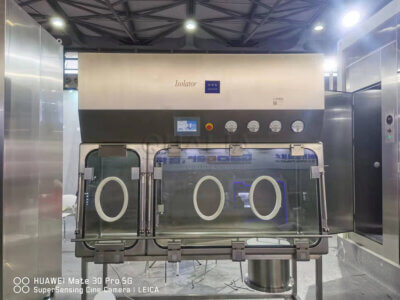
Before procurement, confirm the classification of both connected zones, define how material will behave inside the chamber during realistic operations including dwell and shift overlap, and verify that the vendor’s documentation package—material certifications, weld inspection records, filter test reports, and IQ/OQ protocols—aligns with the facility’s validation master plan. Those three inputs determine whether the specification decision will hold through FAT, SAT, and the first regulatory inspection, or whether it will require defense under conditions it was never designed to withstand. Facilities exploring integrated containment strategies that extend beyond individual transfer points may also find value in reviewing how aseptic isolator systems approach grade-boundary protection at a system level, since the qualification logic and ongoing monitoring obligations follow a similar structure.
Pertanyaan yang Sering Diajukan
Q: What happens if the grade boundary is not formally documented before the unit arrives on site?
A: Qualification will likely stall at FAT or SAT, because the acceptance criteria for airflow, particle count, and interlock sequencing cannot be evaluated without a defined grade differential to validate against. The qualification package is built around the boundary the unit is protecting—if that boundary is unresolved, there is no agreed reference point for pass or fail, and open items accumulate until the design decision is made retroactively under time pressure.
Q: Does a dynamic pass box remain the right specification if the process changes after installation and the transfer point no longer crosses a grade differential?
A: Not necessarily. If a facility redesign or process change removes the grade differential the unit was specified to protect, the dynamic design now carries maintenance and documentation overhead that the residual zone risk no longer justifies. The appropriate response is a documented change-control review that reassesses whether the active airflow specification still has a defensible contamination-control rationale, rather than continuing to qualify and maintain a capability the process no longer requires.
Q: How should UV lamp replacement intervals be resolved when the SOP reference and the manufacturer’s guidance differ?
A: The site SOP must make a single documented determination, supported by the decontamination efficacy the facility is relying on the UV system to deliver. The divergence between shorter and longer replacement intervals reflects differences in lamp type, application, and validated efficacy claims—not an industry-wide settled figure. Whichever interval is selected, the rationale should be recorded in the SOP so that during audit the facility can demonstrate the choice was deliberate and risk-based rather than arbitrary.
Q: Is a VHP pass box a better option than a dynamic HEPA design when the material being transferred carries a higher biocontamination risk?
A: For transfers involving materials with significant surface bioburden—such as primary containers from lower-grade areas or items exiting biological containment zones—VHP decontamination provides sporicidal surface treatment that HEPA-filtered airflow alone cannot deliver. A dynamic HEPA design controls the airborne particulate environment inside the chamber; it does not decontaminate the surface of the material being transferred. When both airborne control and surface decontamination are required at the same transfer point, a Kotak lulus VHP addresses the fuller risk profile, though it introduces its own cycle validation and aeration requirements that must be planned before specification.
Q: After the unit passes FAT and SAT, what is the first operational task that most facilities underestimate in their post-handover planning?
A: Integrating the requalification trigger events into the facility’s change-control and maintenance scheduling system before the first maintenance call occurs. Most facilities plan the six-month requalification calendar but do not pre-authorise the requalification work that an unplanned HEPA replacement or interlock failure will automatically require. When that trigger event happens, the qualification gap is created in the interval between the maintenance activity and the requalification completion—and if that gap is not managed proactively, it is the kind of retrospective compliance exposure that surfaces during internal audit rather than being prevented by it.
Konten Terkait:
- Kotak Lulus Keamanan Hayati: Panduan Jenis dan Pemilihan untuk Aplikasi BSL
- Kotak Pass Dinamis: Ketika Pasokan Udara HEPA Aktif Diperlukan
- Ruang Transfer dalam Isolator Uji Sterilitas
- Sistem BIBO dalam Fasilitas GMP: Cara Menyelaraskan dengan Lampiran 1 GMP UE dan Praktik Validasi
- Persyaratan Pengujian Integritas BIBO: DOP, Pemeriksaan Kebocoran, dan Ekspektasi Dokumentasi
- Isolator Kotak Sarung Tangan: Meningkatkan Keamanan Lab
- Pancuran Udara Pass-Through: Transisi yang Efisien
- Penggantian Filter HEPA pada Isolator Keamanan Hayati
- Protokol Validasi Persyaratan FDA VHP Passbox yang Sesuai dengan GMP