
Budget overruns on containment lab projects rarely announce themselves early. They surface during commissioning, when a failure scenario test reveals that the control system’s trending data was set at intervals too coarse to prove airflow never reversed — and the re-commissioning cost lands entirely outside the original contract. The decision that separates projects that stay on budget from those that don’t is almost always made before the first quote comparison: whether the scope behind each line item has been normalized well enough to be meaningfully compared. Without that step, a lower headline price often reflects scope that has been quietly moved off the supplier’s page and onto the owner’s later.
Module Shell, HVAC Redundancy, Containment Devices, and EDS Cost Buckets
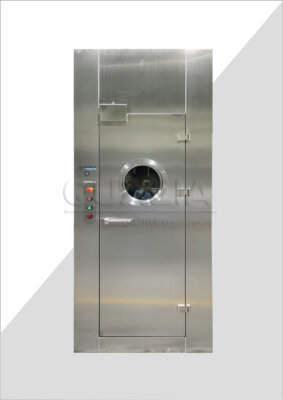
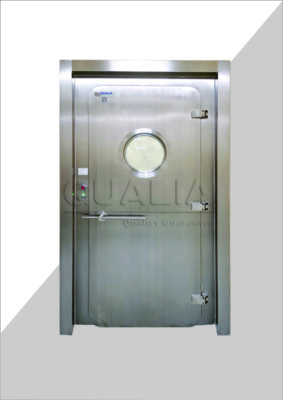
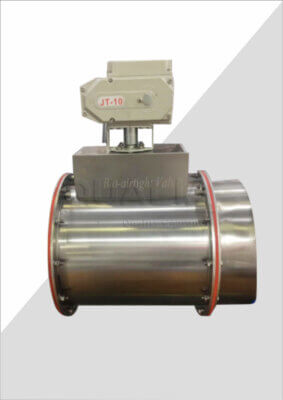
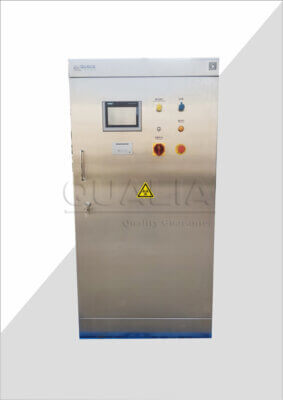
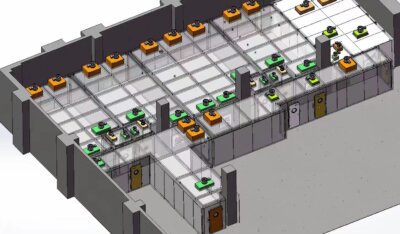
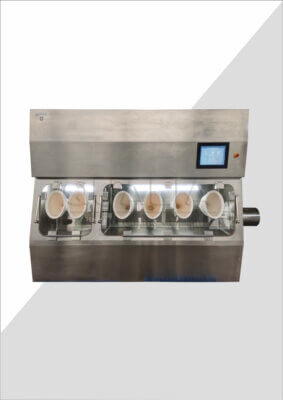
A useful budget framework separates costs into at least seven categories before any supplier comparison: module shell, HVAC system, HEPA filtration, containment devices, effluent decontamination system (EDS), control system, and commissioning and testing package. Treating these as a single bundled figure makes it structurally impossible to understand why two proposals with the same headline number represent very different actual scopes.
Air change rate (ACH) is the single largest driver of HVAC cost variability. Higher ACH directly increases the size of air handling units, exhaust fans, ductwork, HEPA filters, and isolation dampers. NIH guidance sets a minimum of 6 ACH for BSL-3 labs, maintained continuously — including when the lab is unoccupied — but that floor is a design input for a given regulatory context, not a universally applicable requirement across all jurisdictions or lab configurations. What matters for budgeting is that each increment above that baseline adds capital cost, and the increments compound across the full HVAC train.
Pressurization requirements add a separate HVAC sizing obligation. Achieving target pressure differentials typically requires a 100–150 CFM offset per door, and that offset must be maintained under dynamic conditions, not just steady-state. Adding HEPA filtration to the supply side further increases cost but enables ISO Class 8 cleanliness, which matters for projects that need to bridge containment and aseptic processing. These are planning criteria that affect equipment sizing and scope — they belong in the specification before any quote is issued.
For the module shell itself, one structural choice has direct cost consequences downstream: suspended ceilings are a documented failure risk in BSL-3 configurations. Under pressure swings during failure scenario testing, a suspended ceiling can collapse, triggering a redesign, rebuild, and full re-commissioning cycle. Structurally framed ceilings eliminate that failure mode. The specification detail looks minor at the design stage; its absence can become a seven-figure consequence at commissioning.
Testing Package and Site Integration as Hidden Cost Drivers
The testing package is where the largest gap between quoted cost and actual project cost typically opens. Suppliers routinely quote a commissioning scope that covers normal operational verification. Failure scenario testing — which is a distinct and more complex program — may appear as a line item, a footnote, or not at all, depending on how the proposal was structured.
CDC guidance requires that airflow direction not reverse under any failure condition. Meeting that requirement demands controls programming, validation, and a testing protocol that systematically induces failure modes: loss of power, controlled outages, control component failures, network loss, mechanical failures, and control sequence errors. Each of those scenarios must be scripted, tested, documented, and accepted. The programming scope needed to handle all failure sequences correctly is non-trivial, and when it is underscoped in the original contract, the correction cost falls on the owner after handover.
One specific detail that creates hidden re-commissioning exposure is BAS trending data granularity. If the building automation system is configured to log data at intervals too wide to demonstrate that airflow direction remained stable throughout a failure transition, the recorded trend is inconclusive for CDC acceptance purposes. The lab may need to be retested after reconfiguring the logging parameters — a cost and schedule event that was never in the original plan and is almost never mentioned in supplier quotes.
The ceiling collapse documented at the University of South Alabama illustrates the upper bound of what unresolved testing failures can cost. A $14 million NIH grant covered the lab build; it did not cover the cost of a ceiling that failed during pressure testing. Rebuilding and re-commissioning after the collapse required wrapping and sealing every vent, autoclave, and biosafety cabinet in the facility — site-integration costs that accumulated on top of structural remediation. That figure exceeded $1 million and was entirely outside the original contract scope. The case is not representative of every project, but it reflects a real failure pattern when structural and testing specifications are treated as secondary to headline price.
| Hidden Cost Driver | What to Clarify or Include | Potential Hidden Cost If Missed |
|---|---|---|
| Failure scenario testing program | Scope must cover power loss, controlled outages, control component failures, network loss, mechanical failures, and control sequence errors | Unplanned testing complexity and re-commissioning costs typically excluded from supplier quotes |
| CDC airflow non‑reversal under failure | Requirement that airflow direction not reverse during any failure condition drives additional controls and testing | Extra programming, validation, and retesting add cost beyond the initial package |
| BAS trending data granularity | Data points must be set at sufficiently small increments to demonstrate no reversal; otherwise, recorded trends are inconclusive | Hidden re‑commissioning needed to regather data and meet CDC acceptance criteria |
| Structural resilience during failure tests | Suspended ceilings may collapse under pressure swings during failure scenarios; framed ceilings avoid this failure mode | Catastrophic rebuild and re‑commissioning costs exceeding $1 million, as documented in real projects |
The pattern the table reflects is consistent: testing scope omissions are structurally invisible at the proposal stage and structurally expensive at the acceptance stage. The cost does not disappear — it moves.
Headline Price Comparisons That Miss Validation Documents
A headline module price is a meaningful number only after the scope behind it has been defined. ACH level, HEPA filtration, control system type, commissioning scope, and failure scenario testing can all shift between proposals without any change to the cover-page figure. The proposals look comparable; they are not.
The University of South Alabama example makes this concrete. The $14 million figure represented a funded, approved project. The ceiling collapse cost — driven by a structural choice that was not flagged as a risk during design — was a separate exposure that the project budget did not contain. After the collapse, the remediation required wrapping and sealing active lab equipment throughout the space: a site-integration cost that would not appear on any supplier’s standard scope of supply. That sequence of events is not unique to that project. It is the consequence pattern of comparing headline figures before confirming what is included in each one.
Validation documents present a related risk. A supplier quote that excludes or underscopes the validation package — installation qualification records, operational qualification protocols, failure scenario test reports, BAS trending data documentation — produces a lower number that appears competitive until the owner discovers those documents are needed for regulatory acceptance and must be generated separately. At that stage, the cost to produce them retroactively, under time pressure, after handover, is substantially higher than if they had been commissioned into the original scope. For modular BSL-3 configurations, this risk is particularly acute because the acceptance and site-integration scope often spans the supplier’s module, the EPC contractor’s utility connections, and the owner’s commissioning agent — with potential gaps at each boundary.
Redundancy Cost Versus Downtime and Maintenance Risk
The assumption embedded in high-ACH specifications is that more airflow provides more protection. That assumption is worth examining before it drives capital expenditure. Research over 25 years does not support the conclusion that air change rates above a moderate threshold meaningfully reduce biological contamination risk in containment labs. Specifying 15 or 20 ACH when 8 or 10 would meet the design basis does not buy a proportional safety margin — but it does buy substantially larger AHUs, higher fan energy, and greater pressure dynamics during failure conditions.
The energy cost implication is quantifiable. In a mid-size lab of approximately 5,000 square feet, the annual energy cost difference between 6 and 20 ACH is in the range of $40,000 to $50,000 — a recurring owner operating cost that does not appear on any supplier quote but that compounds across the facility’s operational life. As a design comparison, a 6 ACH approach using 100% outside air with chilled beams and ceiling diffusers has been shown to save approximately 22.5% in annual energy cost relative to a 13 ACH approach using 70% outside air — though those savings are specific to that configuration and do not scale directly to all lab sizes or designs.
The maintenance risk trade-off runs in the same direction but is less visible at procurement. A very tight building envelope simplifies pressure control under normal operating conditions, which looks like a safety benefit in the specification. Under failure shutdowns, the same airtightness produces pressure transients — sometimes described as “burping” — that stress ceiling structures and increase the probability of repeated failure scenario retesting. That is not a guaranteed failure mode in all tight-envelope labs, but it is a recognized maintenance and testing risk that belongs in the design trade-off, not just the construction budget.
| Faktor Desain | Higher Redundancy / Conservative Choice | Lean Redundancy / Alternative | Trade‑off and Risk Consideration |
|---|---|---|---|
| ACH rate | 13–20+ ACH; larger AHUs, ducts, filters; higher capital and energy cost | 6–10 ACH, meets NIH minimum, lower equipment and energy cost | Above 10–12 ACH adds little proven safety benefit; annual energy difference ~$40k–50k for a 5,000 SF lab |
| Airflow strategy (energy) | 13 ACH with 70% outside air; higher fan energy | 6 ACH, 100% outside air with chilled beams and ceiling diffusers | The 6 ACH approach can save approximately 22.5% in annual energy cost while maintaining containment |
| Building airtightness | Very tight envelope for easier pressure control | Standard envelope; pressure control slightly more challenging | Tighter labs can cause “burping” and ceiling stress during failure shutdowns, increasing maintenance risk |
| Pathogen containment efficacy | Assumption that higher ACH reduces biological contamination risk | Research over 25 years indicates air change rates are not effective at reducing contamination in containment labs | High ACH cost may be prohibitive without a clear safety advantage |
The implication is that redundancy decisions should be made against a defined risk model, not against a general principle that more is safer. Above 10–12 ACH, the incremental capital and operating cost is difficult to justify on safety grounds, and the same design choices that increase upfront redundancy can increase long-term maintenance and retesting exposure.
EPC and Owner Utility Costs Outside Supplier Quotes
Supplier quotes for BSL-3 module systems describe what the supplier supplies. They do not describe — and are not obligated to describe — the costs that sit with the EPC contractor, the utility infrastructure, or the owner’s ongoing operations. That structural omission means that a cost comparison made against supplier quotes alone is incomplete by definition.
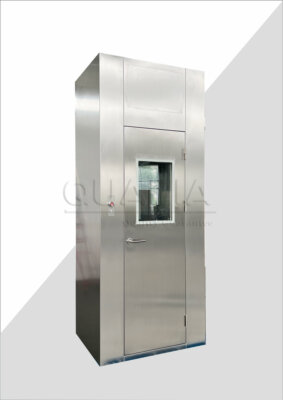
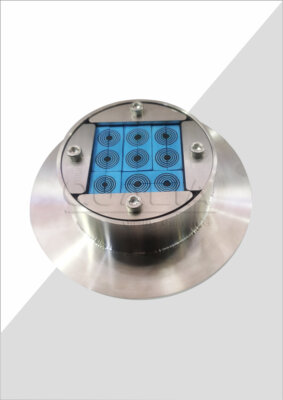
EPC scope typically includes utility tie-ins, structural interfaces, exhaust stack connections, electrical service, and site preparation. Depending on how module specifications are written, some of these costs fall clearly within EPC scope; others may fall in a gap between the module supplier’s scope boundary and the EPC’s. Bag-in bag-out filter housings, exhaust HEPA systems, and chemical shower decontamination systems are examples of containment devices that may appear in a supplier’s scope, in the EPC’s scope, or split between the two — and the cost consequence of that split is invisible until scope boundaries are explicitly mapped.
The annual energy cost differential discussed in the previous section is structurally an owner operating cost that is never on the supplier’s page. In a 5,000 SF lab, that differential between the minimum NIH ACH rate and an aggressively redundant specification is $40,000–$50,000 per year. That figure is not a precise benchmark that scales linearly across lab sizes, but it frames the order of magnitude of a lifecycle cost that routinely gets excluded from capital budget comparisons because no single vendor is responsible for reporting it. The only way to surface it is for the owner or project team to model it explicitly before budget approval.
Normalized Cost Comparison Before Budget Approval
A cost comparison only becomes defensible once the inclusions, exclusions, EPC scope boundaries, and acceptance test requirements are aligned across proposals. Without that normalization, the cheapest bid is frequently the one that has moved the most cost off the supplier’s page — not the one that represents the lowest actual project cost.
The risk consequence of skipping normalization is not marginal. Scope gaps in any of the core factors — ACH rate, HEPA filtration, control system type, commissioning depth, or failure scenario testing — can shift true project cost by more than a million dollars, as the University of South Alabama case demonstrates. That figure is not a statistical claim about typical BSL-3 overruns; it is a documented single-project example of what happens when structural and testing specifications are treated as secondary to headline price. The point is that the mechanism is general even if the magnitude is case-specific. ASTM E2500-25, while developed for pharmaceutical and biopharmaceutical manufacturing systems rather than BSL-3 labs specifically, provides a useful process reference for how specification rigor and verification scope should be defined before acceptance — the principle of science- and risk-based verification applies to the normalization problem directly.
| Normalization Factor | What to Confirm in the Proposal | Risk If Left Undefined |
|---|---|---|
| ACH rate | Specified ACH for occupied and unoccupied modes, basis of design | HVAC sizing and energy costs can vary widely; budget may be based on an inadequate assumption |
| Filtrasi HEPA | Whether supply HEPA filters are included, target ISO cleanliness class | Missing filtration changes capital cost and may fail to meet cleanroom requirements |
| Control system type | BAS capabilities, trending data granularity, failure‑sequence programming scope | Insufficient trending leads to hidden re‑commissioning when proving no airflow reversal |
| Commissioning scope | Inclusion of full failure‑scenario testing and CDC airflow reversal verification | Retesting and remediation after handover can exceed $1 million, as real‑world cases show |
| Failure scenario testing | List of failure modes to be tested, and who pays for corrections if tests fail | Uncovered testing scope becomes an unplanned cost and can delay regulatory approval |
The table defines what to confirm in each proposal before treating numbers as comparable. Any factor left undefined is a cost that has not been located — it exists somewhere in the project, and it will surface.
The most defensible position before budget approval is a proposal set in which every quote has been evaluated against the same ACH assumption, the same HEPA scope, the same control system capability, the same commissioning depth, and the same failure scenario test program. When those inputs are aligned, price differences reflect actual scope differences. When they are not aligned, a lower number may simply reflect a proposal where more of the cost is still unaccounted for.
Before comparing figures, confirm where each proposal’s scope boundary ends: what the supplier hands off, what the EPC picks up, and what the owner absorbs as operating cost. The energy differential between a conservatively specified HVAC system and a minimal one, the re-commissioning exposure if failure scenario testing is underscoped, and the validation document costs if they are excluded from the original contract — none of these appear on a supplier’s cover page, and none of them disappear from the project.
Pertanyaan yang Sering Diajukan
Q: What happens if our site uses an EPC contractor — who is actually responsible for costs like exhaust stack connections and utility tie-ins?
A: Those costs belong to the EPC’s scope, but whether they appear in any single quote depends entirely on how scope boundaries are written — and gaps between the supplier’s handoff point and the EPC’s pickup point are common. The only way to locate every cost is to map scope boundaries explicitly across the supplier, EPC, and owner before comparing any figures. Costs in unassigned boundary zones do not disappear; they surface as change orders during site integration.
Q: At what air change rate does additional HVAC redundancy stop being cost-justifiable for a BSL-3 lab?
A: The cost-benefit case for higher ACH weakens significantly above 10–12 ACH. Research spanning 25 years does not support meaningful additional contamination risk reduction beyond a moderate threshold, while each increment above that range increases AHU sizing, fan energy, ductwork, and pressure dynamics during failure conditions. In a 5,000 SF lab, the annual energy cost gap between a minimal and an aggressively redundant specification runs $40,000–$50,000 — a recurring owner cost that compounds over the facility’s operational life without a proportional safety return.
Q: If our project is already under contract with a supplier, is it too late to normalize scope and identify missing validation documents?
A: It is not too late, but the cost of correction rises sharply after contract execution. Retroactively producing installation qualification records, operational qualification protocols, and failure scenario test documentation under time pressure after handover is substantially more expensive than commissioning them into the original scope. The immediate step is to audit the contracted commissioning package against CDC failure scenario requirements and confirm whether BAS trending data granularity is specified at intervals tight enough to demonstrate no airflow reversal — those are the two most common sources of re-commissioning exposure that surface late.
Q: Is a modular BSL-3 system meaningfully less expensive than a stick-built lab when all costs are accounted for, or does the cost gap close once site integration is included?
A: The cost gap narrows considerably once site-integration scope is fully accounted for. Modular configurations offer capital and schedule advantages in the supply of the module itself, but the acceptance and integration scope spans the supplier’s module, the EPC’s utility connections, and the owner’s commissioning agent — with potential cost gaps at each boundary. If validation documents, failure scenario testing, and utility tie-ins are excluded from the module price comparison, the headline advantage may partially or fully offset by costs that appear later in the project on the owner’s side.
Q: How should we handle a situation where two supplier proposals show the same headline price but one includes HEPA supply filtration and the other does not?
A: Treat them as incomparable until the full specification is aligned. HEPA supply filtration enables ISO Class 8 cleanliness and affects AHU sizing, commissioning depth, and the filter changeout maintenance program — all of which carry cost consequences beyond the unit line item. Before treating the proposals as equivalent in price, confirm that ACH assumption, control system type, commissioning scope, and failure scenario testing are also aligned across both. A normalized comparison checklist built against ASTM E2500-25 verification principles provides a defensible framework for ensuring no factor is left undefined before budget approval.