
Los equipos de validación que pasan directamente al desarrollo del ciclo sin una secuencia de cualificación estructurada suelen descubrir tarde el mismo problema: una prueba de rendimiento fallida sin datos de referencia que expliquen por qué falló. Ese reinicio cuesta semanas, a veces más, dependiendo de hasta qué punto del ciclo de vida de la validación hubiera avanzado el equipo antes de que surgiera la deficiencia. Las variables que provocan estos fallos —la integración del sistema de climatización, la variación de la humedad, la colocación de los indicadores biológicos, la secuencia de la documentación— no son complejas por sí solas, pero interactúan de formas que reducen el margen de error cuando la presión del calendario ya es elevada. Comprender en qué punto cada fase de la secuencia de cualificación crea una dependencia estricta con respecto a la anterior es lo que permite a los equipos diseñar un programa sólido desde el principio, en lugar de tener que reconstruirlo bajo la presión de una auditoría.
Calificación de la instalación: verificación del funcionamiento y conformidad con las especificaciones
El IQ es el momento en el que se documenta la configuración física de la instalación comparándola con las especificaciones aprobadas, y en el que las discrepancias en dicha comparación dan lugar a fallos en los ciclos posteriores que resultan realmente difíciles de diagnosticar una vez que comienza la OQ. El modelo del generador de VHP, la versión del firmware y todas las conexiones a la red deben verificarse según las especificaciones aprobadas por el fabricante antes de realizar cualquier prueba de ciclo. El suministro eléctrico, la presión y la calidad del aire comprimido, así como el recorrido del drenaje, tienen cada uno sus propias tolerancias que, si no se cumplen, afectan al rendimiento del generador de formas que no resultarán evidentes hasta que los perfiles de concentración dejen de mantenerse durante las series repetidas de la OQ.
La variable que con mayor frecuencia se trata como un servicio de fondo, en lugar de como un dato crítico para la certificación, es el sistema de climatización (HVAC). El sistema de climatización desempeña un papel directo en la distribución secundaria de VHP por todo el recinto y en la fase de aireación que reduce la concentración residual por debajo del umbral de entrada segura. Si la integración del sistema de climatización no se verifica formalmente durante la cualificación de instalación (IQ) —documentando los patrones de flujo de aire, confirmando las posiciones de los reguladores y comprobando los enclavamientos—, no existe una base controlada para determinar si la falta de uniformidad en la concentración durante la cualificación operativa (OQ) se debe a un problema del generador, a la configuración de la carga o al flujo de aire. Esos tres modos de fallo requieren medidas correctivas diferentes y, sin la documentación de la calificación de instalación (IQ) que descarte la variable del sistema de climatización, el equipo está realizando un diagnóstico a ciegas. El Anexo 1 de las BPF de la UE establece el principio general de que los sistemas de control ambiental deben ser calificados como parte del proceso global; aplicar ese principio a la integración del sistema de climatización con el VHP durante la calificación de instalación (IQ) es una condición previa, no una mera formalidad.
La comprobación práctica al finalizar la calificación de calidad (IQ) consiste en verificar si se puede demostrar que todos los sistemas que afecten a la distribución de la concentración, el control de la humedad y la aireación cumplen las especificaciones para las que fueron diseñados. Si alguna conexión de servicios está fuera de tolerancia o algún punto de integración no está documentado, el riesgo no es solo que falle la ejecución de la calificación operativa (OQ), sino que dicha ejecución falle con una causa raíz ambigua.
Calificación operativa: tolerancias de concentración y series de ensayos repetidas
La función de la calificación operativa (OQ) es demostrar que el generador suministra y mantiene de forma fiable las condiciones objetivo en un rango definido de configuraciones de funcionamiento. La estructura de las pruebas repetidas —carga mínima, máxima y objetivo— está diseñada para delimitar el espacio de funcionamiento, en lugar de validar un único punto de consigna, lo que significa que todos los parámetros deben mantenerse de forma constante en las tres configuraciones antes de que pueda darse por concluida la fase de OQ.
La restricción de humedad es la variable que más probabilidades tiene de provocar el fallo de un ciclo sin que se produzca un fallo evidente del equipo. Tal y como se señala en el Informe Técnico n.º 126 de la PDA, mantener la humedad relativa dentro del rango de 90–95% durante la fase de gaseado evita la condensación y favorece un contacto eficaz del VHP. Una desviación por encima de ese rango —algo que la integración incorrecta del sistema de climatización durante la calificación de integridad (IQ) hace mucho más probable— provoca condensación que humedece los materiales de la carga, lo que puede dañarlos e invalidar el ciclo al alterar el mecanismo de contacto entre el VHP y la superficie. La consecuencia derivada no se limita a una única ejecución fallida: si el problema del sistema de climatización no se detectó durante la calificación de la instalación (IQ), es probable que el equipo observe fallos repetidos de humedad en las ejecuciones de réplica antes de que se identifique la causa raíz. Cada ejecución fallida requiere un informe formal de desviación y una revisión por parte de la unidad de calidad antes de que pueda excluirse del conjunto de datos de la calificación operativa (OQ), lo que significa que la carga de documentación agrava el impacto en el calendario.
El punto final de aireación —confirmado por debajo de 1 ppm antes de que se autorice la entrada en la cámara— es un criterio medible de cierre del ciclo que debería formar parte de los criterios de aceptación de la calificación operativa (OQ) desde el principio, y no añadirse tras la primera ejecución como una idea de última hora. La programación de ejecuciones repetidas también requiere una asignación de tiempo realista basada en el tipo de recinto: los ciclos de los aisladores suelen durar entre una y cuatro horas, mientras que los ciclos de biodecontaminación de las salas pueden durar entre cuatro y veinticuatro horas. Asignar un tiempo insuficiente para las ejecuciones repetidas es un fallo en la planificación de recursos que obliga a acortar los ciclos o provoca conflictos de programación, lo que en ambos casos impide obtener una documentación de la calificación operativa (OQ) defendible.
| Parámetro | Especificaciones / Objetivo | Criterios de aceptación | Riesgo en caso de incumplimiento |
|---|---|---|---|
| Humedad relativa (durante el gasificado) | 90–95% rH | Mantener la humedad por debajo del punto de inicio de la condensación (100% rH) | Condensación → humectación, descontaminación ineficaz, daños en los equipos |
| Concentración de H₂O₂ (fase de mantenimiento) | 500-800 ppm durante 30-60 minutos | Mantener la concentración dentro del rango en tres series de ensayos (carga mínima/máxima/objetivo) | Por debajo del rango: efecto letal insuficiente. Por encima del rango: posible degradación del material o sobreexposición |
| Punto final de aireación | VHP <1 ppm | Medido al final del ciclo; no se permite la entrada hasta que se confirme que el nivel es seguro según la PPE. | Exposición prematura a la entrada; no se ha demostrado el cierre del ciclo |
| Duración del ciclo (por recinto) | Habitaciones: 4–24 h / Habitaciones de aislamiento: 1–4 h | La duración total debe programarse de manera que permita realizar todas las pruebas de calificación operativa (OQ) de forma completa. | Una planificación insuficiente da lugar a conflictos de calendario o a una validación incompleta |
Una sola lectura de concentración fuera de especificación durante una serie de ensayos es un hecho que debe documentarse, no solo un dato aislado. Si el departamento de calidad no ha participado desde el principio en el diseño del protocolo de calificación operativa (OQ), ese informe de desviación quedará en espera mientras se paraliza el calendario de validación. Incorporar en el protocolo puntos de control para la revisión por parte del departamento de calidad antes de que comience la OQ —en lugar de hacerlo tras la primera no conformidad— es la decisión de planificación que evita que una sola lectura anómala se convierta en un retraso de varias semanas.
Calificación de rendimiento: Prueba de reducción en 6 log del indicador biológico
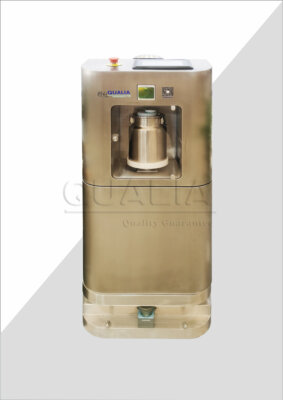
El PQ exige que se demuestre, y no solo que se afirme, que el ciclo validado alcanza una reducción de 6 log —un nivel de garantía de esterilidad de 10⁻⁶— en los puntos donde la penetración del VHP es más limitada. Esta distinción es importante porque un ciclo que funciona bien en superficies accesibles y en geometrías abiertas puede fallar en puntos obstruidos o empotrados sin que se produzca ninguna anomalía en el generador. La ubicación de los indicadores biológicos y el número de ellos que se utilicen por punto determinan si el conjunto de datos de la PQ es realmente defendible cuando se examine la afirmación de una reducción de 6 log durante una auditoría o una revisión reglamentaria. Para los equipos que seleccionen o evalúen equipos de VHP para esta fase, el Generador portátil VHP Tipo II/III es una opción diseñada para satisfacer los requisitos de control de la concentración que exigen estos ciclos.
La estrategia de ubicación incluye dos categorías distintas de lugares, cada una de ellas seleccionada en función de un motivo de fallo diferente. Las zonas críticas —puntos de alto contacto, piezas de formato, superficies con las que entran en contacto los guantes— se seleccionan porque presentan la mayor probabilidad de transferencia de contaminación y debe demostrarse que están estériles para respaldar la declaración de SAL. Las zonas difíciles —puntos parcialmente obstruidos, esquinas superiores, guantes que sobresalen, objetos colgantes— se seleccionan porque su geometría limita la penetración del VHP, y la eliminación eficaz de microorganismos en ellas constituye la prueba más rigurosa de que el ciclo funciona en todo el recinto. El uso de tres indicadores biológicos por ubicación, tal y como recomienda la norma PDA TR 126, proporciona la base estadística para distinguir una eliminación efectiva de un resultado aleatorio; un único fallo de un indicador biológico en una ubicación, con dos que superan la prueba en la misma ubicación, puede evaluarse como un defecto del indicador biológico en lugar de como un fallo del ciclo, pero solo si la replicación se ha incorporado desde el principio.
La disyuntiva en el PQ es real: colocar tres BI en cada ubicación crítica y complicada alarga considerablemente la duración del ciclo y aumenta el coste de los consumibles. Reducir la densidad de colocación para recortar costes da lugar a una ejecución de PQ más rápida y económica, pero difícil de justificar si un revisor regulador pregunta cómo se seleccionaron los puntos de peor escenario y cómo se estableció la confianza estadística. El riesgo no es que el ciclo falle —puede que lo supere—, sino que el conjunto de datos no respalde la afirmación de una reducción de 6 log cuando se someta a escrutinio.
| Categoría de ubicación | Ejemplos de ubicaciones | Motivos de la selección | BI por ubicación |
|---|---|---|---|
| Áreas críticas (de alto riesgo) | Puntos de contacto frecuente, piezas de formato, equipos que se tocan con guantes | Mayor probabilidad de transmisión de la contaminación; se debe demostrar un nivel de residuos (SAL) de 10⁻⁶ | 3 |
| Zonas problemáticas (en el peor de los casos) | Zonas parcialmente tapadas, esquinas superiores, guantes que sobresalen, objetos colgados | Penetración del VHP limitada por la geometría; el éxito de la eliminación en este caso demuestra la eficacia en toda la cámara | 3 |
| Replicación estadística | Todas las zonas de alto riesgo | Contar con tres sistemas de información empresarial (BI) por sede garantiza que un fallo aislado no se deba a un error aleatorio. | 3 por establecimiento |
Para obtener más información sobre los criterios de selección de BI y sobre cómo interpretar resultados mixtos en ubicaciones complejas, el Selección e interpretación de indicadores biológicos para los ciclos de validación de la esterilización con peróxido de hidrógeno Este recurso aborda las dudas habituales sobre interpretación que surgen durante la revisión de las preguntas de calidad (PQ).
Valor de referencia de la cámara vacía antes de las pruebas con la cámara cargada
La prueba con la cámara vacía no es una fase de validación designada formalmente en las directrices reglamentarias, sino una decisión sobre la secuencia del proceso que determina si los resultados de la cámara cargada son interpretables cuando no se ajustan a lo esperado. Realizar primero el ciclo con la cámara vacía permite establecer el perfil de concentración de referencia, el comportamiento de la humedad y los tiempos de ventilación en las condiciones más sencillas posibles: una geometría conocida de la cámara sin variables de carga. Esa referencia es la que permite al equipo aislar los efectos de la carga durante las pruebas posteriores con la cámara cargada.
El patrón de fallo en este caso es constante y predecible. Los equipos, bajo la presión de los plazos, se saltan la prueba con la cámara vacía y pasan directamente a los ciclos con la cámara cargada. Cuando esos ciclos no logran mantener la concentración dentro del rango objetivo, o cuando la humedad varía durante el gaseado, o cuando se retrasa el punto final de aireación, no hay un perfil de referencia con el que comparar para diagnosticar el problema. El equipo no puede determinar si el problema radica en la configuración de la carga, en el generador o en la integración del sistema de climatización; y si, además, los datos de IQ no se han documentado adecuadamente, el número de variables incontroladas aumenta aún más. El resultado suele ser un reinicio completo de la secuencia, lo que supone una mayor pérdida de tiempo en el calendario de lo que habría requerido, en primer lugar, la prueba con la cámara vacía.
La lógica de secuenciación es sencilla: la prueba con la cámara vacía demuestra que el sistema funciona en condiciones ideales antes de introducir las variables de carga. Si la prueba con la cámara vacía falla, la causa raíz se limita al generador, las conexiones a los servicios públicos y el sistema de climatización —todos ellos verificados durante la calificación inicial (IQ)—. Si la prueba con la cámara cargada falla tras haber superado la prueba con la cámara vacía, el ámbito del diagnóstico se reduce inmediatamente a la geometría de la carga, las superficies de los materiales o la configuración de la colocación. Esa claridad diagnóstica es el valor práctico de la línea de referencia, y es la variable que con mayor frecuencia se sacrifica bajo la presión del tiempo y que conlleva el mayor coste posterior.
Requisitos de notificación de desviaciones y de aprobación por parte de la Unidad de Calidad
Cualquier incidente que se salga de las especificaciones durante una prueba de validación debe considerarse, ante todo, un hecho que debe documentarse, antes que un problema que requiera una acción correctiva. El registro de validación debe incluir un informe formal de desviación para cada caso de no conformidad —ya sea una lectura de concentración fuera del rango de retención, una variación de humedad por encima del margen aceptable o un resultado de un indicador biológico que no se ajuste a la eliminación esperada— y dicha desviación debe ser revisada y aprobada por la unidad de calidad del centro antes de que la serie afectada se incluya o se excluya del conjunto de datos. El Anexo 1 de las BPF de la UE respalda el principio general de que las desviaciones deben documentarse y evaluarse como parte de un proceso de cualificación controlado; la forma en que se estructura y se secuencia dicha revisión dentro del protocolo específico de una instalación es una decisión del sistema de calidad interno.
La consecuencia derivada que más sorprende a los equipos de validación es el tiempo, no el contenido. Los informes de desviación requieren la revisión de la unidad de calidad, y estas unidades tienen otras prioridades que compiten entre sí. Si la unidad de calidad no ha participado en el diseño del protocolo —es decir, si recibe los informes de desviación de forma reactiva en lugar de como un punto de control de revisión acordado previamente—, cada desviación se convierte en un elemento de la cola con un plazo de resolución impredecible. Una sola excursión de humedad durante la segunda repetición de la calificación operativa (OQ), documentada como desviación, evaluada como de bajo riesgo y cerrada en un plazo de veinticuatro horas, tiene un impacto en el calendario muy diferente al de la misma excursión remitida a una unidad de calidad que se enfrenta al protocolo de validación por primera vez.
La decisión de planificación que evita esto es sencilla: incorporar puntos de control de calidad en el protocolo de validación antes de que comience la primera ejecución. Definir de antemano qué categorías de desviaciones requieren una suspensión inmediata, cuáles requieren una revisión antes de continuar y cuáles pueden documentarse y resolverse al cierre del protocolo. Esa preparación previa no reduce la carga de documentación —cada desviación sigue requiriendo un informe completo y una aprobación—, pero elimina la ambigüedad en el calendario que agrava un plazo de validación ya de por sí ajustado.
Los programas de validación más sólidos no son aquellos con el menor número de desviaciones, sino aquellos en los que cada desviación se documenta, se evalúa y se cierra con un registro claro de la unidad de calidad antes de que comience la siguiente fase. Las decisiones sobre la secuencia descritas aquí —verificación de la utilidad del IQ antes de las pruebas de ciclo, línea de base de la cámara vacía antes de las ejecuciones con la cámara cargada, estrategia de colocación de BI antes de la ejecución de la PQ, participación de la unidad de calidad antes de las ejecuciones repetidas de la OQ— se pueden gestionar de forma individual. Su efecto acumulativo es un registro de validación que responde a las preguntas que planteará un revisor regulador antes incluso de que se formulen dichas preguntas.
Antes de fijar un calendario de validación, hay que confirmar que el alcance de la integración del sistema de climatización (HVAC) esté incluido en el IQ, que el tiempo de funcionamiento de la cámara vacía se haya asignado como una fase independiente y que el departamento de calidad haya revisado y aceptado el marco de gestión de desviaciones incluido en el protocolo. Estos tres puntos clave, que deben abordarse en la fase de planificación, son los que marcan la diferencia entre un programa de validación que finaliza según lo previsto y uno que tiene que volver a empezar.
Preguntas frecuentes
P: ¿Se aplica esta secuencia de validación si el proceso de descontaminación con VHP se está revalidando tras la sustitución de un generador, en lugar de validarse por primera vez?
R: La sustitución de un generador suele dar lugar a una recalificación parcial, en lugar de a un reinicio completo, pero el alcance depende de si la unidad de sustitución se ajusta a las especificaciones originales aprobadas. Si el nuevo modelo de generador, la versión del firmware o los requisitos de la empresa de suministro difieren de las especificaciones calificadas, deberá volver a realizarse la calificación de instalación (IQ) para esos elementos modificados antes de reanudar cualquier prueba de ciclo. Si la sustitución es por un equipo idéntico, la documentación de la IQ puede limitarse a un registro de control de cambios que confirme la conformidad con las especificaciones; no obstante, deben repetirse las series de pruebas de la OQ, ya que los perfiles de concentración son específicos de cada generador y no puede darse por sentado que los datos originales de la OQ sean transferibles a una unidad físicamente diferente.
P: ¿En qué momento el conjunto de datos de validación respalda la afirmación de que el ciclo es transferible a un segundo aislador del mismo modelo en el mismo emplazamiento?
R: La transferibilidad no es automática, ni siquiera entre unidades idénticas de la misma instalación. Cada aislador constituye un recinto independiente con su propia integración de climatización, conexiones a los servicios públicos y geometría interna, factores que influyen en la distribución de la concentración y el comportamiento de la aireación. Un ciclo de calificación en una unidad establece el punto de consigna y los criterios de aceptación, pero se requiere una nueva calificación de instalación (IQ) y, como mínimo, una calificación operativa (OQ) por intervalos para confirmar que dichos parámetros se mantienen en la segunda unidad. Saltarse este paso da lugar a una situación en la que se ejecuta un ciclo en un recinto no calificado y la documentación resultante no puede respaldar una declaración de cumplimiento de las BPF específicamente para esa unidad.
P: Si los indicadores biológicos en los puntos críticos superan los requisitos, pero la concentración de H₂O₂ durante la prueba de calificación (PQ) se sale del rango de mantenimiento de 500-800 ppm, ¿sigue siendo válida la prueba de calificación?
R: Una desviación en la concentración durante la prueba PQ es un incidente fuera de especificación que requiere un informe formal de desviación y una revisión por parte de la unidad de calidad, independientemente del resultado de la prueba biológica (BI). Un resultado satisfactorio de la prueba biológica no valida retroactivamente una desviación en la concentración, ya que la normativa exige que tanto los parámetros físicos como la prueba biológica cumplan conjuntamente los criterios de aceptación. El informe de desviación debe evaluar si la caída de concentración fue transitoria, cuánto tiempo persistió y si podría haber afectado a las zonas en las que se colocaron las pruebas biológicas. Si la revisión de la unidad de calidad concluye que la desviación fue de bajo riesgo y de carácter espacial limitado, la serie puede conservarse en el conjunto de datos; no obstante, dicha determinación debe documentarse y aprobarse antes de que la serie se tenga en cuenta para la conclusión de la PQ.
P: ¿Cómo influye la elección entre un generador VHP portátil y un sistema fijo instalado en el enfoque de validación que aquí se describe?
R: La secuencia de calificación —IQ, OQ, PQ— se aplica a ambas configuraciones, pero los generadores portátiles introducen una variable adicional: la posición física del generador y el trazado de las conexiones pueden variar entre ciclos, lo que significa que la documentación de IQ debe establecer la configuración de instalación de forma fija o abordar explícitamente cómo se controla la variación posicional. Los sistemas fijos tienen una instalación estática que se documenta una sola vez en la IQ; las unidades portátiles requieren bien un procedimiento de configuración fijo que se verifique en cada uso, bien un desencadenante de recalificación cada vez que cambie la configuración. Para los equipos que evalúan opciones portátiles, esto significa que el protocolo de IQ debe incluir un paso de verificación de la posición y las conexiones que normalmente no aparecería en una IQ de un sistema fijo, y que dicho paso debe reproducirse de forma coherente en todas las repeticiones de la OQ.
P: ¿Existe algún punto en el que el esfuerzo de validación y la complejidad del ciclo de descontaminación del VHP hagan que un método alternativo de esterilización o descontaminación resulte más práctico para una aplicación concreta?
R: El VHP resulta menos rentable en comparación con otras alternativas cuando la geometría del recinto limita gravemente la uniformidad de la distribución, cuando los materiales son sensibles a los residuos de peróxido de hidrógeno o cuando la duración del ciclo y los costes de calificación son desproporcionados en relación con la frecuencia de descontaminación. Para aplicaciones que impliquen aisladores muy pequeños y sencillos con operaciones de bajo riesgo de contaminación, la desinfección esporicida de superficies con un tiempo de contacto documentado puede suponer una menor carga de calificación y un resultado de riesgo comparable. Sin embargo, cuando las exigencias normativas requieren un nivel de seguridad (SAL) validado de 10⁻⁶ —como en los entornos de procesamiento aséptico regulados por el Anexo 1 de las BPF de la UE—, el VHP con un ciclo de vida completo de IQ/OQ/PQ es el método que genera una documentación de cumplimiento defendible. El criterio decisivo es si la aplicación requiere una declaración documentada del SAL o una norma de higiene basada en el riesgo, y esa distinción debe determinar la selección del método antes de que comience la planificación de la validación.